

FILM · 1931 · USA
City Lights
- Directed by
- Charlie Chaplin
- Runtime
- 87 min
- Studio
- Charles Chaplin Productions
85 archived facts 7 topics 1 source Last reviewed Nov 2026
A tramp falls in love with a beautiful blind flower girl. His on-and-off friendship with a wealthy man allows him to be the girl's benefactor and suitor.

85 Interesting Facts About City Lights
Interesting Facts (64)
- #001
It was Chaplin's first film made in the sound era. He faced enormous pressure to make the film with sound, but his popularity and power in Hollywood were so great that, at a time when the rest of the American film industry had converted to sound, he managed to complete and release the film as a silent one (albeit with a recorded score).
- #002
Chaplin invited Albert Einstein and his wife Elsa to the Los Angeles premiere on January 30, 1931. When the house lights came up, Chaplin was surprised to see that Einstein's eyes had teared up during the final scene. In his autobiography, Chaplin said he had not known Einstein was so "emotional."
- #003
Chaplin reshot the scene in which the Little Tramp buys a flower from the blind flower girl 342 times, because he could not find a satisfying way to show that she believes the mute tramp is wealthy.
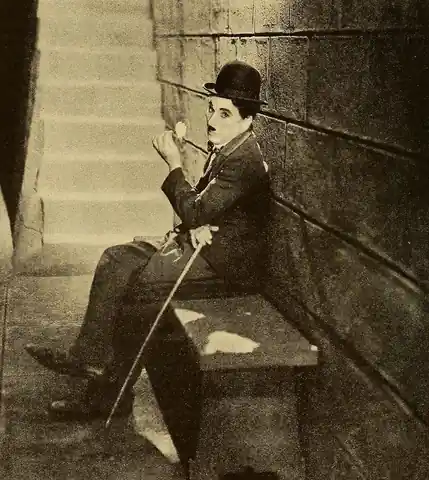
City Lights (1931): TrampImage: Wikimedia Commons · Photographer uncredited, Public domain - #004
- #005
- #006
- #007
- #008
- #009
For a subplot, Chaplin first considered an even lower character on the social scale, a Black journalist. The millionaire plot was based on an old idea that had briefly occurred to Chaplin: two millionaires take the Little Tramp out of the city dump and show him a good time in expensive clubs, then put him back in the dump, so that when the Tramp wakes up he cannot tell whether it was real or a dream. This was rewritten as a millionaire who is the Tramp's friend while drunk but does not recognize him when sober.
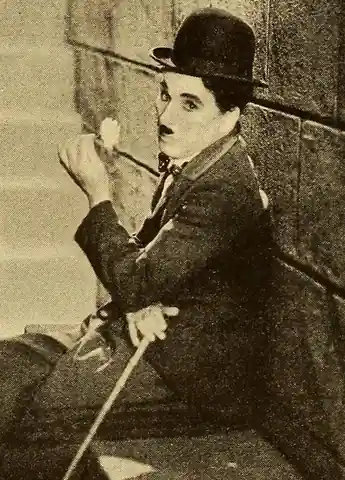
City Lights (1931): Tramp, in the streetImage: Wikimedia Commons · Photographer uncredited, Public domain - #010
- #011
- #012
- #013
- #014
- #015
- #016
- #017
- #018
- #019
- #020
One of Chaplin's most enjoyable moments came during the filming of the film's famous boxing match scene. Virginia Cherrill recalled, 'The shooting of the boxing scene was our only social life at the studio.' 'Charlie had over a hundred extras... and he encouraged his friends in the city to come and watch. In those days everyone in Hollywood loved boxing. Charlie was very funny in the ring. The boxing scene turned into a kind of party at the studio. Charlie loved every moment of it.'
- #021
- #022
- #023
- #024
- #025
- #026
- #027
- #028
The film premiered on February 6, 1931, at the George M. Cohan Theater in New York. It was the only silent film to be released in over a year, and Chaplin's first film to be released in three years. The line to see the film was reported to be so long that impatient moviegoers nearly turned into an angry crowd. One audience member is said to have seen the long line and joked: 'Is this a bread line or a bank run?'
- #029
The millionaire's car is a 1924 Rolls Royce 40/50 hp Silver Ghost built by Springfield Coach Works in Massachusetts (according to IMCDb). Note that it is right-hand drive. An example of this car could be worth six figures in 2023. The car used in the film, however, could be worth much more. It was probably one of Chaplin's own cars at the time.
- #030
- #031
Because Chaplin owned his own studio, he could control every aspect of the production. He could take his time, proceed at his own pace, and spend as much time and money as needed to do things the way he wanted. He demanded perfection from everyone who worked with him, but most of all from himself.
- #032
- #033
The opening scene featured as many as 380 extras and was especially stressful for Chaplin to shoot. During this part of the shoot, construction was underway at Chaplin Studios because the city of Los Angeles had decided to widen La Brea Avenue, and Chaplin had to move several buildings away from the road.
- #034
- #035
- #036
- #037
When Virginia Cherrill returned late from a date, Chaplin fired her. Relations between them were already poor; Chaplin planned to reshoot the flower girl role with Georgia Hale, who had appeared in The Gold Rush, and even shot the final scene with Hale. But he had spent too much time and money on the project to start over. Knowing this, Cherrill offered to return – but at double her salary. Chaplin reluctantly agreed.
- #038
- #039
- #040
Though his perfectionism sometimes led to friction, it was undeniable that Chaplin put his heart and soul into the art of pantomime. The film's poignant final shot was a moment he was especially proud of, because of how much work he put into it despite its deceptive simplicity. 'There was a beautiful feeling of not acting, of standing outside myself,' he said. 'The key was exactly right – a little embarrassed, pleased to see her again – apologetic without becoming sentimental. He was watching and wondering without any effort. It is one of the purest additions I have ever made – what I call additions, close-ups.'
- #041
- #042
- #043
- #044
- #045
- #046
- #047
- #048
Chaplin held a secret preview in downtown Los Angeles and described the result as 'terrible': 'Our film was thrown into a half-empty auditorium. The audience had come to see a drama, not a comedy, and they could not get over their surprise until halfway through the film. There were laughs, but they were weak.' Some audience members left in the middle of the film. In his autobiography he said, 'I left the theater with the feeling that two years of work and two million dollars had been wasted.'
- #049
On gala night, theater manager H.L. Gumbiner was proud of the new Los Angeles Theater, but his timing was terrible. When he stopped the film midway and began describing the theater's features, Chaplin was furious: 'I could not believe my ears. I jumped up from my seat and ran down the aisle: Where is that stupid manager? I'll kill him!' The audience also took Chaplin's side and protested the interruption by stomping their feet. Gumbiner stopped and the film resumed.
- #050
- #051
- #052
- #053
- #054
Chaplin began shooting the film in 1928. Believing sound to be a passing fad, he decided to stick to the pantomime style. However, halfway through production, when he realized that talking pictures were here to stay, he stopped shooting and thought about how to incorporate sound. The Wall Street Crash also made his work harder.
- #055
- #056
- #057
- #058
- #059
City Lights, a favorite of figures such as Orson Welles, Stanley Kubrick, Andrei Tarkovsky, Woody Allen, Guillermo del Toro, Martin Brest and Hideo Kojima, is one of the most beloved films in cinema history.
- #060
Chaplin invited Albert Einstein and his wife Elsa to the Los Angeles premiere on January 30, 1931. When the lights came up, Chaplin saw that Einstein's eyes had filled with tears during the final scene, and wrote in his autobiography that he had not known he was so emotional. When the film opened in England, George Bernard Shaw accompanied him.
- #061
- #062
- #063
- #064
Production Story (1)
- #065
Chaplin initially considered a Black newspaper boy for a subplot. The millionaire story, meanwhile, grew out of an old short film idea: Two millionaires take the Tramp from a garbage dump, entertain him, then put him back; so that when he wakes up he cannot tell whether it was real or a dream. This idea turned into a millionaire who befriends him while drunk and does not recognize him when sober.
Behind the Scenes (4)
- #066
The boxing scene required 100 extras, and Chaplin took four days to rehearse and six days to shoot the scene. Chaplin was initially nervous about taking part in this scene, so he invited his friends to be extras. More than 100 extras were present. Chaplin's performance in the scene was so funny that more people came every day to be extras.
- #067
During the filming of the scene in which Charlie meets the blind girl, Chaplin's friend, the famous illustrator Ralph Barton, was also on set. The home movies included in Unknown Chaplin (1983), showing Chaplin working in his Tramp costume behind the scenes, are the only known footage of their kind.
- #068
Chaplin's friend, the famous illustrator Ralph Barton, was on set one day during the filming of the scene where Charlie and the blind girl meet. His home movies appear in the documentary Unknown Chaplin (1983) and are the only known behind-the-scenes footage of Chaplin working in his Tramp costume.
- #069
Characters & Cast (8)
- #070
- #071
Henry Clive was initially cast as the millionaire, but when he refused to fall into the water for a required scene, Chaplin fired him and hired Harry Myers. Some sources say Clive had a cold at the time and asked Chaplin whether they could wait until the sun warmed the water before he went in. Chaplin responded by immediately bringing in a new actor in his place.
- #072
Chaplin interviewed many actresses for the blind flower girl, but none impressed him. He met Virginia Cherrill while watching footage of women swimming at Santa Monica beach. Cherrill waved and asked whether there was any chance of working with him. After failed auditions, Chaplin called her in for a screen test. Thanks to her nearsightedness, Cherrill became the first actress to play blind convincingly on camera.
- #073
- #074
- #075
- #076
- #077
Shooting began in 1929 when 'talking pictures' came out, but Chaplin continued making a silent film and rehearsing. Twenty-year-old Virginia Cherrill, who had never acted before, was cast for the lead role, worked without a script and acted out the other actors' roles. September 15, 1930, was the 534th day of work, but actual shooting was only 166 days. Chaplin fired an actor, reshot scenes and dealt with Virginia's inexperience. His perfectionism pushed the shooting into a second year.
Easter Eggs & References (1)
- #078
Chaplin's perfectionism was reflected in every area of the production. Robert Parrish, who played one of the newsboys, recounted the following in 1991: 'Chaplin was like a dervish. He would fire a pea from a pea shooter and play both my role and the role of the other newsboy, Austen Jewell. Then he would run and react as if the Tramp had been hit, then turn back into the newsboys and fire another pea. Then he would play Virginia Cherrill's role as the Blind Girl, then become the Tramp again. Then he would tell the people in the background what to do. Everyone would watch him act out all the roles for us. When he had everything in order, he would reluctantly give us back our roles... I think if it had been possible, he would have preferred to play all the roles himself.'
Deeper Meaning (6)
- #079
At one point Virginia Cherrill returned to the set late after a date and kept Chaplin waiting. Chaplin, whose relationship with Cherrill was not friendly, fired her on the spot. He planned to reshoot the film with Georgia Hale, the heroine of The Gold Rush (1925), playing the flower girl; he even reshot the final scene between the tramp and the flower girl with Hale in the role. But Chaplin had already spent too much time and money to start the project over. Knowing this, Cherrill offered to return to the job for twice her original salary. Chaplin reluctantly agreed, and the film was completed. (Source: Virginia Cherrill interview, Unknown Chaplin (1983)).
- #080
- #081
- #082
- #083
- #084
The psychologist Stephen Weissman argued that the film is highly autobiographical: the blind girl represents Chaplin's mother, and the drunken millionaire his father. He noted that the statue in the opening scene resembles St. Mark's Church on Kennington Park Road, and that Chaplin called the seaside set the Thames Set.
Career & Awards (1)
- #085
In 1991, the Library of Congress selected the film for preservation in the National Film Registry, finding it 'culturally, historically, or aesthetically significant.' It also appears on the British Film Institute's critics' top 50 list, Roger Ebert's 'Great Movies' list, and among the '1001 Movies You Must See Before You Die' edited by Steven Schneider.
Related pages
- Victor Wong — City Lights comes up in the facts on that page
- Charlie Chaplin — City Lights comes up in the facts on that page
- La La Land — City Lights comes up in the facts on that page
Sources & editorial notes
Reference databases
- Wikipedia
- IMDb
Information from external sources is independently selected, consolidated and edited by Arka Evren. Sources are listed for verification and further reading. Encyclopedia text is used under its licence (CC BY-SA). How we work