

FILM · 1931 · USA
City Lights
- Directed by
- Charlie Chaplin
- Runtime
- 87 min
- Studio
- Charles Chaplin Productions
85 archived facts 7 topics 1 source Last reviewed Nov 2026
A tramp falls in love with a beautiful blind flower girl. His on-and-off friendship with a wealthy man allows him to be the girl's benefactor and suitor.

85 Interesting Facts About City Lights
Interesting Facts (64)
- #001
It was Chaplin's first film made in the sound era. He faced enormous pressure to make the film with sound, but his popularity and power in Hollywood were so great that, at a time when the rest of the American film industry had converted to sound, he managed to complete and release the film as a silent one (albeit with a recorded score).
- #002
Chaplin invited Albert Einstein and his wife Elsa to the Los Angeles premiere on January 30, 1931. When the house lights came up, Chaplin was surprised to see that Einstein's eyes had teared up during the final scene. In his autobiography, Chaplin said he had not known Einstein was so "emotional."
- #003
Chaplin reshot the scene in which the Little Tramp buys a flower from the blind flower girl 342 times, because he could not find a satisfying way to show that she believes the mute tramp is wealthy.
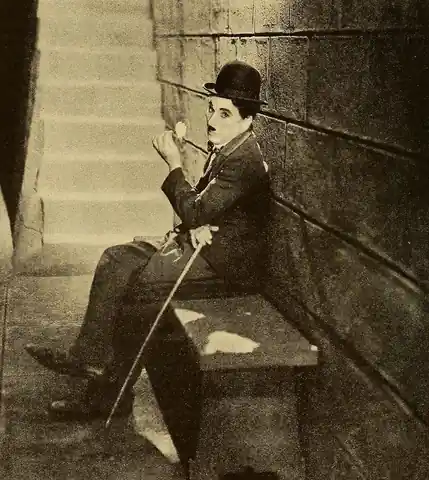
City Lights (1931): TrampImage: Wikimedia Commons · Photographer uncredited, Public domain - #004
It was Chaplin's personal favorite among all his films.
- #005
Winston Churchill visited the set, and Chaplin took a break to shoot a short film with him.
- #006
(About 1 minute) At the start of the film, a town official and a woman dedicating the statue can be heard speaking ordinary words through a paper kazoo-like mouth instrument. The sounds were made by Chaplin, and his voice is heard in the film for the first time.
- #007
Virginia Cherrill was very nearsighted. Chaplin felt her unfocused gaze suggested blindness.
- #008
In terms of years, this film was Chaplin's longest project. Although he shot for only 180 days, it remained in production for more than three years, from December 31, 1927, to January 22, 1931.
- #009
For a subplot, Chaplin first considered an even lower character on the social scale, a Black journalist. The millionaire plot was based on an old idea that had briefly occurred to Chaplin: two millionaires take the Little Tramp out of the city dump and show him a good time in expensive clubs, then put him back in the dump, so that when the Tramp wakes up he cannot tell whether it was real or a dream. This was rewritten as a millionaire who is the Tramp's friend while drunk but does not recognize him when sober.
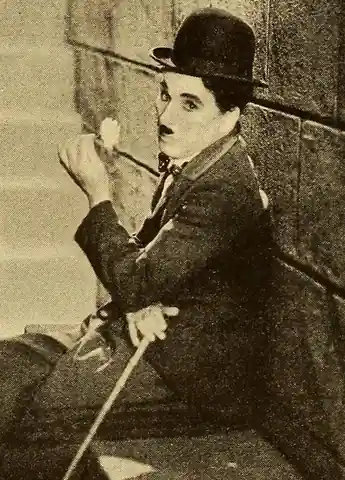
City Lights (1931): Tramp, in the streetImage: Wikimedia Commons · Photographer uncredited, Public domain - #010
This was the first time Chaplin composed the musical score for one of his own productions.
- #011
Production was postponed several times. At one point in 1929 it lasted 62 days.
- #012
According to his autobiography, Chaplin was angered over United Artists' lack of pre-release publicity and decided to exhibit the picture himself. He spent his own money to rent the George M. Cohan Theater and took out half-page advertisements to publicize the fact.
- #013
Though no footage of Georgia Hale appears in the finished film, the reconciliation scene she shot for him in Virginia Cherrill's absence, has survived.
- #014
The film was originally set in Paris.
- #015
The first scenes Chaplin conceived were the final scene, in which the newly recovered blind girl sees the Little Tramp for the first time. Because Chaplin regarded it as the center of the entire film, a highly detailed description of the scene was written.
- #016
The premiere opened the Los Angeles Theater. It was the first time a gala premiere was held in downtown Los Angeles rather than in Hollywood.
- #017
When the film was re-released in 1950, it was banned in Memphis, TN, by the censor Lloyd T. Benford because of Chaplin's "immoral" character. The decision stemmed from a number of personal events that damaged Chaplin's career.
- #018
Chaplin briefly considered the sixteen-year-old actress Marian Marsh for the blind girl, but his colleagues talked him out of the idea.
- #019
Chaplin reshot the scene in which the Tramp buys a flower from the blind flower girl a total of 342 times. He simply could not find a satisfying way to show that the girl mistook the mute vagrant for a rich man.
- #020
One of Chaplin's most enjoyable moments came during the filming of the film's famous boxing match scene. Virginia Cherrill recalled, 'The shooting of the boxing scene was our only social life at the studio.' 'Charlie had over a hundred extras... and he encouraged his friends in the city to come and watch. In those days everyone in Hollywood loved boxing. Charlie was very funny in the ring. The boxing scene turned into a kind of party at the studio. Charlie loved every moment of it.'
- #021
Winston Churchill visited the set, and Chaplin took a break to make a short film with him.
- #022
At the beginning of the film, a town official and a woman dedicating the statue deliver unintelligible words through a paper-reed mouth instrument. Chaplin made the sounds, and this was the first time his voice was heard in a film.
- #023
The boxing scene required 100 extras; Chaplin spent four days rehearsing the scene and six days shooting it. He was initially nervous about attendance for this scene, so he invited his friends to be extras. His performance was so funny that more people came each day to be extras.
- #024
This was the first time Chaplin composed the score for one of his productions.
- #025
Although Georgia Hale does not appear at all in the finished film, the reconciliation scene shot for her in Virginia Cherrill's absence has survived.
- #026
The famous Flower Girl theme was written by José Padilla.
- #027
Its premiere was held at the Los Angeles Theater. It was the first time a premiere was held in downtown Los Angeles rather than Hollywood.
- #028
The film premiered on February 6, 1931, at the George M. Cohan Theater in New York. It was the only silent film to be released in over a year, and Chaplin's first film to be released in three years. The line to see the film was reported to be so long that impatient moviegoers nearly turned into an angry crowd. One audience member is said to have seen the long line and joked: 'Is this a bread line or a bank run?'
- #029
The millionaire's car is a 1924 Rolls Royce 40/50 hp Silver Ghost built by Springfield Coach Works in Massachusetts (according to IMCDb). Note that it is right-hand drive. An example of this car could be worth six figures in 2023. The car used in the film, however, could be worth much more. It was probably one of Chaplin's own cars at the time.
- #030
To remind sound-oriented audiences what to expect from the film, Chaplin promoted it as 'a comedy romance in pantomime written and directed by Charles Chaplin.'
- #031
Because Chaplin owned his own studio, he could control every aspect of the production. He could take his time, proceed at his own pace, and spend as much time and money as needed to do things the way he wanted. He demanded perfection from everyone who worked with him, but most of all from himself.
- #032
The film underwent a 4K film transfer in 2013 for theatrical distribution (Janus Films) and DVD/Blu-ray release (Criterion Collection). The Criterion Collection home video release includes an optional audio commentary track by Chaplin biographer and archivist Jeffrey Vance.
- #033
The opening scene featured as many as 380 extras and was especially stressful for Chaplin to shoot. During this part of the shoot, construction was underway at Chaplin Studios because the city of Los Angeles had decided to widen La Brea Avenue, and Chaplin had to move several buildings away from the road.
- #034
As the uniformed Chaplin advances down the street, several short mule trains driven by cavalry soldiers pass in the distance. At the time, most military units still relied on horse and mule power, but this would change with the arrival of World War II and the changing of weapons.
- #035
Chaplin shot 39 times more film than what was used in the final cut of the film.
- #036
At the nightclub, a couple begins the tough-looking Apache dance that was fashionable in early 20th-century Paris. The Tramp thinks the dance is real and intervenes to protect the woman.
- #037
When Virginia Cherrill returned late from a date, Chaplin fired her. Relations between them were already poor; Chaplin planned to reshoot the flower girl role with Georgia Hale, who had appeared in The Gold Rush, and even shot the final scene with Hale. But he had spent too much time and money on the project to start over. Knowing this, Cherrill offered to return – but at double her salary. Chaplin reluctantly agreed.
- #038
Virginia Cherrill was very nearsighted. Chaplin thought her unfocused gaze suggested blindness.
- #039
According to Virginia Cherrill, Chaplin was never sexually interested in her. 'I was 20 years old. Charlie preferred them younger.'
- #040
Though his perfectionism sometimes led to friction, it was undeniable that Chaplin put his heart and soul into the art of pantomime. The film's poignant final shot was a moment he was especially proud of, because of how much work he put into it despite its deceptive simplicity. 'There was a beautiful feeling of not acting, of standing outside myself,' he said. 'The key was exactly right – a little embarrassed, pleased to see her again – apologetic without becoming sentimental. He was watching and wondering without any effort. It is one of the purest additions I have ever made – what I call additions, close-ups.'
- #041
When Virginia Cherrill renegotiated her contract to return to the film, she said she had taken advice from Marion Davies.
- #042
The superstitious black boxer was played by American Vic Alexander, a real professional boxer before he turned to acting.
- #043
According to studio records, Georgia Hale was added to the cast on November 11, 1929.
- #044
Virginia Cherrill was hired on the spot when Chaplin saw her at a boxing match.
- #045
In the middle of the sound era, Chaplin surprised everyone by making a silent film. While all of Hollywood had switched to sound, thanks to his popularity and power City Lights was completed and released as a silent film accompanied only by music.
- #046
Despite being released in the middle of the sound era, City Lights became one of Chaplin's most successful films, both at the box office and with critics.
- #047
The film was extremely expensive, costing over $1.5 million, because Chaplin kept the cast and crew on standby for 22 months even though he shot for only 179 days.
- #048
Chaplin held a secret preview in downtown Los Angeles and described the result as 'terrible': 'Our film was thrown into a half-empty auditorium. The audience had come to see a drama, not a comedy, and they could not get over their surprise until halfway through the film. There were laughs, but they were weak.' Some audience members left in the middle of the film. In his autobiography he said, 'I left the theater with the feeling that two years of work and two million dollars had been wasted.'
- #049
On gala night, theater manager H.L. Gumbiner was proud of the new Los Angeles Theater, but his timing was terrible. When he stopped the film midway and began describing the theater's features, Chaplin was furious: 'I could not believe my ears. I jumped up from my seat and ran down the aisle: Where is that stupid manager? I'll kill him!' The audience also took Chaplin's side and protested the interruption by stomping their feet. Gumbiner stopped and the film resumed.
- #050
The production was postponed several times; at one point in 1929 it lasted 62 days.
- #051
City Lights became the highest-grossing film in the United States in 1931.
- #052
Chaplin, angered by United Artists' lack of promotion, decided to exhibit the film himself. He spent his own money to rent the George M. Cohan Theater and bought half-page advertisements.
- #053
The story grew from a concept that came to Chaplin after The Circus (1928): A circus clown goes blind and must hide this handicap from his little girl by making the accidents caused by his inability to see look like clowning.
- #054
Chaplin began shooting the film in 1928. Believing sound to be a passing fad, he decided to stick to the pantomime style. However, halfway through production, when he realized that talking pictures were here to stay, he stopped shooting and thought about how to incorporate sound. The Wall Street Crash also made his work harder.
- #055
One of the first scenes that came to Chaplin was the final scene in which the cured blind girl sees the Tramp for the first time. Because he saw this as the center of the film, a very detailed description was written.
- #056
The opening reel and a dream scene in which Chaplin wears an elegant uniform were deleted.
- #057
A scene in which the Tramp tries to pick up a cane stuck in a sidewalk grate was shot but removed at Chaplin's insistence.
- #058
The girl's flowers cost $10 in total, equivalent to about $210 in 2023.
- #059
City Lights, a favorite of figures such as Orson Welles, Stanley Kubrick, Andrei Tarkovsky, Woody Allen, Guillermo del Toro, Martin Brest and Hideo Kojima, is one of the most beloved films in cinema history.
- #060
Chaplin invited Albert Einstein and his wife Elsa to the Los Angeles premiere on January 30, 1931. When the lights came up, Chaplin saw that Einstein's eyes had filled with tears during the final scene, and wrote in his autobiography that he had not known he was so emotional. When the film opened in England, George Bernard Shaw accompanied him.
- #061
City Lights, Chaplin's personal favorite among his own films, was chosen number one on AFI's 2008 list of the greatest romantic comedies of all time. The same institute ranked the film on its 1998 list of the 100 Best American Films and as the 11th Greatest Film of All Time in 2007.
- #062
City Lights ranks 680th in the Criterion Collection. Everyone in the film has died since 2007.
- #063
It appears on Letterboxd's official Top 250 Feature Films list.
- #064
It was among the American Film Institute's 2005 nominees for AFI's 100 Years of Film Scores.
Production Story (1)
- #065
Chaplin initially considered a Black newspaper boy for a subplot. The millionaire story, meanwhile, grew out of an old short film idea: Two millionaires take the Tramp from a garbage dump, entertain him, then put him back; so that when he wakes up he cannot tell whether it was real or a dream. This idea turned into a millionaire who befriends him while drunk and does not recognize him when sober.
Behind the Scenes (4)
- #066
The boxing scene required 100 extras, and Chaplin took four days to rehearse and six days to shoot the scene. Chaplin was initially nervous about taking part in this scene, so he invited his friends to be extras. More than 100 extras were present. Chaplin's performance in the scene was so funny that more people came every day to be extras.
- #067
During the filming of the scene in which Charlie meets the blind girl, Chaplin's friend, the famous illustrator Ralph Barton, was also on set. The home movies included in Unknown Chaplin (1983), showing Chaplin working in his Tramp costume behind the scenes, are the only known footage of their kind.
- #068
Chaplin's friend, the famous illustrator Ralph Barton, was on set one day during the filming of the scene where Charlie and the blind girl meet. His home movies appear in the documentary Unknown Chaplin (1983) and are the only known behind-the-scenes footage of Chaplin working in his Tramp costume.
- #069
City Lights was Chaplin's longest-running production: from December 31, 1927, to January 22, 1931, more than three years, but only 180 days of actual shooting.
Characters & Cast (8)
- #070
The film was extremely expensive — over $1.5 million — mainly because Chaplin kept his cast and crew on standby for 22 months even though he actually shot for only 179 days.
- #071
Henry Clive was initially cast as the millionaire, but when he refused to fall into the water for a required scene, Chaplin fired him and hired Harry Myers. Some sources say Clive had a cold at the time and asked Chaplin whether they could wait until the sun warmed the water before he went in. Chaplin responded by immediately bringing in a new actor in his place.
- #072
Chaplin interviewed many actresses for the blind flower girl, but none impressed him. He met Virginia Cherrill while watching footage of women swimming at Santa Monica beach. Cherrill waved and asked whether there was any chance of working with him. After failed auditions, Chaplin called her in for a screen test. Thanks to her nearsightedness, Cherrill became the first actress to play blind convincingly on camera.
- #073
Henry Clive was initially cast as the millionaire, but when he refused to fall into the water for a necessary scene, Chaplin fired him and hired Harry Myers. Some sources say Clive had a cold at the time and wanted to wait for the water to be heated. Chaplin replaced him immediately.
- #074
Chaplin briefly considered sixteen-year-old Marian Marsh for the blind girl role but was talked out of it by his colleagues.
- #075
At one point Chaplin considered German actress Camilla Horn for the role of the 'Blind Girl.'
- #076
In Lame Brains and Lunatics 2, Steve Massa mistakenly identifies silent film comedian Flora Finch as the 'society lady presenting the statue.' In fact, it is another actress who resembles her.
- #077
Shooting began in 1929 when 'talking pictures' came out, but Chaplin continued making a silent film and rehearsing. Twenty-year-old Virginia Cherrill, who had never acted before, was cast for the lead role, worked without a script and acted out the other actors' roles. September 15, 1930, was the 534th day of work, but actual shooting was only 166 days. Chaplin fired an actor, reshot scenes and dealt with Virginia's inexperience. His perfectionism pushed the shooting into a second year.
Easter Eggs & References (1)
- #078
Chaplin's perfectionism was reflected in every area of the production. Robert Parrish, who played one of the newsboys, recounted the following in 1991: 'Chaplin was like a dervish. He would fire a pea from a pea shooter and play both my role and the role of the other newsboy, Austen Jewell. Then he would run and react as if the Tramp had been hit, then turn back into the newsboys and fire another pea. Then he would play Virginia Cherrill's role as the Blind Girl, then become the Tramp again. Then he would tell the people in the background what to do. Everyone would watch him act out all the roles for us. When he had everything in order, he would reluctantly give us back our roles... I think if it had been possible, he would have preferred to play all the roles himself.'
Deeper Meaning (6)
- #079
At one point Virginia Cherrill returned to the set late after a date and kept Chaplin waiting. Chaplin, whose relationship with Cherrill was not friendly, fired her on the spot. He planned to reshoot the film with Georgia Hale, the heroine of The Gold Rush (1925), playing the flower girl; he even reshot the final scene between the tramp and the flower girl with Hale in the role. But Chaplin had already spent too much time and money to start the project over. Knowing this, Cherrill offered to return to the job for twice her original salary. Chaplin reluctantly agreed, and the film was completed. (Source: Virginia Cherrill interview, Unknown Chaplin (1983)).
- #080
The plot developed gradually from the first concept Chaplin considered after the success of The Circus (1928), in which a circus clown goes blind and must hide his handicap from his girlfriend by treating the accidents caused by his inability to see as slapstick.
- #081
Chaplin spent $1,500,000 of his own money on the film's production. A river covering five acres was built at Chaplin's studio at a cost of $15,000. Two streets representing the business district downtown were also built at a cost of $100,000.
- #082
Chaplin spent $1,500,000 of his own money to make the film. A river was built on his studio lot, covering five acres and costing $15,000 to construct. In addition, two streets representing a downtown business district were built for $100,000.
- #083
The film was banned in Memphis, Tennessee, in 1950 by the censor Lloyd T. Benford because of Chaplin's 'immoral' character. The decision stemmed from the personal matters that haunted Chaplin's career.
- #084
The psychologist Stephen Weissman argued that the film is highly autobiographical: the blind girl represents Chaplin's mother, and the drunken millionaire his father. He noted that the statue in the opening scene resembles St. Mark's Church on Kennington Park Road, and that Chaplin called the seaside set the Thames Set.
Career & Awards (1)
- #085
In 1991, the Library of Congress selected the film for preservation in the National Film Registry, finding it 'culturally, historically, or aesthetically significant.' It also appears on the British Film Institute's critics' top 50 list, Roger Ebert's 'Great Movies' list, and among the '1001 Movies You Must See Before You Die' edited by Steven Schneider.
Related pages
- Victor Wong — City Lights comes up in the facts on that page
- Charlie Chaplin — City Lights comes up in the facts on that page
- La La Land — City Lights comes up in the facts on that page
Sources & editorial notes
Reference databases
- Wikipedia
- IMDb
Information from external sources is independently selected, consolidated and edited by Arka Evren. Sources are listed for verification and further reading. Encyclopedia text is used under its licence (CC BY-SA). How we work