FILM · 1978 · UK
Death on the Nile
63 archived facts 8 topics 1 source Last reviewed Oct 2026
All facts (63)
- #001
During World War II, Peter Ustinov was the batman (personal orderly) of Major David Niven.
- #002
According to producer Richard Goodwin, Bette Davis brought her own makeup, mirrors and lights to Egypt.
- #003
This was the first of Sir Peter Ustinov's six performances in the role of Hercule Poirot.
- #004
Location shooting in Egypt consisted of four weeks aboard the river boat "S. S. Karnak" and three weeks at locations including Luxor, Cairo, Aswan and Abu Simbel.
- #005
Bette Davis, Dame Maggie Smith and Dame Angela Lansbury shared a small steamer cabin as a dressing room. While one actress dressed in the middle of the cabin, the other two lay on one of the beds to the left or right.
- #006
Angela Lansbury had never seen the finished film until she attended its 40th anniversary screening on 9 November 2018.
- #007
Wayne Sleep, then a little-known dancer, choreographed the tango scene. In 2018 he reported: "I was paid by the hour, which was great because nobody had turned up for rehearsal and I had to go and find David Niven and persuade him to come."
- #008
Albert Finney was initially asked to reprise his role as Poirot from Murder on the Orient Express (1974). However, he had found the makeup he was forced to wear in the first film very uncomfortable in the hot interior of the train, and when he realised he would have to endure the same experience in temperatures exceeding 100 Fahrenheit (38 degrees Celsius), he turned the role down.
- #009
Producer John Brabourne said there was not a single telephone available during shooting in Egypt. They had to communicate by telex.
- #010
Agatha Christie drew inspiration for the source novel from an Egyptian holiday in 1937. The hotel scenes were shot at the Old Cataract Hotel in Aswan, where Christie stayed. The hotel's facade had to be "redressed" to look as it did in the 1930s, and the furniture on the hotel terrace was replaced with authentic period pieces.
- #011
Accommodation problems were considerable during location shooting in Egypt. No hotel reservations had been made for part of the crew, and some had to move from one hotel to another, sometimes every day.
- #012
MI5 agent Colonel Race is played by David Niven, whom author and British MI5 agent Ian Fleming had chosen to play James Bond. During World War II Niven took part in British intelligence operations, where he worked with Fleming on some projects.
- #013
This was the only collaboration between Sir Peter Ustinov and Dame Angela Lansbury, despite the two being in-laws (Ustinov was married to Lansbury's half-sister, the stage actress Isolde Denham, from 1940 to 1950) and long-time friends.
- #014
Colonel Johnny Race boards the S. S. Karnak wearing a Royal Green Jackets tie and a straw boater with a Royal Green Jackets hatband. Formed in 1966, the Royal Green Jackets were the descendants of David Niven's wartime regiment, the Rifle Brigade.
- #015
The paddle steamer on which Dame Agatha Christie travelled the Nile in 1937, the P. S. Sudan, still existed, though abandoned; Thomas Cook's fleet of Nile steamers had been decommissioned in the 1940s. But either the Sudan was not available to the filmmakers or they did not give priority to using it, and instead they refurbished another abandoned paddle steamer, the Memnon, to serve as the S. S. Karnak in ''Death on the Nile''. The noise produced by the Memnon's paddle wheel made it necessary to switch off the motor apparatus during shooting: the shots on the boat in which the vessel visibly moves were affected by the Memnon being towed upriver by tugs. Apparently the scenes of the boat sailing towards the Nile were actually shot at Pinewood Studios using a water tank and a model of the Memnon. The real P. S. Sudan, first refurbished in 1991 and again in 2000, was to be used for the Death on the Nile (2004) episode of the Poirot (1989) TV series.
- #016
The scenes set at Linnet Ridgeway's residence were shot at Compton Wynyates, a Warwickshire country house that had served as the title's rural estate in Candleshoe (1977): coincidentally, the butler role in "Candleshoe" was David Niven's last film role before he played Colonel Race in "Death on the Nile".
- #017
This was Dame Angela Lansbury's first appearance in an Agatha Christie murder mystery. She would go on to play Miss Jane Marple in The Mirror Crack'd (1980). Both films gave her an image in the murder mystery genre, which led to her being cast in Murder, She Wrote (1984), in which Lois Chiles and Olivia Hussey appeared as guest stars.
- #018
On the producers' orders, director John Guillermin, the cast and the crew were forbidden from reading the daily newspapers. The rushes were sent directly to the production office in London.
- #019
Seven cast members earned 28 Oscar nominations with eight wins.
- #020
This was the first of three screenplays adapted from Dame Agatha Christie's novels and written by Anthony Shaffer. The others were Evil Under the Sun (1982) and Appointment with Death (1988).
- #021
The film adapts the character of romantic novelist Salome Otterbourne from the original novel. Salome is a thinly veiled version of the real-life novelist Elinor Glyn (1864 - 1943).
- #022
Because the film was required to have an all-star cast, the famous Egyptian actor Omar Sharif was initially brought on to play Kamak's manager, but upon seeing the script he was disappointed that it was only a relatively small role and withdrew from the film. With a name as big as Sharif pulling out, the screenwriters then decided to reduce the managerial character's number of scenes and dialogue, which led to his presence being largely cut in the rewrite of the script. The role was subsequently recast with the veteran Indian actor I. S. Johar.
- #023
Sir Peter Ustinov is the only actor to receive star billing in the opening sequence, as he is the first name to appear on screen. All the other stars' names are listed in alphabetical order. No one even received an "and" credit; not even Bette Davis or David Niven.
- #024
After filming was completed, Lois Chiles found herself on the return flight to New York sitting by chance next to director Lewis Gilbert, who was about to begin casting the James Bond film Moonraker (1979). Gilbert persuaded Chiles to audition. Based on that audition she was cast in what is probably her most famous role, Dr. Holly Goodhead.
- #025
Salome Otterbourne wears a jeweled brooch in the shape of a crescent and star. In 1937 the Egyptian flag consisted of a crescent with three white stars on a green field.
- #026
John Guillermin banned visitors from the set in order to keep the plot secret.
- #027
As of 2025, Mia Farrow and Lois Chiles are the only surviving cast members.
- #028
Although Tony Walton had been widely praised for his period costumes on Murder on the Orient Express (1974), his involvement with The Wiz (1978) made it impossible for him to be the costume designer on Death on the Nile. Walton for The Wiz and Anthony Powell for Death on the Nile were set to face off for the Best Costume Design Oscar: Walton won for The Wiz's elaborate costumes (despite the film's poor box office performance), and Powell's loss of the Oscar was a great disappointment.
- #029
In the denouement, Poirot mentions a Moulage Test. The test he describes is a dermal nitrate test first used in 1933. Moulage is the theatrical technique of using prosthetic makeup to add fake wounds to someone. This was an important element of the first murder in the film.
- #030
The film was released 41 years after the publication of Christie's novel.
- #031
As noted earlier, the first draft of the shooting script was written at a time when it was believed Albert Finney would return to reprise the role of Hercule Poirot. Although Finney decided against it and Sir Peter Ustinov was cast instead, which led to Poirot's dialogue being rewritten (some of it without listing Ustinov in the credits), one line from the first draft still remains when Poirot mentions what happened on his last trip on the Orient Express.
- #032
While talking with Poirot, Salome Otterbourne mentions the god of Crocodilopolis (the City of Crocodiles). Crocodilopolis is the Greek name of the ancient Egyptian city of Shedet. Its name in Byzantine times was Arsinoe, and its modern name is Faiyum. The god mentioned was Sobek, the city's patron deity, who was typically depicted as a man with a crocodile's head.
- #033
The film is set in 1937.
- #034
Jane Birkin and Dame Maggie Smith later appeared alongside Sir Peter Ustinov in Evil Under the Sun (1982).
- #035
The Great Temple of Abu Simbel on the banks of the Nile, where Simon and Linnet leave the riverboat and linger before the four colossal statues of Ramesses II, is appropriate to the period. In 1968 the entire temple was moved 200 meters away from the Nile and raised 65 meters to the shore of Lake Nasser to prevent it from being flooded by the newly built Aswan Dam.
- #036
Dame Maggie Smith appeared in Evil Under the Sun (1982). She also appeared with David Niven in Neil Simon's Murder by Death (1976).
- #037
The exterior of the Ridgeway mansion, "Wode Hall," was used in the opening title sequence of Silver Spoons (1982).
- #038
Although the film is sometimes said to be set in 1937, this is never mentioned on screen. The copy of the "Washington Post" detailing Mrs. Van Schuyler's Ridgeway wedding is dated Thursday, September 11, 1930. This is the correct date, tied to contemporary promotional interviews with actor Jon Finch and production designer Peter Murton, both of whom point to a 1930s setting. (Conversely, David Niven was greatly amused when he discovered a 1932 copy of "The Observer" being used as set decoration at Pinewood Studios.)
- #039
Key differences between Death on the Nile (1978) and the novel. Character changes and omissions: several characters were removed from the film for the sake of simplicity, among them Signor Richetti (archaeologist/spy), Mrs. Allerton and her son Tim. Their roles or plot functions are either eliminated or redistributed to other characters. Andrew Pennington's role in the film was somewhat expanded to increase the suspicion surrounding him. Tone and style: the film is lighter and more humorous than the novel, often adding comic touches through the performances of Bette Davis, Maggie Smith and other actors. The book has a more psychological and tense tone, focusing more on the characters' inner jealousies and motives. Setting and visual emphasis: the film places far greater emphasis on Egyptian scenery and large-scale visuals (temples, monuments, desert landscapes). The novel mentions these landscapes but does not explore them with the same grandeur; its focus remains more on the characters and motives. Order of events: some events are reordered or condensed: the development of Linnet's murder is more intense in the film. Some of Poirot's investigations and interviews were combined into fewer scenes. The film uses a more linear and fluid structure, eliminating the subplots found in the book. Romantic subplots reduced: romantic hints that appear in the novel, such as those between Rosalie Otterbourne and Tim Allerton (who does not even appear in the film), were cut entirely. Other minor emotional developments are simplified. Jacqueline and Simon's motives are somewhat simplified. In the novel, Christie spends more time exploring Jacqueline's psychological complexity, her obsession with Simon and the toxic dynamic among the three of them. The film includes these elements but in a more direct and less layered way. The Otterbourne characters: Salome Otterbourne is portrayed with a more comic air in the film (especially her drunken moments). In the book she is eccentric but less overtly humorous. Death scenes: the film dramatizes the murders far more: the maid's shooting, the confrontation scenes and the final explanation. In the novel some deaths occur off the page or with less cinematic intensity. The portrayal of Hercule Poirot: Peter Ustinov's Poirot is warmer, more humorous and less stern than the novel's Poirot. Christie's Poirot is more methodical, eccentric and formal.
- #040
Four murders are committed in the film: three with a handgun and one with a scalpel. There is also a suicide, bringing the number of violent deaths to five.
- #041
In the scene in Andrew Pennington's office, the diploma on the wall belongs to the University of Virginia.
- #042
Cybill Shepherd turned down the role of Linnet Ridgeway.
- #043
An irritated Colonel Race sarcastically asks why no one is being overbearing toward the exaggerated and sometimes oppressive Mrs. Otterbourne. In fact, it happens later.
- #044
Mia Farrow and Lois Chiles had previously appeared together in The Great Gatsby (1974), which is also set in the Jazz Age.
- #045
Death 'N Denial (1995), set in Egypt, featured a character named "Sally Otterburn."
- #046
Sam Wanamaker's daughter, Zoë Wanamaker, appeared in six episodes of the series Poirot (1989) as the detective's mystery-novelist friend Ariadne Oliver, and also played a prominent role in the episode A Murder Is Announced (2005) of Agatha Christie's Marple (2004).
- #047
The weapon Jacqueline De Bellefort holds on Hercule Poirot in the scene was a Sharps four-barreled Derringer.
- #048
Mia Farrow based her southern English accent on Celia Johnson and watched several of her films to achieve it. Coincidentally, Dame Maggie Smith (Miss Bowers in the film) had appeared alongside Celia Johnson nine years earlier in The Prime of Miss Jean Brodie (1969).
- #049
The cast includes 5 Oscar winners and 2 Oscar nominees: Peter Ustinov - 2 Oscars for Spartacus (1960) and Topkapi (1964), plus 2 nominations for Quo Vadis (1951) and Hot Millions (1968). Bette Davis - 2 Oscars for Dangerous (1935) and Jezebel (1938), plus 9 nominations for Of Human Bondage (1934), Dark Victory (1939), The Letter (1940), The Little Foxes (1941), Now, Voyager (1942), Mr. Skeffington (1944), All About Eve (1950), The Star (1952) and What Ever Happened to Baby Jane? (1962). Maggie Smith - 2 Oscars for The Prime of Miss Jean Brodie (1969) and California Suite (1978), plus 4 nominations for Othello (1965), Travels with My Aunt (1972), A Room with a View (1986) and Gosford Park (2001). David Niven - 1 Oscar for Separate Tables (1958). George Kennedy - 1 Oscar for Cool Hand Luke (1967). Angela Lansbury - 3 nominations for Gaslight (1944), The Picture of Dorian Gray (1945) and The Manchurian Candidate (1962). Jack Warden - 2 nominations for Shampoo (1975) and Heaven Can Wait (1978).
- #050
It is Dame Angela Lansbury's second film after The Manchurian Candidate (1962), in which she was shot in the forehead and killed.
- #051
The showy limousine seen speeding through a small English town in the film's opening scene had previously starred in another international drama with an all-star cast, The Yellow Rolls-Royce (1964).
- #052
Bette Davis and George Kennedy had previously appeared together in a murder mystery of a very different nature: Hush... Hush, Sweet Charlotte (1964).
- #053
Barbara Hicks, who plays a small role as a schoolteacher, appeared in Evil Under the Sun (1982). She also appeared as Amanda Hartnell in Joan Hickson's Miss Marple television programs.
- #054
They kept the scene in which Poirot accuses the ship's steward, even though it is completely absurd since the steward knows no one on board.
- #055
Sir Peter Ustinov, Simon MacCorkindale and Olivia Hussey had all appeared in Jesus of Nazareth (1977), but they played a Roman soldier, King Herod and the Virgin Mary respectively, and shared no scenes.
- #056
Both Sir Peter Ustinov and Jack Warden appeared in The Great Muppet Caper (1981).
- #057
Major differences and style between the 1978 and 2022 film versions of Death on the Nile. 1978: A classic, slow-paced whodunit. Extremely faithful to Agatha Christie's traditional tone. Emphasis on dialogue, ensemble acting and natural Egyptian backdrops. More restrained and theatrical. 2022: Much darker, more stylized and more emotional. Adds dramatic backstories and intense character motivations. Largely modernized pacing, more action-driven. Includes visually CGI-heavy sequences and a more romantic, melodramatic tone. Portrait of Hercule Poirot 1978 (Peter Ustinov): Warm, charming, witty and somewhat relaxed. Less psychological, more cheerful. Poirot's past is not explored. 2022 (Kenneth Branagh): Much more serious and thoughtful. The film opens by giving Poirot a tragic First World War backstory (including the origin of his mustache) that is not in the novel or the 1978 film. Poirot becomes emotionally involved and more vulnerable. Changes to characters added or heavily altered in 2022: Bouc (from Branagh's Murder on the Orient Express) is added to the story and given a large role. His mother Euphemia is also new to the plot. Some characters were redesigned or reimagined: Salome Otterbourne became a famous blues singer (and was aged up). Rosalie Otterbourne becomes her manager and enters into a love affair with Poirot. Changes of race and background are made for diversity and new motivations. 1978 version: Closer to the novel's character types. Invented characters are minimal; personalities remain traditional. Death scenes and execution of the plot 1978: Follows the book's structure more closely. The murders mostly take place off-screen. The revelation scene is classic and dialogue-driven. 2022: The murders are much more striking and dramatized. Bouc becomes an additional victim (an invented plot point). Action scenes are added, including chase sequences and mounting tension. Setting and visual effects 1978: Shot on real locations in Egypt (the Nile, Cairo, Aswan, Luxor). Strong emphasis on authenticity and natural light. Visually warm, classic adventure feel. 2022: Most scenes consist of CGI or recreated sets. A more stylized, glossy and color-saturated aesthetic. Focuses on atmosphere rather than realism. Pace and structure 1978: Longer, slower and more faithful to Christie's structure. Lets the viewer follow the clues gradually. 2022: Faster, more dramatic. Compresses the investigation, adds backstory scenes and raises the emotional stakes. Themes 1978: Primarily a puzzle mystery. Balanced, elegant and traditional. 2022: Strong themes such as trauma, jealousy, class, colonialism and war. Much more character-driven and psychologically intense.
- #058
Michael York was involved in this project at one stage: had he stayed, it would have given Murder on the Orient Express (1974) and Death on the Nile a shared cast member.
- #059
As Poirot (Sir Peter Ustinov) leaves the main cabin, he does not say goodbye to Mrs. Van Schuyler (Bette Davis); as he does with the others, he wishes her a good meal, but somewhat hoarsely.
- #060
Ustinov and Smith had appeared together ten years earlier in Hot Millions (1968).
- #061
The film's potentially romantic pair, Olivia Hussey and Jon Finch, had each played half of a famous Shakespearean couple: Hussey in Romeo and Juliet (1968) and Finch in Macbeth (1971). Finch's Lady Macbeth was Francesca Annis, who would go on to play Dame Agatha Christie's crime-solving Tuppence Beresford in the series Partners in Crime (1983).
- #062
Both Dame Angela Lansbury and Sam Wanamaker appear together in The Shell Seekers (1989).
- #063
The car Jacqueline drives early in the film is a 1933 MG J2 Midget.
Continue through the archive
- Peter Ustinovas Hercule Poirot
- Jane Birkinas Louise Bourget
- Lois Chilesas Linnet Ridgeway
- Bette Davisas Mrs. Van Schuyler
- Mia Farrowas Jacqueline De Bellefort
- Olivia Husseyas Rosalie Otterbourne
- Angela Lansburyas Mrs. Salome Otterbourne
 David Nivenas Colonel Race
 Maggie Smithas Miss Bowers
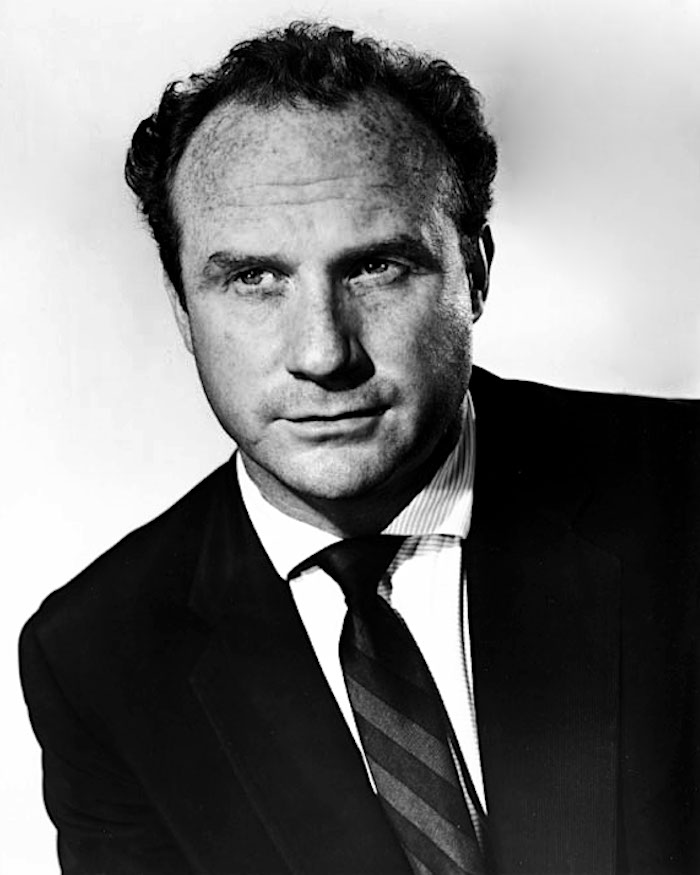 Jack Wardenas Dr. Ludwig Bessner
Sources & editorial notes
Reference databases
Sources for the entries on this page
- IMDb IMDb kaydı
Information from external sources is independently selected, consolidated and edited by Arka Evren. Sources are listed for verification and further reading. Encyclopedia text is used under its licence (CC BY-SA). How we work