
✎ Editor’s notes on 16 facts
FILM · 1964 · UK
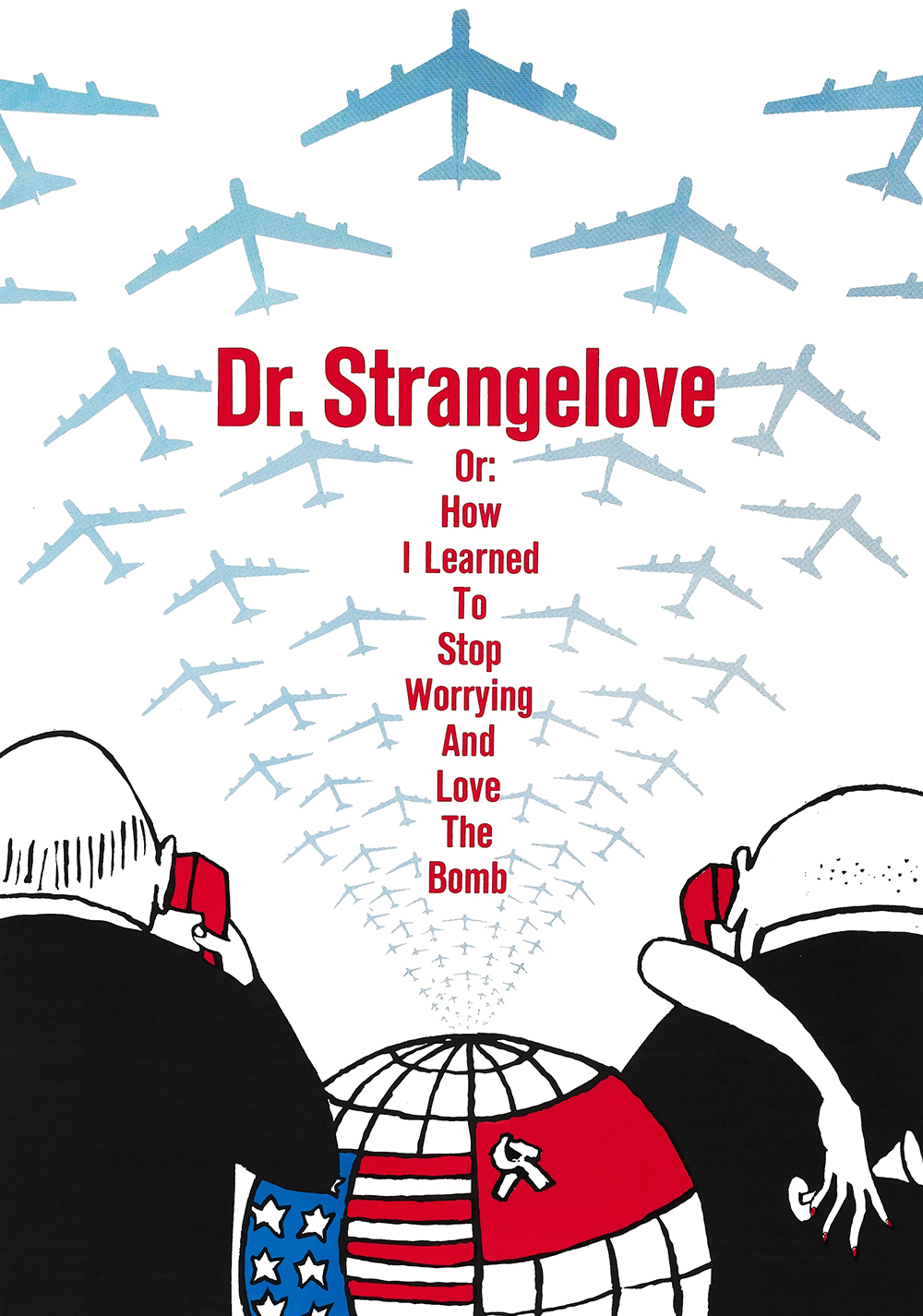
Dr. Strangelove or: How I Learned to Stop Worrying and Love the Bomb
- Directed by
- Stanley Kubrick
- Runtime
- 95 min
- Studio
- Hawk Films, Columbia Pictures
16 archived facts 3 topics 1 source Last reviewed Oct 2026
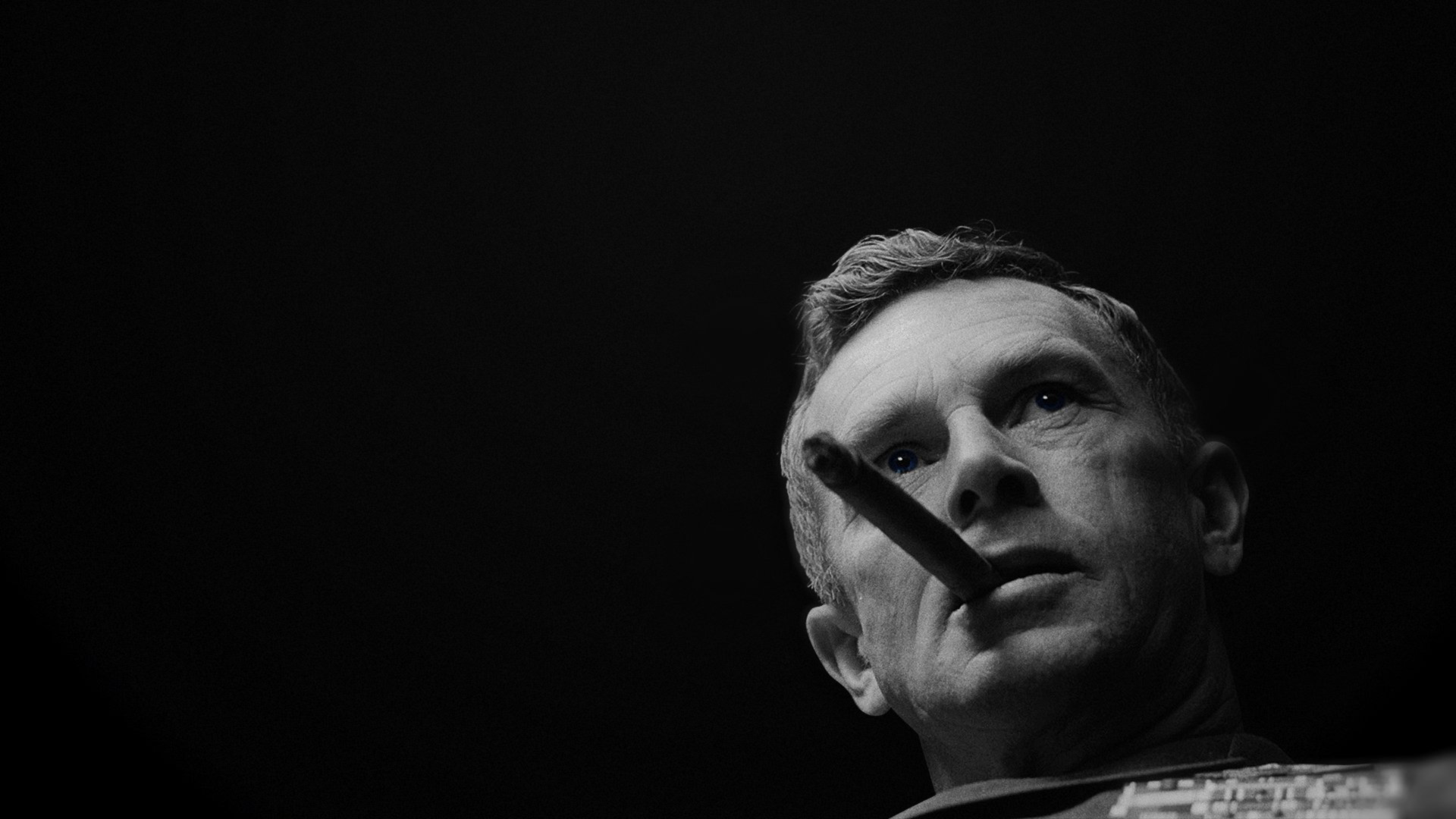
After the insane General Jack D. Ripper initiates a nuclear strike on the Soviet Union, a war room full of politicians, generals and a Russian diplomat all frantically try to stop it.
16 Interesting Facts About Dr. Strangelove or: How I Learned to Stop Worrying and Love the Bomb
Interesting Facts (7)
- #001
The KC-135A seen refueling the B-52 in the opening credits was later destroyed when it crashed on approach to Hanscom AFB, on August 8, 1962, nearly 18 months before the film came out.
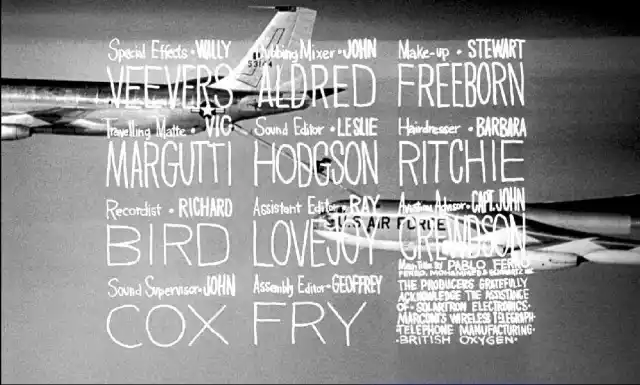
Dr. Strangelove or: How I Learned to Stop Worrying and Love the Bomb (1964): Plane and text in the opening creditsImage: IMDb - #002
About 28 minutes in, Gen. Turgidson explains that roughly 17,000 three-letter combinations are possible for the prefix needed to get a message through. The math holds up: allowing for two- and three-letter repeats such as AAB and AAA, there are 17,576. He adds that sending them all would take about 2.5 days, which works out to ten seconds per attempt.
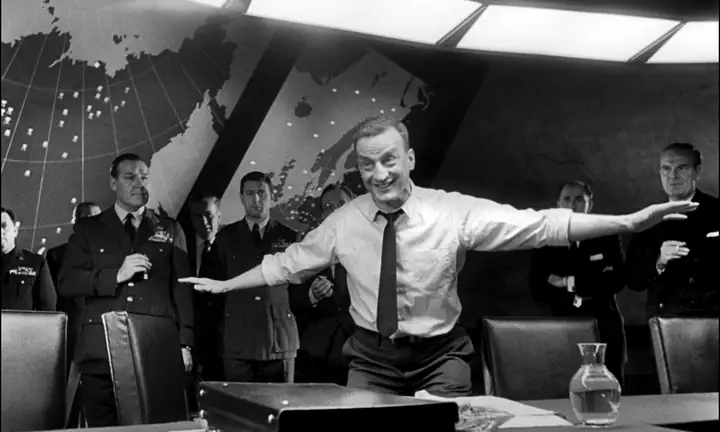
Dr. Strangelove or: How I Learned to Stop Worrying and Love the Bomb (1964): Strangelove and GenImage: Wikimedia Commons · Directed by Stanley Kubrick, distributed by Columbia Pictures, Public domain - #003
- #004
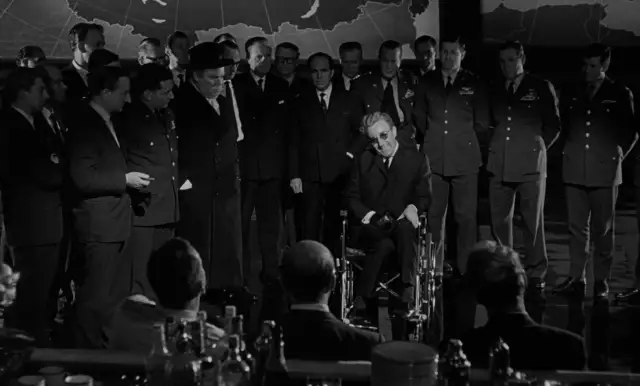
Soon after becoming President, Ronald Reagan reportedly asked where the “war room” was. When told the White House had no such room, he said he had assumed it did because he had seen one in “Dr. Strangelove.”
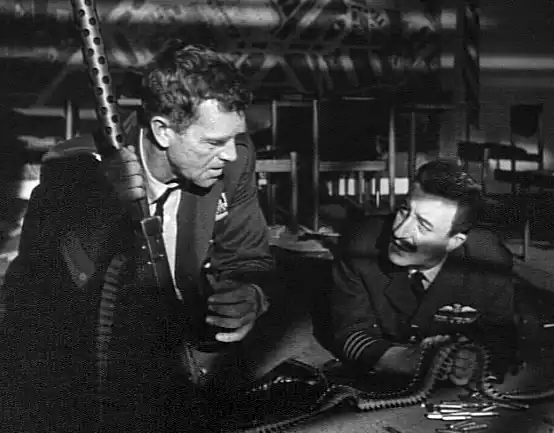
Dr. Strangelove or: How I Learned to Stop Worrying and Love the Bomb (1964): Strangelove, GroupImage: Wikimedia Commons · Directed by Stanley Kubrick, distributed by Columbia Pictures, Public domain - #005
Elvis Presley loved this film enough to see it six times in theaters within a single year. On his famous visit to President Richard Nixon at the White House, he was shown the situation room, which looked a lot like the movie's War Room, and he turned to his friend Jerry Schilling to quote President Merkin Muffley: “You can't fight in here! This is the War Room!”
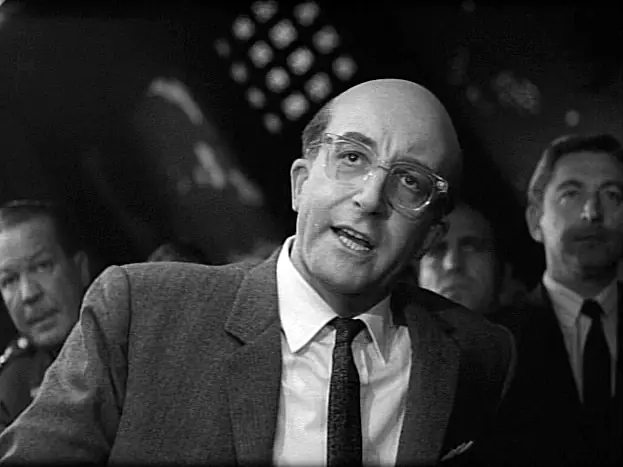
Dr. Strangelove or: How I Learned to Stop Worrying and Love the Bomb (1964): President Merkin MImage: Wikimedia Commons · Directed by Stanley Kubrick, distributed by Columbia Pictures, Public domain - #006
The Soviet-era “Doomsday Machine” is real. Russia's system, inherited from the Soviet Union and in place since a date never disclosed, is called “Perimeter,” or more colloquially “Dead Hand.” Despite the President's line to the Soviet premier in the film (Peter Sellers: “But the... whole point of the doomsday machine... is lost... if you keep it a secret! Why didn't you tell the world?”), its existence was only confirmed in February 2012, by Lieutenant General Sergey Karakayev, commander of the strategic missile forces. In essence, if all contact with the top military command is lost, launch authority passes to lower-ranking personnel, so wiping out command and control would itself authorize a launch WITHOUT any order from above. The USA is suspected of having the same arrangement, though this has never been publicly confirmed; under such a system the President would not even need to be alive to authorize the “football” launch codes for an all-out retaliatory strike.
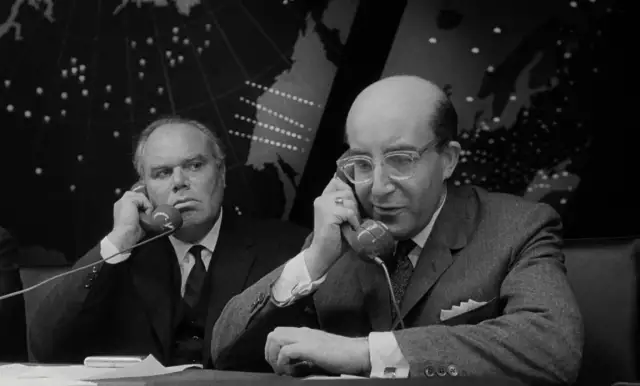
Dr. Strangelove or: How I Learned to Stop Worrying and Love the Bomb (1964): Sellers and Bull on the phoneImage: IMDb - #007
We'll Meet Again was among the music and programming stored during the Cold War at 20 underground radio stations of the BBC's Wartime Broadcasting Service (WTBS), which were meant to keep the public informed and in good spirits for 100 days after a nuclear attack.
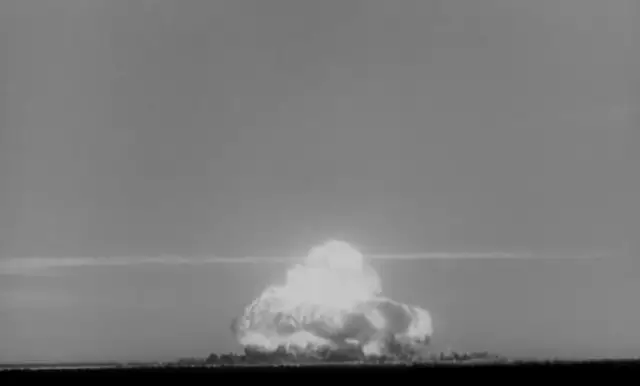
Dr. Strangelove or: How I Learned to Stop Worrying and Love the Bomb (1964): Nuclear explosion mushroomImage: IMDb

Production Story (8)
- #008
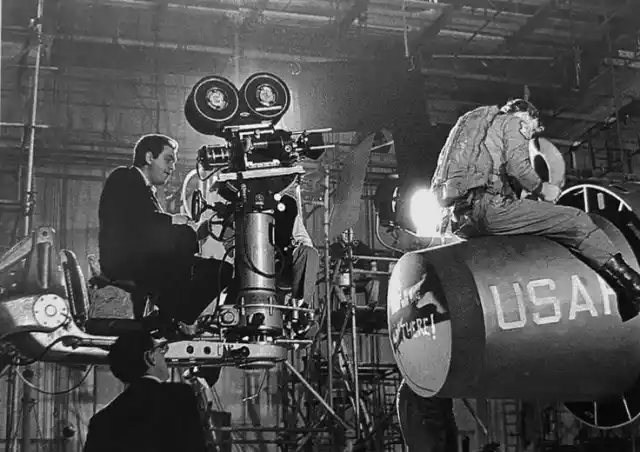
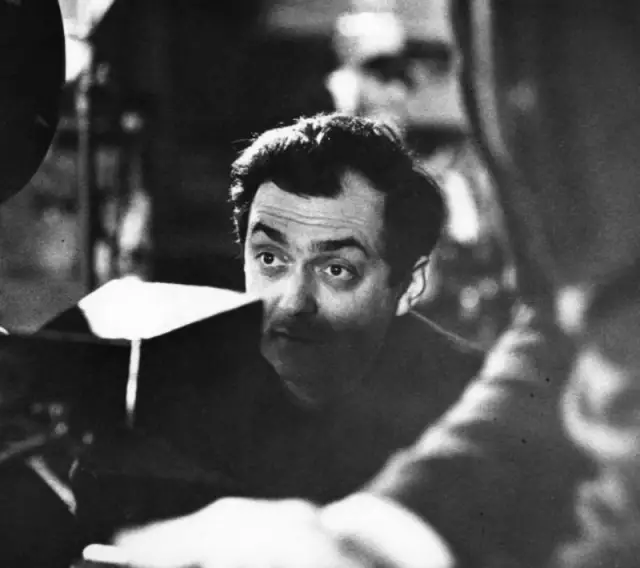
The film was shot in the spring and summer of 1963, and its first test screening was set for November 22, 1963, the day John F. Kennedy was assassinated. Sensing that audiences would have no appetite for a black comedy so soon after such a shock, the producers pushed the premiere back to late January 1964.
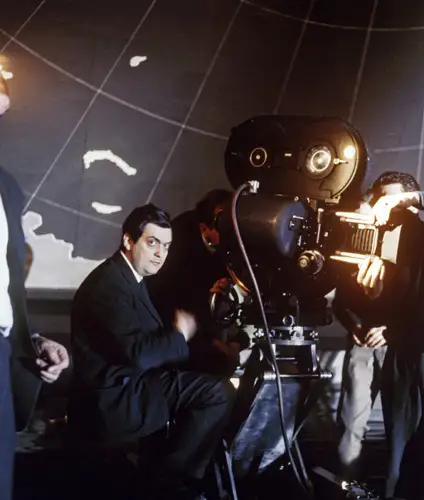
Dr. Strangelove or: How I Learned to Stop Worrying and Love the Bomb (1964): Kubrick on set at the cameraImage: IMDb - #009
- #010
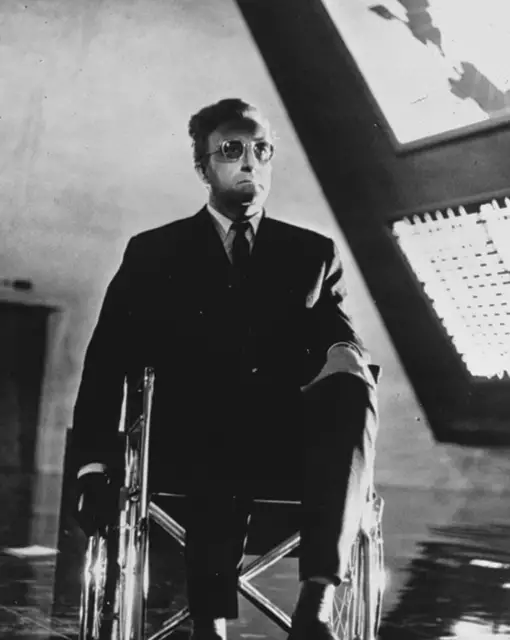
In 1995, Stanley Kubrick brought in Terry Southern to write a sequel called “Son of Strangelove,” with Terry Gilliam in mind as director. The script was never finished, but after Southern died in October 1995, index cards sketching out the story were found among his papers: most of it took place in underground bunkers, where Dr. Strangelove had holed up with a group of women. Gilliam said in 2013, “I was told after Kubrick died - by someone who had been dealing with him - that he had been interested in trying to do another 'Strangelove' with me directing. I never knew about that until after he died but I would have loved to.” It would have been the only sequel to one of his own films that Kubrick ever had a hand in.
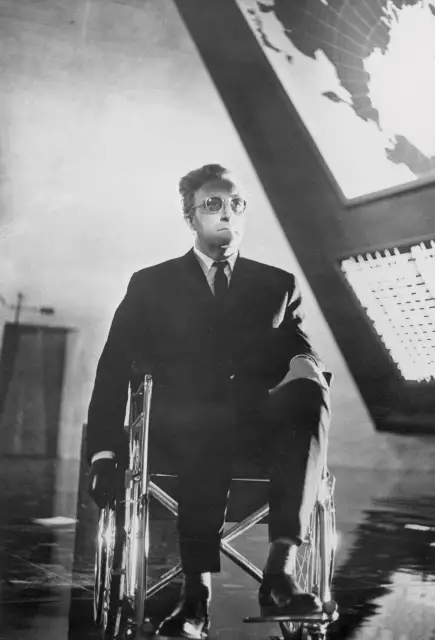
Dr. Strangelove or: How I Learned to Stop Worrying and Love the Bomb (1964): Dr. Strangelove in a wheelchairImage: IMDb - #011
Title designer Pablo Ferro has said the opening shots grew out of a conversation with Stanley Kubrick in which Ferro remarked that every machine men invent has a sexual side. In the context of this film, that made Kubrick think of B-52s refueling in mid-air. While they were discussing how to stage a shoot to get that image, Ferro said he was sure the Air Force, proud of the technology, had already filmed the process from every possible angle. Before long he came back with stock footage that delighted them both: planes suggestively “bobbing,” “bumping” up and down and swaying as they linked up, passed fuel and pulled apart. The instrumental music laid over it sharpens the effect, and knowing the backstory makes the opening titles a very different viewing experience; the music even seems to “punctuate” the refueling rod's final withdrawal from the B-52.
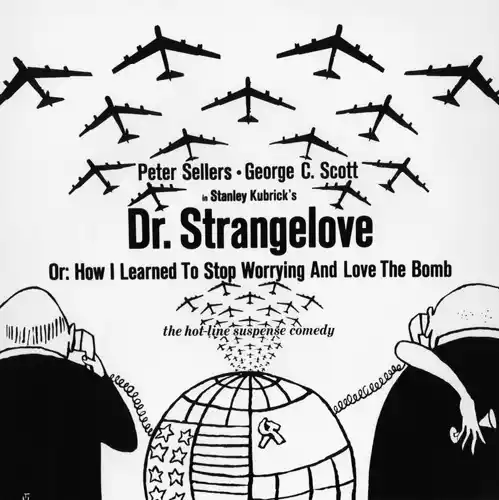
Dr. Strangelove or: How I Learned to Stop Worrying and Love the Bomb (1964): Dr. Strangelove opening creditsImage: IMDb - #012
- #013
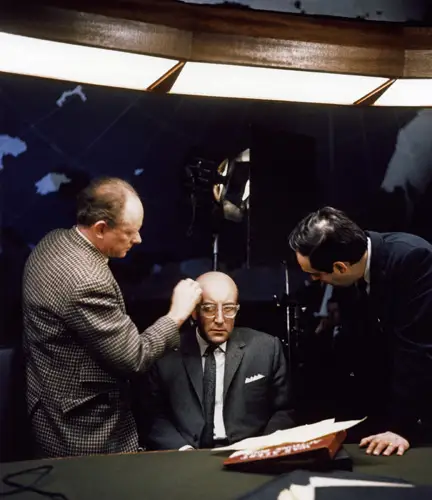
Stanley Kubrick had planned to shoot in the United States, but the production moved to England's Shepperton Studio because Peter Sellers, in the middle of a divorce, had to stay in England.
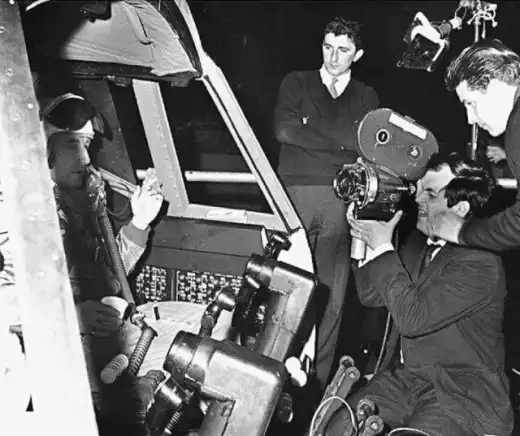
Dr. Strangelove or: How I Learned to Stop Worrying and Love the Bomb (1964): Behind the scenes on the Dr. Strangelove setImage: IMDb - #014
- #015
Behind the Scenes (1)
Sources & editorial notes
Reference databases
- Wikipedia
- IMDb
Information from external sources is independently selected, consolidated and edited by Arka Evren. Sources are listed for verification and further reading. Encyclopedia text is used under its licence (CC BY-SA). How we work