
✎ Editor’s notes on 16 facts
FILM · 1964 · UK
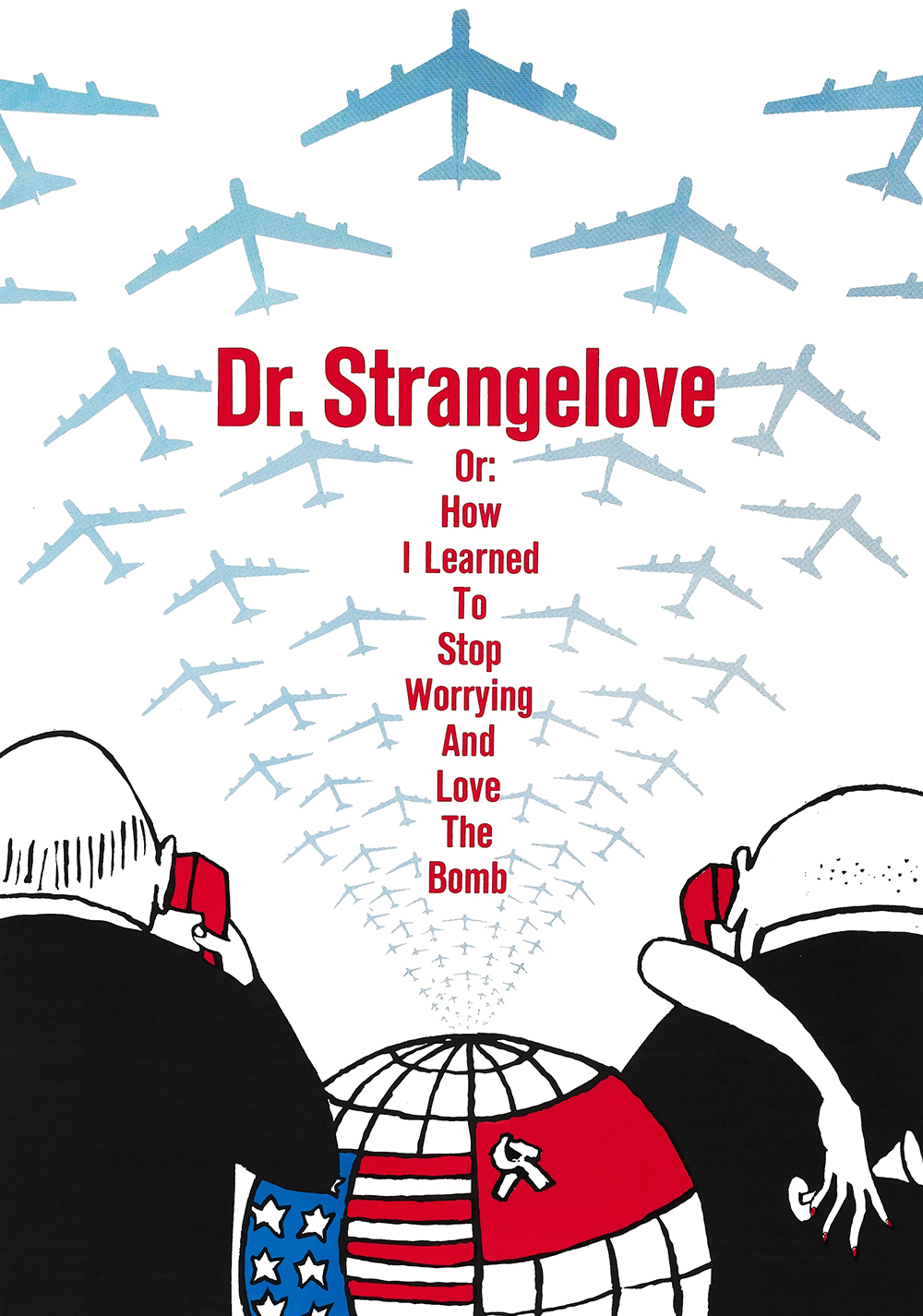
Dr. Strangelove or: How I Learned to Stop Worrying and Love the Bomb
- Directed by
- Stanley Kubrick
- Runtime
- 95 min
- Studio
- Hawk Films, Columbia Pictures
16 archived facts 3 topics 1 source Last reviewed Oct 2026
After the insane General Jack D. Ripper initiates a nuclear strike on the Soviet Union, a war room full of politicians, generals and a Russian diplomat all frantically try to stop it.
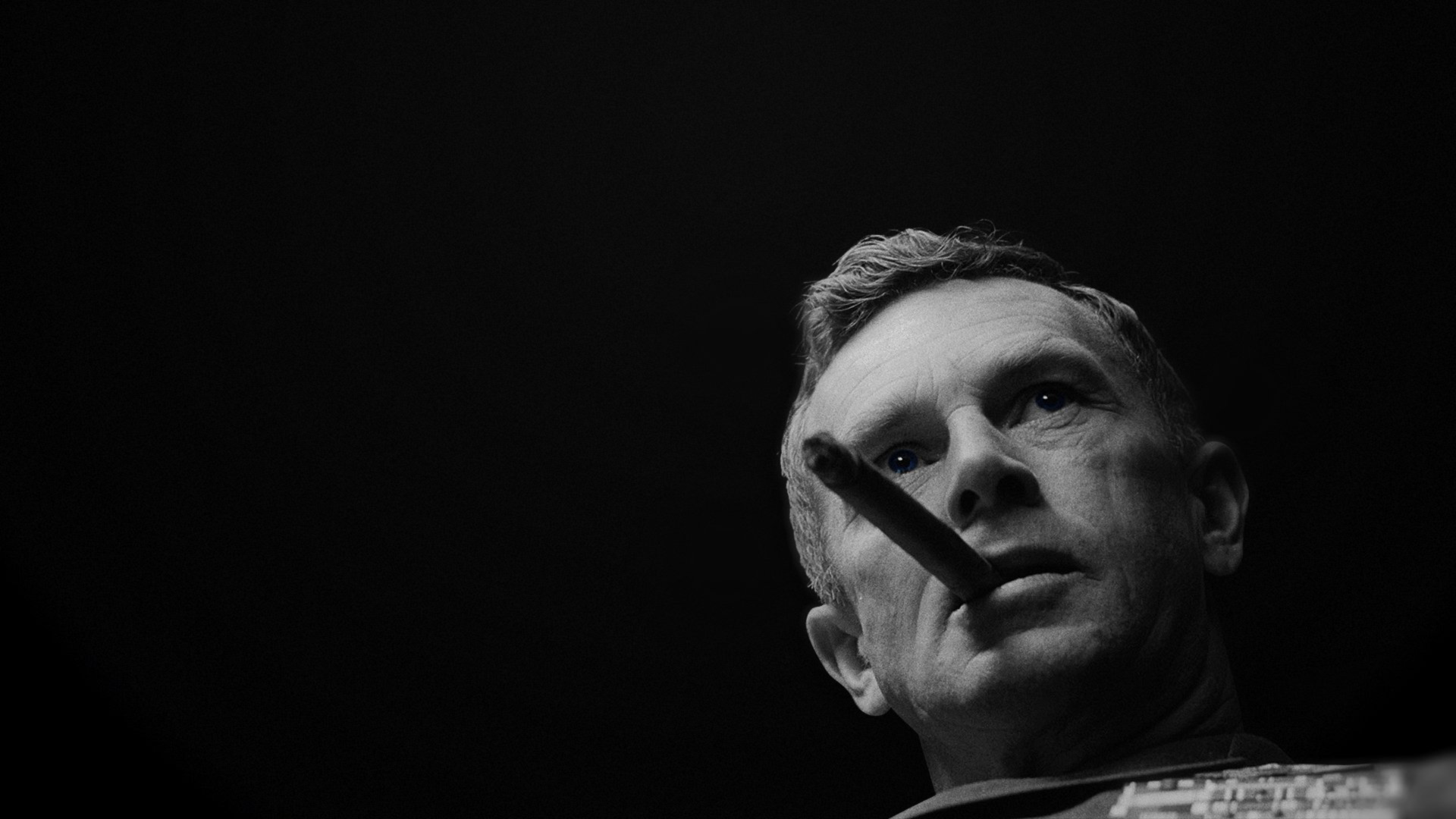
16 Interesting Facts About Dr. Strangelove or: How I Learned to Stop Worrying and Love the Bomb
Interesting Facts (7)
- #001
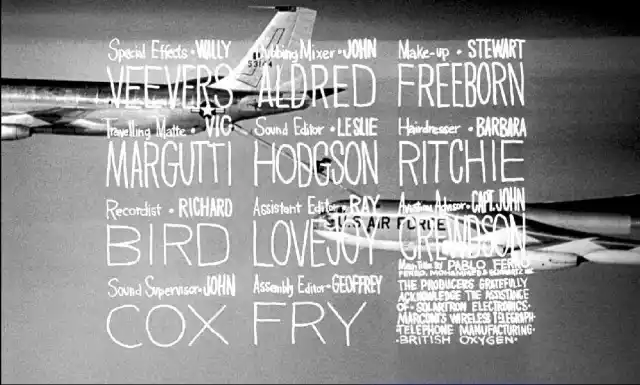
The KC-135A refueling the B-52 in the opening credits actually crashed on approach to Hanscom AFB and was destroyed. This crash happened on August 8, 1962, almost 18 months before this film's release date.
Dr. Strangelove or: How I Learned to Stop Worrying and Love the Bomb (1964): Plane and text in the opening creditsImage: IMDb - #002
At around the 28-minute mark, Gen. Turgidson explains that they have determined there are around 17,000 three-letter code combinations possible for the prefix they would need to send to get a message through. That's correct; there are 17,576 assuming two- and three-letter repeats are allowed (AAB and AAA, respectively, for example). He then says it will take about 2.5 days to transmit them all. That works out to an attempt lasting ten seconds each.
Dr. Strangelove or: How I Learned to Stop Worrying and Love the Bomb (1964): Strangelove and GenImage: Wikimedia Commons · Directed by Stanley Kubrick, distributed by Columbia Pictures, Public domain - #003
- #004
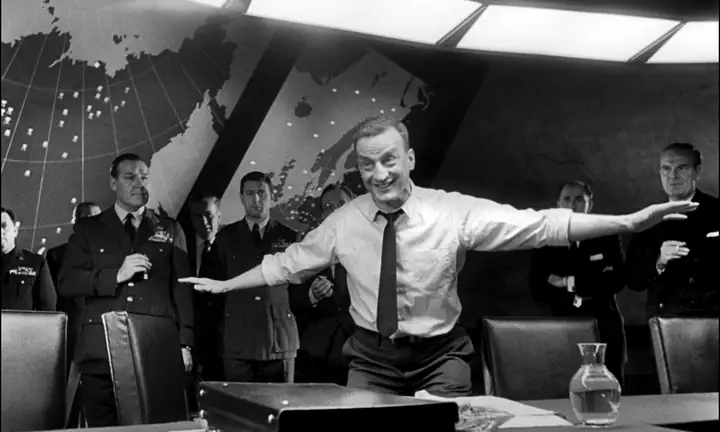
When Ronald Reagan assumed the office of President, one of the first things he asked was the location of the "war room." He was told there was no such room at the White House. Reagan then said he thought there was one because he had seen a war room in "Dr. Strangelove."
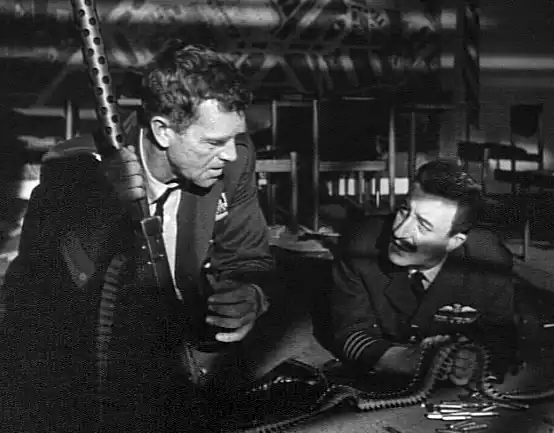
Dr. Strangelove or: How I Learned to Stop Worrying and Love the Bomb (1964): Strangelove, GroupImage: Wikimedia Commons · Directed by Stanley Kubrick, distributed by Columbia Pictures, Public domain - #005
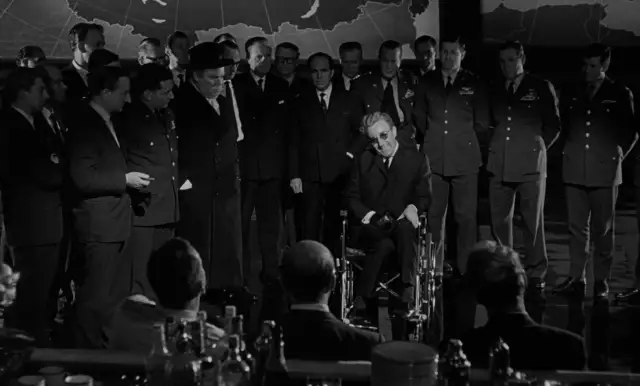
Elvis Presley was a fan of this film, seeing it six times in theaters in the span of a year. During his famous visit to President Richard Nixon in the White House, Presley was shown the situation room which resembled the fictitious War Room. He turned to his friend Jerry Schilling and quoted President Merkin Muffley's famous line, "You can't fight in here! This is the War Room!"
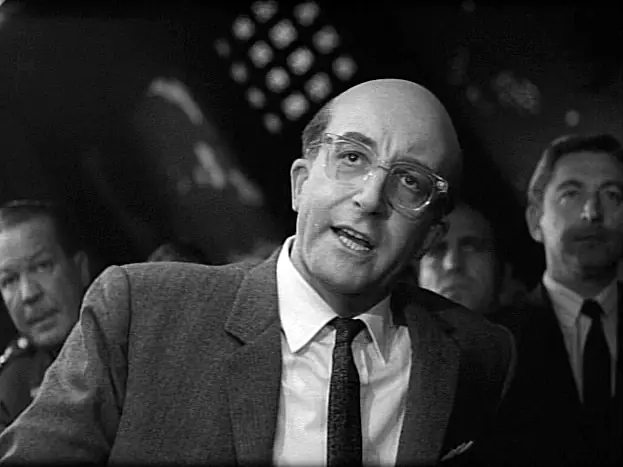
Dr. Strangelove or: How I Learned to Stop Worrying and Love the Bomb (1964): President Merkin MImage: Wikimedia Commons · Directed by Stanley Kubrick, distributed by Columbia Pictures, Public domain - #006
The Russian (prior Soviet Union) 'Doomsday Machine' does exist (and had existed from Soviet era, but date undisclosed): & is called 'Perimeter', or colloquially 'Dead Hand': despite the line in the film of the President - (Peter Sellers to the Soviet premier: " But the .. whole point of the doomsday machine .. is lost .. if you keep it a secret; why didn't you tell the world?") - it was only finally revealed in February 2012 (by Lieutenant General Sergey Karakayev, strategic missiles commander). In basic practice, it involves the delegation to lower command personnel after loss any contact with top military, so to have assumed 'command and control' eliminated = authorisation to launch WITHOUT any top command directive: (i.e. never eliminate top military control and command, or else!) N.B. it is suspected, still never publicly confirmed, USA has exactly same strategy i.e. note: meaning President does NOT have to exist to authorise the 'football' nuclear launch codes, for all out retaliatory strike to occur.
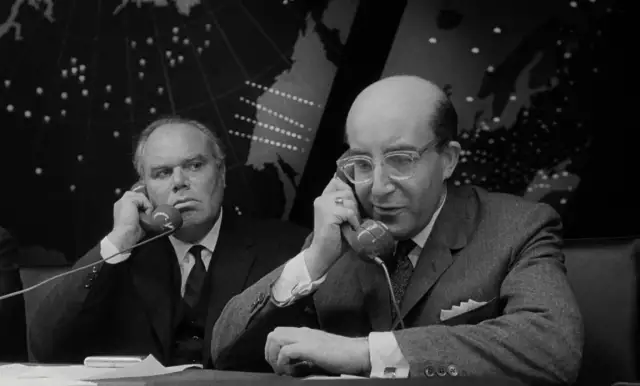
Dr. Strangelove or: How I Learned to Stop Worrying and Love the Bomb (1964): Sellers and Bull on the phoneImage: IMDb - #007
During the Cold War, a recording of We'll Meet Again was included in the package of music and programs held in 20 underground radio stations of the BBC's Wartime Broadcasting Service (WTBS), designed to provide public information and morale-boosting broadcasts for 100 days after a nuclear attack.
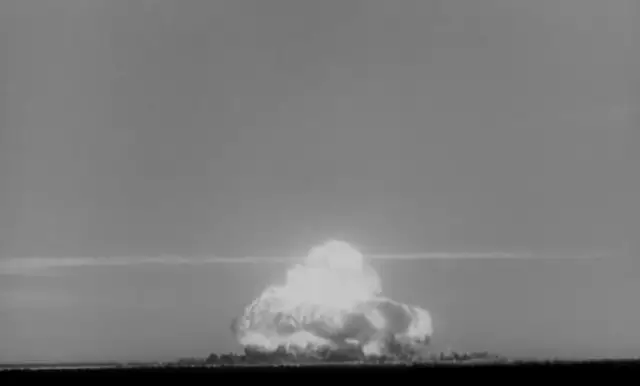
Dr. Strangelove or: How I Learned to Stop Worrying and Love the Bomb (1964): Nuclear explosion mushroomImage: IMDb

Production Story (8)
- #008
Filmed during the spring and summer of 1963, the first test screening was scheduled for November 22, 1963, the day that John F. Kennedy was assassinated. The producers felt that the public would not be in a mood for a black comedy so soon after such a traumatic event, so the premiere was moved back to late January 1964.
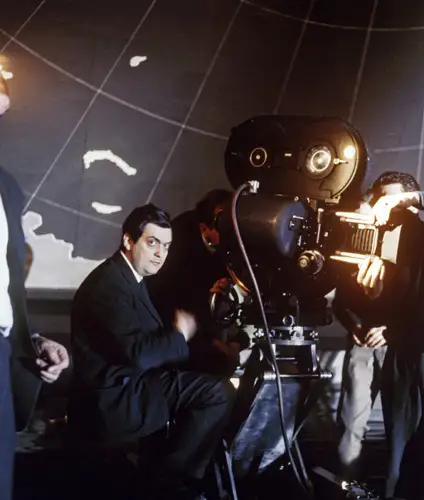
Dr. Strangelove or: How I Learned to Stop Worrying and Love the Bomb (1964): Kubrick on set at the cameraImage: IMDb - #009
Stanley Kubrick chose Sir Ken Adam as production designer after having been impressed with his work on Dr. No (1962).
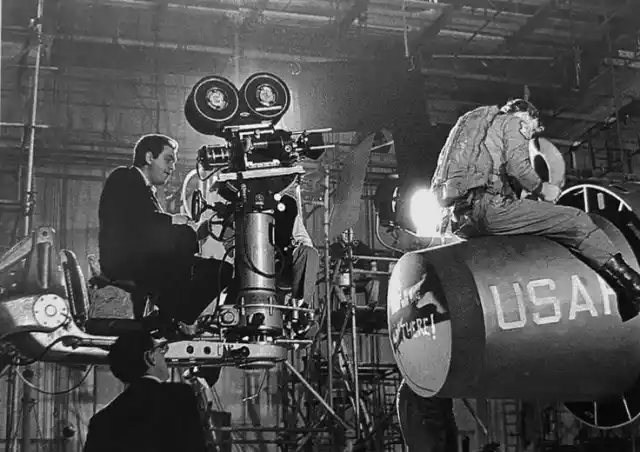
Dr. Strangelove or: How I Learned to Stop Worrying and Love the Bomb (1964): Kubrick behind the camera on setImage: IMDb - #010
In 1995, Stanley Kubrick enlisted Terry Southern to script a sequel titled "Son of Strangelove". Kubrick had Terry Gilliam in mind to direct. The script was never completed, but index cards laying out the story's basic structure were found among Southern's papers after his October 1995 death; it was set largely in underground bunkers, where Dr. Strangelove had taken refuge with a group of women. In 2013, Gilliam commented, "I was told after Kubrick died - by someone who had been dealing with him - that he had been interested in trying to do another 'Strangelove' with me directing. I never knew about that until after he died but I would have loved to." It would've been the only sequel to a Kubrick film that Kubrick himself was involved with.
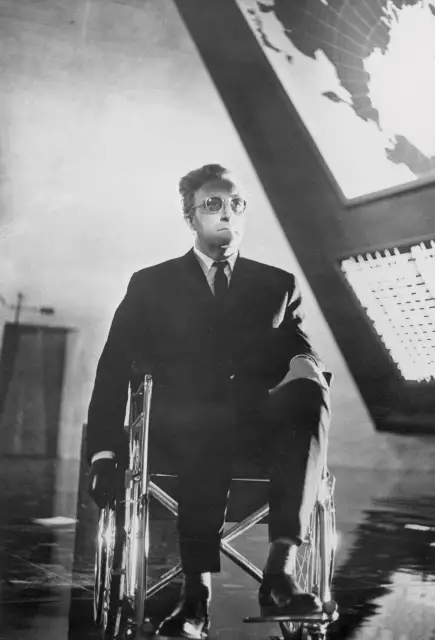
Dr. Strangelove or: How I Learned to Stop Worrying and Love the Bomb (1964): Dr. Strangelove in a wheelchairImage: IMDb - #011
According to Pablo Ferro, title designer, the opening title shots were born of remarks between himself and Stanley Kubrick wherein Ferro observed that all machines invented by men have a sexual aspect. In the context of the film, it made Kubrick think of B-52s refueling in mid-air. Originally talking about arranging for a shoot to capture that image, Ferro said he was sure the Air Force had been so proud of the technology that they had filmed the process from every conceivable angle. It didn't take long for him to bring back stock footage in which both men were delighted to see the aircraft involved in the process suggestively "bobbing," "bumping" up and down and swaying in the air as they connect, transfer fuel and then disconnect. The addition of the music instrumental on top heightened the intended effect, and knowing all this makes watching the opening titles quite a different experience. Indeed, the music actually 'punctuates' the refueling rod's eventual withdrawal from the B-52 scene.
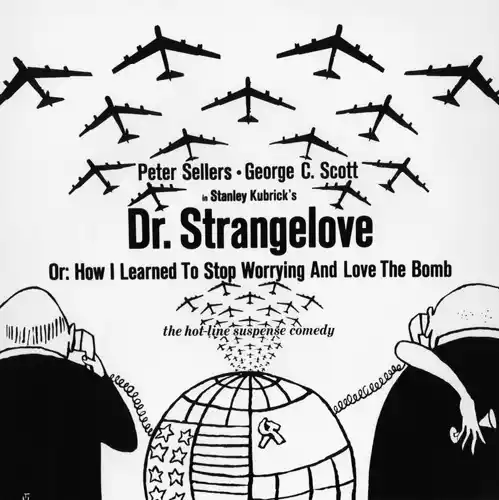
Dr. Strangelove or: How I Learned to Stop Worrying and Love the Bomb (1964): Dr. Strangelove opening creditsImage: IMDb - #012
- #013
Stanley Kubrick intended to film in the United States. Filming was moved to England's Shepperton Studio because Peter Sellers had to stay in England due to his pending divorce.
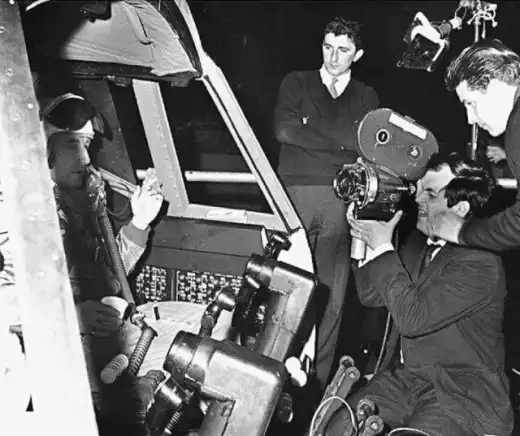
Dr. Strangelove or: How I Learned to Stop Worrying and Love the Bomb (1964): Behind the scenes on the Dr. Strangelove setImage: IMDb - #014
- #015
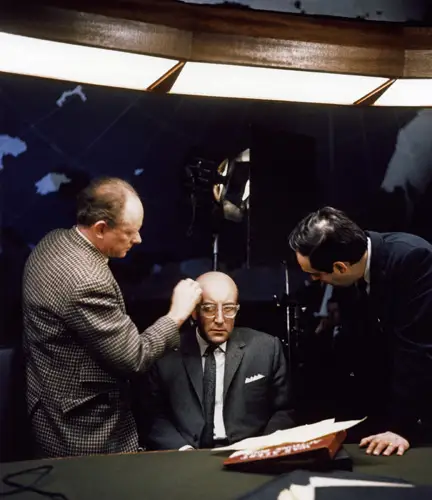
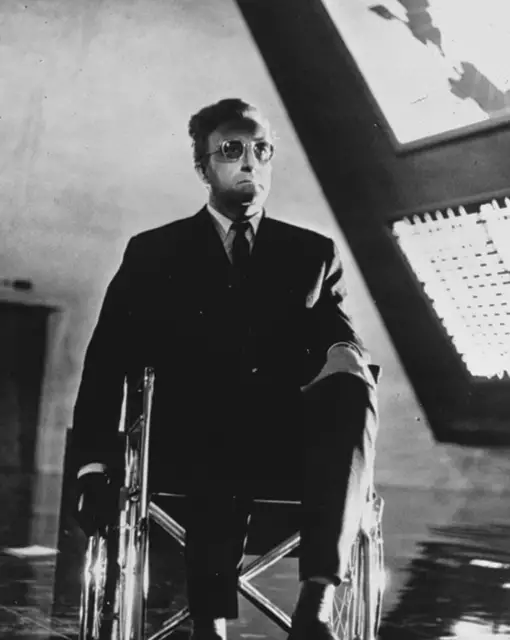
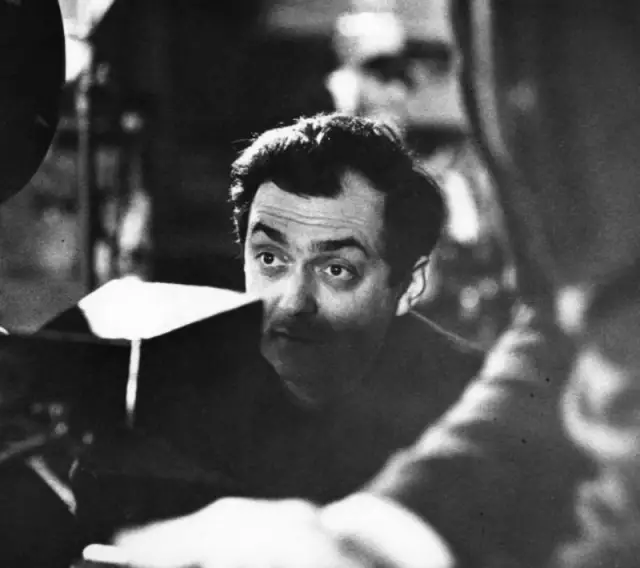
Behind the Scenes (1)
Related pages
- Metropolis — Dr. Strangelove or: How I Learned to Stop Worrying and Love the Bomb comes up in the facts on that page
- Under Siege — Dr. Strangelove or: How I Learned to Stop Worrying and Love the Bomb comes up in the facts on that page
- Barbie — Dr. Strangelove or: How I Learned to Stop Worrying and Love the Bomb comes up in the facts on that page
Sources & editorial notes
Reference databases
- Wikipedia
- IMDb
Information from external sources is independently selected, consolidated and edited by Arka Evren. Sources are listed for verification and further reading. Encyclopedia text is used under its licence (CC BY-SA). How we work