FILM · 1962 · USA
How the West Was Won
72 archived facts 6 topics 1 source Last reviewed Oct 2026
All facts (72)
- #001
Stuntman Bob Morgan was seriously injured and nearly died while performing a stunt in this film. Near the end of the movie, a gunfight breaks out on a moving train between the sheriff and a gang of train robbers. Morgan was one of the stuntmen playing a robber and was crouched beside a pile of logs on a flatcar. The chains holding the logs together snapped, and Morgan was crushed by the falling logs. He was so badly injured that it took him five years to reach the point where he could move on his own and walk unaided.
- #002
The Cinerama Productions Corp. process was so extensive that it was genuinely impossible to set up close-ups. The closest it could manage was to place a key actor in the center of the frame and try to move in as near as possible. Since the camera — a massive apparatus with three lenses under a black housing — would literally be in their faces, exactly 18 inches away, this was very frightening for many actors.
- #003
James Stewart's character in the film is supposed to be only 28 years old, but Stewart was actually 53 during shooting.
- #004
Spencer Tracy, due to health problems, was only able to narrate the film rather than appear in it.
- #005
The film features more than 12,000 extras, including members of several American Indian tribes.
- #006
Gary Cooper was offered the role of Linus Rawlings but died before shooting began. James Stewart then took the role, though he later felt it was the wrong choice.
- #007
Because of the detail that would be shown in the Cinerama Productions Corp. process, the costumes had to be sewn by hand rather than on sewing machines, as they would have been in the periods depicted in the film.
- #008
An intermission was required to give projectionists enough time to realign the three projectors and synchronize the sound.
- #009
Shooting the scene in which the Indians attack the wagon train took six weeks.
- #010
During shooting in June 1961, Karl Malden had to be hospitalized for an emergency appendectomy.
- #011
John Ford's habit was always to sit beside the camera during a take so he could watch the action closely. Unfortunately, because of the Cinerama Productions Corp. camera's three lenses, he kept appearing in the shots until cinematographer Joseph LaShelle came up with the idea of building a rig that would let Ford sit on top of the camera.
- #012
Some stock footage was used from other (non-Cinerama) epics. The Mexican army crossing the Alamo comes from The Alamo (1960), and a Civil War battle is taken from Raintree County (1957). The final scenes of the modern United States were taken from This Is Cinerama (1952).
- #013
It was the second non-documentary Cinerama Productions Corp. film and also one of the last films to use the old three-camera technique, which resulted in a somewhat distracting double dividing line that is very visible in the non-Cinerama print and in all television and home video versions.
- #014
Because the two dividing lines separating the three separate projections could not be arranged to match perfectly, the directors skillfully used camouflage techniques to hide the lines. Some of the objects used for this purpose were trees, lampposts, window frames, porch railings, building corners, doorways and wooden crates positioned at those points.
- #015
Of the five segments, Henry Hathaway directed "The Rivers," "The Plains" and "The Outlaws," John Ford directed "The Civil War," and George Marshall directed "The Railroad." Some work not credited in the titles was done by Richard Thorpe.
- #016
Raymond Massey built a career playing Abraham Lincoln on stage, on television (The Day Lincoln Was Shot (1956)) and in film (Abe Lincoln in Illinois (1940)). This film marks the last time he played the President.
- #017
Most of the actors were very frightened of the three-lens Cinerama Productions Corp. camera and felt they had to raise their performances to a level closer to stage acting, as opposed to the more subtle style normally required in front of a camera. That is why many of the actors in the film look quite over the top.
- #018
Because the Cinerama camera's three lenses sat at angles to one another on the camera, it was very difficult for actors to shoot a scene as they would in front of a single-lens camera. When the images were projected onto the three panels of the Cinerama screen, it looked as though they were gazing slightly above or slightly below the screen rather than directly at the other actors. This is very noticeable in several scenes of Cinerama Productions Corp.'s earlier film The Wonderful World of the Brothers Grimm (1962). However, by the time this film went into production the problem had been solved to some extent. To compensate for the lens angles, actors had to look a third of the way toward the camera and pretend they were looking at the other actors. That way, when their images were projected onto the Cinerama screen, they would appear to be looking at one another. It was a very demanding process for the actors, and it was one of the reasons three-panel Cinerama was abandoned for narrative films after this film's release. This is clearly visible in the final DVD presentation, in which the three images are digitally combined. The actors are now shown moving together without making eye contact.
- #019
Debbie Reynolds and George Peppard are the only actors to appear in three of the film's five segments. According to Ms. Reynolds, in an interview for the documentary Cinerama Adventure (2002), the character Lilith was originally supposed to drown in the river. However, it was decided that Lilith would best link the Prescott generations, and she remained in the story, becoming an old woman at the end of the film.
- #020
It was widely felt that James Stewart was miscast in this film. So was Debbie Reynolds, as she was generally thought to look too old for the early scenes.
- #021
James Stewart offered to play his own corpse in the Civil War story, but John Ford rejected this and used a double who bore no resemblance to Stewart. Later, when George Peppard imitated Stewart's voice during the grizzly bear story, Ford scolded him, but Peppard countered that he wanted the audience to remember that James Stewart was playing his father. It stayed in.
- #022
Hope Lange was cast as the woman who falls in love with George Peppard's character, but her scenes were cut from the final release of the film. She played young Julie Stuart, the daughter of Henry Fonda's character Jethro Stuart. After Lange's scenes were removed from the film, Julie was later played by Carolyn Jones.
- #023
John Wayne had planned to play a character in the segment directed by Henry Hathaway, but John Ford insisted that he appear in the Civil War sequence.
- #024
The train station in "Gold City" in the film was shot in Perkinsville, AZ, and it still stands despite being in need of maintenance. It is now the midpoint stop of the Verde Canyon Scenic Railroad. The train station, the town sign and several other small buildings are still there.
- #025
Metro-Goldwyn-Mayer (MGM) commissioned Louis L'Amour to novelize the screenplay. The book made the bestseller list.
- #026
It is one of the few American films to have had its world premiere in London, England.
- #027
During the Indian attack shot in Lone Pine, California, a Conestoga wagon rolled down a hill. To create the illusion that the audience was inside the rolling wagon, a track was built down the slope of a small hill and the upper part of a Conestoga wagon, without its wheels, was mounted on a flat bed that was guided down the hill along with a mechanism that would overturn the wagon. Cinerama Productions Corp.'s camera was also attached to one end of the flat bed, so that it could shoot directly from inside the rotating wagon as the stuntmen, including Loren Janes, rolled inside the wagon along with boxes, barrels, blankets and other cargo. Setting up the scene took more than two days and it was completed in several takes. In the final cut, this scene lasts no more than five seconds.
- #028
It was Eli Wallach's role in this film, not The Magnificent Seven (1960), that led Sergio Leone to cast him in The Good, the Bad and the Ugly (1966). Lee Van Cleef also appears in the film.
- #029
As with all family and children's films at the time, a comic book version was released alongside the film's release. In the comic book, when Sheriff Ramsay (Lee J. Cobb) tries to stop Zeb Rawlings (George Peppard) from going after the outlaw Gant (Eli Wallach), Rawlings hits Ramsay over the head with his rifle and knocks him unconscious, which explains the bandage on Ramsay's forehead in the next scene. The film offers no such explanation.
- #030
Stars who were approached to appear in the film but were not accepted included Marlon Brando, James Cagney, Bing Crosby, Doris Day, Kirk Douglas, Cary Grant, Audrey Hepburn, Burt Lancaster, Shirley MacLaine, Lee Marvin, Kim Novak and Frank Sinatra.
- #031
It was the second highest-grossing film of 1963 after Cleopatra (1963), but unlike Cleopatra, this film was highly profitable.
- #032
The river rafting scene was shot over a period of seven days.
- #033
Henry Fonda's role was initially much larger. It was gradually reduced.
- #034
All employees of both Metro-Goldwyn-Mayer (MGM) and Cinerama Productions Corp. were instructed by their employers to vote for this film, which received eight Oscar nominations, including one for Best Picture. It won three awards (Best Screenplay, Best Sound and Best Film Editing) and was the most successful of all films produced in Cinerama, grossing about $50 million worldwide against what was then a huge budget of $15 million.
- #035
Carroll Baker plays George Peppard's mother in the film, but in real life she was three years older than Peppard. Two years later, Peppard and Baker played stepmother and stepson (and lovers) in The Carpetbaggers (1964).
- #036
Debbie Reynolds and Carroll Baker became very good friends during the making of the film.
- #037
It is one of only two films — the other being The Wonderful World of the Brothers Grimm (1962) — shot in the true three-strip Cinerama Productions Corp. process; both were the only Cinerama films shown in regular theaters after their initial run. Other Cinerama films such as This Is Cinerama (1952) and Cinerama Holiday (1955) were more documentary in nature; "West" and "Brothers Grimm" told fictional stories. Also, none of the other Cinerama films were shown in regular movie theaters, because these travelogues and documentaries were produced only to show the process rather than to tell a story. Showing them in "regular" format would have been pointless. Other feature films such as It's a Mad, Mad, Mad, Mad World (1963) were promoted as Cinerama, but were actually shot with a single-camera widescreen process such as Ultra Panavision 70 and projected onto a curved Cinerama screen.
- #038
All four of the film's cinematographers were Oscar winners.
- #039
Most of the production was shot in the original Cinerama process using three-strip 35 mm film. However, some sequences — especially all shots involving rear-projected backgrounds — were filmed using Panavision's less cumbersome 70 mm anamorphic Ultra-Panavision process. For Cinerama Productions Corp.'s release prints, this footage had to be optically split into three 35 mm strips for projection in Cinerama venues.
- #040
John Ford complained that the width of the Cinerama Productions Corp. cameras meant he had to dress his sets far more extensively than usual.
- #041
Spencer Tracy provides the narration; Bing Crosby had originally been planned to do it.
- #042
The San Francisco mansion where Debbie Reynolds lives as Mrs. Van Cleve is the same mansion where she later lives as Molly Brown in The Unsinkable Molly Brown (1964). Part of the interior, in particular the grand staircase, was reused.
- #043
The riverboat is the same boat used in Raintree County (1957).
- #044
Five members of this film's impressive all-star cast (John Wayne, Gregory Peck, James Stewart, Debbie Reynolds and Henry Fonda) were included in Quigley Publications' Top 25 Box Office Draw list for 1963, the year the film premiered in the US.
- #045
It ranked 25th among 25 films on the American Film Institute's 2005 list AFI's 100 Years of Film Scores.
- #046
The sides of John Wayne's wig were longer, suggesting his character had not had time to get his hair cut.
- #047
The opening panoramic shots across the Rockies are actually a quotation from This Is Cinerama (1952). The same applies to the closing aerial sweep.
- #048
Richard Widmark and Henry Fonda appeared together in five films; the others are Warlock (1959), Madigan (1968), Rollercoaster (1977) and The Swarm (1978). Both men were also married to the same woman, the socialite Susan Blanchard.
- #049
John Wayne played the key role of General William T. Sherman in five days.
- #050
Cinerama Productions Corp. invited the British Board of Film Censors to classify the film, which passed with a "U" certificate on 25/10/62. It opened to audiences at the Casino Theatre in London on 2/11/62 and ran for a surprising 123 weeks, finally ending on 13/3/65. Long before that, six city cinemas in the provinces (Birmingham ABC Bristol Road, Cardiff Park Hall, Liverpool Abbey, Manchester Theatre Royal, Newcastle Queen's and Glasgow Coliseum) decided to invest in Cinerama equipment so the film could go on a roadshow tour in 1963 and 1964. Metro-Goldwyn-Mayer (MGM) eventually released a 35 mm composite print (much criticised for its visible "join" lines) at regular prices. This began in the American Broadcasting Company (ABC) circuit from 6/6/65.
- #051
Russ Tamblyn and Bryan Russell appeared in both of 1962's Cinerama Productions Corp. films: this one and The Wonderful World of the Brothers Grimm (1962).
- #052
This later inspired an ABC-TV series of the same name (How the West Was Won (1976)), which ran for a total of 11 episodes in 1977.
- #053
The characters Linus Rawlings and Jethro Stuart are friends. The actors who played them, James Stewart and Henry Fonda, were also friends in real life.
- #054
Eve Prescott Rawlings was born in 1820 and died in 1865.
- #055
The main cast included seven Oscar winners — Henry Fonda, Karl Malden, Gregory Peck, James Stewart, John Wayne, Walter Brennan and Spencer Tracy (as narrator) — and 10 other Oscar nominees in the acting categories: Carroll Baker, Lee J. Cobb, Carolyn Jones, Robert Preston, Debbie Reynolds, Richard Widmark, Raymond Massey, Agnes Moorehead, Thelma Ritter and Russ Tamblyn.
- #056
The famous Western author Louis L'Amour wrote the novelisation of this film, published in 1963 under the same title. The book made the bestseller lists.
- #057
When the film was released, many viewers expressed disappointment that John Wayne appeared for only such a short time.
- #058
As of 12.08.2063, the film had grossed 17 million dollars.
- #059
Henry Hathaway was famous for his salty tongue. Debbie Reynolds started a swear jar on set to cure him of his excesses; whenever he swore, he had to put some change into the jar. Reynolds ended up losing quite a lot of money.
- #060
Linus Rawlings was born in 1810 and died in 1862.
- #061
Frank Sinatra was originally intended for the Gregory Peck role.
- #062
It is a widespread legend that Greensleeves was written by King Henry VIII. However, Henry did not write Greensleeves, because the piece is based on an Italian-style composition that did not reach England until after his death.
- #063
Beulah Archuletta's last film.
- #064
Joe Sawyer's last film.
- #065
Jack Pennick's last film (uncredited).
- #066
It was the only film that year to be nominated for Best Picture at the Oscars and not be included in the Best Film category at the Golden Globes.
- #067
John Wayne had previously played General Sherman in The Colter Craven Story (1960).
- #068
The role of Lilith, played by Debbie Reynolds, was in a sense a precursor to Reynolds taking the lead in The Unsinkable Molly Brown (1964). In the latter film, Reynolds once again played a poor young girl who sang for a living, sought gold and wanted to marry a rich man.
- #069
Kim Charney's last film.
- #070
Carroll Baker plays the daughter of Karl Malden's character. Six years earlier, she had played his young wife in Baby Doll (1956).
- #071
Debbie Reynolds (Lilith) and Thelma Ritter (Agatha) had worked together as leads a year earlier in The Second Time Near (1961).
- #072
While the fictional journey takes place on the Ohio River, the rapids scenes were shot on the Rogue River and the McKenzie River in Oregon. Filming of the dangerous river rafting scene took seven days.
Continue through the archive
- Carroll Bakeras Eve Prescott (segment: The Civil War) (segment: The Rivers)
 Lee J. Cobbas Marshal Lou Ramsey (segment: The Outlaws)
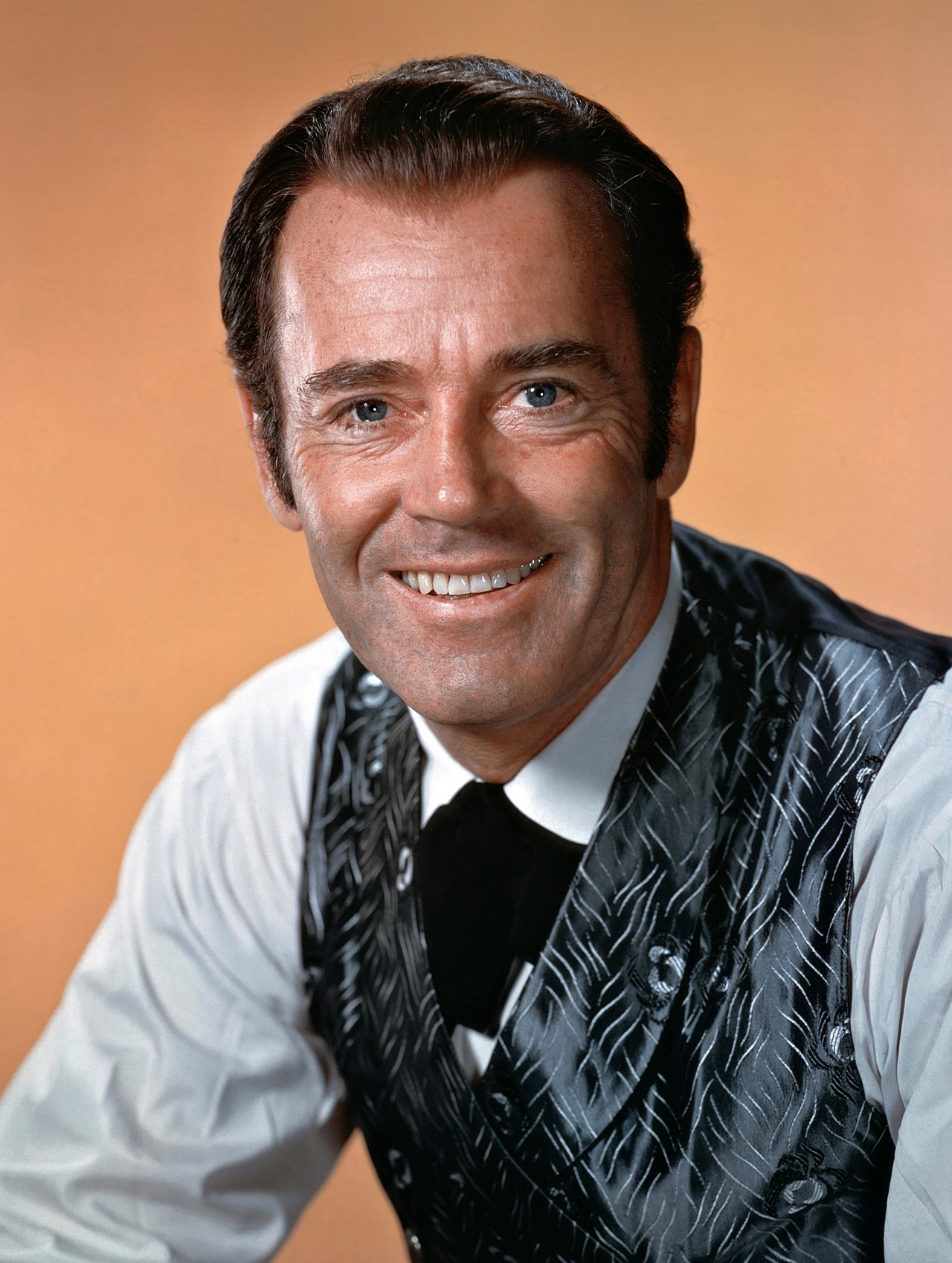 Henry Fondaas Jethro Stuart (segment: The Railroads)
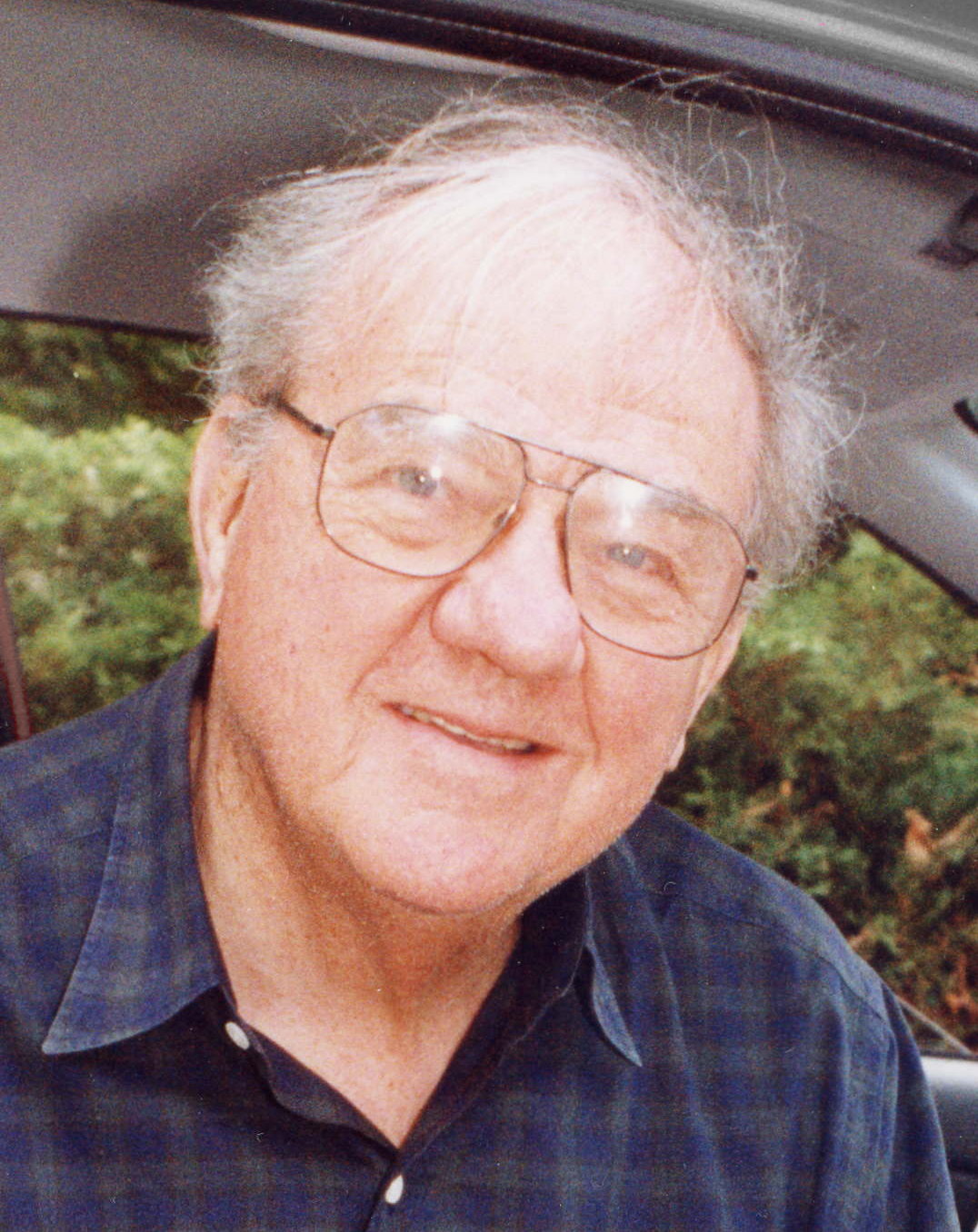 Karl Maldenas Zebulon Prescott (segment: The Rivers)
- Gregory Peckas Cleve Van Valen (segment: The Plains)
 Debbie Reynoldsas Lilith Prescott (segment: The Rivers) (segment: The Plains)
 James Stewartas Linus Rawlings (segment: The Rivers)
 Eli Wallachas Charlie Gant (segment: The Outlaws)
Sources & editorial notes
Reference databases
Sources for the entries on this page
- IMDb IMDb kaydı
Information from external sources is independently selected, consolidated and edited by Arka Evren. Sources are listed for verification and further reading. Encyclopedia text is used under its licence (CC BY-SA). How we work