

ACTOR · BORN 1911 · DIED 1976
Lee J. Cobb
- Birth name
- Leo Jacoby
- Born
- December 8, 1911 · New York City, New York, USA
- Age
- 64
- Died
- February 11, 1976 · Woodland Hills, Los Angeles, California, USA (died at 64 · heart attack)
- Height
- 1.80 m
- Occupation
- Actor, Director, Soundtrack
- Spouse
- Mary (Brako) Hirsch (1957–1976), Helen Beverley (1940–1952)
- Children
- Julie Cobb, Vincent Cobb, Anthony Cobb, Jerry Cobb
- Oscars
- 0 wins, 2 nominations
- Awards
- 5 wins, 15 nominations
- First film
- The Vanishing Shadow (1934)
- Known for
- 12 Angry Men (Juror 3), On the Waterfront (Johnny Friendly), Exodus (Barak Ben Canaan), Boomerang! (Chief Harold F. Robinson)
19 archived facts 4 topics 1 source Last reviewed Nov 2026
Lee J. Cobb (8 December 1911 – 11 February 1976) was an actor best known for 12 Angry Men, On the Waterfront and How the West Was Won.
19 Interesting Facts About Lee J. Cobb
Interesting Facts (7)
- #001
Arthur Miller wrote the character of Willy Loman in his play Death of a Salesman specifically for Lee J. Cobb. The role became one of the most important turning points in Cobb's career and allowed him to display his acting talent to the fullest. Miller's choice is regarded as proof of Cobb's imposing stage presence and his deep character analysis.
- #002
Lee J. Cobb was known not only for his acting but also for his ability to play the harmonica. He was a member of the famous Borrah Minevitch and His Harmonica Rascals troupe, with which he appeared in the 1928 film The Patriot. Directed by Ernst Lubitsch and starring Lewis Stone, the film was an important experience in Cobb's early career.
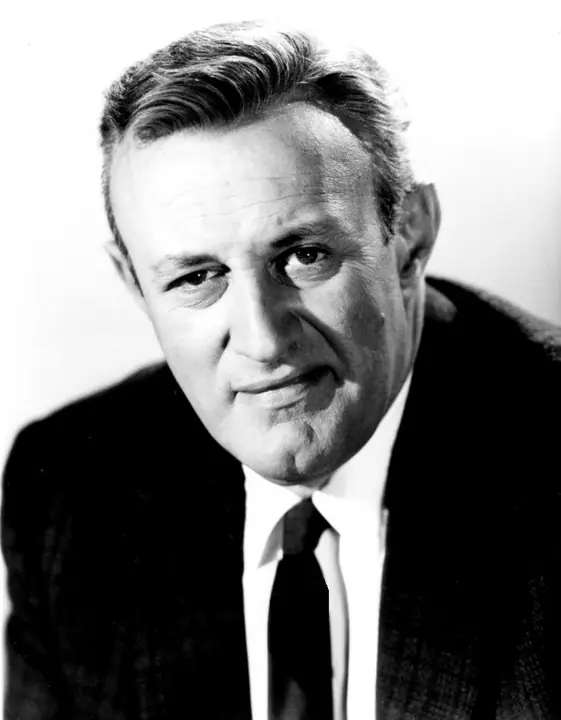
Lee J. Cobb: portraitImage: Wikimedia Commons · NBC Television, Public domain - #003
Lee J. Cobb was the first choice for the role of Mickey in the film Rocky, but he turned down the offer because he would have had to audition. The decision could have been an important turning point in his career, yet his refusal to audition led the role to go to Burgess Meredith. Meredith's performance became one of the unforgettable ones in cinema history, and Cobb's decision caused him to miss one of the best-known opportunities of his career.
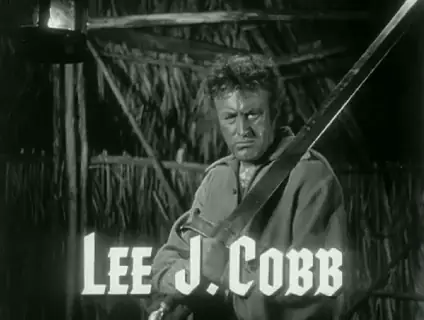
Lee J. Cobb: Judge Henry GarthImage: Wikimedia Commons · Unknown author Unknown author, Public domain - #004
In August 1955, during the filming of The Houston Story, Lee J. Cobb suffered a near-fatal heart attack. The event left him facing a serious health problem that threatened his life. Cobb survived the difficult period and continued his career, and the experience added depth to his life and his acting.
- #005
Lee J. Cobb was included in Karen Burroughs Hannsberry's book Bad Boys: The Actors of Film Noir. Published by McFarland in 2003, the book examines important actors of the film noir genre and discusses Cobb's contributions to it. The book assesses Cobb's talent for portraying dark and complex characters from an academic perspective.
- #006
Lee J. Cobb was a close friend of Alvah Bessie, one of the Hollywood Ten and a screenwriter who was a member of the Communist Party. In the late 1940s, however, Cobb refused to lend Bessie 500 dollars. Bessie was in financial difficulty because of his appeals against HUAC's contempt sentence, and the loan was vital to him. The incident caused a rift between the two friends, and Cobb's decision went down in history as an example of the personal conflicts experienced under the political pressures of the era.
- #007
After Lee J. Cobb's death, two of his important roles were taken over by George C. Scott. Cobb died shortly after playing Lieutenant Kinderman in The Exorcist (1973), and Scott took on the role in the third film. Cobb also played Juror #3 in 12 Angry Men (1957), and Scott portrayed the role in the 1997 television adaptation. Scott further carried on Cobb's legacy by playing the Willy Loman character Cobb created in the Broadway production of Death of a Salesman.
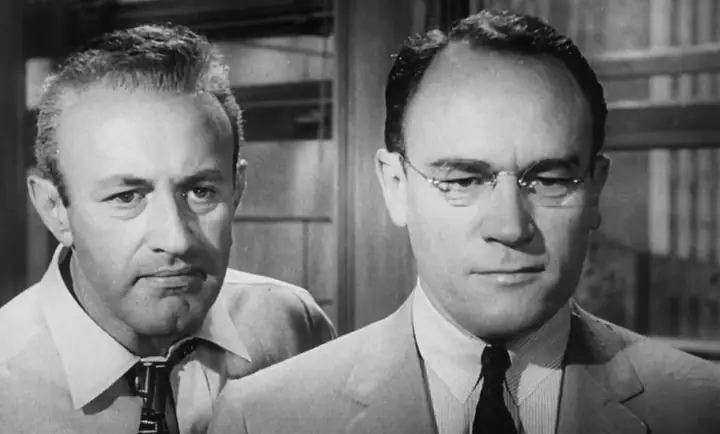
Lee J. Cobb: behind the scenesImage: Wikimedia Commons · Movie directed by Sidney Lumet, adapted from a teleplay of the same n…, Public domain
Characters & Cast (1)
- #008
William Link and Richard Levinson, the creators of the television series Columbo, initially considered Lee J. Cobb for the role of Lieutenant Columbo. Because Cobb was busy with other projects at the time, however, he could not accept the part. This led to the series' iconic character being played by Peter Falk, producing an unforgettable performance in television history.
Career & Awards (5)
- #009
Lee J. Cobb's 1968 performance in King Lear was in what was then the longest-running production of the play in Broadway history. This achievement shows that Cobb masterfully portrayed one of Shakespeare's most difficult characters and held a highly respected place in the theater world. The production is regarded as one of the brightest moments of his stage career.
- #010
Arthur Miller offered Lee J. Cobb the role of Eddie Carbone in the Broadway play A View from the Bridge. Given the political atmosphere of the time, the offer was quite striking, because Cobb was known for his friendly testimony before the House Un-American Activities Committee (HUAC), which could have created tension between him and the left-leaning Miller. Miller, however, appreciated the intensity and realism Cobb would bring to the role and saw him as an ideal choice. Miller himself had been touched by the communist hunt and believed Cobb would do justice to the part.
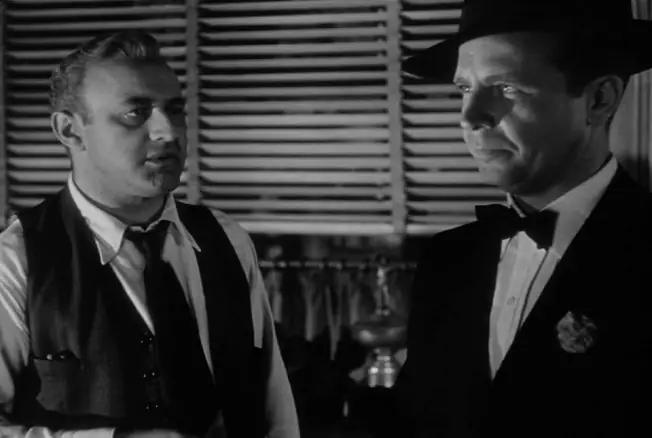
Lee J. Cobb: Johnny Friendly, conversation sceneImage: Wikimedia Commons · Trailer screenshot by uploader, Public domain - #011
Lee J. Cobb appeared in five Oscar Best Picture nominees: The Song of Bernadette (1943), On the Waterfront (1954), 12 Angry Men (1957), How the West Was Won (1962) and The Exorcist (1973). Of these films, On the Waterfront won the Best Picture Oscar in 1955. This achievement highlights the diversity and quality of Cobb's film career.
- #012
Lee J. Cobb appeared in four films selected by the Library of Congress for the National Film Registry as "culturally, historically or aesthetically significant": On the Waterfront (1954), 12 Angry Men (1957), How the West Was Won (1962) and The Exorcist (1973). These films rank among the most valuable works of American cinema, and Cobb's performances in them prove his lasting impact on film history.
- #013
In the early years of his career, Lee J. Cobb appeared with William Boyd in two Hopalong Cassidy films. He was credited as Lee Cobb in the 1937 film North of the Rio Grande and as Lee Colt in Rustlers' Valley the same year. These films were important steps at the beginning of Cobb's film career and formed his first experiences in the Western genre.
Life & Family (6)
- #014
Lee J. Cobb appeared alongside Harry Morgan in the 1962 film How the West Was Won. The film held special meaning because it placed Cobb in the same project as Harry Morgan, the father of his future son-in-law Christopher Morgan. The collaboration brought the two veteran actors together on screen and produced memorable moments in one of the classics of the Western genre.
- #015
Lee J. Cobb's daughter Julie Cobb married the famous actor James Cromwell. The marriage linked two acting families and helped form one of Hollywood's notable families. Julie Cobb followed in her father's footsteps and continued her acting career, and this bond kept an artistic legacy alive within the family.
- #016
In his autobiography Timebends, Arthur Miller stated plainly that Lee J. Cobb was his favorite Willy Loman. Miller noted that Cobb was in fact apolitical and that, like many people during the Great Depression, he had taken an interest in left-wing and anti-Nazi movements, though this did not make him a true leftist. For this reason Miller never held Cobb's friendly testimony before HUAC against him. A decade after Cobb's testimony, a 1966 video recording of his performance as Willy Loman preserved that unforgettable performance for future generations.
- #017
In the 1963 film Come Blow Your Horn, Lee J. Cobb played Frank Sinatra's father. Interestingly, Cobb was only 4 years older than Sinatra. Although the two actors portrayed a father-son relationship, the very small age difference between them shows how flexible casting could be in the filmmaking of the period.
- #018
Lee J. Cobb was the former father-in-law of Christopher Morgan. Christopher Morgan had married Cobb's daughter Julie Cobb, but the marriage ended. This family tie is known as part of the relationships in Cobb's private life and provides information about his family connections.
- #019
Lee J. Cobb was the grandfather of Rosemary Morgan. Rosemary Morgan was born as the daughter of Cobb's daughter Julie Cobb and Christopher Morgan.
Related pages
- Man of the West — Lee J. Cobb comes up in the facts on that page
- Karl Malden — Lee J. Cobb comes up in the facts on that page
Lee J. Cobb — Movies and TV
Lee J. Cobb's filmography includes 100 IMDb acting credits, beginning with The Vanishing Shadow (1934). His credits include On the Waterfront (1954), 12 Angry Men (1957) and The Exorcist (1973).
| Year | Title | Role |
|---|---|---|
| 1934 | The Vanishing Shadow | Roadwork Foreman [Chs. 3, 4] |
| 1937 | North of the Rio Grande | Goodwin |
| 1937 | Rustlers' Valley | Cal Howard |
| 1937 | Ali Baba Goes to Town | Arab |
| 1938 | Danger on the Air | Tony Lisotti |
| 1939 | Golden Boy | Mr. Bonaparte |
| 1940 | This Thing Called Love | Julio Diestro |
| 1941 | Men of Boys Town | Dave Morris |
| 1941 | Paris Calling | Captain Schwabe |
| 1943 | The Moon Is Down | Dr. Albert Winter |
| 1943 | Tonight We Raid Calais | Monsieur Bonnard |
| 1943 | Buckskin Frontier | Jeptha Marr |
| 1943 | The Song of Bernadette | Dr. Dozous |
| 1944 | Winged Victory | Doctor |
| 1946 | Anna and the King of Siam | Kralahome |
| 1946–1952 | Lights Out (TV series, 1 episode) | David Stevenson |
| 1947 | Johnny O'Clock | Inspector Koch |
| 1947 | Boomerang! | Chief Harold F. Robinson |
| 1947 | Captain from Castile | Juan Garcia |
| 1948 | Call Northside 777 | Brian Kelly |
| 1948 | The Miracle of the Bells | Marcus Harris |
| 1948 | The Luck of the Irish | D.C. Augur |
| 1948 | The Dark Past | Dr. Andrew Collins |
| 1948–1958 | Studio One (TV series, 2 episodes) | Dr. Joseph Pearson |
| 1949 | Thieves' Highway | Mike Figlia |
| 1950 | The Man Who Cheated Himself | Lt. Ed Cullen |
| 1950–1951 | Somerset Maugham TV Theatre (TV series, 1 episode) | Charles Strickland |
| 1950–1959 | Lux Video Theatre (TV series, 1 episode) | Emile Zola |
| 1951 | Sirocco | Col. Feroud |
| 1951 | The Family Secret | Howard Clark |
| 1951–1953 | Tales of Tomorrow (TV series, 1 episode) | Wayne Crowder |
| 1951–1957 | Goodyear Television Playhouse (TV series, 1 episode) | — |
| 1952 | The Fighter | Durango |
| 1952–1957 | The Ford Television Theatre (TV series, 1 episode) | Matt Erwin |
| 1953 | The Tall Texan | Capt. Theodore Bess |
| 1953–1962 | General Electric Theater (TV series, 2 episodes) | Dominic Roma |
| 1954 | Yankee Pasha | Sultan |
| 1954 | Gorilla at Large | Detective Sgt. Garrison |
| 1954 | On the Waterfront | Johnny Friendly |
| 1954 | Day of Triumph | Zadok |
| 1954–1956 | Medic (TV series, 1 episode) | Henry Fisher |
| 1954–1957 | Producers' Showcase (TV series, 1 episode) | Rubashev |
| 1955 | The Racers | Maglio |
| 1955 | The Road to Denver | Jim Donovan |
| 1955 | The Left Hand of God | Mieh Yang |
| 1955–1957 | The Alcoa Hour (TV series, 1 episode) | Zocco |
| 1955–1975 | Gunsmoke (TV series, 1 episode) | Col. Josiah Johnson |
| 1956 | The Man in the Gray Flannel Suit | Judge Bernstein |
| 1956 | Miami Exposé | Lt. Barton 'Bart' Scott |
| 1956–1961 | Zane Grey Theatre (TV series, 2 episodes) | Captain Andrew Watling |
| 1956–1961 | Playhouse 90 (TV series, 2 episodes) | Al Bengsten |
| 1957 | 12 Angry Men | Juror 3 |
| 1957 | The Garment Jungle | Walter Mitchell |
| 1957 | The Three Faces of Eve | Doctor Curtis Luther |
| 1957–1961 | The DuPont Show of the Month (TV series, 2 episodes) | Alonso Quijana |
| 1958 | The Brothers Karamazov | Fyodor Karamazov |
| 1958 | Man of the West | Dock Tobin |
| 1958 | Party Girl | Rico Angelo |
| 1958–1960 | Westinghouse Desilu Playhouse (TV series, 1 episode) | El Jefe |
| 1958–1963 | Naked City (TV series, 1 episode) | Paul Delito |
| 1959 | The Trap | Victor Massonetti |
| 1959 | Green Mansions | Nuflo |
| 1959 | But Not for Me | Jeremiah MacDonald |
| 1959–1961 | The DuPont Show with June Allyson (TV series, 1 episode) | Captain Maximillian Gault |
| 1960 | Exodus | Barak Ben Canaan |
| 1961 | Vincent Van Gogh: A Self-Portrait (TV movie) | Vincent Van Gogh |
| 1962 | The Four Horsemen of the Apocalypse | Julio Madariaga |
| 1962 | How the West Was Won | Marshal Lou Ramsey (segment: The Outlaws) |
| 1962–1971 | The Virginian (TV series, 120 episodes) | Judge Henry Garth |
| 1963 | Come Blow Your Horn | Harry Baker |
| 1963–1967 | Bob Hope Presents the Chrysler Theatre (TV series, 1 episode) | Ernie Wigman |
| 1966 | Our Man Flint | Cramden |
| 1966 | Death of a Salesman (TV movie) | Willy Loman |
| 1967 | In Like Flint | Cramden |
| 1968 | Mafia Il giorno della civetta | Don Mariano Arena |
| 1968 | Coogan's Bluff | Lt. McElroy |
| 1968 | They Came to Rob Las Vegas Las Vegas, 500 millones | Steve Skorsky |
| 1969 | Mackenna's Gold | The Editor |
| 1969–1971 | The Young Lawyers (TV series, 24 episodes) | David Barrett |
| 1970 | To Confuse the Angel (TV movie) | — |
| 1970 | The Liberation of L.B. Jones | Oman Hedgepath |
| 1970 | Macho Callahan | Duffy |
| 1970–1977 | McCloud (TV series, 1 episode) | Alexander Montello |
| 1971 | Lawman | Vincent Bronson |
| 1972 | Heat of Anger (TV movie) | Frank Galvin |
| 1973 | The Man Who Loved Cat Dancing | Harvey Lapchance |
| 1973 | Double Indemnity (TV movie) | Barton Keyes |
| 1973 | The Great Kidnapping La polizia sta a guardare | Jovine |
| 1973 | Ultimatum | — |
| 1973 | The Exorcist | Lt. Kinderman |
| 1974 | Dr. Max (TV movie) | Dr. Maxwell 'Max' Gordon |
| 1974 | Trapped Beneath the Sea (TV movie) | Victor Bateman |
| 1974 | The Great Ice Rip-Off (TV movie) | Willy Calso |
| 1974 | Last Moments Il venditore di palloncini | Twenty Years |
| 1975 | Blood, Sweat and Fear Mark il poliziotto | Benzi |
| 1975 | That Lucky Touch | Lt. Gen. Henry Steedman |
| 1975 | Mark il poliziotto spara per primo | Il commedator Benzi |
| 1976 | Cross Shot La legge violenta della squadra anticrimine | Dante Ragusa |
| 1976 | Nick the Sting Gli amici di Nick Hezard | Robert Clark |
| 1976 | Origins of the Mafia Alle origini della mafia (Miniseries, 1 episode) | Bartolomeo Gramignano |
Director
| Year | Title |
|---|---|
| 1959 | Startime |
Lee J. Cobb — Personal Life
Lee J. Cobb was born Leo Jacoby on December 8, 1911, in New York City. He died of a heart attack on February 11, 1976, in Woodland Hills, Los Angeles, California.
- Spouse
- Mary (Brako) Hirsch (1957–1976 · his death · 2 children), Helen Beverley (1940–1952 · divorced · 2 children)
- Children
- Julie Cobb, Vincent Cobb, Anthony Cobb, Jerry Cobb
- Grandchild
- Rosemary Morgan
- Parent
- Benjamin Jacob, Kate Neilecht
Cobb married Helen Beverley in 1940; they had 2 children and divorced in 1952. He married Mary (Brako) Hirsch in 1957, and they had 2 children. They remained married until his death in 1976.
His parents were Benjamin Jacob and Kate Neilecht. His children were Julie Cobb, Vincent Cobb, Anthony Cobb and Jerry Cobb; Rosemary Morgan was his grandchild. He played the violin and harmonica as a child, but a broken wrist ended his hopes of pursuing a career as a violinist.
Lee J. Cobb — Awards
Lee J. Cobb's awards record includes 5 wins from 15 total nominations, with wins included in that total. His 2 Oscar nominations were for supporting roles in On the Waterfront (1954) and The Brothers Karamazov (1958).
| Year | Award | Title | Category | Result |
|---|---|---|---|---|
| 1947 | Photoplay Awards | Boomerang! | Best Performances of the Month (April) | Won |
| 1949 | Photoplay Awards | The Dark Past | Best Performances of the Month (March) | Won |
| 1949 | Photoplay Awards | Thieves' Highway | Best Performances of the Month (November) | Won |
| 1955 | Laurel Awards | On the Waterfront | Top Male Character Performance | Won |
| 1955 | Academy Awards | On the Waterfront | Best Actor in a Supporting Role | Nominated |
| 1958 | Golden Globes | 12 Angry Men | Best Supporting Actor | Nominated |
| 1958 | Primetime Emmy Awards | Studio One | Actor - Best Single Performance - Lead or Support | Nominated |
| 1959 | Academy Awards | The Brothers Karamazov | Best Actor in a Supporting Role | Nominated |
| 1960 | Primetime Emmy Awards | Playhouse 90 | Outstanding Single Performance by an Actor (Lead or Support) | Nominated |
| 1964 | Golden Globes | Come Blow Your Horn | Best Supporting Actor | Nominated |
| 1966 | Western Heritage Awards (Bronze Wrangler) | The Virginian | Fictional Television Drama | Won |
| 1967 | Primetime Emmy Awards | Death of a Salesman | Outstanding Single Performance by an Actor in a Leading Role in a Drama | Nominated |
Lee J. Cobb — Career
Lee J. Cobb worked in film, television and theatre, making his professional stage debut at the Pasadena Playhouse in 1931. His screen credits included The Vanishing Shadow (1934), On the Waterfront (1954), 12 Angry Men (1957) and The Exorcist (1973).
- 1911
Lee J. Cobb was born Leo Jacoby on December 8, 1911, in New York City.
- 1931
He made his professional stage debut at the Pasadena Playhouse.
- 1934
His first film was The Vanishing Shadow.
- 1935
He joined the Group Theater and appeared in Clifford Odets' Waiting for Lefty and Til the Day I Die.
- 1949
He appeared in the original Broadway production of Arthur Miller's Death of a Salesman.
- 1954
He appeared in On the Waterfront.
- 1957
He appeared in 12 Angry Men.
- 1959
He directed Startime.
- 1966
He won a Bronze Wrangler for Fictional Television Drama for The Virginian.
- 1973
He appeared in The Exorcist.
Lee J. Cobb — FAQ
When was Lee J. Cobb born, and how old was he when he died?
He was born on December 8, 1911, in New York City. He died on February 11, 1976, aged 64.
How tall was Lee J. Cobb?
He was 180.3 cm tall.
Who was Lee J. Cobb married to?
He was married to Helen Beverley from 1940 to 1952 and Mary (Brako) Hirsch from 1957 until his death in 1976. He had 2 children with each spouse.
Who were Lee J. Cobb's children and parents?
His children were Julie Cobb, Vincent Cobb, Anthony Cobb and Jerry Cobb. His parents were Benjamin Jacob and Kate Neilecht.
What was Lee J. Cobb's birth name?
His birth name was Leo Jacoby.
What was Lee J. Cobb's first film?
His first film was The Vanishing Shadow (1934).
What films is Lee J. Cobb known for?
He is known for 12 Angry Men (1957), On the Waterfront (1954), Exodus (1960) and The Exorcist (1973).
What awards and Oscar nominations did Lee J. Cobb receive?
He had 5 wins from 15 total nominations, with wins included in that total. He received 2 Oscar nominations, for On the Waterfront (1954) and The Brothers Karamazov (1958), without an Oscar win.
Sources & editorial notes
Reference databases
- Wikipedia
- IMDb
Information from external sources is independently selected, consolidated and edited by Arka Evren. Sources are listed for verification and further reading. Encyclopedia text is used under its licence (CC BY-SA). How we work