

FILM · 2014 · USA
John Wick
- Directed by
- Chad Stahelski
- Runtime
- 101 min
- Studio
- 87Eleven, DefyNite Films, MJW Films
502 archived facts 8 topics 2 sources Last reviewed Nov 2026
Ex-hitman John Wick comes out of retirement to track down the gangsters that took everything from him.

502 Interesting Facts About John Wick
Interesting Facts (200)
- #001
- #002
- #003
- #004
- #005
- #006
- #007
In the original script, the character of John Wick was written with "a man in his mid-sixties" to play the role, given the title character's fabled reputation, ergo, the filmmakers had initially imagined an older actor. However, head of Thunder Road Pictures, Basil Iwanyk, decided against this, stating, "Instead, we decided to look for someone who is not literally older, but who has a seasoned history in the film world."
- #008
- #009
(at around 12 mins) The security guard who waves Wick onto the airport runway is reading the 1970s thriller novel "Shibumi" by Rod Whitaker, under the pen name Trevanian, also about a retired master assassin dragged back into the game. The story Viggo tells about how Wick once killed three men "with a pencil" is describing a crucial scene from the same novel.
- #010
- #011
(at around 24 mins) John Wick is referred to as the one who you send to kill "the boogeyman" but is also referred to as the "Baba Yaga". In Slavic lore, Baba Yaga is usually portrayed as a witch that lives in a house standing on chicken legs. She is often portrayed in a scary way, but tends to act more like a trickster. Even so, she has been known to be helpful to those who are pure of heart.
- #012
- #013
The directors credit Keanu Reeves' dedication and talent with his ability to do long takes during the fight scenes. "I think we really only cut for impact," said Chad Stahelski. "We didn't really cut to get around moves, we didn't cut to speed things up. We wanted you to see what happens before, during and after." "You're not using long lenses to hide bad action," added David Leitch.
- #014
- #015
- #016
During hand-to-hand combat scenes, John Wick shows himself to be a judoka, and use Japanese traditional jujutsu. Judo is a Japanese martial art emphasizing throws. Specifically, Wick repeatedly uses head throws and arm throws. On the other hand, his rival assassin, Ms. Perkins, uses Brazilian Jiu-jitsu (employing a Kimura shoulder lock, the crucifix position and her leather jacket as a gi to perform a wing choke in her fight against Wick in the hotel room).
- #017
- #018
- #019
(at around 14 mins) When the puppy runs behind a couch and a masked man follows him and appears to kick him, this scene was accomplished in two separate takes. In the first take one trainer let the puppy go at point A, and another trainer called the puppy to him at Point B. The dog ran from point A to point B, which was behind the couch. Then they cut and took the puppy out of the room. After the puppy was taken out of the room, they filmed the actor acting like he kicked the puppy behind the couch. The puppy was actually never there.
- #020
- #021
The end fight was originally longer, but they acknowledged that Viggo shouldn't really pose a big physical threat to Wick, who we just watched kill dozens of far fitter bad guys. This is part of their belief that certain action elements should ring true -they kept count of their bullets, they refused to blow up cars that fell two stories -even as the world itself feels like it belongs in a comic.
- #022
(at around 13 mins) They had two of the Mustang cars, and they weren't allowed to damage either of them. The scene with Wick driving aggressively around the airport is 85-95% Keanu Reeves behind the wheel. The final shot with the car stopping centimeters away from the trucks was left to a professional.
- #023
(at around 36 mins) It's set up to look like Marcus is fending off rivals for the bounty, but John never questions where these mysterious shots came from. Once he hears that the contract on John is open (as in, anyone can fill the contract), Marcus accepts it, telling Viggo, "Consider it done." That is, he only accepts once he learns that John could use some protection from other assassins.
- #024
- #025
Initially, the movie is almost a cool blue monotone, reflecting John's detachment and struggle to cope with his wife's death. As he crosses back into the violence, colors leak back into his world and become more intense. And then at the very end of the movie when he at least attempts to cross back over into the ordinary world, the colors become more subdued again, but also warmer.
- #026
John Wick's license plates reveal he's from New Jersey and the gas station convenience store has "NJ Lottery" in the window. John Wick pumps his own gas but all NJ gas stations are full service. It's technically illegal to pump your own gas in NJ, however, it is generally not enforced and it's not uncommon for people to pump their own gas anyway.
- #027
- #028
They originally wanted to have Perkins' nose broken after her big fight with Wick, but the studio suggested that would be going too far. "They're like, you have two women in the movie, one is dead," recalled David Leitch. "Do you really want to break her nose?" They did but were out-voted.
- #029
- #030
- #031
(at around 37 mins) There's also a foreshadowing signal in the soundtrack when Marcus is cleaning and assembling his sniper rifle. The song is "Killing Strangers" by Marilyn Manson, where one of the key and repeated lines is "We're killing strangers so we don't kill the ones that we love." This makes more sense later when the friendship between John and Marcus is revealed.
- #032
- #033
- #034
- #035
- #036
- #037
- #038
- #039
- #040
This movie introduced Charlie (David Patrick Kelly) as the clean-up crew from the "Specialized Waste Disposal - Industrial & Commercial" service who took and disposed of all the dead bodies. This kind of service actually exists in real world where some criminal organizations do have their own body disposal crew. In an interview with people who work in that kind of business, they said their job is to make the bodies completely gone, not even a strand of DNA left to be identified by the police. They said their methods to do that involves the use of machines, chemicals, and fire.
- #041
- #042
- #043
The directors used a Marilyn Manson song as a temp track, and their music supervisor offered to introduce them to the performer who ultimately gave them a track off his new album to use in the film. "It was at [composer] Tyler Bates' house who we kind of wanted originally anyway," said Chad Stahelski. "And that's how we all met with a bottle of absinthe." The spot in the film was originally going to feature Johnny Cash's "God's Going to Cut You Down."
- #044
- #045
- #046
- #047
- #048
- #049
- #050
the weapon cache John digs up in his basement; one side is various weapons, the other side has gold coins. We don't find out the significance of these coins until later, but twelve of them are enough to arrange "a dinner reservation for twelve" AKA disposing of twelve bodies. And Wick has a case full of them. Cases of the gold coins are shown in Viggo's personal safe, where he keeps his big black book of numbers (including John Wick's) and more are shown in the stash that John incinerates. They appear to be the universal currency of the underworld.
- #051
- #052
- #053
Wick shows a lot of traits that indicate that he was once a marine: using M-16 variant weaponry, driving Ford Mustang and tendency to shoot his enemies two times in the chest and one in the head, which is part of Table 2 Marine marksmanship training. Although these are training technique taught in many military branches.
- #054
- #055
- #056
- #057
- #058
Ford Motor Company made only 859 1969 Ford Mustang Boss 429 high-performance cars, the car that was stolen from John Wick. In 2008, Boss 429s could fetch $375,000 at auction. In 2020, a 1969 Boss 429 sold for more than $550,000. The price is only increasing with time, and that trend will likely continue. Of course, that's assuming one can even find a Boss 429 to bid on. The rarity and desirability mean that few ever even go for sale.
- #059
After thieves breaks into John's house to steal his car, his alarm clock buzzes at 6:19 (Matthew 6:19 - "Do not store up for yourselves treasures on earth, where moths and vermin destroy, and where thieves break in and steal. 20 - But store up for yourselves treasures in heaven, where moths and vermin do not destroy, and where thieves do not break in and steal. 21 - For where your treasure is, there your heart will be also.
- #060
- #061
- #062
- #063
- #064
- #065
- #066
The movie John Wick (2014) has interesting similar elements with Pulp Fiction (1994) by Quentin Tarantino. In both movies there's a character named Winston (Winston the owner of Continental Hotel in John Wick and Winston Wolf the problem solver in Pulp Fiction), both have their offices in a hotel (Winston's in Continental Hotel's secret cocktail bar and Winston Wolf's in a casino hotel's bedroom), both also have connection to body disposal services (Winston in John Wick hired Charlie's Specialized Waste Disposal service to dispose of Perkins' body, Winston Wolf in Pulp Fiction hired Monster Joe's Auto & Trucks Dismantlers to dispose of Marvin's body).
- #067
- #068
- #069
- #070
- #071
- #072
- #073
- #074
- #075
- #076
- #077
John Wick's initials are JW, the same initials as John Woo best known for his hyper-kinetic Hong Kong action films like A Better Tomorrow (1986), A Better Tomorrow II (1987), The Killer (1989), Bullet in the Head (1990) and Hard Boiled (1992). The Killer in particular, is cited as an influence to the John Wick franchise.
- #078
- #079
Contains a major spoiler — show
Set to be a trilogy of films based around John Wick's immersion into his previous life of crime and coping with his wife's and dog's deaths. John Wick: Chapter 2 (2017) was released 3 years later, and John Wick: Chapter 3 - Parabellum (2019) was supposed to complete the trilogy. However in May 2019, a "John Wick 4" was announced. John Wick: Chapter 4 (2023) was released on March 24, 2023.
- #080
Contains a major spoiler — show
(at around 48 mins) Toby Leonard Moore said that his character was originally going to be drowned face down in a toilet. But given how complicated it would be to shoot around the toilet with a camera, they changed it to the sink. Moore said that he had lightly concussed his head off the marble sink. But given he had another scene to shoot that day, he followed through.
- #081
Contains a major spoiler — show
(at around 11 mins) At their first meeting, the first words Iosef hears John Wick speak is "'69," in relation to what year his Ford Mustang was produced. If the kill count on the movie is accurate at 77, and the first SUV in the final fight scene has the same number of people in it as the second SUV (four), then Iosef is the 69th person John Wick kills in the movie.
- #082
- #083
Contains a major spoiler — show
(at around 1h 17 mins) The car that Management gifts John as he's checking out of The Continental is a 2014 Dodge Charger. The gift is compensation for the "unfortunate incident" the night before: Perkins breaking House Rules and trying to kill John on hotel grounds.
- #084
- #085
- #086
- #087
- #088
- #089
- #090
In the original script, the character John Wick was written for "a man in his mid-sixties" to play the role, given the main character's legendary reputation, so the producers initially envisioned an older actor. However, Thunder Road Pictures president Basil Iwanyk decided against this, stating, "Instead, we decided to look for someone who is not literally older, but who has a seasoned history in the film world."
- #091
(About 12 minutes later) The security guard who waves Wick toward the airport tarmac is reading "Shibumi," the 1970s thriller novel written by Rod Whitaker under the pen name Trevanian, which is also about a retired master assassin drawn back into the game. The story Viggo tells of how Wick once killed three men "with a pencil" refers to a very important scene from the same novel.
- #092
- #093
Contains a major spoiler — show
In an interview with Screen Junkies on February 16, 2017, Chad Stahelski and David Leitch mentioned that there was an alternate ending for the film in which John shoots and kills Viggo, but they decided to use the other version of the ending in which the two men fight.
- #094
- #095
- #096
- #097
At around 24 minutes, John Wick is referred to as the man you send to kill "the boogeyman," but he is also known as "Baba Yaga." In Slavic belief, Baba Yaga is usually depicted as a witch who lives in a house standing on chicken legs. She is generally portrayed as frightening, but she tends to act more like a trickster. Even so, she is known to help those with a good heart.
- #098
- #099
- #100
- #101
They had to fight for Wick to have a beard. "It's not normal for mainstream producer types to think you can cover up your lead actor's face in a beard," Chad Stahelski said, "but it's our little throwback to a '70s vibe." "It was one of those battles we fought for," David Leitch added, "and everyone responded to."
- #102
- #103
The directors praise Keanu Reeves's dedication and talent, particularly his ability to perform long takes in fight scenes. "I think we really only cut for impact," said Chad Stahelski. "We didn't actually cut to skip moves, we didn't cut to speed things up. We wanted you to see what happened before, during and after." "You're not using long lenses to hide bad action," David Leitch added.
- #104
- #105
- #106
In hand-to-hand combat scenes, John Wick shows that he is a judoka and uses traditional Japanese jujutsu. Judo is a Japanese martial art that emphasizes throws. Wick repeatedly uses head throws and arm throws in particular. On the other hand, his opponent, the assassin Ms. Perkins, uses Brazilian jiu-jitsu (using the Kimura shoulder lock, the crucifix position, and her leather jacket as a gi to perform a wing choke in her struggle against Wick in the hotel room).
- #107
- #108
- #109
- #110
At around 14 minutes, when the puppy runs behind a couch and a masked man appears to follow and kick it, this scene was accomplished in two separate shots. In the first shot, one trainer placed the puppy at point A and another trainer called the puppy to point B. The dog ran from point A to point B behind the couch. Then they cut and removed the puppy from the room. After the puppy was removed from the room, footage was shot of the actor pretending to kick the dog from behind the couch. The puppy was never actually there.
- #111
- #112
Chad Stahelski is listed as the film's director and David Leitch as producer. This is because of DGA regulations that allow only one director to be credited unless unusual exceptions are made. Although the duo produced and directed this film together as a team, no exception was accepted in this case. Stahelski voluntarily took the producer credit.
- #113
The final fight was longer at first, but they agreed that Viggo should not pose a genuinely major physical threat to Wick, whom we have just watched kill dozens of far fitter villains. This was part of their belief that certain action elements had to look right — they kept count of bullets and refused to blow up cars that fell two stories — even though the world itself feels like it belongs in a comic book.
- #114
- #115
John Wick moves seamlessly between various shooting styles depending on the situation. During close-quarters combat and while advancing down narrow corridors he uses the Center Axis Relock stance. When moving and firing over longer distances, he switches to the more traditional Weaver and Isosceles stances.
- #116
- #117
Contains a major spoiler — show
There was to be a trilogy of films about John Wick being drawn back into his former criminal life and dealing with the deaths of his wife and his dog. John Wick: Chapter 2 (2017) was released three years later, and John Wick: Chapter 3 - Parabellum (2019) was meant to complete the trilogy. However, in May 2019 a "John Wick 4" was announced. John Wick: Chapter 4 (2023) was released on March 24, 2023.
- #118
(At about 13 minutes) There were two Mustangs, and they were not allowed to damage either of them. In the scene where Wick drives aggressively at the airport, Keanu Reeves is behind the wheel for 85-95% of it. The final shot, in which the car stops centimeters from the trucks, was left to the professionals.
- #119
- #120
- #121
Contains a major spoiler — show
According to the directors' commentary, the first cut of the film was two hours and twenty minutes long. They did not reveal much about the roughly 39 minutes of footage cut from the film, but they mentioned that the end of the fight between John and Viggo was cut after they agreed Viggo should not pose a genuinely major physical threat to Wick. David Leitch also said, "There's a ton of great shots on the cutting room floor that's just Keanu Reeves walking in cool environments." He said producer Basil Iwanyk, in an interview with Cinapse, stated that the film's twelve-minute opening scenes are nearly three times longer in the Director's Cut.
- #122
(At about 36 minutes) Marcus appears to be fending off rivals for the bounty, but John never questions where these mysterious shots are coming from. Upon hearing that the contract on John is open (as if anyone could fulfill it), Marcus accepts it and tells Viggo, "Consider it done." So he only accepts once he learns that John could use some protection from the other assassins.
- #123
- #124
- #125
- #126
- #127
At first the film is an almost cold blue monotone, reflecting John's neutrality and his struggle to cope with his wife's death. When he returns to violence, color bleeds back into his world and becomes more intense. And at the very end of the film, when he at least tries to return to the ordinary world, the colors become softer again but also warmer.
- #128
- #129
Contains a major spoiler — show
Toby Leonard Moore said his character was originally going to be drowned face-down in a toilet. But given how complicated it would be to shoot around a toilet with the camera, they changed it to a sink. Moore said he hit his head lightly on the marble sink, but continued because he had another scene to shoot that day.
- #130
- #131
- #132
John Wick's plates indicate he is from New Jersey, and the storefront of the gas station market reads "NJ Lottery." John Wick pumps his own gas, but all New Jersey gas stations offer full service. Pumping your own gas in New Jersey is technically illegal, though it is generally not enforced and people pumping their own gas is not unusual anyway.
- #133
- #134
- #135
- #136
- #137
(At about 37 minutes) As Marcus cleans and assembles his sniper rifle, the score carries a foreshadowing signal. The song is Marilyn Manson's "Killing Strangers," whose key and repeated line is "We're killing strangers so we don't kill the ones that we love." This becomes more meaningful later when the friendship between John and Marcus is revealed.
- #138
- #139
The scenes of Iosef Tarasov bringing Wick's car to Aurelio's shop and Wick's subsequent arrival were actually written in chronological order. But they decided they did not want Wick off screen for so long, so they cut between the two instead to sustain the tension. The same thing happens with the scenes where Viggo tells the story of the boogeyman and Wick retrieves his weapons stash from beneath the concrete floor.
- #140
- #141
- #142
- #143
Contains a major spoiler — show
In their first meeting, the first word Iosef hears from John Wick is "'69," referring to the year his Ford Mustang was made. If the film's kill count of 77 is accurate and the first SUV in the final fight scene holds the same number of people as the second SUV (four), then Iosef is the 69th person John Wick kills in the film.
- #144
- #145
- #146
- #147
- #148
- #149
- #150
- #151
- #152
- #153
- #154
- #155
This film introduced Charlie (David Patrick Kelly) as the cleanup crew that collects and disposes of all the bodies in the "Specialized Waste Disposal - Industrial & Commercial" service. This kind of service actually exists in the real world, where some criminal organizations have their own body disposal teams. In an interview with people who work in this line, they said their job is to completely destroy the bodies, ensuring not even a single piece of DNA remains for police to identify. They said the methods they use to do this include machines, chemicals and fire.
- #156
After the film's unexciting first screenings, Chad Stahelski and David Leitch asked filmmaker James Mangold, with whom the pair had most recently worked on The Wolverine (2013), to visit their editing rooms for a notes session. Mangold watched two cuts of the film and, according to Stahelski, gave them "[s]ome of the most complete notes" they had received, which "led to a lot of structural changes."
- #157
- #158
- #159
- #160
- #161
The directors used a Marilyn Manson song as a temp track, and the music supervisors offered to introduce them to the artist, who gave them a track from his new album to use in the film. "It was at [composer] Tyler Bates' house who we kind of wanted originally anyway," said Chad Stahelski. "And that's how we all met with a bottle of absinthe." The trailer for the film was actually going to feature Johnny Cash's "God's Gonna Cut You Down."
- #162
- #163
- #164
- #165
- #166
- #167
Contains a major spoiler — show
As John Wick enters the church, the organist is playing Beethoven's Ode to Joy. The church is later revealed to contain a hidden vault. In Die Hard, Ode to Joy famously plays as the thieves open the hidden vault beneath Nakatomi Plaza. Like Die Hard, this film centers on a main character named John who efficiently kills everyone around him to protect something he believes in and proves that killing him is impossible.
- #168
- #169
- #170
- #171
The weapons stash John digs up in his basement holds various guns on one side and gold coins on the other. We later learn the significance of these coins, but twelve of them are enough to arrange "a dinner reservation for twelve" — that is, the disposal of twelve bodies. And Wick has a bag full of them. The gold coin vaults are shown in Viggo's personal safe, where he keeps the large black ledger (including the John Wicks), and more are shown in the stash John burns. They appear to be the underworld's universal currency.
- #172
- #173
- #174
Wick displays many traits suggesting he was once a Marine: his use of M-16 variant weapons, his driving of a Ford Mustang, and his tendency to shoot enemies twice in the chest and once in the head, which is part of Table 2 Marine Corps marksmanship training. These are, however, training techniques taught in many military branches.
- #175
Contains a major spoiler — show
(At about 1 hour 17 minutes) The car the management gifts John as he leaves the Continental is a 2014 Dodge Charger. The gift is compensation for the "unfortunate incident" of the previous night: Perkins broke the House Rules and tried to kill John on hotel grounds.
- #176
- #177
- #178
- #179
- #180
Ford Motor Company produced only 859 of the 1969 Ford Mustang Boss 429 high-performance cars, the model stolen from John Wick. In 2008, Boss 429s found buyers at auction for $375,000. In 2020, a 1969 Boss 429 sold for over $550,000. The price only rises with time, and that trend will likely continue. Of course, this assumes a Boss 429 can even be found to bid on. Their rarity and desirability mean very few even come up for sale.
- #181
After the thieves break into John's house to steal his car, the alarm clock rings at 6:19 (Matthew 6:19 — "Do not store up for yourselves treasures on earth, where moths and vermin destroy, and where thieves break in and steal. 20 — But store up for yourselves treasures in heaven, where moths and vermin do not destroy, and where thieves do not break in and steal. 21 — For where your treasure is, there your heart will be also.").
- #182
- #183
- #184
- #185
- #186
- #187
- #188
- #189
- #190
- #191
John Wick (2014) contains interesting similarities to Quentin Tarantino's Pulp Fiction (1994). Both films feature a character named Winston (Winston, the owner of the Continental Hotel in John Wick, and the problem solver Winston Wolf in Pulp Fiction), both have offices in a hotel (Winston's in the Continental Hotel's hidden cocktail bar and Winston Wolf's in a casino hotel bedroom), and both have connections to corpse-disposal services (in John Wick, Winston hires Charlie's Special Waste Disposal service to dispose of Perkins's body, while Winston Wolf hires Monster Joe's Auto & Trucks Dismantlers to get rid of Marvin's body in Pulp Fiction).
- #192
- #193
- #194
- #195
- #196
- #197
- #198
Alfie Allen, Ian McShane and Bridget Regan all appeared in television series adapted from fantasy novels: Allen and McShane in Game of Thrones (2011), adapted from George R. R. Martin's "A Song of Ice and Fire" books, and Regan in Legend of the Seeker (2008), adapted from Terry Goodkind's "Sword of Truth" books.
- #199
- #200
John Wick's initials are JW, the same initials as John Woo, known for hyper-kinetic Hong Kong action films such as A Better Tomorrow (1986), A Better Tomorrow II (1987), The Killer (1989), Bullet in the Head (1990) and Hard Boiled (1992). The Killer in particular is said to have influenced the John Wick series.
Production Story (173)
- #201
- #202
- #203
- #204
- #205
- #206
- #207
- #208
- #209
In the original script, the character of John Wick was written with "a man in his mid-sixties" to play the role, given the title character's fabled reputation, ergo, the filmmakers had initially imagined an older actor. However, head of Thunder Road Pictures, Basil Iwanyk, decided against this, stating "Instead, we decided to look for someone who is not literally older, but who has a seasoned history in the film world."
- #210
- #211
The directors used a Marilyn Manson song as a temp track, and their music supervisor offered to introduce them to the performer who ultimately gave them a track off his new album to use in the film. "It was at [composer] Tyler Bates's house who we kind of wanted originally anyway," said Chad Stahelski. "And that's how we all met with a bottle of absinthe." The spot in the film was originally going to feature Johnny Cash's "God's Going to Cut You Down."
- #212
After unenthusiastic early screenings of the film, Chad Stahelski and David Leitch asked filmmaker James Mangold, whom the duo had most recently worked with on The Wolverine (2013), to visit their editing room for a notes session. Mangold saw two cuts of the film and, according to Stahelski, gave them "[s]ome of the most complete notes" they got, which "led to a lot of structural changes".
- #213
- #214
- #215
- #216
Chad Stahelski is the credited director, and David Leitch is credited as a producer. This due to DGA regulations allowing for only one director to be credited, unless unusual exceptions are made. No exception was granted in this case, even though the two produced and directed this film together as a team. Stahelski voluntarily took no producer credit.
- #217
Eva Longoria has made over $12 million off this film and still gets checks ten years after her $6 million saved the movie. According to her, her only mistake was not doing the sequels. It was revealed that Longoria quietly stepped in to close the movie's $6 million financing gap less than 24 hours before production would've shut down entirely. Essentially, there'd be no "John Wick" franchise without Longoria's contribution that saved the original film.
- #218
- #219
- #220
- #221
- #222
- #223
The scenes with Iosef Tarasov bringing Wick's car to Aurelio's shop and Wick's arrival afterwards were originally written in chronological order. They decided they didn't want Wick offscreen for too long, though, and instead intercut the two to maintain the tension. The same occurs during the scenes where Viggo tells the tale of the boogeyman and Wick recovers his weapon cache from beneath the cement floor.
- #224
- #225
They had to fight for Wick to be bearded. "It's not normal for mainstream producer types to think you can cover up your lead actor's face in a beard," said Chad Stahelski, "but it's our little throwback to a '70s vibe." "It was one of those battles we fought for," added David Leitch, "and everyone responded to."
- #226
Eva Longoria has made over $12 million off this film and still gets checks 10 years after her $6 million saved the movie. According to her, her only mistake was not doing the sequels. It was revealed that Longoria quietly stepped in to close the movie's $6 million financing gap less than 24 hours before production would've shut down entirely. Essentially, there'd be no "John Wick" franchise without Longoria's contribution that saved the original film.
- #227
- #228
Alfie Allen, Ian McShane, and Bridget Regan have starred in television series based on fantasy novels. Allen and McShane in Game of Thrones (2011), based on the "A Song of Ice and Fire" books by George R.R. Martin, and Regan in Legend of the Seeker (2008), based on the "Sword of Truth" books by Terry Goodkind.
- #229
Contains a major spoiler — show
The first version of the script was titled "Scorn", and while similar, it was also a lot different from the final film. For example, John was originally a much older character, who was well into his 70s, he didn't have any dialogue for the first 25 pages, and his dog was originally eighteen years old. As in the final film, the dog was the last gift from his dying wife, and after it is killed, Wick goes on a revenge rampage. The body count was much lower - somewhere between six and twelve people died in this first draft.
- #230
Contains a major spoiler — show
Set to be a trilogy of films based around John Wick's immersion into his previous life of crime and coping with his wife's and dog's deaths. John Wick: Chapter 2 (2017) was released 3 years later, and John Wick: Chapter 3 - Parabellum (2019) was supposed to complete the trilogy. However, a fourth movie, John Wick: Chapter 4 (2023), was released on March 24, 2023.
- #231
Contains a major spoiler — show
They originally wanted to have Perkins's nose broken after her big fight with Wick, but the studio suggested that would be going too far. "They're like, you have two women in the movie, one is dead," recalled David Leitch. "Do you really want to break her nose?" They did but were out-voted.
- #232
Contains a major spoiler — show
Chad Stahelski and David Leitch were concerned about how the audience would react to all of the death within the film (especially the puppy). So when casting the character of Iosef Tarasov, they wanted someone who looked like a complete "prick". Consequently, they met Alfie Allen, and thought he was perfect for the role (and also a very nice person).
- #233
Contains a major spoiler — show
In an interview for Screen Junkies on February 16, 2017, Chad Stahelski and David Leitch mentioned how there was an alternate ending for the film, which had John simply shooting Viggo and killing him, but they decided to use the other version of the ending, where the two men fight.
- #234
Contains a major spoiler — show
The first version of the script was titled "Scorn" and, though similar, was very different from the final film. For example, John was originally a much older character, in his seventies, had no dialogue in the first 25 pages, and his dog was actually eighteen years old. As in the final film, the dog was the last gift from his dying wife, and after the dog is killed Wick launches his revenge attack. The body count was much lower; in this first draft six to twelve people died.
- #235
Eva Longoria made more than $12 million from this film and, more than 10 years after the over $6 million she put in to save it, she is still receiving checks. In her view, her only mistake was not doing the sequels. It emerged that Longoria quietly stepped in to cover the film's $6 million financing gap less than 24 hours before production would have shut down completely. Without Longoria's contribution in saving the original film, the "John Wick" series would not exist.
- #236
- #237
- #238
- #239
- #240
- #241
- #242
- #243
- #244
- #245
- #246
- #247
- #248
- #249
- #250
- #251
- #252
Chad Stahelski and David Leitch were worried about how audiences would react to all the deaths in the film (especially the puppy). So when casting the character of Iosef Tarasov, they wanted someone who looked like a complete "prick." As a result, they met Alfie Allen and thought he was perfect for the role (and also a very good person).
- #253
In an interview with 'Rudy's Movie Reviews,' Kevin Nash stated that he was told why his character, the bodyguard Francis, was allowed to live. Nash said that when Wick says he has lost some weight and Francis says he has lost 20 kilos, Wick is in fact asking in code how many enemies are in the building. Francis's answer was 20. He was allowed to live because he gave Wick information.
- #254
- #255
- #256
- #257
- #258
In the original script, the character of John Wick was written for "a man in his mid-sixties" to play the role, given the main character's legendary reputation, so the producers initially envisioned an older actor. However, Thunder Road Pictures president Basil Iwanyk decided against this, stating, "Instead, we decided to look for someone who is not literally older, but who has a seasoned history in the film world."
- #259
- #260
(About 12 minutes in) The security guard who tosses Wick toward the airport runway is reading "Shibumi," the 1970s thriller novel Rod Whitaker wrote under the pen name Trevanian, which is also about a retired master assassin drawn back into the game. Viggo's story about how Wick once killed three men "with a pencil" recounts a very important scene from the same novel.
- #261
- #262
- #263
- #264
The death of John Wick's wife made the role very personal for Keanu Reeves. His girlfriend Jennifer Syme died in a car accident in 2001. Syme gave birth to their child in 1999, but the baby was stillborn. Syme's car accident was alleged to be a result of heavy prescription medication for depression, and reports claim she died instantly. Reeves allegedly used this as an emotional influence for the role of John Wick.
- #265
(At around the 24th minute) John Wick is referred to as the person you send to kill "the boogeyman," but he is also known as "Baba Yaga." In Slavic belief, Baba Yaga is usually depicted as a witch who lives in a house standing on chicken legs. She is often portrayed as frightening, but tends to act more like a trickster. Even so, she is known to help those with a good heart.
- #266
- #267
- #268
- #269
They had to fight for Wick to have a beard. "It's not normal for mainstream producer types to think you can cover up your lead actor's face in a beard," said Chad Stahelski, "but it's our little throwback to a '70s vibe." "It was one of those battles we fought for," added David Leitch, "and everyone responded to."
- #270
The directors praise Keanu Reeves's dedication and talent, particularly his ability to perform long takes in fight scenes. "I think we really only cut for impact," said Chad Stahelski. "We didn't actually cut to skip moves, we didn't cut to speed things up. We wanted you to see what happened before, during and after." "You're not using long lenses to hide bad action," added David Leitch.
- #271
According to an interview with the directors, Chad Stahelski and David Leitch reused many stunt performers several times throughout the film. They would change their hair to look like different people. For this reason, the scenes with long-haired and bearded guards and valets were shot first, and the scenes with bald men were most likely shot last.
- #272
- #273
- #274
In the hand-to-hand fight scenes, John Wick shows that he is a judoka and uses traditional Japanese jujutsu. Judo is a Japanese martial art that emphasizes throws. Wick repeatedly uses head throws and arm throws in particular. On the other hand, his opponent, the assassin Ms. Perkins, uses Brazilian Jiu-jitsu (in her struggle against Wick in the hotel room, she uses the Kimura shoulder lock, the crucifix position, and her leather jacket as a gi to perform a wing choke).
- #275
- #276
- #277
- #278
(At about 14 minutes) When the puppy runs behind a couch and a masked man appears to chase it and kick it, this scene was accomplished in two separate shots. In the first take, one trainer placed the puppy at point A and another trainer called the puppy to point B. The dog ran from point A to point B behind the couch. Then they cut and removed the puppy from the room. After the puppy was removed from the room, footage was shot of the actor pretending to kick the dog from behind the couch. The puppy was never actually there.
- #279
- #280
- #281
Chad Stahelski is listed as the film's director and David Leitch as producer. This is because of DGA regulations that allow only one director to be credited unless unusual exceptions are made. Although the duo produced and directed this film together as a team, no exception was accepted in this case. Stahelski voluntarily did not take a producer credit.
- #282
The final fight was originally longer, but they agreed that Viggo shouldn't really pose a major physical threat to Wick, whom we have just watched kill dozens of much fitter villains. This is part of their belief that certain action elements need to look right — they kept count of their bullets, they refused to blow up cars that flip twice — even if the world itself feels like it belongs in a comic book.
- #283
John Wick transitions seamlessly between various shooting styles depending on the situation. During close-quarters combat and while advancing through narrow corridors, he uses the Center Axis Relock stance. When moving and firing at longer distances, he switches to the more traditional Weaver and Isosceles stances.
- #284
- #285
A trilogy was planned, following John Wick's plunge back into his former criminal life and his struggle to cope with the deaths of his wife and his dog. John Wick: Chapter 2 (2017) was released three years later, and John Wick: Chapter 3 - Parabellum (2019) was meant to complete the trilogy. However, in May 2019 a "John Wick 4" was announced. John Wick: Chapter 4 (2023) was released on March 24, 2023.
- #286
(At about 13 minutes) There were two Mustangs, and they were not allowed to damage either of them. In the scene where Wick drives aggressively at the airport, Keanu Reeves is behind the wheel for 85-95% of it. The final shot, in which the car stops centimetres away from the trucks, was left to the professionals.
- #287
- #288
The first version of the script was titled "Scorn" and, although similar, was very different from the final film. For example, John was actually a much older character, in his seventies, he had no dialogue in the first 25 pages, and his dog was actually eighteen years old. As in the final film, the dog was the last gift from his dying wife, and after the dog is killed, Wick launches a revenge attack. The body count was much lower; in this first draft, between six and twelve people died.
- #289
- #290
According to the directors' comments, the first cut of the film was two hours and twenty minutes long. They did not reveal much about the roughly 39 minutes of footage cut from the film, but they mentioned that the end of the fight between John and Viggo was cut after they accepted that Viggo should not really pose a major physical threat to Wick. David Leitch also said, "There's a ton of great shots on the cutting room floor that's just Keanu Reeves walking in cool environments." He said that producer Basil Iwanyk, in an interview with Cinapse, said the film's twelve-minute opening scenes were almost three times longer in the Director's Cut.
- #291
(At about 36 minutes) Marcus appears to be fending off rivals for the reward, but John never questions where these mysterious shots are coming from. Upon hearing that the contract on John is open (as if anyone could fulfil it), Marcus accepts it and tells Viggo, "Consider it done." So he only accepts once he learns that John could use some protection from the other assassins.
- #292
- #293
- #294
- #295
At the start, the film is almost a cold blue monotone, reflecting John's neutrality and his struggle to cope with his wife's death. When he returns to violence, colour seeps back into his world and becomes more intense. And at the very end of the film, at least when he tries to return to the ordinary world, the colours become softer again but also warmer.
- #296
(At about 48 minutes) Toby Leonard Moore said his character was originally going to be drowned face-down in a toilet. However, given how complicated it would be to shoot around the toilet with a camera, they changed it to a sink. Moore said he lightly struck his head on the marble sink. But since he had another scene to shoot that day, he carried on.
- #297
- #298
- #299
John Wick's plates show that he is from New Jersey, and the shop window of the gas station convenience store reads "NJ Lottery". John Wick pumps his own gas, but all NJ gas stations offer full service. Pumping your own gas in NJ is technically illegal, but it is usually not mandatory, and it is not unusual for people to pump their own gas anyway.
- #300
- #301
Initially they wanted Perkins' nose broken after her big fight with Wick, but the studio argued that would be going too far. "They're like, you have two women in the movie, one is dead," David Leitch recalled. "Do you really want to break her nose?" They did, but the votes were overruled.
- #302
- #303
- #304
- #305
(Around the 37th minute) As Marcus cleans and assembles his sniper rifle, there is a foreshadowing cue in the soundtrack. The song is Marilyn Manson's "Killing Strangers," one of whose key and repeated lines is "We're killing strangers so we don't kill the ones that we love." This becomes more meaningful later when the friendship between John and Marcus emerges.
- #306
- #307
The scenes of Iosef Tarasov bringing Wick's car to Aurelio's shop and Wick's subsequent arrival were actually written in chronological order. However, they decided they did not want Wick off screen for so long and instead cut between the two to sustain the tension. The same thing happens with the scenes where Viggo tells the story of the boogeyman and Wick retrieves his weapons stash from under the concrete floor.
- #308
- #309
- #310
- #311
(Around 11 minutes) In their first meeting, the first word Iosef hears from John Wick is "'69," regarding the year his Ford Mustang was made. If the kill count of 77 for the film is correct and the first SUV in the final fight scene holds the same number of people as the second SUV (four), then Iosef is the 69th person John Wick kills in the film.
- #312
- #313
- #314
Eva Longoria earned more than 12 million dollars from this film, and even though more than 10 years have passed since the 6 million dollars that saved the film, she is still receiving checks. According to her, her only mistake was not doing the sequels. It emerged that Longoria quietly stepped in to cover the film's 6 million dollar financing gap less than 24 hours before production was to shut down completely. In fact, without Longoria's contribution in saving the original film, there would be no "John Wick" series.
- #315
- #316
One of the most surprising arguments focused on Keanu Reeves's beard; the financiers preferred the star to be clean-shaven. Chad Stahelski said of the beard, "We were trying to do a contemporary Greek mythology fantasy film. This isn't mainstream. So we wanted to do something cool with Keanu." "But the money people wanted to see Keanu fucking Reeves. 'Point Break (1991)' Keanu, 'Speed (1994)' Keanu. And I don't know if that still exists, but at the time the powers that be told us you don't cover the lead guy's face with a beard." David Leitch added, "I don't want to get into this, but I've had contentious conversations since then about stars having beards. 'He has to be clean-shaven for international competition!' That's the classic studio line." Stahelski said the team "got away with a lot" by refusing to shave Reeves, a choice that stemmed from the filmmakers not wanting people to see the character as the Reeves action heroes they knew from his previous films. Stahelski recalled, "We felt like you can't fire us, so on the first day of shooting Keanu had a beard, and later that week, when they watched the dailies with cinematographer Jonathan Sela's now-famous half-lit shots, people loved it." Reeves's beard stayed and became one of the signature components of John Wick's look. Another thing that stayed in the film was the death of John's dog. "We were told, 'That's bad luck.' 'That's bad juju.' 'That's 'Old Yeller', you can't do that!' 'Nobody will want to see that on screen; you'll alienate the audience,'" Leitch recalled. "And I said, 'We're going to execute people at close range; killing the dog is one thing, but what about all these people being brutally slaughtered? Will they be able to accept that?' They didn't understand what kind of film we were making. We're admirers of the essence of the genre, and we know that these difficult moments are what create the unforgettable ones." Stahelski added, "For the next few weeks we were proposed to shoot an alternate ending revealing that the puppy actually didn't die. But Keanu stood up for us. In the end they thought, 'Fuck it, let's see what these guys can do.'"
- #317
- #318
- #319
- #320
- #321
- #322
- #323
- #324
This film introduced Charlie (David Patrick Kelly) as the cleanup crew that collects and disposes of all the bodies in the "Specialized Waste Disposal - Industrial & Commercial" service. This kind of service actually exists in the real world, where some criminal organizations have their own body disposal teams. In an interview with people who work in this kind of job, they said their job is to completely destroy the bodies, ensuring not even a single piece of DNA remains that could be identified by the police. They said the methods they use to do this include machines, chemicals and fire.
- #325
After the film's lackluster first screenings, Chad Stahelski and David Leitch asked filmmaker James Mangold, with whom the pair had most recently worked on The Wolverine (2013), to visit their editing rooms for a notes session. Mangold saw two cuts of the film and, according to Stahelski, gave them "[s]ome of the most complete notes" they received, which "led to a lot of structural changes".
- #326
- #327
- #328
- #329
- #330
- #331
The directors used a Marilyn Manson song as a temp track, and the music supervisors offered to introduce them to the artist, who gave them a track from his new album to use in the film. "It was at [composer] Tyler Bates' house who we kind of wanted originally anyway," said Chad Stahelski. "And that's how we all met with a bottle of absinthe." The trailer for the film was actually going to feature Johnny Cash's "God's Going to Cut You Down."
- #332
- #333
- #334
- #335
- #336
As John Wick enters the church, the organist is playing Beethoven's Ode to Joy. The church is later revealed to contain a hidden vault. In Die Hard, Ode to Joy famously plays as the thieves open the secret vault beneath Nakatomi Plaza. Like Die Hard, this film revolves around a protagonist named John who efficiently kills everyone around him to protect something he believes in and proves that killing him is impossible.
- #337
- #338
- #339
- #340
- #341
- #342
The weapons cache John digs up in his basement; on one side there are various guns, on the other gold coins. We later learn the significance of these coins, but twelve of them are enough to arrange for AKA to dispose of twelve bodies, "a dinner reservation for twelve." And Wick has a bag full of them. Cases of gold coins are shown in Viggo's personal safe, where he keeps the large black ledger (including the John Wicks), and more are shown in the stash John burns. They appear to be the underworld's universal currency.
- #343
- #344
- #345
Wick displays several traits indicating he was once a sailor: using M-16 variant weapons, driving a Ford Mustang, and his tendency to shoot enemies twice in the chest and once in the head, which is part of Table 2 naval marksmanship training. Though these are training techniques taught in many military branches.
- #346
- #347
- #348
- #349
Wick's license plate number is XAB235, which reads as "XABZES" in leetspeak; the word Xabze (roughly translated as "language of the universe") refers to the moral rules or code of the Circassian people (who settled in the North Caucasus region before being destroyed by the Russians). Wick's world is governed by a strict moral code.
- #350
- #351
Ford Motor Company produced only 859 of the 1969 Ford Mustang Boss 429 high-performance cars stolen from John Wick. In 2008, Boss 429s found buyers at auction for $375,000. In 2020, a 1969 Boss 429 sold for over $550,000. The price only increases with time, and this trend will likely continue. Of course, this assumes a Boss 429 can even be found to bid on. Rarity and desirability mean very few even come up for sale.
- #352
John Wick acquired the nickname Baba Yaga in his past as a hitman. Translated literally from Russian, Baba Yaga means 'Grandmother Jadwiga.' This is a witch-like character from Russian fairy tales. Baba Yaga is an old woman with a long nose and iron teeth who threatens to kidnap and eat small children. A rather absurd choice to emphasize John Wick's threatening reputation.
- #353
After the thieves break into John's house to steal his car, the alarm clock rings at 6:19 (Matthew 6:19 - "Do not store up for yourselves treasures on earth, where moths and vermin destroy, and where thieves break in and steal. 20 - But store up for yourselves treasures in heaven, where moths and vermin do not destroy, and where thieves do not break in and steal. 21 - For where your treasure is, there your heart will be also.")
- #354
- #355
- #356
- #357
- #358
- #359
- #360
This film reunites two actors from the television series The Wire (2002). Although they do not share screen time, Lance Reddick and Clarke Peters appear in the Continental. Additionally, the pair appeared alongside Dean Winters (who plays Avi) in the HBO series Oz (1997). While Dean Winters and Lance Reddick share scenes together, Clarke Peters also guest-starred in several episodes shared with Winters.
- #361
During the confrontation between Aurelio and Iosef, Iosef's henchmen declare that Viggo will not like Aurelio punching Iosef and hitting him back. Aurelio says they do not know what Viggo will or will not like, and that he will tell Viggo "something he'll understand." After John leaves Aurelio's shop, Viggo demands an explanation, and Aurelio tells him plainly that the reason is Iosef stole John Wick's car and killed his dog. As mentioned, Viggo understands the situation quite well.
- #362
- #363
- #364
John Wick (2014) contains interesting similarities to Quentin Tarantino's Pulp Fiction (1994). Both films feature a character named Winston (Winston, the owner of the Continental Hotel in John Wick, and Winston Wolf, the problem solver in Pulp Fiction), both have offices in a hotel (Winston's in the Continental Hotel's hidden cocktail bar and Winston Wolf's in a casino hotel's bedroom), and both are connected to corpse disposal services (in John Wick, Winston hires Charlie's Special Waste Disposal service to destroy Perkins's body, while Winston Wolf hires Monster Joe's Auto & Trucks Dismantlers to get rid of Marvin's body in Pulp Fiction).
- #365
- #366
- #367
- #368
- #369
- #370
- #371
Alfie Allen, Ian McShane and Bridget Regan appeared in television series adapted from fantasy novels. Allen and McShane in Game of Thrones (2011), adapted from George R. R. Martin's "A Song of Ice and Fire" books, and Regan in Legend of the Seeker (2008), adapted from Terry Goodkind's "Sword of Truth" books.
- #372
- #373
John Wick's initials are JW; the same initials as John Woo, known for hyper-kinetic Hong Kong action films such as A Better Tomorrow (1986), A Better Tomorrow II (1987), The Killer (1989), Bullet in the Head (1990) and Hard Boiled (1992). In particular, The Killer is said to have influenced the John Wick series.
Behind the Scenes (47)
- #374
During hand-to-hand combat scenes, John Wick shows himself to be a judoka, and use Japanese traditional jujutsu. Judo is a Japanese martial art emphasizing throws. Specifically, Wick repeatedly uses head throws and arm throws. On the other hand, his rival assassin, Ms. Perkins, uses Brazilian Jiu-jitsu, employing a Kimura shoulder lock, the crucifix position and her leather jacket as a gi to perform a wing choke in her fight against Wick in the hotel room.
- #375
- #376
- #377
- #378
- #379
- #380
- #381
- #382
- #383
- #384
- #385
- #386
- #387
- #388
- #389
- #390
When the puppy runs behind a couch and a masked man follows him and appears to kick him, this scene was accomplished in two separate takes. In the first take one trainer let the puppy go at point A, and another trainer called the puppy to him at Point B. The dog ran from point A to point B, which was behind the couch. Then they cut and took the puppy out of the room. After the puppy was taken out of the room, they filmed the actor acting like he kicked the puppy behind the couch. The puppy was actually never there.
- #391
- #392
- #393
- #394
- #395
- #396
- #397
- #398
- #399
- #400
- #401
The directors credit Keanu Reeves's dedication and talent with his ability to do long takes during the fight scenes. "I think we really only cut for impact," said Chad Stahelski. "We didn't really cut to get around moves, we didn't cut to speed things up. We wanted you to see what happens before, during and after." "You're not using long lenses to hide bad action," added David Leitch.
- #402
- #403
According to a directors' interview, Chad Stahelski and David Leitch re-used quite a few of the stunt men several times throughout the film. In order to make them look like different people, they would change their hair. So scenes of the guards and henchmen with long hair and beards were shot first, and the scenes with bald men were most likely shot last.
- #404
- #405
- #406
- #407
- #408
- #409
- #410
- #411
Contains a major spoiler — show
Toby Leonard Moore said that his character was originally going to be drowned face down in a toilet. But given how complicated it would be to shoot around the toilet with a camera, they changed it to the sink. Moore said that he had lightly concussed his head off the marble sink. But given he had another scene to shoot that day, he followed through.
- #412
- #413
- #414
According to an interview with the directors, Chad Stahelski and David Leitch reused many stunt performers several times throughout the film. They would change their hair to look like different people. For this reason, scenes with long-haired and bearded guards and valets were shot first, and scenes with bald men were most likely shot last.
- #415
- #416
- #417
- #418
- #419
- #420
Although Keanu Reeves already had martial arts experience, the directors wanted a distinct style for John Wick and had him train in judo, Japanese jujutsu, Brazilian jiu-jitsu and arnis, plus tactical-gun training with the Los Angeles SWAT and Navy SEALs and stunt driving that included drifting a car while aiming a gun.
Characters & Cast (23)
- #421
- #422
- #423
John Wick smoothly transitions between several shooting styles depending on the situation. During close-quarters battles and while moving through tight hallways, he employs a Center Axis Relock stance. When moving and shooting at longer ranges, he changes into more traditional Weaver and Isosceles stances.
- #424
- #425
- #426
Contains a major spoiler — show
In an interview with 'Rudy's Movie Reviews", Kevin Nash stated he was told the reason his character, Francis the bouncer, was allowed to live. Nash said that when Wick mentions he had lost some weight and Francis stated he had lost 20kg, Wick was asking in code how many hostiles were in the building. Francis' reply was 20. Because he provided the information to Wick, he was allowed to live.
- #427
Contains a major spoiler — show
Chad Stahelski and David Leitch were worried about how audiences would react to all the deaths in the film, especially that of the puppy. So when casting the character Iosef Tarasov, they wanted someone who looked like a complete "prick." They ended up meeting Alfie Allen and thought he was perfect for the role (and also a very good person).
- #428
Contains a major spoiler — show
In an interview with 'Rudy's Movie Reviews,' Kevin Nash said he was told why his character, the bodyguard Francis, was allowed to live. Nash said that when Wick mentions he has lost some weight and Francis says he has lost 20 kilos, Wick is in code asking how many enemies are in the building. Francis's answer was 20. He was allowed to live because he gave Wick information.
- #429
- #430
- #431
- #432
- #433
- #434
- #435
- #436
- #437
- #438
- #439
- #440
- #441
- #442
- #443
Easter Eggs & References (30)
- #444
- #445
- #446
- #447
- #448
The Continental's rules of not doing business are not unlike Constantine (2005)'s Papa Midnite's rule of neutrality in his club, making this the second Keanu Reeves movie to feature a neutral club.
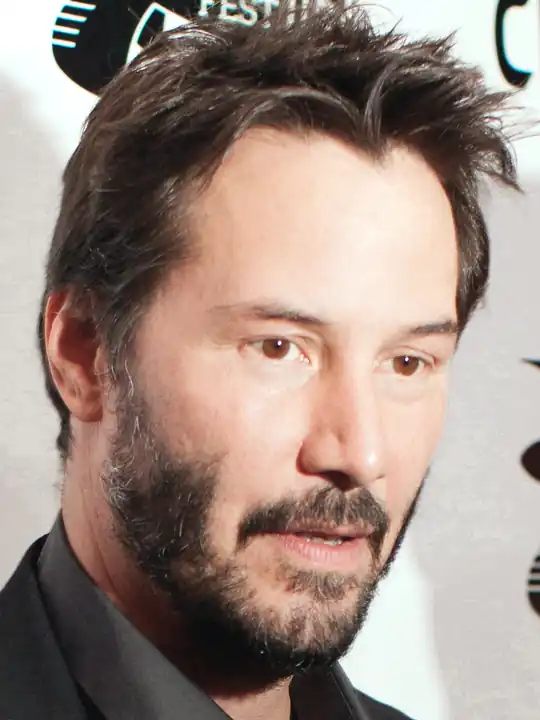
John Wick (2014): Keanu Reeves in a suit in close-upImage: Wikimedia Commons · anna Hanks, CC BY 2.0 - #449
- #450
- #451
- #452
- #453
- #454
- #455
- #456
- #457
- #458
Although this is the first time that Keanu Reeves and Willem Dafoe have acted together on film, both were in the Speed franchise: Reeves was in Speed (1994), and Dafoe was in Speed 2: Cruise Control (1997).
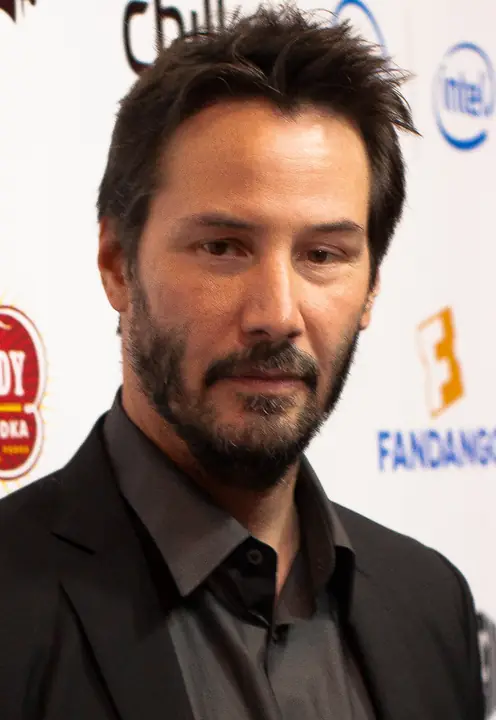
John Wick (2014): Keanu Reeves at an eventImage: Wikimedia Commons · anna Hanks, CC BY 2.0 - #459
The security guard who waves Wick onto the airport runway is reading the 1970s thriller novel "Shibumi" by Rod Whitaker, under the pen name Trevanian, also about a retired master assassin dragged back into the game. The story Viggo tells about how Wick once killed three men "with a pencil" is describing a crucial scene from the same novel.
- #460
- #461
- #462
- #463
- #464
Wick's car plate number is XAB235, which reads "XABZES" in leetspeak; the word Xabze (roughly translated as "language of the universe") refers to the moral code or rules of the Circassian people (who was populating the North Caucasus area before being exterminated by the Russians). Wick's world is governed by a strict moral code.
- #465
This movie reunites two actors from the television series The Wire (2002). Although they do not share screen-time, Lance Reddick and Clarke Peters appear in the Continental. Additionally, the two have also appeared together with Dean Winters (who plays Avi), in the HBO series, Oz (1997). Dean Winters and Lance Reddick shared scenes together, while Clarke Peters had a guest role in a couple of episodes, that were also shared with Winters.
- #466
- #467
Contains a major spoiler — show
As John Wick enters the church, the organist plays Beethoven's Ode to Joy. The church is then seen to contain a hidden vault. Ode to Joy is, famously, played in Die Hard as the thieves open the vault hidden at the bottom of Nakatomi Plaza. Like Die Hard, this film revolves around a main character called John who efficiently kills everyone around him in order to protect something he believes in and proves to be impossible to kill.
- #468
- #469
- #470
- #471
- #472
The film reunites two actors from the television series The Wire (2002). Lance Reddick and Clarke Peters both appear in the Continental, though they do not share screen time. The pair also acted alongside Dean Winters (who plays Avi) in the HBO series Oz (1997): Winters and Reddick shared scenes together, while Peters guest-starred in several episodes with Winters.
- #473
Deeper Meaning (21)
- #474
- #475
John Wick is referred to as the one who you send to kill "the boogeyman" but is also referred to as the "Baba Yaga." In Slavic lore, Baba Yaga is usually portrayed as a witch that lives in a house standing on chicken legs. She is often portrayed in a scary way, but tends to act more like a trickster. Even so, she has been known to be helpful to those who are pure of heart.
- #476
- #477
- #478
- #479
- #480
According to the directors' commentary, their first cut of the movie was two hours and twenty minutes long. They didn't reveal much about approximately 39 minutes of footage that was cut out of the movie, but they did mention that the ending fight between John and Viggo was cut down after they acknowledged that Viggo shouldn't really pose a big physical threat to Wick. Also, David Leitch said how "There's a ton of great shots on the cutting room floor that's just Keanu Reeves walking in cool environments." Producer Basil Iwanyk said in an interview for Cinapse how twelve minute long opening scenes of the film were almost three times longer in the Director's Cut.
- #481
During the confrontation between Aurelio and Iosef, Iosef's lackeys declare Viggo won't like Aurelio punching Iosef and talking back at him. Aurelio counters that they don't know what Viggo would or wouldn't like, and that he'll tell Viggo "something he'll understand". After John leaves Aurelio's shop, Viggo calls for an explanation, and Aurelio plainly tells him it was because Iosef stole John Wick's car and killed his dog. As alluded to, Viggo is very understanding about the situation.
- #482
Contains a major spoiler — show
In an interview with 'Rudy's Movie Reviews", Kevin Nash stated he was told the reason his character, Francis the bouncer, was allowed to live. Nash said that when Wick mentions he had lost some weight and Francis stated he had lost 20kg, Wick was asking in code how many hostiles were in the building. Francis's reply was 20. Because he provided the information to Wick, he was allowed to live.
- #483
- #484
- #485
- #486
One of the most surprising arguments focused on Keanu Reeves's beard; the financiers preferred the star to be clean-shaven. Chad Stahelski said of the beard, "We were trying to do a modern-day Greek mythology fantasy movie. That's not mainstream. So we wanted to do something cool with Keanu." "But the money people wanted to see fucking Keanu Reeves. 'Point Break (1991)' Keanu, 'Speed (1994)' Keanu. And I don't know if this exists anymore, but at the time we were told by the powers that be that you should not cover the face of your lead guy with a beard." David Leitch added, "I don't want to get into it, but I've since had contentious conversations about stars having beards. 'He has to be clean-shaven for the international market!' That's the classic studio line." Stahelski said the team "got away with a lot" by refusing to shave Reeves, a choice that stemmed from the filmmakers not wanting people to see the character as the Reeves action heroes they knew from his earlier films. "We felt like you can't fire us, so Keanu had a beard on the first day of shooting, and later that week, when they watched the dailies with cinematographer Jonathan Sela's now-famous half-lit shots, people loved it," Stahelski recalled. Reeves's beard stayed and became one of the signature components of John Wick's look. Another thing that stayed in the film was the death of John's dog. "We were told, 'That's bad luck.' 'That's bad juju.' 'That's Old Yeller, you can't do that!' 'Nobody will want to see that on screen; you'll alienate the audience,'" Leitch recalled. "And I was like, 'We're going to execute people at close range; killing a dog is one thing, but what about all these people being brutally slaughtered? Will they be able to accept that?' They didn't understand the kind of movie we were making. We're fans of the essence of the genre, and we know that these hard moments are what create the unforgettable ones." Stahelski added, "For the next few weeks we were proposed to shoot an alternate ending revealing that the puppy actually didn't die. But Keanu stood up for us. In the end they thought, 'Fuck it, let's see what these guys can do.'".
- #487
- #488
- #489
During the confrontation between Aurelio and Iosef, Iosef's henchmen declare that Viggo will not like Aurelio punching Iosef and hitting him back. Aurelio says they do not know what Viggo will or will not like, and that he will tell Viggo "something he'll understand." After John leaves Aurelio's shop, Viggo demands an explanation, and Aurelio tells him plainly that it is because Iosef stole John Wick's car and killed his dog. As mentioned, Viggo understands the situation quite well.
- #490
- #491
- #492
- #493
- #494
Career & Awards (5)
Life & Family (3)
- #500
- #501
In his past as a hired killer John Wick has earned the nickname Baba Yaga. Literally translated out of Russian, Baba Yaga means 'Grandmother Jadwiga. ' This is a witch-like character in Russian fairytales. Baba Yaga is in other words an elderly woman with a long nose and iron teeth who kidnaps and threatens to eat young children. A rather ridiculous choice to underline John Wick's menacing reputation.
- #502
Contains a major spoiler — show
The death of John Wick's wife made the role very personal for Keanu Reeves. His girlfriend, Jennifer Syme, died in a car accident in 2001. Syme gave birth to their child in 1999, but the child was stillborn. Syme's car accident was claimed to be a result of heavy prescription medication for depression, and reports claim she died instantly. Supposedly, Reeves used that as an emotional influence for the role of John Wick.
Sources & editorial notes
Reference databases
- Wikipedia
- IMDb
Sources for the entries on this page
- Wikipedia John Wick (film) — Wikipedia
Information from external sources is independently selected, consolidated and edited by Arka Evren. Sources are listed for verification and further reading. Encyclopedia text is used under its licence (CC BY-SA). How we work