FILM · 1976 · USA
Midway
57 archived facts 4 topics 1 source Last reviewed Oct 2026
All facts (57)
- #001
During the actual Battle of Midway, Toshirō Mifune was in Manchuria trying to become a fighter pilot.
- #002
Henry Fonda, Charlton Heston, Glenn Ford, Hal Holbrook, Cliff Robertson, Robert Webber, screenwriter Donald S. Sanford and director Jack Smight were all war veterans.
- #003
Kevin Dobson's character, Lieutenant George Gay, was the sole survivor of Torpedo Squadron 8. Gay wrote a book about his experiences (Sole Survivor) and served as a consultant on the film.
- #004
The clip showing "Tom Garth's" plane crashing and splitting in two is one of the most reused crash scenes of World War II. In the actual crash the pilot was barely shaken and climbed out of the aircraft on his own immediately.
- #005
Henry Fonda kept one of his fingers curled because the character Admiral Chester W. Nimitz had lost a finger.
- #006
Almost all of the scenes aboard ship were shot in the United States. The Lexington was an Essex-class "fast carrier" commissioned in February 1943. Some of the Japanese aircraft carriers shown in the aerial shots were in fact the Lexington; the film was flipped so that the island superstructure sat on the port side (on all US aircraft carriers it was on the starboard side). Decommissioned in 1991, the Lexington was the longest-serving carrier in history. It is now a museum ship in Corpus Christi, Texas.
- #007
The production had only 3 wartime aircraft at its disposal, so it relied on stock footage.
- #008
Matt Garth's character is a composite based largely on Admiral Kimmel and Nimitz's aide Edwin T. Layton. Layton was an intelligence officer; Garth is depicted as a naval aviator as well as a liaison officer.
- #009
Most of the dogfight scenes come from 1942 newsreels, and a significant amount of cropping was done to adapt the footage to the Panavision frame.
- #010
The opening scenes of Lieutenant Colonel James Harold "Jimmy" Doolittle's Tokyo raid were taken from Thirty Seconds Over Tokyo (1944). Robert Mitchum played pilot Bob Gray in Thirty Seconds Over Tokyo (1944) and Admiral William Halsey in this film.
- #011
The 3-hour extended TV version (shot in 4:3 and featuring Susan Sullivan and Mitchell Ryan, who do not appear in the theatrical version) was thought to be lost. The Indicator/Powerhouse Blu-ray release in the United Kingdom includes the two-part TV version in its originally broadcast 4:3 format along with a recap of the second part.
- #012
Midway Airport in Chicago was named in honor of the Battle of Midway. The airport was originally called Chicago Municipal Airport. Chicago's main airport, O'Hare, was named after LT Edward O'Hare, a Navy fighter pilot who received the US Navy Medal of Honor in World War II.
- #013
$60,000 was spent on enlarging footage taken from various sources and editing stock footage for the film's various battle scenes — and that was only a fraction of the cost of recreating those scenes.
- #014
Filming at sea lasted 3 weeks.
- #015
When Matt Garth approaches for a landing after the battle, the number 34 is clearly visible on the ship's stern. This is the USS Oriskany. The Oriskany was sunk off Pensacola, Florida, in May 2006 to become an artificial reef and dive site. The sinking cost $20 million, and it is expected to generate more than $9 million a year as a tourist and diving site.
- #016
After Henry Fonda dyed his hair to resemble Admiral Nimitz, he complained that once filming was completed his hair never returned to its former glory.
- #017
Universal chose the well-known Japanese film actor Toshirō Mifune to play Admiral Yamamoto. When Mifune arrived for filming, one of his white gloves had a short finger. Admiral Yamamoto was missing a joint on one of his fingers. Admiral Chester Nimitz was also missing a joint on one of his fingers.
- #018
Robert Mitchum shot his cameo in a single day.
- #019
Several aerial combat scenes appear to have been taken from Battle of Britain (1969). In some shots the distinctive silhouettes of Spitfires can be seen. The film also includes scenes of a Messerschmitt Bf-109 crashing into the sea and a Ju-87 Stuka and a He-111 exploding.
- #020
The film was a big success in Japan because it showed the Japanese military as very brave and skilled.
- #021
John Guillermin was the original director. He was replaced before filming because he pursued producer Walter Mirisch for more money. Jack Smight was hired as director.
- #022
This was the second film to be presented in "Sensurround," a special low-frequency bass speaker setup consisting of four large speakers loaned by distributors to select theaters showing the film. The system was used only in certain scenes and was so powerful that it cracked the plaster in some theaters. Three other Universal films used Sensurround: Earthquake (1974), Rollercoaster (1977) and Battlestar Galactica (1978).
- #023
The cast includes four Oscar winners: Charlton Heston, Henry Fonda, James Coburn and Cliff Robertson; and three Oscar nominees: Hal Holbrook, Robert Mitchum and Pat Morita.
- #024
Several action scenes, including the scene in which Zero crashes into the Yorktown bridge, were taken from Away All Boats (1956).
- #025
Henry Fonda played Admiral Chester Nimitz twice, in this film and in In Harm's Way (1965).
- #026
The film features old color war footage.
- #027
Charlton Heston's role as Admiral Nimitz's aide (Matt Garth, a composite of the historical roles of Nimitz's staff intelligence liaison officer Lieutenant Commander Edwin Layton and the lesser-known Carrier Air Group Commander of the USS Yorktown, Lieutenant Commander Oscar Pederson) was the only senior officer role given a fictional name in the film.
- #028
Joseph Rochefort's (played by Hal Holbrook) contribution to the battle in identifying AF as Midway and predicting that the attack would come in late May or early June embarrassed the Washington intelligence group, which had predicted an attack in mid-June. Rochefort, a controversial figure, was removed from his code-breaking post and given command of a floating dry dock; he was apparently the victim of Admiral King's counterproductive personal vendettas. At the end of the war he was awarded the United States Armed Forces Legion of Merit, and posthumously received the U.S. Navy Distinguished Service Medal in 1985, the Presidential Medal of Freedom in 1986, and was inducted into the National Security Agency (NSA) Hall of Honor in 2000.
- #029
The wrecks of Akagi and Kaga were found a month before the premiere of the film's remake, Midway (2019).
- #030
The closing epilogue of this film is a quote from Winston Churchill. It says: "The annals of the war at sea offer no more intense, heart-shaking shock than this battle, in which the United States Navy and Air Force and the qualities of the American race stand out in glory. The courage and devotion of the American airmen and sailors and the courage and skill of their leaders were the foundation of it all."
- #031
At 2:01:55, a Japanese plane makes a Kamikaze flight over the aircraft carrier. The clip shown is actually a Kamikaze attack on the USS LEXINGTON (CV-16) on November 5, 1944. LEXINGTON was used extensively in the filming of "MIDWAY" thirty years later.
- #032
It was the 10th highest-grossing film at the U.S. box office in 1976.
- #033
After the film was released, there were complaints about the casting of veteran stars who were clearly too old for their characters.
- #034
In his autobiography, producer Walter Mirisch states that this film was one of the Mirisch Corporation's biggest money earners.
- #035
The Florida coast stood in for the Pacific.
- #036
It was the first cameo signed for the film.
- #037
Henry Fonda was one of the narrators of the groundbreaking World War II documentary The Battle of Midway (1942).
- #038
Admiral Frank (Jack) Fletcher (played by Robert Webber), the overall commander during the Battle of Midway, took part in the actions that resulted in the sinking of six Japanese aircraft carriers. One was before Midway and the other after (his heavily damaged flagship Yorktown was sunk by a Japanese submarine during Midway). He was later promoted to Vice Admiral and in August 1942 commanded a carrier group led by his flagship USS Saratoga in the Guadalcanal Campaign. He first controversially ordered the withdrawal of the carrier force (to protect it from Japanese attack), which cost the U.S. heavily in the loss of other warships left behind (and resulted in critically needed weapons and supplies not being unloaded). Saratoga was then torpedoed and Fletcher was wounded. He was later criticized by Admiral King for allowing the Japanese Combined Fleet to escape. After his recovery he was assigned to the Aleutians Campaign and served there until the end of the war. Admiral Frank (Jack) Fletcher should not be confused with his uncle, Admiral Frank (Friday) Fletcher. Both men were awarded the Medal of Honor in 1915 for their courage during the United States' military occupation of the Mexican port of Veracruz in 1914, and at that time Lieutenant Frank (Jack) was serving under his uncle. Frank (Friday) is the namesake of the Fletcher-class destroyers, which had an extremely successful design and were the most numerous destroyer class to serve in World War II.
- #039
Henry Fonda wore a wig.
- #040
Two of Midway's stars also appeared in the films from which it borrowed footage: Robert Mitchum, who played Admiral Halsey, portrayed bomber pilot Bob Gray in Thirty Seconds Over Tokyo (1944), and Toshirō Mifune, who played Admiral Yamamoto, also portrayed Yamamoto in Rengô kantai shirei chôkan: Yamamoto Isoroku (Admiral Yamamoto, 1968).
- #041
The film routinely shows different aircraft standing in for what is claimed to be the same plane. For example, when Lieutenant Gay's two-seat torpedo bomber is shot down, it is shown as a single-seat Hellcat fighter crashing into the ocean. Some crash and dogfight scenes show German aircraft and even British aircraft.
- #042
Fought in the North Pacific about 2,500 miles from the Japanese mainland, Midway is popularly regarded as the turning point of the Pacific naval war, while the later Guadalcanal campaign (conducted in the Solomon Islands of the South Pacific between August 1942 and February 1943) is regarded as the turning point of the US military's land war, popularly known for its "island hopping" character.
- #043
James Shigeta (Admiral Nagumo) wears a mustache concealed with tape and heavy makeup. This was a trick similar to the one used by Cesar Romero, who refused to shave his mustache while playing the Joker in Batman (1966).
- #044
Although it was never made clear what "skin disease" Admiral Halsey was hospitalized for, in reality there was an outbreak of psoriasis.
- #045
Jack Smight replaced John Guillermin as director.
- #046
Henry Fonda, Robert Mitchum and Robert Wagner appeared in The Longest Day (1962), a reenactment of another major turning point during the Second World War.
- #047
The film's opening prologue states: "This was the way it was - - the story of the battle that was the turning point of the war in the Pacific, told as much as possible with actual film shot during the battle. It exemplifies the combination of planning, courage, error and pure chance by which great events are often decided."
- #048
The end credits of the film are played over a film loop. A sailor on the flight deck railings repeats the same movements several times.
- #049
It was promoted together with a US Navy recruitment campaign.
- #050
Charlton Heston (Captain Matt Garth) turned down the role of Ambassador Robert Thorn in The Omen (1976) in order to appear in this film. Gregory Peck, the star of The Big Country (1958), was cast in his place.
- #051
Henry Fonda and Robert Webber served as jurors in the classic film 12 Angry Men (1957).
- #052
The skin condition that hospitalized Admiral Halsey was eczema.
- #053
Captain Garth was seen running toward his plane in a rear-screen projection shot used for the first time, growing larger as he approached the camera and then returning to normal size when he stepped in front of the plane in live footage.
- #054
Henry Fonda and Christopher George were the only two actors to appear in both this film and the similarly star-studded war film In Harm's Way (1965), made about a dozen years earlier; had John Wayne, who starred in the earlier war epic, accepted Robert Mitchum's role, they would have been the only three actors to appear in both films.
- #055
When Tom shares his troubles about his girlfriend's situation with his father, the 1940s Tommy Dorsey classic "I'll Never Smile Again" plays in the background.
- #056
Charlton Heston's character, Matt Garth, shares his name with the character played by Montgomery Clift in the western classic Red River (1948).
- #057
The actors Hal Holbrook, Mitchell Ryan and Kip Niven had all appeared in Magnum Force (1973) three years earlier.
Continue through the archive
 Charlton Hestonas Captain Matt Garth
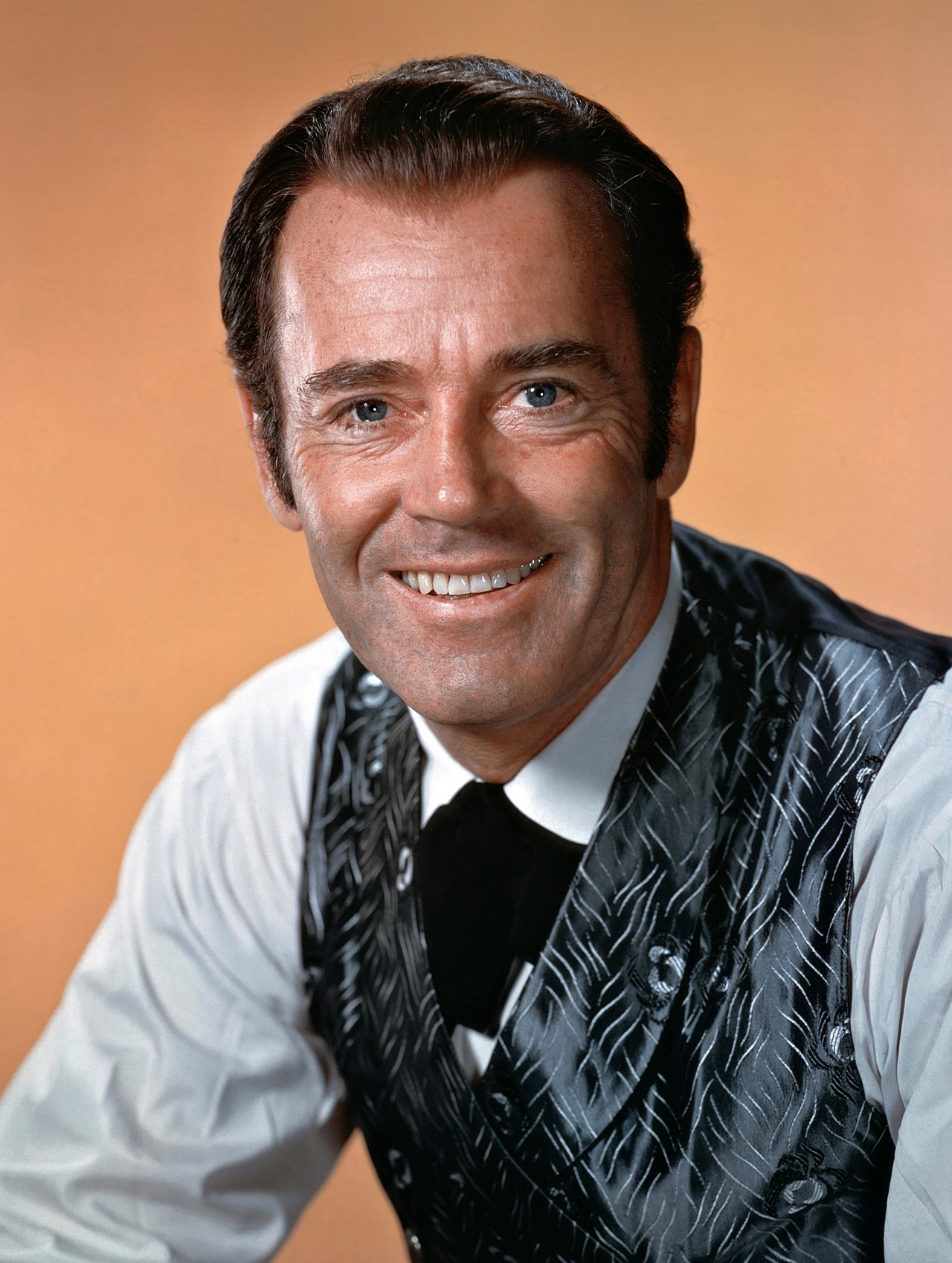 Henry Fondaas Admiral Chester W. Nimitz
- James Coburnas Captain Vinton Maddox
- Glenn Fordas Rear Admiral Raymond A. Spruance
- Hal Holbrookas Commander Joseph Rochefort
 Toshirō Mifuneas Admiral Isoroku Yamamoto
- Robert Mitchumas Admiral William F. Halsey
- Cliff Robertsonas Commander Carl Jessop
- Robert Wagneras Lieutenant Commander Ernest L. Blake
 James Shigetaas Vice Admiral Chuichi Nagumo
Sources & editorial notes
Reference databases
Sources for the entries on this page
- IMDb IMDb kaydı
Information from external sources is independently selected, consolidated and edited by Arka Evren. Sources are listed for verification and further reading. Encyclopedia text is used under its licence (CC BY-SA). How we work