FILM · 1985 · USA
Silver Bullet
50 archived facts 7 topics 1 source Last reviewed Oct 2026
All facts (50)
- #001
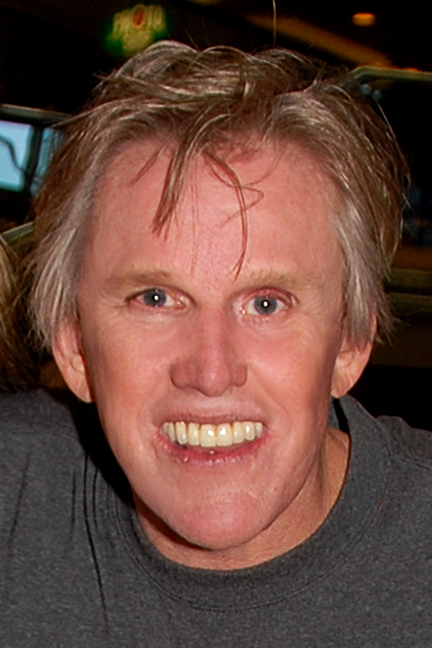
At a private screening in North Hollywood, California, in the fall of 1999, Gary Busey discussed his experiences making Silver Bullet, including performing his own stunts. For the finale, in which the film's creature is thrown across the room, Busey said the effect was achieved by having him run (off camera) and jump onto an air-pressure catapult that then launched him into the air and into various breakaway pieces of furniture. He was seriously injured when he hit a mirror because of the artificial glass; this is evident in the film, where a (bleeding) piece is seen embedded in his arm as he falls to the ground. Because there was no rehearsal for that scene and it was completed in a single take, he said his reaction to the werewolf breaking through the wall was genuine.
- #002
According to director Daniel Attias, Gary Busey ad-libbed a great deal, for example while Uncle Red is in the gun shop. Attias consulted Stephen King, who approved the inclusion of these improvisations.
- #003
Producer Dino De Laurentiis was not very happy with the werewolf used in the film. Both its appearance and the way the actor in the costume moved disappointed him. This was somewhat of an insult to the actor wearing the costume, since he was an accomplished modern dancer who had been hired specifically for his movement skills.
- #004
Tarker's Mills, where the action takes place, is a fictional town in the Stephen King universe. It neighbors the settings of other King works that were also adapted into films, such as Chester's Mill (Under the Dome (2013)), Derry (IT (1990)) and Castle Rock (Needful Things (1993), Cujo (1983) and Pet Sematary (1989)).
- #005
The scene of the priest's werewolf nightmare used a total of seventy extras, divided into four groups with varying levels of makeup and costume. These consisted of roughly ten principal performers with the most elaborate look, used for close-ups and action shots, while the rest were made up simply to look menacing and to fill the rest of the church so it would appear full.
- #006
This was the first and only film directed by Daniel Attias. From the 1980s to the present day he has mostly directed TV episodes of well-known shows and has not made another theatrical film.
- #007
Stephen King wanted the werewolf to be plain and hard to see, in contrast to the gigantic monsters seen in other werewolf films and books of the early to mid-1980s; the result was a creature that looked more than anything like a black bear and in fact had no distinguishing features. Producer Dino De Laurentiis was very unhappy after seeing Carlo Rambaldi's design, which had been made at King's request, and demanded changes, but both King and Rambaldi refused. When pressed to either cancel the film or accept the design, De Laurentiis relented and allowed shooting to continue with Rambaldi's werewolf costume. A modern dancer was hired to perform inside the suit, but De Laurentiis was also unhappy with his performance and demanded a change. As a result, Everett McGill, who played the Reverend Lester Lowe in human form, performed most of the scenes in the werewolf costume, taking on a dual role.
- #008
Filming began without a suitable werewolf suit.
- #009
Building the werewolf costume took three months. After the shape and design were completed using three-dimensional clay maquettes, the entire costume was made of foam and polyurethane and covered with real bear fur. The costume's head was operated mechanically by six people from distances of up to thirty meters.
- #010
Brady's father mentions Harmony Hill cemetery. This is another connection to other Stephen King adaptations, particularly Salem's Lot (1979).
- #011
Marty and Jane giving their silver medallions and crosses to their uncle to be made into silver bullets is likely a subtle nod to the story of the Beast of Gévaudan, probably the most famous werewolf story in history and the origin of the silver bullet legend. In the story, a werewolf attacks the French countryside for three years in or near a town called Gévaudan. According to the tale, after the beast killed the wife and child of a local hunter named Jean Chastel, he turned his family heirloom cross into a silver bullet and had the local priest bless it three times. Because of its popularity, this story has found a place in many works of fiction about werewolves.
- #012
The film's budget was 7 million dollars. It earned 4 million dollars after its initial release. It eventually earned more than 12 million dollars from ticket sales.
- #013
The Coslaw house was a real house in Wilmington, North Carolina, but its interiors were a soundstage set. The house was moved in the 1990s to make room for a large shopping mall.
- #014
Fans familiar with werewolf legend will recognize that the wound exposing Lowe was not the first time such a monster was revealed this way. In 1521 the Inquisitor of Besancon, Jean Boin, tried Philibert Montot, Pierre Bourgot and Michel Verdun for making a pact with the devil and practicing lycanthropy. These men became known as the werewolves of Poligny. They fell under suspicion after a traveler passing through the region was attacked by a wolf. While defending himself, the traveler managed to wound the animal and forced it to retreat. Tracking the wounded creature, the man came to a hut, where he found a local resident, Michel Verdun, being tended by his wife as she washed a wound on his body. Believing Verdun's injury to be a sympathetic wound, the man reported the matter to the authorities. Arrested and tortured, Verdun confessed to being a shapeshifter; he also named his two werewolf accomplices and confessed to the horrific crimes he had committed: devil worship, murder and eating human flesh. The three men were executed immediately.
- #015
The film is adapted from Stephen King's 1983 book Cycle of the Werewolf.
- #016
Early drafts of the film's script, including the release of the press kit, indicated that the werewolf spoke. In the film itself, the werewolf never speaks.
- #017
The fireworks in the bridge scenes were shot on two separate occasions months apart. After principal photography was completed in the fall of 1984, a continuity problem was discovered: Marty's wide shots and close-ups while setting off the fireworks did not match. Four months later they returned to reshoot these scenes, and by then (because of the change of season) most of the leaves and trees had lost their foliage. In the close-ups, great distance was used to keep this from showing in the background.
- #018
Joe Wright (Brady) died in 2009 at the age of 39, and the following year Corey Haim (Marty) died at the age of 38.
- #019
Filming began in October 1984 and was completed shortly before Christmas of the same year.
- #020
This film is the tenth Stephen King film adaptation.
- #021
This was the first horror film in which Terry O'Quinn appeared. His other two horror films are The Stepfather (1987) and Stepfather II: Make Room for Daddy (1989).
- #022
Don Coscarelli was set to direct, but creative differences with Dino De Laurentiis arose.
- #023
When the werewolf attacks Stella Randolph (Wendy Walker) (an unmarried, pregnant woman) in the bedroom, the wolf growl from An American Werewolf in London (1981) can be heard.
- #024
Jennifer Connely was considered for the role of Jane, but she was already busy working in Italy on Dario Argento's "Phenomena" (1985).
- #025
The film is one of two Stephen King adaptations released in 1985. The other is Cat's Eye (1985).
- #026
When Red points out that there was no full moon when Marty was attacked, questioning the supposed werewolf nature of the culprit, Marty and Jane argue that although stories say werewolves transform during a full moon, this werewolf may be able to transform whenever it wants. The werewolf also targets a very specific woman in her own home and enters to kill her, which is unusual for most werewolves, who in both mythology and other modern fiction mostly keep to themselves and attack only those who enter their territory.
- #027
John Candy was considered to play Uncle Red.
- #028
The bar where the mob gathers before searching for the werewolf is called "Owen's Bar." Stephen King has a son named Owen.
- #029
Don Coscarelli was initially going to direct. He explained: "I worked on a project that I ultimately didn't direct. It was a Stephen King story, Cycle of the Werewolf. I had made The Beastmaster. And for some reason the Italian filmmaker Dino De Laurentiis decided that I would be the heir to direct the Conan series. He wanted me to direct Conan 2. Unfortunately they gave me a script but I just couldn't understand it. And I had just made The Beastmaster, I had made The Beastmaster. I couldn't in good conscience figure out how I could go to Mexico for months and shoot another sword-and-sorcery film without a script I felt good about. So I turned Dino De Laurentiis down, and I think that affected him. Because within a month he came back and said, 'I've got this Stephen King book, I want you to read it.' And I read it. The problem was that at the time it wasn't a book, it was actually a calendar. [The story] was just my style. So there was no script. Stephen [King] wasn't available to write the script. So I had to adapt the calendar and turn it into a script. We had significant adaptation problems we were dealing with. One day Stephen came to New York. It was the first time I met him. A very nice guy. Funny, self-effacing. Not what you'd expect. He sat there and listened to me ramble [about the issues]. He said, 'I don't have time to write but I'll think about it.' And so King left. One day I got word that Stephen had sent some notes. There were three, single-spaced pages of notes. He answered every problem. Everything. We go to meet with Dino De Laurentiis. He didn't understand. I didn't want to. I later left the project. Maybe some things aren't meant to be."
- #030
The film was released during the cycle of werewolf films from the early to mid-1980s. The others include Wolfen (1981), The Howling (1981), An American Werewolf in London (1981), Full Moon High (1981), The Company of Wolves (1984), Howling II:… Your Sister Is a Werewolf (1985), Teen Wolf Too (1987) and Howling III (1987).
- #031
Although this is not mentioned or questioned by the townspeople in the film, the script explains that Uncle Red told Marty and Jane that Reverend Lowe claimed he had gone to the pharmacy to get a bottle of otic solution and wore an eye patch because of corneal inflammation.
- #032
In Silver Bullet, An American Werewolf in London (1981) and Cursed (2005), characters who have recently transformed into a werewolf begin having disturbing nightmares about the werewolf. In An American Werewolf in London (1981), David Kessler has several nightmares. However, the only notable nightmare is when David returns home with his family and the werewolf is attacked and killed by Nazis. In this film, Reverend Lester Lowe has a nightmare in which his congregation turns aggressive toward him, transforms into werewolves and attacks him. In Cursed (2005), Ellie Meyers has a nightmare in which she is intimate with her boyfriend Jake, but it turns terrifying when she partly transforms into a werewolf and attacks him.
- #033
One of Don Coscarelli's contributions before he left the project was to frame the film like Steven Spielberg's Jaws (1975).
- #034
Stephen King's source novel initially began as just a calendar and resembles a chronicle of short stories involving werewolf attacks rather than a coherent narrative. It therefore remains King's shortest novel (a record previously held by "Carrie").
- #035
The film is set in 1976. That is the year another Stephen King film adaptation, Carrie (1976), was released.
- #036
Marty is the only person who actually wounds the werewolf and later kills it.
- #037
Reverend Lester Lowe's car is a 1976 Chevrolet Chevelle Malibu Classic.
- #038
It suffered from bad marketing, particularly a series of uninspired posters.
- #039
The video game Werewolf: The Apocalypse - Earthblood (2021) contains two notable references to this film: a pack that sets up shop in a place called Tarker's Mills, and a one-eyed werewolf who wears an eye patch while in human form.
- #040
Roger Ebert shocked his viewers, especially Gene Siskel, when he gave the film a positive review on their television series. Ebert said that although the film is terrible as a straight horror film, it is genuinely funny from beginning to end, and told an incredulous Siskel that he felt the film was intended as a parody of the werewolf film genre. Siskel said he did not believe that for a moment but would be willing to reconsider his negative assessment if he learned that the makers of SB had set out to make a parody. The producers, pleased to have Roger Ebert's positive review on hand for use in print and TV advertising, made no public statement to confirm or deny these ideas.
- #041
The werewolf kills two people with a "peacemaker" baseball bat: Mr. Knopler during an illegal hunting party, and then Sheriff Joe Haller.
- #042
The film is the ninth Stephen King film adaptation to be released in the 1980s.
- #043
Both Corey Haim and Megan Follows would later appear in the werewolf-centered TV series Big Wolf on Campus.
- #044
In many werewolf films the werewolves eat people for food. In this film, however, the werewolf kills people but does not eat them.
- #045
The Coslaws' family car is a 1979 Ford LTD Country Squire station wagon.
- #046
Assuming the character who makes the silver bullet is an expert, in the real world there are certain difficulties in mass-producing silver bullets by traditional methods. They can, however, genuinely be made using ordinary everyday items. Using "lost wax casting," they can be made with wax heated by a propane torch and plaster of Paris. Silver melts at a much higher temperature than lead, which can be melted over an open fire or a kitchen stove (silver at 961.8°C/1,763.24°F versus lead at 327.5°C/621.5°F). Silver also shrinks more than lead as it solidifies when it cools. Using a mold designed for lead would therefore result in an undersized bullet. Silver bullets thus require oversized molds, which we can assume the film's gunsmith used. Another option is to machine the bullets from silver rods or bars, but this method is time-consuming and requires different skills and a lathe. Silver also costs far more than lead, making silver bullets an expensive proposition. But if you are trying to kill werewolves, the expense is worth it. Silver is less dense than lead but denser than copper, which is used as the bullet material for modern firearms. Silver has been proven to engage a barrel's rifling in a manner similar to copper. An alternative to a solid silver bullet is silver-jacketed bullets, which coat a lead bullet in a silver shell just as normal bullets use copper. This reduces the amount of silver needed per round while increasing the bullet's mass, and since the silver jacket can be quite thin, its hardness is unlikely to damage the bullet as it strikes the barrel's rifling. However, the manufacturing process is not something a werewolf hunter could easily do in MacGyver's garage. Another underexplored idea is a silver-cored round, that is, taking a common hollow-point round and filling the cavity with silver. Yet another solution could be a shotgun with shells filled with silver shot, which is rarely used in films but would be far easier to produce than silver-jacketed bullets (and there is no rifling problem, since shotguns have no rifling in the first place). Since industrial-grade silver shot, though expensive, is easily available in large quantities, you could even spare yourself the trouble of melting your silver.
- #047
Uncle Red's car is a 1980 MG B MkIII [ADO76].
- #048
Everett McGill and Gary Busey later played villains who die at the hands of Steven Seagal's Casey Ryback in Under Siege (1992) and Under Siege 2: Dark Territory (1995). Busey's villain dies in an exploding submarine in Under Siege, and in the sequel McGill is killed in a train kitchen.
- #049
The handgun containing the silver bullet used to kill the werewolf is a 4-inch Smith & Wesson Model 629 chambered in .44 Magnum. In the novel, Marty uses a Colt Woodsman in .38 Special. The Woodsman was strictly a .22-caliber handgun, but Stephen King often invents guns in his writing that do not actually exist.
- #050
Although the film is set in 1976, it was shot in 1984 and released in 1985.
Continue through the archive

Sources & editorial notes
Reference databases
Sources for the entries on this page
- IMDb IMDb kaydı
Information from external sources is independently selected, consolidated and edited by Arka Evren. Sources are listed for verification and further reading. Encyclopedia text is used under its licence (CC BY-SA). How we work