FILM · 1985 · USA
Silver Bullet
50 archived facts 7 topics 1 source Last reviewed Oct 2026
36 Interesting Facts About Silver Bullet
- #001
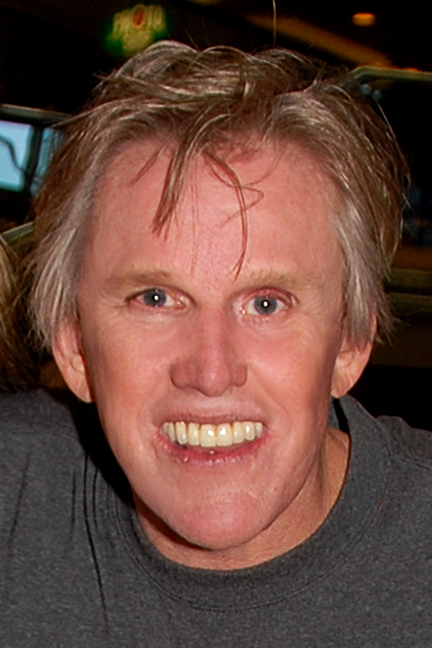
At a private screening in North Hollywood, California, in the fall of 1999, Gary Busey discussed his experiences making Silver Bullet, including performing his own stunts. For the finale, in which the film's creature is thrown across the room, Busey said the effect was achieved by having him run (off camera) and jump onto an air-pressure catapult that then launched him into the air and into various breakaway pieces of furniture. He was seriously injured when he hit a mirror because of the artificial glass; this is evident in the film, where a (bleeding) piece is seen embedded in his arm as he falls to the ground. Because there was no rehearsal for that scene and it was completed in a single take, he said his reaction to the werewolf breaking through the wall was genuine.
- #003
Producer Dino De Laurentiis was not very happy with the werewolf used in the film. Both its appearance and the way the actor in the costume moved disappointed him. This was somewhat of an insult to the actor wearing the costume, since he was an accomplished modern dancer who had been hired specifically for his movement skills.
- #004
Tarker's Mills, where the action takes place, is a fictional town in the Stephen King universe. It neighbors the settings of other King works that were also adapted into films, such as Chester's Mill (Under the Dome (2013)), Derry (IT (1990)) and Castle Rock (Needful Things (1993), Cujo (1983) and Pet Sematary (1989)).
- #006
- #007
Stephen King wanted the werewolf to be plain and hard to see, in contrast to the gigantic monsters seen in other werewolf films and books of the early to mid-1980s; the result was a creature that looked more than anything like a black bear and in fact had no distinguishing features. Producer Dino De Laurentiis was very unhappy after seeing Carlo Rambaldi's design, which had been made at King's request, and demanded changes, but both King and Rambaldi refused. When pressed to either cancel the film or accept the design, De Laurentiis relented and allowed shooting to continue with Rambaldi's werewolf costume. A modern dancer was hired to perform inside the suit, but De Laurentiis was also unhappy with his performance and demanded a change. As a result, Everett McGill, who played the Reverend Lester Lowe in human form, performed most of the scenes in the werewolf costume, taking on a dual role.
- #008
- #010
- #013
- #014
Fans familiar with werewolf legend will recognize that the wound exposing Lowe was not the first time such a monster was revealed this way. In 1521 the Inquisitor of Besancon, Jean Boin, tried Philibert Montot, Pierre Bourgot and Michel Verdun for making a pact with the devil and practicing lycanthropy. These men became known as the werewolves of Poligny. They fell under suspicion after a traveler passing through the region was attacked by a wolf. While defending himself, the traveler managed to wound the animal and forced it to retreat. Tracking the wounded creature, the man came to a hut, where he found a local resident, Michel Verdun, being tended by his wife as she washed a wound on his body. Believing Verdun's injury to be a sympathetic wound, the man reported the matter to the authorities. Arrested and tortured, Verdun confessed to being a shapeshifter; he also named his two werewolf accomplices and confessed to the horrific crimes he had committed: devil worship, murder and eating human flesh. The three men were executed immediately.
- #015
- #018
- #019
- #020
- #021
- #023
- #024
- #025
- #027
- #028
- #031
- #032
In Silver Bullet, An American Werewolf in London (1981) and Cursed (2005), characters who have recently transformed into a werewolf begin having disturbing nightmares about the werewolf. In An American Werewolf in London (1981), David Kessler has several nightmares. However, the only notable nightmare is when David returns home with his family and the werewolf is attacked and killed by Nazis. In this film, Reverend Lester Lowe has a nightmare in which his congregation turns aggressive toward him, transforms into werewolves and attacks him. In Cursed (2005), Ellie Meyers has a nightmare in which she is intimate with her boyfriend Jake, but it turns terrifying when she partly transforms into a werewolf and attacks him.
- #034
- #035
- #036
- #037
- #039
- #040
Roger Ebert shocked his viewers, especially Gene Siskel, when he gave the film a positive review on their television series. Ebert said that although the film is terrible as a straight horror film, it is genuinely funny from beginning to end, and told an incredulous Siskel that he felt the film was intended as a parody of the werewolf film genre. Siskel said he did not believe that for a moment but would be willing to reconsider his negative assessment if he learned that the makers of SB had set out to make a parody. The producers, pleased to have Roger Ebert's positive review on hand for use in print and TV advertising, made no public statement to confirm or deny these ideas.
- #041
- #042
- #043
- #044
- #045
- #046
Assuming the character who makes the silver bullet is an expert, in the real world there are certain difficulties in mass-producing silver bullets by traditional methods. They can, however, genuinely be made using ordinary everyday items. Using "lost wax casting," they can be made with wax heated by a propane torch and plaster of Paris. Silver melts at a much higher temperature than lead, which can be melted over an open fire or a kitchen stove (silver at 961.8°C/1,763.24°F versus lead at 327.5°C/621.5°F). Silver also shrinks more than lead as it solidifies when it cools. Using a mold designed for lead would therefore result in an undersized bullet. Silver bullets thus require oversized molds, which we can assume the film's gunsmith used. Another option is to machine the bullets from silver rods or bars, but this method is time-consuming and requires different skills and a lathe. Silver also costs far more than lead, making silver bullets an expensive proposition. But if you are trying to kill werewolves, the expense is worth it. Silver is less dense than lead but denser than copper, which is used as the bullet material for modern firearms. Silver has been proven to engage a barrel's rifling in a manner similar to copper. An alternative to a solid silver bullet is silver-jacketed bullets, which coat a lead bullet in a silver shell just as normal bullets use copper. This reduces the amount of silver needed per round while increasing the bullet's mass, and since the silver jacket can be quite thin, its hardness is unlikely to damage the bullet as it strikes the barrel's rifling. However, the manufacturing process is not something a werewolf hunter could easily do in MacGyver's garage. Another underexplored idea is a silver-cored round, that is, taking a common hollow-point round and filling the cavity with silver. Yet another solution could be a shotgun with shells filled with silver shot, which is rarely used in films but would be far easier to produce than silver-jacketed bullets (and there is no rifling problem, since shotguns have no rifling in the first place). Since industrial-grade silver shot, though expensive, is easily available in large quantities, you could even spare yourself the trouble of melting your silver.
- #047
- #049
The handgun containing the silver bullet used to kill the werewolf is a 4-inch Smith & Wesson Model 629 chambered in.44 Magnum. In the novel, Marty uses a Colt Woodsman in.38 Special. The Woodsman was strictly a.22-caliber handgun, but Stephen King often invents guns in his writing that do not actually exist.
- #050