

FILM · 1941 · USA
Sullivan's Travels
- Directed by
- Preston Sturges
- Runtime
- 91 min
- Studio
- Paramount Pictures
104 archived facts 7 topics 1 source Last reviewed Nov 2026
Successful movie director John L. Sullivan, convinced he won't be able to film his ambitious masterpiece until he has suffered, dons a hobo disguise and sets off on a journey, aiming to "know trouble" first-hand. When all he finds is a train ride back to Hollywood and a beautiful blonde companion, he redoubles his efforts, managing to land himself in more trouble than he bargained for when he loses his memory and…

104 Interesting Facts About Sullivan's Travels
Interesting Facts (24)
- #001
Preston Sturges initially planned to use a clip from a Charles Chaplin film for the church scene, but Chaplin refused permission. In an earlier scene, Joel McCrea parodies the Little Tramp character. The cartoon finally used was Walt Disney's Mickey Mouse short "Playful Pluto" (1934).
- #002
Preston Sturges reportedly took the idea for the film from stories of John Garfield's brief stint living as a hobo in the 1930s, riding freight trains and hitchhiking across the country.
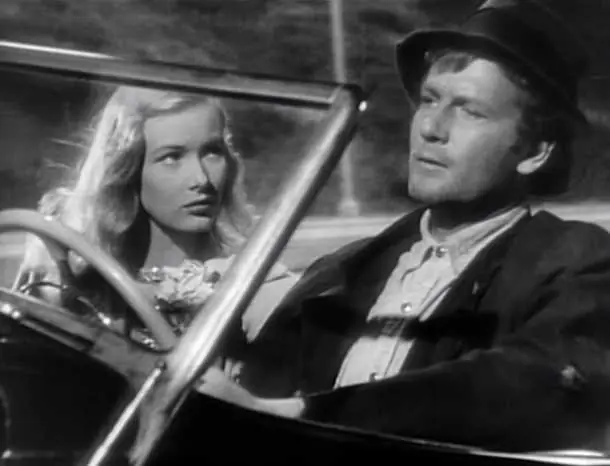
Sullivan's Travels (1941): Girl and John Lloyd 'sully' Sullivan, car sceneImage: Wikimedia Commons · Trailer screenshot Licencing information, Public domain - #003
Veronica Lake was six to eight months pregnant during the making of the film. Production ran from June 12 to July 22, 1941, and her daughter Elaine Detlie was born on August 21, 1941. The only others on the production who knew of her condition were costume designer Edith Head and Preston Sturges's then-wife Louise. Head designed costumes to conceal it. Because of the physical demands of the role, Lake feared that if her advanced pregnancy became apparent she would not be allowed to make the film.
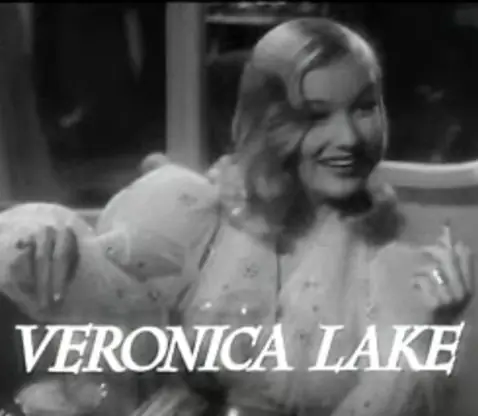
Sullivan's Travels (1941): Girl, by the waterImage: Wikimedia Commons · Trailer screenshot Licencing information, Public domain - #004
Anthony Mann was Preston Sturges's assistant on the film. He recalled: "I'd stage a scene and he'd tell me how terrible it was. Then I saw the editing and gradually I was able to accumulate knowledge. Preston insisted that I make a film as soon as possible. He said it was better to have done something bad than to have done nothing."
- #005
John L. Sullivan plans to make a film called "O Brother, Where Art Thou?", a title Joel and Ethan Coen borrowed for their 2000 film.
- #006
In his autobiography, Preston Sturges stated that he wrote the film as a reaction to the "preaching" found in other comedy films, which "seemed to have abandoned entertainment for the sake of a message."
- #007
The U.S. government's Office of Censorship in New York did not officially approve the film for wartime export because of "the long sequence showing life in a chain gang, which is most objectionable due to the brutality and inhuman treatment of prisoners." The disapproval was consistent with the office's policy of not exporting any film that could be turned into enemy propaganda. The office suggested cuts that would make it acceptable under its own guidelines, but the producers declined the opportunity.
- #008
The opening sequence, in which Capital and Labor fight atop a moving train as it crosses a moonlit lake, is scored with the third movement of Beethoven's (so-called) "Moonlight Sonata." It was likely chosen because of the sonata's popular name and because the music itself resembles silent-film chase music.
- #009
Associate producer Paul Jones appears as the portrait of the husband, "Dear Joseph," who dies early in the film.
- #010
In the airplane scene, the author of the book "Oh Brother, Where Art Thou?" is shown to be "Sinclair Beckstein," a combination of the names of writers Upton Sinclair, Sinclair Lewis and John Steinbeck.
Sullivan's Travels (1941): John Lloyd 'sully' Sullivan, behind the scenesImage: Wikimedia Commons · "Copyright 1941 by Paramount Pictures Inc. ", Public domain - #011
Preston Sturges initially wanted Barbara Stanwyck to play The Girl.
- #012
Studio boss Mr. LeBrand appears to be based on William LeBaron, Sturges's champion at Paramount and the studio's production chief; LeBrand's acid-tongued right-hand man Mr. Hadrian appears to be based on Paramount production head B. G. "Buddy" DeSylva, who took over as production chief from LeBaron the year Sullivan's Travels was released. The actors in these roles, Robert Warwick and Porter Hall, resemble the two producers. As the scene implies, director Sturges had a much harder time working for DeSylva without LeBaron's intervention. DeSylva tried to reshape and recut his films and exasperated the director so much that Sturges eventually left the studio; after a disastrous preview of the cut of DeSylva's last Paramount picture, Sturges returned without pay to recut and reshoot Hail the Conquering Hero.
- #013
Paramount bought Preston Sturges's screenplay for this film for $6,000 (about $105,000 in 2019, adjusted for inflation).
- #014
Preston Sturges wanted Veronica Lake from the start, after admiring her work in I Wanted Wings (1941).
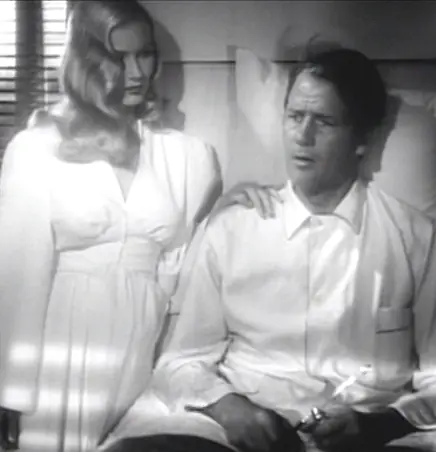
Sullivan's Travels (1941): Girl and John Lloyd 'sully' Sullivan, by the waterImage: Wikimedia Commons · Trailer screenshot Licencing information, Public domain - #015
The film's opening dedication was originally intended to be its epilogue.
- #016
In 2007, the American Film Institute ranked it as the 61st Greatest Movie of All Time. It was the first time the film had been included on the list.
- #017
The shooting of the "Poverty Montage" took seven hours, four hours longer than expected.
- #018
The film's title is taken from Jonathan Swift's 1726 novel 'Gulliver's Travels', which also concerns the protagonist's journey of self-discovery. Ironically, Paramount had also released a feature-length film titled "Gulliver's Travels" in 1939, an animated film produced by Max Fleischer.
- #019
In her biography, Veronica Lake admitted that director Preston Sturges advised her to read her lines just before shooting because he feared she would not remember lines she had learned in advance. And according to her, it worked.
- #020
It was included on the American Film Institute's 2000 list of the 100 Funniest American Films.
- #021
While on "Norm MacDonald Live", Jerry Seinfeld said on the subject that "Sullivan's Travels" was his favorite film and "The Graduate" was the film he most enjoyed watching.
- #022
The film holds a 100% rating on Rotten Tomatoes based on 37 critic reviews.
- #023
"Lux Radio Theater" broadcast a 60-minute radio adaptation of the film on 9 November 1942, with Veronica Lake reprising her role from the film.
- #024
The $4,000 Sullivan earned in 1939 after Ants in Your Plants is said to be worth $90,410.07 in 2024.
Production Story (39)
- #025
Preston Sturges planned to use an excerpt from a Charlie Chaplin film in the church scene, but Chaplin did not give permission. In an earlier scene, Joel McCrea does a parody of the Tramp character. The cartoon ultimately used was Walt Disney's Mickey Mouse: "Playful Pluto (1934)."
- #026
According to accounts, Preston Sturges took the film's idea from stories of John Garfield's hobo life in the 1930s, when he jumped onto freight trains and traveled the country by hitchhiking.
- #027
In his autobiography, Preston Sturges stated that he wrote the film as a reaction to the "preaching" tendency in other comedies. According to him, these films had abandoned entertainment for the sake of a message.
- #028
The U.S. government's New York Censorship Office during the Second World War did not officially approve the film's wartime export because of the long chain gang scene showing brutality and inhumane treatment toward prisoners. This decision was in line with the policy of not exporting films that could turn into enemy propaganda. The producers refused to make the cuts proposed by the office.
- #029
The dedication text at the opening of the film was actually to be voiced by Joel McCrea in an epilogue, as if it were the preface to the comedy he planned to make. In the original script, the preface Sturges wrote was as follows: "This is the story of a man who wanted to wash an elephant. The elephant nearly ruined him."
- #030
Paramount bought the screenplay Preston Sturges wrote for this film for $6,000. That figure is equivalent to about $105,000 in 2019 inflation.
- #031
This film is one of more than 700 Paramount productions made between 1929 and 1949 and sold to MCA/Universal in 1958 for television distribution. The film has been in Universal's ownership since that date, and its first documented television broadcast took place on April 9, 1959, in Milwaukee. It was released on DVD as part of the Criterion Collection on August 21, 2001, and March 6, 2012; it is also frequently shown on cable TV on Turner Classic Movies.
- #032
Cinematographer John Seitz admired Preston Sturges's unconventional working methods. The opening scene contained ten pages of dialogue for roughly four and a half minutes of screen time, and two full days of shooting were planned. On the morning of the first day, Seitz found Sturges on set with the viewfinder, looking for where he could break up the scene and change camera angles. Seitz challenged him to shoot the whole scene in a single take; Sturges did not turn down the challenge and set to work determined to finish two days' work in one. The first take was good, but the camera shook slightly during the tracking shot that follows the men from the projection room to the office, so they tried again. At most two or three takes were shot, and that was it; two days' work was completed by 11 a.m. on the first day, and the feat echoed throughout the studio.
- #033
Anthony Mann was Preston Sturges's assistant on the film. Mann recalled: "I would edit a scene, and he would tell me how terrible it was. Then I watched the editing and gradually accumulated knowledge. Preston insisted that I make a film as soon as possible. He said it was better to have done something bad than to have done nothing."
- #034
The opening sequence — in which Capital and Labor fight atop a moving train passing over a moonlit lake — is scored with the third movement of Beethoven's (so-called) "Moonlight Sonata." The choice was probably made because of the connection established by the sonata's popular name and because the music resembles silent-film chase music.
- #035
Just after the 37th minute, the leaf calendar on the kitchen wall reads "SUNDAY, AUGUST 17, 1941."
- #036
Veronica Lake nearly drowned during a scene by the pool when her slip wrapped around her head. Joel McCrea thought fast, freed the slip from her head and pulled her out of the water. Veronica, who was pregnant during the shoot, did everything she could to keep it secret for fear of being fired. When director Preston Sturges learned of the situation, he assured her that something would be done to ensure her safety.
- #037
In the milk scenes, not real milk but a substitute — namely whitewash as we know it — was used. In the heat, real milk would spoil and become dangerous for crew members to drink.
- #038
Preston Sturges wrote the film with Joel McCrea in mind from beginning to end. No other actor was considered for the role of Sullivan. McCrea was the only name in the director's head.
- #039
Joel McCrea and Veronica Lake never got along during the shoot. McCrea therefore turned down the lead in I Married a Witch (1942); he did not want to work with Lake again. Even so, the pair reunited years later on Ramrod (1947).
- #040
Veronica Lake was six to eight months pregnant during the shoot. Production ran from June 12 to July 22, 1941, and her daughter Elaine Detlie was born on August 21, 1941. Only costume designer Edith Head and Sturges's wife Louise knew of her condition; Head designed costumes that concealed the pregnancy. Lake feared that if her advanced pregnancy became apparent, she would not be able to appear in the film because of the role's physical demands.
- #041
Associate producer Paul Jones appears early in the film as the portrait of the dead husband, "Dear Joseph." This small cameo is a member of the production team reflected on screen.
- #042
The studio manager appears in the background on the set of The Girl's period film. You can see him in the background as the girl reads the newspaper and joyfully raises her hands.
- #043
Preston Sturges wanted Veronica Lake from the start, after being impressed by her performance in I Wanted Wings (1941). Lake's screen appeal had struck the director.
- #044
Studio executives thought Veronica Lake was unsuitable for the role. They suggested other actors such as Ida Lupino, Lucille Ball, Frances Farmer and Ruby Keeler. Sturges nevertheless insisted on his choice.
- #045
In her biography, Veronica Lake admitted that during the shoot she was afraid of forgetting her lines. Director Preston Sturges advised her to read her lines just before shooting. According to Lake, the method worked.
- #046
Matilda Caldwell appeared on the screen for the first time with this film. She thus took her first step into an acting career.
- #047
Preston Sturges planned to use an excerpt from a Charlie Chaplin film in the church scene, but Chaplin did not give permission. In an earlier scene, Joel McCrea does a parody of the Tramp character. The cartoon finally used was Walt Disney's Mickey Mouse: "Playful Pluto (1934)."
- #048
By all accounts, Preston Sturges took the idea for the film from stories of John Garfield's hobo life in the 1930s, when he hopped freight trains and hitchhiked across the country.
- #049
In his autobiography, Preston Sturges stated that he wrote the film as a reaction to the "preaching" tendency in other comedies. According to him, those films had abandoned entertainment for the sake of a message.
- #050
The US government's New York Censorship Office during World War II did not officially approve the film's wartime export because of the long chain-gang scene depicting brutality and inhumane treatment of prisoners. The decision was consistent with the policy of not exporting films that could be turned into enemy propaganda. The producers refused to make the cuts the office suggested.
- #051
The dedication at the film's opening was actually to be narrated by Joel McCrea in an epilogue, as if it were the preface to the comedy he planned to make. The preface Sturges wrote in the original script was: "This is the story of a man who wanted to wash an elephant. The elephant nearly ruined him."
- #052
Paramount bought the script Preston Sturges wrote for this film for $6,000. That figure is equivalent to roughly $105,000 in 2019 inflation.
- #053
This film is one of more than 700 Paramount productions made between 1929 and 1949 and sold to MCA/Universal in 1958 for television distribution. The film, which has been in Universal's ownership since then, had its first documented television broadcast on April 9, 1959, in Milwaukee. It was released on DVD as part of the Criterion Collection on August 21, 2001, and March 6, 2012; it also airs frequently on cable television on Turner Classic Movies.
- #054
In the airplane scene, the author of the book 'Oh Brother, Where Art Thou?' is listed as 'Sinclair Beckstein'; the name is a combination of the names Upton Sinclair, Sinclair Lewis and John Steinbeck.
- #055
The studio boss Mr. LeBrand seems to have been inspired by William LeBaron, the production chief who was Sturges's supporter at Paramount; LeBrand's caustic right-hand man Mr. Hadrian resembles producer B. G. 'Buddy' DeSylva, who took over from LeBaron the year the film was released. Robert Warwick and Porter Hall, who played these roles, are physically similar to the real people. As the scene implies, director Sturges had a much harder time working with DeSylva without LeBaron's mediation.
- #056
The film was selected for the National Film Registry in 1990 on the grounds that it was 'culturally, historically, or aesthetically significant'.
- #057
The American Film Institute ranked the film 61st among the greatest films of all time in 2007; this was the film's first entry on the list.
- #058
The film's title is taken from Jonathan Swift's 1726 novel 'Gulliver's Travels'; just like the novel's protagonist, Sullivan embarks on a journey of self-discovery. Ironically, Paramount also released an animated 'Gulliver's Travels' film produced by Max Fleischer in 1939.
- #059
It was included on the American Film Institute's 1998 list of 400 films nominated for the 100 best American films.
- #060
On 'Norm MacDonald Live', Jerry Seinfeld said that his favorite film in terms of subject matter was 'Sullivan's Travels', while the most enjoyable film to watch was 'The Graduate'.
- #061
It received a 100% positive rating on Rotten Tomatoes based on 37 critic reviews.
- #062
The film is member number 118 of the Criterion Collection.
- #063
The 2024 equivalent of the $4,000 Sullivan earned from the film 'Ants in Your Plants' in 1939 is approximately $90,410.07.
Behind the Scenes (8)
- #064
Cinematographer John Seitz admired Preston Sturges's unconventional approach to his work. The opening scene consisted of ten pages of dialogue spanning roughly four and a half minutes of screen time and was scheduled for two full days of shooting. On the morning of the first day, Seitz found Sturges peering through the viewfinder, looking for places to cut the scene and change camera setups; Seitz encouraged him to do it all in one continuous take. Sturges, who never turned down such a challenge, took it on, even though the nervous Seitz had never attempted to complete a two-day work schedule in a single day. With the support of McCrea and the other actors, Sturges pressed on, determined to set a record. The first take was good, but the camera shook slightly during the tracking shot that followed the men from the screening room to the office, so they tried again. They did at most two or three takes, and that was it; by 11 a.m. on the first day they had done two full days of work, a feat that thrilled the entire studio.
- #065
Veronica Lake nearly drowned in a poolside scene when her petticoat folded over her head. Quick-thinking Joel McCrea pulled it off her head and got her out of the water. Veronica, who was pregnant during the shoot, did her best to keep the incident quiet for fear of being fired. When director Preston Sturgess heard about it, he assured her that something would be done to ensure her safety.
- #066
Cinematographer John Seitz admired Preston Sturges's unconventional working methods. The opening scene contained ten pages of dialogue for roughly four and a half minutes of screen time, and two full days of shooting were planned. On the morning of the first day, Seitz found Sturges on set peering through the viewfinder, looking for where he could break up the scene and change camera angles. Seitz challenged him to shoot the entire scene in a single take; Sturges did not turn down the challenge and set to work determined to finish two days' work in one. The first take was good, but the camera shook slightly during the tracking shot that follows the men from the viewing room to the office, so they tried again. At most two or three takes were shot, and that was that; two days' work was completed by 11 a.m. on the first day, and the feat echoed throughout the studio.
- #067
Anthony Mann was Preston Sturges's assistant on the film. Mann recalled: "I would stage a scene, and he would tell me how terrible it was. Then I watched the editing and gradually I was able to accumulate knowledge. Preston insisted that I make a film as soon as possible. He said it was better to have made something bad than to have made nothing at all."
- #068
The opening sequence — in which Capital and Labor fight atop a moving train passing over a moonlit lake — is scored with the third movement of Beethoven's (so-called) "Moonlight Sonata." The choice was likely made because of the association with the sonata's popular name and because the music resembles silent-film chase music.
- #069
Just after the 37th minute, a leaf calendar on the kitchen wall reads "SUNDAY, AUGUST 17, 1941."
- #070
Veronica Lake nearly drowned during a scene by the pool when her slip wrapped around her head. Joel McCrea thought quickly, freed the slip from her head and pulled her out of the water. Veronica, who was pregnant during the shoot, did everything she could to keep it secret for fear of being fired. When director Preston Sturges learned of the situation, he assured her that something would be done to ensure her safety.
- #071
In the milk-drinking scenes, a substitute substance was used instead of real milk — namely, whitewash as we know it. Because of the hot weather, real milk would spoil and become dangerous for crew members to drink.
Characters & Cast (15)
- #072
Preston Sturges wrote the film with Joel McCrea in mind. McCrea was the only actor considered for the role of Sullivan.
- #073
Frances Farmer tested for the role of The Girl, which ultimately went to Veronica Lake.
- #074
Studio executives thought Veronica Lake was wrong for the role and suggested a number of other actresses, among them Ida Lupino, Lucille Ball, Frances Farmer and Ruby Keeler.
- #075
Preston Sturges wrote the film from start to finish with Joel McCrea in mind. No other actor was considered for the role of Sullivan. McCrea was the only name in the director's head.
- #076
Joel McCrea and Veronica Lake never got along during the shoot. McCrea turned down the lead in I Married a Witch (1942) for this reason; he did not want to work with Lake again. Even so, the pair reunited years later on Ramrod (1947).
- #077
Veronica Lake was six to eight months pregnant during the shoot. Production ran from June 12 to July 22, 1941, and her daughter Elaine Detlie was born on August 21, 1941. Only costume designer Edith Head and Sturges's wife Louise knew of her condition; Head designed costumes that concealed the pregnancy. Because of the role's physical demands, Lake feared she would not be able to appear in the film if her advanced pregnancy became apparent.
- #078
Joel McCrea said Preston Sturges instilled confidence in him and made him feel like a bigger star than Clark Gable. Years later McCrea said, "The money I got was unnecessary," adding, "I never had so much fun with any director. I really felt as if I would have done it for free."
- #079
Associate producer Paul Jones appears early in the film as the portrait of the deceased husband, "Dear Joseph." This small cameo is a member of the production team reflected on screen.
- #080
The studio director appears in the background on the set of The Girl's period film. You can see him in the background as the girl reads the newspaper and joyfully raises her hands.
- #081
Preston Sturges actually wanted Barbara Stanwyck for the role of The Girl. But plans changed and the role went to another actor.
- #082
Preston Sturges wanted Veronica Lake from the very beginning, after being impressed by her performance in I Wanted Wings (1941). Lake's screen appeal had struck the director.
- #083
Frances Farmer auditioned for the role of The Girl. But the role ultimately went to Veronica Lake. Farmer's attempt was one of the era's searches for an alternative actor.
- #084
Studio executives thought Veronica Lake was not right for this role. They suggested other actors such as Ida Lupino, Lucille Ball, Frances Farmer and Ruby Keeler. Even so, Sturges insisted on his choice.
- #085
In her biography, Veronica Lake admitted that she was afraid of forgetting her lines during the shoot. Director Preston Sturges advised her to read her lines just before filming. According to Lake, this method worked.
- #086
Matilda Caldwell appeared on the big screen for the first time with this film. She thus took her first step into an acting career.
Easter Eggs & References (1)
- #087
The calendar torn just after the 37th-minute mark on the kitchen wall reads "1941 AUGUST 17 SUNDAY".
Deeper Meaning (16)
- #088
John L. Sullivan plans to make a film called 'O Brother, Where Art Thou?'; the name inspired Joel and Ethan Coen's 2000 film.
- #089
NAACP Secretary Walter White wrote a letter to Preston Sturges expressing his satisfaction with the dignified and respectful treatment of Black people in the film.
- #090
In the airplane scene, the author of the book 'Oh Brother, Where Art Thou?' is shown as 'Sinclair Beckstein'; the name is a combination of the names Upton Sinclair, Sinclair Lewis and John Steinbeck.
- #091
The film uses the term 'owl wagon' for restaurants that stay open all night.
- #092
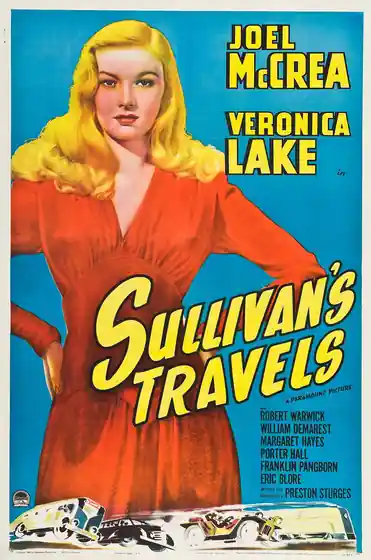
The film's poster ranked 19th on Premiere magazine's list of the '25 Best Movie Posters of All Time'.
- #093
Studio boss Mr. LeBrand seems to be inspired by William LeBaron, Sturges's supporter and head of production at Paramount; LeBrand's caustic right-hand man Mr. Hadrian resembles producer B. G. 'Buddy' DeSylva, who took over from LeBaron the year the film was released. Robert Warwick and Porter Hall, who play these roles, physically resemble the real people. As the scene implies, director Sturges had a much harder time working with DeSylva without LeBaron's mediation.
- #094
The film was selected for the National Film Registry in 1990 on the grounds that it is 'culturally, historically, or aesthetically significant'.
- #095
The American Film Institute ranked it the 61st greatest film of all time in 2007; this is the film's first entry on the list.
- #096
The film's title is taken from Jonathan Swift's 1726 novel 'Gulliver's Travels'; just like the novel's protagonist, Sullivan embarks on a journey of self-discovery. Ironically, Paramount had also released an animated 'Gulliver's Travels' film produced by Max Fleischer in 1939.
- #097
It was included in the American Film Institute's 1998 list of 400 films nominated for the 100 best American films.
- #098
On 'Norm MacDonald Live', Jerry Seinfeld said that his favorite film in terms of subject matter is 'Sullivan's Travels', while the most enjoyable film to watch is 'The Graduate'.
- #099
It has a 100% positive rating on Rotten Tomatoes based on 37 critic reviews.
- #100
'Lux Radio Theater' broadcast a 60-minute radio adaptation of the film on November 9, 1942, with Veronica Lake reprising her role from the film.
- #101
It is included in the book '1001 Movies You Must See Before You Die', edited by Steven Schneider.
- #102
The film is number 118 in the Criterion Collection.
- #103
The 2024 equivalent of the $4,000 Sullivan earned from the 1939 film 'Ants in Your Plants' is approximately $90,410.07.
Career & Awards (1)
- #104
It was included on the American Film Institute's 1998 list of 400 films nominated for the 100 Greatest American Movies.
Sources & editorial notes
Reference databases
- Wikipedia
- IMDb
Information from external sources is independently selected, consolidated and edited by Arka Evren. Sources are listed for verification and further reading. Encyclopedia text is used under its licence (CC BY-SA). How we work