

FILM · 2008 · USA
The Curious Case of Benjamin Button
- Directed by
- David Fincher
- Runtime
- 166 min
- Studio
- Paramount Pictures, Warner Bros. Pictures, The Kennedy/Marshall Company
30 archived facts 6 topics 1 source Last reviewed Nov 2026
Born under unusual circumstances, Benjamin Button springs into being as an elderly man in a New Orleans nursing home and ages in reverse. Twelve years after his birth, he meets Daisy, a child who flits in and out of his life as she grows up to be a dancer. Though he has all sorts of unusual adventures over the course of his life, it is his relationship with Daisy, and the hope that they will come together at the…

30 Interesting Facts About The Curious Case of Benjamin Button
Interesting Facts (19)
- #001
Roy Cleveland Sullivan (1912-1983) holds the Guinness World Record for being struck by lightning seven times. Mr. Daws remembers being hit in his car, just as Sullivan was in 1969: "Did I ever tell you I've been struck by lightning seven times? Once when I was just sitting in my truck, minding my own business."
- #002
Director Tarsem Singh was brought in to shoot the short montage of Benjamin backpacking through India and Cambodia after David Fincher found out that Tarsem and Brad Pitt were both going to be in Southeast Asia at the same time.
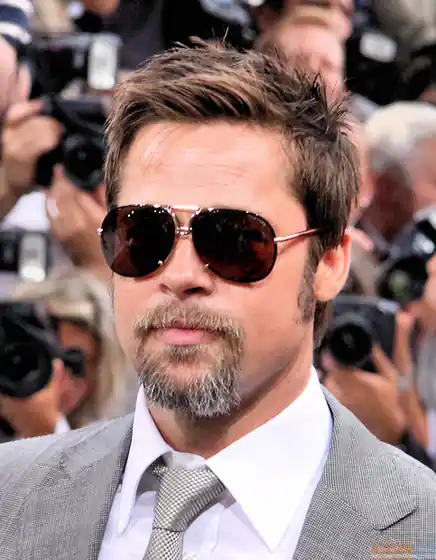
The Curious Case of Benjamin Button (2008): Benjamin ButtonImage: Wikimedia Commons · SpreePiX from Budapest, HU, CC BY 2.0 - #003
- #004
Contains a major spoiler — show
Julia Ormond shot her scenes in the last two weeks of filming. During that stretch, Cate Blanchett spent four hours a day in makeup to play the dying Daisy, and because of the intense heat from the studio lights and blankets, she could only stay in the hospital bed for short periods.
- #005
In real life, a man really was kept in a monkey house. Ota Benga was taken from the Congo in 1904 and put on display in the monkey house at the Bronx Zoo; his teeth had been filed to sharp points, and he shot arrows at onlookers. Recognizing that this was "inhumane," the zoo released him in 1906, and he lived in an orphanage until 1910, when he moved to Virginia. He got a formal education, went to work in a tobacco factory and started planning his return to the Congo, but the outbreak of World War I made that impossible, and he took his own life in 1916.
- #006
Contains a major spoiler — show
David Fincher admitted that Brad Pitt didn't keep playing Benjamin in his last scenes as a child and a baby because the effects budget had run out. Fincher argues, though, that switching to different actors from that point on worked well, since Benjamin is essentially a different character by then.
- #007
- #008
According to director David Fincher and writer Eric Roth, studio executives insisted on moving F. Scott Fitzgerald's original story, which starts just before the Civil War and ends in the Jazz Age, forward to the 1960s to appeal to Baby Boomers, on the assumption that they would relate more to their own era.
- #009
- #010
- #011
- #012
- #013
- #014
- #015
- #016
- #017
Brad Pitt had already worked with Cate Blanchett in Babel (2006), Julia Ormond in Legends of the Fall (1994) and Tilda Swinton in Burn After Reading (2008). He had also appeared alongside Jason Flemyng in Snatch (2000).
- #018
- #019
Production Story (5)
Behind the Scenes (1)
- #025
The look that visual effects supervisor Eric Barba and special makeup effects artist Greg Cannom created for the child Benjamin resembles the later stages of Hutchinson-Gilford Progeria Syndrome, a rare disease that causes extremely rapid aging. Its best-known screen portrayals are Robin Williams's character in Jack (1996) and Susan Sarandon's character in The Hunger (1983).
Easter Eggs & References (1)
Deeper Meaning (2)
- #027
- #028
The rights to the story were first bought in the late '70s by Ray Stark, with Jack Nicholson lined up to play Benjamin. They were later acquired by Steven Spielberg, Kathleen Kennedy and Frank Marshall under the Amblin banner, and when Kennedy and Marshall left to set up their own company, they took the rights with them, only starting to develop the film in 1994. David Fincher admitted he never read the short story; he only read Eric Roth's 240-page screenplay, which was brought to his attention by an agent who had once been Stark's assistant. His resolve to make the film became clear after his father died in 2002.
Career & Awards (2)
Sources & editorial notes
Reference databases
- Wikipedia
- IMDb
Information from external sources is independently selected, consolidated and edited by Arka Evren. Sources are listed for verification and further reading. Encyclopedia text is used under its licence (CC BY-SA). How we work