
FILM · 1940 · USA
The Great Dictator
- Directed by
- Charlie Chaplin
- Runtime
- 125 min
- Studio
- Charles Chaplin Productions
32 archived facts 4 topics 1 source Last reviewed Oct 2026
Dictator Adenoid Hynkel tries to expand his empire while a poor Jewish barber tries to avoid persecution from Hynkel's regime.
Summary: TMDB

All facts (32)
- #001
The film was banned in every country under Nazi occupation, but it was screened for German audiences once. In the occupied Balkans, members of a resistance group stole reels from a military cinema in Greece and replaced them with this film. The German soldiers enjoyed the screening until they realized what it was; some reportedly left the cinema, while others fired at the screen.
- #002
According to documentaries about the making of the film, Sir Charles Chaplin grew increasingly troubled by mocking Adolf Hitler as he heard of Hitler's actions in Europe. Ultimately, the invasion of France inspired Chaplin to change the film's ending to include his famous speech.
- #003
This film was entirely financed by Sir Charles Chaplin and became his biggest box-office success.
- #004
Sir Charles Chaplin accepted an invitation to deliver the film's rousing speech on national radio.
- #005
Apart from the improvised fake German, Sir Charles Chaplin wrote the entire script in screenplay form. He also wrote the screenplay for every movement in the globe dance scene himself.
- #006
Sir Charles Chaplin got the idea when his friend Alexander Korda noticed that his own on-screen persona resembled Adolf Hitler somewhat. Chaplin later learned that the two were born a week apart (Chaplin on 4/16/1889, Hitler on 4/20/1889), were roughly the same height and weight, and both struggled with poverty until achieving great success in their fields. When Chaplin learned of Hitler's policies of racial persecution and nationalist aggression, he used these similarities as inspiration for attacking Hitler in the film.
- #007
Released 11 years after the end of the silent era, this film was Sir Charles Chaplin's first fully talking, all-sound film.
- #008
Some of Sir Charles Chaplin's colleagues tried to dissuade him from his final speech about peace. A film salesman told him the speech would cost him a million dollars in ticket revenue. Chaplin replied: "Well, I don't care if it's five million."
- #009
Sir Charles Chaplin said that wearing Hynkel's costume made him feel more aggressive, and those close to him recalled that it was harder to work with him on the days he shot as that character.
- #010
In his 1964 autobiography, Sir Charles Chaplin said that had he known the true scale of Nazi persecution, he "could not have made fun of their homicidal madness."
- #011
Sir Charles Chaplin spent hours studying Adolf Hitler's films so he could imitate his manner of speaking perfectly. In the end, he did it with a combination of meaningless syllables and isolated German words.
- #012
When Sir Charles Chaplin heard that the studios were trying to discourage him from making the film, President Franklin D. Roosevelt sent an envoy named Harry Hopkins to Chaplin to encourage him to make it.
- #013
When Sir Charles Chaplin first announced he would make this film, the British government, then pursuing a policy of appeasing Nazi Germany, declared it would ban the film. By the time the film was released, however, Britain was at war with Germany and in the midst of the bombing, so the government's stance toward the film had changed completely, given its obvious value as propaganda.
- #014
The German that Hynkel speaks is complete nonsense. The language written on the store signs, posters and so on in the "Jewish quarter" is Esperanto, a language created in 1887 by Dr. Ludwik Lejzer Zamenhof, a Polish Jew.
- #015
The film received five nominations at the 1940 Oscars but won none of them. Sir Charles Chaplin was hurt by this, having spent 27 years in Hollywood. James Stewart, who won Best Actor (Chaplin was nominated), had not even planned to attend the ceremony until someone told him hours before it began to go. Interestingly, this was the first year the winners remained secret until they were announced at the ceremony.
- #016
During filming, Sir Charles Chaplin's relationship with Paulette Goddard began to deteriorate, though both tried hard to save it. In 1942, at an engagement in New York, Chaplin proudly introduced her as "my wife" (a position that was always only half-acknowledged), but within a few months they divorced amicably, and Chaplin, known for his meticulousness, accepted a generous divorce settlement. In the 1960s both Chaplin and Goddard were living in Switzerland, but as they had no contact, they saw each other in a café and had lunch together. It was their last meeting.
- #017
The film was banned in Spain until the dictator Francisco Franco died in 1975. It was released there in April 1976.
- #018
Douglas Fairbanks visited the film's set in 1939 and laughed almost uncontrollably at the scene being shot. He said goodbye to Sir Charles Chaplin and left. Within a week he was dead, and it was Chaplin's last sight of him.
- #019
As the premiere approached, Sir Charles Chaplin had good reason to worry about the gamble he was taking with political commentary. Gallup polls revealed that 96 percent of Americans opposed the US joining the war in Europe, and threatening letters from Nazi sympathizers poured into the studio. At one point he even asked a friend in the New York Longshoreman's Union whether some union members could be present at the opening to prevent a pro-Nazi demonstration.
- #020
Production of the film began in 1937, when many people did not believe Nazism was a threat as much as they did at the film's premiere in 1940. However, the first anti-Nazi satire film was The Three Stooges' You Nazty Spy! (1940), an 18-minute short released nine months earlier.
- #021
Sir Charles Chaplin blinked fewer than ten times throughout his final speech, which lasts more than five minutes.
- #022
Hynkel's stormtroopers wear Imperial German spiked helmets (Pickelhauben) left over from the First World War era, with the spikes on top removed. They wear them backwards, so the neck guard actually becomes the front visor and vice versa.
- #023
Sir Charles Chaplin cast his wife, Paulette Goddard, as the female lead, a washerwoman. He insisted that she scrub the entire set floor, only for him to reject her. Chaplin halted filming until she agreed to do it. (Their relationship was shaky at this stage, which may explain how he treated her.)
- #024
After the Allied victory, General Dwight D. Eisenhower personally requested French-dubbed versions of the film from Sir Charles Chaplin for distribution in France.
- #025
Sir Charles Chaplin planned scenes of German soldiers waltzing in the goose step and Japanese bombers dropping toys on Chinese children, intercut with photographs of people around the world embracing his message of peace. He actually began shooting some of these scenes before abandoning the idea. They survive in home movies shot by his son.
- #026
Some Eva Braun biographies published decades after the war reveal that Adolf Hitler greatly enjoyed private screenings of the film. He even remarked that the Dictator's office in the film closely resembled his own office in the Berlin Chancellery. And the scene in which Sir Charles Chaplin plays with the globe made him laugh.
- #027
It is the only Best Picture Oscar nominee starring Sir Charles Chaplin.
- #028
Color behind-the-scenes footage exists, including the only images of the cancelled ending in which the soldiers join a folk dance.
- #029
The scene in which Sir Charles Chaplin dances with the globe originated in a 1928 home movie in which Chaplin similarly played with a globe.
- #030
Sir Charles Chaplin spent some time trying to simulate the sound of an airplane engine by various methods, but was outdone by one of his sound technicians, who went to an airport to capture the appropriate sounds.
- #031
The film was Sir Charles Chaplin's biggest box-office hit to date, grossing about 5 million US dollars at the time.
- #032
Sir Charles Chaplin and Jack Oakie enjoyed their roles so much that they often stayed in character after that day's shooting was finished. They even attended a party hosted by Mary Pickford in full costume.
Continue through the archive
 Charlie ChaplinDirector
 Paulette Goddardas Hannah
 Jack Oakieas Benzino Napaloni, Dictator of Bacteria
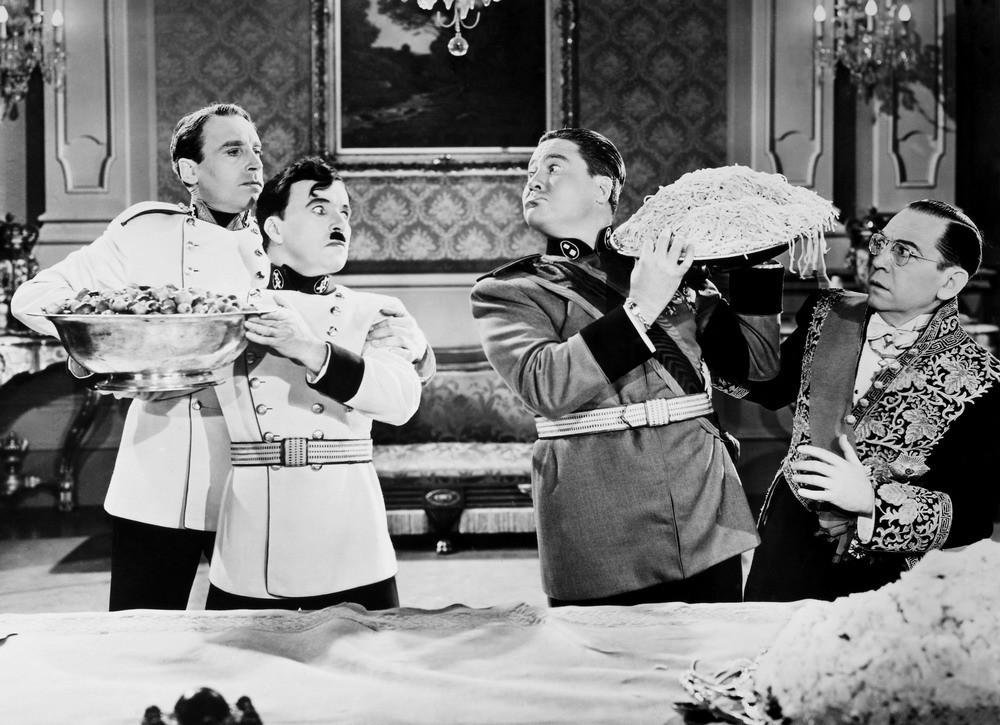 Henry Daniellas Garbitsch
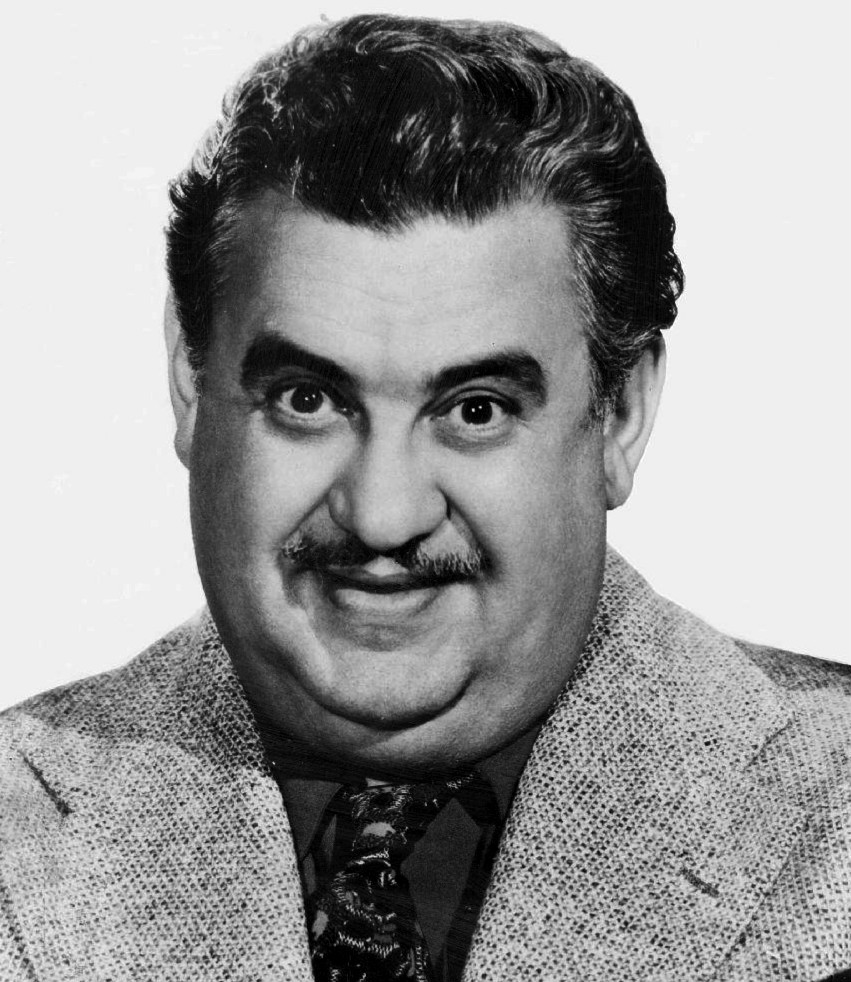 Billy Gilbertas Field Marshal Herring
 Rudolph Andersas Tomanian Commandant at Osterlich / Robert O. Davis
 Sig Arnoas Compact Parachute Inventor (uncredited)
 The KidSame creators
 The Gold RushSame creators
Sources & editorial notes
Reference databases
Sources for the entries on this page
- IMDb IMDb kaydı
Information from external sources is independently selected, consolidated and edited by Arka Evren. Sources are listed for verification and further reading. Encyclopedia text is used under its licence (CC BY-SA). How we work