

FILM · 2014 · NEW ZEALAND
The Hobbit: The Battle of the Five Armies
- Directed by
- Peter Jackson
- Runtime
- 144 min
- Studio
- New Line Cinema, Metro-Goldwyn-Mayer, WingNut Films
151 archived facts 7 topics 1 source Last reviewed Nov 2026
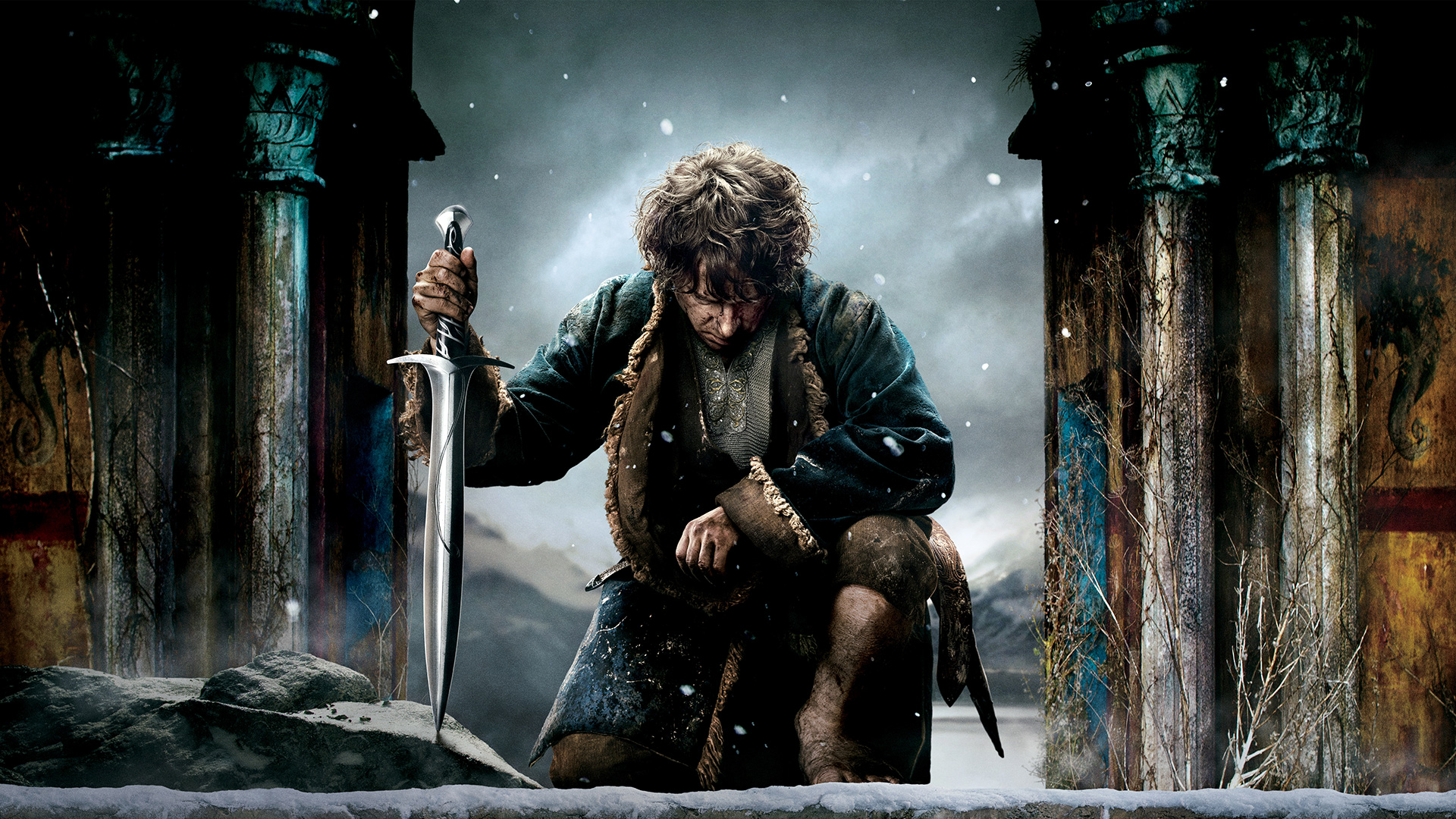
Following Smaug's attack on Laketown, Bilbo and the dwarves try to defend Erebor's mountain of treasure from others who claim it: the men of the ruined Laketown and the elves of Mirkwood. Meanwhile an army of Orcs led by Azog the Defiler is marching on Erebor, fueled by the rise of the dark lord Sauron. Dwarves, elves and men must unite, and the hope for Middle-Earth falls into Bilbo's hands.
151 Interesting Facts About The Hobbit: The Battle of the Five Armies
Interesting Facts (44)
- #001
- #002
Sir Peter Jackson met Evangeline Lilly after he finished filming The Lord of the Rings trilogy, and liked her so much that he promised to include her in J.R.R. Tolkien's other stories, should they be made into film. When they started filming The Hobbit, Lilly received a phone call from Jackson, that he created the character of Tauriel for her.
- #003
- #004
- #005
- #006
The Extended Edition (not the theatrical cut) of this film is the only Middle-earth movie in the franchise to receive an R rating by the MPAA. It is also the first Extended Edition with the second least amount of new footage (twenty minutes). The movie with the least amount of new footage is The Hobbit: An Unexpected Journey (2012) (thirteen minutes).
- #007
This movie is the shortest movie in Sir Peter Jackson's Middle-earth film franchise. The Hobbit: An Unexpected Journey (2012) is one hundred sixty-nine minutes, The Hobbit: The Desolation of Smaug (2013) is one hundred sixty-one minutes, The Lord of the Rings: The Fellowship of the Ring (2001) is one hundred seventy-eight minutes, The Lord of the Rings: The Two Towers (2002) is one hundred seventy-nine minutes, The Lord of the Rings: The Return of the King (2003) is two hundred one minutes, and this movie is one hundred forty-four minutes. (This list does not include the Extended Editions.)
- #008
- #009
Sir Ian Holm's final film before his death on June 19, 2020. Actor Orson Bean, who preceded him in the roles of both Bilbo (Bean played the role in The Hobbit (1977)) and Frodo (Bean in The Return of the King (1980), Holm in the 1981 BBC "Lord of the Rings" radio drama), also died earlier that same year.
- #010
- #011
- #012
- #013
- #014
Orlando Bloom performed all his own stunts in the scene of Legolas fighting orcs while hanging upside-down from a giant bat.
- #015
- #016
Lee Pace's parents visited him on set, and Sir Peter Jackson then offered them roles as extras in the film. They were cast as Lake Town villagers and shot a scene with Sir Ian McKellen. However, according to Pace, they were cut from the film because his father was "hamming it up" in the scene.
- #017
- #018
- #019
- #020
After finishing shooting The Lord of the Rings trilogy, Sir Peter Jackson met Evangeline Lilly and liked her so much that he promised to include her if J. R. R. Tolkien's other stories were ever adapted for film. When they began shooting The Hobbit, Lilly received a phone call from Jackson telling her that he had created the character Tauriel for her.
- #021
- #022
Sir Peter Jackson confirmed that principal photography on the films was completed after two hundred and sixty-six days, which matches the same duration as The Lord of the Rings trilogy. In a production video, Jackson described this achievement as getting to experience a once-in-a-lifetime experience twice.
- #023
- #024
- #025
In the film's epilogue, an aging Bilbo sits watching the One Ring. When Gandalf knocks at his door, he stands up to answer it and keeps the ring in the right pocket of his waistcoat. This creates a direct link to the beginning of The Lord of the Rings: The Fellowship of the Ring (2001), when Bilbo reaches into the same pocket to touch the One Ring while talking with Gandalf in the kitchen.
- #026
- #027
When the Hobbit film series was in early development under then-director Guillermo del Toro, it was to adapt the book as a single film followed by a set of "bridge movies" between it and The Lord of the Rings. The project later became a two-film release; the first film was The Hobbit: An Unexpected Journey (2012) and the second carried the subtitle "There and Back Again". When the decision was made in July 2012 to expand the series to three films, that second subtitle was kept for the final film, while the second film became The Hobbit: The Desolation of Smaug (2013). However, in April 2014 Sir Peter Jackson announced that the third film's subtitle had been changed to "The Battle of the Five Armies". The main reasons for the change were that the battle for the title was the film's central focus, but also, as Jackson stated on his Facebook page, "'There and Back Again' felt like the right name for the second of a two film telling of the quest to reclaim Erebor, when Bilbo's arrival there, and departure, were both contained within the second film. But with three movies, it suddenly felt misplaced—after all, Bilbo has already arrived 'there' in the Desolation of Smaug."
- #028
This is the only Middle-earth film containing any profanity, spoken unsurprisingly by Sir Billy Connolly's character Dain Ironfoot. Dain shouts "GO SODDING OFF!" at all the non-Dwarf soldiers outside the gate of Erebor, a common British insult; he later refers to them with the similar epithet "bastards".
- #029
At the end of the film, when Gandalf knocks on Bilbo's door, the exchange between Bilbo and Gandalf — "No thank you! We don't want any more visitors, well-wishers or distant relations!" — appears to use audio recordings taken directly from The Lord of the Rings: The Fellowship of the Ring (2001).
- #030
- #031
- #032
- #033
- #034
- #035
This film begins by throwing the viewer directly into the action and continues straight on from the end of the previous film, making it the only film in Sir Peter Jackson's Middle-earth series without a prologue or a flashback or rewind near the beginning. The Hobbit: An Unexpected Journey (2012) opens with Bilbo telling the story of the fall of Erebor; The Hobbit: The Desolation of Smaug (2013) rewinds to show Thorin meeting Gandalf in Bree and planning to retake Erebor; The Lord of the Rings: The Fellowship of the Ring (2001) opens with Galadriel recounting the War of the Elves and Sauron at the end of the Second Age, Sauron's defeat and the Ring's passage from Isildur to Gollum to Bilbo; The Lord of the Rings: The Two Towers (2002) rewinds Gandalf's struggle with the Balrog of Moria, then shows them falling and fighting in the lake below Khazad-Dum; and The Lord of the Rings: The Return of the King (2003) opens with Deagol finding the One Ring in the Gladden river, being killed by his brother Smeagol, and Smeagol's descent into Gollum.
- #036
Azog's weapon arm was redesigned for this film. In the first two Hobbit films, the arm Thorin cut off at the gates of Moria is replaced by a thin, spiked claw made of iron-like metal. In this film it has a curved double blade whose design is almost Elven in style (and closely resembles the Klingon bat'leth from Star Trek).
- #037
- #038
- #039
- #040
- #041
- #042
- #043
- #044
One of the first lines spoken in the film is "I'm trying to evacuate myself here." It is said by The Master of Laketown (played by the renowned master of the witty remark, comedian and clever clog Stephen Fry). It is meant to mean "I'm trying to get myself out of here." Grammatically, however, you evacuate a container, not its contents — a building, not people. So trying to evacuate himself is a very clever way for Mr. Fry to show that, in light of the dragon's arrival, the Master has soiled himself.
Production Story (41)
- #045
- #046
Sir Peter Jackson confirmed that principal photography on the movies had finished after two hundred sixty-six days, the same amount of days as The Lord of the Rings trilogy. Jackson has described this accomplishment as having done a once in a lifetime experience twice, in a production video.
- #047
This film begins by jumping straight into the action and continuing directly from the end of the previous movie, making it the only film in Sir Peter Jackson's Middle Earth series that does not feature a flashback or rewind at or near the beginning. The Hobbit: An Unexpected Journey (2012) begins with Bilbo narrating the fall of Erebor to Smaug; The Hobbit: The Desolation of Smaug (2013) rewinds to show Thorin meeting Gandalf in Bree and planning to retake Erebor; The Lord of the Rings: The Fellowship of the Ring (2001) begins with Galadriel narrating the War of Elves and Sauron at the end of the Second Age, the defeat of Sauron, and the course of the ring from Isildur, to Gollum, to Bilbo; The Lord of the Rings: The Two Towers (2002) rewinds to Gandalf's fight with the Balrog of Moria, then shows them falling and battling in the lake below Khazad-Dum; and The Lord of the Rings: The Return of the King (2003) begins with Deagol finding the One Ring in the Gladden river, being murdered by his brother Smeagol, and Smeagol's descent into Gollum.
- #048
- #049
Though the movie revolves around the thirteen Dwarves, there is less screentime devoted to Thorin's company in the theatrical version, compared to the previous movies. However, Sir Peter Jackson claims the Extended Version added thirty minutes of film, thus making it the longest addition in the franchise.
- #050
- #051
- #052
When the Hobbit film franchise was in early development under then-director Guillermo del Toro, it was going to adapt the book as a single movie, to be followed by a "bridge movie" set between it and The Lord of the Rings. The project was then changed to a two-movie arc, with the first movie subtitled The Hobbit: An Unexpected Journey (2012) and the second movie subtitled "There and Back Again". When the decision was made in July, 2012, to extend the franchise to three movies, this second subtitle was kept for the final movie, while the second movie became The Hobbit: The Desolation of Smaug (2013). However, in April 2014, Sir Peter Jackson announced that the third movie's subtitle had been changed to "The Battle of the Five Armies". The primary reasons for the change were that the title battle is the central focus of the movie, but also, as Jackson stated on his Facebook page, "'There and Back Again' felt like the right name for the second of a two film telling of the quest to reclaim Erebor, when Bilbo's arrival there, and departure, were both contained within the second film. But with three movies, it suddenly felt misplaced. After all, Bilbo has already arrived 'there' in the Desolation of Smaug."
- #053
- #054
Reports of studio interference were confirmed by Sir Peter Jackson, Graham McTavish, and Evangeline Lilly, with McTavish confirming the theatrical cut for this movie isn't what Jackson intended, and that the extended cuts of all three movies are closer to Jackson's original vision. Amongst other things, the studio demanded more emphasis on the love story.
- #055
The three songs from The Hobbit trilogy ("Song Of The Lonely Mountain", "I See Fire" and "The Last Goodbye") have been performed by men: Neil Finn, Ed Sheeran, and Billy Boyd, respectively. In the opposite way, the three songs from The Lord of the Rings' trilogy ("May It Be", "Gollum's Song" and "Into the West") have been performed by women: Enya, Emiliana Torrini, and Annie Lennox.
- #056
- #057
- #058
- #059
- #060
Contains a major spoiler — show
In the book, Bolg is killed by Beorn during the Battle Of The Five Armies. In the movie, he is killed by Legolas, outside of the main battle. Bolg's father Azog is killed by Thorin in the movie, also away from the battlefield; in the book, Azog has already been killed 143 years earlier, by Thorin's cousin Dain during the Battle outside the Gates of Moria. The Hobbit: An Unexpected Journey (2012) briefly showed this battle, but the movie adaptation kept Azog alive to be the returning villain throughout the Hobbit trilogy.
- #061
In The Hobbit: The Desolation of Smaug (2013), Gandalf's old staff was destroyed in his battle against Sauron, and in the Extended Edition of this film Radagast gives him a new staff. While filming the Battle of Dale, however, a member of the props department accidentally handed Sir Ian McKellen the old staff. Sir Peter Jackson did not notice the mistake until most of the footage had been shot, so it had to be changed digitally during post-production.
- #062
A puppet of Sir Ian McKellen was used in the scenes in which Galadriel catches Gandalf. The puppet was named Michael Gambon (it even appeared under that name on call sheets (as seen in the documentary in the appendices)) because Gambon and McKellen were sometimes confused with each other.
- #063
When the film was presented at a panel at San Diego Comic Con, many fans camped out in front of the hall the day before the panel to get seats. In the middle of the night, the fans were woken by actors Lee Pace and Andy Serkis, who greeted the waiting fans and handed out autographs and photos for hours. Eventually Pace passed out from exhaustion and shared the same bed with a fan.
- #064
- #065
Near the end of the film, when Bilbo comes home to find his belongings being sold at auction, he takes Lobelia Sackville-Baggins's spoons. This is a reference to the first Hobbit film, The Hobbit: An Unexpected Journey (2012), in which Frodo asks Bilbo why he kept some of his belongings hidden. Bilbo tells him it is because he once caught Lobelia trying to take his spoons. In the book, the spoons were never found. In the film, Bilbo sets them down on the ground before entering Bag End, meaning it is possible that Lobelia took them again.
- #066
- #067
Near the end of the film, Thranduil tells his son Legolas to find the Ranger Strider (Aragorn in The Lord of the Rings). According to the timeline of the Middle-earth films, Aragorn was roughly twenty-seven years old at that point. However, there is a slight discrepancy between the timelines of the films and the novels. In fact, The Hobbit takes place in the Third Age in 2941-2942. Aragorn was born in the Third Age in 2931, was between ten and eleven years old at the end of the Battle of the Five Armies, and was hardly likely to be a Ranger. However, in The Hobbit: An Unexpected Journey (2012), an elderly Bilbo begins recounting events that took place in 3018, sixty years before The Lord of the Rings: The Fellowship of the Ring (2001), which begins in the Third Age when Aragorn is eighty-seven years old.
- #068
- #069
- #070
- #071
- #072
- #073
In the novel, the Master of Lake-town is eventually given a fair share of the treasure of Erebor, but, consumed by greed, he flees with as much gold as he can carry. He later starves to death in a wasteland. Since the Master is killed early in the film, Alfrid was given a similar fate in the extended edition, in which his greed ultimately kills him.
- #074
Azog's primary goal throughout the trilogy is to kill Thorin and end Durin's line. If Daín II Ironfoot and Thorin's sister Dís were not technically of Durin's line, Azog would have succeeded. In fact, although Dain is Thorin's closest cousin and therefore his heir after the deaths of Thorin, Fili and Kili, he would also have had to eliminate most of the company, since Oin, Gloin, Balin and Dwalin are also descendants of Durin.
- #075
In the book, Bolg is killed by Beorn during the Battle of the Five Armies. In the film he is killed by Legolas, away from the main battle. Bolg's father Azog is likewise killed by Thorin away from the battlefield in the film; in the book Azog had been killed 143 years earlier by Thorin's cousin Dain during the Battle outside the Gates of Moria. The Hobbit: An Unexpected Journey (2012) briefly showed that battle, but the film adaptation kept Azog alive as a recurring villain throughout the Hobbit trilogy.
- #076
In the Extended Edition, in the tense scene following Thorin's threat to kill Bilbo and Bilbo's escape, Bard tries to reason with him about returning the Arkenstone safely. Thranduil says Bard should sell the Arkenstone to Ecthelion of Gondor. Ecthelion is the Steward of Gondor and the father of Denethor, played by John Noble in The Lord of the Rings trilogy.
- #077
- #078
Bilbo puts on the One Ring near the thrilling fight scene between Thorin and Azog in order to warn Thorin about Bolg's reinforcing army. When he does so, he sees the Elves as beings of white light and the Orcs as black shadows. This may be a reference to a scene in The Fellowship of the Ring featuring Saruman and the Uruk-Hai, known as Lurtz, in which Saruman reveals that the Orcs are in fact Elves who turned treacherous and joined forces with Morgoth and Sauron.
- #079
In the Extended Edition, during the attack on Dol Guldur to rescue Gandalf, Sauron orders an Orc lieutenant to bring him the Elven Ring of Fire, and Gandalf is surprised to find it on his own person. In the film universe, no explanation is given for how Gandalf came to possess one of the Three Rings of the Elves. In the novels, Narya was given to Gandalf by Cirdan the Shipwright, lord of the Grey Havens, who came from Aman early in the Third Age. Cirdan foresaw that Gandalf would need it to sustain himself and to kindle the fire of spirit in the Free Peoples to resist Sauron.
- #080
- #081
- #082
- #083
- #084
Bombur blowing the horn before the battle was a last-minute addition by Sir Peter Jackson. Sir Richard Taylor of Weta Workshop said the horn support was completed only a few days before the scene was shot. Because of the tight schedule, the Weta team could not make a lightweight support. The horn, made of fiberglass, was extremely heavy.
- #085
Behind the Scenes (21)
- #086
Lee Pace's parents visited him on-set, and subsequently Sir Peter Jackson offered them to be extras in the movie. They were given roles as Lake Town villagers, and filmed a scene with Sir Ian McKellen. However, according to Pace, they were cut out of the movie, because his father was "hamming it up" during his scene.
- #087
Despite appearing in all three movies of the trilogy, Cate Blanchett was on set for only eight days of the entire production.
- #088
- #089
- #090
Gandalf's old staff was destroyed during his battle against Sauron in The Hobbit: The Desolation of Smaug (2013), and he was given a new one by Radagast in the Extended Edition of this film. However, while filming the Battle of Dale, a member of the prop department accidentally gave Sir Ian McKellen the old staff. Sir Peter Jackson did not notice the mistake until most of the footage had already been shot, so it had to be digitally replaced during post-production.
- #091
- #092
- #093
Bombur blowing the horn before the battle was a last-minute addition by Sir Peter Jackson. Sir Richard Taylor of Weta Workshop said the horn prop was completed only days before the scene was filmed. Due to the rushed schedule, the Weta team was not able to make a lightweight prop. The horn, made of fiberglass, was extremely heavy.
- #094
- #095
- #096
When the movie was promoted with a panel at San Diego Comic Con, several fans camped outside the hall the day before the panel in order to get seats. In the middle of the night, the fans were woken up by cast members Lee Pace and Andy Serkis, who greeted the waiting fans and delivered autographs and photos for hours. In the end, Pace passed out from exhaustion, and shared a mattress with a fan.
- #097
- #098
- #099
- #100
Sir Billy Connolly was struggling with the early stages of Parkinson's disease, and receiving treatment for prostate cancer in the early 2010's. Although he visited New Zealand to have prosthetic make-up designed for his role as Dain Ironfoot, the physicality of the role was too much of a strain on his health. Rather then recast the character, Sir Peter Jackson decided to have Sir Billy Connolly record all his dialogue and fully digitize the character in post production.
- #101
- #102
- #103
Contains a major spoiler — show
Sir Peter Jackson claimed that the nonverbal scene of Gandalf sitting next to Bilbo and fumbling with his pipe was Sir Ian McKellen's last day during production. Jackson became overwhelmed with sentiment that he was filming McKellen's swan song as Gandalf, and made the decision to disregard the scripted dialogue for the scene.
- #104
Contains a major spoiler — show
As seen in the behind the scenes footage of the Extended Edition, the last shot filmed, is that of Kíli watching his just killed brother Fíli fall down on Ravenhill, which was shot by the Second Unit. The first main unit just finished filming Thorin fighting Azog on the ice plate beforehand.
- #105
- #106
Sir Billy Connolly was battling the early stages of Parkinson's disease and was being treated for prostate cancer in the early 2010s. Although he traveled to New Zealand to have prosthetic makeup applied to suit the role of Dain Ironfoot, the physicality of the role put too much strain on his health. Rather than recast the character, Sir Peter Jackson decided to have Sir Billy Connolly record all of his dialogue and to make the character entirely digital in post-production.
Characters & Cast (4)
- #107
Azog's weapon-arm is redesigned for this film. In the first two Hobbit films, he has a thin spike-like claw made of iron-like metal to replace the arm Thorin sliced off at Moria's gates. In this film, it's a curved double blade that is almost Elvish in its design (and bears a close resemblance to a Klingon bat'leth from Star Trek).
- #108
- #109
- #110
It is also his last live-action film, as all his following performances were only vocal. "Leave Sauron to me" is Lee's last line in the film, making it the last on-screen line delivery of his career. He posthumously reprised the role of Saruman in The Lord of the Rings: The War of the Rohirrim (2024), via archival recordings, officially approved by his estate. Lee was one of a handful of cast members to star in both "The Lord of the Rings" and "The Hobbit" trilogies, and was also the only cast member of either trilogy to have met J.R.R. Tolkien.
Easter Eggs & References (37)
- #111
- #112
- #113
- #114
- #115
At the end of the movie, when Gandalf knocks on Bilbo's door, the dialogue between Bilbo and Gandalf "No thank you! We don't want any more visitors, well-wishers or distant relations!" seem to be the audio recordings taken straight from The Lord of the Rings: The Fellowship of the Ring (2001).
- #116
- #117
This is the only Middle-earth movie to have any profanity at all, unsurprisingly spoken by Sir Billy Connolly's character, Dain Ironfoot. Dain yells for all the non-Dwarf soldiers outside the gate of Erebor to "GO SODDING OFF!!!", a common British insult; he later refers to them as "bastards", a similar epithet.
- #118
One of the first lines spoken in the film is "I'm trying to evacuate myself here". The line is said by The Master of Laketown (played by noted wordsmith, comedian and clever clogs Stephen Fry). It is intended to mean "I'm trying to get myself out of here". However, grammatically, you evacuate a container, not the contents i.e. a building, not the people. Thus, trying to evacuate oneself is Mr Fry's very clever way of showing that The Master, in light of the dragon's arrival, has soiled himself.
- #119
- #120
- #121
- #122
- #123
- #124
- #125
- #126
- #127
- #128
- #129
- #130
- #131
- #132
- #133
- #134
At the epilogue of the movie, the aging Bilbo is sitting down looking at the One Ring. When Gandalf knocks his door, he stands up to open it, keeping the ring inside the right pocket of his vest. This establishes a straight connection with the beginning of The Lord of the Rings: The Fellowship of the Ring (2001), when Bilbo, talking with Gandalf in the kitchen, introduces his hand in the same pocket, in order to touch the One Ring.
- #135
Contains a major spoiler — show
In the Extended Edition during the attack on Dol Guldor Fortress to rescue Gandalf, Sauron orders an Orc lieutenant to bring him the Elven Ring of Fire, which Gandalf is surprised to find on his person. No explanation has been given as to how Gandalf in the movie universe is in possession of one of Three Rings for the Elves. In the novels, Narya was given to Gandalf by Cirdan the Shipwright, lord of the Grey Havens, when he arrives from Aman early in the Third Age. Cirdan foresaw that Gandalf would have need of it, to sustain himself and to ignite the fire of spirit in the Free People to resist Sauron.
- #136
- #137
- #138
Contains a major spoiler — show
In the novel, the Master of Lake Town is given a fair share of the Erebor treasure at the end, but consumed by greed, he makes a getaway with whatever gold he can carry. He later dies of starvation in a wasteland. Since the Master gets killed early in the movie, Alfrid was given a similar fate in the extended edition where his greed ultimately kills him.
- #139
Contains a major spoiler — show
In the Extended Edition, during the tense scene after Thorin threatens to kill Bilbo and Bilbo is able to escape, Bard attempts to reason with him for terms for the safe return of the Arkenstone. Thranduil comments that Bard should sell the Arkenstone to Ecthelion of Gondor. Ecthelion is the Steward of Gondor, and is the father of Denethor, played by John Noble in the Lord of the Rings trilogy.
- #140
- #141
Contains a major spoiler — show
Fans of both the Lord of the Rings novels and the movies know what happens to Balin. He attempts to essentially finish Thror's attempt to reclaim the ancient kingdom of Moria from the Orcs, more than likely emboldened with the victory over the Orcs at Erebor in this film, and is killed and entombed in the city regions of the Mines of Moria.
- #142
- #143
Contains a major spoiler — show
Bilbo puts the One Ring on near the climatic fight scene between Thorin and Azog in order to warn Thorin about Bolg's reinforcement army. When he does, he sees the Elves as beings of white light and the Orcs as black shadows. This might be a reference to a scene with Saruman and the Uruk-Hai known as Lurtz in Fellowship of the Ring where Saruman reveals Orcs were originally Elves who turned traitor and joined forces with Morgoth and Sauron.
- #144
Contains a major spoiler — show
Near the end of the movie, when Bilbo gets home to see his things being auctioned off, he takes away spoons from Lobelia Sackville-Baggins. This is a reference to the first hobbit movie, The Hobbit: An Unexpected Journey (2012), when Frodo asks Bilbo why he is hiding some of his things. Bilbo tells him it is because once, he'd caught Lobelia trying to take his spoons. In the book, the spoons were never recovered. In the film, Bilbo sets them down before entering Bag End, so it is possible that Lobelia took them again.
- #145
Contains a major spoiler — show
In the extended edition, the dungeon keeper in Dol Guldur drags Gandalf to an execution block to cut off his hand and take Narya, the ring of fire. The camera angle and the knife he tries to use are reminiscent of the scene in Game of Thrones (2011) involving Jaime Lannister's hand.
- #146
- #147
Contains a major spoiler — show
When Galadriel confronts Sauron, she calls him "servant of Morgoth". In Middle-earth lore, Morgoth was the first Dark Lord and conqueror of Middle-earth, defeated at the end of the First Age; Sauron, Morgoth's lieutenant, took on this role for much of the Second Age, which ended with the One Ring being taken from him. This is the only instance in the entire Middle-earth film series in which Morgoth is explicitly mentioned; in The Lord of the Rings: The Fellowship of the Ring (2001) there is a vague reference in which the Balrog (a type that allied with Morgoth in the First Age) is described as "a demon of the ancient world".
Deeper Meaning (3)
- #148
Contains a major spoiler — show
The Line of Durin is not the only bloodline ended in this film. During Legolas's fight with Bolg, Bolg is killed following Legolas driving his knife into his brain and then throwing him into an icy pit where he is crushed to death by stone bricks. It is heavily implied that Bolg is Azog's son in the Hobbit Trilogy. A while earlier, Bolg had killed Kili in front of Tauriel while Fili was murdered by Azog earlier. Following the fight between Bolg and Legolas, Azog delivers a mortal blow to Thorin who then kills Azog. Thus the bloodline of Durin and Azog are both ended...though, technically, Dain and Thorin's sister Dis are members of that same Bloodline, so Azog lost.
- #149
Contains a major spoiler — show
When Galadriel confronts Sauron, she calls him 'servant of Morgoth'. In Middle-earth lore, Morgoth was the first Dark Lord and conqueror of Middle-earth who was defeated at the end of the First Age; Sauron, Morgoth's lieutenant, took over that role during most of the Second Age, which ended when the One Ring was taken from him. This is the only explicit mentioning of Morgoth in the entire Middle-earth film series; an obscure reference is made in The Lord of the Rings: The Fellowship of the Ring (2001), where the Balrog (a species that had allied with Morgoth during the First Age) is described as "a demon of the ancient world".
- #150
Life & Family (1)
- #151
Contains a major spoiler — show
Towards the end of the movie, Thranduil instructs his son Legolas to go find the Ranger Strider (Aragorn in The Lord of the Rings). Aragorn would have been roughly twenty-seven years old at this time, according to the timeline of the Middle-earth movies. However, there's a slight discrepancy between the timelines of the movies and the novels. In truth, The Hobbit occurs in the Third Age in 2941-2942. Aragorn was born in the Third Age in 2931, making him between ten and eleven years old at the end of the Battle of the Five Armies, and unlikely to be a Ranger. But in The Hobbit: An Unexpected Journey (2012), the old Bilbo begins describing events that occurred sixty years prior to The Lord of the Rings: The Fellowship of the Ring (2001), which begins in the Third Age in 3018, when Aragorn is eighty-seven years old.
Related pages
- The Hobbit: An Unexpected Journey — The Hobbit: The Battle of the Five Armies comes up in the facts on that page
- Sherlock — The Hobbit: The Battle of the Five Armies comes up in the facts on that page
- Guillermo del Toro — The Hobbit: The Battle of the Five Armies comes up in the facts on that page
Sources & editorial notes
Reference databases
- Wikipedia
- IMDb
Information from external sources is independently selected, consolidated and edited by Arka Evren. Sources are listed for verification and further reading. Encyclopedia text is used under its licence (CC BY-SA). How we work