
FILM · 2019 · CANADA
The Lighthouse
32 archived facts 6 topics 1 source Last reviewed Oct 2026
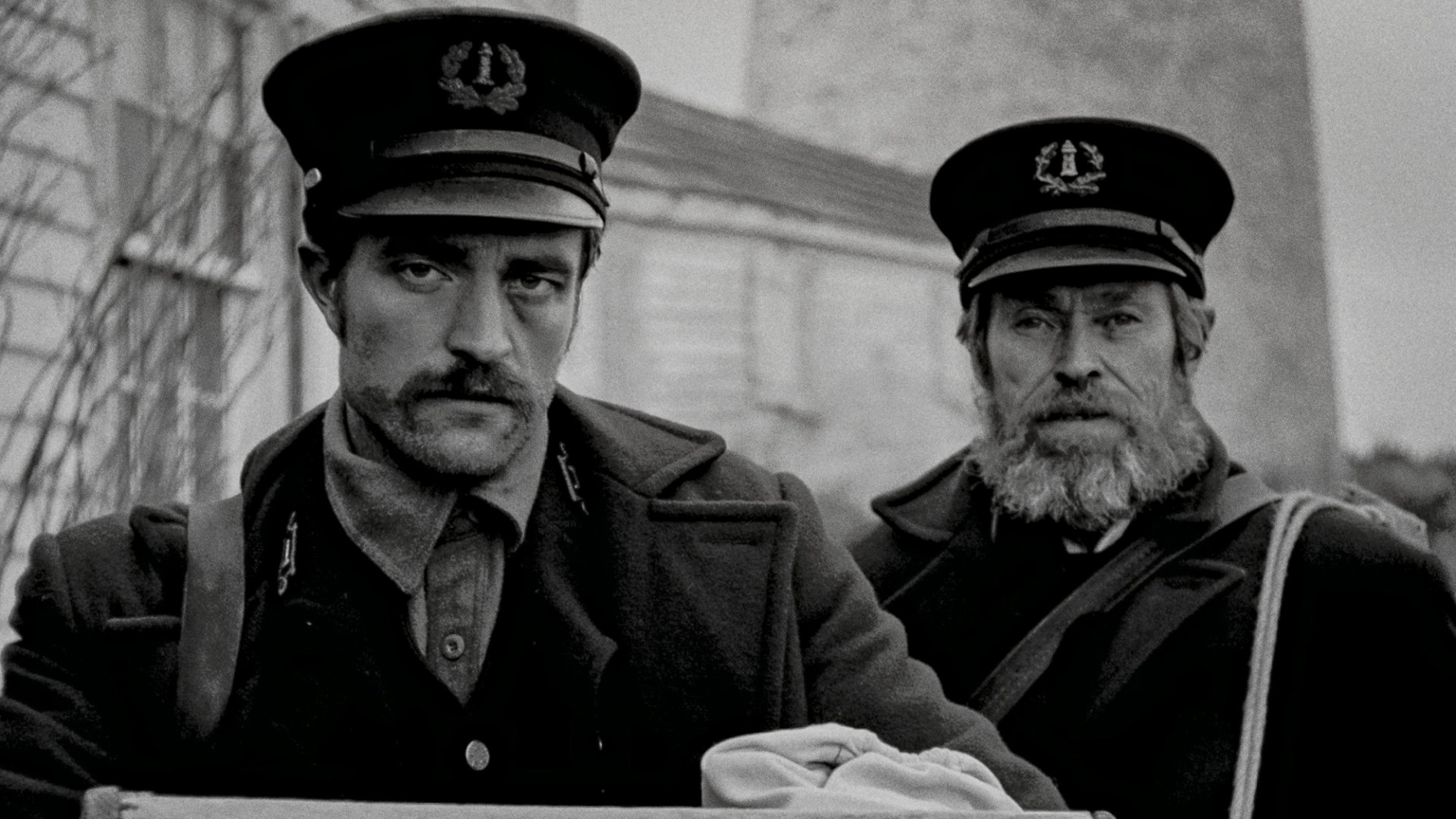
17 Interesting Facts About The Lighthouse
- #002
The scene in which Willem Dafoe's character curses Robert Pattinson's character with a sea curse because he did not like his cooked lobster was shot in a single take. According to director Robert Eggers, Dafoe did not blink for more than two minutes.
- #005
There were versions of the script that were "too clear." Director Robert Eggers's goal was to drive the audience mad and to confuse them just as Thomas Howard/Ephraim Winslow is confused, so the final script was more confusing for the audience.
- #006
The film's aspect ratio is 1.19:1, a nearly square frame used by filmmakers such as Fritz Lang and Georg Wilhelm Pabst in the early years of sound, when room for the soundtrack had to be made on the physical film. They chose this aspect ratio specifically for The Lighthouse because "the spaces in this film are meant to be limited; it's a much more close-up film than The Witch (2015). The idea of widescreen only emerged in the 1950s; we wanted to take people back even further than that."
- #008
Robert Pattinson's and Willem Dafoe's beards were completely real. However, because Pattinson is naturally dark blond, he had to dye his mustache dark. Dafoe's rotten teeth were prosthetics.
- #013
To draw inspiration for the dialogue, the Eggers brothers read works by Herman Melville, Robert Louis Stevenson and others, and consulted 19th-century slang and nautical dictionaries for short jargon. Willem Dafoe's character tends to deliver soliloquies in the style of William Shakespeare and Milton. For naturalistic dialogue, the Eggers brothers turned to the works of Sarah Orne Jewett, a Maine-based poet and novelist known for her writing set on the East Coast, including 'Tales of New England' and 'Strangers and Wayfarers,' both published in 1890. As research for her own work, Jewett interviewed old sailors and farmers, often writing in their dialects.
- #014
At the center of the sound design is a bellowing foghorn, so sound designer Damian Volpe turned to J. J. Jamieson, a craftsman living in Shetland, Scotland, who makes YouTube tutorials on operating and maintaining foghorns, for recordings of a period-appropriate foghorn. Using Jamieson's samples, Volpe altered the sound and created an ominous, memorable foghorn unique to the film. The foghorn heard throughout the film is a recording of the Nash Point Lighthouse Fog Horn (located in Wales, United Kingdom). The Nash Point foghorn is sounded with compressed air.
- #015
The word "wickie," used by Wake, is a 19th-century slang term for a lighthouse keeper, derived from the "wick trimming" required of lighthouse keepers.
- #016
The design of the mermaid's genitals was based on shark lips and was made entirely of silicone. Robert Eggers on the background: "The two-tailed mermaid in the Starbucks (coffee) cup is based on an older mermaid design: medieval and Renaissance mermaids were always split so that these anima figures in male fantasy could fulfill the roles unfairly imposed on them by their male dreamers. But it is not surprising that in the Victorian era they closed mermaids off and made them impenetrable. So the single-tailed mermaid silhouette became the archetypal mermaid look. For people today, and also for how a mermaid would have looked in the period in which the film is set. But we still had to figure out how mermaids could mate and create more mermaids. So we studied shark genitalia."
- #018
The script did not explain what Thomas Wake and Thomas Howard/Ephraim Winslow see when they look into the lighthouse light. Willem Dafoe and Robert Pattinson did not know either while playing these scenes. It is never explained and is left ambiguous. The script only described how their characters felt while looking at the light.
- #019
The mermaid carving Robert Pattinson used in the film was auctioned by A24 during the 2020 COVID-19 pandemic to benefit the NYC Food Bank. It sold to an anonymous buyer for $110,750.
- #021
Every building seen on screen was constructed for the film. The lighthouse complex consisted of two sets: for exterior shots, a full-scale, 70-foot lighthouse tower capable of withstanding 120-kilometer winds was built on a unique volcanic rock outcrop at Cape Forchu in Nova Scotia, Canada. The lighthouse's skeleton was covered in plywood, then wrapped in a thin layer resembling brick cladding, and it was demolished after filming ended. A few interiors were also shot there, but most were built inside sound stages and warehouses outside Halifax, Nova Scotia. During the writing stage, it became clear that maneuvering the camera inside the lighthouse tower would be too cramped.
- #022
Residents of Yarmouth, Nova Scotia (where the lighthouse set was built) liked it so much that some fought to protect and preserve the fake lighthouse while the film was shooting, but it was removed due to safety concerns and because it was made only of wood.
- #023
Director Robert Eggers stated that the scene in which Robert Pattinson's character gets feces smeared on his face was inspired by The Big Lebowski (1998).
- #025
Willem Dafoe did not want to wear a hat in the first dinner scene, but director Robert Eggers wanted his character to look authoritative and responsible. This is historically inaccurate, since wearing a hat in the kitchen was considered bad luck.
- #028
The wicks that pop at the beginning of the film were played by crew members.
- #029
Ten days before filming was to begin, the production company New Regency tried to convince director Robert Eggers to shoot in widescreen because the film's sets were "too beautiful" not to be shown at full scale.
- #030
While writing the screenplay, director Robert Eggers listened to hours of YouTube videos featuring subwoofer noise, crashing waves, blowing wind and foghorns.
Sources & editorial notes
Reference databases
Sources for the entries on this page
- IMDb IMDb kaydı
Information from external sources is independently selected, consolidated and edited by Arka Evren. Sources are listed for verification and further reading. Encyclopedia text is used under its licence (CC BY-SA). How we work