
FILM · 1962 · USA
The Man Who Shot Liberty Valance
- Directed by
- John Ford
- Runtime
- 123 min
- Studio
- John Ford Productions, Paramount Pictures
199 archived facts 5 topics 1 source Last reviewed Nov 2026
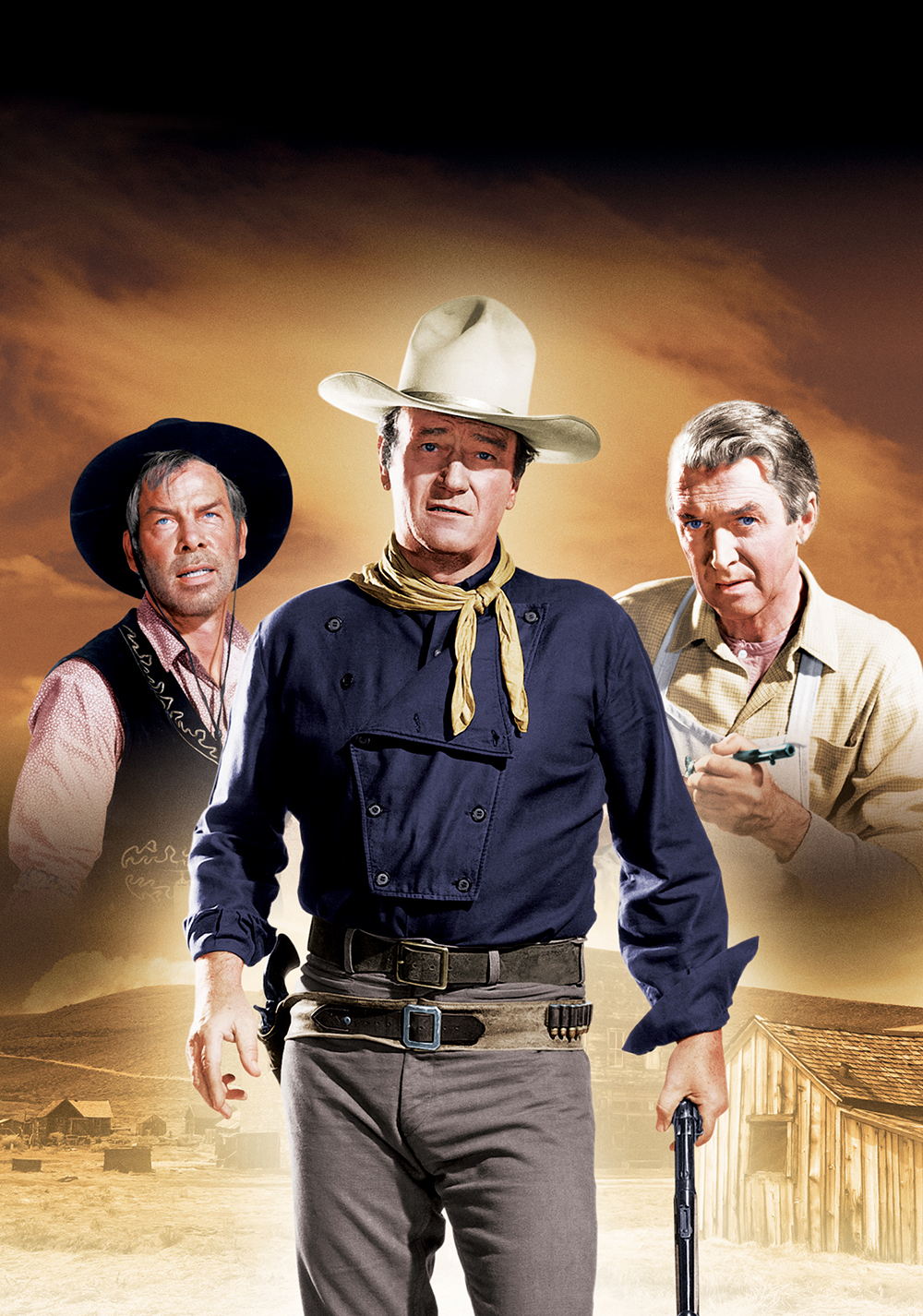
Questions arise when Senator Stoddard attends the funeral of a local man named Tom Doniphon in a small Western town. Flashing back, we learn Doniphon saved Stoddard, then a lawyer, when he was roughed up by a crew of outlaws terrorizing the town, led by Liberty Valance. As the territory's safety hung in the balance, Doniphon and Stoddard, two of the only people standing up to him, proved to be very important, but…
199 Interesting Facts About The Man Who Shot Liberty Valance
Interesting Facts (22)
- #001
- #002
- #003
- #004
- #005
Lee Marvin's first scene (the stagecoach robbery) caused problems for the actor; he seemed unable to grasp his character. After several takes, John Ford instructed the prop man not to drop the strongbox on the ground when Marvin demanded it. This defused much of Marvin's anger and led him to shout, "NOW!" The take was printed.
- #006
- #007
- #008
- #009
- #010
- #011
John Ford once said he preferred black and white and that it was harder than shooting in color. "You have to be very careful in black and white. You have to know your business, place your shadows correctly, keep your perspective right, but in color that's it," he said. "You can call me old-fashioned, but black and white is real photography."
- #012
- #013
According to John Ford's grandson, many of those involved in the shoot noted Ford's lack of energy and his complete disregard for details such as background effects. In his book-length study of the director, Lindsay Anderson says: "Undoubtedly this was another example of Ford's growing impatience with the job of shooting: it was no longer 'fun.' He resented the demands of the crowd-pleasing show and the 'artistic' trimmings on the narrative. And in places the work suffered."
- #014
- #015
When Dutton Peabody returns drunk to the newspaper office, he partly reads the St. Crispin's Day speech from William Shakespeare's "Henry V." Delivered just before Henry V's army defeats a superior French force, the speech foreshadows the coming gunfight between Ransom Stoddard and the gunman Liberty Valance.
- #016
- #017
Print the Legend, a phrase taken from the film's famous quote, is the title of Craig McDonald's crime novel about Ernest Hemingway's death, of a study of photography in the American West, and of course of a book Scott Eyman wrote about John Ford. The phrase is often invoked in any writing or discussion about a person or event whose fame exceeds the underlying facts.
- #018
- #019
The screenplay followed Dorothy M. Johnson's story and point of view quite closely, with one notable exception. On the page, Tom Doniphon was more of a mentor to Ranse Stoddard, easing his path from frontier lawyer to state senator. In the film, apart from two key roles that change Stoddard's life forever, Doniphon is not very proactive about Stoddard's future.
- #020
- #021
When the wounded Stoddard is carried into the kitchen of "Peter's Place," Nora gives him a cup of coffee mixed with what she describes as "Akvavit, Swedish brandy." The bottle is a Red Aalborg from the Danish Aalborg Aquavit company. Aquavit is made from potatoes and is closer to vodka than to brandy.
- #022
Editor Scott describes Stoddard's public service as follows: three terms as governor (presumably twelve years), two terms as a U.S. senator (twelve years), an appointment to the St. James Court (usually one year), and another term as senator (six years). This means the action of the prologue takes place about thirty-one years after the original events.
Production Story (76)
- #023
Various reasons have been offered for the film being shot in black and white. John Ford once claimed it heightened the tension, but others involved in the production said Paramount was cutting costs, which is why the film was shot on studio soundstages. Without the budget restrictions, Ford would have filmed in Monument Valley using Technicolor stock. It has also been argued that the film had to be black and white because both John Wayne and James Stewart were playing characters 30 years younger than their real ages (Wayne was 54 and Stewart 53 when filming took place in the fall of 1961), and the age difference could never have been hidden in color. The gap was especially noticeable in Stewart's case, since he played a young lawyer fresh out of law school who moved west without ever practicing in the East. Cinematographer William H. Clothier said: "There was only one reason… Paramount was cutting costs. Otherwise we would have been in Monument Valley or Brackettville and we would have had color stock. Ford had to accept those conditions or not make the picture."
- #024
There are several reasons the film was shot in black and white. Although John Ford said it heightened the tension, some members of the production crew claim Paramount cut costs, which is why it was shot on studio sets. Had there been no budget restrictions, Ford would have filmed in Technicolor in Monument Valley. In addition, the fact that John Wayne and James Stewart were 30 years older than the characters they played may have made black and white necessary; had it been shot in color, this age difference would never have been acceptable.
- #025
Lee Marvin was the only actor on set who could do just about anything. John Ford appreciated his acting and his Marine Corps background in World War II, as well as his genial personality. One day when Ford came to the set, Marvin whistled loudly through his teeth; the crew froze, thinking there would be trouble. Instead Ford merely smiled, because he understood that Marvin was summoning the director to the 'deck' with an admiral's whistle.
- #026
Woody Strode did most of his own stunt work, both because he was a very good athlete and because it was hard to find a suitable Black stunt double. In the scene where Doniphon sets fire to his house, Strode had to run inside and drag John Wayne out. Wayne used a stunt double while the 47-year-old Strode did not. When John Ford told his star, 'Duke, Woody is an old man and he has to carry you, and he doesn't need a double!', Wayne decided to shoot the scene without a stunt double.
- #027
Lee Marvin's first scene, the stagecoach robbery, caused problems for the actor; he simply could not grasp his character. After a few takes, John Ford told the driver not to hand over the money box immediately when Marvin demanded it. This so increased Marvin's anger that he shouted 'NOW!' and that take was used.
- #028
James Stewart recounts that in the middle of shooting, John Wayne asked him why he was not the target of John Ford's barbs. The other actors and the crew had also noticed that Stewart seemed exempt from Ford's harassment. Toward the end of the shoot, however, Ford asked Stewart what he thought of the costume Woody Strode wore for the beginning and end of the film. When Stewart said 'It looks a bit like Uncle Remus', Ford snapped, 'What's wrong with Uncle Remus?', turned to the crew and said, 'One of our actors doesn't like Woody's costume. I don't know whether Mr. Stewart has a prejudice against Negroes, but I wanted you to know.' Stewart says he 'wanted to sink through the floor', while Wayne told him, 'Welcome to the club. Glad you made it.'
- #029
According to Woody Strode, John Wayne had been so hurt by John Ford's harassment that he took his pain out on Strode. While shooting an exterior scene with a wagon, Wayne nearly lost control of the horses and pushed Strode when he ran to help. When the horses stopped, Wayne tried to pick a fight with the younger, fitter Strode; Ford called out, 'Don't hit him, Woody, we need him.' Wayne later told Strode, 'We have to work together. We both have to be professional.' Strode blamed Ford for nearly all the friction on set and added, 'What a terrible film to make.'
- #030
- #031
John Ford treated John Wayne quite harshly during the shoot. Some attribute this to Ford's age and his growing impatience with filmmaking, while others say Wayne resented that very few of the scenes he worked on uncredited in Ford's The Alamo (1960) made it to the screen. One day, when Wayne suggested a small change to a scene, Ford exploded in anger: 'Jesus Christ, I take you out of eight-day cowboy pictures and put you in big films, and you come to me with a stupid suggestion like that!'
- #032
John Ford shot only what he needed and did very few additional takes. He also preferred to shoot as little as possible, saying that after the first few takes actors grew tired and bored and lost the naturalness of their performances. That is why he liked to work with the same people over and over (the famous Ford 'stock company'); he knew what he wanted from them and trusted them to deliver it on the first take.
- #033
- #034
- #035
John Ford once said he preferred black and white and that it was in fact harder than shooting in color: 'You have to be very careful in black and white. You have to know your business, place the shadows correctly, get the perspective right; but in color everything is right there. You can call me old-fashioned, but black and white is real photography.'
- #036
While shooting the stagecoach robbery scene, James Stewart could not get into the right frame of mind and kept mixing up his lines. John Ford went over to him and quietly repeated in his ear, 'You're not afraid, you're not afraid.' This gave Stewart the cue he needed and he completed the take successfully.
- #037
According to John Ford's grandson, many people present at the shoot spoke of Ford's lack of energy and his complete indifference to details such as background effects. In his book-length study of the director, Lindsay Anderson says: 'Doubtless this was another symptom of Ford's growing impatience with the business of shooting: it was no longer 'fun'. He resented the demands of narrative, of crowd-pleasing spectacle, of 'art' trimmings. And in places the work suffered.'
- #038
- #039
- #040
Shinbone is a fictional town most likely located in southern Colorado. Given that the cattlemen are said to live north of the Picket Wire (the Purgatoire River) and that Tom Doniphon is 'the toughest man south of the Picket Wire', the region in which the film is set is most probably Colorado.
- #041
Among the uncredited townspeople was Danny Borzage, brother of director Frank Borzage and something of Ford's mascot. Borzage had been taking small roles in John Ford's films since The Iron Horse (1924) and on set would always play sentimental music on his accordion for the cast and crew between scenes, and sometimes even during them.
- #042
There are differing views on why the film was shot in black and white in the studio rather than in colour and on location. Some say John Ford was forced to cut back on his usual methods because Paramount would not provide the financing needed to shoot in his favourite locations such as Monument Valley. Others, especially critics and film analysts who have reassessed the film as one of Ford's greatest achievements, state that the decision was entirely Ford's, a choice focused on a more intimate and intense character study. Most observers agree that black and white also made it easier to suspend disbelief enough to accept James Stewart and John Wayne as young men and Stewart in old-age makeup.
- #043
On the stagecoach that takes Stoddard and Peabody to the political convention there is a very faint 'BUTTERFIELD STAGE LINES' lettering. This coach line operated between 1858 and 1861, ceasing activity 14 years before the territorial vote. It is most likely the same stagecoach used in 3:10 to Yuma (1957), loaned by Columbia to Paramount.
- #044
- #045
Cyril J. Mockridge had been hired to score the film, but John Ford used a piece from the score of Young Mr. Lincoln (1939) beneath some of Vera Miles's scenes. Ford later told Peter Bogdanovich that he used Alfred Newman's 'Ann Rutledge' theme in both films for the same reason, to evoke the feeling of lost love. He also told Bogdanovich that through this music and by other means he made it clear that Miles's character Hallie never forgot Tom Doniphon, because she had wanted the lead role to go to John Wayne rather than James Stewart.
- #046
- #047
In Tom's first scene in the restaurant kitchen, he appears to light his cigarette magically by holding it over the bulbous part of the oil lamp. In fact it is no magic at all. The flame concentrated inside the narrow glass neck produces so much heat that drawing on the cigarette above ignites the tobacco without touching the flame.
- #048
- #049
- #050
John Wayne suggested Lee Marvin, with whom he had worked on The Comancheros (1961), for the role of Valance. This professional bond between the two was decisive in the choice of the film's villain. On Wayne's recommendation, Marvin brought to life one of the most unforgettable antagonists in western history.
- #051
- #052
- #053
This is the first film in which John Wayne addresses someone as "Pilgrim." The phrase became a symbol of the mocking and dismissive attitude that Wayne's character, Tom Doniphon, adopts toward Ransom Stoddard. The word "Pilgrim" became a constant reference to Stoddard's Eastern origins and inexperience.
- #054
- #055
Woody Strode worked with John Ford for the third time, after Sergeant Rutledge (1960) and Two Rode Together (1961). Strode always remained grateful to Ford as the man who made him an actor, describing him as "the greatest director I ever worked with." This collaboration left deep marks on Strode's career.
- #056
John Wayne described this film as a "tough assignment" for himself. Although the other characters were layered, he saw his own role as merely a functional piece serving the plot. He even lashed out at those who spoke of the complexity of his role, saying, "Under the mask of ambiguity lies perversion and corruption. I don't like ambiguity, I don't trust it."
- #057
James Stewart does not wear a hat throughout the film, in order to emphasize his character's Eastern origins. He wears a hat only in the "Senator Stoddard" scenes at the beginning and the end, after he has been westernized by his experiences in Shinbone. This detail is a subtle cinematic trick that visually supports the character's transformation.
- #058
When James Stewart wore the hat he had used in the westerns he made with Anthony Mann in Two Rode Together (1961), John Ford joked, "Great, now are my actors going to approve hats?" While Ford did not allow Stewart to wear a hat at all in this film, John Wayne appeared before the camera in the most flamboyant wide-brimmed cowboy hat he had worn since the 1930s. This contrast made the difference between the characters even more pronounced.
- #059
- #060
- #061
- #062
Lee Marvin, Strother Martin and Lee Van Cleef had previously appeared together in the episode The Grave (1961), which aired on October 27, 1961. The paths of this trio crossing again in this film reinforced their shared fate in the western genre. Each delivered performances that would leave unforgettable marks on their careers.
- #063
- #064
James Stewart sincerely loved John Ford and was eager to work with him again. Especially since he was unhappy with the development of his unlikable character in Two Rode Together (1961), playing an honest citizen and an idealist in this film appealed to him. With this role, Stewart succeeded in winning the audience's sympathy.
- #065
- #066
- #067
Vera Miles had played John Qualen's daughter in The Searchers (1956). In this film, her relationship with Qualen's character does not appear parent-child; she addresses the Ericsons (Qualen and Jeanette Nolan) by their first names. This ambiguity lends a mysterious air to the dynamic between the characters.
- #068
- #069
Sheriff Appleyard goes to the school to check on his "little family"; these are the nine Latin children who leave together when he tells the eldest to take them home. In Stagecoach (1939), Andy Devine's character complains that he "fed half the state of Chihuahua," which likewise indicates he is the head of a large Mexican family.
- #070
- #071
- #072
- #073
- #074
- #075
- #076
Gene Pitney sang 'The Man Who Shot Liberty Valance,' written by Burt Bacharach and Hal David, and the song rose to number four on the US charts in 1962. Although it shares the film's title, it was not used in the production because of a publishing dispute between Famous Music and Paramount Pictures and because the song was considered too modern for the film's 19th-century atmosphere.
- #077
- #078
The screenplay remained largely faithful to Dorothy M. Johnson's story and point of view, but with one important difference: in Johnson's text, Tom Doniphon was a mentor to Ranse Stoddard and guided him on the path from frontier lawyer to state senator. In the film, however, apart from the two critical actions that change Stoddard's life forever, Doniphon does not take such a proactive role in his future.
- #079
In early summer 1961, while John Wayne was still on set for the shooting of 'The Comancheros' (1961), he began receiving notes from John Ford about his upcoming projects. Ford was eagerly awaiting his star's return to begin shooting at the end of summer, and in a note dated July 7 he said, 'This time, unlike before, there is no location shooting. It will all be shot in the studio... Seriously, in my humble opinion we have a great screenplay.'
- #080
Although it was never used in the film's score, a popular pop ballad inspired by the production emerged. Written by Burt Bacharach and Hal David, the song was recorded after the film's release and became a top-10 hit for Gene Pitney. The melody was later also performed by Jimmie Rodgers, James Taylor and The Royal Guardsmen.
- #081
- #082
- #083
- #084
- #085
- #086
- #087
- #088
When Stoddard, wounded, is carried into the kitchen of 'Peter's Place', Nora gives him coffee with something she calls 'Akvavit, Swedish brandy' added to it. The bottle is Red Aalborg, a product of the Danish Aalborg Aquavit company. Aquavit is made from potatoes and is closer to vodka than to brandy.
- #089
Editor Scott lists Stoddard's public service as follows: three terms as governor (twelve years), two terms as senator (twelve years), ambassador to the Court of St. James's (usually one year), and one more term as senator (six years). By this reckoning, the opening section takes place about thirty-one years after the events.
- #090
Although it is said that it would be obvious Valance was killed by a rifle bullet, this is not true. It was very common for Westerners to carry a handgun and a lever-action rifle that used the same ammunition. Even today, old-style rifles such as the Winchester are produced in various handgun calibers.
- #091
- #092
- #093
In the classroom, Rance asks Pompey what the governing document is, one that is updated with changes from time to time. Pompey gives the correct answer: 'the Constitution'. Rance corrects him and says 'the Declaration of Independence'. In fact, Rance is the one who is wrong; the document Pompey says was written by Thomas Jefferson is the Declaration of Independence.
- #094
- #095
The Speaker of Congress refers to Peabody as a representative of 'the fourth estate'. The term is of British origin and refers to the four fundamental elements of the people's power. The first three estates are the clergy, the nobility and the common people. The term is said to date back to a parliamentary speech in 1787, when the press was first allowed to observe parliamentary sessions.
- #096
- #097
Like a grand stage play, the story essentially consists of three major acts: Ransom's arrival in town and his establishment of a law office and a school; the killing of Liberty Valance and the strengthening of his relationship with Hallie; and finally his political campaign and the beginning of his long career.
- #098
The film later inspired the episode The Homecoming (1993). In that episode, the legendary Bajoran resistance fighter Li Nalas is remembered for heroically killing the notorious Cardassian military leader Gul Zarale; in reality, however, Li found Zarale, whom he did not know, bathing in a lake in his underwear and shot him. The subsequent episode Indiscretion (1995) was also inspired by The Searchers (1956), another John Ford western.
Behind the Scenes (45)
- #099
- #100
John Ford treated John Wayne quite harshly during filming. Some attributed this to Ford's age and his growing impatience with filmmaking. Others say he was angry at Wayne because very few of the scenes Ford worked on for Wayne's film The Alamo (1960), without receiving credit, made it to the screen. One day, when Wayne casually suggested a small change to a scene, Ford lost his temper and shouted: "God, here I am pulling you out of eight-day Westerns, putting you in big pictures, and you make a stupid suggestion like that to me!"
- #101
- #102
There are several reasons the film was shot in black and white. Although John Ford said it heightened the tension, some members of the production team claim that Paramount was cutting costs and that this is why it was shot on studio sets. Had there been no budget restrictions, Ford would have shot in Technicolor in Monument Valley. The fact that John Wayne and James Stewart were 30 years older than the characters they played may also have made black and white necessary; had it been shot in color, that age gap would never have been acceptable.
- #103
Lee Marvin was the only actor on set who could do just about anything. John Ford appreciated his acting and his background as a Marine in World War II, as well as his genial personality. One day when Ford came to the set, Marvin whistled loudly through his teeth; the crew froze, thinking there would be trouble. Instead Ford merely smiled, because he understood that Marvin was summoning the director to the 'deck' with an admiral's whistle.
- #104
Because Woody Strode was both a very good athlete and it was hard to find a suitable Black stunt double, he did most of his own stunt work. In the scene where Doniphon burns down his house, Strode had to rush inside and drag John Wayne out. Wayne used a stunt double, while the 47-year-old Strode did not. When John Ford told his star, 'Duke, Woody is an old man and he has to carry you, and he doesn't need a double!', Wayne decided to shoot the scene without a stunt double.
- #105
Lee Marvin's first scene, the stagecoach robbery, caused problems for the actor; he simply could not get a grasp on his character. After a few takes, John Ford told the driver not to hand Marvin the money box right away when he asked for it. This so inflamed Marvin's anger that he shouted 'NOW!' and that take was used.
- #106
James Stewart recounts that midway through shooting, John Wayne asked him why he was not the target of John Ford's barbs. The other actors and the crew had also noticed that Stewart seemed exempt from Ford's harassment. But toward the end of the shoot, Ford asked Stewart what he thought of the costume Woody Strode wore at the beginning and end of the film. When Stewart said 'It's a little Uncle Remus,' Ford snapped back, 'What's wrong with Uncle Remus?' and, turning to the crew, said, 'One of our actors doesn't like Woody's costume. I don't know whether Mr. Stewart has a prejudice against Black people, but I wanted you to know.' Stewart said he 'wanted to sink through the floor,' while Wayne told him, 'Welcome to the club. Glad you made it.'
- #107
According to Woody Strode, John Wayne had been so hurt by John Ford's harassment that he took his pain out on Strode. While shooting an exterior scene with a wagon, Wayne nearly lost control of the horses and pushed Strode when he ran to help. When the horses stopped, Wayne tried to pick a fight with the younger, fitter Strode; Ford called out, 'Don't hit him, Woody, we need him.' Wayne later told Strode, 'We have to work together. We both have to be professional.' Strode blamed Ford for nearly all the friction on set and added, 'What a lousy way to make a movie.'
- #108
- #109
John Ford treated John Wayne quite harshly during the shoot. Some attribute this to Ford's age and his growing impatience with filmmaking, while others say Wayne resented that very few of the scenes he worked on uncredited for Ford on The Alamo (1960) made it to the screen. One day, when Wayne suggested a small change to a scene, Ford exploded in anger: 'Jesus Christ, I take you out of eight-day cowboy pictures and put you in big films, and you come to me with a stupid suggestion like that!'
- #110
John Ford would shoot only what he needed and did very few additional takes. He also preferred to shoot as little as possible, saying that after the first few takes actors grew tired and bored and their performances lost their naturalness. That is why he liked to work with the same people over and over (the famous Ford 'stock company'); he trusted that they knew what he wanted and would deliver it on the first take.
- #111
- #112
- #113
- #114
John Ford once said that he preferred black and white and that it was in fact harder than shooting in color: 'You have to be very careful in black and white. You have to know your business, place the shadows correctly, get the perspective right; but in color everything is right there. You can call me old-fashioned, but black and white is real photography.'
- #115
While shooting the stagecoach robbery scene, James Stewart simply could not get into the right frame of mind and kept mixing up his lines. John Ford went over to him and quietly repeated in his ear, 'You're not afraid, you're not afraid.' This gave Stewart the cue he needed and he completed the take successfully.
- #116
According to John Ford's grandson, many people present during filming spoke of Ford's lack of energy and his complete indifference to details such as background effects. Lindsay Anderson, in his book-length study of the director, says: 'This was undoubtedly another example of Ford's growing impatience with the business of filming: it was no longer 'fun'. He resented the demands of narrative, of crowd-pleasing spectacle, of 'art' embellishments. And in places the work suffered.'
- #117
- #118
- #119
- #120
- #121
Shinbone is a fictional town most likely located in southern Colorado. Given that cattle ranchers are said to live north of the Picket Wire (the Purgatoire River) and that Tom Doniphon is described as 'the toughest man south of the Picket Wire,' the region in which the film is set is most likely Colorado.
- #122
Among the uncredited townspeople was Danny Borzage, the brother of director Frank Borzage and something of Ford's mascot. Borzage had been taking small roles in John Ford's films since The Iron Horse (1924) and always played sentimental music on his accordion on set for the cast and crew between scenes, and sometimes even during them.
- #123
There are differing views on why the film was shot in black and white in the studio rather than in color and on location. Some say John Ford was forced to cut back on his usual methods because Paramount would not provide the financing needed to shoot in his favorite locations such as Monument Valley. Others, especially critics and film analysts who have reassessed the film as one of Ford's greatest achievements, state that the decision was entirely Ford's, a choice focused on a more intimate and intense character study. Most observers agree that black and white also made it easier to suspend disbelief enough to accept James Stewart and John Wayne as young men and Stewart in old-age makeup.
- #124
On the stagecoach that takes Stoddard and Peabody to the political convention there is a very faint 'BUTTERFIELD STAGE LINES' lettering. This coach line operated between 1858 and 1861, ceasing activity 14 years before the statehood vote. It is most likely the same stagecoach used in 3:10 to Yuma (1957), loaned by Columbia to Paramount.
- #125
- #126
- #127
Cyril J. Mockridge had been hired to score the film, but John Ford used a piece from the score of Young Mr. Lincoln (1939) under some of Vera Miles's scenes. Ford later told Peter Bogdanovich that he used Alfred Newman's 'Ann Rutledge' theme in both films for the same reason: to evoke the feeling of lost love. He also told Bogdanovich that through this music and by other means he made it clear that Miles's character Hallie never forgot Tom Doniphon, because she had wanted the lead role to go to John Wayne instead of James Stewart.
- #128
- #129
- #130
In Tom's first scene in the restaurant kitchen, he appears to magically light his cigarette by holding it over the bulbous part of a gas lamp. In fact it is no magic at all. The flame concentrated inside the narrow glass neck produces so much heat that drawing on the cigarette above it ignites the tobacco without touching the flame.
- #131
- #132
- #133
- #134
Gene Pitney recorded the Burt Bacharach-Hal David song 'The Man Who Shot Liberty Valance,' which rose to number four on the US charts in 1962. Despite sharing the film's title, it was not used in the production due to a publishing dispute between Famous Music and Paramount Pictures and because the song was considered too modern for the film's 19th-century atmosphere.
- #135
- #136
The screenplay remained largely faithful to Dorothy M. Johnson's story and point of view, but with one significant difference: in Johnson's text, Tom Doniphon was a mentor to Ranse Stoddard, guiding him on the path from frontier lawyer to state senator. In the film, however, apart from two critical actions that change Stoddard's life forever, Doniphon does not take such a proactive role in his future.
- #137
- #138
In early summer 1961, while John Wayne was still on set for the filming of 'The Comancheros' (1961), he began receiving notes from John Ford about his upcoming projects. Ford was eagerly awaiting his star's return to begin filming at the end of summer, and in a note dated July 7, he said, 'This time, unlike before, there are no exterior shots. It will all be filmed in the studio... Seriously, in my humble opinion, we have a great script.'
- #139
- #140
Despite never being used in the film's score, a popular pop ballad inspired by the production emerged. Written by Burt Bacharach and Hal David, the song was recorded after the film's release and became a top-10 hit for Gene Pitney. The melody was later also recorded by Jimmie Rodgers, James Taylor and The Royal Guardsmen.
- #141
- #142
- #143
Characters & Cast (32)
- #144
- #145
John Wayne recommended Lee Marvin, with whom he had worked on The Comancheros (1961), for the role of Valance. This professional bond between the two was decisive in choosing the film's villain. On Wayne's advice, Marvin brought to life one of the most unforgettable antagonists in western history.
- #146
- #147
- #148
This is the first film in which John Wayne addresses someone as "Pilgrim." The phrase became the symbol of the mocking and dismissive attitude that Wayne's character, Tom Doniphon, adopts toward Ransom Stoddard. The word "Pilgrim" turned into a constant reference to Stoddard's eastern origins and inexperience.
- #149
- #150
John Ford had considered a young actor for the role of Stoddard, but worried that this would emphasize the fact that John Wayne was too old for Doniphon. He therefore chose the more age-appropriate James Stewart, preserving the balance between the characters. This decision by Ford was an important touch that increased the film's credibility.
- #151
Woody Strode came together with John Ford for the third time, after Sergeant Rutledge (1960) and Two Rode Together (1961). Strode always remained grateful to Ford as the man who made him an actor and described him as "the greatest director I ever worked with." This collaboration left deep marks on Strode's career.
- #152
John Wayne described this film as a "tough assignment" for himself. While the other characters were deep, he saw his own role as merely a functional piece serving the plot. He even lashed out at those who spoke of his role's complexity, saying, "Under the mask of ambiguity lies perversion and corruption. I don't like ambiguity, I don't trust it."
- #153
James Stewart does not wear a hat throughout the film in order to emphasize his character's eastern origins. He wears a hat only in the "Senator Stoddard" scenes at the beginning and the end, after he has been westernized by his experiences in Shinbone. This detail is a subtle cinematic trick that visually supports the character's transformation.
- #154
When James Stewart wore, in Two Rode Together (1961), the hat he had used in the westerns he shot with Anthony Mann, John Ford joked, "Great, now are my actors going to approve hats?" While Ford did not allow Stewart to wear a hat at all in this film, John Wayne appeared before the camera in the most flamboyant wide-brimmed cowboy hat he had worn since the 1930s. This contrast made the difference between the characters even more pronounced.
- #155
- #156
- #157
- #158
- #159
Lee Marvin, Strother Martin and Lee Van Cleef had previously appeared together in the episode The Grave (1961), which aired on October 27, 1961. The paths of this trio crossing again in this film reinforced their shared fate in the western genre. Each of them delivered performances that would leave unforgettable marks on their careers.
- #160
- #161
James Stewart sincerely loved John Ford and was eager to work with him again. Especially because he was not satisfied with the development of his unlikable character in Two Rode Together (1961), playing an honest citizen and idealist in this film appealed to him. With this role, Stewart succeeded in winning the audience's sympathy.
- #162
In the territorial convention scene, John Wayne, James Stewart, Andy Devine and John Carradine had previously appeared together in Stagecoach (1939), directed by John Ford. This nostalgic reunion emphasized the continuity within Ford's cinematic universe. The same actors coming together again with the same director years later created a moment that went down in cinema history.
- #163
- #164
- #165
Vera Miles had played John Qualen's daughter in The Searchers (1956). In this film, however, her relationship with Qualen's character does not appear to be parent-child; she addresses the Ericsons (Qualen and Jeanette Nolan) by their first names. This ambiguity lends a mysterious air to the dynamic between the characters.
- #166
- #167
Sheriff Appleyard goes to the school to check on his "little family"; these are the nine Latin children who leave together when he tells the eldest to take them home. In Stagecoach (1939), Andy Devine's character complains that he "fed half the state of Chihuahua," which likewise suggests he is the head of a large Mexican family.
- #168
- #169
- #170
- #171
Lee Marvin (Liberty Valance) and Strother Martin (Floyd) also appeared together in The Great Scout & Cathouse Thursday (1976) and Attack (1956). The repeated crossing of these two actors' paths shows their expertise in westerns and war films. Marvin and Martin became indispensable to the genre with their tough characters.
- #172
- #173
- #174
- #175
Deeper Meaning (24)
- #176
- #177
- #178
- #179
- #180
- #181
- #182
As Dutton Peabody drunkenly returns to the newspaper office, he partly recites the St. Crispin's Day speech from Shakespeare's Henry V. This speech is the morale-boosting address Henry gives before defeating the superior French army, and it foreshadows the armed confrontation between Stoddard and Valance.
- #183
- #184
The phrase 'Print the Legend' is taken from the film's famous line and has become the title of Craig McDonald's crime novel about Ernest Hemingway's death, a study of photography in the American West, and Scott Eyman's book on John Ford. The expression is frequently used in any writing about reputations that go beyond reality.
- #185
- #186
Editor Scott lists Stoddard's public service as follows: three terms as governor (twelve years), two terms as senator (twelve years), ambassador to the Court of St. James's (usually one year), and one more term as senator (six years). By this calculation, the opening section takes place about thirty-one years after the events.
- #187
Although it is said it would be obvious that Valance was killed by a rifle bullet, this is not true. It was very common for Westerners to carry a handgun and a lever-action rifle that used the same ammunition. Even today, old-style rifles such as the Winchester are produced in various handgun calibers.
- #188
- #189
- #190
- #191
In the classroom, Rance asks Pompey what the governing document is that is updated with changes from time to time. Pompey gives the correct answer: 'the Constitution.' Rance corrects him and says 'the Declaration of Independence.' In fact, Rance is the one who is wrong; the document Pompey said was written by Thomas Jefferson is the Declaration of Independence.
- #192
- #193
- #194
The speaker of the Congress refers to Peabody as a representative of 'the fourth estate.' The term is of British origin and refers to the four fundamental elements of the people's power. The first three estates are the clergy, the nobility and the common people. The term is said to date back to a parliamentary speech in 1787, when the press was first allowed to observe parliamentary sessions.
- #195
In this film and in many John Wayne films, a single long cartridge sits in the back center of the character's cartridge belt. This is a.45-70 government cartridge and serves to distinguish by touch the.45 Long Colt cartridges for the handgun on one side from the.44-40 cartridges for the Winchester rifle on the other. The rifle in the film is actually a Winchester '92 saddle-ring carbine.
- #196
- #197
- #198
Like a great stage play, the story essentially consists of three major acts: Ransom's arrival in town and his establishment of a law office and a school; the killing of Liberty Valance and the strengthening of his relationship with Hallie; and finally his political campaign and the beginning of his long career.
- #199
The film later inspired the episode The Homecoming (1993). In that episode, the legendary Bajoran resistance fighter Li Nalas is remembered for heroically killing the notorious Cardassian military leader Gul Zarale; in reality, however, Li found Zarale, whom he did not know, bathing in a lake in his underwear and shot him. The subsequent episode Indiscretion (1995) was also inspired by John Ford's other western, The Searchers (1956).
Sources & editorial notes
Reference databases
- Wikipedia
- IMDb
Information from external sources is independently selected, consolidated and edited by Arka Evren. Sources are listed for verification and further reading. Encyclopedia text is used under its licence (CC BY-SA). How we work