

FILM · 1997 · USA
Titanic
- Directed by
- James Cameron
- Runtime
- 194 min
- Studio
- Paramount Pictures, 20th Century Fox, Lightstorm Entertainment
360 archived facts 8 topics 2 sources Last reviewed Nov 2026
101-year-old Rose DeWitt Bukater tells the story of her life aboard the Titanic, 84 years later. A young Rose boards the ship with her mother and fiancé. Meanwhile, Jack Dawson and Fabrizio De Rossi win third-class tickets aboard the ship. Rose tells the whole story from Titanic's departure through to its death—on its first and last voyage—on April 15, 1912.
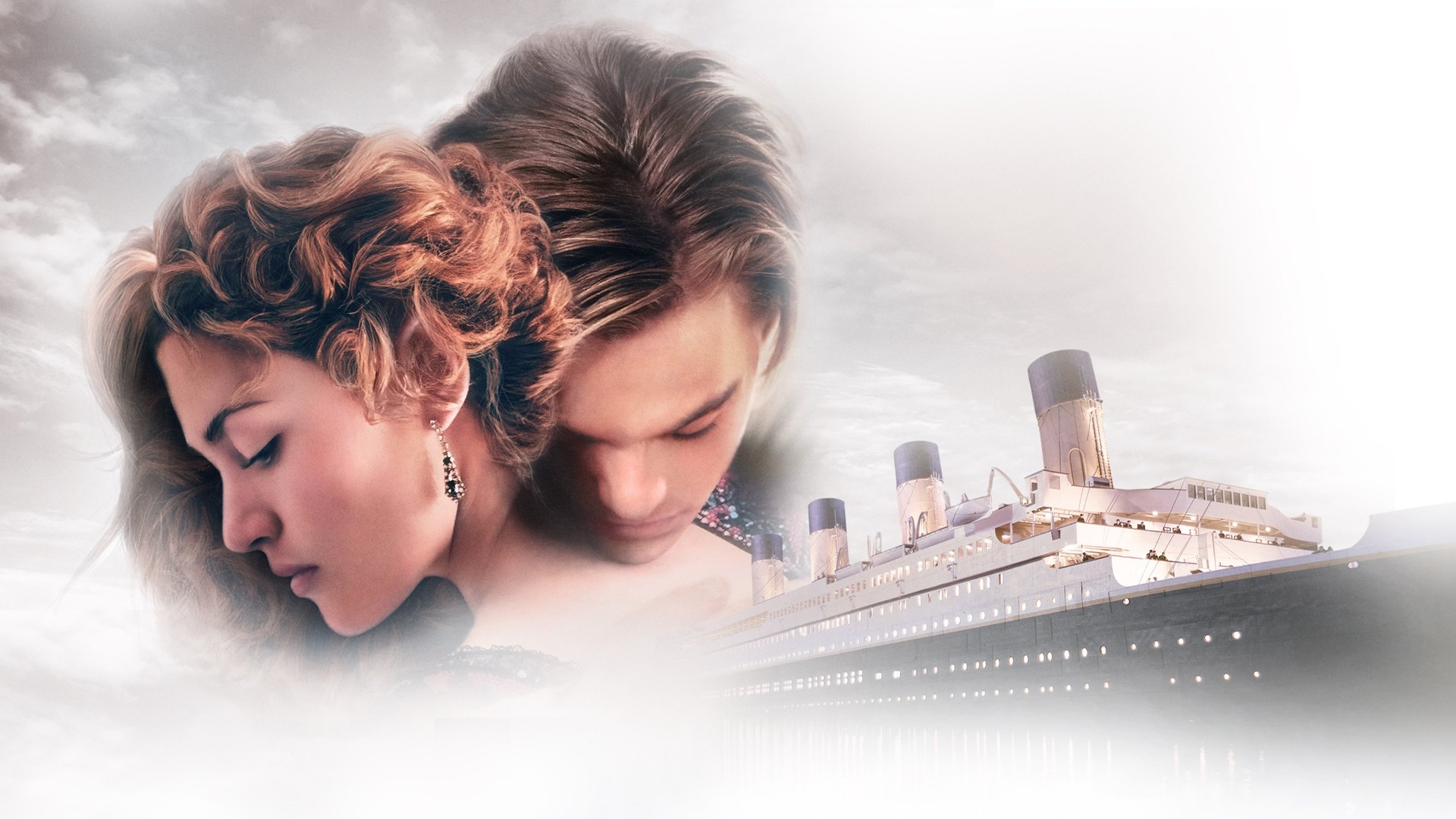
360 Interesting Facts About Titanic
Interesting Facts (50)
- #001
- #002
One of the Irish passengers, Patrick A. O'Keefe, was a young man who boarded the Titanic when he was 21 years of age. Just days before he entered the Titanic, he had horrific dreams of the ship sinking and nearly canceled his ticket. However he decided to board on the ship anyway. Once the Titanic was sinking, he managed to survive on the "collapsible B" life raft. He died in 1939 in Manhattan from unknown causes at the age of 48.
- #003
Contrary to popular belief, the Titanic was originally designed with enough lifeboats for everybody. The designer took the British standards, written for much smaller vessels, and calculated how many would be needed for a vessel Titanic's size. White Star rejected this saying they would take up too much deck space , wanting to attract the wealthy who liked to promenade on deck in their fine clothing.
- #004
- #005
In the bonus featurette "Trailer Presentation" hosted by producer Jon Landau that is included on Vudu and the 4K Blu-ray release, Landau says that when Kurt Russell saw this film's trailer, he liked it so much that he stated he would pay $12 to see it again. Kurt Russell later starred in another movie about a shipwreck, the disaster film Poseidon (2006).
- #006
The Titanic Belfast Maritime Museum Ireland opened on 31 March 2012, commemorating the centenary of the great ship's demise. Construction began in May 2009 and cost £77 million sterling by completion. The nine self-guided state-of-the-art interactive galleries are located on the very Harland & Wolff shipyard site where Titanic was originally built.
- #007
- #008
The scenes set in 1912, i.e. the whole movie except the present-day scenes and the opening and ending credits, have a total length of two hours and forty minutes, the exact time it took for Titanic to sink. Also, the collision with the iceberg reportedly lasted 37 seconds, which is how long the collision scene is in the movie.
- #009
When James Cameron decided to include real footage of the Titanic's remains on the seabed, he did not want to simply shoot from inside a submersible as had been done for the IMAX documentary Titanica (1992). To allow filming from outside the sub, Cameron's brother Mike Cameron and Panavision developed a deep-sea camera system capable of withstanding the 400 atmospheres (5878.38 psi) of pressure at that depth.
- #010
Most of the "ocean" that extras were jumping into was only three feet deep, except for a tiny area much deeper around the set. "Debris", like deck chairs and life jackets, were placed in the water to mark where they could safely jump. Once they jumped, they would swim to the shallow section and crouch to give the illusion of deep water.
- #011
At around 2 hours and 5 minutes, during the scene where Rose searches the corridors for Jack, the water footage was filmed using real Pacific Ocean water from Baja California, Mexico. The water was extremely cold, and Rose's gasp upon her first dive was her authentic reaction to the freezing ocean, captured naturally.
- #012
'Titanic' was shown to an audience for the first time in a test screening on July 14, 1997, at the Mall of America in Bloomington, Minnesota. Tickets were handed out at the July 11 premiere of Jodie Foster's 'Contact.' To avoid drawing press attention, audience members were told they would be seeing an early version of 'Great Expectations,' starring Ethan Hawke and Gwyneth Paltrow. Cameron and his team were in the auditorium; they grew worried when the audience stayed silent for the first 10 minutes, but realized the reason was that viewers had not yet grasped that they were watching the entire film. When the 1912 scenes began, a wave of joy swept through the auditorium.
- #013
- #014
Production began in 1995 with James Cameron shooting footage of the real Titanic wreck. Cameron convinced 20th Century Fox to make a $4 million pre-marketing investment, arguing that the publicity generated by diving to the wreck would be very beneficial. Studio executive Peter Chernin greenlit the project on the strength of Cameron's reputation and his sales pitch alone, with not even a finished script in hand; the decision raised many eyebrows at Fox.
- #015
An alternative ending was shot: Brock catches old Rose before she throws the diamond into the sea, and after Rose shows him the diamond and lets him touch it, she throws it in anyway. Cameron did not use this ending because it was too Brock-focused and prevented the character of Rose from completing her story.
- #016
- #017
Céline Dion initially did not want to record 'My Heart Will Go On'; she did not want to sing another film song and had not liked James Horner's rendition when he first played it for her. Persuaded by her husband René Angélil, she went into the studio and recorded the song in a single take; the version used in the film is therefore actually a demo.
- #018
- #019
Danny Nucci (Fabrizio) said that several different scenarios were written for his character's death. In one version, Cal swims to the capsized lifeboat and begs, and Cal hits him with an oar and says, 'America is that way!' Cameron later informed Nucci that the scene's running time had been shortened and the death scene changed; the scene in which he is crushed under the funnel was shot in additional photography.
- #020
In the final cut of the film, we last see Caledon's bodyguard Lovejoy clinging to the Titanic's railing, his head covered in blood. A scene explaining how Lovejoy got into that state was cut. Caledon chases Jack and Rose on the Grand Staircase, and when he runs out of bullets he gives the gun to Lovejoy and tells him the diamond will be his if he brings it to him. Lovejoy is caught by Jack in the dining saloon, and Jack dangles him from a window and roughs him up. Cameron removed the scene, stating that test audiences found the extra action unnecessary when there was already a long sinking sequence, and that they did not find it believable for Lovejoy to turn into a killer chasing the diamond while the ship sank.
- #021
- #022
In the original script, Fabrizio had a romance with a Norwegian blonde named Helga, with whom he danced at the third-class party. Most of this subplot was cut in editing. Fabrizio's death was also changed; originally he escaped the funnel and was trying to get into a lifeboat when Cal hit him on the head with an oar and he drowned.
- #023
- #024
- #025
Before announcing the project, James Cameron secretly boarded the Russian research vessel Keldysh under the pretext of filming icebergs for a film called 'Planet Ice.' In reality, he was making dives to the real Titanic wreck. Only a few studio executives and the ship's crew knew about this operation.
- #026
- #027
The scene in which Benjamin Guggenheim says, 'We've dressed up in our best and are prepared to go down like gentlemen' is based on words he is said to have actually spoken. When Cameron was unsure how to stage the scene, Michael Ensign improvised the line 'But we would like a brandy!'; the part where he says goodbye to John Jacob Astor was cut.
- #028
- #029
- #030
When it was released, the film became a worldwide pop culture phenomenon. Its box office success was largely driven by positive word of mouth and a 15-week unbroken run at number one. This 'Leomania,' which made Leonardo DiCaprio a star, led more than 45% of female viewers under 25 to see the film twice in theaters. Interest in the Titanic was revived; libraries could not keep books on the shelves, restaurants offered Titanic-themed menus, and stores sold replica items.
- #031
- #032
One of 20th Century Fox's conditions before greenlighting the project was that the film receive a PG-13 rating in order to reach a wide audience. This was possible because the violence was not excessive and nudity appeared only in the artistic scene in which Rose poses for Jack; this was also the reason no nudity was shown in the sex scene.
- #033
The real Titanic wreck was discovered in 1985 by ocean explorer Robert Ballard. Ballard was officially searching for the Titanic, but was in fact secretly tasked by the US Navy with finding two lost nuclear submarines. After quickly locating the submarines, he searched for the Titanic with the remaining time and resources. This situation ironically resembles the plot of James Cameron's film The Abyss.
- #034
James Cameron recounts that 20th Century Fox was skeptical when he first pitched the film: 'A three-hour romantic epic? Sure, that's exactly what we want. Is there a little Terminator in it? Harrier jets, fights, car chases?' Still, the film does contain a scene in which Caledon chases Jack and Rose with a gun.
- #035
The film was announced for release in July 1997, but set construction and shooting ran long. In the last quarter of 1996, it became clear that a summer 1997 release would only be possible with major cuts. After a successful preview, Cameron persuaded the studios to finish the film properly, and the release was postponed to Christmas 1997. Event Horizon was readied for the summer slot thus vacated.
- #036
- #037
James Cameron describes his creative process as follows: 'The thing I'm good at is working with actors to create scenes and then editing their performances to get the best vibrating version of that scene and share it with the audience. Sometimes you think at the start that it won't work, and then the characters come alive.'
- #038
James Cameron wanted to shoot a scene in which Kate Winslet opens a reproduction of Picasso's Les Demoiselles d'Avignon. It was to be shown sinking into the water as the ship went down. The Picasso Administration refused permission, stating that the painting had been on display at the Museum of Modern Art for over 60 years and did not sink with the Titanic. However, the scene remained in the film; the producers then had to reach a settlement afterward by paying a heavy penalty.
- #039
- #040
- #041
- #042
- #043
- #044
- #045
- #046
- #047
- #048
In the bonus short film titled 'Trailer Presentation', presented by producer Jon Landau and included on the Vudu and 4K Blu-ray releases, Landau recounts that when Kurt Russell watched the trailer for this film he liked it so much that he said he would pay 12 dollars to see it again. Kurt Russell later starred in another film about a ship disaster, the disaster film Poseidon (2006).
- #049
- #050
Contains a major spoiler — show
In the National Geographics documentaries Drain the Titanic (2015) and Titanic: The Digital Resurrection (2025), it has been newly theorized that due to the size of the debris field, it would have been impossible for the ship to sink the way as is portrayed in the movie. Not only did a wide area of the hull splinter into fragments, it would also have happened underwater. The stern would have to have been still connected to the bow section, which dragged it under, and the two would not have separated until much closer to the bottom impact. As a result, the stern wouldn't have tilted to almost upright position and then sink after some pause; both would have happened simultaneously. The stern would have corkscrewed immediately after detaching, as evidenced by the large scraping of the sea bottom near the final resting place of the stern.
Production Story (82)
- #051
- #052
Caleb Deschanel was the movie's first cinematographer due to his experience with shooting period films. He clashed with James Cameron over the lighting of the film; Cameron wanted to be involved as much as possible, while Deschanel was used to operating on his own. He was eventually replaced by Russell Carpenter, who had also shot Cameron's True Lies (1994) and T2 3-D: Battle Across Time (1996) and was used to the director's way of working. Funny enough, one of the films that Carpenter watched for inspiration was Deschanel's The Natural (1984).
- #053
The wreck of the real Titanic was discovered in 1985 by ocean explorer Robert Ballard. Ballard was officially on a mission to locate the Titanic, but in reality, he had been secretly charged by the US Navy to locate two missing American nuclear submarines with his deep sea robot craft, before they could be found by the Soviets. After quickly finding the subs, Ballard used the remaining time and resources in a successful search for the Titanic. Ironically, this closely mirrors the premise of The Abyss (1989), one of James Cameron's previous movies. Cameron stated that he was inspired to make The Abyss after seeing a National Geographic film about remote operated vehicles working deep in the North Atlantic Ocean, much the same tools used by Ballard. Cameron's love for deep sea diving which he developed during the making of The Abyss, coupled with his fascination for shipwrecks, finally culminated in the making of Titanic.
- #054
- #055
James Cameron forfeited his $8 million upfront director's salary and his percentage of the initial gross when the studio became concerned at how much over budget the movie was running; he would only receive a back-end percentage if the film did exceptionally well. He noted that initial compliments over the raw footage became more sparing over time as the costs spiraled out of control, and the studio heads at 20th Century Fox and Paramount Pictures "acted like they had been diagnosed with terminal cancer" as the release date drew near. Even Cameron himself was at one point convinced that the film would bomb, and he would never work again; analysts had predicted a total loss of at least $100 million, so he could only hope to at least make a very good film. At one point, he ran into Fox CEO Rupert Murdoch, and told him "I guess that I'm not your most favorite person in the world, but the movie is going to be good." Murdoch simply replied "It better be a damn sight better than 'good.'"
- #056
Despite being either minor characters or extras, Helga the Norwegian third-class girl, her family, Jack's room-mates, a Chinese pony-tailed man, a young girl named Cora and her parents, and an Irish mother and her two children are seen several times in the film, especially during the Saturday night party and the sinking of the ship. Many scenes with these characters had been filmed, but most subplots were deleted from the final cut. They can be seen as bonus features on the Special Edition DVD and Blu-ray.
- #057
- #058
- #059
- #060
- #061
- #062
There was one "crucial historical fact" James Cameron chose to omit from the film - the ship that was close to the Titanic, but had turned off its radio for the night and did not hear their SOS calls. "Yes, the [SS] Californian. That wasn't a compromise to mainstream filmmaking. That was really more about emphasis, creating an emotional truth to the film," stated Cameron. He said there were aspects of retelling the sinking that seemed important in pre and post-production, but turned out to be less important as the film evolved. "The story of the Californian was in there; we even shot a scene of them switching off their Marconi radio set," said Cameron. "But I took it out. It was a clean cut, because it focuses you back onto that world. If Titanic is powerful as a metaphor, as a microcosm, for the end of the world in a sense, then that world must be self-contained."
- #063
- #064
- #065
- #066
- #067
- #068
James Cameron had been learning about movie editing during his previous movie True Lies (1994), and was a full-fledged part of the editing team on Titanic, together with long-time collaborators Conrad Buff IV and Richard A. Harris. Three editors were needed because almost twice the amount of footage was shot than is normal for a three-hour epic. Cameron had turned one of the rooms in his home into an editing suite; during the day, he would supervise the special effects, and at night, he would do editing. The three men worked separately on sections of the film, and would then check each other's work, and recut if necessary. They shared the Academy Award for Best Editing for their efforts.
- #069
James Cameron was determined not to include any song in the film, not even during the credits, as he often feels they don't match the tone. However, composer James Horner was trying to end the movie on a powerful emotional note and believed a song would be ideal. He secretly coordinated with lyricist Will Jennings and singer Céline Dion to create "My Heart Will Go On," using the film's main musical theme as the melody. A demo was recorded with most of 20th Century Fox's senior executives present, who loved the song. Horner then showed the recording to Cameron, who responded positively, though he didn't know the singer was Dion. When told she was Canadian, Cameron said, "Oh, she's big, right?" The song was included in the closing credits and later won the Academy Award for Best Original Song.
- #070
Kate Winslet and Leonardo DiCaprio first met at the Cannes Film Festival in 1996. Winslet knew that DiCaprio had auditioned, but was hesitant to take the role of Jack Dawson. She discovered where his hotel room was, and went to chat with him about doing the film. "I was thinking 'I'm going to persuade him to do this, because I'm not doing this without him.'"
- #071
In 2012, Entertainment Weekly reported that when the movie was re-released in 3D, James Cameron didn't update any effects or fix any errors except one. When astrophysicist Neil deGrasse Tyson, director of New York's Hayden Planetarium, first saw the movie in its original theatrical release, he noticed that the configuration of stars in the night sky during Rose's night in the water bore no resemblance to what the sky really looked like over that place on that night (and, in fact, the same incorrect set of stars had just been duplicated in post-production). Tyson wrote a letter to Cameron explaining the error; several years later, upon meeting Cameron in person, Tyson repeated his complaint; and then at an event that occurred at the Hayden Planetarium, Tyson spoke about it to Cameron a third time. Finally, a post-production technician working on the re-release called Tyson and asked him to provide a picture of what the sky really would have looked like, and Tyson's star image was used to fix that shot. Before the shot was fixed, the stars were arranged to look like the Heart of the Ocean necklace.
- #072
- #073
Special effects were originally going to be produced by James Cameron's own company Digital Domain, but after several delays and a postponed premiere, it was clear that the company could not cope with the extreme workload. Seventeen different special effects company were employed to finish in time.
- #074
James Cameron wrote the role of Lewis Bodine with his friend Lewis Abernathy in mind. When he couldn't find an actor to play the role, he went to Abernathy and asked, essentially, if he would play himself. Abernathy replied "If you want to fuck up your movie by casting me, buddy, alright."
- #075
Director James Cameron made a total of 12 diving trips with a special submersible to the wreckage of the real Titanic. The third trip (which he later nicknamed "the bottom storm") almost ended in tragedy: while nearing the Titanic, there was a heavy underwater current that swept the sub out off course. Since each dive to the wreckage took nearly 11 hours and cost an estimated $40,000, Cameron wanted to make the most out of it, and started to film footage while the crew tried to keep the sub stable with its thrusters. However, when they wanted to ascend again, this maneuver had severely depleted the engines. The only way to return and escape fatal hypothermia was by periodically stopping and re-starting the engines, and allowing the sub to slowly drift upwards during the shut-downs (while trying to avoid a current that frequently pulled them down again). The return trip actually took much longer than necessary because halfway up, the crew finally remembered to jettison the ballast that they still had in the tanks.
- #076
The original release date was July 25, 1997. When Harrison Ford (whose upcoming film Air Force One (1997) was scheduled to be released on the same day) found out, he demanded that Paramount Pictures push the release date to a different time. The studio agreed, having distributed many successful films of Ford's and worrying that he would never do another film for them again. Ford may have had a point, because Titanic was subsequently released on the same date as Kevin Costner's The Postman (1997), which became a massive box office bomb.
- #077
The opening was originally going to be an Irishman painting the word 'Titanic'. During that same scene, as believed by some, it is not a real film from her departure in 1912. James Cameron wanted to use actual footage, but at the time there was none. So he attempted to create what he thought took place. However after the movie was released, some actual footage was discovered.
- #078
- #079
- #080
The completed film ignores the freighter Californian, which had stopped for the night due to the ice hazard and was within sight of the Titanic throughout the sinking (the Californian's warning had been received and sent to the bridge but was not placed in the chartroom). An early version of the script included a scene on the Californian, but James Cameron cut out the subplot after filming it to shorten running time. The two actors in the scene on the Californian were Adam Barker as radio operator Cyril Evans and Peter John White as Third Officer Groves.
- #081
- #082
At the time of filming, it was believed that the ship broke into two pieces (as shown in the CGI animation at the beginning). However, as of 2016, it is now known that the ship broke into three pieces: the famous bow section, the imploded and crumpled stern section, and the middle, double-hull of the ship, which had planned away and accounts for approximately 100' of her total 883' of length and sits far from the wreckage, near the outer rim of the debris field. James Cameron acknowledges this error but defends his description of the sinking in the film because the mid-section was unknown at the time. As such, the film is retrospectively historically inaccurate.
- #083
Apart from the long, grueling and technically difficult shoot, director James Cameron stated that one of the biggest obstacles he faced was the increasingly negative press coverage. When the industry trade papers got wind of the epic delays, cost overruns, set safety issues and missed delivery dates, they started to relentlessly characterize the production as a waste of money and a sure box office bomb. Cameron suggested to the studios not to go into aggressive defense, but remain silent, in the hope that the press would run out of stories to print before the movie's premiere (or, in his own words, "step back and let them go flying past, and fall because of their own inertia"). Cameron also organized two premieres outside the United States, one in Tokyo and one in the United Kingdom (with King Charles III in attendance), in the hopes that positive word of mouth from the still unbiased foreign press would force the American press to put aside their prejudices. Both strategies worked, as Titanic opened in the United States to rave reviews.
- #084
- #085
Production of the film began in 1995 when James Cameron shot footage of the real wreck of the Titanic. He was able to persuade 20th Century Fox to invest $4 million in the film's marketing upfront, by convincing them that the publicity surrounding a real-life dive to the wreck would be really beneficial to the production; the alternative was shooting models of the ship, which could have been cheaper, but would not nearly generate as much publicity. Studio executive Peter Chernin greenlit the project purely on Cameron's established reputation and sales pitch, as there was no completed script at that time, only a rough story outline; according to insiders, this decision raised more than a few eyebrows at 20th Century Fox.
- #086
- #087
In one of the deleted scenes, Brock's manager Bobby tells him that they're over-budget, the partners depending on them are pissed, and that they're in serious danger of getting shut down. James Cameron later noted that when he was writing this, he had no idea he would be hearing all these things when the production ran into problems.
- #088
The piece of wooden paneling that Rose floated on after the sinking is based upon a genuine artifact that survived the sinking and is on display at the Maritime Museum of the Atlantic in Halifax, Nova Scotia, Canada, though it was scaled larger to provide sufficient buoyancy as a life-raft for Rose.
- #089
- #090
Lindsay Lohan auditioned for the role of Cora Cartmell. Lohan, who was then an unknown and was only 8 years old at the time casting took place, was the top choice for the role. However, James Cameron felt that Lohan's fiery red hair would confuse people into thinking she was related to the characters Rose and Ruth, who both had fiery red hair. Alex Sarno was cast instead.
- #091
- #092
James Cameron went on 12 dives to the actual Titanic himself and found seeing the sunken ship an overwhelming emotional experience. During his first trip, he was so goal-oriented that he managed to film the shots he wanted, but as soon as he was back on the surface, he broke down in tears after finally realizing the magnitude of the historical tragedy he had just witnessed. He spent more time with the ship than its living passengers did.
- #093
In the movie, the original script included scenes of newlywed couple Daniel and Mary Marvin, Daniel being a cameraman and son of Henry Marvin, co-founder of the movie production company American Mutoscope & Biograph. Daniel Marvin died aboard the Titanic, but not without photographing some of the only existing film of the liner. The Marvins were actually featured characters in S.O.S. Titanic (1979) which also starred David Warner (Lovejoy).
- #094
"Titanic" was presented to a test audience at a theater in the Mall of America, Bloomington, Minnesota, on July 14, 1997. Tickets to the showing were given to the audience at Jodie Foster's movie Contact (1997) on its July 11 opening night. Because "Titanic" had been receiving considerable industry buzz (most of it bad, due in part to budget concerns) and not wanting to have press at the test shows, ticket recipients were told that they would see an early version of Great Expectations (1998), starring Ethan Hawke and Gwyneth Paltrow. At the test screening, James Cameron and others were in attendance, but the theater maintained the ruse by not mentioning the movie by name, only referring to it as "the movie you are about to see," etc. Cameron anxiously noted that the audience was completely silent for the first 10 minutes when the movie started. Still, he later learned that this was because they thought they were only getting to see a new trailer for "Titanic," not yet realizing they were watching the whole movie; when the film transitioned to the 1912 scenes, there was a collective response of joy. Film personnel collected feedback in many ways, including handwritten surveys, post-film interviews, and even stationing personnel in the lobbies and restrooms to listen to guests' conversations.
- #095
Christian Bale auditioned for the role of Jack Dawson, but was turned down because James Cameron didn't want two British actors playing the lead roles of two Americans. Considerably, Bale and Leonardo DiCaprio were both born in 1974, but were in ten months apart from each other. Bale was born on January 30th and DiCaprio was born on November 11th. Bale has since half-joked that he usually gets offered the parts that DiCaprio passed on.
- #096
James Cameron initially claimed that he could make the movie for $80 million, but during development, it quickly became clear that this number was way too conservative. 20th Century Fox's own estimations budgeted the film at $135 million, but set construction soon turned out so costly and time-consuming that the film was already two months behind schedule before any filming was done. This required the aid of a second studio to cope with the costs. Universal Pictures was in the running for a long time, but ultimately passed. Paramount Pictures was finally willing to step in and contribute an additional $65 million in exchange for U.S. distribution rights. This was the full extent of Paramount's contribution, meaning that 20th Century Fox was still responsible for all future budget overruns (of which there were many), and it would have undoubtedly meant the end of the studio if the film had not been so successful.
- #097
A scene was filmed with Rose and a friend briefly looking at Jack in the first-class restaurant, obviously appreciative of how he looks in his (borrowed) tuxedo. Rose's friend looks especially enamored, but Rose turns to her and says "He's spoken for." This scene featured in the U.K. theatrical version on its original release, but was not present in the VHS release or the DVD.
- #098
James Cameron wanted to show a reproduction of Pablo Picasso's Les Demoiselles d'Avignon in a scene in which Kate Winslet is seen unpacking it. When the ship goes down, the painting is shown sinking below the waves. The Picasso Administration decided that it could not authorize the inclusion of Les Demoiselles d'Avignon in the film "because the painting has been on display at the Museum of Modern Art for well over 60 years and certainly did not go down with the ship when the Titanic sank," said Feder, who, in addition to his work with the Artists Rights Society, is an art historian who has taught at Columbia University and Queens College. "When I viewed the film several weeks after its opening, I was surprised to discover that the scene depicting the submersion of Les Demoiselles was still in it. We negotiated a fee after the fact, which, as one could imagine, included a substantial penalty."
- #099
- #100
James Cameron got production designer Peter Lamont, with whom he had worked on Aliens (1986) and True Lies (1994), out of retirement to work on the film. All the artifacts were created from scratch by Lamont's team to recreate the newness of everything on the ship. Pictures from the RMS Olympic, Titanic's identical sister ship, were used for reference since very few photos of Titanic still exist. At one point, Lamont had four separate art departments working on the film. His efforts earned him the Academy Award for Best Art Direction.
- #101
James Cameron originally wanted Enya to compose the score for the film and even went so far as to assemble a rough edit using her music. When Enya declined, Cameron hired James Horner (who had composed the music for Cameron's previous film Aliens (1986)) to write the score. Horner stated that the tensions with Cameron were so high during post-production of "Aliens" that he assumed he and Cameron would never work together again. However, Cameron was so impressed with Horner's score from Braveheart (1995) that he contacted Horner, who was willing to forget the past. According to some accounts, Horner independently decided the film's score should be done in Enya's style. As a result, several pieces of the score sound very similar to some well-known Enya songs, in particular her theme song for Far and Away (1992) (Book of Days).
- #102
- #103
Due to enormous budget overruns, 20th Century Fox executives suggested an hour of specific cuts from the three-hour film. They argued the extended length would mean fewer showings, thus less money, even though long epics are more likely to help directors win Oscars. James Cameron refused, telling the studio, "You want to cut my movie? You're going to have to fire me! You want to fire me? You're going to have to kill me!" The executives did not want to start over, because it would mean the loss of their entire investment, but they also initially rejected Cameron's offer of forfeiting his share of the profits as an empty gesture; they felt that profits would be unlikely anyway. One executive who suggested that he also forfeit half his share of his next movie was angrily dismissed from Cameron's house. Amidst all the doubt, Cameron credits Sherry Lansing, head of co-producer Paramount Pictures at the time, for her continued support for the movie, even when no one else seemed to believe in it anymore. Cameron even screened a rough version of the film for Lansing on a small monitor at his own home, and her approval and helpful feedback were a turning point for him, confirming that he was on the right track with the movie, and that the three-hour running time was justified. Finally, all doubts held by the studios proved to be moot when the movie returned a giant profit by staying at the top of the box office for weeks, and held the record of highest-grossing film of all time for 12 years (until it was beaten by Cameron's own Avatar (2009)). Despite the huge profit, the studio initially tried to deny Cameron his back-end salary, but since they had rejected his forfeit offer, they were legally obliged to pay him an undisclosed sum.
- #104
Initially, Céline Dion didn't want to record "My Heart Will Go On" because she didn't want to sing another film song and she didn't like it when James Horner first played it to her; she disliked Horner's singing abilities. After she was convinced by her husband René Angélil, she stepped in and recorded the song in just one take, so the song that was used over the end credits and later released is actually a demo.
- #105
Before announcing this film project, director James Cameron secretly boarded the Russian research vessel 'Keldysh,' which was heading off Nova Scotia's coast under the pretense of filming icebergs for a movie called "Planet Ice." In reality, he was conducting dives to the actual Titanic. This operation was kept very secret, with only a few studio executives and the ship's crew aware of the director's true purpose.
- #106
The initial marketing of the movie was disastrous. Filming had run significantly behind schedule, so when it was time to create a first teaser trailer, no completed special effects shots were available; the best they could manage was a short clip of old Rose narrating about the necklace (which, according to producer Rae Sanchini, made one 20th Century Fox executive vomit over his own shoes). Later trailers contained the desired money shots, but initial TV spots focused almost exclusively on the action and peril, making the film look more like a standard disaster movie than a romantic drama. Cameron felt that this hugely undersold the movie, so he suggested an alternative campaign that emphasized the drama and love story, to be targeted at female audiences (and to be broadcast during episodes of The Oprah Winfrey Show (1986)). Later TV spots combined elements of both.
- #107
According to James Cameron, 20th Century Fox was initially dubious when he pitched the film. "They were like 'Oooooohkaaaaaay - a three-hour romantic epic? Sure, that's just what we want. Is there a little bit of Terminator in that? Any Harrier jets, shoot-outs, or car chases?' I said 'No, no, no. It's not like that.'" Although, there is a scene when Caledon (Billy Zane) chases the main characters and fires a gun at them.
- #108
- #109
Leonardo DiCaprio was initially not convinced about playing Jack Dawson, thinking the role to be "a bit light". James Cameron convinced him that this would be the real challenge: to play Jack as a normal person, without looking for something safe to cling to, like exaggerated emotions or an impairment.
- #110
- #111
As the box office receipts for the film grew, so did billing on the poster and print ads. When Titanic first opened in 1997, Gloria Stuart's name was absent from posters and advertising. When she garnered a lot of publicity for being a 1930s Hollywood star returning to the movies, her name was added. Victor Garber's agent also petitioned for him to be added, and he was.
- #112
In the original script, after Jack, Fabrizio and Tommy break down the locked gate, Rose steps through the wreckage, threatens the steward to get him fired, and orders him to escort the steerage passengers to the boat deck immediately. As filming progressed, James Cameron became impressed with Jason Barry's performance in a relatively small role and wanted to give him a stronger scene. With Kate Winslet's blessing, Cameron changed the gate breakdown scene to give Tommy the last word instead of Rose.
- #113
Although a sizable publicity campaign had already announced the movie's premiere to be in July 1997, both set construction and filming took longer than anticipated. Shooting didn't start until July 1996, so by the fourth quarter of 1996, it was already clear that a summer 1997 release of the movie would only be possible with major cuts and compromises to the film. However, after a very successful preview of a rough cut of the movie, James Cameron convinced the studios that they needed to properly finish the film and many elements in post-production (especially the special effects) instead of cutting them down. The studio then agreed to delay the release until Christmas 1997; the movie Event Horizon (1997) was quickly rushed into production to fill the summer 1997 timeslot that had become available due to this decision.
- #114
While writing the movie, James Cameron intended the characters Jack Dawson and Rose DeWitt Bukater to be entirely fictional. He only learned that a "J. Dawson" had died on the Titanic after completing the script. This "J. Dawson" was Joseph Dawson, a trimmer born in September 1888 in Dublin, Ireland. His body was recovered and buried at Fairview Lawn Cemetery in Nova Scotia among many other Titanic victims. Today, his gravestone (#227) is the most visited in the cemetery.
- #115
James Cameron claimed that Leonardo DiCaprio was very reluctant to play Jack, hesitant to appear as a romantic lead instead of more eccentric character roles. Cameron explained to him that he ought to consider it a challenge to fill a role based on screen presence. When DiCaprio was still hesitant, Cameron responded with reverse-psychology, telling DiCaprio he obviously wasn't ready to be a leading man, and he was moving on to somebody else. At that, DiCaprio reconsidered and accepted the part.
- #116
Initially, director James Cameron wasn't sold on the idea of casting either Kate Winslet or Leonardo DiCaprio. Winslet was a logical suggestion by the casting department since she had already done quite a lot of period drama (she was nicknamed 'Corset Kate' for that reason), but Cameron actually wanted to avoid typecasting, and look for a fresh face with less cinematic baggage. However, after auditioning Winslet, it was clear that she had both the strength and vulnerability to accurately portray Rose. For Jack, Cameron was equally afraid that DiCaprio's previous portrayal of mentally challenged and antisocial characters might be an obstacle for the audience in accepting him as a regular person. During the audition, DiCaprio got off to a bad start by initially refusing to read for the role, but he reluctantly accepted when Cameron told him that there would be no audition unless he did. Cameron's doubts were immediately gone when DiCaprio instantly turned into Jack as envisioned as soon as he started to read. When Winslet and DiCaprio later did a scene together and showed unmistakable chemistry, the deal was sealed.
- #117
(at around 32 mins) The movie's line "I'm the king of the world!" was voted as the #4 of "The 100 Greatest Movie Lines" by Premiere in 2007, as well as the #100 movie quote by the American Film Institute (out of 100). It was thought the line was ad-libbed by Leonardo DiCaprio; however, in a 2019 interview with BBC Radio 1, director James Cameron revealed that, while the iconic line was a last-minute addition, the phrase was actually his idea, and DiCaprio wasn't too enthusiastic about it at first.
- #118
James Cameron described his creative process as "what I'm good at is working with actors to create scenes and then editing their performances to get the absolute best vibrating version of that scene and then share that with the audience. It's an amazing process to go through. Sometimes you think it's not going to work when you get started and then the characters come to life."
- #119
- #120
- #121
To reassure the studio, which was worried about the film going over budget, James Cameron gave up his $8 million upfront directing fee and his first share of the gross; he would take a share of the profits only if the film was very successful. As costs spiraled out of control, the attitude of studio executives changed; Cameron said the Fox and Paramount executives 'acted like they had been given a terminal cancer diagnosis.' At one point he himself was convinced the film would sink and that he would never work again. When he told Fox CEO Rupert Murdoch, 'I suppose I'm not your favorite person, but the film is going to be good,' Murdoch's reply was, 'It had better be better than good.'
- #122
- #123
James Cameron initially claimed he could make the film for $80 million, but it quickly became clear that this figure was far too optimistic. Fox's estimate was $135 million, yet set construction was so costly and time-consuming that the production fell two months behind before shooting even began. Paramount Pictures joined the project, contributing $65 million in exchange for US distribution rights; full responsibility for budget overruns remained with Fox.
- #124
- #125
James Cameron said that, along with the long and difficult shoot, one of the biggest obstacles was the increasingly negative press coverage. When delays, budget overruns and set safety problems became known, the trade press began describing the production as a waste of money and a box-office bomb. Cameron advised the studios to stay silent and wait for the press to collapse under its own inertia. He also organized two premieres, in Tokyo and London (with the attendance of King Charles III), so that positive reviews from the foreign press would influence the American press. The strategy worked, and the film opened in the US to great acclaim.
- #126
- #127
The film's initial marketing was a disaster. Because shooting ran late, the first trailer had no completed special-effects shot; there was only a short clip of old Rose talking about the necklace. Later trailers focused on action and danger, presenting the film as a disaster movie. Cameron proposed an alternative campaign emphasizing the drama and love story; this campaign aired on The Oprah Winfrey Show and targeted female audiences.
- #128
Contains a major spoiler — show
(at around 2h 25 mins) Considerable controversy arose when James Cameron depicted the suicide of First Officer William McMaster Murdoch, based on many testimonies during the official post-sinking inquiry that people had seen an officer shooting himself out of cowardice. With the captain drowning and Second Officer Charles Herbert Lightoller surviving the disaster, Murdoch was long believed to have been that officer in question, which, much to his family's dismay, tarnished his legacy. Per Lightoller's own account, he had last seen Murdoch in the process of lowering the final lifeboat when an incoming wave tossed him overboard. While Cameron did apologize to Murdoch's family members for the upset the scene caused them, he still kept the shot in the film, stating simply that while no one could prove that it did happen, neither could anyone prove that it didn't. Murdoch's body was never recovered, but it is now generally agreed that he either drowned or froze to death in the water. In Titanic: The Digital Resurrection (2025), a 3D simulation of the Titanic's wreck showed that the davit of the final lifeboat was still in the active position used for lowering, proving at least that part of Lightoller's testimony.
- #129
Contains a major spoiler — show
In Titanic: The Final Word with James Cameron (2012) and Titanic: 20 Years Later with James Cameron (2017), director James Cameron and a group of experts researched newly discovered facts and evidence about the sinking of the Titanic to see if the movie was retrospectively inaccurate. They discovered that the designs of the movie ship's interior had been quite adequate; the small exception was the telegraph room, which had been modeled after Titanic's sister ship but looked a bit different. Fortunately, scenes that had been shot there had been deleted from the final print. Cameron also found out that the ship's telegraph had broken down a few days to the ship's sinking. The two telegraphers on board had repaired it, in spite of regulations to wait for the ship to reach the mainland. By ignoring this rule, they were able to contact the Carpathia to come and pick up survivors, saving hundreds of lives. There is evidence to believe that an outer door on one of the lower levels was opened to hasten the evacuation; unfortunately, this also sped up the ship's flooding. Eyewitness accounts of what exactly happened after the breaking of the ship vary wildly, so Cameron and his team did several (computer) simulations of the sinking and evacuation of the ship. The movie depicts the ship breaking between the last two smokestacks above the waterline, while in reality, it probably broke halfway through the middle, just below the water. As seen in Titanic: The Digital Resurrection (2025), once the ship broke in two, the Titanic's stern section likely dropped back into the water as depicted in the movie, but it probably didn't get tilted almost into upright position afterwards until the final sinking. Concerning the evacuation, it is unlikely that more passengers would have been saved if Titanic had a full complement of lifeboats; the sinking of the ship went too fast to lower more boats into the water than the crew had already done. Lastly, there is anecdotal evidence that Molly Brown (played by Kathy Bates) eventually commandeered her boat to go back and pick up survivors, and even threatened to throw off the unwilling crewman if he wouldn't cooperate.
- #130
Contains a major spoiler — show
An alternative ending was shot, in which Brock spots Old Rose before she throws the diamond into the sea. She shows it to him and allows him to touch it before she throws it anyway. James Cameron didn't use it, because it focused too much on Brock, and took away too much closure for the character of Rose.
- #131
- #132
Contains a major spoiler — show
In the original script, Fabrizio had a romance with a blond Norwegian girl named Helga (she is the girl he is seen dancing with in the third class party). Several scenes were filmed but most of this subplot was deleted during editing (some scenes are on the bonus features of the DVD/Blu-ray version). Fabrizio himself wasn't originally killed by the falling smokestack; he managed to avoid it at the last second. During the ship's final moments, he tried to board a lifeboat, but Caledon beat him in the head with an oar, cutting open his scalp, and sarcastically tells him to swim to his destination. Fabrizio then sunk in the water and drowned. This death scene was changed during production.
Behind the Scenes (103)
- #133
Despite being an accomplished scuba diver, Leonardo DiCaprio really hated being in cold water, so much that James Cameron jokingly called him a "Persian cat". However, Kate Winslet needed the water to be cold to help her performance, so DiCaprio just had to get used to the temperature, which usually took a few minutes prior to each scene, and some coaxing by Winslet. He later said that making the film "made a man out of me".
- #134
- #135
- #136
Long shots showing the whole ship's exterior were produced by Digital Domain. A 1/20 scale model was filmed and computer-generated images of people, ocean and smoke were added. For one scene, James Cameron instructed them to "imagine we're making a commercial for White Star Line and we need beautiful shots sweeping around the ship from a helicopter."
- #137
- #138
- #139
- #140
Danny Nucci (Fabrizio) stated that one of the hardest scenes to film was, ironically, the cheerful "King of the world" scene. The bow section on which the scene takes place was a separate setpiece; the rest of the ship wasn't there, it would be animated in by computer later. This meant that he and Leonardo DiCaprio had to be hoisted up on top of the bow, and were pretty much stuck up there for a long time. They didn't dare to ask to be taken off for lunch or a bathroom break, out of fear of drawing the ire of director James Cameron, so the hard part was acting euphorically all the time while they were feeling hungry and desperately had to urinate between takes.
- #141
- #142
- #143
- #144
- #145
- #146
- #147
(at around 30 mins) In the scene in the beginning where the captain orders full-speed ahead and the shot moves down into the boiler room, the set was really just about three boilers, but the filmmakers had huge mirrors installed to visualize a great big long room. (In this scene you can see workers shoving in coal, and about 20 feet down the room you can see the mirror image of the workers). This is a trick that production designer Peter Lamont had done on a previous James Cameron film, Aliens (1986), during the scene aboard the Sulaco to make four hypersleep chambers look like twelve.
- #148
Only the starboard side of the exterior set was completed. In the scenes portraying the ship at the Southampton dock, all shots were reversed to give the appearance of the port side of the ship, as it was actually docked in 1912. This required the painstaking construction of reversed costumes and signage to complete the illusion, which was achieved by reversing the image in post-production. One cast member joked "I wasn't dyslexic before starting this show. I am now."
- #149
- #150
- #151
When Jack and Rose stand on the ship's bow, and Rose exclaims, "I'm flying, Jack," the sunset looks real, not CGI. The set was deliberately built at a seaside location to take advantage of natural light, with only 8 days allotted for filming the bow-kiss scene. Despite having just a few minutes each day to shoot, something always seemed slightly off. The crew relied on rehearsal footage, hoping for better conditions the next day. On the last day, overcast weather was expected to persist, but unexpectedly, the sky cleared just before sunset. James Cameron quickly organized the crew, Kate Winslet was hurriedly brought in from make-up, and the scene was shot just before the clouds returned. Although slightly out of focus, Cameron felt it was the perfect sunset he had been waiting for. While Cameron advocates for computer effects, he acknowledged that the magic captured on film that day would have been hard, if not impossible, to duplicate with CGI.
- #152
- #153
- #154
At around 2 hours and 10 minutes, James Cameron directed the actors playing officers to maintain order among the extras during the sinking scenes. Jonny Phillips (Second Officer Lightoller) improvised the line where he turns around with the gun and shouts, "Keep back, or I'll shoot you all like dogs!" After the scene, Cameron complimented him and asked him to repeat it, while Phillips inquired, "What did I say?" because he was too caught up in the moment to realize his words.
- #155
Lighting the immense set was a gargantuan task, so director of photography Russell Carpenter had made a list for thousands of set and prop lights, as well as 40 miles of cabling that he thought he would need. However, the studio balked at the tall order, claiming that he wasn't managing his resources effectively, and sent experts of their own to assess the situation. The experts concluded that the initial estimates had been conservative, and that even more lights and cabling were needed.
- #156
20th Century Fox acquired 40 acres of waterfront south of Playas de Rosarito in Mexico and started building a brand new studio in May 31, 1996. A 17 million gallon tank was built for the exterior of the reconstructed ship, providing 270 degrees of ocean view. The ship was built to full scale but production design removed redundant sections on the superstructure and the forward well deck so that it would fit the tank. The remaining sections were filled in digitally. The lifeboats and funnels were shrunk by 10%. While the boat deck and the A-deck were full working sets, the rest of the ship was steel plating. Contained within that was a 50 foot lifting platform for the ship to tilt during the sinking sequences, while towering above that was a 162 feet tall tower crane on 600 feet of railtrack. This was used as a construction, lighting and camera platform.
- #157
The cast's favourite lunch were prawn mayonnaise sandwiches. Interestingly, Leonardo DiCaprio requested that these were taken off the menu as they were not yet created until 1932. He felt that this prevented people from getting into character. The chemistry improved significantly among the cast after they were boycotted.
- #158
- #159
(at around 2h 15 mins) Many of the "core extras" used for the movie took on characteristics of actual survivors. One scene where two little girls are loaded onto a lifeboat, and the man says, "It's only for a little while," is based on testimony from one of the girls who survived. The man also says in the scene, "Hold Mummy's hand and be a good little girl." According to survivor Eva Hart, these were the last words her father said to her before the lifeboat she was in was lowered.
- #160
At approximately 2 hours and 15 minutes, the shot of Jack and Rose embracing after Rose jumps from the lifeboat was the last take. After numerous attempts, Leonardo DiCaprio convinced James Cameron to do one more take "for the actors." During this shot, DiCaprio took Kate Winslet in his arms and lifted her up, surprising Winslet but helping her deliver a more emotional performance.
- #161
The detached stern section of the full-size set was moved onto a separate tilting platform which would allow it to be rapidly turned vertical for the final phase of sinking. There were 10 takes, each requiring 100 stunt players to fall from or along the set while 1,000 extras were attached to the railings by safety harnesses.
- #162
- #163
- #164
Most of the "ocean" that extras were jumping into was only three feet deep, except for a tiny area much deeper around the set. "Debris", like deck chairs and life jackets, were placed in the water to mark where they could safely jump. Once they jumped, they would swim to the shallow section and crouch to give the illusion of deep water.
- #165
- #166
- #167
To sink the Grand Staircase into the purpose-built 5 million gallon tank, 90,000 gallons of water were dumped through it as it was lowered into the tank. Such was the volume that the staircase was ripped from its steel-reinforced foundations. This is possibly what really happened to the Grand Staircase during the sinking in 1912. When the wreck was searched following its discovery in 1985, nothing remained of the staircase.
- #168
After the ship breaks into half, the bow section sinks rapidly. To film this, the full-size set was in fact divided into sections, but the bow section would not sink fast enough, due to its own buoyancy and the narrow clearance between it and the tank. James Cameron observed that once "God's 10,000,000 kW light" had risen they would have to wait until the next night, and suggested sinking the set, letting the air space between the two decks fill with water, then raising the set again and quickly sinking it before the water ran out. This worked.
- #169
Leonardo DiCaprio took great joy in teasing Kate Winslet's foot size on set and would make them press their feet together to compare sizes. "We would sit on the floor and he'd go 'C'mon sweetie, foot-to-foot', and I'd put my foot up, and he would just fall-about laughing, because my feet are exactly the same size as his!" DiCaprio referred to them as Winslet's 'canoes.'
- #170
Approximately 120 tons of water (triple what had been initially planned) were released for Eric Braeden's final scene. Braeden, who played John Jacob Astor, said that he has never been more terrified in his life than when he was preparing for it, as there was obviously no possible physical rehearsal.
- #171
- #172
The deep-sea camera held only 12 minutes' worth of film, but each dive to the real Titanic took about 11 hours to get there. To make the best use of his resources, James Cameron had a 1/33 scale model of the wreck constructed and used it to rehearse each dive, and memorize the ship's layout. The Russian sub operators would walk around the model ship holding model subs in their hands as Cameron explained the shots he wanted.
- #173
- #174
When James Cameron decided to include real footage of the Titanic's remains on the seabed, he did not want to simply shoot from inside a submersible as had been done for the IMAX documentary Titanica (1992). To allow filming from outside the sub, Cameron's brother Mike Cameron and Panavision developed a deep-sea camera system capable of withstanding the 400 atmospheres (5878.38 psi) of pressure at that depth.
- #175
(at around 1h 1 min) Jack Dawson has a line during the first-class dinner scene in which he asks Molly Brown which utensils to use for what. Because of the enormous amount of time spent shooting the scene, having to provide different angles and coverage for all the cast members at the table, Leonardo DiCaprio was so worn out towards the end that he picked up a fork and asked Kathy Bates "Which one of these do I use to lobotomize myself?"
- #176
A 162-foot crane originally intended for construction and lighting was mounted on railway tracks and used for most high-level exterior shots, rather than expensive helicopters. The camera platform was big enough for a gyro-stabilized Wescam, a Steadicam and a hand-held camera. James Cameron directed atop it to be able to see the entire set.
- #177
- #178
On the final night of filming in Nova Scotia, one or more criminals mixed the dissociative hallucinogen PCP (angel dust) into the clam chowder served to the cast and crew. Eighty people fell ill, and over 50 were taken to the hospital (87-year-old Gloria Stuart was luckily spared because she had eaten elsewhere). Initially, shellfish poisoning was suspected, but when James Cameron noticed that one crew member was insisting on seeing a priest, the director of photography was leading a conga line. The assistant director was talking to Cameron over a walkie-talkie while staring at him (she even poked him in the cheek with a pen when he mentioned this), and he realized the chowder had been spiked with hallucinogenic drugs. Without a purging agent, he forced himself to vomit before the drug took full effect; his bloodshot eyes afterward scared other crew members into thinking it was another side effect of the drug. Although PCP's primary effects last only a few hours, the drug can take eight or more days to leave the body: Bill Paxton ultimately said he felt weak for two weeks afterward. The culprit or culprits were never caught; some disgruntled crew members who had been fired were suspected, but Cameron always believed it was an ex-crew member who argued with the caterer and then poisoned the chowder in an attempt to get the caterer fired as well.
- #179
- #180
- #181
Kate Winslet spoke of the filming of the kiss at the bow of the ship scene in a Vanity Fair interview on YouTube. Winslet and Leonardo DiCaprio had to climb up a rickety ladder to reach the bow, so hair and makeup couldn't reach them. Because of this, Winslet had hidden in the top left and right front of her navy dress her makeup and brushes and sponges on one side, and DiCaprio's tanning makeup and brushes and sponges on the other. Between takes she redid their make up, which had transferred from one to the other while kissing. She actually said the bottom half of her face looked like she had been sucking on a caramel chocolate bar from his tanning makeup transferring to her paler face. DiCaprio had to lay in tanning beds and wear tanning make up for the 'living in the rough' look James Cameron wanted Jack Dawson to have.
- #182
- #183
- #184
- #185
The process of capturing close-up shots of Leonardo DiCaprio and Kate Winslet underwater proved quite distressing for the actors, as they were immobilized on a step ladder at the bottom of the tank. Kate Winslet, in particular, found the experience frightening, as her respirator and mask were removed, leaving her unable to see. Nevertheless, DiCaprio remained by her side and gently stroked her legs in sync with her breathing to prevent her from becoming anxious.
- #186
During the sinking of the actual Titanic, there was concern that the davits might not be strong enough to lower the boats fully loaded, although they had in real life been tested under such a weight. The davits in the film, which can be seen flexing under the weight, were made under the same dimensions as originally designed by the White Star Line.
- #187
The Irish mother reading the story of "Oisin and Niamh" to her children was not included in the script. The script only said she reads her children a bedtime story with no mention of what story she is telling. This confused Jenette Goldstein as she didn't know which story to tell. When relaying this to the producers, a few of them, who were Irish, told Goldstein to read the story of "Oisin and Niamh" for the scene, as it is about two kids who live happily ever after in the "land of Tír na nÓg, the land of eternal youth and beauty" as they felt this would be somewhat symbolic as the children will eventually be forever young and beautiful after their impending deaths in the sinking.
- #188
- #189
The shot of the water ripping through the lower deck corridors was achieved with a miniature model, which had all its door and wall panels broken apart and then loosely re-assembled with glue, before being blasted by multiple hoses. According to James Cameron, the shot did not look convincing until he tilted the camera angle in post.
- #190
- #191
The "full-size" ship exterior set was constructed in a brand-new tank on a beach south of Rosarito, Baja California, Mexico. Construction started on the 85th anniversary of the real Titanic's launch - May 31, 1996 (see also A Night to Remember (1958)). To reduce costs, the number of instances of some repeating sections (such as windows in the middle) was reduced (and later added via CGI), and other parts (such as the funnels and lifeboats) were built at 90% scale to produce the correct visual appearance. The set was oriented to face into the prevailing wind so that the smoke from the funnels would blow the right way. Since the studio was also newly built, sets were often constructed at the same time as the studio building around them. Some of the sets were so big that crew members often got lost in them, necessitating the implementation of a zone system so they could find their way back.
- #192
(at around 2h 10 mins) Both Leonardo DiCaprio and Jason Barry injured themselves while filming the scene in which their characters pull up a wooden bench in third class and use it to smash a locked gate open. DiCaprio threw out a shoulder, and Barry caught himself in the chin with the bench.
- #193
- #194
Although they were harnessed in, filming the ship tilting at 90 degrees was still scary for Kate Winslet and Leonardo DiCaprio due to the height and how many takes were required. To distract themselves, they would sneak cigarettes into their costumes and cling onto each other. Just before one take, as the section was being risen into position, Winslet said to DiCaprio "Hey Jack, I feel like I'm flying.", making DiCaprio laugh heartily.
- #195
When production costs spiraled out of control, the studio tried to scrap scenes wherever they could. The first-class lounge where Rose has tea with her mother was deemed to be too expensive a set to be built, but fortunately, a miniature of a quarter of the real size was required for the flooding scenes. The actors filmed the lounge scene against a greenscreen, and shots of the miniature were digitally edited into the background.
- #196
- #197
(at around 2h 25 mins) The scene in which Benjamin Guggenheim declares that he and his valet "have dressed in their best and are prepared to go down as gentlemen," which he actually said during the sinking, was originally supposed to feature him saying goodbye to John Jacob Astor, who is looking for his dog so that he won't die alone. James Cameron was unsure how to block the scene so that they would be close to each other, so he suggested that he say something else in addition to his line. Michael Ensign then ad-libbed "But we would like a brandy!", though the bit with Astor was ultimately cut.
- #198
Many cast and crew members came down with colds, flu, or kidney infections after spending hours in cold water, including Kate Winslet. Some crew members started out wearing hip waders, but after several incidents where these accidentally filled with water, they quickly switched to wetsuits. Several people left, three stuntmen broke bones, and both cast and crew got exhausted from all the peril and long days of shooting. Both Winslet and James Cameron admitted that they often woke up on shooting days thinking "Please, God, let me die."
- #199
The entire set could be tilted hydraulically to simulate the Titanic sinking from the bow, but putting the set in a new angle would take hours. To make up for lost time, in some shots the apparent tilt angle was simulated with various tricks, such as tilting the camera and horizon, and having the actors lean forward.
- #200
All the scenes with a shot of an exterior sunset were filmed at the Fox Studios south of Playas de Rosarito, Baja California, Mexico. The set was constructed specifically for the film, as no studio was large enough at the time to encompass the almost full-scale replication of the ship. James Cameron actually brought a large model of the Titanic and moved it around the 40-acre lot of recently acquired land to determine which place would have the best natural lighting conditions. When he finally found his preferred spot, he was told that that particular piece of land was not part of the lot. He simply replied "Then we'll need to buy this too".
- #201
- #202
- #203
- #204
Kate Winslet established a few straightforward guidelines for Leonardo DiCaprio regarding their kissing scenes: abstain from coffee, onions, garlic, and smoking before filming. DiCaprio concurred but would deliberately engage in all these activities intentionally. On set, Winslet affectionately bestowed upon him the nickname "Stinky Leo." Moreover, he would occasionally insert his tongue during their kissing scenes, solely to amuse her.
- #205
- #206
- #207
The rooms that Caledon Hockley, Rose DeWitt Bukater and Ruth DeWitt Bukater occupied (B52, B54 and B56) were actual rooms on the real Titanic. They were originally booked by J.P. Morgan, but he canceled before the ship sailed. Morgan had a controlling interest in International Mercantile Marine, a conglomerate that owned the White Star Line. It was said that J. Bruce Ismay booked the rooms following Morgan's cancellation, but this was never proven.
- #208
- #209
For many years, there was speculation that the breakfast scene in which Cal violently flips the table was improvised, and that the reactions of Billy Zane and Kate Winslet were genuine. In an interview commemorating the film's 25th anniversary, Zane clarified that although the decision to flip the table was made on the day of filming (which required approximately half a dozen takes), it would have been "dangerous and inappropriate" to improvise, considering the flying glassware, which could have caused injury to Winslet if it had gone wrong.
- #210
The filming schedule was supposed to last 135 days but grew to 160 days. Filming began on July 31, 1996 and ended on March 23, 1997 after 7 months, 34 weeks or 243 days of filming. Exhaustion became an issue near the end of filming, as long working hours and several all-nighters had to be done to rush the film to completion. Director James Cameron, who had sworn off caffeine because it did not improve his personality, had to take regular vitamin B12 supplements and drank wheat-grass in order to keep up his energy.
- #211
The chiffon dress that Rose wears when the ship sinks proved very difficult for Kate Winslet to run and swim in, as the fabric would bunch up and wrap around her legs, tripping her up. James Cameron eventually got some scissors and cut away the lower layers, leaving just the top of the dress and the bloomers underneath. Winslet referred to it as her 'Bo-Peep dress' and said that Leonardo DiCaprio found it highly amusing.
- #212
- #213
- #214
The only real decks were the boat deck and A deck, with a facade of plating and lighted portholes completed only on the starboard side. So many lights were required that cinematographer Russell Carpenter commented: "And you walk inside, and 70 miles of one kind of cable and 70 miles of another kind all add up to this Terry Gilliam vision of the telephone company of the 1950s."
- #215
- #216
In preference to hiring new extras all the time and repeatedly having to fit them for clothes and coach them in proper 1912 mannerisms, a group of 150 "core extras" was hired who would stay with the picture through the entire production. They and other performers learned proper 1912 behavior in a three-hour course from Lynne Hockney, the film's choreographer. Hockney also produced a video, "Titanic Etiquette: A Time Traveler's Guide", which was then left playing continuously in the wardrobe department.
- #217
An enclosed 5,000,000 US gallons (19,000,000 L) tank was used for sinking interiors, in which the entire set could be tilted into the water. In order to sink the Grand Staircase, 90,000 US gallons (340,000 L) of water were dumped into the set as it was lowered into the tank. Unexpectedly, the waterfall ripped the staircase from its steel-reinforced foundations, although no one was hurt. The 744-foot (227 m) long exterior of the RMS Titanic had its first half lowered into the tank, but being the heaviest part of the ship meant it acted as a shock absorber against the water; to get the set into the water, James Cameron had much of the set emptied and even smashed some of the promenade windows himself. After submerging the dining saloon, three days were spent shooting Lovett's ROV traversing the wreck in the present.
- #218
- #219
- #220
According to the cast and crew commentary on the Special Edition DVD, the first scene filmed between Leonardo DiCaprio and Kate Winslet was the nude scene where he draws her; the last shot of the film was the flooding of the captain's wheelhouse. It was a three second sequence that required multiple cameras and safety divers and a stuntman to play Captain Smith.
- #221
- #222
- #223
- #224
- #225
- #226
When Jack and Rose stand on the ship's bow, and Rose exclaims, "I'm flying, Jack," the sunset looks real, not CGI. The set was deliberately built at a seaside location to take advantage of natural light, with only 8 days allotted for filming the bow-kiss scene. Despite having just a few minutes each day to shoot, something always seemed slightly off. The crew relied on rehearsal footage, hoping for better conditions the next day. On the last day, overcast weather was expected to persist, but unexpectedly, the sky cleared just before sunset. James Cameron quickly organized the crew, Kate Winslet was hurriedly brought in from make-up, and the scene was shot just before the clouds returned. Although slightly out of focus, Cameron felt it was the perfect sunset he had been waiting for. While Cameron advocates for computer effects, he acknowledged that the magic captured on film that day would have been hard, if not impossible, to duplicate with CGI.
- #227
When production costs spiraled out of control, the studio tried to scrap scenes wherever they could. The first-class lounge where Rose has tea with her mother was deemed to be too expensive a set to be built, but fortunately, a miniature of a quarter of the real size was required for the flooding scenes. The actors filmed the lounge scene against a greenscreen, and shots of the miniature were digitally edited into the background.
- #228
- #229
Contains a major spoiler — show
(at around 2h 40 mins) When the stern of the ship is vertical, Chief Baker Charles Joughin (Liam Tuohy, in white) is drinking from a flask. The scene was added after Liam showed the flask to James Cameron explaining that it was a family heirloom as old as the Titanic itself. Joughin was one of few to survive the freezing water, allegedly due to the alcohol, which has been disputed as unlikely as alcohol is known to accelerate hypothermia rather than resist cold. However, a fact not commonly known is that death from sudden immersion into freezing water is not due to hypothermia, but usually from cold shock: the sudden cold causes blood vessels to tighten, which can put such a burden on the heart that it leads to abrupt cardiac failure and arrest. The alcohol may have protected Joughin from a fatal heart attack, or he was simply lucky enough to hold on long enough for a lifeboat to pick him up.
- #230
Contains a major spoiler — show
Kate Winslet nearly drowned during the scene where she and Jack are stuck in front of a gate while the water is rising in the hallway around them. Her coat had gotten caught below water by the gate, and she only managed to save herself by wrestling out of her coat. Director James Cameron had no idea what had happened, and asked for another take. Winslet carried on without telling anyone.
- #231
Contains a major spoiler — show
(at around 2h 30 mins) The scene where Captain Smith (Bernard Hill) is engulfed by the flooding of the cabin was the very last scene to be filmed. It was part of an all-night shoot in order to make up for lost time. Although the stuntman was equipped with a breathing regulator, director James Cameron was in the cabin himself wearing a diving suit during the stunt, in case he had to supply emergency oxygen to the stuntman. All went well, and afterwards, Cameron had a brief wrapping party with the remaining crew members, where he finished half a bottle of tequila. He was finally taken home, and had already fallen asleep in the van before it left the studio.
- #232
Contains a major spoiler — show
Danny Nucci (Fabrizio) stated that there were several different versions of his death that were scripted. One of them would have involved him swimming up to Cal's swamped lifeboat and begging to be let aboard, saying it was his destiny to go to America. At that point, Cal was supposed to have knocked him unconscious with his oar and tell him "IT'S THAT WAY!" Nucci was later told by director James Cameron that his screen time had been shortened, and that his death scene had to be altered. The shot of him being crushed under the smokestack was shot during re-shoots.
- #233
Contains a major spoiler — show
The climactic scene, which features the breakup of the ship directly before it sinks, as well as its final plunge to the bottom of the Atlantic, involved a tilting full-sized set, 150 extras and 100 stunt performers. James Cameron criticized previous Titanic films for depicting the final plunge of the liner as sliding gracefully underwater. He "wanted to depict it as the terrifyingly chaotic event that it really was". When carrying out the sequence, people needed to fall off the increasingly tilting deck, plunging hundreds of feet below and bouncing off of railings and propellers on the way down. Even though the sequence had been rehearsed for weeks, stunt performers were suspended by harnesses and wires and the set had been coated with foam rubber, the actual filming of the scene resulted in one stunt man breaking a leg, and one stunt woman fracturing a rib. Cameron halted the more dangerous stunts, and inquired with special effects supervisor Robert Legato if computer-generated people could be used for the more dangerous falls. Legato acknowledged, even though he was still in the initial stages of employing this technique. It finally paid off, although the amount of digital stunt people was purposely limited due to the fact that they didn't always hold up to close scrutiny (clothing textures and faces still looked a bit fake). The shot of Titanic's final moments was featured prominently in the trailer, and Cameron later commented that "that shot alone got our opening weekend audience."
- #234
Contains a major spoiler — show
To create the nude drawing of Rose, James Cameron had a photo session with Kate Winslet and took photographs of her sitting in different positions so he could use as reference. Cameron and Winslet didn't know each other well enough at that time for her to pose naked for him, so she posed in a bikini. Cameron had to use his imagination to draw her naked.
- #235
Characters & Cast (12)
- #236
Kate Winslet claimed when she first met Leonardo DiCaprio she thought he was so impossibly attractive that it would be awkward for her acting romantic scenes with him. She claimed that fortunately the two of them developed a close friendship over the shoot that made it comfortable for the two of them to trust each other and be comfortable acting in character during the love scene, and they remained best of friends ever since. Due to that friendship the two of them have always found it amusing when people have asked them if they were really in love or if they regretted not starting a relationship.
- #237
Kate Winslet was heavily ridiculed for "pulling off a terrible American accent" in the film, but few realize that she had actually spent time with a dialect coach perfecting what was at the time the "high-society American English" way of speaking (think Carey Grant or any other actor/actress from that era), and that's what she was emulating.
- #238
- #239
One of the most memorable scenes in James Cameron's Titanic is Kate Winslet's drawing scene. And although the film legitimized her acting career, Winslet sometimes regrets having agreed to that scene. To this day, Winslet claims that people still approach her on the street asking her to sign the film's drawing. "I don't sign that [picture]. It feels very uncomfortable. Why would you do that? People ask me to sign that [picture] a lot... I'm like 'No! I didn't mean for it to be a photograph that I would end up still seeing 17 years later'."
- #240
Following her grueling experience on the film, which included a rigorous filming schedule as well as experiencing many hardships and bruises, Kate Winslet said "You'd have to pay me an awful lot of money to work with James Cameron again". Apparently, her request was granted, because she has since been in Cameron's Avatar: The Way of Water (2022) and Avatar: Fire and Ash (2025). Leonardo DiCaprio also acknowledged it was a tough shoot, yet he stated that if he would ever do another action movie, he would want Cameron as director.
- #241
- #242
Eager to secure the role of Rose, Kate Winslet sent James Cameron daily notes from England, traveled to Los Angeles, and kept calling him. "You don't understand! I am Rose! I don't know why you're seeing anyone else!" When he finally offered her the role, she sent him a rose with the message "From Your Rose."
- #243
- #244
- #245
The film's first and last lines are spoken by Brock Lovett, played by Bill Paxton: 'Thirteen meters. You should see it' and 'I've thought about nothing but the Titanic for three years, but I never got it, I never let it in.' In the alternate ending, the last line is Rose's to her granddaughter: 'Would you like to dance?'
- #246
A line cut from the film appeared in the trailer. As Caledon boards the ship in Southampton, he tells Rose, 'I've done everything I can to have us written into the greatest ship in history, and you act as if you're going to your execution.' The reason this line was cut is that on the Titanic's maiden voyage, even half of first and second class were not full, and no bribery was needed to get a ticket.
- #247
Easter Eggs & References (75)
- #248
(at around 2h 10 mins) As Rose and Jack meander through the hallways of the sinking liner, they come across a family of Middle Eastern origin; the man is frantically looking up the Arabic equivalent of a sign in English on the wall. With him are two women, one of whom is saying 'Yalla, yalla!' It means 'Hurry, hurry!'
- #249
- #250
- #251
The scenes set in 1912, i.e. the whole movie except the present-day scenes and the opening and ending credits, have a total length of two hours and forty minutes, the exact time it took for Titanic to sink. Also, the collision with the iceberg reportedly lasted 37 seconds, which is how long the collision scene is in the movie.
- #252
The scene where Jack and Rose are scolded by a steward for breaking through a door is based on the real-life account of Titanic survivor and professional tennis player Richard Norris Williams. When he left his cabin after the iceberg collision, he saw a steward trying to pry open a passenger door that had jammed, leaving the passenger locked in the room. Williams rammed the door with his shoulder, breaking it open and freeing the trapped passenger. The steward responded by threatening to report him and billing him for repair damages to the door. Williams' father Charles was killed by a collapsing funnel just before his son jumped into the freezing waters. He would later survive on Collapsible A.
- #253
(at around 58 mins) While walking down the Grand Staircase, Caledon Hockley says "Thousands of tons of Hockley steel are in this ship." Ruth replies "Which parts?", to which Caledon says "All the right ones." This prompts Ruth to say: "Then you're accountable if there's a problem", foreshadowing the sinking of the ship.
- #254
(at around 2h 5 mins) Mr. Andrews (Victor Garber) angrily notes to Second Officer Lightoller (Jonny Phillips) that he saw a lifeboat leave with only 12 people aboard, while it could theoretically hold 60 people. This is probably based on a real-life account of a surviving passenger to Walter Lord, who wrote the book "A Night to Remember", where he mentioned that some of the officers ignored the "women and children first" rule. As a result, lifeboat #1 was boarded by Sir Cosmo Duff Gordon and his wife (portrayed in the movie by Martin Jarvis and Rosalind Ayres), her secretary, and two other first-class men, for a total of only 12 passengers.
- #255
- #256
(at around 1h 14 mins) The song being sang by the church congregation is "Eternal Father, Strong to Save", which is a song about the dangers of being out to sea, written by William Whiting. The congregation was said to have sang the same song during Sunday Service on April 14, the day before the Titanic sank.
- #257
The first and last lines of the film are both spoken by Brock Lovett, played by Bill Paxton. They are: "Thirteen meters. You should see it"; and "Three years, I've thought of nothing except Titanic, but I never got it, I never let it in", respectively. But in an alternate ending scene, Bill Paxton 's character also says the last line in the movie when he asks Rose's granddaughter "would you like to dance?"
- #258
- #259
(at around 1h 6 mins) At the party in steerage, a foreign-speaking man is speaking with Rose and she says "I'm sorry, I can't understand you." The man is Swedish, probably a friend of Sven's, and he's saying to her "Talar fröken svenska?" In English that translates to "Does the miss/lady speak Swedish?" which she obviously doesn't.
- #260
Several scenes show all four funnels smoking but the smoke from the fourth funnel is fewer and cleaner. The White Star Line's competitors all had four and they did not want to lose face. So the fourth funnel was designed as additional storage space that was used on the first trip for livestock and to provide ventilation.
- #261
(at around 2h 55 mins) When the lifeboats are rowing to the Carpathia, there is a brief scene that shows Fifth Officer Lowe waving a green flare and shouting something, but for dramatic reasons the dialogue is muted. If you were to read his lips, you can tell he is saying "Come on, put your backs into it, men. We've been saved! Row!"
- #262
- #263
(at around 9 mins) When Brock opens the safe that has been brought up from the RMS Titanic and finds it empty, Lewis tells him "You know, boss, this same thing happened to Geraldo and his career never recovered." On April 21, 1986, journalist Geraldo Rivera hosted a live, two-hour TV special, The Mystery of Al Capone's Vaults (1986), produced by Westgate Productions. An estimated 30 million people watched the heavily-publicized show, making it the highest-rated syndicated TV special in history. Broadcasting from the basement of the Lexington Hotel in Chicago, Illinois, the former headquarters of 1920s gangster and bootlegger Al Capone, Rivera proposed to open a large vault door that had been found by construction workers. He speculated that inside the vault, they would find great riches, or even dead bodies that Capone had buried there. However, when the vault was opened on live TV, it was found to be largely empty. The term "Al Capone's Vaults" became a euphemism for an over-hyped event that leads to nothing, and Rivera's career as a journalist went into decline. Ironically, James Cameron's story about Titanic treasure hunters was inspired by another Westgate Productions TV special, Return to the Titanic: Live! (1987), hosted by Telly Savalas, in which a safe that had been brought up from the RMS Titanic was opened on live television. However, the results were better this time, as the safe was found to contain several pieces of valuable jewelry, gold coins, and artifacts from the Titanic passengers.
- #264
Lewis Bodine (Lewis Abernathy) is seen wearing a T-shirt featuring a blood-spotted yellow smiley face design, reminiscent of the iconic bloodied yellow smiley face design associated with the acclaimed 1986-87 comic book limited series "Watchmen" by Alan Moore and Dave Gibbons (filmed later as Watchmen (2009), directed by Zack Snyder).
- #265
(at around 56 mins) In the film, Molly Brown lends Jack Dawson a tuxedo that she has most likely purchased in Europe for her son who is supposedly the same size as Jack. (The real Molly Brown did indeed have a son, Larry, who was 24 at the time that the Titanic sank.) The scene is very similar to one in the film Titanic (1953) when Clifton Webb is standing in front of a mirror in a tailor shop on board ship admiring the brand new suit made for him (which is also for a grand dinner in first class just like in Jack's case). Cameron's original script contained this shop and had Jack and Rose going there together in order to acquire the latter's appropriate dinner attire. In reality there was no such store on board the Titanic.
- #266
- #267
(at around 2h 10 mins) When Lovejoy tells Cal that an officer on the other side of the ship is letting men board the lifeboats, and to stick with First Officer William McMaster Murdoch because he "seems to be quite practical", he is factually and historically correct. When the ship started to sink, Murdoch and Second Officer Charles Herbert Lightoller were each responsible for organizing the evacuations on the starboard and port sides respectively. Where they differed was their interpretation of the "women and children" rule: Lightoller believed that the rule meant that no men were allowed, so he wouldn't let them enter and sent several boats away with empty seats (something Andrews admonishes him for); while Murdoch allowed men on his boats if all the women and children had entered and there was still room.
- #268
(at around 1h) Jack mentions to Astor that he is of the "Chippewa Falls Dawsons". This is the nearest city to Lake Wissota which he mentions earlier, when he is saving Rose, as a lake near his childhood home. His childhood home would most likely be Chippewa Falls, Wisconsin, United States.
- #269
- #270
- #271
- #272
- #273
- #274
- #275
(at around 2h 35 mins) During the sinking scene, the priest reciting a passage from the Bible did exist on the Titanic. He is believed to be Father Thomas Byles of second class. Instead of escaping, Byles twice refused lifeboat seats, spending his final hours hearing confessions, praying the Rosary, and ministering to passengers on deck before dying in the 1912 disaster.
- #276
This is the third Titanic film to feature the Statue of Liberty, after Raise the Titanic (1980) and the miniseries Titanic (1996). Another Titanic film A Night to Remember (1958) showed the Statue of Liberty in the painting above the fireplace in the First Class Smoking Room, which was actually on the Titanic's sister ship, the RMS Olympic.
- #277
- #278
(at around 14 mins) As the elderly Rose exits the helicopter in her wheelchair, she is holding her pet Pomeranian. This is in tribute to the 12 confirmed dogs on the Titanic. Only three pets survived: two Pomeranians and one Pekinese which, due to their small size, were smuggled onto lifeboats.
- #279
- #280
- #281
- #282
A line that was deleted from the movie nonetheless ended up being featured in the the film's trailer. While boarding the ship in Southampton, Caledon says to Rose "I've pulled every string I could to get us booked on the grandest ship in history and you act as if you're going to your execution." This line is said as Rose and Caledon traveled up the gangplank to the liner. While the scene remained in the film the line was edited out. The most likely reason for the line's deletion was that Caledon would have hardly had to pull any strings to book a passage on the Titanic. First and Second Classes on the liner were hardly even half full as the ship maiden trip coincided with the end of a coal strike in England which laid up many liners. Due to the uncertainties brought on by the strike, many people were cautious in their travel plans at the time and thus, merciful, the ship had only 2,208 people aboard as opposed to her full capacity of 3,547 people. Unfortunately, many people who find themselves aboard the liner had been transferred from other White Star Line ships that were being laid up due to the strike. It would be weeks after the Titanic disaster when coal supplies became plentiful again thus allowing most liners to resume their normal schedules.
- #283
(at around 23 mins) The Swedish phrases that Sven and Olaf exchange during the card game translate into the following: Olaf: "You moron!" Sven: "Shut up!" Olaf: "You damn chicken brain! I can't believe you're betting our tickets!" Sven: "We lost our money, I'm just trying to win them back!"/.../Olaf (when grabbing Jack by the throat): "You damn scoundrel!" Olaf (after punching Sven in the face): "You damn moron! What the hell are we gonna do?! I'm gonna kill you!"
- #284
- #285
- #286
The man drinking from the flask of bourbon is a real person named Charles Joughin who was the chief baker on the Titanic and the last survivor to leave the ship. He paddled for over two hours in the frigid waters until a boat picked him up and said he didn't really feel the cold due to the large amounts of alcohol he had consumed.
- #287
(at around 1h 16 mins) When Jack sneaks onto the first-class deck in search of Rose, we see a young boy playing with a top as his father looks on. The father is played by Titanic historian and author Don Lynch, of the Titanic Historical Society, who served as a consultant on the film. The scene is based on a famous photograph taken aboard Titanic during the second leg of the voyage, between Cherbourg and Queenstown (the photographer, Fr. Francis Browne, a Jesuit priest, left the ship when it docked briefly in Ireland). The boy, 6-year-old Robert Douglas Spedden and his father Frederic O. Spedden of Tuxedo Park, New York survived the sinking, but the boy died three years later in an auto accident in Maine, one of the first recorded in the state.
- #288
- #289
At 31:21 in the people on Titanic are briefly computer generated. You can see the officer coming out to talk to the Captain. The officer's hat doesn't even come down to the middle of the back of his head. At 31:24 in when it goes back to the actors, the same officer's hat covers almost all of the back of his head.
- #290
(at around 13 mins) Lewis Bodine (Lewis Abernathy) is suspicious of Rose Calvert's (Gloria Stuart) claim to be the long-thought-dead Rose DeWitt Bukater, comparing her to a Russian woman named "Anesthesia". Bodine is referring to Anastasia, the youngest daughter of Tsar Nicholas II, who was murdered with the rest of the imperial family by Bolsheviks during the turbulent early years of the Russian Revolution. It was believed by some that Grand Duchess Anastasia had somehow survived her family's execution, and a number of impostors (most famously a Polish woman known as Anna Anderson) turned up in later years, claiming to be the long-lost princess. This historical phenomenon is dealt with differently in various films, including Anastasia (1956) with Ingrid Bergman, Anastasia: The Czar's Last Daughter (1956) with Lilli Palmer, the miniseries Anastasia: The Mystery of Anna (1986), and the animated musical Anastasia (1997).
- #291
- #292
- #293
- #294
- #295
The dialogue between J. Bruce Ismay and Captain Smith at the First Class Lounge regarding the speed of the Titanic and how Ismay is pressuring the Captain to light all boilers is based on fact. The conversation was overheard by first class passenger Elizabeth Lindsey Lines, and she reported it to the board of inquiry in New York after the sinking. In the scene, there is a woman in the background drinking tea, and when Ismay is talking she briefly looks at them.
- #296
- #297
- #298
- #299
- #300
- #301
The shooting schedule was planned for 135 days but stretched to 160 days. Filming began on July 31, 1996, and was completed on March 23, 1997, that is, 7 months, 34 weeks or 243 days later. Toward the end, exhaustion set in because of long working hours and sleepless nights; Cameron turned to vitamin B12 and wheatgrass juice to keep his energy up.
- #302
Contains a major spoiler — show
(at around 2h 40 mins) In a deleted scene, called Ismay's guilt, it shows the lifeboats arriving near the Carpathia, and J. Bruce Ismay gets on and he looks around as the sad theme plays and everyone in the crowd is watching him. He did the same thing in real life. And in later interviews, he "couldn't bear the sight of the Titanic sinking" (in the movie, he indeed averts his eyes from the sinking ship). After the Titanic disaster he kept a low profile. On October 17, 1937, J. Bruce Ismay died of a stroke and is buried at Putney Vale London cemetery.
- #303
Contains a major spoiler — show
(at around 1h 16 mins) In order to visit Rose as she's touring the bridge with Thomas Andrews and Cal on the day of the sinking, Jack steals a coat and hat belonging to a first-class passenger named A.L. Ryerson. A.L. Ryerson (Arthur Larned Ryerson) was a real first-class Titanic passenger who boarded in Cherbourg with his wife Mrs. Emily Maria Ryerson and three of their five children including their son John Borie Ryerson. The Ryersons stayed in staterooms B57, 63, and 66 and the family purchased their tickets from the White Star Line for a total of 262 pounds 7 shillings. The scene in which Jack steal's the coat depicts a famous picture of a father and his young son playing with a top on Titanic's deck. The scene in the movie takes place on April 14, 1912, the day of the sinking. The original photo however was taken on the day of the sailing, and it's generally accepted that it was the Spedden who appear in the picture. Originally from Harford, Pennsylvania, the Ryersons were traveling aboard the Titanic to Cooperstown, New York. Emily and the children were rescued aboard life boat 4, but Arthur perished in the sinking.
- #304
- #305
Contains a major spoiler — show
At approximately 2 hours and 25 minutes, the scene where Jack and Rose meet Thomas Andrews just before the ship sinks has some historical backing. According to Walter Lord's book "A Night to Remember," at around 2:10 a.m., a steward entered the smoking room and saw Andrews alone, with his lifebelt casually placed on a green cloth-covered card table. The steward asked, "Aren't you even going to try for it, Mr. Andrews?" In the film, this line is delivered by Rose. The original scene, as noted by Lord, is in A Night to Remember (1958).
- #306
- #307
Contains a major spoiler — show
(at around 2h 25 mins) When Tommy Ryan is prevented from getting into a lifeboat by First Officer Murdoch, Tommy shouts at him "Will you give us a chance to live, you limey bastard!" Limey is a nickname for an English sailor, referencing the age of sailing ships, when English sailors were given lime juice to drink to prevent scurvy.
- #308
- #309
- #310
Contains a major spoiler — show
At around 2 hours and 55 minutes, during the scene where Old Rose describes how the survivors in the lifeboats could only "wait to die, wait to live, wait for an absolution," her mother Ruth is shown being held by Molly Brown, indicating that her mother has moved past her prejudice against her.
- #311
Contains a major spoiler — show
(at around 2h 40 mins) When we last see Caledon's bodyguard Lovejoy in the finished film, he is hanging onto the side rail of the Titanic as it is breaking into half, with the side of his head appearing quite bloody. A scene had been cut that explains how Lovejoy got to look so bloodied and disheveled. The existing scene where Caledon chases Jack and Rose down the Grand Staircase, shooting at them and then running out of bullets (prior to realizing he gave his coat with the diamond in the pocket to Rose), was originally longer. Caledon hands Lovejoy the gun and tells him that if he can get the diamond from Rose, he may keep it. Lovejoy then loads the gun and goes hunting for them in the dining room. Lovejoy's head gets bloodied when Jack catches him off guard, crashes Lovejoy's head through a glass window and roughs him up a bit before he and Rose run away. On the 3-disc Special Edition DVD that includes the deleted scene, James Cameron states that preview audiences felt the additional action of the scene was unnecessary, since there was already an elaborate sinking in process. They also didn't buy the fact that Lovejoy turns into a murderous villain trying to get a diamond from Jack and Rose as the ship is sinking (and they're ALL liable to die anyway). Cameron decided to listen to the audience, and took out the scene over the protest of the other editors.
- #312
- #313
Contains a major spoiler — show
(at around 1h 45 mins) Captain Smith instructs his wireless operators to send out a CQD message over the airwaves, the traditional distress signal in those days. The letters are an abbreviation - CQ ("seeking you") and D ("distress"). At 12:15 a.m. first operator John Phillips begins tapping out CQD MGY - MGY being the Titanic's call letters. In a deleted scene of the film, which is almost identical to what is reported in Walter Lord's book "A Night to Remember", second operator Harold Bride suggests they use the new distress call that had been agreed to at a recent international conference: "Send SOS; it's the new call, and it may be your last chance to send it." Phillips laughed at the joke and, at 12:45 a.m., he sent out the first SOS signal in history.
- #314
Contains a major spoiler — show
Jack kisses Rose's hand three times during the film. The first time was when they meet at the staircase as to say "hello" before walking into the formal dinner party. The second time he kisses her hand when he slips her the note to meet him at the clock. The third time is at the end when they are both in the water as to say "goodbye".
- #315
- #316
- #317
Contains a major spoiler — show
When Ismay suggests to Captain Smith that they should accelerate the ship, a woman watches them from the background. Her name is Elizabeth Lines, a genuine passenger who testified at the post-sinking inquiry about witnessing this conversation, which harmed Ismay's reputation.
- #318
Contains a major spoiler — show
(at around 40 mins) When Jack prevents Rose from attempting suicide, he shares a story about how he once fell into freezing cold water while ice fishing and how "it hits you like a thousand knives stabbing you all over your body." This was an actual quote to the American Inquiry from Second Officer Charles Herbert Lightoller (played in the film by Jonny Phillips) describing the temperature of the North Atlantic water.
- #319
- #320
Contains a major spoiler — show
(at around 2h 50 mins) When Rose is afloat on the wood looking up at the stars, there is a vague image of the necklace. It is outlined by brighter stars shaping the heart loosely, and a few bright stars shaping the chain. This shot is omitted in the 3D re-release, in which it is replaced with a shot of how the stars really looked in 1912.
- #321
- #322
Contains a major spoiler — show
Caledon's snide comments notwithstanding, Rose intuitively has quite an eye for art. She bought herself a canvas considered one of the most influential paintings of the 20th century: Pablo Picasso's Les Demoiselles d'Avignon (The Ladies of Avignon). During the sinking, it is shown floating in Rose's cabin - but actually it has been on exhibit safe and dry for decades at the Museum of Modern Art in New York City (see Goofs).
Deeper Meaning (20)
- #323
While shoes and feet are a common motif for James Cameron, another reason to show shoes on the ocean floor is that they are all that remains of the humans who came to rest there. When first visiting the wreck, Robert Ballard noticed several pairs of shoes remaining, and eventually came to realize that each represented the final resting place of one of the dead. The bodies, bones, and clothing that came to rest on the ocean floor decayed away, probably within a few decades of the sinking. Tanned leather wasn't affected by anything in the deep ocean, so shoes and boots were preserved.
- #324
As Old Rose correctly states in her voice-over, history would call Molly Brown (played by Kathy Bates) 'The Unsinkable Molly Brown'. She was never known as Unsinkable or Molly in her lifetime, as her given name was Margaret Brown, and her friends and family called her Maggie. She was referred to as the "Unsinkable Molly Brown" in her obituary following her death from a brain tumor in 1932, a name that was reinforced in the eponymous 1960 Broadway musical about her life, and the subsequent film adaption The Unsinkable Molly Brown (1964).
- #325
- #326
During Old Rose's voiceover in the scene where she describes Molly Brown coming aboard, she says that her mother called Molly "new money" at the same time as Ruth silently mouths these words to Rose on screen. "New money", or 'nouveau riche' refers to people who have become wealthy and rose through the social ranks within their own generation (often through business); they are often looked down upon by 'old money', who have inherited their riches from previous generations and have been part of the upper class for much longer. Molly indeed grew up in a poor household, and became rich when her husband's mine unexpectedly struck gold. She remained a philanthropist for her entire life but never forgot her past, which is why she is much nicer to Jack than the other first class passengers.
- #327
Much has been made of the fact that Titanic left port without enough lifeboats to carry everyone aboard the ship, both in the film as in real life. However, this was actually common practice at the time: large ships were constructed to stay afloat long enough for help to arrive, even after sustaining heavy damage; they always traveled in shipping lanes so there would be other ships close by. In case of emergencies, the safest place to be was on the ship itself, until it made land or another ship arrived. Lifeboats were only ever expected to ferry people from the damaged or sinking ship to land or rescue vessels, not to hold passengers until rescue. The tragedy of the Titanic was such that the sinking occurred much faster than expected, and help couldn't arrive in time.
- #328
In the movie, Jack Dawson is a third-class passenger on the Titanic who sneaks his way up to first class with the hopes of never getting caught. In the real disaster in 1912, third-class passenger Hilda Maria Hellström really did sneak up to first class out of curiosity and never got caught, although she was in her third-class cabin when the Titanic struck an iceberg and ended up surviving the sinking by boarding one of the last lifeboats to leave, Collapsible C.
- #329
- #330
(at around 2h 30 mins) The elderly couple seen hugging on the bed while water floods their room were the owners of Macy's department store in New York, Rosalie Ida Straus and Isidor Straus, both of whom died on the Titanic. Ida was offered a seat on a lifeboat but refused so that she could stay with her husband, saying "As we have lived together, so we shall die together." There was a scene filmed that depicted this moment but was cut from the final version. It was Mrs. Straus who originally said "Where you go, I go" that inspired Rose's same line in the film.
- #331
Both Rose and Jack are taken by surprise from each other respectively on opposite ends of Titanic respectively. Earlier in the film, Rose almost throws herself off the stern of the ship until Jack stops her. Later, Jack convinced he lost Rose to Caledon is seen on the bow side of the ship and Rose comes up to him much to his shock and delight.
- #332
James Cameron went on 12 dives to the actual Titanic himself and found seeing the sunken ship an overwhelming emotional experience. During his first trip, he was so goal-oriented that he managed to film the shots he wanted, but as soon as he was back on the surface, he broke down in tears after finally realizing the magnitude of the historical tragedy he had just witnessed. He spent more time with the ship than its living passengers did.
- #333
James Cameron originally wanted Enya to compose the film's score and cut a rough edit to her music. When Enya declined, he turned to James Horner, with whom he had worked on Aliens. Horner accepted Cameron's offer, who had been impressed by his score for Braveheart. According to some sources, Horner independently decided to write the music in Enya's style; as a result, some pieces resemble Enya's songs.
- #334
James Cameron chose to leave out of the film the ship that was close to the Titanic but had shut off its radio and did not hear the SOS calls (SS Californian). He said they had shot the scene but cut it because it distracted from the film's focus. According to Cameron, the Titanic was a powerful metaphor as a world unto itself, and that world needed to be self-contained.
- #335
The story of 'Oisin and Niamh' that the Irish mother reads to her children was not in the script. When Jenette Goldstein did not know which story to read, the Irish producers suggested the tale of two children living happily forever in Tír na nÓg, the land of eternal youth and beauty. This choice carried symbolic meaning, since the children would die in the sinking.
- #336
- #337
Contains a major spoiler — show
(at around 2h 15 mins) When Mr. Ismay is being lowered down in one of the lifeboats, the band is playing 'Orpheus' from Offenbach's musical 'Orpheus in the Underworld', which is based on the Greek myth of Orpheus and Eurydice: Orpheus descended into Hell to rescue Eurydice, his wife, from a life of misery in the underworld, but just before they made it out, she slipped and fell back in, much to his despair. Since the camera shows Ismay being lowered at the time, its almost like he is descending into his own personal Hell where he gets to watch Titanic sink while the lifeboat slowly sails away: if it weren't for his insistence on speeding up, the Titanic never would have hit the iceberg. Especially note his grieving expression when Molly Brown says "God Almighty!" as Titanic is close to breaking in half; a cruel reminder of his own comment that "God himself could not sink this ship." There is another interesting analogue to the Orpheus myth in the movie, when Rose goes to the lower decks in order to save Jack from drowning in the submerged parts of the ship; unfortunately, she is not able to save Jack in the end either, and finally watches him descend into the depths of the ocean.
- #338
Contains a major spoiler — show
(at around 2h 30 mins) The bedtime story the Irish mother tells her children is the story of "Oisin and Niamh", a story about a mortal man who falls in love with a goddess and lives with her for 300 years in the land of eternal youth and beauty, Tír Na N'óg, before returning home and dying when he steps off his horse. The choice seems particularly apt when considering that though Jack died, his love story was immortalized with Rose, who lived on.
- #339
Contains a major spoiler — show
The movie shows the electricity on the Titanic going out shortly before the ship breaks in two. This is historically accurate: according to testimonies, while boiler rooms started to flood, the men in the ones that were still active kept working ceaselessly to keep the power on, as it was a moonless night and the only light came from the ship itself. In Titanic: The Digital Resurrection (2025), a survey of the wreckage confirmed that the master engineer had activated an emergency generator just before the final boiler rooms were flooded, ensuring that power kept being delivered throughout the ship just before its final moments. In reality, once Titanic's power went out, it must have been very dark as the only other light came from the stars.
- #340
Contains a major spoiler — show
Several main characters are not present in the ending sequence, including Caledon Hockley, Rose's mother Ruth, J. Bruce Ismay and Molly Brown. This is because they survived the sinking. Only the characters who died on the Titanic are present in the dream sequence, because it serves to illustrate Rose being reunited with all the people she lost when it sank, including Jack.
- #341
Contains a major spoiler — show
At approximately 1 hour and 19 minutes, Rose's dress during the Titanic sinking is lavender. Earlier, in a scene of afternoon tea, Rose's mother mentions that Rose picked lavender for her bridesmaids' dresses because her mother dislikes the color. This detail might symbolize Rose's choice to be with Jack and her rejection of her mother's predetermined plans for her.
- #342
Contains a major spoiler — show
According to James Cameron, the ending is meant to be ambiguous regarding whether or not Rose dies, so as to allow the audience to decide. Many fans claim that Old Rose is simply dreaming, while others claim that she has died and gone to heaven (being a restored Titanic), along with everyone who died when the ship sank. The screenplay confirms this intentional ambiguity: "We PAN OFF the last picture to Rose herself, warm in her bunk. A profile shot. She is very still. She could be sleeping, or maybe something else."
Career & Awards (13)
- #343
- #344
Eric Braeden made claims to TV Insider that he had faith that the movie would be a hit. "I'm the only one who did. And I remember being interviewed by famed Variety writer, Army Archerd. He said 'Why are you the only one who says this is going to be a success? Everyone else is afraid it will sink 20th Century Studios and sink Paramount because it costs too much money.' I said 'Very simple. It's a soap opera, a very expensive soap opera. And I know something about soap operas.'
- #345
In 1998, it became the first film since 1966 to win the Oscar for Best Picture but not be nominated for its screenplay (the previous film to hold this "honor" was The Sound of Music (1965). As of 2020, it remains the most recent Best Picture winner to not receive a screenwriting nomination.
- #346
- #347
- #348
- #349
- #350
- #351
Ranks first in the Academy Award Most Nominated Films List with 14 nominations, tying with All About Eve (1950) and La La Land (2016). La La Land (2016) is the only one out of the three films to not win Best Picture.
- #352
James Cameron was determined not to use any song, including over the credits, on the grounds that it did not suit the film's tone. But composer James Horner, believing the film needed to end on a powerful emotional note, secretly created 'My Heart Will Go On' with lyricist Will Jennings and singer Céline Dion. The demo recording won over the studio executives; Cameron also responded positively to the song, but when he learned Dion was Canadian he asked, 'She's a big name, isn't she?' The song was added to the film and won the Oscar for Best Original Song.
- #353
Because of the large budget overruns, 20th Century Fox executives proposed cutting an hour from the three-hour film. Cameron refused, saying, 'If you want to cut the film, you have to fire me! If you want to fire me, you have to kill me!' The executives backed down because they did not want to lose their investment. Cameron cites the support of Paramount executive Sherry Lansing, who continued to believe in the film, as a turning point. When the film made a huge profit and broke box office records for weeks, all doubts were laid to rest.
- #354
- #355
Life & Family (5)
- #356
- #357
Eric Braeden (John Jacob Astor) was himself a survivor of the worst sinking in history. The Wilhelm Gustloff was a cruise ship built by Nazi Germany in the 1930s. In 1945, the ship was being used to evacuate civilians from the Baltic, ahead of the advancing Red Army. On January 30, 1945, she was torpedoed by a Soviet submarine. More than 9000 people died, nearly six times as many as who had perished aboard the Titanic. Braeden was one of the 1252 people who survived.
- #358
After Bill Paxton's death in 2017, James Cameron reflected on working with him, "We... recognized the creative spark in each other and became fast friends. What followed was 36 years of making films together, helping develop each others projects, going on scuba diving trips together, watching each others kids growing up, even diving the Titanic wreck together in Russian subs. It was a friendship of laughter, adventure, love of cinema, and mutual respect. Bill wrote beautiful heartfelt and thoughtful letters, an anachronism in this age of digital shorthand. He took good care of his relationships with people, always caring and present for others. He was a good man, a great actor, and a creative dynamo."
- #359
During World War I, Titanic's former Second Officer Charles Herbert Lightoller served in the Royal Navy Reserve in multiple vessels (including three commands). Despite his distinguished record (he would be decorated twice for valor in combat), he would never command a merchant vessel for White Star or any other shipping line. After leaving merchant service, he owned a small motor yacht for much of the rest of his life. His was one of the many private citizens who helped in the evacuation of British and Allied forces from Dunkirk, France; he and his two sons would be credited for evacuating approximately 130 Allied personnel in the dangerously overloaded vessel.
- #360
The last remaining Titanic survivor, Millvina Dean, was asked if she would like to attend the premiere but she refused, stating that watching A Night to Remember (1958) was painful enough. She was born 2 February 1912 and died 31 May 2009 at the age of 97. She never married or had children.
Related pages
- My Big Fat Greek Wedding — Titanic comes up in the facts on that page
- Don Jon — Titanic comes up in the facts on that page
- Kate Winslet — Titanic comes up in the facts on that page
Sources & editorial notes
Reference databases
- Wikipedia
- IMDb
Information from external sources is independently selected, consolidated and edited by Arka Evren. Sources are listed for verification and further reading. Encyclopedia text is used under its licence (CC BY-SA). How we work