

FILM · 2007 · USA
Transformers
- Directed by
- Michael Bay
- Runtime
- 144 min
- Studio
- DreamWorks Pictures, di Bonaventura Pictures, DeSanto/Murphy Productions
281 archived facts 6 topics 1 source Last reviewed Nov 2026
Young teenager Sam Witwicky becomes involved in the ancient struggle between two extraterrestrial factions of transforming robots – the heroic Autobots and the evil Decepticons. Sam holds the clue to unimaginable power and the Decepticons will stop at nothing to retrieve it.
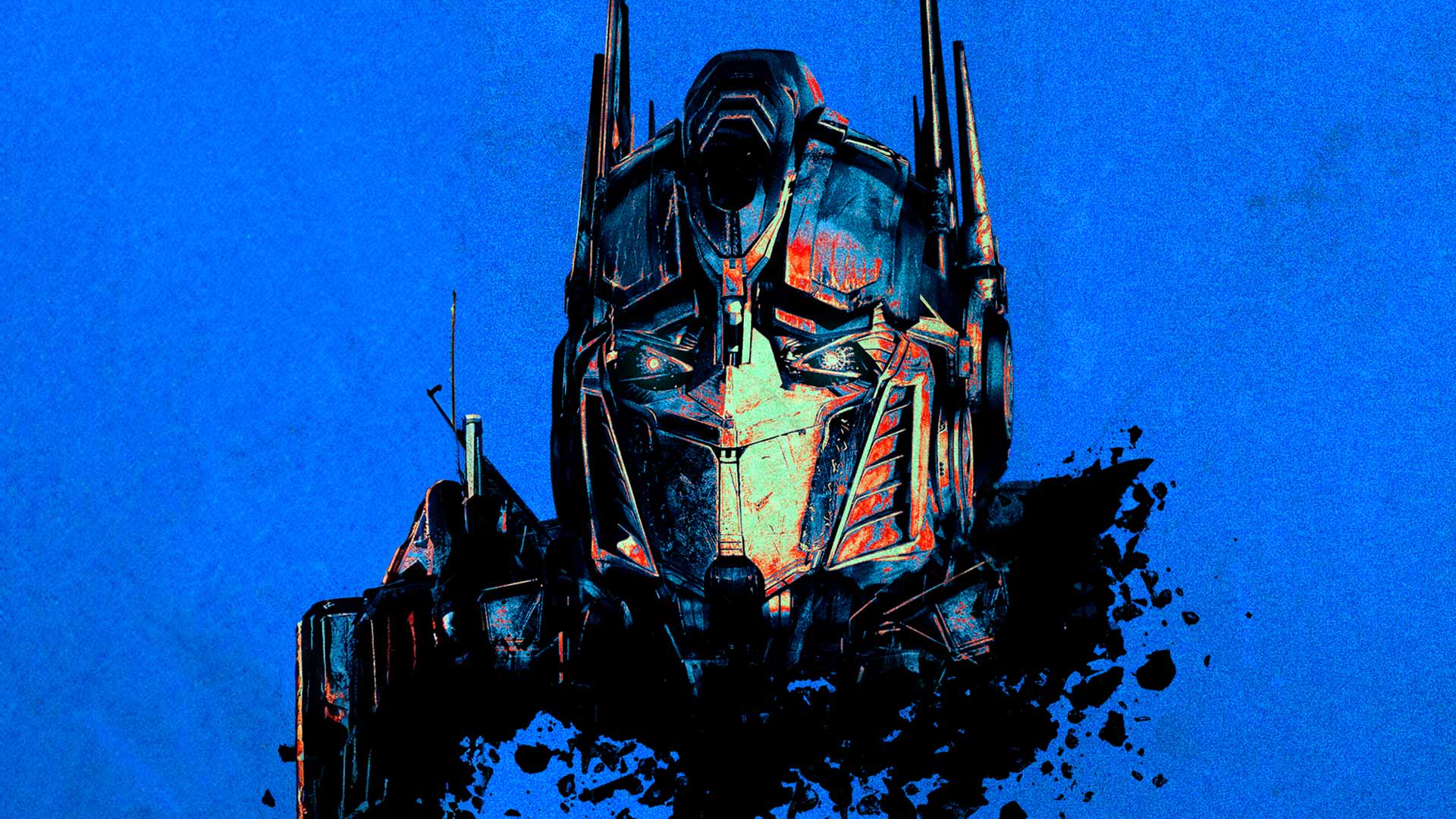
281 Interesting Facts About Transformers
Interesting Facts (118)
- #001
According to Megan Fox, she was attending a Linkin Park concert, and when the concert ended the band personally met her, told her they had heard about the live-action Transformers film and asked whether one of their songs could be in it, and so "What I've Done" ended up in the end credits sequence.
- #002
(Around 40 minutes) In the scene where Scorponok bursts out of the sand right behind the soldiers, the effect was achieved by detonating a capsule beneath the sand. The explosions would be very close and very dangerous for the actors in the scene, so before it was shot Michael Bay told the actors to run no matter what and to keep running, otherwise they could be seriously injured or, worse, killed. As a result, the panic on the actors' faces as they flee Scorponok in this scene is one hundred percent real.
- #003
As part of the film's promotional campaign, a special Sector 7 website was launched featuring videos showing that Transformers "evidence" had reached Earth: a video showing Grimlock destroying a construction site; a Reflector transforming at a birthday party; Kickback and Laserbeak accidentally caught on video; and a security video showing Bumblebee (in his old Volkswagen Beetle mode) transforming in a parking lot.
- #004
In the film Megatron does not choose an alternate mode, arrogantly choosing not to hide himself on Earth. Instead he keeps his alien jet mode. His original alternate mode in Transformers (1984) was a Walther P38 pistol, but the writers felt this was like "having Darth Vader transform into his own lightsaber and someone else swinging him around," so he was given a more realistic alien design and made uglier to render him more menacing.
- #005
The "Moustache Man" hologram projected by the Decepticons is actually Brian Reece, an MH-53 pilot. He was noticed while flying Blackout helicopters, and Michael Bay and Steven Spielberg thought he had the right look (sinister and cold) for a Decepticon hologram. Reece had to reschedule his wedding and honeymoon in order to shoot his scenes.
- #006
Contains a major spoiler — show
(Around 14 minutes) Bumblebee's original alternate mode in Transformers (1984) was a Volkswagen Beetle, but this was revised to a 1976/2009 Chevrolet Camaro. This was because Michael Bay wanted to avoid comparisons with Herbie the Love Bug and felt the Camaro had a tougher yet friendlier quality than the Beetle. As a nod to the series, a yellow Volkswagen Beetle appears next to Bumblebee at the car dealership (and, as a joke, he damages it). Bumblebee appeared as a Volkswagen Beetle in the prequel Bumblebee (2018), which he eventually upgrades to a Camaro, thus preserving continuity.
- #007
- #008
Because no working 2009 Chevrolet Camaro existed during production, Saleen Inc., which worked with the Pontiac GTO and used General Motors' Camaro designs, managed to build a working Camaro within thirty days to serve as Bumblebee's alternate mode. Saleen also provided one of its S281 cars (a modified Ford Mustang) to serve as Barricade's alternate mode.
- #009
- #010
Optimus Prime's original alternate mode in "Transformers (1984)" was a cab-over truck, but this was revised to a bull-nosed Peterbilt truck. This was because test designs showed that a cab could only conceal a six-meter robot, and so the larger Peterbilt truck was chosen to make Prime taller (nine two feet in height). The truck was also painted blue with red flames to give Prime a different look (like Optimus's successor Rodimus Prime).
- #011
According to ILM animators, every transformation in the film is unique (even when performed by the same robot), with thousands of components moving in significantly different orders/sequences and along different routes around the body. This is because the robots transform in a fluid, instinctive way depending on their own conditions (speed/terrain/purpose of movement); however, the animators also admit that each transformation was primarily animated to look interesting and convincing.
- #012
- #013
- #014
- #015
- #016
- #017
- #018
To maintain the film's exuberant feel, most of the action scenes were shot practically, with the actors performing their stunts live in front of the camera. All computer-generated imagery was limited to the robots and certain key scenes. Because of the intensity of the action (mostly car crashes and explosions), the camera was kept inside a box made of bulletproof glass. Shia LaBeouf later joked: "The camera's protected, but the actors are expendable!"
- #019
(At about 1 hour 22 minutes) Before shooting the scene in which the Autobots cut off Sector 7's convoy, an extra — the driver of the car holding Sam and Mikaela — was worried he would be injured while the Agents take out Jazz. Michael Bay assured him he would come to no harm, since the guns would be pulled away quickly on elastic cords and were made of rubber. During the shot, however, a plastic gun struck the excess material as it was pulled past his temple, making him flinch in pain (visible in the film). Bay could offer the extra only a sheepish apology for his misfortune.
- #020
Griffith Observatory is a private area, and officials were initially reluctant to allow the film to shoot there. The producers managed to secure permission to film the Autobots' arrival on Earth and their council through Leonard Nimoy and Susan Bay Nimoy (Nimoy's wife, a relative of Michael Bay). Nimoy had voiced Galvatron, Megatron's successor, in The Transformers: The Movie (1986), and went on to voice Sentinel Prime, Optimus Prime's predecessor, in Transformers: Dark of the Moon (2011).
- #021
- #022
- #023
To save money, the producers struck a production deal with General Motors, saving about $3 million. The company provided the Autobots' alternate modes (in fact, it supplied three versions of each car in case some were crashed) and also provided the roughly 200 cars blown up in the Battle of Mission City.
- #024
In the "Transformers (1984)" series, the Autobots had blue optics (eyes) and the Decepticons had red optics. To make the robots more engaging, the animators created a new eye design resembling a camera shutter, though the color scheme stayed the same. The only exception is Frenzy, a Decepticon spy with blue optics.
- #025
- #026
Michael Bay initially turned down directing the film, thinking it was "a stupid toy movie." But he wanted to work with Steven Spielberg and to make the first family film of his career, and since he is a car enthusiast, the idea of sentient cars appealed to him. He later admitted that not being a Transformers fan was a blessing, because it allowed him to introduce the saga to other non-fans.
- #027
The female Autobot Arcee was to appear in the film, but she was removed because the writers could not fully explain the concept of robot gender in the film, and Ironhide was brought in in her place. Arcee would appear in "Transformers: Revenge of the Fallen (2009)," as the writers decided to ignore the gender issue.
- #028
- #029
- #030
- #031
Although Scorponok is the only robot in the film that does not transform, the center of his body looks like a General Electric T64 turboshaft engine and his forearms are partly formed from side exhausts; since his master Blackout is a helicopter, this would mean he is one of Blackout's engines.
- #032
- #033
- #034
Bonecrusher's alternate mode is a Buffalo H Mine-Protected Clearance Vehicle equipped with a claw on the end of a telescopic arm. According to production designer Jeff Mann, the production design team saw a picture of the vehicle with the claw in the foreground and got the impression that the claw was large enough to topple other vehicles. When they contacted the vehicle's owners to ask how it was used, they were greatly amused to learn that the claw was only 14 inches wide (the picture turned out to have been edited in Photoshop). The claw seen in the film is a three-metre tool the team had to build to fit over the existing claw.
- #035
The US Department of Defense provided the actors with authentic military uniforms. The uniforms worn by the survivors of the base attack are the Army's Future Force Warrior system Multicam uniform (part of the Future Combat Systems project), and Agent Simmons's uniform bears a Combat Infantryman Badge and a Lieutenant Colonel's silver oak leaves (indicating that Simmons was once a US Army Infantry officer).
- #036
Contains a major spoiler — show
(At about 1 hour 55 minutes) Autobot Jazz is killed in the final battle. Ironically, he was one of the Autobot survivors in The Transformers: The Movie (1986), which featured the deaths of many of his comrades, including Ratchet, Ironhide and Optimus Prime. All of them survived in this film.
- #037
Starscream's original alternate mode in Transformers (1984) was an F-15 Eagle jet, but this was revised to an F-22 Raptor (in real life, the Air Force planned to replace the F-15 with the F-22). He was also given small bird-like feet so that he could transform properly and show off his abilities throughout the film.
- #038
- #039
Soundwave was to appear in this film disguised as an MH-53 Pave Low helicopter. The helicopter's name was later changed to Blackout, and Soundwave was then to be a Saleen Mustang car. However, Hasbro demanded that Soundwave's original alternate mode from Transformers (1984), a music player, appear in the film, so the Saleen was renamed Barricade and the music player robot appeared as Barricade's partner. The writers, however, felt the role did not do justice to Soundwave, so they renamed the music player Frenzy, after Soundwave's slave. Soundwave himself would appear in the next two films.
- #040
- #041
According to one of the CGI artists at Industrial Light & Magic, the Transformers consist of a total of 60,217 parts. Optimus Prime consists of 10,108 parts, Megatron of 2,411 parts and Bumblebee of 7,433 parts. Ironhide, with both of his weapons made up of 10,000 parts, is the most cumbersome Transformer in the film.
- #042
Contains a major spoiler — show
Sentinel Prime was to appear in the film. During the Mission City battle, time would stop and he would briefly appear before Sam to give him a hint about how to defeat Megatron. In the final film, Optimus Prime gives this hint, but the concept was reworked into the Dynasty of Primes in Transformers: Revenge of the Fallen (2009), and Sentinel Prime himself appeared in Transformers: Dark of the Moon (2011).
- #043
Contains a major spoiler — show
(Around 2 hours 10 minutes) During the Mission City battle, an F-22 attacks Megatron. Fans have suggested that the attacking F-22 is a disguised Starscream, fitting his classic double-agent nature and later appearing in Transformers: Revenge of the Fallen (2009). Writer Roberto Orci said that since they did not consider this idea while writing the film, deciding whether it really is Starscream is up to the fans.
- #044
Producer Don Murphy initially wanted the film to feature seven Autobots (Optimus Prime, Bumblebee, Ironhide, Jazz, Ratchet, Prowl and Wheeljack) against eight Decepticons (Megatron, Starscream, Soundwave, Ravage, Laserbeak, Rumble, Skywarp and Shockwave). Only seven of these Transformers (five Autobots and two Decepticons) could appear in the film, but Soundwave and Ravage appeared in the second film, and Laserbeak and Wheeljack (renamed Que) appeared in the third.
- #045
- #046
- #047
- #048
- #049
Initially the Matrix of Leadership was to be the powerful artifact the Transformers were searching for, but the writers felt it resembled The Matrix (1999) too closely and renamed it the All Spark (the concept itself was a hybrid of the Matrix, the Energon cubes from the television series, and the cube-shaped artifact the Underbase from the 1980s comics). The Matrix would appear in Transformers: Revenge of the Fallen (2009), with its purpose changed to that of a key to activate the sun-harvesting machine.
- #050
Contains a major spoiler — show
(At about 1 hour 3 minutes) In the film, the name "Autobot" stands for "Autonomous Robotic Organism." In the series, the Autobots were named this because their alternate modes are automobiles. Since the species is given as "Autonomous Robotic Organism," this naming makes more sense, which would also make the Decepticons Autobots.
- #051
Contains a major spoiler — show
(At about 2 hours 5 minutes) When Optimus Prime confronts Megatron in their climactic showdown, he says, "One shall stand, one shall fall!" Prime notes that he said the same thing to Megatron when they clashed in The Transformers: The Movie (1986). However, in that film it was Prime who fell, while in this film it is Megatron.
- #052
If you look closely at Starscream, markings from his F-22 form can be seen: On the tail that forms his left shoulder, there is a winged sword within a shield (the emblem of Air Combat Command) and the letters "FF 1. FW" (indicating the 1st Fighter Wing, based at Langley Air Force Base). On the part of his nose that forms his chest, there is a "flying fist" emblem belonging to the 71st Fighter Squadron of the 1st Wing (this squadron still flies the F-15 Eagle, Starscream's alternate mode in Transformers (1984)). And the tail markings read "ED," placing him at Edwards Air Force Base (also seen among a squadron bearing "ED" tail markings).
- #053
- #054
Throughout the film, Bumblebee communicates using his radio in a manner reminiscent of the Junkions, the inhabitants of the planet Junk shown in The Transformers: The Movie (1986), who speak entirely in television broadcasts. Bumblebee's notable broadcasts include: the voice of Lieutenant Uhura from Star Trek (1966) saying, "Message from Starfleet" — the roles of Megatron/Galvatron had previously been played by Leonard Nimoy, who also played Spock in Star Trek, and by Frank Welker. A line, "Across the inanimate vastness of space," is taken from Orson Welles's famous 1939 radio broadcast "The War of the Worlds." Welles's last film was The Transformers: The Movie (1986), in which he voiced Unicron, the planet-devouring entity. A sentence from a sermon, "angels from Heaven." In Japan, Transformers is known as the "Super God Robot Force," a title written by John Wayne from El Dorado (1966). Wayne's voice has long been cited as an influence on the voice Peter Cullen gave to Optimus Prime.
- #055
- #056
Ratchet's alternate mode is a Hummer H2 search-and-rescue vehicle. This vehicle was built from scratch for the film and modified from an original Hummer to have a sturdier structure. The vehicle was also painted green to give it a different look (although a Ratchet toy released to mark the film shows him in his classic red-and-white appearance).
- #057
Michael Bay wanted Steve Buscemi, with whom he had previously worked on Armageddon (1998) and The Island (2005), to play Agent Simmons. However, Buscemi was unavailable due to filming other movies. Buscemi would later voice Transformers in Transformers: The Last Knight (2017) and Transformers One (2024).
- #058
- #059
Contains a major spoiler — show
Although Jazz does not survive the final battle, a Jazz toy released by Hasbro in the film's memory described him as having been rebuilt into a tougher (and better-looking) frame. In the Japanese manga adaptation of Transformers: Revenge of the Fallen (2009), he is seen alive and well, joining the Giza Guerrilla, killing Long Haul and impaling Megatron's left leg with his new sword to stop him from reaching Sam, though he is thrown into some ruins and spends the rest of the battle fighting Decepticon protoforms.
- #060
Brawl's alternate mode, a hybrid tank resembling an M1 Abrams and a Leopard II, was a remodeled version of the "stealth tank" from xXx: State of the Union (2005). Michael Bay looked over every tank in the United States Army to find the right one to serve as Brawl's alternate mode, but ultimately settled on the stealth tank, which he felt had an attitude suited to a Decepticon (it was evil, authoritarian and loaded with weapons). Additionally, the prop tank is much lighter than a real tank, which was useful in situations where much of the on-screen action was driven on asphalt roads.
- #061
Two of the Decepticons in the film are named Bonecrusher (a mine-clearing vehicle) and Devastator (a tank). They take their names from two members of the Constructicons, a Decepticon group from Transformers (1984) that took the form of construction vehicles and could combine to form a larger robot. The Constructicons were to appear in the second film, although some names necessarily had to be changed.
- #062
(At about 1 hour 40 minutes) A sign in the All Spark room reads, "The last accident happened here 322 days ago." Michael Bay considered filming this accident as a flashback (which would also have shown how the claw marks appeared on the partition walls), but decided to scrap it in favor of Simmons's present-day show.
- #063
Contains a major spoiler — show
The prequel novel "Transformers: Ghosts of Yesterday" provides a more extensive explanation than the film of how the Autobots and Decepticons learned that the AllSpark was on Earth. Both sides encounter Ghost-1, a spacecraft reverse-engineered from Megatron and crewed by Sector Seven astronauts. Both sides learn that the AllSpark and Megatron are on Earth and fight a battle that causes the destruction of Ghost-1 but directs them toward Earth.
- #064
Contains a major spoiler — show
According to Michael Bay, the Battle of Mission City did not introduce Transformers to the world: "Everyone did it. It's realistic. Two weeks after the 2004 tsunami, no one was talking about it anymore. It's very strange. We decided to do the same thing for Transformers. The government mentions something military, says everything is wrong, that it's a joke, and people don't know what they actually saw."
- #065
- #066
Contains a major spoiler — show
(At about 2 hours 10 minutes) When Sam pushes the AllSpark (described in the film as "raw power") into his chest, Megatron meets his end. This is a homage to The Transformers: The Movie (1986) (Hot Rod uses the power of the Matrix to destroy Unicron) and Beast Wars: Transformers (1996) (raw energy is pumped into Predacon Rampage's chest).
- #067
- #068
- #069
- #070
- #071
Producer Don Murphy tasked Tom DeSanto with writing the plot; he was impressed by DeSanto's handling of many characters and storylines in X-Men (2000). A big fan of the series since childhood, DeSanto did extensive research on Transformers. He held several meetings with comic book writer Simon Furman and invited fans to discuss the film on Murphy's online message board. His treatment explored the existence and history of Transformers, as well as the real possibilities and consequences of "their war on our world," similar to a disaster film; this was what Murphy wanted the film to resemble.
- #072
Contains a major spoiler — show
Barricade was last seen in the highway chase leading to Mission City. The film's comic adaptation mentions a brief fight between Barricade and Optimus Prime, ending with Prime throwing Barricade into a concrete pillar. Barricade survived and went on to appear in the sequels.
- #073
The Transformer that turns into a tank was originally named Brawl in Transformers (1984) but was renamed Devastator. Roberto Orci stated that this, like the licensors at Hasbro, was an error noted during editing. Michael Bay, however, stated that he felt Devastator was a more destructive and fitting name for a Decepticon. In related merchandise, the Decepticon tank was named Brawl.
- #074
The transformation sound from Transformers (1984) is heard five times in the film: * The blackout transformations at the SOCCENT base. * Bumblebee transforms to catch the falling Sam and Mikaela. * The Nokia phone becomes a Transformer after being exposed to the AllSpark. * Ironhide and Blackout transform during the Battle of Mission City. * At the end, when Starscream flies into space.
- #075
- #076
When fans asked why the film was released on DVD and HD DVD but not on Blu-ray, Michael Bay responded: "What you don't understand is corporate politics. Microsoft wants both formats to fail so they can be heroes and guide the world toward digital downloads. That's the dirty secret nobody talks about. That's why Microsoft is handing out $100 million checks to studios to embrace only HD DVD and not the leading, superior Blu. They want confusion in the market until Ray makes digital downloads perfect. Time will tell, and you will see the truth." Apparently Bay was right.
- #077
- #078
As part of the film's promotional campaign, pavement artist Julian Beever was commissioned to create a sidewalk advertisement for the film. Beever used props and models to give the advertisement a three-dimensional look, and said it was one of his most difficult achievements. The advertisement can still be seen in New York.
- #079
The script initially included the Autobots' and Decepticons' respective spacecraft, the Ark and the Nemesis. Roberto Orci removed the spacecraft element, wondering, "Why would aliens who moonlight as vehicles need other vehicles to travel inside?", and replaced it with the roaming prototype concept from Beast Wars: Transformers (1996). However, the Nemesis would appear in Transformers: Revenge of the Fallen (2009) and the Ark in Transformers: Dark of the Moon (2011).
- #080
According to Lorenzo di Bonaventura, when Transformers was being designed as a test, Optimus Prime was first designed in CGI with his classic boxy look from Transformers (1984), but it looked fake and boring. The robots were therefore designed with a more complex, three-dimensional look that would be more realistic and reflect their alien origins. The main influences on these designs were real-world physics (each robot matches the size of the chosen disguise), the Rubik's Cube (many moving parts transforming one thing into another) and samurai armor (a nod back to the toy line's Japanese origins).
- #081
Contains a major spoiler — show
At around the 50-minute mark, Transformers references a notorious scene in The Transformers: The Movie (1986) in which Spike Witwicky swears during a battle ("Oh, shit… what are we going to do now?"). In this film, Sam Witwicky shouts "Oh, shit!" when he first encounters a Decepticon, and "Oh, shit!" becomes Frenzy's last words when his head is split in two.
- #082
Transformers was created through a combination of computer-generated imagery (from Industrial Light & Magic and Digital Domain) and practical props (from KNB Effects). The props built included a miniature AllSpark; Optimus Prime's head, chest and foot; Megatron's legs and claws; Barricade's pop-out sensors; Blackout's feet; Bonecrusher's claw; Scorponok's head and tail; a seventeen-meter model of Bumblebee; and a one-and-a-half-meter model of Frenzy (the last three at full scale). Of the film's six hundred and thirty effect shots, ILM designed seventy-five percent while Digital Domain handled the remaining twenty-five percent, including Megatron's Arctic discovery, Frenzy's animated head, the machines mutated by the AllSpark, and the Autobots' protoforms.
- #083
At around the 58-minute mark, Tomoyasu Hotei's "Battle Without Honor or Integrity" plays when Bumblebee takes on his new Camaro form. The same song plays in Kill Bill: Vol. 1 (2003) when the Bride arrives in Okinawa, Japan, to fight O-Ren Ishii. The yellow-and-black color scheme of the Bride's outfit matches Bumblebee's paint job.
- #084
- #085
- #086
Megatron was initially to have an aerodynamic helmet design based on his classic bucket-headed look in Transformers (1984). The producers, however, decided it was not threatening enough and gave the head design to Starscream, giving Megatron a rougher, crowned design. The helmet design would later become Megatron's design in Transformers: The Last Knight (2017).
- #087
- #088
- #089
Corey Burton, who voiced Shockwave in Transformers (1984), was approached to voice Jazz and Brawl. He turned down Brawl because he did not want the voice role at the drop of a hat, and later expressed surprise that he would be considered for Jazz, a "black character." He was later offered the role of Shockwave in the third film, but declined because he had already taken on the role many times.
- #090
- #091
- #092
- #093
In close-ups the Transformers are sped up and in wide shots they are shown in slow motion. This gives weight to their movements as well as making them look cool. ILM animators also watched footage of martial arts fights to get an idea of how to portray the Transformers' movements as gracefully and organically as possible.
- #094
- #095
- #096
- #097
The character Scorponok made his debut in the Headmasters episodes that made up the final season of Transformers (1984); since those episodes take place shortly after the events of The Transformers: The Movie (1986) (set in 2006), Scorponok's first appearance in the series would also likely be set in 2007. The film is set in the then-present day of 2007, and one of the first Transformers seen is Scorponok.
- #098
- #099
- #100
Hasbro released several toys based on the film's characters. These toys feature the new "Automorph Technology," in which moving parts of one toy allow certain other parts to change automatically during transformations. This marks a rare period in which Transformers toys were designed after the fictional characters, whereas normally the toys are designed first (although Michael Bay acknowledges that the appearances of most of the Decepticons were chosen before their characterizations because Hasbro needed them to start on the toys).
- #101
Contains a major spoiler — show
In 1973, Steven Spielberg was considered to direct Superman (1978), and in 1998, Michael Bay was considered to direct Man of Steel (2013). This film serves as a tribute to the original Superman: * Both films feature similar locations (a dying planet, the Arctic, an underground base and the Hoover Dam). * A glowing green artifact from another world plays a significant role. * The scene in which Starscream flies toward the Dam is directly copied. * Optimus Prime catches the falling Sam the way Superman catches Lois Lane (the two even say the same line). * Starscream, like Superman, ultimately flies off into space.
- #102
- #103
- #104
- #105
- #106
- #107
The working title for this film and for Transformers: Revenge of the Fallen (2009) was "Prime Directive." This was the name of Dreamwave Productions' first "Transformers" comic book, but it is also a directive mentioned in Star Trek (1966) emphasizing the avoidance of harmful or otherwise interfering contact with alien civilizations (which the Transformers blatantly violate). Writers Roberto Orci and Alex Kurtzman and actor William Morgan Sheppard worked on Star Trek (2009).
- #108
- #109
- #110
- #111
- #112
- #113
- #114
- #115
- #116
In one of the earlier drafts of the script, some of the Decepticons had different names. Blackout [MH-53 helicopter] was called Vortex, Barricade [Saleen police car] was called Brawl, and Frenzy [CD player] was called Soundwave. In the original 1980s cartoon, there was a Decepticon named Vortex who transformed into a military helicopter, and Soundwave transformed into a Walkman cassette player [and like Soundwave, Frenzy was a Decepticon deep-cover agent who transformed into a music player]. Brawl, just as in the original cartoon, ended up as an Army tank. Although due to an error the name Devastator was used in the film, promotional materials and toys featured Brawl.
- #117
- #118
The series Transformers: Animated (2007) was produced to coincide with the release of this film. It premiered five months after the film's release. The series was originally titled "Transformers: Heroes" but was renamed "Transformers: Animated" to distinguish it from the live-action film.
Production Story (134)
- #119
To keep the film realistic and under budget, the US Department of Defense supported the production, its largest project since "Black Hawk Down (2001)." The military provided its vehicles as the alternate modes of the Decepticons Starscream and Bonecrusher. It also allowed the filming of F-22 and CV-22 aircraft, seen in a feature film for the first time since "Hulk (2003)," whose soldiers served as extras, and provided the actors with authentic uniforms. In return for this favor, the producers arranged a free advance screening of the film for the soldiers.
- #120
- #121
- #122
In the first draft of the script, the Army Ranger team appears to be made up of characters who are or will become members of G. I. Joe, another Hasbro property. The characters all share traits and likenesses of some of the original Joes, and some were even cast to match. The team appears to consist of at least Duke (Lennox), Stalker (Epps), Trip Wire (Donnelly), Gung Ho (Fig) and others who are not named. This was apparently changed in rewrites, but you can still see remnants of the characters. Donnelly is clumsy and wears glasses just like the Joe "Trip Wire." The heavy weapons man is a muscular, bright blond man, like Joe's heavy machine gunner "Rock n' Roll." The place where you can really see remnants of the first draft is the character "Fig." In his dialogue he complains about going back to Louisiana to eat Cajun food, just like the G. I. Joe character "Gung Ho." They cast Amaury Nolasco, a Puerto Rican Latin American, in the role. So oddly, they changed his dialogue so that when he starts remembering his favorite home-cooked meal, his description of Cajun flavors begins halfway to turning into Puerto Rican food to match the actor's bilingual abilities, and has him switch to Spanish. He even resembles "Gung Ho" with his bald head, muscular build and bare chest. It can be assumed that the decision to introduce "G. I. Joe" in its own franchise simply went in another direction.
- #123
- #124
According to Megan Fox, she was attending a Linkin Park concert, and when the concert ended, the band met her in person, told her they had heard about the live-action "Transformers" film, and asked whether they would have a song of their own in the film — and so "What I've Done" ended up in the closing title sequence.
- #125
- #126
(Around 40 minutes) In the scene where Scorponok bursts out of the sand right behind the soldiers, the effect was achieved by detonating a capsule beneath the sand. The explosions would be very close and very dangerous for the actors in the scene, so before the scene was shot, Michael Bay told the actors to run no matter what and to keep running, otherwise they could be seriously injured or, worse, killed. As a result, the panic on the actors' faces as they flee from Scorponok in this scene is one hundred percent real.
- #127
To keep the film realistic and under budget, the U.S. Department of Defense supported the production of the film, the largest project they had assisted since "Black Hawk Down (2001)." The military provided its vehicles as the alternate modes of the Decepticons Starscream and Bonecrusher. It also allowed the filming of F-22 and CV-22 aircraft, seen in a feature film for the first time since "Hulk (2003)," whose soldiers served as extras, and provided the actors with authentic uniforms. In return for this favor, the producers arranged for the film to be shown to the soldiers in advance, free of charge.
- #128
As part of the film's promotional campaign, a special Sector 7 website was launched featuring videos showing that the Transformers' "evidence" had reached Earth: a video showing Grimlock destroying a construction site; a Reflector transforming at a birthday party; Kickback and Laserbeak accidentally being caught on video; and a security video showing Bumblebee (in his old Volkswagen Beetle mode) transforming in a parking lot.
- #129
In the film, Megatron does not choose an alternate mode, arrogantly choosing not to hide himself on Earth. Instead, he keeps his alien jet mode. His original alternate mode in Transformers (1984) was a Walther P38 pistol, but the writers felt this was like "having Darth Vader transform into his own lightsaber and someone else swinging him around," so he was given a more realistic alien design and made uglier to make him more threatening.
- #130
The "Moustache Man" hologram projected by the Decepticons is actually Brian Reece, an MH-53 pilot. He was noticed while flying Blackout helicopters, and Michael Bay and Steven Spielberg thought he had the right look (evil and cold) for a Decepticon hologram. Reece had to reschedule his wedding and honeymoon in order to shoot his scenes.
- #131
(Around 1 hour 45 minutes) The Decepticons were supposed to have more dialogue in the film, but most of their lines were cut to keep them mysterious (screenwriter Roberto Orci felt that the more a villain talks, the less threatening they are). However, to please fans, Megatron's classic scolding of Starscream ("You fail me yet again, Starscream.") was included in the film.
- #132
(Around 14 minutes) Bumblebee's original alternate mode in Transformers (1984) was a Volkswagen Beetle, but this was revised to a 1976/2009 Chevrolet Camaro. This was because Michael Bay wanted to avoid comparisons with Herbie the Love Bug and felt the Camaro had a tougher but friendlier quality than the Beetle. As a nod to the series, a yellow Volkswagen Beetle appears next to Bumblebee at the car dealership (and, as a joke, damages him). Bumblebee appeared as a Volkswagen Beetle in the prequel Bumblebee (2018), which he eventually upgrades to a Camaro, thus preserving continuity.
- #133
- #134
Because there was no working 2009 Chevrolet Camaro during production, Saleen Inc., which worked with the Pontiac GTO and used General Motors' Camaro designs, managed to produce a working Camaro to serve as Bumblebee's alternate mode within thirty days. Saleen also provided one of its S281 cars (a modified Ford Mustang) to serve as Barricade's alternate mode.
- #135
Optimus Prime's original alternate mode in "Transformers (1984)" was a cab-over truck, but this was revised to a bull-nose Peterbilt truck. The reason was that test designs showed a cab could only conceal a robot six meters tall, so the larger Peterbilt truck was chosen to make Prime taller (nine feet two inches). The truck was also painted blue with red flames to give Prime a distinct look (like Optimus's successor Rodimus Prime).
- #136
- #137
According to ILM animators, every transformation in the film is unique (even when performed by the same robot), with thousands of components moving in significantly different orders/sequences and along different routes around the body. This is because the robots transform fluidly and instinctively depending on their own circumstances (speed/terrain/purpose of movement); however, the animators also admit that each transformation was primarily animated to look interesting and convincing.
- #138
- #139
- #140
- #141
- #142
- #143
In police car mode, Barricade has the Decepticon symbol on its front and reads "Pacis Quod Alcedonia" (Latin for "Still, Halcyon days of Peace") and "Incorporated since June 1865." On its rear it reads "To punish and enslave," a distorted version of the Los Angeles police motto, "To protect and to serve."
- #144
- #145
To maintain the film's exuberant atmosphere, most of the action scenes were shot practically, with the actors performing their stunts live in front of the camera. All computer-generated imagery was limited to the robots and certain key scenes. Due to the intensity of the action (mostly car crashes and explosions), the camera was kept inside a box made of bulletproof glass. Shia LaBeouf later joked: "The camera's protected, but the actors are expendable!"
- #146
(At about 1 hour 22 minutes) Before shooting the scene where the Autobots cut off Sector 7's convoy, an extra (the driver of the car in which Sam and Mikaela are held) was worried he would be injured when Agents Jazz takes him down. Michael Bay assured him that the guns would be pulled away quickly with elastic cords and were made of rubber, so he would not be harmed. However, during the shot, a plastic gun hit the excess as it was pulled to his temple, causing him to flinch in pain (visible in the film). Bay could only offer a sheepish apology for the extra's misfortune.
- #147
- #148
Griffith Observatory is a private area, and officials were initially reluctant to allow the film's shooting to proceed. However, the producers managed to secure permission to film the Autobots' arrival on Earth and their council through Leonard Nimoy and Susan Bay Nimoy (Nimoy's wife, a relative of Michael Bay). Nimoy had voiced Galvatron, Megatron's successor, in The Transformers: The Movie (1986), and went on to voice Sentinel Prime, Optimus Prime's predecessor, in Transformers: Dark of the Moon (2011).
- #149
To save money, the producers struck a production deal with General Motors, saving roughly $3 million. The company provided the Autobots' alternate modes (in fact, they provided three versions of each car in case some were damaged) and also supplied the roughly 200 cars blown up in the Battle of Mission City.
- #150
In the "Transformers (1984)" series, the Autobots had blue optics (eyes) and the Decepticons had red optics. To make the robots more engaging, the animators created a new eye design resembling a camera shutter; the color scheme, however, remained the same. The only exception is Frenzy, a Decepticon spy with blue optics.
- #151
Michael Bay initially turned down directing the film, thinking it was "a stupid toy movie." But he wanted to work with Steven Spielberg, wanted to make the first family film of his career, and, being a car enthusiast, was drawn to the idea of sentient cars. He later admitted that not being a Transformers fan was a blessing, because it allowed him to introduce the saga to other non-fans.
- #152
The female Autobot Arcee was to appear in the film, but she was removed because the writers could not fully explain the concept of robot gender in the film, and Ironhide was brought in in her place. Arcee was to appear in "Transformers: Revenge of the Fallen (2009)," as the writers decided to ignore the gender issue.
- #153
- #154
- #155
- #156
- #157
Bonecrusher's alternate mode is the Buffalo H Mine-Protected Clearance Vehicle, which comes equipped with a claw at the end of a telescopic arm. According to production designer Jeff Mann, the production design team saw a picture of the vehicle with the claw in the foreground, which gave the impression that the claw was large enough to knock over other vehicles. But when they contacted the vehicle's owners to ask how it was used, they were very amused to learn that the claw was only 14 inches wide (it turned out the picture had been edited in Photoshop). The claw seen in this film is a three-meter tool the team had to build to fit over the existing claw.
- #158
The US Department of Defense provided the actors with authentic military uniforms. The uniforms worn by the survivors of the base attack are the Army's Future Force Warrior system's Multicam uniform (part of the Future Combat Systems project), and Agent Simmons's uniform bears a Combat Infantryman Badge and a Lieutenant Colonel's silver oak leaves (indicating that Simmons was once a US Army Infantry officer).
- #159
- #160
Starscream's original alternate mode in Transformers (1984) was an F-15 Eagle jet, but this was revised to an F-22 Raptor (in real life, the Air Force planned to replace the F-15 with the F-22). He was also given small bird-like feet so that he could transform properly and display his abilities throughout the film.
- #161
According to one of the CGI artists at Industrial Light & Magic, if you took all the polygons (CGI blocks) from all the Transformer models they created and lined them up end to end, they would reach the moon, and there would still be enough left over to build the Colosseum in Rome, Italy twice.
- #162
Bumblebee was designed to visually resemble a bumblebee: his color is yellow and black, the protrusions on his helmet resemble antennae, and the car's doors fold back behind him like wings. There is even a bee cartoon hanging from the rearview mirror and an air freshener with the words "Bee otch" on it.
- #163
(Around 2 minutes) At the beginning of the film, the soldiers are seen in a Bell Boeing CV-22 Osprey tiltrotor aircraft. Initially, they were to be shown returning home in a Humvee, but during the shoot, Michael Bay saw the newly arrived CV-22s instead and wanted them used. A unique feature of the CV-22 is that its rotors tilt so they can switch between helicopter and airplane. With its ability to change modes, it is essentially a real-life transformer.
- #164
Soundwave was to appear in this film in the guise of an MH-53 Pave Low helicopter. Later the helicopter's name was changed to Blackout, and then Soundwave was to be a Saleen Mustang car. However, Hasbro demanded that a music player, Soundwave's original alternate mode in Transformers (1984), appear in the film, so the Saleen's name was changed to Barricade and the music player robot appeared as Barricade's partner. However, the writers felt the role did not do justice to Soundwave, and so they renamed the music player Frenzy, after Soundwave's minion. Soundwave himself would appear in the next two films.
- #165
There are many references in the film to Hasbro, the official distributor of the "Transformers" toy line: * When the little girl discovers Ironhide in the swimming pool, she is holding a "My Little Pony" plush toy. Hasbro owns the "My Little Pony" toy line. * During the Battle of Mission City, Bumblebee and Ironhide use the "Furby" truck as a shield against Starscream's attack. The "Furby" toy line also belongs to Hasbro. * During the battle, shortly after Jazz and Ratchet engage Brawl, a sign reading "Takara Sushi" can be seen. The Japanese toy company Takara was responsible for Transformers in Japan until it was sold to Hasbro.
- #166
- #167
- #168
According to one of the CGI artists at Industrial Light & Magic, Transformers consists of a total of 60,217 parts. Optimus Prime consists of 10,108 parts, Megatron of 2,411 parts, and Bumblebee of 7,433 parts. Ironhide, with both of his weapons made up of 10,000 parts, is the most cumbersome Transformer in the film.
- #169
- #170
Sentinel Prime was going to appear in the film. During the Battle of Mission City, time would stop and he would briefly appear before Sam and give him a hint about how to defeat Megatron. In the final film, Optimus Prime gives this hint, but the concept was turned into the Dynasty of Primes in Transformers: Revenge of the Fallen (2009), and Sentinel Prime himself appeared in Transformers: Dark of the Moon (2011).
- #171
(Around 2 hours 10 minutes) During the Battle of Mission City, an F-22 attacks Megatron. Fans have suggested that the attacking F-22 is a disguised Starscream, fitting his classic double-agent nature and appearing in Transformers: Revenge of the Fallen (2009). Writer Roberto Orci felt that since they had not considered this idea while writing the film, deciding whether it really is Starscream is up to the fans.
- #172
Producer Don Murphy initially wanted seven Autobots (Optimus Prime, Bumblebee, Ironhide, Jazz, Ratchet, Prowl and Wheeljack) to appear in the film against eight Decepticons (Megatron, Starscream, Soundwave, Ravage, Laserbeak, Rumble, Skywarp and Shockwave). Of these Transformers, only seven (five Autobots and two Decepticons) could appear in the film, but Soundwave and Ravage appeared in the second film, and Laserbeak and Wheeljack (renamed Que) appeared in the third film.
- #173
- #174
- #175
- #176
According to Michael Bay, the key to making the robots look realistic was lighting. Each component of the robots had to reflect light like real metal. To recreate the scene with the robots, photographs of each set were taken to be used as lighting reference, and extensive use of ray tracing (a light reflection technique) was carried out. However, there were various light sources (optics, headlights, lamps, sunlight, etc.) that had to reflect off various surfaces (with different textures), which made ray tracing a difficult task.
- #177
- #178
Initially, the Matrix of Leadership was going to be the powerful artifact the Transformers were searching for, but the writers thought it was too similar to The Matrix (1999) and renamed it the All Spark (the concept itself was a hybrid of the Matrix, the Energon cubes from the television series, and the cubic artifact the Underbase from the 1980s comics). The Matrix would appear in Transformers: Revenge of the Fallen (2009), and its purpose was changed to a key to activate the solar energy harvesting machine.
- #179
- #180
(Around 2 hours 5 minutes) When Optimus Prime confronts Megatron in their climactic showdown, he says, "One shall stand, one shall fall!" This notes that Prime said the same thing to Megatron when they clashed in The Transformers: The Movie (1986). However, in that film it was Prime who fell, while in this film it is Megatron.
- #181
If you look closely at Starscream, markings in his F-22 form can be seen: * On the tail that forms his left shoulder, a winged sword enclosed in a shield (the emblem of Air Combat Command) and the letters "FF 1. FW" (indicating the 1st Fighter Wing based at Langley Air Force Base) are visible. * On the part of his nose that forms his chest, a "flying fist" emblem belonging to the 71st Fighter Squadron of the 1st Wing is visible (this squadron still flies the F-15 Eagle, Starscream's alternate mode in Transformers (1984)). * And the tail markings read "ED," placing him at Edwards Air Force Base (also seen among a squadron bearing "ED" tail markings).
- #182
- #183
The faces and bodies of the Transformers were designed to resemble the symbol of their own faction. The Autobots (especially Optimus Prime, Bumblebee and Ratchet) were modelled on the Autobot face, and the Decepticons (especially Megatron, Barricade and Blackout) were modelled on the Decepticon face.
- #184
Throughout the film, Bumblebee communicates using his radio in a manner reminiscent of the Junkions, the inhabitants of the planet Junk shown in The Transformers: The Movie (1986), who speak entirely in television broadcasts. Bumblebee's notable broadcasts include: * The voice of Lieutenant Uhura from Star Trek (1966), saying "Message from Starfleet." The roles of Megatron/Galvatron had previously been played by Leonard Nimoy, who also played Spock in Star Trek, and by Frank Welker. * The line "Across the inanimate vastness of space" is taken from Orson Welles's famous 1939 radio broadcast "The War of the Worlds." Welles's last film was The Transformers: The Movie (1986), in which he voiced Unicron, the planet-destroying entity. * A sentence from a sermon, "angels from Heaven". In Japan, Transformers is known as the "Super God Robot Force." * A series written by John Wayne from El Dorado (1966). Wayne's voice has long been cited as an influence on the voice Peter Cullen gave to Optimus Prime.
- #185
- #186
Ratchet's alternate mode is a Hummer H2 search and rescue vehicle. This vehicle is an original Hummer built from scratch for the film and modified to have a sturdier structure. The vehicle was also painted green to give it a different look (although a Ratchet toy released to tie in with the film shows him in his classic red and white appearance).
- #187
- #188
Michael Bay wanted Steve Buscemi, with whom he had previously worked on Armageddon (1998) and The Island (2005), to play Agent Simmons. However, Buscemi was unavailable due to the shooting of other films. Buscemi would later voice Transformers in Transformers: The Last Knight (2017) and Transformers One (2024).
- #189
- #190
- #191
Brawl's alternate mode, a hybrid tank resembling an M1 Abrams and a Leopard II, was a remodelled version of the "stealth tank" from xXx: State of the Union (2005). Michael Bay had looked through all the tanks in the United States Army to find the right tank to serve as Brawl's alternate mode, but ultimately settled on the stealth tank, which he felt had an attitude suited to a Decepticon (it was evil, authoritarian and loaded with weapons). In addition, the prop tank is much lighter than a real tank, which was useful in situations where much of the on-screen action was driven on asphalt roads.
- #192
Two of the Decepticons in the film are named Bonecrusher (a mine-clearing vehicle) and Devastator (a tank). They take their names from two members of the Constructicons, a Decepticon group in Transformers (1984) that takes the form of construction vehicles and can combine to form a larger robot. The Constructicons would appear in the second film, although some names necessarily had to be changed.
- #193
(At around 1 hour 40 minutes) A sign in the All Spark room reads "The last accident happened here 322 days ago." Michael Bay considered filming this accident as a flashback (which would also have shown how the claw marks appeared on the partition walls), but decided to scrap it in favour of Simmons's present-day presentation.
- #194
According to Michael Bay, the Battle of Mission City did not introduce Transformers to the world: "Everyone did it. It's realistic. Two weeks after the 2004 tsunami, no one was talking about it anymore. Very strange. We decided to do the same for Transformers. The government mentions something military, says everything is wrong, that it's a joke, and people don't know what they actually saw."
- #195
- #196
- #197
Producer Don Murphy tasked Tom DeSanto with writing the plot; he was impressed by DeSanto's approach to managing many characters and storylines in X-Men (2000). A big fan of the series since childhood, DeSanto conducted extensive research on Transformers. He held various meetings with comic book writer Simon Furman and invited fans to discuss the film on Murphy's online message board. His treatment explored the existence and history of Transformers as well as the real possibilities and consequences of "their war on our world," similar to a disaster film; this was what Murphy wanted the film to resemble.
- #198
- #199
The film contains references to Transformers' (1984) three-part pilot "More Than Meets the Eye": * Sam and Optimus Prime say the title in their lines. * Megatron is frozen at Hoover Dam, referencing the first battle between Megatron and Optimus Prime (set at the fictional Sherman Dam). * Optimus carries an energon sword and Megatron carries a flail (both used them against each other in the above battle, but not in this film).
- #200
The Transformer that turns into a tank was originally named Brawl in Transformers (1984), but the name was changed to Devastator. Roberto Orci stated that this, like the licensors Hasbro, was an error noted during editing. However, Michael Bay stated that he felt Devastator was a more destructive and appropriate name for a Decepticon. In related products, the Decepticon tank was named Brawl.
- #201
- #202
When fans asked why the film was released on DVD and HD DVD but not on Blu-ray, Michael Bay responded: "The thing you don't understand is corporate politics. Microsoft wants both formats to fail so they can be heroes and guide the world toward digital downloads. That's the dirty secret nobody talks about. That's why Microsoft is handing out $100 million checks to studios to embrace only HD DVD instead of the leading, superior Blu. They want confusion in the market until Ray makes digital downloads perfect. Time will tell, and you will see the truth." It appears Bay was right.
- #203
- #204
The script originally included the Ark and the Nemesis, the respective spacecraft of the Autobots and Decepticons. Roberto Orci removed the spacecraft element, wondering, "Why would aliens who moonlight as vehicles need other vehicles to travel inside?", and replaced it with the roaming prototype concept from Beast Wars: Transformers (1996). However, the Nemesis would appear in Transformers: Revenge of the Fallen (2009) and the Ark in Transformers: Dark of the Moon (2011).
- #205
According to Lorenzo di Bonaventura, when Transformers was being designed as a test, Optimus Prime was first designed in CGI with his classic boxy look from Transformers (1984), but it looked fake and boring. So the robots were designed with a more complex, three-dimensional look, to be more realistic and to reflect their alien origins. The main influences on these designs were real-world physics (each robot matches the size of the chosen disguise), the Rubik's Cube (many parts moving to transform one thing into another) and samurai armor (a nod back to the toy line's Japanese origins).
- #206
(Around 50 minutes) In The Transformers: The Movie (1986) there is an infamous scene in which Spike Witwicky swears during a battle ("Oh, shit… what are we going to do now?"). In this film, Sam Witwicky shouts "Oh, shit!" when he first encounters a Decepticon, and "Oh, shit!" becomes his last words when Frenzy's head is split in two.
- #207
- #208
Transformers was created with a mixture of computer-generated imagery (from Industrial Light & Magic and Digital Domain) and practical props (from KNB Effects). Among the props built were a miniature AllSpark; Optimus Prime's head, chest and foot; Megatron's legs and claws; Barricade's pop-out sensors; Blackout's feet; Bonecrusher's claw; Scorponok's head and tail; a seventeen-foot model of Bumblebee; and a five-foot model of Frenzy (the last three full-scale). Of the film's six hundred thirty effects shots, ILM designed seventy-five percent, while Digital Domain handled the remaining twenty-five percent, including Megatron's Arctic discovery, Frenzy's animated head, the machines mutated by the AllSpark and the Autobots' protoforms.
- #209
(Around 58 minutes) When Bumblebee takes his new Camaro form, Tomoyasu Hotei's "Battle Without Honor or Integrity" plays. The same song plays in Kill Bill: Vol. 1 (2003) when the Bride arrives in Okinawa, Japan, to fight O-Ren Ishii. The yellow-and-black color scheme of the Bride's outfit matches Bumblebee's paint job.
- #210
- #211
- #212
- #213
- #214
Megatron was initially going to have an aerodynamic helmet design based on his classic bucket-head look in Transformers (1984). However, the producers decided it was not threatening enough and handed the head design over to Starscream, giving Megatron a rougher, crowned design. The helmet design would later become Megatron's design in Transformers: The Last Knight (2017).
- #215
- #216
- #217
- #218
Corey Burton, who voiced Shockwave in Transformers (1984), was approached to voice Jazz and Brawl. He turned down Brawl because he did not want the voice role for a moment, and later expressed his surprise that he would be considered for Jazz, a "black character." He was later offered the role of voicing Shockwave in the third film, but turned it down because he had taken on the role many times.
- #219
- #220
- #221
In close-ups the Transformers are sped up, and in wide shots they are shown in slow motion. This gives weight to their movements as well as making them look cool. ILM animators also watched footage of martial arts fights to get an idea of how to portray the Transformers' movements as gracefully and organically as possible.
- #222
- #223
- #224
- #225
- #226
- #227
In the first draft of the script, it appears that the Army Ranger team would compromise characters who are or will be members of G. I. Joe, another Hasbro property. All of the characters share traits and similarities with some of the original Joes, and some were even cast to match. The team appears to consist of at least Duke (Lennox), Stalker (Epps), Trip Wire (Donnelly), Gung Ho (Fig) and others who are not named. Apparently this was changed in rewrites, but you can still see remnants of the characters. Donnelly is clumsy and wears glasses, just like Joe "Trip Wire." The heavy weapons man is a muscular, bright blond man, like Joe's heavy machine gunner "Rock n' Roll." The place where you can really see the remnants of the first draft is the character "Fig." In his dialogue he complains about going back to Louisiana and eating Cajun food, just like the G. I Joe character "Gung Ho." They cast Amaury Nolasco, a Puerto Rican Latin American, in the role. So strangely did they change his dialogue that when he starts remembering his favorite home-cooked meal, his description of Cajun flavors begins to turn halfway into Puerto Rican dishes to match the actor's bilingual abilities, and has him switch to Spanish. With his bald head, muscular build and bare chest, he even resembles "Gung Ho." It can be assumed that the decision to introduce "G. I. Joe" in its own franchise simply went in another direction.
- #228
The character Scorponok made his debut in the Headmasters episodes that make up the final season of Transformers (1984); since these episodes take place shortly after the events of The Transformers: The Movie (1986) (set in 2006), Scorponok's first appearance in the series is also likely set in 2007. The film is set in what was then the present day of 2007, and one of the first Transformers seen is Scorponok.
- #229
- #230
- #231
All five of the Autobots featured in this film appeared in The Transformers: The Movie. In this film, Jazz dies. In the animated film, Jazz and Bumblebee were the only survivors of these five. Shortly after the film's release, Jazz had already been retired due to Scatman Crothers's real-life death.
- #232
Hasbro released several toys based on the film's characters. These toys feature the new "Automorph Technology," in which moving parts of a toy allow certain other parts to change automatically during transformations. This points to a rare period in which Transformers toys were designed after the characters in the fiction, whereas normally the toys are designed first (although Michael Bay acknowledges that, because Hasbro needed to get started on the toys, the appearances of most of the Decepticons were chosen before their characterizations).
- #233
In 1973, Steven Spielberg was thought to direct Superman (1978), and in 1998, Michael Bay was thought to direct Man of Steel (2013). This film is a tribute to the original Superman: * Similar locations appear in both films (a dying planet, the Arctic, an underground base and the Hoover Dam). * A bright green artifact from another world plays an important role. * The scene in which Starscream flies toward the Dam is directly copied. * Optimus Prime catches the falling Sam just as Superman catches Lois Lane (the two even say the same line). * Starscream, like Superman, also ends up flying into space.
- #234
(Around 1 hour 55 minutes) During the battle of Mission City, Jazz attacks Devastator and bends the barrel of his gun while he is in tank mode. This resembles the scene in The Transformers: The Movie (1986) where Kup jumps on Blitzwing while he is in tank mode and does the same thing to him.
- #235
- #236
- #237
- #238
- #239
The working title for this film and for Transformers: Revenge of the Fallen (2009) was "Prime Directive." This was the name of Dreamwave Productions' first "Transformers" comic book, but it is also a directive mentioned in Star Trek (1966) emphasizing the avoidance of harmful or otherwise interfering contact with alien civilizations (one that Transformers blatantly violates). Writers Roberto Orci and Alex Kurtzman and actor William Morgan Sheppard worked on Star Trek (2009).
- #240
- #241
When the film was announced in 2005, it was to be released by DreamWorks in the United States and by Paramount Pictures internationally. Early in pre-production, Paramount's owner Viacom also bought DreamWorks, giving the established studio full ownership of the film; this is also indicated by the Paramount logo being used instead of the DreamWorks logo on the US release. Paramount's involvement came about because at the time Hasbro had licensed the DVD rights to some of the newer animated Transformers productions, such as Transformers: Energon (2004) and Transformers: Cybertron (2005) (both television series and direct-to-DVD films), to Paramount (these productions are now distributed by Shout! Factory). Because DreamWorks became independent again in 2008 but left its library behind at Paramount, Transformers films would be presented by Paramount alone starting with this film's second sequel.
- #242
(Around 42 minutes in) Producer Don Murphy initially negotiated with the Hasbro Company for G. I. Joe: The Rise of Cobra (2009), but in 2003 instead negotiated for a Transformers (1984) film. However, the soldiers in the film are mentioned as being from G. I. Joe and one of its characters, Scorponok, is mentioned during the desert attack (a pilot calls "Falcon Ops").
- #243
Simon Furman, who wrote Transformers comics in the UK and the US, collaborated with the screenwriters to produce a comic book titled "Transformers: Prequel," which tells the events leading up to the classic Autobot and Decepticon war returning to Cybertron and serves as a prelude to the events that take place in the film. This story can be seen as a bonus feature on the Walmart DVD, Transformers: Beginnings (2007).
- #244
- #245
- #246
- #247
- #248
- #249
- #250
- #251
In one of the earlier drafts of the script, some of the Decepticons had different names. Blackout [MH-53 helicopter] was called Vortex, Barricade [Saleen police car] was called Brawl, and Frenzy [CD player] was called Soundwave. In the original 1980s cartoon, there was a Decepticon named Vortex who transformed into a military helicopter, and Soundwave transformed into a Walkman cassette player [and like Soundwave, Frenzy was a Decepticon deep-cover agent who transformed into a music player]. Brawl, just as in the original cartoon, became an Army tank in the final film. Although, due to an error, the name Devastator was used in the film, while promotional materials and toys featured Brawl.
- #252
In the poster used for the film's marketing, which shows Optimus Prime and Megatron facing off, Megatron's head is actually an early concept design, much more so than the head he has in the film. Many early concepts were created for Megatron, including a nearly shark-like face that was scrapped due to fan backlash. After that, various concepts were proposed; some of them gave Megatron two head variants, a standard one and a "battle mode." One of these concepts appeared in the final poster instead of the final head design. This early design was also used as the basis for how Megatron's Cybertronian head looks in the animated series Transformers: Animated (2007).
Behind the Scenes (7)
- #253
- #254
- #255
- #256
(At about 2 minutes) The soldiers at the start of the film are seen in a Bell Boeing CV-22 Osprey tiltrotor aircraft. Initially they were to be shown returning home in a Humvee, but during filming Michael Bay saw the newly arrived CV-22s instead and wanted them used. A unique feature of the CV-22 is that its rotors tilt so it can switch between helicopter and aeroplane. With its ability to change modes, it is essentially a real-life transformer.
- #257
According to Michael Bay, lighting was the key to making the robots look realistic. Every component of the robots had to reflect light like real metal. To recreate the scene with the robots, photographs of each set were taken to serve as lighting references, and ray tracing (a light-reflection technique) was used extensively. However, there were various light sources (optics, headlights, lamps, sunlight, etc.) that had to reflect off various surfaces (with different textures), which made ray tracing a demanding task.
- #258
- #259
Characters & Cast (6)
- #260
(Around 1 hour 45 minutes) The Decepticons were supposed to have more dialogue in the film, but most of their lines were cut to keep them mysterious (screenwriter Roberto Orci felt that the more a villain talks, the less threatening they are). However, to please fans, Megatron's classic scolding of Starscream ("You fail me yet again, Starscream.") was kept in the film.
- #261
Contains a major spoiler — show
Frank Welker, the veteran voice actor who voiced Decepticon leader Megatron (among other characters) in Transformers (1984), was approached to reprise the role but had to turn it down due to conflicts with other projects. Michael Bay also felt his voice was too light for Megatron's new monster-like appearance, and so Hugo Weaving took on the role of Megatron. Welker would go on to voice several Decepticons in the sequels, notably returning to voice Megatron's new body Galvatron in Transformers: Age of Extinction (2014) and Megatron in Transformers: The Last Knight (2017).
- #262
- #263
- #264
- #265
Easter Eggs & References (8)
- #266
The film contains many references to Hasbro, the official distributor of the "Transformers" toy line: * When the little girl discovers Ironhide in the swimming pool, she is holding a "My Little Pony" plush toy. Hasbro owns the "My Little Pony" toy line. * During the Battle of Mission City, Bumblebee and Ironhide use the "Furby" truck as a shield against Starscream's attack. The "Furby" toy line also belongs to Hasbro. * During the battle, shortly after Jazz and Ratchet engage Brawl, a sign reading "Takara Sushi" can be seen. The Japanese toy company Takara was responsible for Transformers in Japan until it was sold to Hasbro.
- #267
- #268
The film contains references to "More Than Meets the Eye," the three-part pilot of Transformers (1984): * Sam and Optimus Prime say the title in their lines. * Megatron is frozen at Hoover Dam, referencing the first battle between Megatron and Optimus Prime (set at the fictional Sherman Dam). * Optimus carries an energon sword and Megatron carries a flail (both used them against each other in the above battle, though not in this film).
- #269
- #270
- #271
- #272
- #273
In the poster used to market the film, which shows Optimus Prime and Megatron facing off, Megatron's head is actually an early concept design rather than the head he has in the film. Many early concepts were created for Megatron, including a nearly shark-like face that was scrapped due to fan backlash. Various concepts were proposed afterward; some of them gave Megatron two head variants, a standard one and a "battle mode." One of these concepts appeared in the final poster instead of the final head design. This early design was also used as the basis for how Megatron's Cybertronian head looks in the animated series Transformers: Animated (2007).
Deeper Meaning (8)
- #274
In police car mode, Barricade has the Decepticon symbol on its front and bears the words "Pacis Quod Alcedonia" (Latin for "Still, Halcyon days of Peace") and "Incorporated since June 1865." On its rear it reads "To punish and enslave," a twisted version of the Los Angeles police motto "To protect and to serve."
- #275
Bumblebee was designed to visually resemble a bumblebee: his colour is yellow and black, the protrusions on his helmet resemble antennae, and the car's doors fold back behind him like wings. There is even a bee cartoon hanging from the rear-view mirror and an air freshener bearing the words "Bee otch".
- #276
- #277
- #278
The Transformers' faces and bodies were designed to resemble the symbol of their own group. The Autobots (especially Optimus Prime, Bumblebee and Ratchet) were modeled on the Autobot face, and the Decepticons (especially Megatron, Barricade and Blackout) were modeled on the Decepticon face.
- #279
- #280
- #281
Related pages
- A Quiet Place — Transformers comes up in the facts on that page
- Ewan McGregor — Transformers comes up in the facts on that page
Sources & editorial notes
Reference databases
- Wikipedia
- IMDb
Information from external sources is independently selected, consolidated and edited by Arka Evren. Sources are listed for verification and further reading. Encyclopedia text is used under its licence (CC BY-SA). How we work