ArkaEvren
Up

FILM · 2009 · USA

Up

Directed by
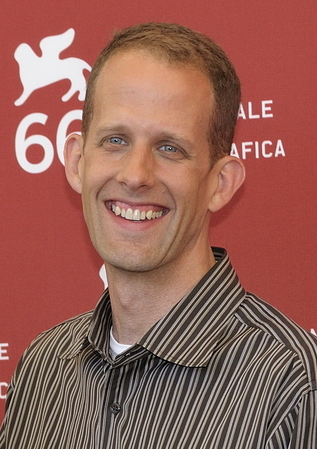
Pete Docter
Runtime
96 min
Studio
Pixar

460 archived facts 8 topics 2 sources Last reviewed Nov 2026

Carl Fredricksen spent his entire life dreaming of exploring the globe and experiencing life to its fullest. But at age 78, life seems to have passed him by, until a twist of fate (and a persistent 8-year old Wilderness Explorer named Russell) gives him a new lease on life.

  • Up — production image

460 Interesting Facts About Up

Interesting Facts (46)

  1. #001

    As of April 2020, this is Pixar's shortest movie title.

    INTERESTING FACTS · SOURCED

  2. #002

    The film is responsible for bringing the once-obscure term "Cone of Shame" into popular usage. Its official name is an Elizabethan collar, or E-collar.

    INTERESTING FACTS · SOURCED

  3. #003

    It is Pixar's first film in which the voice actor of the protagonist has passed away in recent years.

    INTERESTING FACTS · SOURCED

  4. #004

    In the movie, Kevin the bird likes chocolate. In real life, birds get food poisoning from eating chocolate, so Kevin would have died from eating the chocolate.

    INTERESTING FACTS · SOURCED

  5. #005

    It takes approximately 9 seconds for a skilled worker to fill and tie off a helium balloon. It would take just over 12.5 million balloons to lift a standard 1600 sq. ft house off the ground. Therefore, inflating the necessary number of balloons for Carl to complete his task would take roughly 3.5 years, assuming he worked constantly and did not stop to eat or rest.

    INTERESTING FACTS · SOURCED

  6. #006

    On August 16, 2025, the final movie to air on HBO Family before the channel ceased programming at midnight was Up (2009).

    INTERESTING FACTS · SOURCED

  7. #007

    The word "up" is spoken only eleven times throughout the film.

    INTERESTING FACTS · SOURCED

  8. #008

    There's an infamous ripoff of this film called What's Up: Balloon to the Rescue! (2009).

    INTERESTING FACTS · SOURCED

  9. #009

    If Carl's house was approximately 1600 square feet, and the average house weighs between 60 and 100 pounds per square foot, it weighs 120,000 pounds. If the average helium balloon can carry.009 pounds (or 4.63 grams), it would take 12,658,392 balloons to lift his house off the ground. (20,622 balloons appear on the house when it first lifts off, only enough to lift 185.6 pounds.)

    INTERESTING FACTS · SOURCED

  10. #010

    The second Pixar film whose main character is a senior citizen. The first film was Geri's Game (1997), which won Best Animated Short in 1997.

    INTERESTING FACTS · SOURCED

  11. #011

    Before the film's worldwide release date, Pixar granted a wish from 10-year-old Colby Curtin to see the movie before she died. Colby had been diagnosed with cancer and was too sick to go to a theater. A Pixar employee flew to the Curtins' house with a DVD of the finished film and screened it for her and her family. Curtin died seven hours later at 9:20 pm, shortly after seeing the movie.

    INTERESTING FACTS · SOURCED

  12. #012

    The voice for young Ellie is the director's daughter Elie Docter.

    INTERESTING FACTS · SOURCED

  13. #013

    On May 26, 2009, Disney attached balloons to the roof of Edith Macefield's house in the Seattle neighborhood of Ballard, Washington. Edith fought building developers and her little house still stands in the center of a large development known as the Ballard Blocks. However, development on this film began a full two years prior to the incidents in Washington, so any similarities are purely coincidental.

    INTERESTING FACTS · SOURCED

  14. #014

    In the famous married-life montage, Ellie is seen painting's the baby's room. What she's painting is a scene from Partly Cloudy (2009), a Pixar short that was shown before this film in several theaters.

    INTERESTING FACTS · SOURCED

  15. #015

    When Carl and Ellie are children, only Ellie speaks at length. (Young Carl screams, gasps, and says "Wow" once.) When Carl and Ellie are adults, only Carl speaks.

    INTERESTING FACTS · SOURCED

  16. #016

    When Carl's house first takes off and when the camera zooms out from the parking lot at the end, Pixar's trademark Pizza Planet truck introduced in Toy Story (1995) can be seen.

    INTERESTING FACTS · SOURCED

  17. #017

    About halfway through the film, Carl and Russell are trying to put up a tent. Carl is surprised that Russell, with all his badges, never put up a tent before. When he asks Russell why he didn't ask his dad for help, Russell reveals (albeit indirectly) that his parents are divorced (during the conversation where Russell says, "Phyllis isn't my mom"). This is the first time in a Disney full-length animated feature where divorce is hinted at as a reason for a character having a single parent (most of Disney's single parents are assumed to be widowed).

    INTERESTING FACTS · SOURCED

  18. #018

    According to Pete Docter, Carl Fredricksen and Charles Muntz were designed to be mirrors of each other, right down to their names (Carl is a Germanic form of Charles). Both men have suffered a tremendous personal loss (for Carl, his wife Ellie, and Muntz, his good name and reputation), and both are obsessed with an object from their past (the house for Carl and Kevin for Muntz). The difference between the two men is that over the years, Muntz's obsession has made him bitter, paranoid to an extreme, and willing to resort to violence to get what he wants. In other words, Muntz represents what Carl would likely become had he not met Russell and Dug and learned to let go of his past.

    INTERESTING FACTS · SOURCED

  19. #019

    A subplot involving Carl keeping one of Kevin's eggs (which could reverse the aging process) from Charles Muntz was conceived in the early stages of production. Muntz would have already used a few of these eggs, explaining why he looks almost younger than Carl despite being several decades older. It would have also been emphasized that Muntz's obsession with Kevin comes mainly from wanting to obtain another egg. None of this was ever scripted due to it being (in director Pete Docter's words) "too bizarre"

    INTERESTING FACTS · SOURCED

  20. #020
    Contains a major spoiler — show

    The second Pixar film where a protagonist breaks the law, the first being Cars (2006) where Lightning McQueen did so by speeding.

    INTERESTING FACTS · SOURCED

  21. #021
    Contains a major spoiler — show

    This is a rare instance of a Disney/Pixar film showing graphic violence when Carl whacks a construction worker with his cane and Muntz falls to his death.

    INTERESTING FACTS · SOURCED

  22. #022

    Before the film's worldwide premiere, Pixar granted 10-year-old Colby Curtin's wish to see the film before she died. Colby had been diagnosed with cancer and was too ill to go to a theater. A Pixar employee flew to the Curtins' home with a DVD of the finished film and screened it for her and her family. Curtin died shortly after watching the film, at 9:20 p.m. seven hours later.

    INTERESTING FACTS · SOURCED

  23. #023

    The married-life sequence at the beginning of the film reduced the production crew to tears, even in storyboard form.

    INTERESTING FACTS · SOURCED

  24. #024

    The voice of young Ellie is Elie Docter, the director's daughter.

    INTERESTING FACTS · SOURCED

  25. #025

    Apart from the villains, who are triangles, all the characters are based on circles and rectangles. Carl and Ellie are not only built from squares and circles; the objects around them, such as chairs and picture frames, are also based on their shapes. When the two appear in a photograph, the frame is a circle and a square.

    INTERESTING FACTS · SOURCED

  26. #026

    When Carl and Ellie go on their picnic, their destination is a spot under the same tree seen in A Bug's Life (1998).

    INTERESTING FACTS · SOURCED

  27. #027

    The tepuis (flat-topped mountains) and waterfalls resembling Paradise Falls are actually located in Venezuela. The country's Angel Falls is the highest waterfall in the world.

    INTERESTING FACTS · SOURCED

  28. #028

    It was the first animated film to open the Cannes Film Festival and also the first 3D film to do so. When the film ended, the festival audience was completely silent. During a panel at the 2011 D23 Expo, executive producer John Lasseter said that the person who broke the silence by standing and applauding was actress Tilda Swinton.

    INTERESTING FACTS · SOURCED

  29. #029

    In the German-dubbed version, Dug's attention is distracted by a cat rather than a squirrel, because the word for cat (Katze) is shorter than the word for squirrel (Eichhörnchen).

    INTERESTING FACTS · SOURCED

  30. #030

    Director Pete Docter provided most of Kevin's vocalizations.

    INTERESTING FACTS · SOURCED

  31. #031

    Carl wears the same grape soda badge shown in the Buzz Lightyear commercial in Toy Story (1995).

    INTERESTING FACTS · SOURCED

  32. #032

    On May 26, 2009, Disney attached balloons to the roof of Edith Macefield's house in the Ballard neighborhood of Seattle, Washington. Edith fought construction contractors, and her small house still stands at the center of a large development known as the Ballard Blocks. However, development of this film began a full two years before the events in Washington, so the similarities are purely coincidental.

    INTERESTING FACTS · SOURCED

  33. #033

    In the famous married-life montage, Ellie is seen painting a baby's room. What she is painting is a scene from the Pixar short Partly Cloudy (2009), which screened in theaters before this film.

    INTERESTING FACTS · SOURCED

  34. #034

    Dug's "point" pose, in which his entire tail, back and head form a perfectly straight line, is a tribute to the same pose Mickey's dog Pluto often strikes. Dug also has a color scheme similar to Pluto's.

    INTERESTING FACTS · SOURCED

  35. #035

    Carl Fredricksen's face and grumpy personality are based on Spencer Tracy and Walter Matthau.

    INTERESTING FACTS · SOURCED

  36. #036

    As children, only Ellie talks at length to Carl. (Young Carl squeals, gasps and says "Wow" once.) As adults, only Carl talks to Ellie.

    INTERESTING FACTS · SOURCED

  37. #037

    The code title used during production was "Helium".

    INTERESTING FACTS · SOURCED

  38. #038

    When Carl's house first lifts off and the camera pulls away from the parking lot at the end, the Pizza Planet truck, Pixar's signature vehicle introduced in Toy Story (1995), can be seen.

    INTERESTING FACTS · SOURCED

  39. #039

    The iconic, slightly out-of-perspective drawing of the house beside the waterfall is a tribute to the style of artist Mary Blair, who gave Disney animation its modern art look.

    INTERESTING FACTS · SOURCED

  40. #040

    There is less than a month between the ages of Edward Asner (Carl) and Christopher Plummer (Charles). Asner was born on 15 November 1929 and Plummer on 13 December 1929. Both men died in 2021, seven months apart, both at the age of 91.

    INTERESTING FACTS · SOURCED

  41. #041

    Co-director Bob Peterson based Dug's voice on how he tends to talk to his own dogs.

    INTERESTING FACTS · SOURCED

  42. #042

    When we first see Carl as a child, the left side of his collar is sticking out from his vest while the right side is tucked inside it. When we first meet Russell, the left side of his collar is tucked under his scarf while the right side is sticking out.

    INTERESTING FACTS · SOURCED

  43. #043

    Russell is Pixar's first Japanese/Asian-American character, voiced by Asian-American actor Jordan Nagai.

    INTERESTING FACTS · SOURCED

  44. #044

    While playing in the abandoned house, Ellie travels to Paradise Falls; through her soda-bottle binoculars she spots a puppy, and then says they are passing through a storm full of lightning and hail. Carl pilots using the same window of the same house that opens onto Paradise Falls; along the way they pass through a storm, and the first living thing they encounter is a puppy.

    INTERESTING FACTS · SOURCED

  45. #045

    Russell's Wilderness Explorer sash has many jokes and tributes. The most obvious is the Luxo Jr. (1986) ball, which can also be seen on the floor of a girl's room as Carl's house passes by. One of the badges shows a hamburger with a candle in it. This is a nod to Merritt Bakery in Oakland, a favorite haunt of director Pete Docter and producer Jonas Rivera, which makes cakes in that shape. Another badge is a tribute to 2D animation and shows a sheet of hole-punched paper of the kind 2D animators used to align their drawings correctly. There are also First Aid and Second Aid badges, which may be a reference to a short story on the Up website in which Russell struggles to put a bandage on Carl. Another badge depicts the multicolored pinwheel that is the "hang" icon of Apple's Mac OS X operating system. Many of the badges are shown in the credits. In an additional tribute to Apple and Steve Jobs (Pixar's former CEO), Russell is seen trying to teach Carl how to use a computer. The typeface used for the numbers on Carl's alarm clock is "Chicago", one of the first typefaces designed for the Macintosh.

    INTERESTING FACTS · SOURCED

  46. #046

    When young Charles Muntz tells a large audience that he will return with the monster, everyone is wearing a hat. What the viewer cannot see, however, is that he is addressing a real "Sea of Hats" with no characters underneath them. This is a common method computer animators use to depict large crowds.

    INTERESTING FACTS · SOURCED

Production Story (46)

  1. #047

    This is Pete Docter's only directorial effort to focus on a human character. Monsters, Inc. (2001) focused on monsters, while Inside Out (2015) focused on emotions.

    PRODUCTION STORY · SOURCED

  2. #048

    The first Pixar film in 3D.

    PRODUCTION STORY · SOURCED

  3. #049

    It is the sixth animated film in which characters voiced by studio members are listed during the casting call of the main cast members outside the credits. This applies to co-director Bob Peterson as Dug and Alpha (a tritagonist and a secondary antagonist), director Pete Docter as Kevin (a tetartagonist), and Jerome Ranft as Gamma (a tertiary antagonist alongside Beta). The previous five were Lilo & Stitch (2002) with Chris Sanders as Stitch (a deuteragonist), Open Season (2006) with Cody Cameron as Mr. Weenie (a tritagonist), Meet the Robinsons (2007) with Stephen J. Anderson as Bowler Hat Guy (a secondary antagonist), Ratatouille (2007) with Lou Romano as Alfredo Linguini (a deuteragonist) and Peter Sohn (a supporting character), and Bolt (2008) with Mark Walton as Rhino the Hamster (a tetartagonist). The first of these also had a dog character voiced by such a person and featured voice actor Danny Mann credited outside the additional voices. It is also the last one of this kind released in the 2000s and the last not to be a follow-up film or a spinoff until Early Man (2018), nine years later.

    PRODUCTION STORY · SOURCED

  4. #050

    Pete Docter, the director, provided most of Kevin's vocalizations.

    PRODUCTION STORY · SOURCED

  5. #051

    Co-director Bob Peterson based Dug's voice on how he'd tend to speak to his own dogs.

    PRODUCTION STORY · SOURCED

  6. #052

    This is the third Pixar film to be composed by Michael Giacchino, after The Incredibles (2004) and Ratatouille (2007), as well as the first one not to be directed by Brad Bird.

    PRODUCTION STORY · SOURCED

  7. #053

    In the Spanish dub, Luis Varela voices Carl Fredricksen, Claudio Rodríguez voices Charles Muntz, Julian Mora voices Russell, and Fernando Cabrera voices Dug.

    PRODUCTION STORY · SOURCED

  8. #054

    On the official movie website, there is a video clip titled "Ditch 'Em". The same scene in the film has music playing, while the clip on the site has only voices and sound effects.

    PRODUCTION STORY · SOURCED

  9. #055

    A code title used during production was "Helium".

    PRODUCTION STORY · SOURCED

  10. #056

    Bets and the dog voiced by John Cygan are the only ones of Muntz's dogs to be voiced by actors instead of studio members at Pixar.

    PRODUCTION STORY · SOURCED

  11. #057

    It is Pixar's last film not released in June to not release the same year as a Pixar film that did release in June until Gatto (2027), 18 years later.

    PRODUCTION STORY · SOURCED

  12. #058

    Pixar's last film not to be released in June until The Good Dinosaur (2015) released 6 years later.

    PRODUCTION STORY · SOURCED

  13. #059

    This is Pete Docter's only Pixar film to use the original Disney and Pixar production logos. Monsters, Inc. (2001) and Inside Out (2015) have both inserted their own music for the production logo. It is also the only one to not have any characters voiced by Frank Oz.

    PRODUCTION STORY · SOURCED

  14. #060

    Carl and Russell travel to Paradise Falls far from society where extinct creatures live - at a cliff much like that of a similar story in 'The Lost World' (1925). It is also based on Angel Falls in Venezuela. They based the landscape on the mountain Roraima, which is situated on the border between Venezuela, Brazil and Guyana. The mountain has a flat tabletop structure with very steep walls (they are called tepuis) which makes for a very otherworldly landscape. The Lost World was also based on the landscape around and on the tepuis.

    PRODUCTION STORY · SOURCED

  15. #061

    This is the first Pixar film since Finding Nemo (2003) to be released in May, and the first since The Incredibles (2004) not to be released in June.

    PRODUCTION STORY · SOURCED

  16. #062

    Co-director and co-writer Bob Peterson stated that Dug's line "I have just met you, and I love you" was inspired by a quote from a small child he met when he was a camp counselor in the 1980s.

    PRODUCTION STORY · SOURCED

  17. #063

    Even in storyboard form, the married life sequence that opens the film brought members of the production team to tears.

    PRODUCTION STORY · SOURCED

  18. #064

    Preceded by the short Partly Cloudy (2009) in some theaters.

    PRODUCTION STORY · SOURCED

  19. #065

    The voice for young Ellie is provided by the director's daughter, Elie Docter.

    PRODUCTION STORY · SOURCED

  20. #066

    In the opening newsreel, Muntz is revealed to have lots of dogs and technology for them. When the dogs first appear in South America, the fact that their collars allow them to speak is an early clue as to who their master is before he appears.

    PRODUCTION STORY · SOURCED

  21. #067

    It is Disney's fifth computer-animated film to be released during the spring season, following Dinosaur (2000), Finding Nemo (2003), The Wild (2006), and Meet the Robinsons (2007).

    PRODUCTION STORY · SOURCED

  22. #068

    This film marks the debut of Jordan Nagai, who voices Russell. Originally, his older brother Hunter was auditioning for the part, and Nagai simply came along with him. About 400 children showed up for the auditions, but Nagai stood out because he would not stop talking, and they realized he had the same personality and mannerisms as they envisioned for Russell. Director Pete Docter later said that "as soon as Jordan's voice came on we started smiling because he is appealing and innocent and cute and different from what I was initially thinking."

    PRODUCTION STORY · SOURCED

  23. #069

    The second Pixar film to be rated PG by the MPAA, after The Incredibles (2004).

    PRODUCTION STORY · SOURCED

  24. #070

    The first Pixar film since Finding Nemo (2003) to be presented in a 1.85:1 aspect ratio.

    PRODUCTION STORY · SOURCED

  25. #071

    The music from the montage that opens the film was featured in a 2016 commercial for Save the Food.com.

    PRODUCTION STORY · SOURCED

  26. #072

    Was originally going to be titled "Up & Down", but was changed due to fear of negative feedback for the title.

    PRODUCTION STORY · SOURCED

  27. #073

    During pre-production of the film, director Pete Docter looked up to Disney veteran animators Frank Thomas, Ollie Johnston, and Joe Grant for inspiration. Docter stated that the film reflects the friendship he shared with these three talented animators before their deaths, as well as his desire to learn what they went through during their years working for Walt Disney.

    PRODUCTION STORY · SOURCED

  28. #074

    On May 26, 2009, Disney attached balloons to the roof of Edith Macefield's house in the Seattle neighborhood of Ballard, Washington. Edith fought building developers, and her little house still stands in the center of a large development known as the Ballard Blocks. However, development on this film began a full two years prior to the incidents in Washington, so any similarities are purely coincidental.

    PRODUCTION STORY · SOURCED

  29. #075

    It is Disney's third computer-animated film to be released in May, after Dinosaur (2000) and Finding Nemo (2003).

    PRODUCTION STORY · SOURCED

  30. #076

    It is Pixar's fourth film in which the director or a co-director has a major role, rather than being simply listed in the additional voices, with Pete Docter as Kevin and Bob Peterson as Dug and Alpha. The other three were Finding Nemo (2003), The Incredibles (2004), and Cars (2006).

    PRODUCTION STORY · SOURCED

  31. #077

    All characters are based upon circles and rectangles, except for the villains, who are triangles. Not only are Carl and Ellie based on squares and circles, but objects around them are based on their shapes, like their chairs and picture frames. When they both appear in a photograph, the frame is a circle and a square.

    PRODUCTION STORY · SOURCED

  32. #078
    Contains a major spoiler — show

    This is the second Pixar film where a protagonist loses a love interest, the first being Finding Nemo (2003) where Marlin loses Coral.

    PRODUCTION STORY · SOURCED

  33. #079
    Contains a major spoiler — show

    Many possible endings were proposed for Charles Muntz. At first, the animators considered redeeming him by having him iron out his differences with Carl after their fight on the zeppelin. However, this ending was deemed too dull, as it would amount to both men simply standing and talking for a long time. In another scenario, Muntz's obsession with catching Kevin took him inside the dreaded labyrinth against his recommendation, where he would eventually get lost and die. As the animators wanted to keep the climax in the air, they considered having Muntz lured into Carl's house by Kevin and then dying as the house fell off the zeppelin with him still inside. However, they did not want to associate the house, which symbolized Ellie, with a violent death. Another potential ending had Muntz getting tangled in some balloons and being lifted away rather than falling. However, animators felt this was too ambiguous and did not give proper closure to the character. Ultimately, the directors decided that this was Carl's story, so Muntz's ending would be kept simple.

    PRODUCTION STORY · SOURCED

  34. #080
    Contains a major spoiler — show

    Russell was originally going to be named Lewis, but the name was changed to avoid confusion with the protagonist of Disney's Meet the Robinsons.

    PRODUCTION STORY · SOURCED

  35. #081
    Contains a major spoiler — show

    A subplot involving Carl keeping one of Kevin's eggs (which could reverse the aging process) from Charles Muntz was conceived in the early stages of production. Muntz would have already used a few of these eggs, explaining why he looks almost younger than Carl despite being several decades older. It would have also been emphasized that Muntz's obsession with Kevin comes mainly from wanting to obtain another egg. None of this was ever scripted due to it being (in director Pete Docter's words) "too bizarre".

    PRODUCTION STORY · SOURCED

  36. #082

    Pete Docter based Up's flying-house fantasy on the idea of escaping from life when it becomes too irritating, an idea that grew out of his own difficulty with social situations while growing up.

    PRODUCTION STORY · PETE DOCTER · SOURCED

  37. #083

    While Bob Peterson was away from Up for three months to co-direct Ratatouille, actor and writer Tom McCarthy joined Pete Docter on the story and created the character Russell.

    PRODUCTION STORY · PETE DOCTER · SOURCED

  38. #084

    With Carl and Russell as the leads, Docter and Peterson envisioned the house landing on a Soviet-era spy airship disguised as a giant cloud instead of a tepui, but Docter said the idea was rewritten because it resembled another Pixar project then in development.

    PRODUCTION STORY · SOURCED

  39. #085

    Docter briefly included magic fountain-of-youth eggs laid by the bird to explain the age gap between Muntz and Carl, but removed the subplot as too distracting, judging that audiences would forgive the minor inconsistency; The Station Agent by Tom McCarthy was the biggest single early influence on Up.

    PRODUCTION STORY · MILD SPOILER · SOURCED

  40. #086

    Pete Docter said Up reflects his friendships with Disney veterans Frank Thomas, Ollie Johnston and Joe Grant, all of whom died before the film's release, leading the film to be dedicated to them.

    PRODUCTION STORY · PETE DOCTER · SOURCED

  41. #087

    Joe Grant approved the script of Up and offered advice before his death in 2005, reminding Pete Docter that the audience needed an "emotional bedrock" given how wacky the adventure would become.

    PRODUCTION STORY · PETE DOCTER · SOURCED

  42. #088

    The South America setting in Up was chosen partly out of Pete Docter's love of tropical locations and partly because it was remote enough that Carl would be stuck with Russell without social authorities able to intervene.

    PRODUCTION STORY · SOURCED

  43. #089

    Pete Docter and Bob Peterson concluded that a child character would be the most effective way to help Carl stop being stuck in his ways in Up.

    PRODUCTION STORY · PETE DOCTER · SOURCED

  44. #090

    Pete Docter cited Casablanca and A Christmas Carol as inspirations for Up, describing both as resurrection stories about men who lose something and regain purpose during their journey.

    PRODUCTION STORY · PETE DOCTER · SOURCED

  45. #091

    Pete Docter and Rivera cited the Muppets, Hayao Miyazaki, Dumbo and Peter Pan as inspirations for Up, and also saw parallels to The Wizard of Oz while trying to keep Up from feeling too similar.

    PRODUCTION STORY · PETE DOCTER · SOURCED

  46. #092

    Up director Pete Docter chose Venezuela as the film's setting after Ralph Eggleston showed him video of the tepui mountains in Canaima National Park.

    PRODUCTION STORY · PETE DOCTER · SOURCED

Behind the Scenes (41)

  1. #093

    When a younger Charles Muntz speaks to a large audience that he will return with the beast alive, everyone is wearing a hat. What the viewer can't see, however, is that he is speaking to a literal "Sea of Hats" with no characters beneath them. This is a common method computer animators use to depict large crowds.

    BEHIND THE SCENES · SOURCED

  2. #094

    The married life sequence starts 7:15 minutes into the movie and lasts a little over 4 minutes.

    BEHIND THE SCENES · SOURCED

  3. #095

    The tepui (flat mountains) and waterfalls similar to Paradise Falls are actually found in Venezuela. The country's Angel Falls is the highest waterfall in the world.

    BEHIND THE SCENES · SOURCED

  4. #096

    The orange and white leaf blower Russel used to propel himself while hanging from some balloons was modeled after a real commercially available leaf blower, a Stihl model BG-50.

    BEHIND THE SCENES · SOURCED

  5. #097

    The rifle that Charles Muntz uses is an 1874 Sharps, a very popular model with buffalo hunters of the American Wild West, and the procedure he uses to load, aim, and fire the weapon is accurate. (His use of shot-shells in a long-range rifle, however, is questionable at best.)

    BEHIND THE SCENES · SOURCED

  6. #098
    Contains a major spoiler — show

    Carl and Russell's hometown at the end is Oakland, California. Oakland landmarks shown include the Fox Oakland Theatre (showing Star Wars: Episode IV - A New Hope (1977)) and the iconic Fenton's Creamery. Fenton's is close to Pixar's headquarters in Emeryville, CA and frequented by its employees. Fenton's did not have to pay to have it in there; Disney and Pixar put it in the film for free.

    BEHIND THE SCENES · SOURCED

  7. #099
    Contains a major spoiler — show

    It is the third Pixar film to show blood briefly when Carl whacks one of the construction workers with his cane on the head, supposedly damaging his mailbox. Blood also appears on Kevin's leg through the bandage when she is injured. The first two are Finding Nemo (2003) and The Incredibles (2004), not counting A Bug's Life (1998), where it is only a small sample and not shown from someone getting hurt.

    BEHIND THE SCENES · SOURCED

  8. #100

    While recording the role of Russell in Up, Docter encouraged Jordan Nagai to act physically as well as vocally, lifting him upside down and tickling him for the scene in which Russell encounters Kevin.

    BEHIND THE SCENES · MILD SPOILER · SOURCED

  9. #101

    In the DVD extra "The Many Endings of Muntz", Pete Docter and his team discussed how difficult it was to settle on the character's final fate.

    BEHIND THE SCENES · PETE DOCTER · SOURCED

  10. #102

    In 2004, Pete Docter and eleven other Pixar artists traveled by airplane, jeep and helicopter to reach Monte Roraima, where they spent three days and three nights painting, sketching and encountering wildlife including ants, mosquitoes, scorpions, frogs and snakes.

    BEHIND THE SCENES · PETE DOCTER · SOURCED

  11. #103

    Pete Docter said the real rocks and plants the team saw could not be used in Up because reality was so strange that audiences would not believe it.

    BEHIND THE SCENES · PETE DOCTER · SOURCED

  12. #104

    Pete Docter sought a stylized look for Up in which Carl's squarish head suggests his containment within his house, while Russell's rounded shape evokes a balloon; Docter said the effect worked better than the realistic humans of Toy Story, who suffered from the "uncanny valley".

    BEHIND THE SCENES · PETE DOCTER · SOURCED

  13. #105

    The human designs in Up drew on cartoonists Al Hirschfeld, Hank Ketcham and George Booth, and simulating realistic cloth on the caricatured characters proved harder than creating the 10,000 balloons that lift the house, prompting new programs for the cloth and for Kevin's iridescent feathers.

    BEHIND THE SCENES · SOURCED

  14. #106

    To animate elderly characters in Up, Pixar animators studied their own parents or grandparents and watched footage of the Senior Olympics; the directors limited Carl's movements, barring him from turning his head more than 15–20 degrees without turning his torso or raising his arms high, though they wanted him to become more flexible and "action hero"-like near the film's end.

    BEHIND THE SCENES · MILD SPOILER · SOURCED

  15. #107

    For Up, a technical director calculated that Carl's house would need 23 million balloons to fly, but Pete Docter found that this number made the balloons appear as small dots. The balloons were instead made twice Carl's size.

    BEHIND THE SCENES · PETE DOCTER · SOURCED

  16. #108

    Up used 10,297 balloons for shots of the house simply flying and 20,622 balloons for the lift-off sequence, with a varying number in other scenes.

    BEHIND THE SCENES · SOURCED

  17. #109

    Pete Docter's priority for the music of Up was emotion, leading Michael Giacchino to write a character theme-based score that producer Jonas Rivera felt enhanced the story.

    BEHIND THE SCENES · SOURCED

  18. #110

    In Up, "Muntz's Theme" is the first music heard, playing as young Carl watches a newsreel about Muntz in a movie theater; it begins as a celebratory theme and echoes through the film when Muntz reappears 70 years later.

    BEHIND THE SCENES · MILD SPOILER · SOURCED

  19. #111

    "Ellie's Theme" in Up is introduced when Ellie appears as a little kid and recurs in different versions, including a full orchestral arrangement during the sequence where Carl lifts his house with balloons; Michael Giacchino compared the film to opera because each character has a unique theme that changes at particular story moments.

    BEHIND THE SCENES · MILD SPOILER · SOURCED

  20. #112

    The tepuis and Angel Falls in Venezuela inspired the flat-topped mountains and Paradise Falls in the film. Angel Falls is the world's highest waterfall.

    BEHIND THE SCENES · SOURCED

  21. #113

    In the German dub, Dug is distracted by a cat instead of a squirrel, because 'Katze' (cat) is a shorter word than 'Eichhörnchen' (squirrel).

    BEHIND THE SCENES · SOURCED

  22. #114

    Up's score is one of many film scores to win an Oscar, a Grammy and a Golden Globe in the original score category.

    BEHIND THE SCENES · SOURCED

  23. #115

    The distorted perspective drawing of the house by the waterfall is a tribute to the style of Mary Blair, who brought a modern art touch to Disney animation.

    BEHIND THE SCENES · SOURCED

  24. #116

    When young Charles Muntz talks about bringing the monster back alive, everyone wears a hat; there are actually no characters underneath them, it is a 'Sea of Hats.' Computer animators depict large crowds this way.

    BEHIND THE SCENES · SOURCED

  25. #117

    WILHELM SCREAM: The dogs fall from the cliff into the river while chasing Carl, Russell, Kevin and Dug.

    BEHIND THE SCENES · SOURCED

  26. #118

    Carl and Russell's hometown at the end is Oakland, California. Among the landmarks shown are the Fox Oakland Theatre (during a screening of Star Wars: Episode IV) and Fenton's Creamery. Fenton's is close to Pixar's Emeryville headquarters and appeared in the film for free.

    BEHIND THE SCENES · SOURCED

  27. #119

    Pixar's first film shot in 3D.

    BEHIND THE SCENES · SOURCED

  28. #120

    Carl's house is about 150 square meters and weighs 54,431 kilos. Since an average helium balloon can lift 4.63 grams, it would take 12,658,392 balloons to lift the house. The 20,622 balloons seen during the first takeoff in the film could lift only 84 kilos.

    BEHIND THE SCENES · SOURCED

  29. #121

    Charles Muntz's rifle is an 1874 model Sharps; it was popular among buffalo hunters in the American Wild West, and its use is accurate. However, his use of a cartridge in a long-range rifle is questionable.

    BEHIND THE SCENES · SOURCED

  30. #122

    It takes a worker about 9 seconds to inflate and tie a helium balloon. Lifting Carl's house would require more than 12.5 million balloons, which would take about 3.5 years of nonstop work.

    BEHIND THE SCENES · SOURCED

  31. #123

    In the film, the bird Kevin loves chocolate; in reality, birds would suffer food poisoning from chocolate and die.

    BEHIND THE SCENES · SOURCED

  32. #124

    Pixar's third film to show blood: Carl hitting the construction worker with his cane and blood seeping through Kevin's bandage. The first two are Finding Nemo and The Incredibles.

    BEHIND THE SCENES · SOURCED

  33. #125

    On the DVD cover, the dogs fly Curtiss F9C-2 Sparrowhawk fighter planes. In the 1930s, the U.S. Navy's Akron and Macon airships were designed to carry these aircraft; the trapeze system for launching and recovering them worked, but both airships were lost in storms.

    BEHIND THE SCENES · SOURCED

  34. #126

    The married life sequence begins at 7:15 of the film and lasts about 4 minutes.

    BEHIND THE SCENES · SOURCED

  35. #127

    The orange and white leaf blower Russell uses is modeled on the Stihl BG-50.

    BEHIND THE SCENES · SOURCED

  36. #128

    The first Pixar film presented in a 1.85:1 aspect ratio since Finding Nemo.

    BEHIND THE SCENES · SOURCED

  37. #129

    The first Pixar film since The Incredibles to feature the Luxo Jr. ball; the ball had appeared only in the short film Jack Jack Attack and in the alternate opening. Up is the first feature film since Nemo to feature the ball.

    BEHIND THE SCENES · SOURCED

  38. #130

    This is a rare example of a Disney/Pixar film showing graphic violence: Carl hitting the construction worker with his cane and Muntz falling to his death.

    BEHIND THE SCENES · SOURCED

  39. #131

    The film's official website has a video clip titled 'Ditch 'Em'; in the film the same scene plays with music, while the clip on the site has only sounds and effects.

    BEHIND THE SCENES · SOURCED

  40. #132

    Carl and Russell set off toward Paradise Falls, where extinct creatures live cut off from society. This journey takes place in a world surrounded by cliffs, just like in the 1925 film 'The Lost World.'

    BEHIND THE SCENES · SOURCED

  41. #133

    So was Paradise Falls inspired by Angel Falls in Venezuela? In fact, the landscape was modeled on Mount Roraima on the border of Venezuela, Brazil and Guyana. With its sheer walls and flat top (known as tepuis), this mountain looks as if it sprang from another planet. 'The Lost World' was also inspired by similar tepui landscapes.

    BEHIND THE SCENES · SOURCED

Characters & Cast (212)

  1. #134

    Carl never speaks (audibly) directly to Ellie throughout the movie. However, he talks to her when pointing out the baby-shaped cloud in the car before getting a flat tire. In the early scenes where they first meet, Ellie talks.

    CHARACTERS & CAST · SOURCED

  2. #135

    Nurse AJ is the first ever Pixar character with a mullet.

    CHARACTERS & CAST · SOURCED

  3. #136

    When Carl and Ellie are children, only Ellie speaks at length. Young Carl screams, gasps, and says "Wow" once. When Carl and Ellie are adults, only Carl speaks.

    CHARACTERS & CAST · SOURCED

  4. #137

    Dug is Bob Peterson's favorite Pixar role.

    CHARACTERS & CAST · SOURCED

  5. #138

    Russell is Pixar's first Japanese/Asian-American character voiced by an Asian-American actor, Jordan Nagai.

    CHARACTERS & CAST · SOURCED

  6. #139

    Russell's appearance was based on Korean-American Pixar employee Peter Sohn, who was a storyboard artist on the film. The employees at Pixar draw each other during meetings for fun, and a cartoon of Sohn was used as the model for Russell. Sohn also voiced Russell in the video short George and A.J. (2009).

    CHARACTERS & CAST · SOURCED

  7. #140

    Carl Fredricksen's face and gruff personality are based on Spencer Tracy and Walter Matthau.

    CHARACTERS & CAST · SOURCED

  8. #141

    It is one of two PG-rated Pixar films featuring John Cygan, alongside Inside Out (2015). He was rumored to appear in Incredibles 2 (2018), but he died of cancer in 2017.

    CHARACTERS & CAST · SOURCED

  9. #142

    In the Brazilian dubbed version, Chico Anysio voices Carl Fredricksen, Jomeri Pozzoli voices Charles Muntz, Eduardo Drummond voices Russell, and Nizo Neto voices Dug.

    CHARACTERS & CAST · SOURCED

  10. #143

    In the version for France and French Canada, the voice of Carl Fredricksen is played by Charles Aznavour.

    CHARACTERS & CAST · SOURCED

  11. #144

    It is Pixar's second film in which studio members are mentioned during the casting call of the main cast members outside the credits, which applies to Bob Peterson, Pete Docter, and Jerome Ranft, the voices of Dug, Alpha, Kevin, and Gamma respectively. The first was Ratatouille (2007) with Lou Romano.

    CHARACTERS & CAST · SOURCED

  12. #145

    Gamma is voiced by Jerome Ranft, who is the brother of the late Joe Ranft, who happened to voice a number of Pixar characters prior to his death in 2005 during the production of Cars (2006). Additionally Joe was also rumored to voice Gamma.

    CHARACTERS & CAST · SOURCED

  13. #146

    The character, Carl Frederickson, is supposed to be 78 years old. Ed Asner was 78 when he recorded Carl's lines for the movie.

    CHARACTERS & CAST · SOURCED

  14. #147

    Film debut of Jordan Nagai, who voices Russell. Originally, his older brother Hunter was auditioning for the part, and Nagai simply came along with him. About 400 children had showed up for the auditions, but Nagai stood out because he would not stop talking, and they realized he had the same personality and mannerisms as they envisioned for Russell. Director Pete Docter later said that "as soon as Jordan's voice came on we started smiling because he is appealing and innocent and cute and different from what I was initially thinking."

    CHARACTERS & CAST · SOURCED

  15. #148

    Co-director/co-writer Bob Peterson stated that Dug's line "I have just met you, and I love you," was inspired by a quote from a small child that he met when he was a camp counselor in the 1980s.

    CHARACTERS & CAST · SOURCED

  16. #149
    Contains a major spoiler — show

    When Beta and Gamma start laughing at Alpha's squeaky voice, he suggests that they may be attempting to challenge his rank. Beta denies this but jokingly suggests that Dug would. Dug becomes the new Alpha at the end of the film after trapping Alpha using the Cone of Shame.

    CHARACTERS & CAST · SOURCED

  17. #150

    Pete Docter chose an elderly man as Up's protagonist after drawing a grumpy old man with smiling balloons, and he and Tom McCarthy felt that the worldview of someone Carl's age would be a rich source of humor; Docter was not worried about an elderly lead in a children's film, saying children would relate to Carl as they do to their grandparents.

    CHARACTERS & CAST · PETE DOCTER · SOURCED

  18. #151

    Pete Docter felt Joe Grant's personality shaped Carl's deceased wife Ellie more than it shaped the grouchy main character, and the "emotional bedrock" Grant called for became Carl's mourning for his wife.

    CHARACTERS & CAST · PETE DOCTER · MILD SPOILER · SOURCED

  19. #152

    Carl was based primarily on Spencer Tracy, Walter Matthau and James Whitmore, along with the grandparents of Pete Docter and his team, because Docter saw "something sweet about [those] grumpy old guys".

    CHARACTERS & CAST · PETE DOCTER · SOURCED

  20. #153

    For the role of Russell in Up, director Pete Docter held a nationwide casting call and auditioned 400 boys.

    CHARACTERS & CAST · PETE DOCTER · SOURCED

  21. #154

    Jordan Nagai, who is Japanese American, accompanied his brother to an audition for Up even though his brother was the one trying out; Docter noticed that Nagai behaved and spoke non-stop like Russell and cast him, at age eight.

    CHARACTERS & CAST · SOURCED

  22. #155

    The character Charles Muntz in Up was inspired by Howard Hughes and Errol Flynn.

    CHARACTERS & CAST · SOURCED

  23. #156

    The animators made Russell Asian-American and modeled him on Peter Sohn, a Korean-American Pixar storyboard artist whose likeness in a meeting sketch became the character's design.

    CHARACTERS & CAST · SOURCED

  24. #157

    For Up, Pixar gave Carl Fredricksen a more extreme caricatured design than usual, standing only about three heads high, and avoided elderly details such as liver spots or ear hair while adding wrinkles, nose pockmarks, a hearing aid and a cane to convey age.

    CHARACTERS & CAST · SOURCED

  25. #158

    Up was the first film for Jordan Nagai, who voiced Russell. His older brother Hunter originally auditioned for the role, and Nagai came along with him. About 400 children auditioned, but Nagai stood out because he wouldn't stop talking, and they realized he had the same personality and mannerisms they had in mind for Russell. Director Pete Docter later said, "As soon as Jordan's voice came in, we started smiling, because he's appealing, innocent, lovable and different from what I'd initially imagined."

    CHARACTERS & CAST · SOURCED

  26. #159

    Bob Peterson wrote Dug's line "I have just met you and I love you" after being inspired by the words of a small child he met while working as a camp counselor in the 1980s.

    CHARACTERS & CAST · SOURCED

  27. #160

    Young Ellie was voiced by Elie Docter, the daughter of director Pete Docter.

    CHARACTERS & CAST · SOURCED

  28. #161

    Most of the sounds Kevin makes belong to director Pete Docter.

    CHARACTERS & CAST · SOURCED

  29. #162

    Carl notices that Russell has never pitched a tent despite all his badges; the fact that Russell does not ask his father for help implies that his parents are divorced. This is the first instance in a Disney animated film of divorce being shown as the cause of single parenthood.

    CHARACTERS & CAST · SOURCED

  30. #163

    It is the first film for Jordan Nagai, who voiced Russell. His older brother Hunter was attending the auditions and Nagai went along with him; out of 400 children he stood out for his talkativeness, and the producers found him ideal for Russell.

    CHARACTERS & CAST · SOURCED

  31. #164

    Carl Fredricksen's face and grumpy personality were inspired by Spencer Tracy and Walter Matthau.

    CHARACTERS & CAST · SOURCED

  32. #165

    In the childhood scenes only Ellie speaks; in their adulthood only Carl speaks.

    CHARACTERS & CAST · SOURCED

  33. #166

    According to Pete Docter, Carl and Charles Muntz are mirror images of each other, down to their names. Both have suffered a great loss and become obsessed with the past; the difference is that Muntz's obsession makes him ruthless, while Carl learns to let go of the past thanks to Russell and Dug.

    CHARACTERS & CAST · SOURCED

  34. #167

    There is less than a month's age difference between Edward Asner (Carl) and Christopher Plummer (Charles): Asner was born on November 15, 1929, and Plummer on December 13, 1929. Both died in 2021, at the age of 91, seven months apart.

    CHARACTERS & CAST · SOURCED

  35. #168

    Bob Peterson created Dug's voice by drawing on the way he talks to his own dogs.

    CHARACTERS & CAST · SOURCED

  36. #169

    Russell is Pixar's first Japanese/Asian-American character voiced by an Asian-American actor.

    CHARACTERS & CAST · SOURCED

  37. #170

    Carl never speaks directly to Ellie throughout the film; the only exception is when he talks to her while pointing out the baby-shaped cloud before a car tire bursts.

    CHARACTERS & CAST · SOURCED

  38. #171

    Russell's appearance was inspired by a caricature of Korean-American Pixar employee Peter Sohn.

    CHARACTERS & CAST · SOURCED

  39. #172

    Carl Fredricksen is 78 years old; Ed Asner was also 78 when he recorded his lines.

    CHARACTERS & CAST · SOURCED

  40. #173

    All the dogs except Dug are named after letters of the Greek alphabet. When Dug puts Alpha in the Cone of Shame, the other dogs begin calling him Alpha. Dug and Alpha are voiced by the same actor. Alpha, Beta and Gamma are a reference to the working classes in Aldous Huxley's novel Brave New World.

    CHARACTERS & CAST · SOURCED

  41. #174

    When Beta and Gamma laugh at Alpha's squeaky voice, Alpha implies that they are challenging his rank. Beta denies it but says Dug could do it. At the end of the film Dug puts Alpha in the Cone of Shame and becomes the new Alpha.

    CHARACTERS & CAST · SOURCED

  42. #175

    Nurse AJ is the first Pixar character with a bangs hairstyle.

    CHARACTERS & CAST · SOURCED

  43. #176

    Carl's square face and body emphasize how boxed in he has become in his life and his home.

    CHARACTERS & CAST · SOURCED

  44. #177

    Christopher Plummer is the eighth Academy Award winner to voice a Disney villain. The previous ones: George Sanders (Shere Khan), Peter Ustinov (Prince John), Geraldine Page (Madame Medusa), Jack Albertson (Amos Slade), George C. Scott (Percival C. McLeach), Jeremy Irons (Scar) and Kevin Spacey (Hopper).

    CHARACTERS & CAST · SOURCED

  45. #178

    Gamma was voiced by Jerome Ranft, the brother of Joe Ranft, who died in 2005; Joe was also said to have been intended for the role.

    CHARACTERS & CAST · SOURCED

  46. #179

    Up, Christopher Plummer's third animated film, was also his first computer-animated, non-Don Bluth and PG-rated film. His previous two films were An American Tail and Rock-A-Doodle.

    CHARACTERS & CAST · SOURCED

  47. #180

    All of Charles Muntz's dogs except Dug had their tails docked. Those with docked tails were obedient, while only Dug showed love and kindness.

    CHARACTERS & CAST · SOURCED

  48. #181

    Carl becomes grumpy after his wife's death, but regains his old cheerfulness at the end of the film. Christopher Plummer voiced Muntz; he had previously played Captain Von Trapp, who grows cold after the death of his first wife, in The Sound of Music.

    CHARACTERS & CAST · SOURCED

  49. #182

    In the French and French-Canadian versions, Carl Fredricksen was voiced by Charles Aznavour.

    CHARACTERS & CAST · SOURCED

  50. #183

    Four months after Up, Christopher Plummer's first CGI film in 2009, he appeared in the film 9.

    CHARACTERS & CAST · SOURCED

  51. #184

    As of 2018, Up was the only film Pete Docter worked on or directed in which his voice work was not credited merely as "Additional Voices."

    CHARACTERS & CAST · SOURCED

  52. #185

    Charles Muntz's dog Beta was inspired by Snots (a Rottweiler), Cousin Eddie's dog in National Lampoon's Christmas Vacation.

    CHARACTERS & CAST · SOURCED

  53. #186

    Up is one of the two PG-rated Pixar films featuring John Cygan; the other was Inside Out. Cygan was said to be set to appear in Incredibles 2, but he died of cancer in 2017.

    CHARACTERS & CAST · SOURCED

  54. #187

    It is Pixar's fourth film in which the director or co-director has a major role: Pete Docter voiced Kevin, and Bob Peterson voiced Dug and Alpha. The other three films: Finding Nemo, The Incredibles and Cars.

    CHARACTERS & CAST · SOURCED

  55. #188

    In the Brazilian dub, Carl Fredricksen was voiced by Chico Anysio, Charles Muntz by Jomeri Pozzoli, Russell by Eduardo Drummond and Dug by Nizo Neto.

    CHARACTERS & CAST · SOURCED

  56. #189

    In the Spanish dub, Carl Fredricksen was voiced by Luis Varela, Charles Muntz by Claudio Rodríguez, Russell by Julian Mora and Dug by Fernando Cabrera.

    CHARACTERS & CAST · SOURCED

  57. #190

    Up was the sixth animated film in which studio employees voiced the main characters and were listed in the cast outside the credits. The previous ones: Lilo & Stitch (2002), Open Season (2006), Meet the Robinsons (2007), Ratatouille (2007) and Bolt (2008). It was also the last film of this kind in the 2000s and, until Early Man in 2018, the only production of this kind that was not a sequel or a spin-off.

    CHARACTERS & CAST · SOURCED

  58. #191

    Russell's name was initially conceived as Lewis, but it was changed to avoid confusion with the main character in Disney's Meet the Robinsons.

    CHARACTERS & CAST · SOURCED

  59. #192

    Bets, one of Muntz's dogs, and the dog voiced by John Cygan were the only characters voiced by professional actors rather than Pixar studio employees.

    CHARACTERS & CAST · SOURCED

  60. #193

    Pixar fulfilled the final wish of 10-year-old cancer patient Colby Curtin before the film's release. An employee flew a finished copy of the film on DVD to the Curtin family's home; Colby passed away shortly after watching the film, at 9:20 PM.

    CHARACTERS & CAST · SOURCED

  61. #194

    The marriage sequence at the opening of the film made the production team cry while it was still at the storyboard stage.

    CHARACTERS & CAST · SOURCED

  62. #195

    Up became the first animated and first 3D film to open the Cannes Film Festival. After the screening, such a silence fell over the hall that Tilda Swinton stood up and led the audience in applause.

    CHARACTERS & CAST · SOURCED

  63. #196

    On May 26, 2009, Disney tied balloons to the roof of Edith Macefield's house in Seattle. Edith had resisted construction developers, and her house still stands in the middle of Ballard Blocks. However, the film's development began two years before these events; the similarities are entirely coincidental.

    CHARACTERS & CAST · SOURCED

  64. #197

    Many endings were considered for Charles Muntz: reconciling with Carl, getting lost in a maze while chasing Kevin, dying by falling from the house's zeppelin, or getting tangled in balloons and rising into the air. However, the directors decided it was Carl's story and kept Muntz's ending simple.

    CHARACTERS & CAST · SOURCED

  65. #198

    The production's code name was "Helium."

    CHARACTERS & CAST · SOURCED

  66. #199

    In an early subplot, Carl hides one of Kevin's eggs that reverse aging; Muntz appeared younger because he used several eggs. This idea did not make it into the script because director Pete Docter found it "too strange."

    CHARACTERS & CAST · SOURCED

  67. #200

    Up is the second animated film nominated for the Academy Award for Best Picture (the first: Beauty and the Beast, 1991) and the first Disney/Pixar production to achieve this.

    CHARACTERS & CAST · SOURCED

  68. #201

    The first animated film to win the Best Original Score Oscar since Pocahontas (1995).

    CHARACTERS & CAST · SOURCED

  69. #202

    The second Pixar film whose main character is an elderly person; the first was Geri's Game, which won the Best Animated Short Oscar in 1997.

    CHARACTERS & CAST · SOURCED

  70. #203

    Director Pete Docter looked to Disney's veteran animators Frank Thomas, Ollie Johnston and Joe Grant for inspiration during pre-production; the film reflects the friendship he shared with them and the years they worked for Walt Disney.

    CHARACTERS & CAST · SOURCED

  71. #204

    In some theaters it was shown together with the short film Partly Cloudy (2009).

    CHARACTERS & CAST · SOURCED

  72. #205

    The only Pixar film by Pete Docter that uses the original Disney and Pixar production logos; it is also the only film with no character voiced by Frank Oz.

    CHARACTERS & CAST · SOURCED

  73. #206

    The second highest-grossing animated film of 2009 (after Ice Age: Dawn of the Dinosaurs).

    CHARACTERS & CAST · SOURCED

  74. #207

    The only Best Picture nominee whose title contains just two letters; the record for the shortest nominee title belongs to Z (1969).

    CHARACTERS & CAST · SOURCED

  75. #208

    The first Pixar film that failed to win Best Animated Film at the Saturn Awards; it lost the award to Monsters vs. Aliens (2009).

    CHARACTERS & CAST · SOURCED

  76. #209

    Up shares similarities with the film "Batteries Not Included": a property slated for demolition, elderly adults, and the property being squeezed between skyscrapers. That film was written by Pixar writer/director Brad Bird.

    CHARACTERS & CAST · SOURCED

  77. #210

    The second Pixar film rated PG by the MPAA (after The Incredibles).

    CHARACTERS & CAST · SOURCED

  78. #211

    It was initially going to be called "Up & Down," but the title was changed to avoid negative reactions.

    CHARACTERS & CAST · SOURCED

  79. #212

    As of April 2020, it is Pixar's shortest film title.

    CHARACTERS & CAST · SOURCED

  80. #213

    Up became the third Pixar film rated PG by the Australian Classification Board; The Incredibles (2004) and Ratatouille (2007) are also on this list.

    CHARACTERS & CAST · SOURCED

  81. #214

    Up, the third Pixar film composed by Michael Giacchino, was also the first Pixar production not directed by Brad Bird.

    CHARACTERS & CAST · SOURCED

  82. #215

    It went down in history as the last original feature-length Pixar film of the 2000s.

    CHARACTERS & CAST · SOURCED

  83. #216

    Up was the last Pixar film not released in June; this changed six years later with The Good Dinosaur (2015).

    CHARACTERS & CAST · SOURCED

  84. #217

    Up, Pixar Animation Studios' 10th film, was Lou Romano's last work at the studio; the artist moved to Laika in 2009, then to Sony Animation.

    CHARACTERS & CAST · SOURCED

  85. #218

    Disney's fifth computer-animated film rated PG by the ACB: Dinosaur (2000), The Incredibles (2004), Chicken Little (2005) and Ratatouille (2007) lead this list.

    CHARACTERS & CAST · SOURCED

  86. #219

    Up, Pete Docter's only directorial experience focused on a human character, stands in contrast to Monsters, Inc. (monsters) and Inside Out (emotions).

    CHARACTERS & CAST · SOURCED

  87. #220

    On August 16, 2025, Up was the last film broadcast on HBO Family before midnight programming ended.

    CHARACTERS & CAST · SOURCED

  88. #221

    Disney's third computer-animated film released in May: Dinosaur (2000) and Finding Nemo (2003) are among the predecessors.

    CHARACTERS & CAST · SOURCED

  89. #222

    Up was Pixar's first film released in May since Finding Nemo (2003); it was also the first Pixar production not released in June after The Incredibles (2004).

    CHARACTERS & CAST · SOURCED

  90. #223

    Up, along with Ratatouille (2007), is one of two Pixar films whose main cast members are named outside the credits and which won the Academy Award for Best Animated Feature.

    CHARACTERS & CAST · SOURCED

  91. #224

    Up, along with Mary Poppins (1964), Beauty and the Beast (1991), Aladdin (1992), A Bug's Life (1998) and Ratatouille (2007), is the sixth Disney film to win the Grammy Award for Best Score Soundtrack for Visual Media.

    CHARACTERS & CAST · SOURCED

  92. #225

    Before the film's world premiere, Pixar fulfilled the last wish of 10-year-old cancer patient Colby Curtin. An employee flew to the Curtin family's home with a DVD of the finished film and screened it for Colby and her family. Colby passed away shortly after watching the film, at 9:20 PM.

    CHARACTERS & CAST · SOURCED

  93. #226

    The name of the villain Charles Muntz is a nod to Charles Mintz, the Universal executive who in 1928 took the rights to Walt Disney's Oswald the Lucky Rabbit cartoon series. This event led Disney to create Mickey Mouse, who quickly overshadowed Oswald.

    CHARACTERS & CAST · SOURCED

  94. #227

    The married life sequence at the film's opening moved the production team to tears while it was still at the storyboard stage.

    CHARACTERS & CAST · SOURCED

  95. #228

    Co-director Bob Peterson said that Dug's line 'I have just met you and I love you' was inspired by the words of a small child he met while working as a camp counselor in the 1980s.

    CHARACTERS & CAST · SOURCED

  96. #229

    The voice of young Ellie belongs to Elie Docter, the daughter of director Pete Docter.

    CHARACTERS & CAST · SOURCED

  97. #230

    All characters except the villains are built on circles and rectangles. Carl and Ellie are based on square and circular shapes, while the objects around them reflect these shapes as well. The photo frame in which they appear together is also made up of a circle and a square.

    CHARACTERS & CAST · SOURCED

  98. #231

    The tree under which Carl and Ellie have their picnic is the tree from A Bug's Life (1998).

    CHARACTERS & CAST · SOURCED

  99. #232

    The tepui mountains and Paradise Falls were inspired by real places in Venezuela. Angel Falls in that country is the world's highest waterfall.

    CHARACTERS & CAST · SOURCED

  100. #233

    In the German dub, Dug's attention is distracted by a cat instead of a squirrel, because 'Katze' (cat) is shorter than 'Eichhörnchen' (squirrel).

    CHARACTERS & CAST · SOURCED

  101. #234

    Up is the first animated film and the first 3D film to open the Cannes Film Festival. The silence after the screening was broken by actress Tilda Swinton's applause, which prompted the audience to give a standing ovation.

    CHARACTERS & CAST · SOURCED

  102. #235

    Director Pete Docter performed most of Kevin's vocalizations.

    CHARACTERS & CAST · SOURCED

  103. #236

    Carl is surprised that Russell has never pitched a tent despite all his badges. The reason Russell doesn't ask his father for help is that his parents are divorced. This is the first time divorce is implied in a Disney feature-length animated film.

    CHARACTERS & CAST · SOURCED

  104. #237

    This is the first film of Jordan Nagai, who voices Russell. Nagai had come along when his older brother Hunter attended the auditions. Out of roughly 400 children, Nagai stood out because he never stopped talking, and the production team realized he had the personality they had envisioned for Russell.

    CHARACTERS & CAST · SOURCED

  105. #238

    In the room of a girl that Carl's house passes over when it first takes flight, the Lotso bear from Toy Story 3 (2010), the ball from Luxo Jr. (1986) and the airplane from Toy Story (1995) can be seen.

    CHARACTERS & CAST · SOURCED

  106. #239

    On May 26, 2009, Disney tied balloons to the roof of Edith Macefield's house in Seattle. Edith had fought against construction developers, and her house still stands in the middle of a large shopping center. However, since production on the film began two years before these events, the similarities are purely coincidental.

    CHARACTERS & CAST · SOURCED

  107. #240

    Many endings were considered for Charles Muntz. At first the animators tried to redeem him, but this was found too boring. In another scenario, Muntz would die lost in the labyrinth due to his obsession with catching Kevin. It was also considered that he would be lured by Kevin to Carl's house and die when the house fell, but they did not want to associate the house, which symbolizes Ellie, with violence. The idea of Muntz becoming tangled in the balloons and rising into the air was also found unclear. In the end, the directors decided that this was Carl's story, and Muntz's end was kept simple.

    CHARACTERS & CAST · SOURCED

  108. #241

    Up's music won an Oscar, a Grammy and a Golden Globe in the original score category.

    CHARACTERS & CAST · SOURCED

  109. #242

    The nursery wall that Ellie paints in the married life montage shows a scene from the Pixar short Partly Cloudy (2009).

    CHARACTERS & CAST · SOURCED

  110. #243

    Dug's 'point' pose (tail, back and head forming a straight line) is a tribute to the pose Mickey's dog Pluto often strikes. Dug's colors are also similar to Pluto's.

    CHARACTERS & CAST · SOURCED

  111. #244

    When the dogs attack Russell with airplanes, the aerial battle turns into a literal 'dogfight.' The dogs address each other as 'Grey Leader,' 'Grey One,' 'Grey Two' and so on; this is a nod to Star Wars: Episode IV - A New Hope (1977) and also a humorous reference to the myth that dogs cannot see colors. When Russell distracts them, the airplanes' formation breaks apart like Darth Vader's squadron in Han Solo's attack on the Death Star. The sound of the weapons also resembles the blasts of an X-Wing fighter.

    CHARACTERS & CAST · SOURCED

  112. #245

    As children, only Ellie speaks at length; young Carl merely screams, gasps for breath and says 'Wow' once. As adults, this time only Carl speaks.

    CHARACTERS & CAST · SOURCED

  113. #246

    The code name used during production was 'Helium.'

    CHARACTERS & CAST · SOURCED

  114. #247

    When Carl's house first takes flight and the camera pulls away from the parking lot, Pixar's familiar Pizza Planet truck from Toy Story (1995) can be seen.

    CHARACTERS & CAST · SOURCED

  115. #248

    According to Pete Docter, Carl Fredricksen and Charles Muntz were designed as mirror images of each other, right down to their names (Carl is the Germanic form of Charles). Both have suffered a great personal loss (Ellie for Carl, his reputation for Muntz) and are obsessed with an object from their past (the house for Carl, Kevin for Muntz). The difference is that Muntz's obsession has made him bitter, paranoid and prone to violence; Muntz represents the person Carl would have become if he had not met Russell and Dug and learned to let go of the past.

    CHARACTERS & CAST · SOURCED

  116. #249

    In the opening scene, while Ellie is in the hospital, there are craft supplies such as tape and crayons on her bedside table, indicating that she is working on her adventure books. Also notable is Carl catching the balloon cart that nearly floats away.

    CHARACTERS & CAST · SOURCED

  117. #250

    The slightly off-perspective iconic drawing of the house beside the waterfall is a tribute to the style of Mary Blair, who gave Disney animation a modern art look.

    CHARACTERS & CAST · SOURCED

  118. #251

    The term 'A113' is the number of the courtroom and appears on the gold plaque next to Carl as he waits to be called. A113 is a frequently used Pixar in-joke based on one of the room numbers of the animation program at Cal Arts.

    CHARACTERS & CAST · SOURCED

  119. #252

    There is less than a month's age difference between Edward Asner (Carl) and Christopher Plummer (Charles): Asner was born on November 15, 1929, and Plummer on December 13, 1929. Both died in 2021, seven months apart, at the age of 91.

    CHARACTERS & CAST · SOURCED

  120. #253

    Co-director Bob Peterson based his voice performance for Dug on the way he talks to his own dogs.

    CHARACTERS & CAST · SOURCED

  121. #254

    Russell is Pixar's first Japanese/Korean character, and he was voiced by Asian-American actor Jordan Nagai.

    CHARACTERS & CAST · SOURCED

  122. #255

    When we first see Carl as a child, the left side of his collar is outside his vest and the right side is tucked in. When we first see Russell, his left side is under his neckerchief and his right side is out.

    CHARACTERS & CAST · SOURCED

  123. #256

    Russell's Wilderness Explorer sash contains many jokes and tributes. The most prominent is the Luxo Jr. ball seen on the floor as a girl watches Carl's house float past her room. One badge features a hamburger with a candle, a nod to Merritt Bakery in Oakland, a frequent haunt of director Pete Docter and producer Jonas Rivera. Another badge is a tribute to the hole-punched paper that 2D animators used to align their drawings. There are also First Aid and Second Aid badges, which may refer to a short on the Up website in which Russell struggles to put a bandage on Carl. One badge depicts the multicolored pinwheel that is the 'wait' icon of Apple's Mac OS X operating system. Many of the badges are shown in the credits. Another tribute to Apple and Steve Jobs is Russell trying to teach Carl how to use a computer. The font of the numbers on Carl's alarm clock is 'Chicago', one of the first typefaces designed for the Macintosh.

    CHARACTERS & CAST · SOURCED

  124. #257

    While playing in the abandoned house, Ellie goes to Paradise Falls; through her soda-bottle binoculars she sees a puppy, and then says they are about to enter a storm with lightning and hail. Carl flies the same house to Paradise Falls using the same window; along the way they pass through a storm, and the first living creature they encounter is a puppy.

    CHARACTERS & CAST · SOURCED

  125. #258

    A subplot involving Carl hiding one of Charles Muntz's eggs that could reverse Kevin's aging process was considered in the early stages of production. Muntz would have used several of these eggs, explaining why he looks almost younger despite being decades older than Carl. It would also have been emphasized that Muntz's obsession with Kevin stemmed mainly from obtaining another egg. None of this was written into the script because, in director Pete Docter's words, it was 'too weird'.

    CHARACTERS & CAST · SOURCED

  126. #259

    When young Charles Muntz says he will bring the monster back alive to a large crowd, everyone is wearing a hat. But what the audience cannot see is that he is actually addressing a 'Sea of Hats' with no characters beneath them. This is a common method computer animators use to animate large crowds.

    CHARACTERS & CAST · SOURCED

  127. #260

    WILHELM SCREAM: It is heard when the dogs fall from the cliff into the river while chasing Carl, Russell, Kevin and Dug.

    CHARACTERS & CAST · SOURCED

  128. #261

    When Russell knocks on the door, Carl is watching a home shopping channel while shaving. This program became a well-known blooper video in which a seller describes a painting of a horse, but the painting is actually a moth.

    CHARACTERS & CAST · SOURCED

  129. #262

    Carl never speaks directly (aloud) to Ellie throughout the film. However, before the car tire blows out, he talks to her while pointing at the cloud shaped like a baby. In the scenes where they first meet, Ellie does the talking.

    CHARACTERS & CAST · SOURCED

  130. #263

    Carl and Russell's journey ends in Oakland, California. Among the city's landmarks are the Fox Oakland Theater (showing Star Wars: Episode IV - A New Hope) and the iconic Fenton's Creamery. Fenton's is a frequent spot for employees because it is close to Pixar's headquarters in Emeryville; Disney and Pixar included the establishment in the film for free.

    CHARACTERS & CAST · SOURCED

  131. #264

    Up is the second animated film to be nominated for the Academy Award for Best Picture. The first was Beauty and the Beast in 1991, but Up is the first Disney/Pixar production to achieve this feat.

    CHARACTERS & CAST · SOURCED

  132. #265

    It is Pixar's first film produced in 3D.

    CHARACTERS & CAST · SOURCED

  133. #266

    Russell's appearance is based on Peter Sohn, a Korean-origin Pixar employee who was a storyboard artist on the film. Employees at Pixar who draw caricatures of each other for fun used a caricature of Sohn as the model for Russell. Sohn also voiced Russell in the short film George and A.J. (2009).

    CHARACTERS & CAST · SOURCED

  134. #267

    In the renovated photo album, a picture of the couple looking over their shoulders in the car (with Carl in the driver's seat) is a recreation of a famous ghost photograph. In the original photo, a man poses with his new car while the ghostly image of his mother appears in the passenger seat.

    CHARACTERS & CAST · SOURCED

  135. #268

    Charles Muntz is the sixth Disney villain to die by falling in an animated film (the previous ones: the Evil Queen, Ratigan, McLeach, Gaston and Frollo). He is also the first Pixar villain to do so. Although the cat Lucifer in Cinderella appears to fall, he is alive in the sequel; Maleficent in Sleeping Beauty falls but is first wounded by a sword; Clayton in Tarzan dies hanging from vines; and Queen Narissa in Enchanted falls in the live-action section.

    CHARACTERS & CAST · SOURCED

  136. #269

    As Russell passes by the airship with balloons and a leaf blower, several of Charles Muntz's dogs play poker at a card table. This scene is a tribute to Cassius Marcellus Coolidge's famous 'Dogs Playing Poker' painting series.

    CHARACTERS & CAST · SOURCED

  137. #270

    The character Carl Fredricksen is 78 years old. Ed Asner was also 78 when he recorded his lines.

    CHARACTERS & CAST · SOURCED

  138. #271

    If Carl's house were about 150 square meters and weighed 60-100 kilos per square meter, the total weight would come to 54,431 kilos. Since an average helium balloon can lift 4.63 grams, it would take 12,658,392 balloons to lift the house. (The 20,622 balloons seen during the first takeoff are only enough to lift 84 kilos.)

    CHARACTERS & CAST · SOURCED

  139. #272

    On one of the construction machines, the text L 415-72 indicates art director Lou Romano's birthday.

    CHARACTERS & CAST · SOURCED

  140. #273

    The rifle Charles Muntz uses is an 1874 Sharps, popular among buffalo hunters in the American Wild West; the procedure for loading, aiming and firing the weapon is accurate. However, his use of a cartridge in a long-range rifle is questionable.

    CHARACTERS & CAST · SOURCED

  141. #274

    Up is the first animated film to win the Best Original Score award since Pocahontas (1995).

    CHARACTERS & CAST · SOURCED

  142. #275

    It is the second Pixar film whose main character is an elderly citizen. The first was Geri's Game, which won the Best Animated Short award in 1997.

    CHARACTERS & CAST · SOURCED

  143. #276

    The antique sword Muntz holds against Carl is the kind of sword used by William Wallace.

    CHARACTERS & CAST · SOURCED

  144. #277

    Director Pete Docter looked to Disney senior animators Frank Thomas, Ollie Johnston and Joe Grant for inspiration during pre-production. The film reflects the friendship Docter shared with these three talented animators before their deaths and his desire to learn about the years they worked for Walt Disney.

    CHARACTERS & CAST · SOURCED

  145. #278

    In some theaters, a short film titled Partly Cloudy (2009) was shown before the film.

    CHARACTERS & CAST · SOURCED

  146. #279

    There are interesting parallels between the villain Charles Muntz and Charles A. Lindbergh: both were named Charles, both were celebrated adventurers, both disappeared from the public eye after being mocked, and both were aviators who flew airships named 'Spirit of _____'.

    CHARACTERS & CAST · SOURCED

  147. #280

    All the dogs except Dug are named after letters of the Greek alphabet (Alpha, Beta, Gamma, etc.), which relates to the ranks within the dog pack. When Dug puts Alpha in the Cone of Shame, the other dogs begin calling Dug Alpha. Dug and Alpha are both voiced by the same actor, Bob Peterson. Alpha, Beta and Gamma also refer to the working classes in Aldous Huxley's novel Brave New World. Muntz's 'chef' is a dog named Epsilon, and the third dog is Omega (named only in the credits, voiced by Josh Cooley).

    CHARACTERS & CAST · SOURCED

  148. #281

    Up is the only Pixar film by Pete Docter to use the original Disney and Pixar production logos. Monsters, Inc. and Inside Out added their own music to the logo. It is also the only film with no character voiced by Frank Oz.

    CHARACTERS & CAST · SOURCED

  149. #282

    The victory music that plays in Up when Dug defeats Alpha and puts the Cone of Shame on him resembles the victory music of Nigel defeating the seagulls in Finding Nemo.

    CHARACTERS & CAST · SOURCED

  150. #283

    The zip code 94070 on Carl's notice belongs to San Carlos, where producer Bradford Lewis was once mayor.

    CHARACTERS & CAST · SOURCED

  151. #284

    When Beta and Gamma laugh at Alpha's crackly voice, Alpha says they are challenging his rank. Beta denies it but jokingly says Dug might try. At the end of the film, Dug traps Alpha with the Cone of Shame and becomes the new Alpha.

    CHARACTERS & CAST · SOURCED

  152. #285

    It is the second highest-grossing animated film of 2009; Ice Age: Dawn of the Dinosaurs holds first place.

    CHARACTERS & CAST · SOURCED

  153. #286

    In the credits, Carl is seen taking Russell to 'Star Wars' (probably the 1977 film Episode IV - A New Hope). Disney later acquired Lucasfilm in 2012, bringing the entire Star Wars series under its wing.

    CHARACTERS & CAST · SOURCED

  154. #287

    It takes a skilled worker about 9 seconds to fill and tie a helium balloon. Lifting a standard 1,600-square-meter house off the ground requires more than 12.5 million balloons. Inflating the balloons needed for Carl's task would take about 3.5 years of continuous work without eating or resting.

    CHARACTERS & CAST · SOURCED

  155. #288

    One of Carl's Paradise Falls brochures contains an image based on the Sunny Miami figure from Knick Knack (1989).

    CHARACTERS & CAST · SOURCED

  156. #289

    In the opening newsreel, it is revealed that Muntz has a pack of dogs and technology for them. When the dogs first appear in South America, the fact that their collars allow them to speak is an early hint about who their owner is.

    CHARACTERS & CAST · SOURCED

  157. #290

    In the film, the bird Kevin loves chocolate. In real life, birds suffer food poisoning from chocolate, so Kevin would die from eating it.

    CHARACTERS & CAST · SOURCED

  158. #291

    It is the only film nominated for Best Picture whose title consists of just two letters. The record for the shortest-titled Best Picture nominee belongs to Z (1969).

    CHARACTERS & CAST · SOURCED

  159. #292

    It is the third Pixar film in which blood is briefly seen: Carl hits one of the construction workers with his cane and damages the mailbox. Also, when Kevin is injured, blood seeps through the bandage on his leg. The first two films are Finding Nemo (2003) and The Incredibles (2004); A Bug's Life (1998) does not count because there is only a small sample/an unseen injury there.

    CHARACTERS & CAST · SOURCED

  160. #293

    The 'Shady Oaks Retirement Home' seen in the brochure is probably a reference to the Touchstone Television series The Golden Girls (1985). That series is also a Walt Disney Company production about the elderly. Dorothy and her mother Sophia frequently mentioned the questionable retirement home called 'Shady Pines'.

    CHARACTERS & CAST · SOURCED

  161. #294

    On the DVD cover and in advertisements, the dogs appear to be flying Curtiss F9C-2 Sparrowhawk fighter planes. Built in the early 1930s, the US Navy airships Akron (ZRS-4) and Macon (ZRS-5) were actually designed to carry and launch these fighter planes; an elaborate 'trapez' system was used to launch and recover the aircraft in mid-air. Although the system worked well, both airships were lost at sea in severe storms: Akron off the coast of New Jersey in 1933, and Macon two years later off Big Sur, California. The Navy later abandoned the technology, so it was never used in actual combat operations.

    CHARACTERS & CAST · SOURCED

  162. #295

    The married life sequence begins at the 7:15 mark of the film and lasts about 4 minutes.

    CHARACTERS & CAST · SOURCED

  163. #296

    The orange-and-white leaf blower Russell uses to propel himself while holding onto the balloons is inspired by a real commercial product, the Stihl BG-50.

    CHARACTERS & CAST · SOURCED

  164. #297

    The round red lights on the dogs' collars may be a reference to HAL 9000 in 2001: A Space Odyssey (1968).

    CHARACTERS & CAST · SOURCED

  165. #298

    Note that Carl's face and body are designed in a square shape. This is meant to emphasize how stuck he is in his life and his home.

    CHARACTERS & CAST · SOURCED

  166. #299

    Christopher Plummer is the eighth Academy Award winner to voice a Disney villain. The previous ones: George Sanders (Shere Khan, The Jungle Book, 1967), Sir Peter Ustinov (Prince John, Robin Hood, 1973), Geraldine Page (Madame Medusa, The Rescuers, 1977), Jack Albertson (Amos Slade, The Fox and the Hound, 1981), George C. Scott (Percival C. McLeach, The Rescuers Down Under, 1990), Jeremy Irons (Scar, The Lion King, 1994), Kevin Spacey (Hopper, A Bug's Life, 1998).

    CHARACTERS & CAST · SOURCED

  167. #300

    The first Pixar film presented in a 1.85:1 aspect ratio since Finding Nemo (2003).

    CHARACTERS & CAST · SOURCED

  168. #301

    The name 'Kevin' that Russell gives to the exotic bird comes from Kevin Spacey, who voiced Hopper in A Bug's Life (1998).

    CHARACTERS & CAST · SOURCED

  169. #302

    Jerome Ranft, who voices the character Gamma, is the brother of Joe Ranft, who passed away in 2005 and brought many Pixar characters to life with his voice. There were rumors that Joe would voice Gamma.

    CHARACTERS & CAST · SOURCED

  170. #303

    Up is the first Pixar film since The Incredibles (2004) in which the Luxo Jr. ball appears. But in The Incredibles, the ball appears only in the short film Jack-Jack Attack and in an alternate opening. Up, meanwhile, is the first feature film since Finding Nemo (2003) in which the ball appears.

    CHARACTERS & CAST · SOURCED

  171. #304

    Up, Christopher Plummer's third animated film, is also his first animated film in the computer animation genre, unconnected to Don Bluth, and rated PG. His first two animated films were An American Tail (1986) and Rock-A-Doodle (1991).

    CHARACTERS & CAST · SOURCED

  172. #305

    All of Charles Muntz's dogs have docked tails, except Dug. The tailless dogs are obedient, but Dug is the only dog that shows affection and kindness.

    CHARACTERS & CAST · SOURCED

  173. #306

    Carl becomes grumpy after losing his wife, and regains his former cheerfulness at the end of the film. Christopher Plummer, who voices Muntz, had played Captain Von Trapp, who undergoes a similar transformation in The Sound of Music (1965): Von Trapp, who grows cold after the death of his first wife, softens at his children's singing.

    CHARACTERS & CAST · SOURCED

  174. #307

    Up presents one of the rare instances of graphic violence in a Disney/Pixar film: Carl hits a construction worker with his cane, and Muntz dies in a fall.

    CHARACTERS & CAST · SOURCED

  175. #308

    Up is the first Pixar film not to win the Saturn Award for Best Animated Film at the Academy of Science Fiction, Fantasy and Horror Films. While Nemo, The Incredibles, Cars, Ratatouille and WALL·E won the award, Up lost to Monsters vs. Aliens (2009). Moreover, this is the first Pixar film to lose the award to a film that was not nominated for the Academy Award for Best Animated Feature.

    CHARACTERS & CAST · SOURCED

  176. #309

    On the official film website there is a video clip titled 'Ditch 'Em'. In the film, the same scene plays with music, while in the clip on the site only sounds and effects are heard.

    CHARACTERS & CAST · SOURCED

  177. #310

    Up's story bears similarities to the film 'Batteries Not Included': a property doomed to demolition, elderly adults, and the property being squeezed among skyscrapers. 'Batteries Not Included' was written by Brad Bird, one of Pixar's successful writers/directors.

    CHARACTERS & CAST · SOURCED

  178. #311

    Up is the second Pixar film in which a main character loses a loved one. The first was Finding Nemo (2003), in which Marlin loses Coral.

    CHARACTERS & CAST · SOURCED

  179. #312

    Carl and Russell travel to Paradise Falls, far from society, where extinct creatures live. This cliff recalls the story in the film 'The Lost World' (1925). The landscape is based on Mount Roraima on the border of Venezuela, Brazil and Guyana; with its flat tabletop structure and steep walls (tepui), it resembles another world. The Lost World was also inspired by the landscape around the tepuis.

    CHARACTERS & CAST · SOURCED

  180. #313

    The word 'Up' is spoken only eleven times throughout the film.

    CHARACTERS & CAST · SOURCED

  181. #314

    Up is the second Pixar film rated PG by the MPAA (the first was The Incredibles, 2004).

    CHARACTERS & CAST · SOURCED

  182. #315

    Initially the title 'Up & Down' was considered, but it was changed for fear of negative feedback.

    CHARACTERS & CAST · SOURCED

  183. #316

    Up is the second Pixar film in which a main character breaks the law; the first was Lightning McQueen speeding in Cars (2006).

    CHARACTERS & CAST · SOURCED

  184. #317

    As of April 2020, Up is Pixar's shortest film title.

    CHARACTERS & CAST · SOURCED

  185. #318

    The music of the montage that opens the film was used in a 2016 commercial made for Save the Food.com.

    CHARACTERS & CAST · SOURCED

  186. #319

    Up is Pixar's third film rated PG by the ACB (Australian Classification Board) (after The Incredibles and Ratatouille).

    CHARACTERS & CAST · SOURCED

  187. #320

    Up, the third Pixar film composed by Michael Giacchino (after The Incredibles and Ratatouille), is also the first Giacchino-Pixar collaboration not directed by Brad Bird.

    CHARACTERS & CAST · SOURCED

  188. #321

    The last original Pixar feature film of the 2000s.

    CHARACTERS & CAST · SOURCED

  189. #322

    The film has a notorious knockoff titled 'What's Up: Balloon to the Rescue!' (2009).

    CHARACTERS & CAST · SOURCED

  190. #323

    The last Pixar film not released in June until The Good Dinosaur (2015).

    CHARACTERS & CAST · SOURCED

  191. #324

    Pixar's 10th film.

    CHARACTERS & CAST · SOURCED

  192. #325

    Russell says he found a 'snipe' under Carl's house, while Dug hides under the porch.

    CHARACTERS & CAST · SOURCED

  193. #326

    The abandoned house where Carl and Ellie met as children is the same house they lived in throughout their marriage and that Carl takes to Paradise Falls.

    CHARACTERS & CAST · SOURCED

  194. #327

    The last Pixar film Lou Romano worked on before moving to Laika and Sony Animation.

    CHARACTERS & CAST · SOURCED

  195. #328

    Christopher Plummer's first CGI film; 9 (2009) followed four months later.

    CHARACTERS & CAST · SOURCED

  196. #329

    Disney's fifth computer-animated film to be rated PG by the ACB (after Dinosaur, The Incredibles, Chicken Little and Ratatouille).

    CHARACTERS & CAST · SOURCED

  197. #330

    As of 2018, the only film of Pete Docter's in which he appears in the voice cast solely under Additional Voices.

    CHARACTERS & CAST · SOURCED

  198. #331

    Charles Muntz's dog Beta was inspired by Cousin Eddie's dog Snots in National Lampoon's Christmas Vacation (both are Rottweilers).

    CHARACTERS & CAST · SOURCED

  199. #332

    Pete Docter's only directorial work focused on a human character; Monsters, Inc. focused on monsters and Inside Out on emotions.

    CHARACTERS & CAST · SOURCED

  200. #333

    Along with Inside Out, one of two PG-rated Pixar films featuring John Cygan; there were rumors Cygan would appear in Incredibles 2, but he died of cancer in 2017.

    CHARACTERS & CAST · SOURCED

  201. #334

    The last film aired on HBO Family on 16 August 2025, Up, before the channel's programming ended at midnight.

    CHARACTERS & CAST · SOURCED

  202. #335

    The fourth Pixar film in which the director took a significant voice role: Pete Docter as Kevin, Bob Peterson as Dug and Alpha. The other three films: Finding Nemo, The Incredibles and Cars.

    CHARACTERS & CAST · SOURCED

  203. #336

    Brazilian dub: Chico Anysio (Carl), Jomeri Pozzoli (Muntz), Eduardo Drummond (Russell), Nizo Neto (Dug).

    CHARACTERS & CAST · SOURCED

  204. #337

    Disney's third computer-animated film released in May, after Dinosaur and Finding Nemo.

    CHARACTERS & CAST · SOURCED

  205. #338

    Spanish dub: Luis Varela (Carl), Claudio Rodríguez (Muntz), Julian Mora (Russell), Fernando Cabrera (Dug).

    CHARACTERS & CAST · SOURCED

  206. #339

    The first Pixar film released in May after Finding Nemo, and the first not released in June after The Incredibles.

    CHARACTERS & CAST · SOURCED

  207. #340

    Ratatouille (2007) and Up are Pixar's two films that won the Academy Award for Best Animated Feature and featured characters in the main cast voiced by studio employees.

    CHARACTERS & CAST · SOURCED

  208. #341

    Up is the sixth animated film to feature characters in the main cast voiced by studio employees. Co-director Bob Peterson voiced Dug and Alpha, director Pete Docter voiced Kevin, and Jerome Ranft voiced Gamma. The previous five films: Lilo & Stitch (2002), Open Season (2006), Meet the Robinsons (2007), Ratatouille (2007) and Bolt (2008). Up is also the last example of its kind in the 2000s and the last production that was not a sequel or spin-off until Early Man (2018), nine years later.

    CHARACTERS & CAST · SOURCED

  209. #342

    Up is the sixth Disney film to win the Grammy Award for Best Score Soundtrack for Visual Media, after Mary Poppins (1964), Beauty and the Beast (1991), Aladdin (1992), A Bug's Life (1998) and Ratatouille (2007).

    CHARACTERS & CAST · SOURCED

  210. #343

    Russell's name was originally intended to be Lewis, but it was changed to avoid confusion with the main character in Disney's Meet the Robinsons.

    CHARACTERS & CAST · SOURCED

  211. #344

    Among Muntz's dogs, Bets and the characters voiced by John Cygan are the only ones voiced by professional actors rather than Pixar studio employees.

    CHARACTERS & CAST · SOURCED

  212. #345

    The film caused the once little-known term 'Cone of Shame' to become popular. The official name of this item is an Elizabethan collar or E-collar.

    CHARACTERS & CAST · SOURCED

Easter Eggs & References (41)

  1. #346

    Several interesting parallels exist between the villain Charles Muntz and Charles A. Lindbergh include: Both are named Charles, both were lauded adventurers who became persona non grata, disappearing from public sight after being publicly ridiculed, and both were aviators who captained airships named "The Spirit of _________."

    EASTER EGGS & REFERENCES · SOURCED

  2. #347

    The abandoned house where Carl and Ellie first meet as children is the very same home where they settle during their marriage and that Carl later takes to Paradise Falls.

    EASTER EGGS & REFERENCES · SOURCED

  3. #348

    Pixar is known, at least among devoted Pixar fans, for referring to a character from their next movie in their most recent one. A stuffed Lotso bear from Toy Story 3 (2010) appears, along with the ball from Luxo Jr. (1986) and the plane from Toy Story (1995), in the room of a little girl Carl passes when his house first takes off.

    EASTER EGGS & REFERENCES · SOURCED

  4. #349

    On the DVD cover and in commercials, the dogs appear to be flying Curtiss F9C-2 Sparrowhawk fighter planes. The U.S. Navy airships Akron (ZRS-4) and Macon (ZRS-5), built and flown in the early 1930s, were actually designed to carry and launch these fighters, using an elaborate "trapeze" to launch and retrieve the planes in mid-flight. Although the system worked well, both airships were lost at sea in severe storms; the Akron in 1933 off the New Jersey coast, and the Macon two years later off Big Sur, California. The Navy then abandoned the technology, so it was never used in actual combat operations.

    EASTER EGGS & REFERENCES · SOURCED

  5. #350

    The first Pixar film with the Luxo Jr. ball since The Incredibles (2004). Although, in The Incredibles (2004), it only appears in the short film, Jack Jack Attack, and it appears in an Alternate Opening of The Incredibles (2004). Up is on the other hand the first movie with the Pixar ball since Finding Nemo (2003).

    EASTER EGGS & REFERENCES · SOURCED

  6. #351

    The round red lamps on the dogs' leads, through which they talk, may be a reference to HAL 9000 from 2001: A Space Odyssey (1968).

    EASTER EGGS & REFERENCES · SOURCED

  7. #352

    When we first meet Carl as a child, the left side of his collar is sticking out of his vest while the right side of his collar is tucked into his vest. When we first meet Russell, the left side of his collar is tucked under his neckerchief and the right side is sticking out.

    EASTER EGGS & REFERENCES · SOURCED

  8. #353

    When Carl is interrupted by Russell knocking at the door, he is watching a home shopping channel. This particular program has become a well-known blooper video of a pitchman describing a picture of a horse, except the picture is of a moth.

    EASTER EGGS & REFERENCES · SOURCED

  9. #354

    One of Carl's brochures for Paradise Falls has an image based on the Sunny Miami figurine from Knick Knack (1989).

    EASTER EGGS & REFERENCES · SOURCED

  10. #355

    Carl's summons notice has the number 94070, which is the ZIP Code of San Carlos, where producer Bradford Lewis was once the mayor.

    EASTER EGGS & REFERENCES · SOURCED

  11. #356

    When Carl and Ellie go picnicking, their destination is a spot under the same tree from A Bug's Life (1998).

    EASTER EGGS & REFERENCES · SOURCED

  12. #357

    The Shady Oaks Retirement Village, seen in the leaflet, is likely to be an in-joke reference to the Touchstone Television series The Golden Girls (1985), another Walt Disney Company title dealing with older people. Dorothy and her mother, Sophia, always discussed the dubious retirement home called Shady Pines.

    EASTER EGGS & REFERENCES · SOURCED

  13. #358

    When Ellie plays in the abandoned house, she goes to Paradise Falls; she sees a puppy through her soda binoculars and then says they're going through a storm with lightning and hail. Carl pilots the same house using the same window to Paradise Falls; along the way, they fly through a storm, and the first living thing they encounter is a puppy.

    EASTER EGGS & REFERENCES · SOURCED

  14. #359

    When Carl's house first takes off and when the camera zooms out from the parking lot at the end, Pixar's trademark Pizza Planet truck, introduced in Toy Story (1995), can be seen.

    EASTER EGGS & REFERENCES · SOURCED

  15. #360

    The term 'A113' is the number of the courtroom, and can be found on the gold sign Carl sits next to while waiting to be called (Courtroom A113). A113 is a frequent Pixar in-joke based on one of the room numbers for the animation program at Cal Arts.

    EASTER EGGS & REFERENCES · SOURCED

  16. #361

    In the famous married-life montage, Ellie is seen painting the baby's room. What she is painting is a scene from Partly Cloudy (2009), a Pixar short that was shown before this film in several theaters.

    EASTER EGGS & REFERENCES · SOURCED

  17. #362

    The exotic bird Russell names 'Kevin' is named after Kevin Spacey who voiced Hopper in A Bug's Life (1998).

    EASTER EGGS & REFERENCES · SOURCED

  18. #363

    One of the construction machines reads L 415-72, which is art director Lou Romano's birthday.

    EASTER EGGS & REFERENCES · SOURCED

  19. #364

    Carl wears the same grape soda pin that was featured in the Buzz Lightyear commercial in Toy Story (1995).

    EASTER EGGS & REFERENCES · SOURCED

  20. #365

    Dug's 'point' pose, where his entire tail, back, and head are in a perfectly straight line, is an homage to the identical pose that Mickey's dog Pluto often makes. Dug also has a color scheme similar to Pluto's.

    EASTER EGGS & REFERENCES · SOURCED

  21. #366

    The villain Charles Muntz has a similar name to Charles Mintz, the Universal Pictures executive who in 1928 stole Walt Disney's production rights to his highly successful "Oswald the Lucky Rabbit" cartoon series. This led Walt Disney to create Mickey Mouse, who soon eclipsed Oswald in popularity.

    EASTER EGGS & REFERENCES · SOURCED

  22. #367

    Beta, Charles Muntz's dog, is based on and modeled after Cousin Eddie's dog Snots in National Lampoon's Christmas Vacation (1989); both are Rottweilers.

    EASTER EGGS & REFERENCES · SOURCED

  23. #368

    The iconic, slightly out-of-perspective drawing of the house sitting by the falls is a homage to the style of Mary Blair, the artist credited with bringing the modern art look to Disney animation.

    EASTER EGGS & REFERENCES · SOURCED

  24. #369

    Russell's Wilderness Explorer sash has several in-jokes and tributes. The most obvious is a Luxo Jr. (1986) ball, which can also be seen on the floor of a girl's room watching Carl's house float by. One badge has a hamburger with a candle in it. This is a nod to Merritt Bakery in Oakland - which creates cakes in that shape - a favorite hangout of director Pete Docter and producer Jonas Rivera. Another badge is a tribute to 2-D animation, showing a perforated paper that 2D animators use to line up their drawings correctly. He also has badges for First Aid and Second Aid, which may reference a short on the Up website where Russell struggles to apply bandages to Carl. Yet another badge depicts a multicolored pinwheel - the "hang" icon of Apple's Mac OS X operating system. Several of the badges are shown in the credits. An additional tribute to Apple and Steve Jobs (former CEO of Pixar) shows Russell trying to teach Carl how to use a computer. The font used for the numbers on Carl's alarm clock is the "Chicago" font, one of the first fonts designed for the Macintosh.

    EASTER EGGS & REFERENCES · SOURCED

  25. #370

    Pixar is known (at least by devoted Pixar fans) for referring to a character in their next movie to come out in their most recent one. A stuffed Lotso bear (from Toy Story 3 (2010)) appears (along with the ball from Luxo Jr. (1986) and the plane from Toy Story (1995)) in the room of a little girl Carl passes when his house first takes off.

    EASTER EGGS & REFERENCES · SOURCED

  26. #371
    Contains a major spoiler — show

    The victory music that plays in UP when Dug outwits Alpha and puts the cone of shame on him sounds like the victory music in Finding Nemo (2003) when Nigel outwits the seagulls and makes them get their beaks stuck in the sail of a yacht.

    EASTER EGGS & REFERENCES · SOURCED

  27. #372
    Contains a major spoiler — show

    Carl becomes a grumpy man after his wife dies, only to return to his cheerful self again near the film's end. Christopher Plummer, who voices Muntz, played a similar character, Captain Georg Von Trapp, in The Sound of Music (1965). Captain Von Trapp is cold and grumpy after the death of his first wife but begins to warm up after hearing his children sing together.

    EASTER EGGS & REFERENCES · SOURCED

  28. #373
    Contains a major spoiler — show

    When Russell flies past the airship using his balloons and the leaf-blower, we briefly see several of Charles Muntz's dogs playing poker at a card table. This is a tribute to the famous "Dogs Playing Poker" series of paintings by Cassius Marcellus Coolidge.

    EASTER EGGS & REFERENCES · SOURCED

  29. #374
    Contains a major spoiler — show

    WILHELM SCREAM: As the dogs fall off the cliff into the river below while chasing Carl, Russell, Kevin, and Dug.

    EASTER EGGS & REFERENCES · SOURCED

  30. #375
    Contains a major spoiler — show

    In the credits, Carl can be seen taking Russell to see Star Wars (presumably Star Wars: Episode IV - A New Hope (1977)). Disney would eventually buy the whole Star Wars franchise as part of Lucasfilm, Ltd. in 2012.

    EASTER EGGS & REFERENCES · SOURCED

  31. #376
    Contains a major spoiler — show

    Russell says he found the "snipe" under Carl's house and remarks that "this snipe had a long tail and looked more like a large mouse." Later, Dug hides under Carl's porch.

    EASTER EGGS & REFERENCES · SOURCED

  32. #377
    Contains a major spoiler — show

    Up has some story similarities to the film *Batteries Not Included, including property due for demolition, older adults, and the property eventually being sandwiched between skyscrapers. *Batteries Not Included was co-written by Brad Bird, one of Pixar's most successful writers/directors.

    EASTER EGGS & REFERENCES · SOURCED

  33. #378
    Contains a major spoiler — show

    If you pay attention during the opening, there are crafting supplies, including tape and various crayons, on Ellie's bedside table while she is in the hospital. This alludes to her having worked on their adventure book. There's also Carl catching his balloon cart as it almost floats away.

    EASTER EGGS & REFERENCES · SOURCED

  34. #379
    Contains a major spoiler — show

    All of the dogs except for Dug are named after letters of the Greek alphabet (Alpha, Beta, Gamma, etc.), although this could relate to rankings in a dog pack, where the lead male is known as the Alpha, then Beta, and so on. This is supported by the fact that when Dug puts Alpha in the Cone of Shame, all the other dogs begin referring to Dug as Alpha. The voices of both Dug and Alpha are performed by the same actor, Bob Peterson. The three main dog characters, Alpha, Beta, and Gamma, named from the Ancient Greek alphabet, also reference three classes of workers in Aldous Huxley's novel 'Brave New World' It is also worth noting that Muntz' "chef" is a dog named Epsilon, another class of worker from 'Brave New World,' and that the third dog piloting the small planes alongside Beta and Gamma is named Omega (whose name is never used anywhere in the film itself, being only used in the Credits, voiced by Josh Cooley).

    EASTER EGGS & REFERENCES · SOURCED

  35. #380
    Contains a major spoiler — show

    At 1:15:37, four dogs inside Charles's zeppelin are playing poker for dog treats. This scene is a nod to the famous painting Dogs Playing Poker by American artist Cassius Marcellus Coolidge.

    EASTER EGGS & REFERENCES · SOURCED

  36. #381
    Contains a major spoiler — show

    When the dogs start attacking Russell with airplanes at the end, this aerial fight literally becomes a 'dogfight'. Also, the dogs refer to each other with "Grey Leader", "Grey One", "Grey Two", etc. This is a nod to Star Wars: Episode IV - A New Hope (1977), where pilots referred to each other with Red Leader, Red One, etc., and it also jokingly refers to the myth that dogs cannot see colors, only black, white and shades of gray. Also, when Russell distracts the dogs and their planes start to scramble, their formation breaks just like Darth Vader's squadron when they were attacked by Han Solo in the Death Star. Lastly, when the dogs start shooting, their guns sound like the blasts from an X-Wing fighter.

    EASTER EGGS & REFERENCES · SOURCED

  37. #382
    Contains a major spoiler — show

    The ancient sword Muntz holds against Carl is a Claymore, just like the one William Wallace famously owned.

    EASTER EGGS & REFERENCES · SOURCED

  38. #383
    Contains a major spoiler — show

    Inside the newly-updated photo album, one of the pictures of the couple is of them in a car, looking over their shoulders (Carl in the driver's seat). The pose they are in, as well as the car is a recreation of a famous ghost photo. In the picture, the man was posing for his brand new car, and in the passenger seat was the ghostly image of his mother.

    EASTER EGGS & REFERENCES · SOURCED

  39. #384
    Contains a major spoiler — show

    When the dogs start attacking Russell with airplanes at the end, this aerial fight literally becomes a 'dogfight'. Also, the dogs refer to each other with "Grey Leader", "Grey One", "Grey Two", etc. This is a nod to Star Wars: Episode IV - A New Hope (1977) (where pilots referred to each other with Red Leader, Red One, etc.), and it also jokingly refers to the myth that dogs cannot see colors, only black, white and shades of gray. Also when Russell distracts the dogs and their planes start to scramble, their formation breaks just like Darth Vader's squadron when they were attacked by Han Solo in the Death Star. Lastly, when the dogs start shooting, their guns sound like the blasts from an X-Wing fighter.

    EASTER EGGS & REFERENCES · SOURCED

  40. #385

    Pixar is known (at least among devoted Pixar fans) for having a character in one film reference a character who will appear in its next film. A stuffed Lotso bear (from Toy Story 3 (2010)) appears in the bedroom of a little girl Carl passes when his house first lifts off (along with the ball from Luxo Jr. (1986) and the plane from Toy Story (1995)).

    EASTER EGGS & REFERENCES · SOURCED

  41. #386

    When the dogs finally attack Russell with airplanes, the aerial battle literally turns into a dogfight. The dogs also address each other as "Grey Leader," "Grey One," "Grey Two" and so on. This is a joking nod to Star Wars: Episode IV - A New Hope (1977) (where the pilots refer to each other as Red Leader, Red One, etc.) and to the myth that dogs cannot see colors and only see shades of black, white and gray. Also, when Russell distracts the dogs and they start confusing the planes, their formation breaks apart, just like Darth Vader's squadron when Han Solo attacks in the Death Star. Finally, when the dogs start firing, their weapons sound like the explosion of an X-Wing fighter.

    EASTER EGGS & REFERENCES · SOURCED

Deeper Meaning (50)

  1. #387

    All characters are based on circles and rectangles, except for the villains, who are based on triangles. Not only are Carl and Ellie based on squares and circles, but objects around them are also based on their shapes, such as their chairs and picture frames. When they both appear in a photograph, the frame is a circle and a square.

    DEEPER MEANING · SOURCED

  2. #388

    Note how Carl's face and indeed body are very square in design. This is to emphasize how boxed in he was in life and in his home.

    DEEPER MEANING · SOURCED

  3. #389
    Contains a major spoiler — show

    All of Charles Muntz's dogs have their tails docked, except for Dug. The docked dogs are all obedient, but only Dug shows love and kindness.

    DEEPER MEANING · SOURCED

  4. #390
    Contains a major spoiler — show

    About halfway through the film, Carl and Russell are trying to put up a tent. Carl is surprised that Russell, with all his badges, has never put up a tent before. When he asks Russell why he didn't ask his dad for help, Russell reveals, albeit indirectly, that his parents are divorced (during the conversation where Russell says, "Phyllis isn't my mom"). This is the first time in a Disney full-length animated feature that divorce is hinted at as a reason for a character having a single parent (most of Disney's single parents are assumed to be widowed).

    DEEPER MEANING · SOURCED

  5. #391
    Contains a major spoiler — show

    According to Pete Docter, Carl Fredricksen and Charles Muntz were designed to be mirrors of each other, right down to their names (Carl is a Germanic form of Charles). Both men have suffered a tremendous personal loss (for Carl, his wife Ellie, and for Muntz, his good name and reputation), and both are obsessed with an object from their past (the house for Carl and Kevin for Muntz). The difference between the two men is that over the years, Muntz's obsession has made him bitter, extremely paranoid, and willing to resort to violence to get what he wants. In other words, Muntz represents what Carl would likely become had he not met Russell and Dug and learned to let go of his past.

    DEEPER MEANING · SOURCED

  6. #392
    Contains a major spoiler — show

    Charles Muntz is the sixth Disney villain to fall to his death in an animated movie (following the Wicked Queen in Snow White and the Seven Dwarfs (1937), Ratigan in The Great Mouse Detective (1986), McLeach in The Rescuers Down Under (1990), Gaston in Beauty and the Beast (1991), and Frollo in The Hunchback of Notre Dame (1996)). He is the first Pixar villain to do so. It's also noteworthy that Lucifer the cat in Cinderella (1950) fell to his apparent death but was alive and well in the direct-to-video sequel; Malificent in Sleeping Beauty (1959) falls as well, but only after being mortally wounded with a sword, and Clayton in Tarzan (1999) falls after fighting Tarzan but dies by being hanged by vines. Furthermore, Queen Narissa from Enchanted (2007) also falls to her death, but while she is animated, this occurs in the live-action portion of the story.

    DEEPER MEANING · SOURCED

  7. #393
    Contains a major spoiler — show

    Many possible endings were proposed for Charles Muntz. At first, the animators considered redeeming him by having him iron out his differences with Carl after their fight on the zeppelin. However, this ending was deemed too dull, as it would amount to both men simply standing and talking for a long time. In another scenario, Muntz's obsession with catching Kevin took him inside the dreaded labyrinth against his recommendation, where he would eventually get lost and die. As the animators wanted to keep the climax in the air, they considered having Muntz lured into Carl's house by Kevin and then dying as the house fell off the zeppelin with him still inside. However, they did not want to associate the house, which symbolized Ellie, with a violent death. Another potential ending had Muntz getting tangled into some balloons and getting lifted away rather than falling. However, animators felt this was too ambiguous and did not give proper closure to the character. Ultimately, the directors decided that this was Carl's story, so Muntz's ending would be kept simple.

    DEEPER MEANING · SOURCED

  8. #394

    East Asian Americans have positively noted that Up marked Pixar's first casting of an East Asian lead character, in contrast to the common practice of casting non-East Asians in East Asian parts, and that the role of an "all-American" boy carried none of the stereotypes typically seen with East Asian characters, such as martial arts.

    DEEPER MEANING · SOURCED

  9. #395

    Pete Docter described Carl's relationship with Russell as reflecting that Carl is not really ready for the whirlwind that a kid is, as few people are.

    DEEPER MEANING · PETE DOCTER · SOURCED

  10. #396

    Several possible endings were proposed for Charles Muntz. At first the animators considered saving him by having him reconcile with Carl after their fight aboard the airship. But this ending seemed too boring, because it would have the two men standing and talking for a long time. In another scenario, Muntz's obsession with capturing Kevin led him into the terrifying labyrinth despite her advice, and he would ultimately get lost there and die. Because the animators wanted to keep the climax in the air, they considered having Muntz be pulled by Kevin to Carl's house and then fall from the airship to his death with himself inside. But they did not want to associate the house, which symbolizes Ellie, with a violent death. Another potential ending had Muntz become tangled in some balloons and rise into the air rather than fall. But the animators felt this was too ambiguous and did not give the character a proper closure. Ultimately the directors decided that this was Carl's story, so Muntz's ending needed to be kept simple.

    DEEPER MEANING · SOURCED

  11. #397

    According to Pete Docter, Carl Fredricksen and Charles Muntz were designed to mirror each other right down to their names (Carl is the Germanic form of Charles). Both men suffered an immense personal loss (Carl his wife Ellie, and Muntz his good name and reputation), and both are fixated on an object from their past (the house for Carl and Kevin for Muntz). The difference between the two men is that over the years Muntz's obsession made him harsh, extremely paranoid and willing to resort to violence to get what he wants. In other words, Muntz represents what Carl would probably have become had he never met Russell and Dug and never learned to let go of his past.

    DEEPER MEANING · SOURCED

  12. #398

    If you pay attention during the opening, Ellie has craft supplies consisting of tape and various crayons on her nightstand while she is in the hospital. This implies that she is working on her adventure book. Carl also catches his balloon cart just as it is about to float away.

    DEEPER MEANING · SOURCED

  13. #399

    A subplot involving Carl hiding one of Kevin's eggs (which could reverse the aging process) from Charles Muntz was devised in the early stages of production. Muntz would already have used several of these eggs, explaining why he looks almost younger than Carl despite being decades older. It would also have been emphasized that Muntz's obsession with Kevin stems mainly from his desire to obtain another egg. None of this was scripted because, in director Pete Docter's words, it was "too bizarre".

    DEEPER MEANING · SOURCED

  14. #400

    The villain Charles Muntz's name is a nod to Charles Mintz, the Universal Pictures executive who in 1928 took the rights to Walt Disney's 'Oswald the Lucky Rabbit' cartoon series. This event pushed Disney to create Mickey Mouse, who would soon overshadow Oswald.

    DEEPER MEANING · SOURCED

  15. #401

    All the characters are based on circles and rectangles, while the villains are made of triangles. Carl and Ellie are not only composed of squares and circles; the objects around them (chairs, picture frames) are also designed to match these shapes. In a photo of them together, the frame consists of a circle and a square.

    DEEPER MEANING · SOURCED

  16. #402

    The spot where Carl and Ellie have their picnic is the same spot under the tree in A Bug's Life (1998).

    DEEPER MEANING · SOURCED

  17. #403

    Carl wears the grape soda badge seen in the Buzz Lightyear commercial in Toy Story (1995).

    DEEPER MEANING · SOURCED

  18. #404

    Pixar's tradition of referencing its next film continues here: in the room of a girl the house passes when it first lifts off, Lotso the bear from Toy Story 3 (2010), the ball from Luxo Jr. (1986) and the airplane from Toy Story (1995) can be seen.

    DEEPER MEANING · SOURCED

  19. #405

    During the marriage montage, while Ellie is painting the baby's room, she is drawing a scene from Pixar's short film Partly Cloudy (2009). This short was shown before Up in many theaters where the film played.

    DEEPER MEANING · SOURCED

  20. #406

    Dug's 'point' pose, in which his tail, back and head form a straight line, is a tribute to the pose Mickey's dog Pluto often strikes. Dug's colors also resemble Pluto's.

    DEEPER MEANING · SOURCED

  21. #407

    The aerial battle in which the dogs attack Russell with airplanes turns into a literal 'dogfight.' The dogs address each other with names like 'Grey Leader' and 'Grey One'; this is a reference to Star Wars: Episode IV - A New Hope (1977) and also a humorous nod to the myth that dogs cannot see colors. With Russell's distraction, the formation of their planes resembles the breaking up of Darth Vader's squadron during Han Solo's Death Star attack. The weapon sounds also resemble X-Wing explosions.

    DEEPER MEANING · SOURCED

  22. #408

    When Carl's house first lifts off, and in the camera pulling away from the parking lot at the end of the film, Pixar's Pizza Planet truck, known from Toy Story (1995), can be seen.

    DEEPER MEANING · SOURCED

  23. #409

    In the opening scene, while Ellie is in the hospital, there are craft supplies such as tape and colored pencils on the nightstand; this indicates that she is working on the adventure book. Carl also catches the balloon cart just as it is about to float away.

    DEEPER MEANING · SOURCED

  24. #410

    The term 'A113' is the number of the courtroom and appears on the gold plaque next to Carl as he waits to be called (Courtroom A113). A113 is a frequently used Pixar inside joke based on one of the room numbers of the animation program at Cal Arts.

    DEEPER MEANING · SOURCED

  25. #411

    When we first see Carl as a child, the left side of his collar is outside his vest and the right side is inside. When we first see Russell, the left side of his collar is under his neckerchief and the right side is out.

    DEEPER MEANING · SOURCED

  26. #412

    Russell's Wilderness Explorer sash contains many inside jokes and tributes. The most obvious is the Luxo Jr. (1986) ball, which can also be seen on the floor of the room of a girl watching Carl's house float by. On one badge there is a hamburger with a candle in it; this is a nod to Merritt Bakery in Oakland, the favorite spot of director Pete Docter and producer Jonas Rivera. Another badge is dedicated to 2D animation, a tribute to the perforated paper used by 2D animators. There are also First Aid and Second Aid badges; this may refer to a short on the Up website in which Russell struggles to put a bandage on Carl. Another badge depicts the multicolored pinwheel that is the 'wait' icon of Apple's Mac OS X operating system. Many of the badges are shown in the credits. An additional tribute to Apple and Steve Jobs is Russell trying to teach Carl how to use a computer. The font used for the numbers on Carl's alarm clock is 'Chicago,' one of the first fonts designed for the Macintosh.

    DEEPER MEANING · SOURCED

  27. #413

    While playing in the abandoned house, Ellie travels to Paradise Falls; with her soda-bottle binoculars she sees a puppy, and then says they are about to enter a storm with lightning and hail. Carl flies the same house to Paradise Falls using the same window; on the way they pass through a storm, and the first living creature they encounter is a puppy.

    DEEPER MEANING · SOURCED

  28. #414

    When Russell knocks on the door, Carl is watching a home shopping channel. This program became a well-known montage video in which a salesman describes a painting of a horse, but the painting is actually a moth.

    DEEPER MEANING · SOURCED

  29. #415

    In the newly updated photo album, a picture of the couple shows them looking back over their shoulders in a car (Carl in the driver's seat). Their pose and the car are a re-creation of a famous ghost photograph. In the photo, the man was posing with his new car, and the ghostly image of his mother was in the passenger seat.

    DEEPER MEANING · SOURCED

  30. #416

    Charles Muntz is the sixth Disney villain to die by falling in an animated film (after the Evil Queen in Snow White and the Seven Dwarfs, Ratigan in The Great Mouse Detective, McLeach in The Rescuers Down Under, Gaston in Beauty and the Beast and Frollo in The Hunchback of Notre Dame). He is the first Pixar villain to do so. It should also be noted that Lucifer the cat in Cinderella falls to his death but is alive in the sequel; Maleficent in Sleeping Beauty falls after being wounded by a sword; Clayton in Tarzan dies after fighting Tarzan, hanging himself in the vines; and Queen Narissa in Enchanted, although animated, dies by falling in the live-action part of the film.

    DEEPER MEANING · SOURCED

  31. #417

    As Russell passes by the airship with balloons and a leaf blower, we see several of Charles Muntz's dogs playing poker at a card table. This is a tribute to Cassius Marcellus Coolidge's famous 'Dogs Playing Poker' painting series.

    DEEPER MEANING · SOURCED

  32. #418

    One of the construction machines bears the inscription L 415-72; this is the birthday of art director Lou Romano.

    DEEPER MEANING · SOURCED

  33. #419

    The ancient sword Muntz holds against Carl is a Claymore, like William Wallace's famous sword.

    DEEPER MEANING · SOURCED

  34. #420

    There are interesting parallels between Charles Muntz and Charles Lindbergh: both share the name Charles, both were celebrated explorers, and both disappeared from the public eye after becoming figures of ridicule; both were aviators who used airships named 'Spirit'.

    DEEPER MEANING · SOURCED

  35. #421

    The victory music when Dug defeats Alpha and puts the cone of shame on him recalls the music from the scene in Finding Nemo where Nigel defeats the seagulls.

    DEEPER MEANING · SOURCED

  36. #422

    Carl's summons has the zip code 94070; this is the zip code of San Carlos, where producer Bradford Lewis was once mayor.

    DEEPER MEANING · SOURCED

  37. #423

    In the credits, Carl takes Russell to see Star Wars; Disney later acquired Lucasfilm in 2012, bringing the entire Star Wars series under its umbrella.

    DEEPER MEANING · SOURCED

  38. #424

    One of Carl's Paradise Falls brochures contains an image based on the Sunny Miami figure from Knick Knack.

    DEEPER MEANING · SOURCED

  39. #425

    The opening newsreel introduces Muntz's dogs and technology; when the dogs first appear in South America, their talking collars give an early hint as to who their master is.

    DEEPER MEANING · SOURCED

  40. #426

    'Shady Oaks Retirement Village' in the brochure may be a reference to the 'Shady Pines' retirement home in The Golden Girls.

    DEEPER MEANING · SOURCED

  41. #427

    The round red lights on the dogs' collars evoke HAL 9000 in 2001: A Space Odyssey.

    DEEPER MEANING · SOURCED

  42. #428

    The bird Russell names 'Kevin' was named after Kevin Spacey, who voiced Hopper in A Bug's Life.

    DEEPER MEANING · SOURCED

  43. #429

    Up is the second Pixar film in which a protagonist loses a loved one; the first was Finding Nemo.

    DEEPER MEANING · SOURCED

  44. #430

    Throughout the film, the word 'up' is spoken only eleven times.

    DEEPER MEANING · SOURCED

  45. #431

    It is Pixar's second film with a protagonist who breaks the law; the first was Cars.

    DEEPER MEANING · SOURCED

  46. #432

    The music in the film's opening montage was used in a 2016 Save the Food.com commercial.

    DEEPER MEANING · SOURCED

  47. #433

    The film has a notorious copy: What's Up: Balloon to the Rescue! (2009).

    DEEPER MEANING · SOURCED

  48. #434

    Russell says he found a 'snipe' under Carl's house and that it 'looks like a big mouse with a long tail'; Dug later hides in the same spot.

    DEEPER MEANING · SOURCED

  49. #435

    The abandoned house where Carl and Ellie met as children is the very same house they lived in throughout their marriage and that Carl takes to Paradise Falls.

    DEEPER MEANING · SOURCED

  50. #436

    The film popularized the term 'Cone of Shame'; its official name is the Elizabethan collar or E-collar.

    DEEPER MEANING · SOURCED

Career & Awards (21)

  1. #437

    Christopher Plummer is the eighth Academy Award winner to provide the voice of a Disney villain, after: George Sanders as Shere Khan in The Jungle Book (1967); Sir Peter Ustinov as Prince John in Robin Hood (1973); Geraldine Page as Madame Medusa in The Rescuers (1977); Jack Albertson as Amos Slade in The Fox and the Hound (1981); George C. Scott as Percival C. McLeach in The Rescuers Down Under (1990); Jeremy Irons as Scar in The Lion King (1994); and Kevin Spacey as Hopper in A Bug's Life (1998).

    CAREER & AWARDS · SOURCED

  2. #438

    Christopher Plummer's third animated film, after An American Tail (1986) and Rock-A-Doodle (1991). In addition to being his first animated film that's computer animated, to not be associated with Don Bluth, and to be rated PG.

    CAREER & AWARDS · SOURCED

  3. #439

    This is the sixth Disney film to win the Grammy Award for Best Score Soundtrack for Visual Media, after Mary Poppins (1964), Beauty and the Beast (1991), Aladdin (1992), A Bug's Life (1998), and Ratatouille (2007).

    CAREER & AWARDS · SOURCED

  4. #440

    The second animated film to be nominated for an Academy Award for Best Picture. The first was Beauty and the Beast (1991). However, it is the first Disney/Pixar film to do so.

    CAREER & AWARDS · SOURCED

  5. #441

    It is the only Best Picture nominee to have just two letters in the title. The record for the shortest Best Picture nominee title belongs to the film Z (1969).

    CAREER & AWARDS · SOURCED

  6. #442

    It is Disney's fifth computer-animated film to be rated PG by the Australian Classification Board, following Dinosaur (2000), The Incredibles (2004), Chicken Little (2005), and Ratatouille (2007).

    CAREER & AWARDS · SOURCED

  7. #443

    Up's musical score is one of many to win the Oscar, Grammy and Golden Globe for its original score.

    CAREER & AWARDS · SOURCED

  8. #444

    It is the second animated film in which a studio member is mentioned during the casting call of the main cast members outside the credits to be the winner of the Academy Award for Best Animated Feature, after Ratatouille (2007), which is also from Pixar.

    CAREER & AWARDS · SOURCED

  9. #445

    The first animated film to win Best Original Score since Pocahontas (1995).

    CAREER & AWARDS · SOURCED

  10. #446

    It was the second highest-grossing animated film of 2009, behind Ice Age: Dawn of the Dinosaurs.

    CAREER & AWARDS · SOURCED

  11. #447

    The first Pixar film to not win the Saturn Award for Best Animated Film at the Academy of Science Fiction, Fantasy, and Horror Films. Finding Nemo (2003), The Incredibles (2004), Cars (2006), Ratatouille (2007), and WALL·E (2008) all won, but this lost to the animated sci-fi film Monsters vs. Aliens (2009). This is also the first film to lose the award to a film that wasn't nominated for the Academy Award for Best Animated Feature.

    CAREER & AWARDS · SOURCED

  12. #448

    Pixar's third film to be rated PG by the ACB (Australian Classification Board) after The Incredibles (2004) and Ratatouille (2007).

    CAREER & AWARDS · SOURCED

  13. #449

    Pixar Animation Studios' 10th film.

    CAREER & AWARDS · SOURCED

  14. #450

    It is the highest-grossing animated film worldwide that is not part of a franchise.

    CAREER & AWARDS · SOURCED

  15. #451

    The last original full-length feature film Pixar film of the 2000s.

    CAREER & AWARDS · SOURCED

  16. #452

    As of 2018, this is the only film Pete Docter worked on or directed where he is not simply credited in the Additional Voices for the voice work he did.

    CAREER & AWARDS · SOURCED

  17. #453

    Christopher Plummer's first CGI film of 2009 was Up, and his next one was 9 (2009), released four months later.

    CAREER & AWARDS · SOURCED

  18. #454

    The very first animated film, as well as the first 3-D film, ever to open the Cannes Film Festival. When the film was over, the festival audience remained completely silent. During a panel at the 2011 D23 Expo, executive producer John Lasseter said that it was actress Tilda Swinton who broke the silence by applauding and leading the audience in a standing ovation.

    CAREER & AWARDS · SOURCED

  19. #455

    The last Pixar film worked on by Lou Romano before he'd move on to work for Laika from 2009 to 2016 and later Sony Animation.

    CAREER & AWARDS · SOURCED

  20. #456

    Up was the third Pixar film scored by Michael Giacchino, following The Incredibles and Ratatouille.

    CAREER & AWARDS · SOURCED

  21. #457

    Up's score is one of the few to win an Oscar, a Grammy and a Golden Globe for its original music.

    CAREER & AWARDS · SOURCED

Life & Family (3)

  1. #458

    Before the film's worldwide release, Pixar granted a wish from 10-year-old Colby Curtin to see the movie before she died. Colby had been diagnosed with cancer and was too sick to go to a theater. A Pixar employee flew to the Curtins' house with a DVD of the finished film and screened it for her and her family. Curtin died seven hours later at 9:20 pm, shortly after seeing the movie.

    LIFE & FAMILY · SOURCED

  2. #459

    Edward Asner (Carl) and Christopher Plummer (Charles) are less than a month apart in age. Asner was born November 15, 1929 and Plummer was born December 13, 1929. Both men died in 2021, seven months apart, both at the age of 91.

    LIFE & FAMILY · SOURCED

  3. #460

    About halfway through the film, Carl and Russell try to pitch a tent. Carl is surprised that Russell has never pitched a tent before, despite all his badges. When he asks Russell why he didn't ask his father for help, Russell (indirectly) reveals that his parents are divorced (during the exchange in which Russell says "Phyllis isn't my mom"). This is the first time in a Disney feature-length animated film that divorce is implied as the reason a character has a single parent (most of Disney's single parents are assumed to be widowed).

    LIFE & FAMILY · SOURCED

Continue through the archive

Sources & editorial notes

Reference databases

  • Wikipedia English Wikipedia article
  • IMDb IMDb title page (trivia)

Sources for the entries on this page

  1. Wikipedia Up (2009 film) — WikipediaEncyclopedia · accessed 17 Sep 2026

Information from external sources is independently selected, consolidated and edited by Arka Evren. Sources are listed for verification and further reading. Encyclopedia text is used under its licence (CC BY-SA). How we work