

FILM · 1961 · USA
West Side Story
- Directed by
- Robert Wise, Jerome Robbins
- Runtime
- 153 min
- Studio
- Seven Arts Productions, The Mirisch Company, Robert Wise Productions
110 archived facts 7 topics 1 source Last reviewed Nov 2026
In Manhattan’s Upper West Side, rival gangs of Polish-Americans and newly arrived Puerto Ricans clash for control of the neighborhood, even as two young members from opposite sides fall dangerously in love.

110 Interesting Facts About West Side Story
Interesting Facts (11)
- #001
- #002
The lyrics to "America" were substantially changed for the movie. There had been complaints that the Broadway version was too belittling to Puerto Ricans, in that the song mainly ridiculed Puerto Rico and Puerto Ricans. The movie lyrics emphasize the racism and discrimination that Puerto Ricans were subjected to in America.
- #003
- #004
Even though dubbing Natalie Wood was Marni Nixon's chief assignment, Nixon also did one number for Rita Moreno, which required a relatively high vocal register. Having dubbed Wood as well as Moreno, Nixon felt she deserved a cut of the movie-album royalties. Neither the movie or the record producers would bow to her demands. Leonard Bernstein broke the stalemate by volunteering a percentage of his income, a gesture of loyalty-royalty since Nixon had been a performer-colleague of his at New York Philharmonic concerts. He ceded one-quarter of one percent of his royalties to her (a generous amount).
- #005
Throughout the movie, Natalie Wood wears a bracelet on her left wrist, not for any aesthetic reason, but because she had injured her wrist in the scene of The Green Promise (1949) when she fell on the bridge that collapsed during the severe rainstorm, causing an unsightly bone protrusion on her wrist. She wore the bracelet to hide the injury. It became her trademark in all of her movies.
- #006
- #007
- #008
- #009
- #010
- #011
Contains a major spoiler — show
Rita Moreno went on Jack Benny to promote West Side Story in 1961. Jack Benny said he liked the movie but one thing that really bugged him was at the ending, Tony is dying, he's just been shot, and instead of helping him or getting a doctor Maria just stands there singing to him. "Well we tried that scene with a doctor, but he couldn't sing, so we cut it out", Rita quipped.
Production Story (39)
- #012
Jerome Robbins initially refused to work on the film unless he could direct it. Producer Walter Mirisch was nervous about handing the reins entirely over to Robbins, who had never made a film before, so he enlisted Robert Wise to direct the drama while Robbins would handle the singing and dancing sequences. Robbins developed a habit of shooting numerous takes of each scene, to the point where the film went over budget and behind schedule. This led to his firing.
- #013
Most of the original Broadway cast were rejected for the film as either photographing too old or actually being too old for the teenage characters. Since Hollywood was accustomed to dubbing the singing voices of many stars, dozens of non-singing actors and actresses were tested or considered for the leading roles. Among them: Suzanne Pleshette, Jill St. John, Audrey Hepburn, Elizabeth Ashley, Anthony Perkins, Warren Beatty, Burt Reynolds, Richard Chamberlain, Troy Donahue and Gary Lockwood.
- #014
Along with all the other songs that were rewritten for the movie perhaps one of the songs that was most worked over was "The Rumble Song" (Sometimes known simply as Quintet). Due to the outcome of the war council, the best man from each gang will fight it out fairly. The duel in the stage show is initially meant to be fought between Bernardo and Diesel. Diesel didn't appear in the movie, so the duel is between Ice and Bernardo. Also there is a part when Riff is talking Tony into arriving at the Rumble (I'm counting on you to be there tonight/When Diesel wins it fair and square tonight) which changed (We'll be a-backing you boy/You're gonna flatten him good) due to the change of the fighters.
- #015
- #016
Natalie Wood signed her contract giving the studio the option to replace her singing but she was assured that Marnie Nixon would only be dubbing her high notes, The studio however secretly recorded her learning the songs then sent them to Marnie so that she could get used to the timber of Natalie's voice.
- #017
The lyrics to "America" were substantially changed for the movie. There had been complaints that the Broadway version was too belittling to Puerto Ricans, in that the song mainly ridiculed Puerto Rico and Puerto Ricans. The movie lyrics emphasize the racism and discrimination that Puerto Ricans were subjected to in America.
- #018
Unusual for the time, the film does not have any opening credits (just a title sequence). As a result, all the credits are shown at the end, and because many of them are shown physically written onto real walls and street signs, they take longer than usual to display. As a result, this film would hold the record for the longest end credits (at just over 5 minutes) until the release of Superman The Movie, 17 years later (which ran for nearly 7 and a half minutes)
- #019
Natalie Wood recorded all the songs she would sing in the film and was told that only some of her higher notes would be dubbed, but eventually they were all dubbed by Marni Nixon. Natalie's actual singing voice can be heard in the movie "Inside Daisy Clover", when she performs the number "You're Gonna Hear from Me." and she did her own singing in Gypsy (1962).
- #020
- #021
- #022
Marnie Nixon got $420 for the sound track of The King and I so asked for royalties on West Side Story but was told no. As she was an accomplished concert singer performing with the New York Philharmonic and West Side composer Leornard Bernstein he agreed to give her a half percentage of his record royalties which was a huge hit resulting in her getting a sum equal to all her other work,
- #023
- #024
- #025
According to Rita Moreno, co-directors Robert Wise and Jerome Robbins were polar opposites. She described Wise as the gentlest, most patient man in the world, whereas Robbins had a vicious temper and was extremely demanding and impatient. However, she was quick to say that she still would have dropped anything to work with Robbins again.
- #026
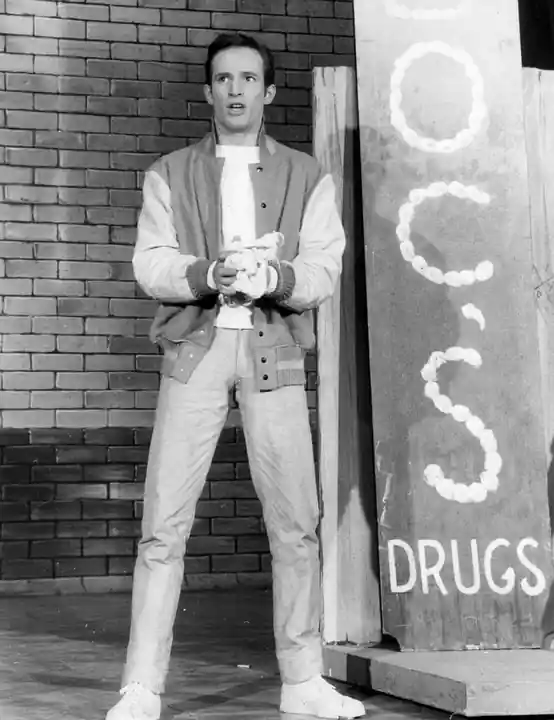
Filming schedule conflicts with One, Two, Three (1961) prevented Horst Buchholz from accepting the offered role of Tony in West Side Story.
West Side Story (1961): Tony on stage in a varsity jacket holding a white objectImage: Wikimedia Commons · Photo by Fred Fehl, New York, Public domain - #027
Jimmy Bryant was selected over every singer in the world to be the "ghost voice" for Richard Beymer. The producers flew people from all over the world to audition, putting them up at the Beverly Hills Hotel. When the producers decided to hire Jimmy, he was offered a contract at scale, which he took because he needed the money, desperately, at the time. Jimmy Bryant received residuals only for television replays. Inquiring about a Record Album residual, Saul Chaplin told Jimmy he had to deal directly with Leonard Bernstein and Stephen Sondheim since they kept those rights. Marni Nixon, a friend of Bernstein, flew her agent to New York to negotiate her deal. Marni Nixon made $18,000 in her first check.
- #028
- #029
The only major cut from the original play as a seven minute dream ballet following the song 'Somewhere,' which drew heavily from the dream ballet in 'Oklahoma.' Tony and Maria dream of finding a peaceful place where the gangs do not fight and form a marriage procession for the two while an offstage voice sang the song, only for Riff and Bernardo to appear suddenly, leading to a nightmarish recreation of the knife fight. For the film the ballet was cut, and the song turned into a duet for Tony and Maria.
- #030
The fact that nearly all of the singing was dubbed has tainted the film to a degree, but, in a twist of irony, George Chakiris, whose character doesn't sing a solo note, was the only performer awarded a recording contract in the wake of the film's success. This was a standard practice in the early 1960s; non-singing actors such as Patty Duke, Hugh O'Brian, Richard Chamberlain, Connie Stevens and Tab Hunter all answered the call of their fan bases and reported, however tentatively, into the recording studio. The albums they made were top-sellers, owing more to their fame and album covers than their singing ability. Chakiris' albums for Capitol usually came with framable photo inserts.
- #031
Before his death in 2011, Arthur Laurents revealed that Disney studios had once proposed an animated version of "West Side Story" and even produced a 7-minute sample reel in which "white cats and black cats" were the rival gang members and that the Puerto Rican "Maria cat came down the rope of a steamer [ship] illegally into the country"...and that her lover, "the Tony cat got run over. You can't believe how terrible it was."
- #032
The stage lyrics for the song "Gee, Officer Krupke" are "My father is a bastard, my ma's an s.o.b. My grandpa's always plastered..." The lyrics had to be changed for the movie to: "My daddy beats my mommy, my mommy clobbers me, my grandpa is a commie..." Also, the stage lyric was, "Dear kindly social worker, they say go earn a buck, like be a soda jerker, which means like be a schmuck." For the film, the lines were changed to "Dear kindly social worker, they say go get a job, like be a soda jerker, which means I'd be a slob."
- #033
- #034
Although Natalie Wood was dubbed for the singing parts, in 1992 Sony Music released on CD audio a remastered (using 20-bit technology) original soundtrack with previously unreleased elements including a test with her singing. All the songs and musical tracks were recorded, before filming,in Hollywood on August 9th and August 10th 1960.
- #035
The original stage version of Maria's song "I Feel Pretty" included the lyrics "I feel pretty and witty and bright / And I pity / Any girl who isn't me tonight." In the film this night scene was changed to the daytime, and presumably for this reason, the rhyming words "bright" and "tonight" were changed to "gay" and "today." The 2021 movie moved this scene back to the nighttime and restored the stage version's original lyrics.
- #036
When writing the show, Laurents and Sondheim decided not to use any actual New York gang lingo for the Jets' dialogue, feeling that would give it a 'dated' feel. Instead they mixed a few actual terms like 'daddy-o' and 'cool' with rhythmic exclamations such as 'cracko-jacko,' 'ooblee-oo' and 'pam-pam' to create their own slang.
- #037
In the scene on the roof before the musical number "America", when the girls are mocking Bernardo's speech, one of the girls say,"We came with our hearts open", one of the Sharks says, "You came with your pants open!" This line had to be changed to "You came with your mouth open," for the movie because of censorship standards.
- #038
- #039
- #040
- #041
- #042
According to Russ Tamblyn, Jerome Robbins "told us on the set one day that the idea [for West Side Story] really came from Montgomery Clift, who was Jerry's boyfriend at the time... He said that he was with Monty at a party on Fire Island... [and Clift said] 'I've got an idea for a musical. Why not have a musical about Romeo and Juliet but make it with gangs in New York?' And Jerry said that he just couldn't get it out of his head."
- #043
Pauline Kael famously slammed The Sound of Music (1965). She also slammed Robert Wise's other masterwork West Side Story (1961). Pauline Kael's review scorched the earth. The movie was "frenzied hokum," the dialogue was "painfully old-fashioned and mawkish," the dancing was "simpering, sickly romantic ballet," and the "machine-tooled" Natalie Wood was "so perfectly banal she destroys all thoughts of love."
- #044
- #045
- #046
- #047
When Jerome Robbins who'd directed the stage version, was signed to do the film the first thing he did was to dissuade the production from casting Elvis Presley as leader of the Jets with Fabian, Frankie Avalon and Paul Anka as his gang, While he was still in rehearsal coaching his dancers, Robert Wise was brought in to direct the non-musical sequences and eventually took complete control. Natalie Wood's and Richard Beymer's singing was dubbed by Marnie Nixon and Jim Bryan. Wise and Robbins were the only joint directors in Academy history to be unmentioned or thanked, Robbins returned to Broadway to supervise and choreograph such musicals as Funny Girl and Fiddler on the Roof but he never directed another film.
- #048
Jerome Robbins initially refused to work on the film unless he could direct it. Producer Walter Mirisch was nervous about handing the reins entirely over to Robbins, who had never made a film before, so he enlisted Robert Wise to direct the drama while Robbins would handle the singing and dancing sequences. Robbins developed a habit of shooting numerous takes of each scene, to the point where the film went over budget and behind schedule. This led to his firing.
- #049
Contains a major spoiler — show
Robert Wise wanted the film to have a single rising line of tension, with no light moments after the rumble. Therefore, "I Feel Pretty" was moved earlier, and the positions of "Cool" and "Gee, Officer Krupke" were reversed. Those who feel that the sassy, lighthearted tone of "Gee, Officer Krupke" is out of place following the deaths that end the first act prefer the film's ordering of the numbers. The placement of "I Feel Pretty" and "Gee, Officer Krupke" after the rumble in the stage version was meant to help cheer people up after the deaths of Bernardo and Riff, as audiences were not used to death occurring in Broadway musicals. This issue is still heatedly debated among the film's fans. Stephen Sondheim himself had voiced concerns about the issue in the original production, and later confessed he felt partly responsible for the ongoing debate.
- #050
Behind the Scenes (24)
- #051
- #052
- #053
- #054
The ship seen in the opening aerial view of the city is the SS United States of the United States Lines. It first sailed in 1952 and was laid up in the late 1960s and has been idle ever since. It was recently bought by NCL to be refurbished as a cruise ship. The SS United States currently sits rusting away at a pier on the Delaware River in Philadelphia. PA.
- #055
- #056
- #057
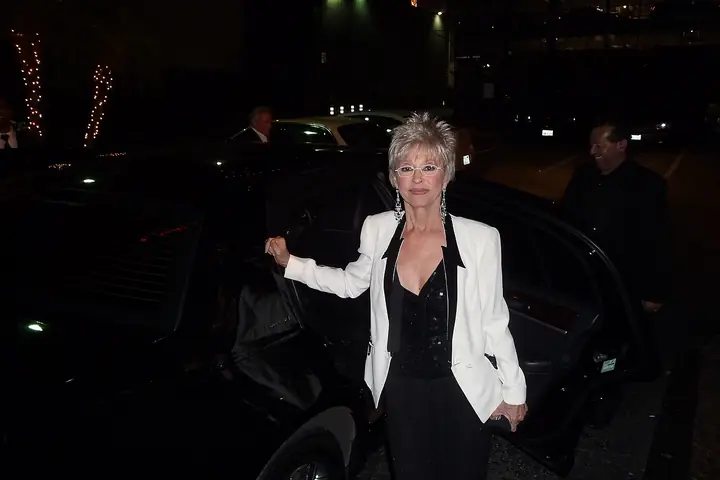
Not only are Natalie Wood and George Chakiris wearing make-up to look more "Puerto Rican," Rita Moreno (who is actually Puerto Rican) had to wear the same make-up to match their skintone. In a June 2021 interview with Terry Gross on the National Public Radio program "Fresh Air," Rita Moreno remembered that even though she was used to white Hollywood producers deciding she had to wear make-up to darken her skin tone, West Side Story was the worst example of this in her career, even though it was one of the few times when she was playing a Puerto Rican, Moreno's actual ethnicity and national origin: "[The make-up I had to wear in West Side Story] was worse. That was like mud. I remember some shots of George Chakiris--who, by the way, is still my dear friend--where he looked like somebody had taken him by the ankles and dipped him in a bucket of mud. It was so thick, and it was so dark that we would--our faces would streak and show our real color underneath. And I remember saying to a makeup man once, 'I don't know why I have to be this color.' You know, I said, 'this is not my color.' And he actually said to me, as he was making me up, 'What are you racist?'"
- #058
- #059
- #060
Only the opening prologue number and the Jets song were filmed on location in Manhattan, NY: (1) West 68th Street between Amsterdam Avenue and West End Avenue (Street Scenes). (2) East 110th Street between 2nd Avenue and 3rd Avenue (School Playground). The scenes from the 2 different locations were then edited together to make it seem as if they were both in the same neighborhood.
- #061
The hokey-pokey style mix and match game where the DJ at the gym dance tells all the boys to stand in an outward circle, and the girls to stand in an inner circle; and walk in opposite directions until he says "stop!" And then you've landed on your partner, all of that is supposed to set up Tony and Maria meeting each other. But the way Robert Wise and Jerome Robbins filmed it you can't tell that; they just seem to be coming together from opposite sides of the gym at each other randomly.
- #062
- #063
- #064
The actors playing the Jets and the Sharks suffered shin splits from dancing on the concrete streets of New York City. Despite this, and the constant rain, they all loved filming on location, even doing "rain dances" so they could be on location longer (which they were eventually barred from doing as it seemed to work once or twice).
- #065
- #066
- #067
- #068
- #069
- #070
- #071
- #072
Richard Beymer later revealed that he and Natalie Wood did not have a close rapport off camera, describing her treatment of him at the time of filming as aloof at best. Beymer believed part of the problem was a screen test from a previous film that went south. However, Beymer says that a few years later he and Wood crossed paths at a night club, she said hello to him and chatted with him for a few minutes, and he was left surprised at how sweet and kind she was to him.
- #073
- #074
Contains a major spoiler — show
When filming "The Taunting Scene", Rita Moreno was reduced to tears when Anita is harassed and nearly raped by the Jets, as it brought back memories of Moreno's own sexual assault. When she started crying, the actors playing the Jets immediately stopped what they were doing and tried to comfort her, while pointing out that the audience was going to hate them for what they were doing.
Characters & Cast (14)
- #075
- #076
Throughout the movie, Natalie Wood wears a bracelet on her left wrist, not for any aesthetic reason, but because she had injured her wrist in the scene of The Green Promise (1949) when she fell on the bridge that collapsed during the severe rainstorm, causing an unsightly bone protrusion on her wrist. She wore the bracelet to hide the injury. It became her trademark in all of her movies.
- #077
- #078
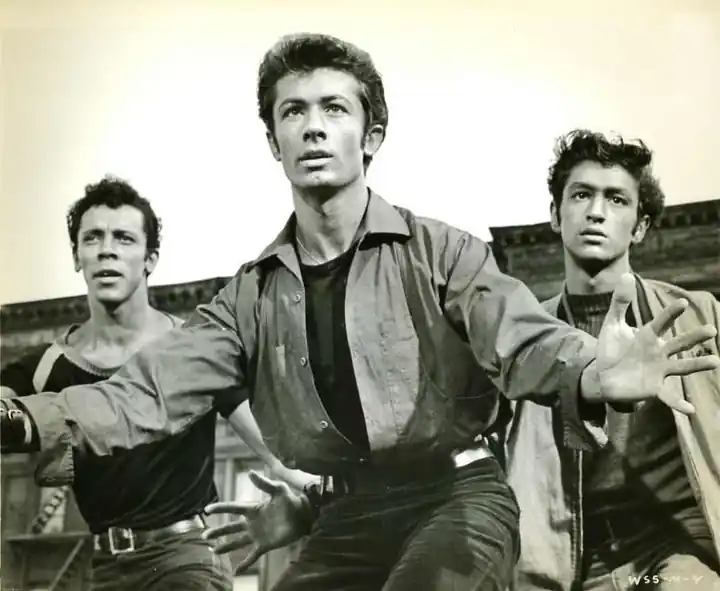
George Chakiris was the only one out of the main characters to not be dubbed. This was because he had no hard solo songs to sing.
West Side Story (1961): Bernardo and two men dancing or fighting in an urban areaImage: Wikimedia Commons · From West Side Story, Public domain - #079
- #080
- #081
Richard Beymer later revealed that he and Natalie Wood did not have a close rapport off camera, describing her treatment of him at the time of filming as aloof at best. Beymer believed part of the problem was a screen test from a previous film that went south. However, Beymer says that a few years later he and Wood crossed paths at a night club, she said hello to him and chatted with him for a few minutes, and he was left surprised at how sweet and kind she was to him.
- #082
Natalie Wood had literally just finished filming Splendor in the Grass (1961) upon joining the cast, and felt very insecure about her singing and dancing, and withdrew into herself, hence why some of her fellow actors felt that she was aloof. Contrary to myth that has persisted, she did not want Warren Beatty to play Tony. They didn't get along during filming of Splendor in the Grass (1961) and did not start dating until her separation from Robert Wagner. Tony Mordente, who helped Wood with the dance numbers and became a close friend, confirmed that Beatty was never around, during filming or afterwards as he spent a lot of time with both Wood and Wagner off-camera during production.
- #083
In the original show, Riff's girlfriend was Velma, the bubblier, slightly dumber of the Jet girls, while Graziella was the girlfriend of Diesel, the group's muscle man. For the films the pairings were reversed - Velma was Ice's girlfriend, and the smarter, harder Graziella was Riff's girlfriend.
- #084
- #085
- #086
Richard Beymer later confessed in an interview that he wasn't happy with how his performance came out, saying that he wanted to play Tony as rougher and tougher, more like an actual street kid who used to run around with a gang starting fights for fun, but Robert Wise made him play Tony as the nicest guy around, which Beymer felt didn't mesh with the character's back story. He also said he had trouble saying some of his lines with a straight face, namely the more romantic lines. He even reportedly walked out on the London premiere of the film - even though it ended up being his most famous role.
- #087
- #088
Easter Eggs & References (12)
- #089
- #090
In the dress shop Maria calls Anita "querida", a term of endearment. Only a few minutes later John Astin appears as the recreational director who in his role as Gomez Addams will call his wife Morticia that name throughout the "Addams Family" series.
West Side Story (1961): Rita Moreno, who plays Anita, on the red carpetImage: Wikimedia Commons · John Ferguson, CC BY-SA 3.0 - #091
- #092
- #093
- #094
- #095
- #096
- #097
- #098
- #099
- #100
Deeper Meaning (4)
- #101
Apart from the suggestive lyrics in some of the numbers, the scene of Maria and Tony together in her room after he's run from trouble was about as far as the censors would allow back then, pseudo marriage or not. But within a few years, the code would be on the way out and more realistic love scenes could be filmed.
- #102
- #103
In the song "Gee, Officer Krupke," the Jets parody the various interpretations of their gang's behavior that they have heard from law enforcement, judges, psychologists, social workers, and so on. In one of the verses, A-rab jokes, "In my opinion, this child don't need to have his head shrunk at all. Juvenile delinquency is purely a social disease." Action says "Hey, I got a social disease!" and A-rab responds, "so take him to a social worker!" Later in the song, they pick up the "social disease" theme: "Gee, Officer Krupke / We're down on our knees / 'Cause no one wants a fellow / with a social disease." What viewers of West Side Story's original 1950s stage production and the early-1960s film adaptation would have understood (but what may be lost on viewers of the 2021 movie) is that "social disease" is an antiquated slang euphemism for what is now known as a sexually transmitted infection (e.g., syphilis, gonorrhea, etc.). So the show's original audiences would have understood that the Jets were making an off-color facetious reference to sexual activity, albeit in an oblique way that would have passed muster with the censors of the mid-1950s.
- #104
Career & Awards (6)
- #105
- #106
- #107
Roger Ebert placed this film on his "Great Movie List", but he also said it had been diminished over the years by the increased standing and cult status of Singin' in the Rain (1952). Ebert gave West Side Story (1961) 4 stars; but added: "Although "West Side Story" was named the best picture of 1961 and won 10 Academy Awards, it is not much mentioned by movie fans these days, and the old warhorse "Singin' in the Rain" is probably more seen and certainly better loved. "West Side Story" was the kind of musical people thought was good for them, a pious expression of admirable but unrealistic liberal sentiments, and certainly its street gangs at war - one Puerto Rican, one the descendants of European immigrants - seem touchingly innocent compared to contemporary reality". Ebert went on to damn "West Side" with faint praise: "So the dancing is remarkable, and several of the songs have proven themselves by becoming standards, and there are moments of startling power and truth. "West Side Story" remains a landmark of musical history. But if the drama had been as edgy as the choreography, if the lead performances had matched Moreno's fierce concentration, if the gangs had been more dangerous and less like bad-boy Archies and Jugheads, if the ending had delivered on the pathos and tragedy of the original, there's no telling what might have resulted. The movie began with a brave vision, and it is best when you sense that vision surviving the process by which it was turned into safe entertainment."
- #108
- #109
- #110
Sources & editorial notes
Reference databases
- Wikipedia
- IMDb
Information from external sources is independently selected, consolidated and edited by Arka Evren. Sources are listed for verification and further reading. Encyclopedia text is used under its licence (CC BY-SA). How we work