

DIRECTOR · BORN 1899 · DIED 1980
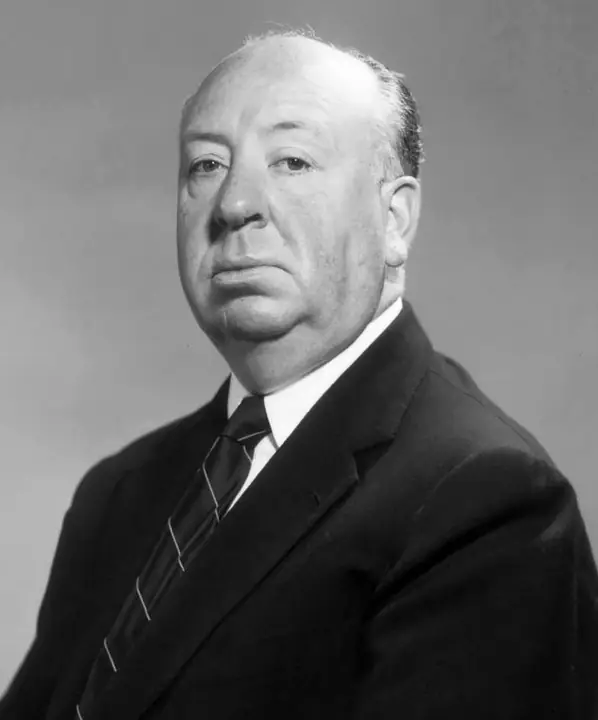
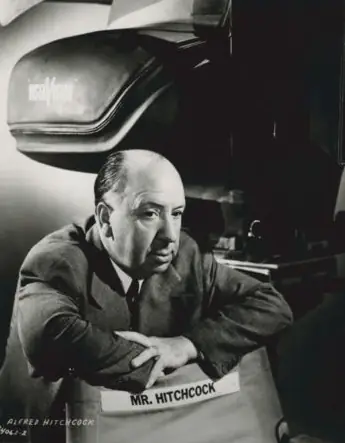
Alfred Hitchcock
- Born
- 13 August 1899, Leytonstone, London, England, UK
- Died
- 29 April 1980
- Known for
- The Trouble with Harry (1955), The Lodger: A Story of the London Fog (1927), Psycho (1960), Rear Window (1954)
92 archived facts 6 topics 1 source Last reviewed Nov 2026
Alfred Hitchcock (13 August 1899 – 29 April 1980) was an actor best known for The Trouble with Harry, The Lodger: A Story of the London Fog and Psycho.
Alfred Hitchcock over the years


92 Interesting Facts About Alfred Hitchcock
Interesting Facts (31)
- #001
For Psycho (1960), Hitchcock waived his usual $250,000 fee in exchange for 60% of the film's net profits, a bold deal that earned him more than $15 million personally, over $150 million in 2006 dollars, one of the most profitable decisions of his career.
Alfred Hitchcock: behind the scenesImage: Wikimedia Commons · Ante Brkan, Public domain - #002
Hitchcock surveyed audiences to find out which sounds scared them most: top of the list was a police siren, followed by a car crash, the crackle of a forest fire, horses galloping in the distance, howling dogs, the scream of a woman being stabbed and the footsteps of someone limping in the dark, findings that show how well he understood the psychology of sound.
- #003
In the early 1960s, Walt Disney refused to let Hitchcock film at Disneyland because he'd made Psycho (1960), which Disney called 'that disgusting film,' a clash between two legendary figures.
Alfred Hitchcock: car sceneImage: Wikimedia Commons · Unknown author Unknown author, Public domain - #004
On set, when he finished a cup of tea, Hitchcock would often toss the cup and saucer over his shoulder without caring where they landed or whether they broke, a carefree habit at odds with his perfectionism as a director.
- #005
Hitchcock struggled to come up with his trademark cameo for Lifeboat (1944), set entirely on a small boat of survivors, and finally appeared in a newspaper ad floating among the debris; having lost a lot of weight on a diet, he posed for 'Before' and 'After' photos for the ad, which promoted 'The Obesity Killer.'
- #006
At a press conference for Family Plot (1976), Hitchcock said Champagne (1928) was his least favorite of all his films, a sign of how critically he viewed some of his early work compared with his later masterpieces.
- #007
Hitchcock was famous for practical jokes on his actors and crew; some got laughs (like suddenly appearing in a dress), but most were more scarring than funny: he'd find out someone's phobia, say mice or spiders, and send them a box full of them, a sign of his dark sense of humor.
- #008
Alfred Hitchcock's Mystery Magazine, which bears his name, is one of his most successful spin-offs, a respected and long-running mystery publication still going nearly a quarter of a century after his death.
- #009
Hitchcock reportedly turned down a CBE (Commander of the Order of the British Empire) in 1962; why isn't known, though it may reflect his distant attitude toward British institutions.
- #010
On April 29, 1974, the Film Society of Lincoln Center in New York held a gala in Hitchcock's honor, showing three hours of clips, and François Truffaut presented two brilliant sequences from the book of interviews with Hitchcock he'd published a few years earlier: the cymbal crash in the second version of The Man Who Knew Too Much (1956) and the airplane attack on Cary Grant in North by Northwest (1959).
- #011
From 1942 until his death, the Hitchcocks lived at 10957 Bellagio Road in Bel Air, California; before that they rented a house at 609 St. Cloud Road in Bel Air from their friends Carole Lombard and Clark Gable.
- #012
On August 2, 1968, Hitchcock visited Finland to scout locations for 'The Short Night,' a film he never made; asked by Finnish reporters at the airport why his films were so popular, he replied, 'Everyone loves to be scared,' a neat summary of his success.
- #013
According to many who knew him, Hitchcock couldn't bear to look at his wife, Alma Reville, while she was pregnant; why isn't known, but it may have been discomfort with pregnancy and childbirth.
- #014
Hitchcock was angry when Brian De Palma made Obsession (1976), which he saw as practically a remake of Vertigo (1958); ironically, after Hitchcock died in 1980, De Palma stopped making mystery and adventure films, apart from Body Double (1984).
- #015
Hitchcock lent his name and persona to the youth book series 'Alfred Hitchcock and the Three Investigators,' in which young sleuth Jupiter Jones wins the use of Mr. Hitchcock's limousine in a contest, and Hitch wrote introductions for the books; after his death, his famous silhouette was removed from the spines and his introductions disappeared.
- #016
Director Alexander Payne can't imagine Hitchcock's Psycho (1960) in color, believing the black-and-white images are more chilling; it was remade in color in 1998 anyway, to near-universal disapproval.
- #017
After Henri-Georges Clouzot beat him to the rights to Diabolique (1955), Hitchcock asked its authors, Pierre Boileau and Thomas Narcejac, to write a novel for him, and the result, 'From Among the Dead,' became Vertigo (1958).
- #018
Although his wife, Alma, was an excellent cook, Hitchcock liked to eat out now and then, and for more than 30 years he reserved a booth every Thursday night at Chasen's, his favorite Hollywood restaurant.
- #019
Hitchcock directed the pilot of the radio series 'Suspense' (1942-1962) and made a brief appearance at the end; it was an adaptation of his film The Lodger: A Story of the London Fog (1927), starring Herbert Marshall and Edmund Gwenn, who took on the role of Mr. Bunting, played in the film by his brother Arthur Chesney.
- #020
Watch his films closely, especially the endings and the way police are portrayed, and you'll notice that if a policeman has to die, it's slow, horrible or uncompromisingly gruesome, and if the police survive, they're nearly always cast as the bad guys rather than the good guys, a reflection of Hitchcock's lifelong fear of policemen.
- #021
Hitchcock hated being surprised but loved surprising others and playing practical jokes.
- #022
From 1977 until his death, Alfred Hitchcock worked with a series of writers on what became known as The Short Night, most of it written by David Freeman, who published the final script after Hitchcock died.
- #023
In the late 1940s, Hitchcock planned a modern version of Hamlet, a 'psychological melodrama' set in contemporary England and starring Cary Grant, but his studio shelved it after hearing a professor who'd already written a modern Hamlet might sue.
- #024
Alfred Hitchcock suggested some improvements to a scene in Gone with the Wind (1939), but the shots with his changes weren't used.
- #025
Just before leaving for Hollywood, Hitchcock told a British film magazine he hoped to make a film about the sinking of the RMS Titanic, drawn to the drama of the disaster, but he made Rebecca (1940) instead.
- #026
Alfred Hitchcock was the first to see a proof of Ira Levin's Rosemary's Baby and passed on it; it was then shown to producer-director William Castle, who jumped at the chance to buy it, and the film, produced by Castle and directed by Roman Polanski, caused a sensation.
- #027
MGM optioned Hammond Innes's novel The Wreck of the Mary Deare for Hitchcock to direct with Gary Cooper, whom he'd long wanted to work with, but after several weeks on the script with Ernest Lehman, they concluded it would only turn into a 'boring courtroom drama'; instead, Hitchcock and Lehman pitched MGM's executives the story of North by Northwest (1959), promising the studio two films from Hitchcock.
- #028
Donald Spoto wrote that after their falling-out over Torn Curtain (1966), Hitchcock hid behind a door when Bernard Herrmann came to see him, but Herrmann's third wife, Norma, denied it in a June 2006 interview with Gunther Kogebehn, saying she and Bernard had visited Alfred Hitchcock 'together.'
- #029
Alma insisted on accompanying Hitch even for hospital tests, and stayed by his side throughout.
- #030
Alfred Hitchcock relied so heavily on his wife, Alma, and valued her opinion of his work so much that he'd be upset if she didn't like something.
- #031
After their falling-out in early 1964 while making Marnie (1964), Hitchcock tried to mend fences with Tippi Hedren over business lunches on 30 June, 19 August and 16 December 1964, hoping she'd star in 'Mary Rose'; when Universal rejected that project, he considered her for Torn Curtain (1966) opposite Paul Newman, but Hedren was adamant she'd never work with him again, and Julie Andrews was cast.
Behind the Scenes (36)
- #032
Hitchcock determined the most frightening sounds in films through a statistical survey he conducted among audiences. According to the survey, the sound that frightened moviegoers most was the siren of a police patrol car; it was followed, in order, by a traffic accident collision, the crackling of a burning forest, horses galloping in the distance, howling dogs, the scream of a woman being stabbed, and the footsteps of someone limping in the dark. These findings show Hitchcock's mastery at creating tension and how well he understood the psychological effect of sound.
- #033
In the early 1960s, Walt Disney refused to allow Hitchcock to shoot at Disneyland. Disney's reasoning was that Hitchcock had made Psycho (1960), which he described as 'that disgusting film.' This incident lays bare the creative and personal conflict between two legendary names.
- #034
According to Hitchcock's own account, as a child he had to stand at the foot of his mother's bed every evening and tell her everything that had happened to him that day. This ritual shows his relationship with his family and the respect he felt for authority figures.
- #035
On set, when Hitchcock finished a cup of tea, he would often toss the cup and saucer carelessly over his shoulder; he did not care where they landed or whether they broke. This behavior was a sign of his relaxed and carefree manner on set. At the same time, it reveals how messy he could be in daily life, in contrast to his identity as a perfectionist director.
- #036
Hitchcock became a United States citizen in 1956. This step helped him consolidate his career in Hollywood and become one of the most important names in American cinema. His naturalization also demonstrated the British-born director's commitment to America.
- #037
During the production of Alfred Hitchcock Presents (1955), Hitchcock was said to hide from producer Joan Harrison whenever there was any problem with the production. His favorite hiding place was behind the couch in his office. This behavior shows Hitchcock's tendency to avoid responsibilities and his humorous side.
- #038
Hitchcock had difficulty devising his signature cameo for Lifeboat (1944), because the film was about a group of people trying to survive on a small boat. In the end, he decided to use his photograph in a newspaper advertisement floating among the debris around the boat. He had lost a great deal of weight on a diet at the time, so the advertisement featured both 'Before' and 'After' photos; the slogan of the advertisement was 'The Obesity Killer.'
- #039
Most of Hitchcock's films have one-word titles: Blackmail (1929), Rebecca (1940), Suspicion (1941), Saboteur (1942), Lifeboat (1944), Spellbound (1945), Notorious (1946), Rope (1948), Vertigo (1958), Psycho (1960), Marnie (1964), Topaz (1969) and Frenzy (1972). Hitchcock preferred one-word titles because he thought they were plain, clean and easily remembered by audiences.
- #040
Hitchcock often said that among the films he directed, his favorite was Shadow of a Doubt (1943). This film was an important turning point in his career and dealt with the dark side of small-town life. This choice of Hitchcock's shows the depth of his storytelling and the importance he placed on character analysis.
- #041
'Alfred Hitchcock's Mystery Magazine,' which bears Hitchcock's name, is one of his most successful tie-in products. The magazine became a respected publication in mystery literature and one of the longest-running anthologies. The fact that it continued to be published nearly a quarter of a century after Hitchcock's death proves how powerful his name and legacy are.
- #042
Hitchcock is said to have declined the title of Commander of the Order of the British Empire (CBE) in 1962. The exact reason for this refusal is not known, though it may relate to Hitchcock's distant attitude toward British institutions. The incident illustrates his stance toward honours.
- #043
On 29 April 1974, the Film Society of Lincoln Center in New York held a large gala in honour of Hitchcock's contributions to cinema. That evening, three hours of film clips were shown, and François Truffaut presented two brilliant sequences drawn from his book of interviews with Hitchcock published a few years earlier: the cymbal clash in the second version of The Man Who Knew Too Much (1956) and the plane attack on Cary Grant in North by Northwest (1959). The gala once again demonstrated Hitchcock's standing and influence in the film world.
- #044
Hitchcock, like W.C. Fields and Arthur Godfrey before him, became legendary for gently needling his sponsors during his television programme. In a typical example, he would allude to the sponsors by saying, 'We are interrupting our story now for an important announcement. I needn't tell you who it will be most important to.' This humorous approach showed his creativity and sense of humour in the world of television.
- #045
In a Hitchcock course given at the University of Southern California (USC) in the autumn of 2000, the guest speaker Patricia Hitchcock revealed that her father's two guilty pleasures were Smokey and the Bandit (1977) and Benji (1974). These tastes reveal just how broad Hitchcock's cinematic palate was.
- #046
Hitchcock directed nine films selected by the Library of Congress for the National Film Registry as being 'culturally, historically or aesthetically' significant: Rebecca (1940), Shadow of a Doubt (1943), Notorious (1946), Strangers on a Train (1951), Rear Window (1954), Vertigo (1958), North by Northwest (1959), Psycho (1960) and The Birds (1963). These films are counted among the most treasured works of American cinema. Hitchcock's achievement proves his lasting impact on film history.
- #047
On 2 August 1968, Hitchcock visited Finland to scout locations for his next film, 'The Short Night'; however, the film was never made. In an interview with Finnish reporters at the airport, when asked why his films were so popular, he replied, 'Everyone loves to be scared.' This brief and concise explanation sums up the secret of Hitchcock's success in the thriller genre.
- #048
Of the 56 films he directed, Hitchcock appeared in a cameo in all but 18. Among these films are the unfinished Number 13 (1922), The Pleasure Garden (1925), The Mountain Eagle (1926), Downhill (1927), The Farmer's Wife (1928), Champagne (1928), The Manxman (1929), Juno and the Paycock (1930), Elstree Calling (1930), The Skin Game (1931), Mary (1931), East of Shanghai (1931), Number 17 (1932), Strauss' Great Waltz (1934), Secret Agent (1936), Jamaica Inn (1939), Lifeboat (1944) and Dial M for Murder (1954). However, in Lifeboat and Dial M for Murder he found special solutions to appear in a cameo; in Lifeboat his photograph appeared in a newspaper advertisement, and in Dial M he appeared in a photograph.
- #049
Hitchcock was at his heaviest in the late 1930s; he weighed over 300 pounds. Although he was always overweight, in the early 1950s he went on a diet and lost a significant amount of weight; photographs taken on the set of To Catch a Thief (1955) show a surprisingly thin Hitchcock. His weight continued to fluctuate throughout his life, a sign of his struggle with food.
- #050
On 11 August 2009, Hitchcock appeared on a 44-cent commemorative stamp issued by the United States Postal Service. The stamp honoured the television programme Alfred Hitchcock Presents (1955) as part of the 'Early TV Memories' series. This stamp immortalised Hitchcock's contributions to the world of television.
- #051
Hitchcock's discomfort under the heavy control of producer David O. Selznick is clearly visible in the final scene of Rebecca (1940). Selznick wanted the director to show the smoke rising from the chimney of the burning house forming the letter 'R'; however, Hitchcock thought this touch lacked subtlety. Instead, he showed flames licking a pillow embroidered with the letter 'R'. This scene symbolises Hitchcock's creative vision and his resistance to authority.
- #052
Hitchcock directed eight different actors in Oscar-nominated performances: Laurence Olivier, Joan Fontaine, Judith Anderson, Albert Bassermann, Michael Chekhov, Claude Rains, Ethel Barrymore and Janet Leigh. Fontaine won the Best Actress Oscar for Suspicion (1941).
- #053
Hitchcock lent his name and character to the youth book series 'Alfred Hitchcock and the Three Investigators'. The series' premise was that the main character and crime-solver Jupiter Jones won the right to use Mr. Hitchcock's limousine in a contest. Hitch also wrote forewords for these books. After his death, his famous silhouette was removed from the books' spines and the forewords became invisible.
- #054
Hitchcock told François Truffaut that although he had made two films before The Lodger: A Story of the London Fog (1927), he considered this film to be his first real film. The Lodger was a turning point in his cinema career and revealed his mastery of the thriller genre. Hitchcock's assessment shows how critically he approached his own works.
- #055
In the 1980 New Year Honours list, just a few months before his death, Hitchcock was made a Knight Commander of the Order of the British Empire, although he was a United States citizen. This honour was a tribute to his contributions to British cinema. By receiving this title, Hitchcock once again proved his influence in both British and American cinema.
- #056
Hitchcock praised Luis Buñuel as the best director of all time. Buñuel's bold and experimental style may also have influenced Hitchcock's own work.
- #057
After Henri-Georges Clouzot was faster in buying the rights to Diabolique (1955), Hitchcock asked authors Pierre Boileau and Thomas Narcejac to write a novel for him. The novel the authors wrote, 'From Among the Dead', was later adapted into cinema as Vertigo (1958). This incident shows Hitchcock's competitive nature and his determination to find stories.
- #058
Although his wife Alma was an excellent cook, Hitchcock occasionally liked to eat out. His preferred restaurant in Hollywood was Chasen's, where he reserved a booth every Thursday night for more than 30 years. This ritual was a rare detail about his social life.
- #059
Hitchcock directed the pilot episode of the radio series 'Suspense' (1942-1962) and made a brief appearance at the end of the episode. This episode was an adaptation of his film The Lodger: A Story of the London Fog (1927) and starred Herbert Marshall and Edmund Gwenn; Gwenn reprised the role of Mr. Sleuth, which his brother Arthur Chesney had played. This radio experience shows Hitchcock's versatility in storytelling.
- #060
In the late 1940s, Hitchcock planned to make a modernized version of Hamlet. Hitchcock's vision of Shakespeare was a 'psychological melodrama' set in contemporary England and starring Cary Grant. The project was shelved when Hitchcock's studio heard of a potential lawsuit from a professor who had already written a modern version of Hamlet.
- #061
He suggested some improvements to a scene in Gone with the Wind (1939), but the shots containing his improvements were not used.
- #062
In an interview with a British film magazine just before leaving for Hollywood, Hitchcock stated that he hoped to make a film about the tragic loss of the RMS Titanic, because the drama inherent in the ocean liner's sinking appealed to him. Instead, he made Rebecca (1940).
- #063
He was the first person to see a proof of Ira Levin's book 'Rosemary's Baby'. He turned it down. It was later shown to producer/director William Castle, who jumped at the chance to buy it. The film adaptation, produced by Castle and directed by Roman Polanski, caused a sensation.
- #064
Hammond Innes's novel The Wreck of the Mary Deare was optioned by MGM with the intention of Hitchcock directing and Gary Cooper starring. Hitchcock had long wanted to work with Cooper, but after developing the screenplay with Ernest Lehman for several weeks, they concluded it could not be made without turning into 'a boring courtroom drama'. Hitchcock and Lehman went before the MGM executives, pitched the story of North by Northwest (1959) and told them MGM would get two films from Hitchcock...
- #065
All copies of The White Shadow (1924) were thought to be lost, but in 2011 three reels containing the first half of the film were found in the vaults of the New Zealand Film Archive.
- #066
In 1963, Twentieth Century-Fox planned for him to direct Trap for a Solitary Man in widescreen. Based on the French play Piege Pour un Homme Seul by M. Robert Thomas, the story concerns a young married couple vacationing in the Alps. The wife disappears, and after a long search the police bring back someone they claim is her; the woman even says she is the man's wife, but the man has never seen her before.
- #067
Hitchcock approached the Italian comedy-thriller writers Agenore Incrocci and Furio Scarpelli (Age & Scarpelli), the writers of Big Deal on Madonna Street (1958), to write a script around an original idea Hitchcock had carried in his head since the late 1930s. A New York City hotel run by an Italian immigrant and his family; the family uses the hotel as a cover for crimes, including the theft of a valuable coin from one of the hotel's guests. (R.R.R.R. is the highest-value coin.) The Italian screenwriters...
Easter Eggs & References (1)
- #068
Like W.C. Fields and Arthur Godfrey before him, Hitchcock became legendary for gently mocking the sponsors of his TV show, typically with lines like 'We're interrupting our story now for an important announcement. I needn't tell you who it will be most important to.'
Deeper Meaning (2)
- #069
Hitchcock has two stars on the Hollywood Walk of Fame, one for film at 6506 Hollywood Boulevard and one for television at 7013 Hollywood Boulevard, marking his success in both.
- #070
Hitchcock's discomfort under producer David O. Selznick's tight control shows in the final scene of Rebecca (1940): Selznick wanted smoke from the burning house's chimney to form the letter 'R,' but Hitchcock found that unsubtle and instead showed flames licking a pillow embroidered with an 'R,' a small act of creative resistance.
Career & Awards (5)
- #071
When he received the Lifetime Achievement Award in 1979, Hitchcock joked to friends that he wouldn't be around much longer, and he died a year later, in 1980, leaving the film world in mourning and an unforgettable legacy behind.
- #072
Hitchcock gave the shortest acceptance speech in Academy Awards history: accepting the Irving Thalberg Memorial Award in 1967, he said simply 'Thank you,' a sign of how little he cared for fame and prizes.
- #073
When Hitchcock first visited Hollywood in the late 1930s, nearly all the major studios turned him down, doubting he could make a Hollywood-style film, until producer David O. Selznick offered him a seven-year contract; his first project was to be a Titanic film, but Selznick canceled it because he 'couldn't find a ship that would sink' and put him on Rebecca (1940) instead, which won Best Picture.
- #074
Hitchcock told François Truffaut that although he'd made two films before The Lodger: A Story of the London Fog (1927), he considered it his first real film, the turning point where his mastery of the thriller emerged.
- #075
Hitchcock was nominated five times for the Best Director Oscar, for Rebecca (1940), Lifeboat (1944), Spellbound (1945), Rear Window (1954) and Psycho (1960), but never won; apart from Clarence Brown, no director has more nominations in the category without a win.
Life & Family (17)
- #076
Besides his fear of the police, Alfred Hitchcock had another phobia: eggs. Runny yolks especially disgusted him, and he'd never eat them on their own, part of a complicated relationship with food.
- #077
When Hitchcock was a child, his father sent him to the local police station with a note, and the desk sergeant, after reading it, locked little Alfred in a cell for ten minutes before letting him out with the words, 'That is what happens to people who do bad things.' The experience left him with a lifelong morbid fear of the police, so much so that he never learned to drive, since a man who doesn't drive can never be pulled over and ticketed.
- #078
Patricia Hitchcock, the only child of Alfred Hitchcock and Alma Reville, appeared in three of her father's films, Stage Fright (1950), Strangers on a Train (1951) and Psycho (1960), and after his death played an important role in protecting his legacy.
- #079
Hitchcock said that as a child he had to stand at the foot of his mother's bed every evening and tell her everything that had happened that day, a ritual thought by some to have shaped the psychological depth of his films.
- #080
While making Alfred Hitchcock Presents (1955), Hitchcock reportedly hid from producer Joan Harrison whenever there was a problem, his favorite hiding place being behind the couch in his office.
- #081
Hitchcock once dressed in women's clothes for a party he threw; footage of it was kept in his office, but when the office was cleared after his death it couldn't be found, and whether it still exists is a mystery.
- #082
Hitchcock had a varied education: after St. Ignatius College in London, he studied mechanics, electricity, acoustics and navigation at the School of Engineering and Navigation, then took art classes at the University of London, a mix of the technical and the artistic that shaped his visual storytelling.
- #083
Hitchcock had a love-hate relationship with food, swinging between overeating and crash diets for much of his life; he had a particular horror of runny egg yolks and would never eat them on their own in any form, and also feared cheese and cold cuts, habits that contributed to his weight swings and health problems.
- #084
As a guest speaker at a Hitchcock course at the University of Southern California (USC) in fall 2000, Patricia Hitchcock revealed that her father's two guilty pleasures were Smokey and the Bandit (1977) and Benji (1974), a surprisingly lighthearted taste for the master of suspense.
- #085
Hitchcock supported English football club West Ham United and told Hollywood colleagues he subscribed to English newspapers to keep up with their results.
- #086
Frenzy (1972) took its title and some plot points from an idea Hitchcock had years earlier for a prologue to Shadow of a Doubt (1943); he approached many writers, including Samuel A. Taylor and Alec Coppel, before asking an old friend, Benn W. Levy, to develop his draft, a story about a handsome young bodybuilder (inspired by Neville Heath) who lured young women to their deaths, a version of the character known as the 'Merry Widow' murderer.
- #087
Hitch, a longtime friend of Sidney Bernstein (the two had founded Transatlantic Pictures together in the 1940s), became the first celebrity to visit the set of the long-running British soap Coronation Street (1960), in June 1964, at the Manchester studios of Granada Television, which Bernstein had founded with his brother Cecil.
- #088
Hitchcock badly wanted to direct Norma Shearer, Robert Taylor and Conrad Veidt in the World War II drama Escape (1940); a longtime admirer of Shearer, he'd spent years looking for a project for her, but when Metro-Goldwyn-Mayer bought Ethel Vance's (pen name of Grace Zaring Stone) novel Escape, he was shut out, knowing he could never work for notoriously difficult MGM boss Louis B. Mayer, who chose Mervyn LeRoy to direct instead.
- #089
After Psycho (1960), Hitchcock teamed up again with Ernest Lehman on an original idea: Jimmy Shearing (a role for James Stewart), a blind pianist, regains his sight after receiving a dead man's eyes, and while watching a Wild West show at Disneyland with his family, he has visions of being shot and realizes the donor was murdered and the killer's image is still imprinted on the retinas; the story was to end with a chase aboard an ocean liner.
- #090
Hitchcock's last, unfinished project was The Short Night, adapted from Ronald Kirkbride's spy thriller, about a British double agent (loosely based on George Blake) who escapes from prison and flees through Finland toward Moscow, where his wife and children wait; an American agent whose brother was one of the traitor's victims goes to Finland to stop him but falls for his wife. It was Hitchcock's third attempt, after Torn Curtain (1966) and Topaz (1969), at a realistic spy film.
- #091
In the late 1950s, Hitchcock planned to adapt Henry Cecil's novel No Bail for the Judge, about a London lawyer who, with the help of a gentleman thief, must defend his father, a High Court judge accused of murdering a prostitute; breaking from his usual blondes, he cast Audrey Hepburn as the lawyer, with Laurence Harvey as the thief and John Williams as her father.
- #092
In 1964, Hitchcock reread John Buchan's The Three Hostages, another Richard Hannay novel, with a view to adapting it, but as with Greenmantle a quarter of a century earlier, the rights couldn't be secured; the story was also dated, tied too closely to the 1930s, and its plot hinged on a villain hypnotizing the hero's blind mother, and Hitchcock said in interviews that hypnosis never worked on film and that films that tried it turned out badly.
Related pages
- Dead Silence — Alfred Hitchcock comes up in the facts on that page
- Ronin — Alfred Hitchcock comes up in the facts on that page
- Teresa Wright — Alfred Hitchcock comes up in the facts on that page
Sources & editorial notes
Reference databases
- Wikipedia
- IMDb
Information from external sources is independently selected, consolidated and edited by Arka Evren. Sources are listed for verification and further reading. Encyclopedia text is used under its licence (CC BY-SA). How we work