

ACTOR · BORN 1932 · DIED 1992
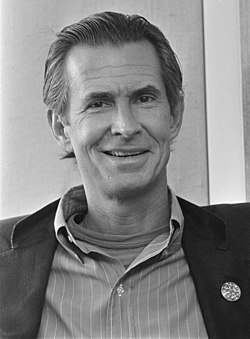
Anthony Perkins
- Born
- 4 April 1932, New York City, New York, USA
- Died
- 12 September 1992
- Known for
- Psycho (1960), Psycho II (1983), The Black Hole (1979), Le Procès (1962)
64 archived facts 6 topics 1 source Last reviewed Nov 2026
Anthony Perkins (4 April 1932 – 12 September 1992) was an actor best known for Psycho, Psycho II and The Black Hole.
Anthony Perkins over the years

64 Interesting Facts About Anthony Perkins
Interesting Facts (7)
- #001
During 1990, he got a blood sample taken due to a palsy on the side of his face. The National Enquirer illegally had Tony's blood sample tested for the AIDS virus, and found out that it was positive. Later that year, the National Enquirer wrote a story about his battle with AIDS, but the ironic thing was that he only found out that he was HIV positive from this article. He suspected that he probably was, but he never checked for it before the article was written.
- #002
- #003
According to Tab Hunter's autobiography, Perkins and Hunter were in a relationship in the mid to late 1950s. He was also linked with Grover Dale, Alan Helms, Patrick Loiseau and Christopher Makos (per each of them), as well as many unconfirmed paramours reportedly including Erik Bruhn, Timmy Everett, Rudolf Nureyev, Teno Pollick and Stephen Sondheim. Perkins and Dale shared an apartment for six years.
- #004
- #005
- #006
In 1956, Perkins arrived in Los Angeles to join the cast of the upcoming American Civil War-themed film Friendly Persuasion (1956). He did not have a car or a driving license at the time, and the studio did not provide transportation for him. Every day, he hitchhiked from his hotel to the film's set. This habit provided some publicity for Perkins in the gossip magazines.
- #007
In the late 1940s, Perkins attended the Buckingham Browne & Nichols School, an all-boys school located in Cambridge, Massachusetts. He repeatedly amused his classmates with a lisping impression of the actor Roddy McDowall. Perkins still disliked baseball, but he joined the school's varsity tennis team. He also joined the school's glee club, and served as the co-literary editor of the school newspaper.
Production Story (5)
- #008
Perkins was offered a role in the comedy film Some Like It Hot (1959), which would require him to dress up in drag. Paramount, balked at the idea of having their "heartthrob" wear drag for an entire film and forbade Perkins from accepting the role. Tony Curtis was cast in the role intended for Perkins.
- #009
Had agreed to voice the dentist on The Simpsons (1989) episode "Last Exit to Springfield" but died before work began. The role then went to Hank Azaria.
- #010
In 1985, Perkins was offered the part of the main villain in the Western comedy film Lust in the Dust (1984). It was a parody of "Duel in the Sun" (1946), without the sadomasochistic elements of the original film. The role would require Perkins to co-star with Tab Hunter, an ex-lover with whom Perkins had had no interactions for about two decades. Perkins turned down the offer. After a brief conversation between Perkins and Hunter over the merits of the role, the two men never met again.
- #011
- #012
In 1966, Perkins starred in the television musical Evening Primrose (1966), his first American performance in several years. Stephen Sondheim, who wrote the music, thought it was one the greatest moments of his own career. He soon offered to cast Perkins in his next Broadway musical. Perkins turned down the offer, but Sondheim would go on to create several roles intended for Perkins.
Behind the Scenes (4)
- #013
In 1957, Perkins and Henry Fonda were jointly working on the Western film The Tin Star (1957). Every day, Perkins and Fonda took the hours-long drive out to the film set in the same car. They became closely acquainted and shared stories of their private lives to pass the time during the long drive.
- #014
- #015
In 1956, Perkins arrived in Los Angeles to join the cast of the upcoming American Civil War-themed film Friendly Persuasion (1956). He did not have a car or a driving license at the time, and the studio did not provide transportation for him. Every day, he hitchhiked from his hotel to the film's set. This habit provided some publicity for Perkins in the gossip magazines.
- #016
Perkins had to take basketball lessons to star in the sports film Tall Story (1960). He found that this game was highly entertaining, and compared it to chess. He mentioned in interviews: "I've been working out at the Warner Brothers gym, discovering what basketball is all about. I spend about an hour and a half a day dribbling, passing, shooting baskets, and going after rebounds ... It's a good game. Like chess in a way.".
Characters & Cast (11)
- #017
Perkins' early film roles cast Gary Cooper and Jack Palance as the fathers of the characters which he portrayed. Perkins bonded with Cooper and reportedly viewed him as an actual father figure. He did not enjoy working with Palance, and the feeling was mutual.
- #018
- #019
In 1964, Perkins played a Soviet spy in the spy comedy The Ravishing Idiot (1964). Brigitte Bardot played his accomplice and love interest for the film. The press took note that Perkins was the first American actor to play Bardot's love interest, and Bardot herself enjoyed working with Perkins. On the other hand, Perkins himself was uncomfortable when working with her. He later described her as his least favorite co-star, as he was used to working with more experienced and mature actresses.
- #020
In 1984, Perkins and Rod Steiger co-starred in the British thriller miniseries The Glory Boys (1984). It depicted two terrorists plotting the assassination of a nuclear scientist. Perkins intensely disliked Steiger and his self-important attitude, and Steiger thought that Perkins' dependence on chemicals made him both pitiful and unreliable. They were at loggerheads for the duration of the series.
- #021
- #022
- #023
In 1962, Perkins starred in the black comedy film link=tt0057427]. He portrayed a bureaucrat who is constantly harassed by the police, suspected of crimes which nobody bothers to explain to him. Perkins enjoyed working with the film's director, Orson Welles. He appreciated that Welles was self-confident, but not dictatorial and autocratic. This was quite unlike several of Perkins' previous experiences with overly controlling and inflexible directors.
- #024
In 1954, Perkins first gained fame for portraying the lead character Tom Lee in the play "Tea and Sympathy". The character is an effeminate teenage boy who is seduced by an older woman. The role brought many job offers for him, but he was typecast for several years in playing effeminate characters.
- #025
In the summer of 1953, Perkins vacationed in California. He started hanging out on the lot of Metro-Goldwyn-Mayer, and running errands for the studio in hopes of eventually finding work as an actor. He was indeed cast in the supporting role of Fred Whitmarsh in the comedy-drama film The Actress (1953). His character served as a love interest for the main character Ruth Gordon Jones (played by Jean Simmons).
- #026
- #027
In 1964, Perkins played a Soviet spy in the spy comedy The Ravishing Idiot (1964). Brigitte Bardot played his accomplice and love interest for the film. The press took note that Perkins was the first American actor to play Bardot's love interest, and Bardot herself enjoyed working with Perkins. On the other hand, Perkins himself was uncomfortable when working with her. He later described her as his least favorite co-star, as he was used to working with more experienced and mature actresses.
Career & Awards (15)
- #028
- #029
In 1978, Perkins co-starred with Mary Tyler Moore in the television film First, You Cry (1978). It depicts a career woman who survives her first struggle with breast cancer, but then sees her career and marriage falling apart due to the effects of her psychological trauma on her interactions with others. In 1979, Saturday Night Live (1975) parodied the film in the sketch "First He Cries", where a husband mourns that his wife no longer has sexy breasts following a mastectomy. The perceived insensitivity of the parody resulted in viewers protesting against the comedy show and sending 300 letters of complaint.
- #030
Perkins and Shirley MacLaine co-starred in the comedy film The Matchmaker (1958), and worked for the same number of days in the film. Perkins was given a salary of 75,000 dollars for the film, and MacLaine was given 25,000 dollars. Perkins protested on MacLaine's behalf about unfair treatment, but the studio simply ignored his protests.
- #031
- #032
In 1960, Perkins was starring in the Broadway musical "Greenwillow", written by Frank Loesser. Loesser personally disliked Perkins, and wrote Perkins' main solo "Never Will I Marry" with the idea that it would be one of the musical's least memorable segments. Instead, it became one of Perkins' most popular singing performances and was highly praised in the press. The song later received popular renditions by Judy Garland, Barbra Streisand, and Linda Ronstadt.
- #033
In 1962, Perkins starred in the black comedy film link=tt0057427]. He portrayed a bureaucrat who is constantly harassed by the police, suspected of crimes which nobody bothers to explain to him. Perkins enjoyed working with the film's director, Orson Welles. He appreciated that Welles was self-confident, but not dictatorial and autocratic. This was quite unlike several of Perkins' previous experiences with overly controlling and inflexible directors.
- #034
In 1954, Perkins first gained fame for portraying the lead character Tom Lee in the play "Tea and Sympathy". The character is an effeminate teenage boy who is seduced by an older woman. The role brought many job offers for him, but he was typecast for several years in playing effeminate characters.
- #035
- #036
In the summer of 1953, Perkins vacationed in California. He started hanging out on the lot of Metro-Goldwyn-Mayer, and running errands for the studio in hopes of eventually finding work as an actor. He was indeed cast in the supporting role of Fred Whitmarsh in the comedy-drama film The Actress (1953). His character served as a love interest for the main character Ruth Gordon Jones (played by Jean Simmons).
- #037
- #038
Perkins released three pop music albums and several singles in 1957 and 1958 on Epic and RCA Victor under the name Tony Perkins. His single "Moon-Light Swim" was a moderate hit in the United States, peaking at number 24 on the Billboard Hot 100 in 1957. His 1958 single "The Prettiest Girl in School" flopped in the United States, but became a popular hit in Australia.
- #039
Before playing his best remembered role as Norman Bates in Psycho (1960), Perkins had been an innocuous, rather generic younger leading man, co-starring with the likes of Sophia Loren and Jane Fonda. After the release of Psycho, Perkins found romantic leading roles hard to come by, and eventually came to resent the impact his most famous film had on his career.
- #040
In 1961, Perkins bought himself out of his Paramount contract and settled in France. He spend the next several years working primarily in European films. He continued to be paired with the most popular female leads available at that time, including Ingrid Bergman, Melina Mercouri, and Sophia Loren.
- #041
In 1960, Perkins was starring in the Broadway musical "Greenwillow", written by Frank Loesser. Loesser personally disliked Perkins, and wrote Perkins' main solo "Never Will I Marry" with the idea that it would be one of the musical's least memorable segments. Instead, it became one of Perkins' most popular singing performances and was highly praised in the press. The song later received popular renditions by Judy Garland, Barbra Streisand, and Linda Ronstadt.
- #042
Life & Family (22)
- #043
- #044
- #045
Entered Rollins College in Winter Park, Florida in September 1950. Also on campus during his first year were Fred Rogers (of Mister Rogers' Neighborhood (1968)) who graduated in 1951 and John Reardon, class of 1952. In 1953 he was offered a leading role in the movie The Actress (1953). Almost immediately after returning to his studies he left to replace John Kerr in "Tea and Sympathy" on Broadway. He never completed his degree but was given an honorary degree by the college some 20 years later.
- #046
During 1990, he got a blood sample taken due to a palsy on the side of his face. The National Enquirer illegally had Tony's blood sample tested for the AIDS virus, and found out that it was positive. Later that year, the National Enquirer wrote a story about his battle with AIDS, but the ironic thing was that he only found out that he was HIV positive from this article. He suspected that he probably was, but he never checked for it before the article was written.
- #047
- #048
- #049
According to an 1983 interview, Perkins had a particularly close relationship with his mother as a child, but he rarely interacted with his workaholic father. He claimed to have suffered from Oedipus complex, and to have secretly resented his father: "whenever my father came home I was jealous. It was the Oedipal thing in a pronounced form, I loved him but I also wanted him to be dead so I could have her [his mother] all to myself.
- #050
- #051
- #052
- #053
- #054
- #055
In 1950, Rollins College expelled most of its homosexual students in a group expulsion. Perkins was excluded from the list of expulsions, despite his sexuality being known to everyone. Perkins happened to be a favorite student of the college's theater professor, and he could not be expelled without his patron's approval.
- #056
- #057
- #058
Charles Winecoff's book "Anthony Perkins: Split Image" (Alyson Books, first published in 1996; 2006 10th Anniversary Revised Edition) illuminated Perkins' early life, his homosexuality, his later drug use and life with his family. Some contributors to the biography were Janet Leigh, Hilton A. Green, Jeff Fahey, John Gavin and Joseph Stefano, plus an impressive number of Perkins' friends and relatives. However, his wife, Berry Berenson, did not participate. According to the book, Perkins contracted the AIDS virus around the time of Psycho III (1986) and kept the illness secret for six years until his death so he could keep working and not worry his friends and his two sons. The only person who knew he was sick was his wife Berry. Anthony officially found out that he was HIV positive when the tabloid National Enquirer wrote a story about it in 1990. Author Winecoff amended his book with a chapter about the death of Berry Perkins nine years after the death of her husband, as a passenger on board the ill-fated American Airlines Flight 11 on September 11, 2001.
- #059
- #060
According to an 1983 interview, Perkins had a particularly close relationship with his mother as a child, but he rarely interacted with his workaholic father. He claimed to have suffered from Oedipus complex, and to have secretly resented his father: "whenever my father came home I was jealous. It was the Oedipal thing in a pronounced form, I loved him but I also wanted him to be dead so I could have her [his mother] all to myself.
- #061
In 1978, Perkins co-starred with Mary Tyler Moore in the television film First, You Cry (1978). It depicts a career woman who survives her first struggle with breast cancer, but then sees her career and marriage falling apart due to the effects of her psychological trauma on her interactions with others. In 1979, Saturday Night Live (1975) parodied the film in the sketch "First He Cries", where a husband mourns that his wife no longer has sexy breasts following a mastectomy. The perceived insensitivity of the parody resulted in viewers protesting against the comedy show and sending 300 letters of complaint.
- #062
- #063
In 1947, as a teenager, Perkins joined the Vermont-based summer stock company Brattleboro Summer Theater. His mother had some connections in the theatrical world and had friends in this stock company. Perkins' meager salary amounted to 25 dollars per week and a membership card for the labor union Actors' Equity Association.
- #064
Related pages
- Charmian Carr — Anthony Perkins comes up in the facts on that page
- Gary Lockwood — Anthony Perkins comes up in the facts on that page
- Vera Miles — Anthony Perkins comes up in the facts on that page
Sources & editorial notes
Reference databases
- Wikipedia
- IMDb
Information from external sources is independently selected, consolidated and edited by Arka Evren. Sources are listed for verification and further reading. Encyclopedia text is used under its licence (CC BY-SA). How we work