
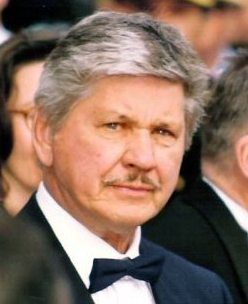
ACTOR · BORN 1921 · DIED 2003
Charles Bronson
- Born
- 3 November 1921, Ehrenfeld, Pennsylvania, USA
- Died
- 30 August 2003
- Known for
- C'era una volta il West (1968), Death Wish (1974), The Mechanic (1972), Hard Times (1975)
50 archived facts 7 topics 1 source Last reviewed Nov 2026
Charles Bronson (3 November 1921 – 30 August 2003) was an actor best known for C'era una volta il West, Death Wish and The Mechanic.
Charles Bronson over the years


50 Interesting Facts About Charles Bronson
Interesting Facts (5)
- #001
He rarely granted interviews, or commented on his own films. However, he plainly stated his unhappiness with Death Wish 3 (1985) at least a few times, and was especially angered when he discovered that Michael Winner filmed extremely gory shots with extras (as nameless thugs) when he was off-set.
- #002
- #003
- #004
- #005
Production Story (12)
- #006
- #007
- #008
Sergio Leone once called him "the greatest actor I ever worked with". Leone had wanted Bronson for all of what became known as the "Man with No Name" trilogy, but Bronson turned him down each time. He turned down the lead role in A Fistful of Dollars (1964) after describing it as the "worst script I have ever seen"; he turned down the role of Col. Douglas Mortimer in For a Few Dollars More (1965) as he wasn't interested, and turned the role of Angel Eyes in The Good, the Bad and the Ugly (1966) because he was in England filming The Dirty Dozen (1967). Leone eventually cast him as Harmonicac in Once Upon a Time in the West (1968).
- #009
- #010
- #011
- #012
- #013
- #014
- #015
- #016
- #017
Behind the Scenes (5)
- #018
In 1954 on the Mexican set of Vera Cruz (1954), he and fellow cast member Ernest Borgnine--who were playing American gunfighters involved in the Mexican fight against the French--had some spare time on their hands and decided to go to a nearby town for cigarettes. They saddled up in costume, sidearms and all, and began riding to town. On the way they were spotted by a truck full of Mexican "federales"--national police--who mistook them for bandits and held them at gunpoint until their identities could be verified.
- #019
He rarely granted interviews, or commented on his own films. However, he plainly stated his unhappiness with Death Wish 3 (1985) at least a few times, and was especially angered when he discovered that Michael Winner filmed extremely gory shots with extras (as nameless thugs) when he was off-set.
- #020
- #021
Was by all accounts a very quiet and introspective collaborator, often sitting in a corner for much of a shoot and listening to a director's instructions and not saying a word until cameras were rolling. Don Siegel, who directed him in Telefon (1977), and Tom Gries, who directed him in Breakheart Pass (1975), both commented on how surprised they were to discover how thoroughly and completely prepared Bronson was when he came to work, as it didn't seem to fit his laid-back, taciturn image.
- #022
Characters & Cast (6)
Easter Eggs & References (3)
Career & Awards (4)
Life & Family (15)
- #036
- #037
- #038
- #039
- #040
- #041
In 1943 he enlisted in the US Army Air Force and served in the 760th Flexible Gunnery Training Squadron. In 1945 he was a gunner on a Boeing B-29 Superfortress with the Guam-based 61st Bombardment Squadron of the 39th Bombardment Group, which conducted combat missions against the Japanese home islands. He flew 25 missions and received a Purple Heart for wounds received in battle.
- #042
- #043
- #044
His parents were from Lithuania, where his father was a coal miner, and he grew up in a western Pennsylvania coal-mining town. Like all the men in his family he worked in the mines, but hated it and used a variety of means to escape it (including the military and, eventually, acting). His expertise with tunneling and working underground turned out to be quite helpful when making The Great Escape (1963) in the role of "Tunnel King" Velinski. However, even though the "tunnel" he was working in was a cutaway set, he could only stay in it for a few minutes at a time before he had to get up and leave. As a boy working in the mines, he was caught in a cave-in and almost died before he was finally rescued. Ever since that time he had had a deathly fear of enclosed spaces.
- #045
- #046
- #047
- #048
- #049
- #050
Sources & editorial notes
Reference databases
- Wikipedia
- IMDb
Information from external sources is independently selected, consolidated and edited by Arka Evren. Sources are listed for verification and further reading. Encyclopedia text is used under its licence (CC BY-SA). How we work