
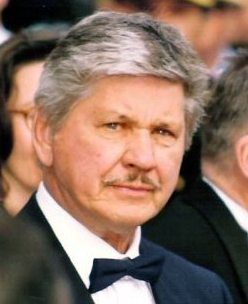
ACTOR · BORN 1921 · DIED 2003
Charles Bronson
- Born
- 3 November 1921, Ehrenfeld, Pennsylvania, USA
- Died
- 30 August 2003
- Known for
- C'era una volta il West (1968), Death Wish (1974), The Mechanic (1972), Hard Times (1975)
50 archived facts 7 topics 1 source Last reviewed Nov 2026
Charles Bronson (3 November 1921 – 30 August 2003) was an actor best known for C'era una volta il West, Death Wish and The Mechanic.
Charles Bronson over the years


50 Interesting Facts About Charles Bronson
Interesting Facts (5)
- #001
He rarely granted interviews, or commented on his own films. However, he plainly stated his unhappiness with Death Wish 3 (1985) at least a few times, and was especially angered when he discovered that Michael Winner filmed extremely gory shots with extras (as nameless thugs) when he was off-set.
- #002
Shared a room with Jack Klugman in a New York boarding house in the 1940s.
- #003
When he first signed with his long-time agent Paul Kohner, he told Kohner that if he made him a star, he'd buy Kohner a Rolls-Royce. True to his word, when he made it big he delivered a brand-new Rolls-Royce to the Kohner house.
- #004
He didn't watch his own films.
- #005
According to director Michael Winner, Bronson had a considerable amount of plastic surgery in the 1980s.
Production Story (12)
- #006
Was once considered to star in a film to be directed by Sam Peckinpah (in the latter part of his career) but he refused. His reason was "I ain't working with no drunk".
- #007
He was considered for the lead role in The Driver (1978), as Walter Hill had previously worked with him on Hard Times (1975). However, Bronson wasn't happy with how Hill had edited Jill Ireland's performance in the film and that was the end of that.
- #008
Sergio Leone once called him "the greatest actor I ever worked with". Leone had wanted Bronson for all of what became known as the "Man with No Name" trilogy, but Bronson turned him down each time. He turned down the lead role in A Fistful of Dollars (1964) after describing it as the "worst script I have ever seen"; he turned down the role of Col. Douglas Mortimer in For a Few Dollars More (1965) as he wasn't interested, and turned the role of Angel Eyes in The Good, the Bad and the Ugly (1966) because he was in England filming The Dirty Dozen (1967). Leone eventually cast him as Harmonicac in Once Upon a Time in the West (1968).
- #009
He was considered for the role of Snake Plissken in Escape from New York (1981), but director John Carpenter felt Bronson was too old and too tough, and cast Kurt Russell instead.
- #010
He was considered for Ernest Borgnine's role in The Wild Bunch (1969).
- #011
He was considered for Jeff Bridges' role in Blown Away (1994).
- #012
Billy Crystal claimed that Bronson was offered the role of Curly in City Slickers (1991), only to be rudely rebuffed because the character dies. Jack Palance went on to win an Oscar for the role.
- #013
He was considered for James Coburn's role in Firepower (1979). Rumor had it that Bronson turned the film down because the producers had refused to write in a role for his wife, Jill Ireland.
- #014
He was originally considered for Lee Marvin's role in The Delta Force (1986). This turned out to be Marvin's final role.
- #015
He was considered for the role of John McClane in Die Hard (1988) but was under contract with The Cannon Group, which refused to loan him out.
- #016
He turned down the role of the titular character's father in Billy Madison (1995).
- #017
He turned down the role of Pasquinel in Centennial (1978).
Behind the Scenes (5)
- #018
In 1954 on the Mexican set of Vera Cruz (1954), he and fellow cast member Ernest Borgnine--who were playing American gunfighters involved in the Mexican fight against the French--had some spare time on their hands and decided to go to a nearby town for cigarettes. They saddled up in costume, sidearms and all, and began riding to town. On the way they were spotted by a truck full of Mexican "federales"--national police--who mistook them for bandits and held them at gunpoint until their identities could be verified.
- #019
He rarely granted interviews, or commented on his own films. However, he plainly stated his unhappiness with Death Wish 3 (1985) at least a few times, and was especially angered when he discovered that Michael Winner filmed extremely gory shots with extras (as nameless thugs) when he was off-set.
- #020
Robert Mitchum did not get along with Bronson when they filmed Villa Rides (1968). He later said he could not understand why Bronson was famous.
- #021
Was by all accounts a very quiet and introspective collaborator, often sitting in a corner for much of a shoot and listening to a director's instructions and not saying a word until cameras were rolling. Don Siegel, who directed him in Telefon (1977), and Tom Gries, who directed him in Breakheart Pass (1975), both commented on how surprised they were to discover how thoroughly and completely prepared Bronson was when he came to work, as it didn't seem to fit his laid-back, taciturn image.
- #022
His personal handgun was a Wildey .475 Magnum hand cannon. He suggested its use in Death Wish 3 (1985).
Characters & Cast (6)
- #023
John Huston once summed him up as "a grenade with the pin pulled".
- #024
In two different movies he played a character who could read lips: The Mechanic (1972) & The Evil That Men Do (1984).
- #025
The claustrophobia he developed working with his father in the Pennsylvania coal mines was part of the character Danny he played in The Great Escape (1963). His real-life talent for art was also part of the character Velasquez he played in Heritage (1965).
- #026
Was once considered to star in a film to be directed by Sam Peckinpah (in the latter part of his career) but he refused. His reason was "I ain't working with no drunk".
- #027
Tennessee Williams wanted him to play the general in his play "The Red Devil Battery Sign" in 1975, but he wasn't interested.
- #028
He was considered for the lead role in The Driver (1978), as Walter Hill had previously worked with him on Hard Times (1975). However, Bronson wasn't happy with how Hill had edited Jill Ireland's performance in the film and that was the end of that.
Easter Eggs & References (3)
- #029
Bill Murray said he based his character in Lost in Translation (2003) on Bronson.
- #030
Japanese manga artist Buronson, famed for his "Fist of the Northstar" manga, took the name in honor of Bronson (his real name is Yoshiyuki Okamura) and sports a similar mustache.
- #031
The voice of the sarcastic store clerk on The Simpsons (1989) is based on him.
Career & Awards (4)
- #032
When he first signed with his long-time agent Paul Kohner, he told Kohner that if he made him a star, he'd buy Kohner a Rolls-Royce. True to his word, when he made it big he delivered a brand-new Rolls-Royce to the Kohner house.
- #033
He grew privately frustrated by the declining quality and range of roles over his career, being pigeonholed as a violent vigilante after the commercial success of Death Wish (1974). His own favorite of his vigilante movies was Once Upon a Time in the West (1968).
- #034
Was a successful artist and painter. He once had an anonymous showing of his artwork at a gallery in California (under his birth name of Buchinsky), and every piece of art sold within two weeks.
- #035
Was one of the first big stars to note the emerging new media that was arriving--video and laserdisc--and had a clause put in all his contracts that sales from these new formats should be included in his royalties.
Life & Family (15)
- #036
According to director Michael Winner, Bronson had a considerable amount of plastic surgery in the 1980s.
- #037
Owned homes in Europe, including Lithuania and Greece.
- #038
In the 1990s a lady whom he'd never met left him her estate worth well over $1 million. She was a big fan of his. Her family sued and he ended up settling with them out of court.
- #039
Although born in Pennsylvania, Bronson grew up speaking Russian and Lithuanian as his first language (his father was an immigrant, and his mother was the daughter of immigrants). He did not become truly fluent in English until he served in the military during World War II.
- #040
Growing up without much money for newer clothes, as a boy he often wore his older sister's hand-me-downs.
- #041
In 1943 he enlisted in the US Army Air Force and served in the 760th Flexible Gunnery Training Squadron. In 1945 he was a gunner on a Boeing B-29 Superfortress with the Guam-based 61st Bombardment Squadron of the 39th Bombardment Group, which conducted combat missions against the Japanese home islands. He flew 25 missions and received a Purple Heart for wounds received in battle.
- #042
Spoke fluent Russian, Lithuanian and Greek.
- #043
He was known as a very shy and private man who hated doing interviews and didn't like revealing personal information.
- #044
His parents were from Lithuania, where his father was a coal miner, and he grew up in a western Pennsylvania coal-mining town. Like all the men in his family he worked in the mines, but hated it and used a variety of means to escape it (including the military and, eventually, acting). His expertise with tunneling and working underground turned out to be quite helpful when making The Great Escape (1963) in the role of "Tunnel King" Velinski. However, even though the "tunnel" he was working in was a cutaway set, he could only stay in it for a few minutes at a time before he had to get up and leave. As a boy working in the mines, he was caught in a cave-in and almost died before he was finally rescued. Ever since that time he had had a deathly fear of enclosed spaces.
- #045
Was introduced to his second wife, Jill Ireland, by her then-husband David McCallum during the filming of The Great Escape (1963).
- #046
Once told Roger Ebert that getting drafted into World War II was one of the best things that happened to him. For the first time in his life he was well fed and well dressed, and it afforded him the opportunity to improve his English.
- #047
"I am not a Casper Milquetoast," he told "The Washington Post" in 1985, recalling the time he was visiting Rome and felt someone stick a gun in his side. "A guy in broken English asked me for money. I said, 'You give ME money.' He turned around and walked away.".
- #048
His father died when he was 10, and at 16 he followed his brothers into the coal mines in Scooptown, PA, to support the family. He was paid $1 per ton of coal and volunteered for perilous jobs because the pay was better.
- #049
Changed his stage name in the early 1950s in the midst of the McCarthy "Red Scare" at the suggestion of his agent, who was fearful that his last name (Buchinsky) would damage his career.
- #050
Although born in Pennsylvania, Bronson grew up speaking Russian and Lithuanian as his first language (his father was an immigrant, and his mother was the daughter of immigrants). He did not become truly fluent in English until he served in the military during World War II.
Related pages
- Empire of the Sun — Charles Bronson comes up in the facts on that page
- Richard Boone — Charles Bronson comes up in the facts on that page
- Sidney Lumet — Charles Bronson comes up in the facts on that page
Continue through the archive

Sources & editorial notes
Reference databases
- Wikipedia
- IMDb
Information from external sources is independently selected, consolidated and edited by Arka Evren. Sources are listed for verification and further reading. Encyclopedia text is used under its licence (CC BY-SA). How we work