
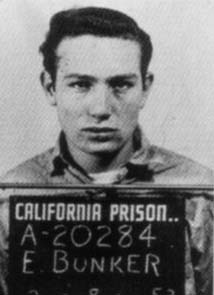
ACTOR · BORN 1933 · DIED 2005
Edward Bunker
- Born
- 31 December 1933
- Died
- 19 July 2005
- Known for
- Heat (1995), Reservoir Dogs (1992), Runaway Train (1985)
21 archived facts 5 topics 1 source Last reviewed Nov 2026
Edward Bunker (31 December 1933 – 19 July 2005) was an actor best known for Heat, Reservoir Dogs and Runaway Train.
21 Interesting Facts About Edward Bunker
Interesting Facts (4)
- #001
Edward Bunker formed a close friendship with the renowned director Michael Mann, and this friendship was reflected in the projects the two worked on together. Their relationship, which began while they worked together on the screenplay adaptation of Bunker's first novel "No Beast So Fierce," continued with Heat (1995). Bunker served as the film's prison technical adviser and taught actors such as Robert De Niro, Val Kilmer, Tom Sizemore, Kevin Gage and Dennis Haysbert to think, react and walk like former convicts. This experience contributed greatly to the film's realism and became the most concrete example of how Bunker's knowledge of the criminal world could be transferred to cinema. It was also announced that Bunker and Mann were working on a television series about gang life in prison, but the project was never realized.
- #002
One of the important turning points in Edward Bunker's life was meeting Danny Trejo at Folsom Prison in California in the late 1970s. This chance encounter paved the way for the two to form a close friendship and to work together in their film careers. Bunker and Trejo appeared together in films such as Runaway Train (1985), Heat (1995) and Animal Factory (2000). These collaborations helped both actors become identified with their performances in crime- and prison-themed productions. Bunker's prison experiences and Trejo's similar past strengthened the pair's on-screen chemistry and made these films even more compelling.
- #003
Edward Bunker's prison years introduced him to important figures of the criminal world, one of whom was Mexican Mafia leader Joe "Pegleg" Morgan. Bunker formed a close friendship with Morgan, and this relationship allowed him to understand the inner dynamics of the criminal world more deeply. Morgan's influence and leadership in the prison environment were reflected in Bunker's observations and works. This friendship contributed to Bunker being recognized not only as a criminal but also as an observer who analyzed the social structure of the criminal world.
- #004
Edward Bunker also formed a close friendship with the famous crime novelist James Ellroy, and this friendship led to a significant literary exchange. Ellroy praised Bunker's novel "No Beast So Fierce" as "the toughest and most realistic novel about a heist," and this praise strengthened Bunker's literary reputation. At one point Bunker reached an agreement with the French production company Davisfilm to adapt Ellroy's "Suicide Hill," the third book in the Lloyd Hopkins trilogy, for the screen. However, the project was never realized and the film was not made. This attempted collaboration remained a sign of the two writers' mutual respect and their shared passion for crime literature.
Characters & Cast (11)
- #005
Edward Bunker's life took a sharp turn with a bank robbery he committed at a young age. This crime drew him into a prison life that lasted for years and was decisive in shaping his identity. While the robbery cemented Bunker's reputation in the criminal world, it also laid the foundation for his future career as a writer and in cinema. This experience gave an authentic depth to his works and the characters he portrayed.
- #006
Bunker's life story was an inspiration for Heat (1995), one of the unforgettable productions in cinema history. Director Michael Mann created the character Nate, portrayed by Jon Voight, based on Bunker's personality and experiences. Nate was a figure in the film who, as a former convict, knew the prison environment and the dynamics of the criminal world. Bunker's serving as the basis for this character made an important contribution to the film's realism and was an indication of how his deep knowledge of the criminal world was reflected in cinema.
- #007
Edward Bunker's criminal career began at a very young age and developed at a surprising speed. At the age of three he smashed a neighbor's garden incinerator with a hammer, at four he set fire to a garage, and at fifteen he stabbed a fork into a boy's eye. These behavioral disorders in his early years quickly made him one of the youngest and most troubled inmates in the California penal system. By the time he was seventeen, he was sent to San Quentin Prison for a series of robberies, assaults and the stabbing of a guard, drawing attention as the youngest inmate there. This process completely changed Bunker's life and made him a permanent figure within the criminal world.
- #008
Edward Bunker formed a close friendship with the famous director Michael Mann, and this friendship was also reflected in the projects the two worked on together. This relationship, which began while they worked together on the screenplay adaptation of Bunker's first novel "No Beast So Fierce," continued with the film Heat (1995). Bunker served as a prison technical adviser on this film and taught actors such as Robert De Niro, Val Kilmer, Tom Sizemore, Kevin Gage and Dennis Haysbert how to think, react and walk like former convicts. This experience made a great contribution to the film's realism and was the most concrete example of how Bunker's knowledge of the criminal world could be transferred to cinema. In addition, it was announced that Bunker and Mann were working on a television series about gang life in prison, but this project was never realized.
- #009
One of the important turning points in Edward Bunker's life was meeting Danny Trejo at Folsom Prison in California in the late 1970s. This chance encounter paved the way for the two to form a close friendship and to work together in their film careers. Bunker and Trejo appeared together in films such as Runaway Train (1985), Heat (1995) and Animal Factory (2000). These collaborations contributed to both actors becoming identified with their performances in crime and prison-themed productions. Bunker's prison experiences and Trejo's similar past strengthened the pair's on-screen harmony and made these films even more impressive.
- #010
Edward Bunker's childhood also featured an unusual experience before he entered the criminal world. While still a small child, during the era when the famous media mogul William Randolph Hearst was alive, he had the opportunity to swim at Hearst Castle. This magnificent castle was Hearst's mansion in California, and Bunker's swimming there stands out as one of the unusual contradictions in his life. This experience, together with Bunker's later entry into the world of crime and punishment, became a symbol of the sharp transitions between wealth and poverty in his life.
- #011
One of the most important achievements in Edward Bunker's writing career was the adaptation of his first novel "No Beast So Fierce" to cinema. This novel formed the basis for the 1978 film Straight Time, and the film was awarded first prize at the San Mateo Video Festival in 1979. Straight Time drew attention for reflecting Bunker's prison and crime experiences authentically and was an important turning point in his writing career.
- #012
Edward Bunker's prison years introduced him to important names in the criminal world, and one of these names was Joe "Pegleg" Morgan, the leader of the Mexican Mafia. Bunker formed a close friendship with Morgan, and this relationship enabled him to understand the internal dynamics of the criminal world more deeply. Morgan's influence and leadership in the prison environment were reflected in Bunker's observations and works. This friendship contributed to Bunker being recognized not only as a criminal but also as an observer who analyzed the social structure of the criminal world.
- #013
Edward Bunker also formed a close friendship with the famous crime novelist James Ellroy, and this friendship led to an important interaction in the literary field. Ellroy praised Bunker's novel "No Beast So Fierce" as "the toughest and most realistic novel about a heist," and this praise strengthened Bunker's literary reputation. At one point, Bunker made a deal with the French production company Davisfilm for the screenplay adaptation of "Suicide Hill," the third book in Ellroy's Lloyd Hopkins trilogy. However, this project was never realized and the film was not made. This attempted collaboration remained an indication of the two writers' mutual respect and their shared passion for crime literature.
- #014
Edward Bunker's criminal career took him all the way to the FBI's Most Wanted list. This list features the most dangerous and sought-after criminals in the United States, and Bunker's inclusion on it laid bare the seriousness of the crimes he had committed. Yet the experience also paved the way for Bunker to move away from crime in later years and focus on his writing and film career.
- #015
In Edward Bunker's personal life, his marriage to his ex-wife Jennifer produced a son named Brendan. Brendan was born in 1994 and held an important place in Bunker's life. Despite Bunker's past in the criminal world, his relationship with his son revealed a different side of his life. Brendan's birth marked the beginning of a new chapter in Bunker's life and helped him confront his past and look to the future with more hope.
Deeper Meaning (1)
- #016
Edward Bunker's childhood, before he entered the criminal world, also included an unusual experience. While still a small child, during the era when the famous media magnate William Randolph Hearst was alive, he had the chance to swim at Hearst Castle. This magnificent castle was Hearst's mansion in California, and Bunker swimming there stands out as one of the extraordinary contradictions of his life. Along with his later entry into the world of crime and punishment, this experience became a symbol of the sharp transitions between wealth and poverty in his life.
Career & Awards (4)
- #017
Edward Bunker's life took a sharp turn when he committed a bank robbery at a young age. The crime drew him into years of prison life and became a defining force in shaping his identity. While the robbery cemented his reputation in the criminal world, it also laid the groundwork for his future careers as a writer and in cinema. That experience gave an authentic depth to his works and to the characters he portrayed.
- #018
Edward Bunker's criminal career began in childhood and developed at a startling pace. At the age of three he smashed a neighbor's garden incinerator with a hammer, at four he set fire to a garage, and at fifteen he stabbed a boy in the eye with a fork. These early behavioral problems quickly made him one of the youngest and most troubled inmates in the California penal system. By the time he was seventeen, a series of robberies, assaults and the stabbing of a guard sent him to San Quentin Prison, where he stood out as its youngest inmate. This period completely changed Bunker's life and made him a permanent figure in the criminal world.
- #019
One of the most important achievements of Edward Bunker's writing career was the film adaptation of his first novel, "No Beast So Fierce." The novel formed the basis for the 1978 film Straight Time, which was awarded first prize at the San Mateo Video Festival in 1979. Straight Time drew attention for authentically reflecting Bunker's prison and crime experiences and was an important turning point in his writing career.
- #020
Edward Bunker's criminal career took him all the way to the FBI's Most Wanted list. This list contains the most dangerous and sought-after criminals in the United States, and Bunker's inclusion on it laid bare the seriousness of the crimes he committed. Yet this experience also paved the way for Bunker to move away from crime in later years and focus on his writing and film career.
Life & Family (1)
- #021
In Edward Bunker's personal life, a son named Brendan was born from his marriage to his former wife Jennifer. Brendan was born in 1994 and held an important place in Bunker's life. Despite Bunker's past in the criminal world, his relationship with his son revealed a different side of his life. Brendan's birth marked the beginning of a new period in Bunker's life and helped him confront his past and look to the future with more hope.
Sources & editorial notes
Reference databases
- Wikipedia
- IMDb
Information from external sources is independently selected, consolidated and edited by Arka Evren. Sources are listed for verification and further reading. Encyclopedia text is used under its licence (CC BY-SA). How we work