ACTOR · BORN 1939
Harvey Keitel
- Born
- 13 May 1939, Brooklyn, New York City, New York, USA
- Known for
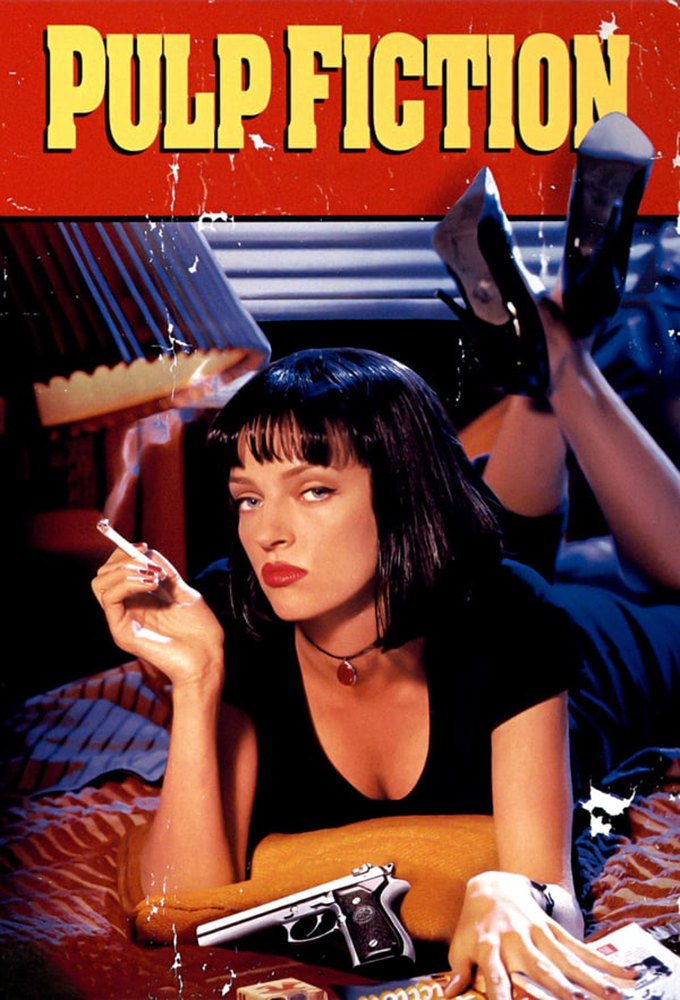
- Pulp Fiction (1994), Inglourious Basterds (2009), The Grand Budapest Hotel (2014), Reservoir Dogs (1992)
60 archived facts 6 topics 1 source Last reviewed Sep 2026
All facts (60)
- #001
During the early years of his acting career, Harvey Keitel worked as a court stenographer in New York for about ten years to make a living. The experience gave him a unique perspective on human nature and later helped him add depth to the complex characters he played. That difficult period ensured he never lost his passion for the stage.
- #002
Before he began acting, Keitel served for three years in the United States Marine Corps. In 1958 he was sent to Lebanon during a US military intervention aimed at quelling a major political crisis there. Military discipline and endurance played an important role in helping him handle demanding roles later in his career.
- #003
Throughout his career, Keitel showed a remarkable willingness to work with directors on their debut films. Starting with Martin Scorsese in 1968, he teamed up with figures such as Ridley Scott, Paul Schrader, James Toback and Quentin Tarantino on their first films, and in 1999 with Vietnamese-American director Tony Bui. That courage contributed to the emergence of many cult films that left their mark on cinema history.
- #004
Keitel had a long relationship with actress Lorraine Bracco from 1982 to 1993. Their daughter, Stella Keitel, was born in 1985. Stella followed in her father's footsteps and embarked on an acting career, continuing the Keitel family's presence in cinema.
- #005
Much like his close friend Robert De Niro, Harvey Keitel generally feels uneasy in interviews and often lets out a nervous laugh in those moments. A master actor who is highly impressive in front of the camera, he has a rather withdrawn and modest personality in his private life. This contrast forms an intriguing aspect of his artistic identity.
- #006
Keitel was cast as Captain Willard in Francis Ford Coppola's masterpiece Apocalypse Now (1979). However, only two weeks after filming began, he had to leave the project because of creative differences with the director. Martin Sheen replaced him and went down in cinema history with the role. Keitel's early departure is regarded as one of the turning points of his career.
- #007
Harvey Keitel appeared in seven different productions nominated for the Best Picture Oscar, a striking achievement in that regard. Taxi Driver (1976), Bugsy (1991), The Piano (1993), Pulp Fiction (1994), Inglourious Basterds (2009), The Grand Budapest Hotel (2014) and The Irishman (2019) are among these films. The variety on this list shows how sought-after an actor he was across different genres and eras.
- #008
Keitel, who often plays Italian-American characters on screen, is in fact the child of a Jewish family of Eastern European origin. His mother Miriam emigrated to the US from Romania, and his father Harry from Poland. This cultural heritage was an important element that added depth to his acting and allowed him to portray different ethnic identities convincingly.
- #009
Keitel met the love of his life, Daphna Kastner, on 11 September 2001 at the Toronto Film Festival. While that historic day was a turning point for the world, for them it heralded a new beginning. Three weeks later, on 7 October, they married in a private ceremony in Jerusalem, Israel. This quick and romantic decision was interpreted as a sign of the couple's commitment to each other.
- #010
In 2019, while filming See You Soon in Cluj-Napoca, Romania, Keitel took time for himself and visited Leordina, his mother's birthplace. His mother had lived in this commune until she was twelve. After touring the house where his mother grew up, Keitel also visited the Jewish cemetery where his ancestors are buried. The locals welcomed him with traditional food and drink, and he was even given a traditional outfit as a gift. After this meaningful visit, the authorities of Leordina declared Keitel an honorary citizen of the town.
- #011
Sylvester Stallone had considered Harvey Keitel as his first choice for the character Paulie in Rocky (1976). The role ultimately went to Burt Young, whose performance left an unforgettable mark on the film. Keitel's absence from the project remains one of cinema history's great 'what ifs'.
- #012
Harvey Keitel is the godfather of Max, the son of his close friend and frequent co-star Michael Madsen. This spiritual bond is a sign of the strong friendship between the two master actors. Keitel has been an important figure in the Madsen family's life.
- #013
Keitel completed his acting training at the prestigious Actors Studio in New York and earned a Bachelor of Fine Arts degree from New School University. During this time he developed his talents under the guidance of Dean James Lipton. The Actors Studio's method acting tradition formed the foundation of his career.
- #014
Harvey Keitel appeared in the crime comedy Get Shorty (1995) and its sequel Be Cool (2005), but he brought entirely different characters to life in the two films. In the first he played a hitman, while in the sequel he became a different figure of the criminal world. This highlights his broad acting range and the diversity of his characters.
- #015
Keitel, who worked as a salesman in a women's shoe store to make a living early in his acting career, developed his ability to communicate with people through this experience. Such ordinary jobs enriched his life off stage and gave his acting a realistic touch.
- #016
Since 2014, Keitel has revived his unforgettable Pulp Fiction (1994) character Winston Wolfe in a £40 million television advertising campaign made for the British insurance company Direct Line. The campaign both created nostalgia and introduced Keitel's iconic role to new generations. The commercials were widely praised and raised the brand's recognition.
- #017
Harvey Keitel was honoured with a lifetime achievement award at the 24th Istanbul Film Festival, held on 16 April 2005. The award was a sign that his long-standing contributions to the world of cinema were recognised internationally. Keitel also had the chance to meet his fans in Turkey on this occasion.
- #018
Keitel took on the role of a 'cleaner' twice in his career: Victor the Cleaner in Point of No Return (1993) and Winston 'The Wolf' Wolfe in Pulp Fiction (1994). Both characters were cool-headed professionals who solved problems in the criminal world. This similarity showed how well suited Keitel was to such roles.
- #019
In 1998, Entertainment Weekly included Harvey Keitel in its '25 Best Actors' list. This selection was proof that he was regarded as one of the most respected actors of the era. By appearing on such lists, Keitel reinforced his position at the peak of his career.
- #020
Harvey Keitel appeared in six Martin Scorsese films, making him one of the actors who worked most with the director. Who's That Knocking at My Door (1967), Mean Streets (1973), Alice Doesn't Live Here Anymore (1974), Taxi Driver (1976), The Last Temptation of Christ (1988) and The Irishman (2019) were the products of these collaborations. Although he starred in the first two films, he was not always billed first; this shows the importance he placed on being a team player.
- #021
In an interview with Larry King, Harvey Keitel said his favorite actor was Pauly Shore and that Shore's performance in Son in Law (1993) nearly made him consider quitting acting to make room for new talent. The remark reflected Keitel's sense of humor and his respect for his colleagues.
- #022
At Rebelfest in Toronto in 2005, Harvey Keitel presented the first Rebel Award to his close friend and colleague Michael Madsen for his contributions to independent cinema. The gesture symbolized the strong friendship between the two actors and their shared commitment to independent film.
- #023
Keitel appeared in five films selected for the National Film Registry by the Library of Congress as being 'culturally, historically, or aesthetically' significant: Mean Streets (1973), Taxi Driver (1976), Thelma & Louise (1991), Pulp Fiction (1994) and The Grand Budapest Hotel (2014). These films are counted among the masterpieces of American cinema, and Keitel's performances in them are part of his lasting legacy.
- #024
Harvey Keitel shared the same character with Dennis Farina in two different roles. At the end of Get Shorty (1995), he played the character Farina portrayed in the film-within-a-film. Keitel also took on the role of Jack Crawford, which Farina had created in Manhunter (1986), in the remake Red Dragon (2002). The coincidence is an interesting point of intersection in the two actors' careers.
- #025
After Mandy Patinkin left Criminal Minds, Harvey Keitel was the first choice to replace him. The role ultimately went to Joe Mantegna. Keitel's absence from the popular series remained a point of curiosity for fans.
- #026
Keitel was cast as Victor Ziegler in Eyes Wide Shut (1999), Stanley Kubrick's final film. He left the project, however, due to disagreements with Kubrick during shooting, and Sydney Pollack replaced him. The episode is remembered as one of the major turning points in Keitel's career.
- #027
After his service in the Marine Corps, Keitel attended New York University (NYU) and the Actors Studio to train as an actor. This training helped him develop his talent for the performing arts and laid the groundwork for his becoming a professional actor.
- #028
As a member of the Actors Studio, Harvey Keitel studied under legendary acting teachers such as Frank Corsaro, Lee Strasberg and Stella Adler. These figures were pioneers of method acting and played a major role in shaping Keitel's approach to acting.
- #029
Keitel resides in New York City and also owns a home in California. His life between the two coasts keeps him close to both the theater stage and Hollywood productions. New York represents his artistic roots, while California is where he maintains his presence in the film industry.
- #030
Harvey Keitel holds a unique place in cinema history for starring in the first feature films of four different directors. Martin Scorsese's Who's That Knocking at My Door (1967), Ridley Scott's The Duellists (1977), James Toback's Fingers (1978) and Quentin Tarantino's Reservoir Dogs (1992) marked the beginnings of these directors' careers and came to life with Keitel's support.
- #031
Keitel was considered for the role of Max in Sergio Leone's cult film Once Upon a Time in America (1984). The role ultimately went to James Woods. Woods's performance was widely praised in the film, but how Keitel would have interpreted the part remained a matter of curiosity.
- #032
Keitel auditioned for the role of Curly in City Slickers (1991), but the part went to Jack Palance. Palance won the Academy Award for Best Supporting Actor for the performance. Missing out on the role meant Keitel lost one of the biggest opportunities of his career.
- #033
As of 2017, Harvey Keitel had appeared in three films that won the Palme d'Or at the Cannes Film Festival: Taxi Driver (1976), The Piano (1993) and Pulp Fiction (1994). By winning cinema's most prestigious prize, these films reinforced Keitel's international reputation.
- #034
Harvey Keitel ranked 37th on Empire magazine's list of the '100 Greatest Movie Stars of All Time.' The ranking was an indication of his lasting impact on the film world and the breadth of his fan base.
- #035
Keitel had a son named Hudson, born in 2001, from his relationship with Lisa Karmazin, a potter in California. Hudson draws attention as a name continuing his father's artistic legacy.
- #036
In January 2008, Harvey Keitel played Jerry Springer in the premiere of Jerry Springer: The Opera at Carnegie Hall in New York. The performance showed that he is a versatile artist capable of ambitious work on the theater stage as well.
- #037
Keitel was considered for the role of Warden Norton in The Shawshank Redemption (1994), but the part went to Bob Gunton. Gunton's performance created an unforgettable villain in the film. Keitel's absence from the project remained one of cinema history's interesting 'what ifs.'.
- #038
Harvey Keitel's surname is pronounced 'ky-tel.' The pronunciation may be unusual for Turkish speakers, but it is a common name among the Jewish communities of Eastern Europe, where the Keitel family originated.
- #039
Keitel took part of his acting training at HB Studio in New York's Greenwich Village. The studio is a long-established institution that has produced many famous actors and strengthened Keitel's foundations in the performing arts.
- #040
Harvey Keitel is one of three actors to portray the character Jack Crawford in the Hannibal Lecter series. He brought the role to life in Red Dragon (2002), while Scott Glenn played the same character in The Silence of the Lambs (1991) and Dennis Farina in Manhunter (1986). The trio left their mark on cinema history by taking on the same role in different periods.
- #041
Harvey Keitel's family ran a cafeteria in Brighton Beach, Brooklyn. The business was the family's livelihood and gave the young Harvey an early introduction to working life. Life in the seaside neighborhood is an important part of his childhood memories.
- #042
Harvey Keitel starred in the first films of two iconic directors from different generations: Martin Scorsese's Who's That Knocking at My Door (1967) and Quentin Tarantino's Reservoir Dogs (1992). He also appeared in Mean Streets (1973) and Pulp Fiction (1994), the films that took these directors' careers to their peak. These collaborations formed one of the most important partnerships in cinema history.
- #043
In 1995, Empire magazine ranked Harvey Keitel 95th on its list of the 100 sexiest stars in film history. The selection shows that he drew attention not only for his acting but also for his charisma on screen.
- #044
Harvey Keitel has a son named Roman with his wife Daphna Kastner. Roman was born as the second child of the Keitel family and is growing up as a name who carries his father's artistic legacy.
- #045
Keitel graduated from Abraham Lincoln High School in Brooklyn in 1956 alongside the famous singer Neil Sedaka. The school was an institution that produced many successful names, and Keitel and Sedaka's paths crossed there.
- #046
Harvey Keitel runs his own film production company, The Goatsingers, together with his partner Peggy Gormley. The company allows him to develop projects not only as an actor but also as a producer.
- #047
Keitel is a graduate of the Stella Adler Acting Studio. Stella Adler was one of the leading figures of method acting and played an important role in shaping Keitel's approach to acting.
- #048
In 1992, Harvey Keitel played two opposite roles in the same year: a criminal pursuing a woman disguised as a nun in Sister Act, and a police lieutenant pursuing the criminals who raped a nun in Bad Lieutenant. These two performances laid bare his mastery of both villain and anti-hero roles.
- #049
Apocalypse Now (1979), from which he was fired, was based on Joseph Conrad's novel 'Heart of Darkness.' Although Keitel was not in that film, he appeared in The Duellists (1977), an adaptation of another Conrad story. The coincidence interestingly reveals his connection to Conrad's works.
- #050
Keitel was considered for the role of Jimmy Serrano in Midnight Run (1988), but the role was given to Dennis Farina. Farina's performance created an unforgettable gangster portrait in the film. Keitel's absence from the project was regarded as one of the missed opportunities of his career.
- #051
Keitel was considered for the role of Mr. Horowitz in Clueless (1995), but the producers found him too expensive for the part. The role ultimately went to Dan Hedaya. Keitel's absence from this teen comedy became a point of curiosity for his fans.
- #052
Harvey Keitel appeared alongside Scott Glenn in Puerto Vallarta Squeeze (2004). Glenn was the other actor who played the character Jack Crawford in the Hannibal Lecter series. The film was significant in that it brought two master actors together in the same project.
- #053
Before starting his film career, Keitel took the stage in Summer Stock and Off Broadway theater productions. These experiences helped him develop his acting skills and become more comfortable in front of the camera. He entered cinema with his first film, Who's That Knocking at My Door.
- #054
Keitel was considered for the role of Jack Horner in Boogie Nights (1997), but the role was given to Burt Reynolds. Reynolds won a Golden Globe for this performance and experienced an important turning point in his career. Keitel's absence from the project remained one of cinema history's interesting 'what ifs.'.
- #055
In The Bridge of San Luis Rey (2004), Keitel's singing voice was dubbed by the actor and baritone Emilio Gavira. This was due to the limited nature of Keitel's singing ability and added a professional touch to the film's musical scenes.
- #056
Keitel was considered for the role of Vicenzo in a Sydney Pollack film, but the role was given to Philip Bosco. This information shows that Keitel was evaluated for many important roles throughout his career but missed some of them.
- #057
The role of Dorothy Macha in Revolver (2005) was offered to Keitel, but he turned it down and it ultimately went to Ray Liotta. Liotta's performance drew attention in the film. Keitel's decision was regarded as an example of his selective approach in his career.
- #058
Keitel appeared on camera as a priest in It's Pat: The Movie (1994), but the scene was cut from the film's final version. This behind-the-scenes anecdote shows that he was also willing to take part in comedy.
- #059
Keitel was approached to play God in the film God Has a Rap Sheet (2003). The offer could have been one of the most unusual roles of his career, but little information about the project is available.
- #060
Keitel was considered for the role of Frank 'Cooch' Coutelle in Thunderheart (1992), but the role was given to Sam Shepard. Shepard's performance held an important place in the film. Keitel's absence from the project was recorded as one of the missed opportunities of his career.
Continue through the archive
Sources & editorial notes
Reference databases
Sources for the entries on this page
- IMDb IMDb
Information from external sources is independently selected, consolidated and edited by Arka Evren. Sources are listed for verification and further reading. Encyclopedia text is used under its licence (CC BY-SA). How we work