

ACTOR · BORN 1909 · DIED 2001
Jack Gwillim
- Born
- 15 December 1909
- Died
- 2 July 2001
- Known for
- Clash of the Titans (1981), The Battle of the River Plate (1956), The One That Got Away (1957), Sword of Sherwood Forest (1960)
24 archived facts 5 topics 1 source Last reviewed Nov 2026
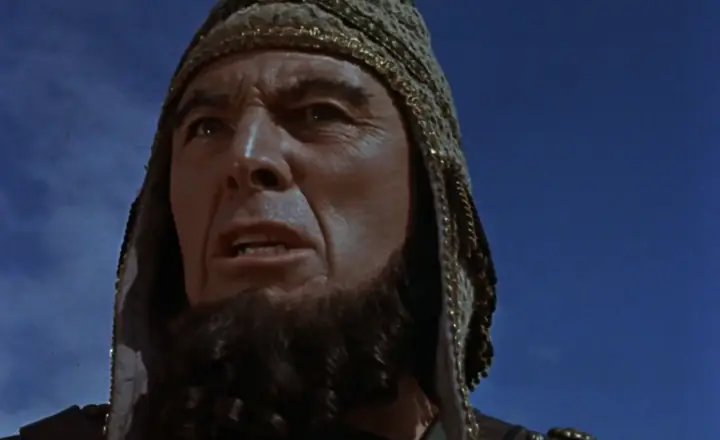
Jack Gwillim (15 December 1909 – 2 July 2001) was an actor best known for Clash of the Titans, The Battle of the River Plate and The One That Got Away.
24 Interesting Facts About Jack Gwillim
Interesting Facts (3)
- #001
Before beginning his acting career, Jack Gwillim served in the Royal Navy for a full twenty years with the rank of Commander. This long military past not only gave him a disciplined way of life but also lent deep credibility to the soldiers and authority figures he portrayed on stage and screen. His naval experience helped him develop an acting identity associated with his upright bearing and resolute gaze. As an actor with a military background, he thus became a frequent choice for historical and military-themed productions.
Jack Gwillim: a sceneImage: Wikimedia Commons · Columbia Pictures, Public domain - #002
Jack Gwillim was a soldier who served actively during the Second World War. Stationed in Hong Kong and China at the start of the war, Gwillim served on various fronts during this period. His wartime experiences left deep marks on his life and lent realism to the soldier characters he would later portray. His distinguished service during the war allowed him to advance in his military career and rise to the rank of Commander. This period played an important role in both his personal and professional development.
- #003
Jack Gwillim received his acting training at the Central School in London. The school is known as one of Britain's oldest and most respected acting schools and has helped train many famous actors. With the training he received there, Gwillim gained a solid foundation in the performing arts, and this education was an important part of his career success. His experiences at the Central School helped him establish himself in the worlds of theatre and film.
Behind the Scenes (1)
- #004
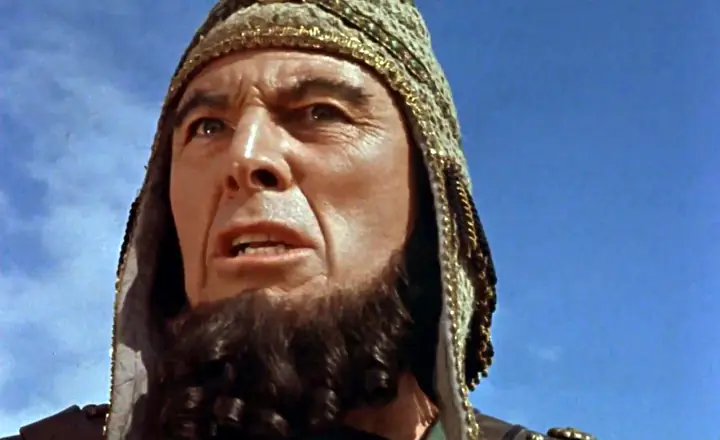
When Jack Gwillim played dignified and authoritative figures on screen, he was in fact reflecting his own personality. The celebrated director Michael Powell described him as "six foot two, a man of few words, courteous, and every inch a Royal Navy man." Powell noted that during the filming of "Pursuit of the Graf Spee," Gwillim's presence on set had a deterrent effect on the other actors, even making them mind their behavior. Saying that a single glance from Gwillim's grey eyes made the actors straighten their spines, Powell emphasized that this was a sign of his natural authority.
Jack Gwillim: a sceneImage: Wikimedia Commons · Columbia Pictures, CC0
Characters & Cast (10)
- #005
Jack Gwillim was a versatile athlete who drew attention not only for his presence on stage but also for his achievements on the sports field. He was athletic enough to play rugby in the Royal Navy, and during his service in the Mediterranean he also made a name for himself in the boxing ring. By winning the undefeated heavyweight championship in both the Army and Navy boxing championships, he displayed superior discipline and strength in his military career as well. This sporting background also formed a natural foundation for the authoritative and powerful characters he would later portray.
- #006
Before beginning his acting career, Jack Gwillim served in the Royal Navy for a full twenty years with the rank of Commander. This long military past not only gave him a disciplined way of life; it also lent deep credibility to the soldiers and authority figures he portrayed on stage and screen. His experiences in the Navy helped him develop an acting identity identified with his upright bearing and resolute gaze. For this reason, as an actor of military origin, he became a name frequently sought after for historical and military-themed productions.
- #007
When Jack Gwillim portrayed respectable and authoritarian figures on screen, he was in fact reflecting his own personality. The famous director Michael Powell described him as "six foot two, a man of few words, courteous, and every inch a Royal Navy man." Powell stated that during the shooting of "Pursuit of the Graf Spee," Gwillim's presence on set had an intimidating effect on the other actors, even causing them to mind their behavior. Saying that a single glance from Gwillim's gray eyes made the actors straighten their spines, Powell emphasized that this was an indication of his natural authority.
- #008
With the outbreak of the Second World War, Jack Gwillim saw active service as an officer stationed in Hong Kong and China. After the war, in 1946, he was forced to retire from the military due to arthritis. At that time he held the rank of Commander, and when he was promoted to that rank he carried the title of the youngest commander in the military. This early retirement marked the beginning of a new period in his life and paved the way for him to step into an acting career. His military past had given him discipline and leadership qualities; these traits would later add depth to the characters he portrayed.
- #009
Jack Gwillim's final performance in his theater career came with the play "On Borrowed Time," staged in 1995. In this special play, not only he but many members of his family took the stage: his two children, his son-in-law, two grandchildren, and even the family dogs appeared. For Gwillim this was both a farewell and a joy of interweaving his artistic life with his family. The play put an emotional end to his long and successful career while also revealing the strength of family bonds.
- #010
Jack Gwillim began his military career at a very early age, joining the Royal Navy when he was only 17. This decision, made at such a young age, was an important turning point that determined the course of his life. His training and experiences in the Navy gave him a disciplined way of life and a strong character. This early start laid the foundation for the successes he would later achieve in both the military and artistic fields. These experiences gained at a young age also lent a natural air to the authoritarian figures he portrayed on stage and screen.
- #011
Jack Gwillim was a soldier who saw active service during the Second World War. Stationed in Hong Kong and China at the start of the war, Gwillim served on various fronts during this period. His war experiences left deep marks on his life, and these experiences added realism to the soldier characters he would later portray. His outstanding services during the war enabled him to advance in his military career and rise to the rank of Commander. This period played an important role in both his personal and professional development.
- #012
Jack Gwillim received his acting training at the Central School in London. This school is known as one of Britain's most established and respected acting schools and has contributed to the training of many famous actors. With the education he received there, Gwillim acquired a solid foundation in the performing arts, and this training became an important part of his career success. His experiences at the Central School helped him establish a place for himself in the worlds of theatre and cinema.
- #013
Throughout his acting career, Jack Gwillim formed close friendships with important actors of the period such as Harry Andrews and Anthony Quayle. These friendships held an important place in both his personal and professional life. Taking part in various projects with Andrews and Quayle, Gwillim thereby built a strong network in the worlds of theatre and cinema. These friendships also made positive contributions to his artistic life and helped him attain a respected position among his colleagues.
- #014
From his marriage to Peggy Bollard, Jack Gwillim had two children named Sarah-Jane Gwillim and David Gwillim. These children were at the center of his family life, and Gwillim took great care in raising them. Sarah-Jane and David followed in their father's footsteps and turned to acting careers, achieving their own successes in the worlds of theatre and cinema. Gwillim's family always played an important role in his life, and this bond added depth to his artistic life as well.
Career & Awards (6)
- #015
With the outbreak of the Second World War, Jack Gwillim saw active service as an officer stationed in Hong Kong and China. After the war, in 1946, he was forced to retire from the military because of arthritis. He held the rank of Commander at the time, and when he was promoted to that rank he was the youngest commander in the service. This early retirement marked the beginning of a new chapter in his life and paved the way for his entry into acting. His military past had given him discipline and leadership qualities, traits that would add depth to the characters he later portrayed.
- #016
Jack Gwillim began his military career at a very early age, joining the Royal Navy when he was just 17. This decision, taken so young, was an important turning point that determined the course of his life. His training and experiences in the Navy gave him a disciplined way of life and a strong character. This early start laid the foundation for the successes he would later achieve in both the military and artistic fields. The experiences he gained at a young age also lent a natural air to the authoritative figures he portrayed on stage and screen.
- #017
Over the course of his film career, Jack Gwillim appeared in three major productions that won the Academy Award for Best Picture. These are "Lawrence of Arabia" (1962), "A Man for All Seasons" (1966) and "Patton" (1970). Usually playing military or authoritative figures in all three films, Gwillim won the appreciation of both critics and audiences.
- #018
In 1977, Jack Gwillim was nominated for a Joseph Jefferson Award for his performance in the play "Too Good To Be True," staged at the Academy Festival Theatre in Chicago. The award carried considerable prestige in the Chicago theatre community, and Gwillim's nomination in the Supporting Actor category was a sign of his success in his theatre career. The nomination proved what a talented actor he was not only in film and television but also on the stage. With his performance in this play, Gwillim won the appreciation of audiences and critics.
- #019
In 1976, Jack Gwillim was honored with the Best Actor award by the New Jersey Drama Critics Association. He won the award for his outstanding performance in the play "The Heiress," staged at the McCarter Theatre in New Jersey. The award is regarded as one of the most important achievements of his theatre career and shows that his acting talent was recognized by the theatre community as well. With his role in this play, Gwillim gave audiences an unforgettable performance and wrote his name into theatre history.
- #020
Throughout his acting career, Jack Gwillim formed close friendships with important actors of the period such as Harry Andrews and Anthony Quayle. These friendships held an important place in both his personal and professional life. Appearing in various projects alongside Andrews and Quayle, Gwillim thereby built a strong network in the worlds of theatre and film. These friendships also contributed positively to his artistic life and helped him attain a respected position among his colleagues.
Life & Family (4)
- #021
Jack Gwillim was a versatile athlete whose presence was felt not only on stage but also on the sports field. Athletic enough to play rugby in the Royal Navy, he also made a name for himself in the boxing ring while serving in the Mediterranean. He won the Army and Navy boxing championship as an undefeated heavyweight, showing exceptional discipline and strength in his military career as well. This sporting background provided a natural foundation for the authoritative, powerful characters he would later portray.
- #022
Jack Gwillim's final performance in his theatre career came with the play "On Borrowed Time," staged in 1995. In this special production, not only he but many members of his family took the stage: his two children, his son-in-law, two grandchildren and even the family dogs appeared. For Gwillim this was both a farewell and a joy, allowing him to weave his artistic life together with his family. The play put an emotional full stop to his long and successful career while also revealing the strength of family bonds.
- #023
Jack Gwillim had a son named Jaxon Duff Gwillim with Olivia Selby. This child held an important place in his family life, and Gwillim took on the role of father with the same seriousness as acting. Jaxon Duff Gwillim was influenced by his father's artistic and military background and charted his own path. Gwillim's family was always an important source of support in his life, and this bond was reflected positively in his career achievements.
- #024
From his marriage to Peggy Bollard, Jack Gwillim had two children, Sarah-Jane Gwillim and David Gwillim. These children were at the center of his family life, and Gwillim took great care in raising them. Sarah-Jane and David followed in their father's footsteps and turned to acting careers, achieving their own successes in the worlds of theatre and film. Gwillim's family always played an important role in his life, and this bond added depth to his artistic life.
Sources & editorial notes
Reference databases
- Wikipedia
- IMDb
Information from external sources is independently selected, consolidated and edited by Arka Evren. Sources are listed for verification and further reading. Encyclopedia text is used under its licence (CC BY-SA). How we work