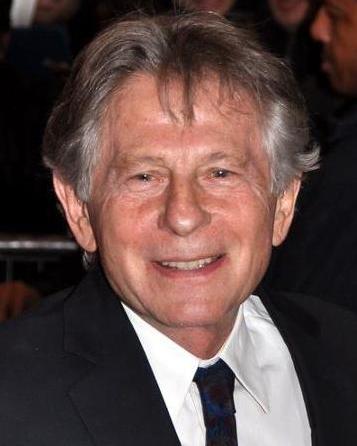
DIRECTOR · BORN 1933
Roman Polanski
- Born
- 18 August 1933, Paris, France
- Known for
- Chinatown (1974), Rush Hour 3 (2007), Carnage (2011), An Officer and a Spy (2019)
51 archived facts 5 topics 1 source Last reviewed Sep 2026
All facts (51)
- #001
After Roman Polanski fled the United States in 1978, Judge Laurence J. Rittenband, who presided over his case, vowed to put him back in prison. Although the judge died in 1989, the director still cannot return to the US, because he knows he would be arrested immediately if he did. This situation deeply affected his career and personal life and led him to continue making his films in Europe.
- #002
In 1977, Roman Polanski accepted a plea deal with prosecutors on charges of sodomy and unlawful sexual intercourse with a minor, a 13-year-old girl, and served time in a California prison. However, prison officials released him earlier than the sentence envisioned by Judge Laurence J. Rittenband. The judge then wanted to summon Polanski back to court for additional punishment; to avoid a second arrest and prison term, Polanski fled to Europe in 1978. In 2013, his former victim, Samantha Geimer (then 50 years old and long since having forgiven him), spoke publicly about the case in support of Polanski.
- #003
In 1969, while Polanski was out of town for work, his wife, actress Sharon Tate, was brutally murdered by members of Charles Manson's cult family. Manson only ordered the murders and was not at the scene; Tate was eight months pregnant with Polanski's first child. Polanski has often said that his greatest regret in life is that he was not at home the night his wife and four others were killed. This tragedy left deep marks on both his personal and his artistic life.
- #004
Roman Polanski has not returned to the United States since 1978. This radically affected his Hollywood career and his personal life; he continued to make his films in Europe and could not attend award ceremonies in the US. Even so, he continued his work as an internationally respected director.
- #005
Roman Polanski and his father were Holocaust survivors. His father was Jewish; his mother, who was half-Jewish, was killed at Auschwitz, and he was raised as a Roman Catholic. This tragic family history deeply shaped Polanski's worldview and art, leading him to address Holocaust themes, especially in films such as 'The Pianist'.
- #006
Shortly before her death, Sharon Tate had given Polanski a copy of Thomas Hardy's 1891 novel 'Tess of the d'Urbervilles'. Polanski planned to film the novel with her, but Tate's tragic death prevented that plan. Years later, when he made 'Tess' in 1979, he dedicated it to Sharon. The film is regarded as an expression of Polanski's love for his wife and of his loss.
- #007
Polanski's flight from the United States at the end of the 1970s led to commentary that he would never again be able to make a film in America. Interestingly, however, he had made only two films in the US before his arrest: 'Rosemary's Baby' (1968) and 'Chinatown' (1974). His other English-language films were shot in England, and his later ones in Central Europe. This shows his flexibility as an international director.
- #008
In the late 1960s and early 1970s, Polanski was frequently mocked in the Hollywood industry with the stereotype of the short, despotic European director. Combined with his authoritarian directing style and his European identity, this stereotype affected his image in the industry. Even so, this perception could not overshadow his talent and achievements.
- #009
Polanski has two children with his wife Emmanuelle Seigner: Morgane Polanski (born 20 January 1993) and Elvis Polanski (born 12 April 1998). Morgane appeared in small roles in some of her father's films, while Elvis leads a more private life. The family has been an important balancing element in Polanski's personal life.
- #010
On 26 September 2009, Polanski was detained at Zurich Airport as he was about to enter Switzerland. This took place just 1 year and 7 months after the documentary 'Roman Polanski: Wanted and Desired' (2008) was shown at the Sundance Film Festival. The documentary questioned the legality of Polanski's 1977-1978 Los Angeles trial, and so the documentary is thought to have been the real reason for the new arrest warrant. Polanski and his lawyers discussed this connection for a long time.
- #011
Polanski began publicly dating Nastassja Kinski in 1979, after Kinski turned 18. However, the relationship is believed to have actually begun in 1976, when Kinski was 15. This relationship inflamed the debate over Polanski's relationships with young women. Even so, the two managed to remain friends years later.
- #012
Polanski won the Academy Award for Best Director for 'The Pianist' (2002), but he was able to receive the award about six months after the ceremony. The reason was the arrest warrant issued against him after he fled the US following his 1978 conviction for unlawful sexual intercourse with a minor; for this reason he could not attend the ceremony. His friend Harrison Ford flew to the Deauville American Film Festival in France on 11 September 2003 to present the award to him.
- #013
In March 2003, Polanski won the Best Director Oscar for 'The Pianist' at the age of 69 years and 7 months, making him the oldest person to have won the award at that time. The record had previously belonged to George Cukor, who won at 65 with 'My Fair Lady' (1964). Polanski's record was broken in February 2005 when Clint Eastwood won at 74 years and 9 months with 'Million Dollar Baby' (2004).
- #014
Among Polanski's favorite films are 'Odd Man Out' (1947), 'Hamlet' (1948), 'Citizen Kane' (1941) and '8½' (1963). These films show his taste in cinema and the directors who influenced him. Figures such as Orson Welles and Federico Fellini in particular are known to have had a deep influence on him.
- #015
At its meeting on 1 May 2018, the Board of Governors of the Academy of Motion Picture Arts and Sciences decided to expel Roman Polanski from membership. The decision was the result of long-running controversy over Polanski's 1977 sexual assault charge and his flight. With this step the Academy aimed to protect its institutional reputation, but the decision drew mixed reactions in the film world.
- #016
Polanski had agreed to direct 'The Double', a modern comedy to be adapted from Fyodor Dostoevsky's novel 'The Double'. John Travolta was to be paid 17 million dollars for the lead role; Isabelle Adjani, John Goodman and Jean Reno were also in the cast. Shooting was planned to begin in June 1996 in Paris; Lili Fini Zanuck and Todd Black were to produce, Jeremy Leven had written the screenplay, and figures such as cinematographer Robert Richardson were also involved in the project. However, the project did not come together for unknown reasons.
- #017
In February 2007 it was announced that Polanski would direct a 130 million dollar adaptation of Robert Harris's 2003 novel 'Pompeii'. There were rumors that Orlando Bloom and Scarlett Johansson would star. However, in September 2007 Polanski left the project because of the threat of a Screen Actors Guild strike. This departure harmed the film's production and the project was shelved.
- #018
On 30 October 2017, Polanski opened a month-long retrospective as guest of honor at the prestigious cinema museum La Cinémathèque Française in Paris. However, about 40 protesters tried to disrupt the event; two women with 'Very Important Pedocriminal' written on their upper bodies shouted 'No honor for rapists'. Polanski was at the time presenting his latest film, 'Based on a True Story' (2017). The protesters were behind a petition that collected more than 27,000 signatures.
- #019
In 2017 Polanski was appointed president of the César Awards, but he withdrew from the role because of public protests in France. In selecting him for this honorary role, the Académie des Arts et Techniques du Cinéma had stated: 'There are many words to describe the artist, filmmaker, producer, screenwriter, actor, director - Roman Polanski. But there is only one word to express our admiration and fascination: Thank you, Mr. President.' However, Polanski stepped down from the role, especially after the reaction of family and children's rights associations.
- #020
Over the course of his career, Polanski directed four actors who were nominated for Oscars: Ruth Gordon, Jack Nicholson, Faye Dunaway and Adrien Brody. Gordon won the Best Supporting Actress Oscar for 'Rosemary's Baby', and Brody won the Best Actor Oscar for 'The Pianist'. Nicholson and Dunaway did not win the awards in the categories for which they were nominated. These achievements show Polanski's mastery of directing actors.
- #021
Six of Roman Polanski's films are included in the prestigious Criterion Collection: 'Knife in the Water' (1962), 'Repulsion' (1965), 'Cul-de-sac' (1966), 'Rosemary's Baby' (1968), 'Macbeth' (1971) and 'Tess' (1979). The collection selects the most important and influential films in cinema history, and Polanski's strong presence on that list shows how valuable his cinematic legacy is.
- #022
According to Polanski's autobiography, producer Robert Evans initially wanted him to direct 'Sliver' (1993). Because Polanski could not return to the United States, Evans planned for a second-unit director to shoot some scenes in New York while Polanski directed the rest of the film in Paris. The plan shows that Polanski's ban on entering the US was met with attempts at creative solutions.
- #023
Polanski was introduced to Emmanuelle Seigner in 1985 by casting director Dominique Besnehard. Seigner was 19 at the time and Polanski was 52. The age difference caused controversy at the start of their relationship, but the couple went on to have a long marriage and two children.
- #024
Roman Polanski was born in Paris; his father, Ryszard Liebling (who later took the surname Polanski), was a painter and plastics manufacturer, and his mother, Bula (née Katz-Przedborska), was born in Russia. His father was a Polish Jew; his mother's father was Jewish and her mother was a Roman Catholic, and she was raised Catholic. This multicultural and complex family background influenced Polanski's sense of identity and his art.
- #025
In 1976 Polanski served as one of the judges at the Miss Universe beauty pageant. It is an interesting detail showing that he was part of popular culture beyond the world of cinema. The pageant was held in the United States that year, and Polanski's participation reveals his connections with the famous names of the era.
- #026
Polanski was to receive a Lifetime Achievement Award at the 67th Locarno Film Festival in 2014, but he declined the award after Swiss politicians and newspapers accused him of being a pedophile. Members of the Swiss Christian Democratic party called for a boycott of the ceremony, and Ticino politician Fiorenzo Dadò described Polanski on Facebook as 'a pedophile who drugged and raped a girl and is now being welcomed with great honours.' As a result of this pressure, Polanski did not accept the award.
- #027
In November 1989 Warner Bros. offered Polanski the chance to adapt and direct Mikhail A. Bulgakov's novel 'The Master and Margarita'. The project was shelved, however, because of budget concerns and the studio's belief that the subject had lost its relevance with the fall of the Berlin Wall. Polanski described this screenplay as the best he had ever adapted, showing how important the project was to him.
- #028
Polanski had a relationship with singer and actress Michelle Phillips from February to April 1969. The relationship was part of his private life at the time, but because it took place while he was married to Sharon Tate it led to controversy over his infidelity. Phillips was known as a member of the group The Mamas & the Papas.
- #029
Polanski was offered the chance to direct the 1976 film 'King Kong' but turned it down. The decision shows his tendency to turn toward more personal and artistic projects rather than commercial productions. The film he declined was later directed by John Guillermin and was a box-office success.
- #030
In 1991 Polanski served as president of the Official Competition jury at the 44th Cannes International Film Festival. This prestigious role shows his standing and authority in the world of cinema. As jury president he led the team that determined the festival's Palme d'Or.
- #031
In 1969 Polanski was writing a screenplay for a film about the Donner Party and was also working on a biography of the Italian violinist and composer Niccolò Paganini. Both projects were abandoned before completion. They show Polanski's interest in historical and artistic subjects, but the personal tragedies of that period caused the works to be left unfinished.
- #032
In September 2011 Polanski returned to Zurich, the city where he had been arrested in 2009, and accepted the Zurich International Film Festival's Lifetime Achievement Award. It was, in a sense, a rehabilitation after his legal troubles in Switzerland. The ceremony amounted to a tribute to Polanski's career.
- #033
Two films directed by Polanski were selected for the National Film Registry by the Library of Congress as being 'culturally, historically or aesthetically' significant: 'Rosemary's Baby' (1968) and 'Chinatown' (1974). The selection registers the value these films hold for American cinema heritage. Both are considered classics of their genres.
- #034
Roman and Emmanuelle's daughter Morgane Polanski was born on 20 January 1993, which was Roman's wedding anniversary with Sharon Tate. The coincidence may carry emotional meaning for Polanski, since Sharon's loss left a deep mark on his life. Morgane appeared in small roles in some of her father's films.
- #035
Polanski set a record as the most awarded director in the Best Director category at the César Awards, France's national film prize. He won the award five times: for 'Tess' (1979), 'The Pianist' (2002), 'The Ghost Writer' (2010), 'Venus in Fur' (2013) and 'J'accuse' (2019). The achievement shows his influence on French cinema and his consistency over a long career.
- #036
Polanski sued Vanity Fair over a 2002 article claiming that, on his way to Sharon Tate's funeral, he seduced a woman at Elaine's restaurant in New York. Mia Farrow defended Polanski in the libel case, testifying at the London High Court that he could focus on nothing but his wife's murder. The jury ruled in Polanski's favour, and the magazine was ordered to pay $87,700 in damages plus a substantial portion of Polanski's legal costs.
- #037
Polanski was portrayed by actor Marek Probosz in the 2004 television film 'Helter Skelter'. The film deals with the murders committed by Charles Manson and his family; Polanski's character features in the events of the night Sharon Tate was killed. Probosz's performance brought Polanski's situation at the time to the screen.
- #038
Polanski's two most expensive productions (adjusted for inflation) were 'Pirates' (1986) and 'Oliver Twist' (2005). Ironically, these films were also his biggest commercial failures and received mixed reviews from critics. The situation shows that big-budget projects do not always bring success.
- #039
Polanski's late wife Sharon Tate and his former girlfriend Nastassja Kinski shared the same birthday: 24 January. The coincidence that two important women in Polanski's life were born on the same day may have created an emotional bond for him. Both women left deep marks on his life.
- #040
Entertainment Weekly named Polanski the 26th greatest director of all time. The ranking shows his place and influence in cinema history. Over his career Polanski achieved both critical and commercial success, though his personal scandals always overshadowed his legacy.
- #041
In 1984, Polanski published his autobiography, 'Roman by Polanski'. In the book, he described girls as 'sexy, lively and completely human' and said he appreciated Gstaad, Switzerland, because it was 'full of hundreds of fresh-faced young girls of every nationality'. These statements sparked debate and drew criticism over his attitude toward women.
- #042
Polanski directed three films nominated for the Best Picture Oscar: 'Chinatown' (1974), 'Tess' (1979) and 'The Pianist' (2002). These films represent the peak of his career; though each was made in a different genre and period, they share strong narratives and unforgettable characters. 'The Pianist' bears traces of Polanski's Holocaust experiences.
- #043
In 1965, Polanski had a brief relationship with actress Jill St. John. St. John was a well-known name in Hollywood at the time; the relationship showed Polanski's connections to film circles. The relationship did not last long, however, and Polanski later married Sharon Tate.
- #044
Polanski was portrayed by actor Rafal Zawierucha in Quentin Tarantino's 'Once Upon a Time... in Hollywood' (2019). The film deals with 1969 Hollywood and the murders committed by the Manson family; Polanski's character is shown through his relationship with Sharon Tate and his life at the time. Zawierucha's performance reflected Polanski's image of that period.
- #045
At the time Sharon Tate was murdered, Polanski was in London scouting locations for 'The Day of the Dolphin', an adaptation of Robert Merle's novel 'Un animal doué de raison'. The film was ultimately directed by Mike Nichols in 1973. In 1977, when he was arrested for unlawful sexual intercourse with a minor, he was working on an adaptation of Lawrence Sanders's novel 'The First Deadly Sin' for Columbia Pictures; after his arrest, Columbia fired him from the project. The film was later made with another director.
- #046
In 1996, Polanski served as president of the 'Official Competition' jury at the 53rd Venice International Film Festival. This role reinforced his standing in European cinema. As jury president, he led the team that determined the festival's top prize, the Golden Lion.
- #047
The character played by Jeroen Krabbé in the 2005 film 'Snuff-Movie' — a European film director whose pregnant wife was killed by a hippie cult in the 1960s — appears to have been largely based on Polanski. The character reflects the tragedy Polanski experienced and his subsequent career. The film drew attention as a horror-genre production.
- #048
In 2003, Polanski served as president of the 'Official Competition' jury at the 29th Deauville American Film Festival. The festival was an important event highlighting American independent cinema. Polanski's jury presidency showed that he maintained his connection to American cinema.
- #049
Polanski was the son-in-law of Doris Tate, Sharon Tate's mother. After Sharon's death, Doris Tate became an active activist to keep her daughter's memory alive and to advocate for the rights of crime victims. Although her relationship with Polanski was difficult at times, family ties continued.
- #050
Polanski was the brother-in-law of Sharon Tate's sisters Debra Tate and Patricia Tate. After Sharon's death, Debra Tate in particular kept in contact with Polanski and maintained family ties. Patricia Tate appeared in public less often.
- #051
Polanski set a record by winning the César Award for Best Director five times: 'Tess' (1979), 'The Pianist' (2002), 'The Ghost Writer' (2010), 'Venus in Fur' (2013) and 'An Officer and a Spy' (2019). This achievement shows his influence in French cinema and his consistency over a long career. No other director has won the award this many times.
Sources & editorial notes
Reference databases
Sources for the entries on this page
- IMDb IMDb
Information from external sources is independently selected, consolidated and edited by Arka Evren. Sources are listed for verification and further reading. Encyclopedia text is used under its licence (CC BY-SA). How we work