
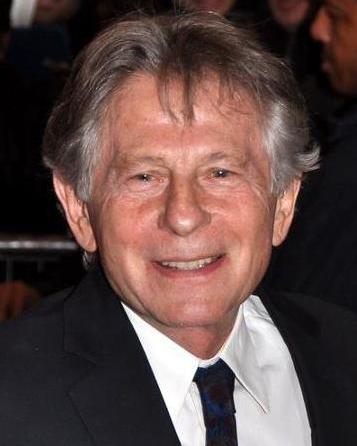
DIRECTOR · BORN 1933
Roman Polanski
- Born
- 18 August 1933, Paris, France
- Known for
- The Pianist (2002), Le Locataire (1976), Dance of the Vampires (1967), Nóz w wodzie (1962)
78 archived facts 7 topics 1 source Last reviewed Nov 2026
Roman Polanski (born 18 August 1933) is a director best known for The Pianist, Le Locataire and Dance of the Vampires.
Roman Polanski over the years


78 Interesting Facts About Roman Polanski
Interesting Facts (14)
- #001
Convicted of sodomy and statutory rape of a 13-year-old girl after plea bargaining, Polanski served time in prison in California, but prison officials released him sooner than judge Laurence J. Rittenband's original sentence had intended. The judge then sought to have Polanski brought to court again for further sentencing. Rather than do so, Polanski fled to Europe to avoid and escape a second arrest and incarceration. In 2013, his former victim, Samantha Geimer - who was 50 years old and had long ago forgiven him for the crime - detailed her story in her autobiography "The Girl" (2013).
- #002
In 1969, while Polanski was out of town on business, his wife, actress Sharon Tate, was brutally murdered by members of Charles Manson's cult family, though Manson only ordered the killing and was not present during the murders. Tate was eight months pregnant with Polanski's first child at the time. Polanski has said that his life's biggest regret was not being present at the house the night his wife and four others were murdered.
- #003
- #004
- #005
- #006
- #007
In 1977, Roman Polanski took a plea deal on charges of sodomy and unlawful sexual intercourse with a 13-year-old girl and served time in a California prison, but was released earlier than Judge Laurence J. Rittenband had intended; when the judge sought to bring him back to court for further punishment, Polanski fled to Europe in 1978 to avoid another arrest and prison term. In 2013, his victim, Samantha Geimer, then 50, who had long since said she forgave him, spoke publicly about the case in his support.
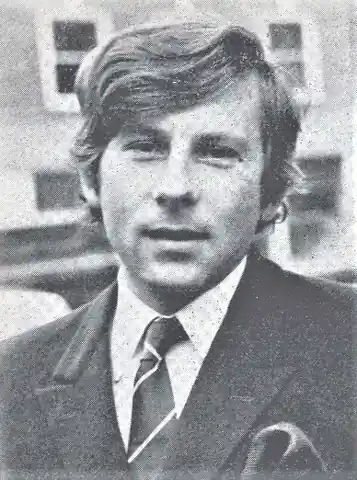
Roman Polanski: portraitImage: Wikimedia Commons · Autor nieznany, Public domain - #008
At a meeting on 1 May 2018, the Board of Governors of the Academy of Motion Picture Arts and Sciences voted to expel Roman Polanski, after years of controversy over his 1977 sexual assault case and his flight, a move meant to protect the Academy's reputation that drew mixed reactions in the film world.
- #009
- #010
- #011
- #012
- #013
In 1984, Polanski published his autobiography, 'Roman by Polanski,' in which he described girls as 'sexy, lively and completely human' and praised Gstaad, Switzerland, for being 'full of hundreds of fresh-faced young girls of every nationality,' remarks that drew criticism of his attitude toward women.
- #014
When Sharon Tate was murdered, Polanski was in London scouting locations for 'The Day of the Dolphin,' adapted from Robert Merle's novel 'Un animal doué de raison,' which Mike Nichols eventually directed in 1973. In 1977, when he was arrested for unlawful sex with a minor, he was adapting Lawrence Sanders's novel 'The First Deadly Sin' for Columbia Pictures, which fired him after the arrest, and the film was later made by another director.
Production Story (8)
- #015
Polanski was set to direct "The Double," a modern comic take on Fyodor Dostoevsky's novel about a man whose life is taken over by his doppelganger, starring John Travolta, on a $17 million fee, with Isabelle Adjani, John Goodman and Jean Reno. Shooting was due to start in Paris in June 1996, with Lili Fini Zanuck and Todd Black producing, a script by Jeremy Leven, and cinematographer Robert Richardson and production designer Pierre Guffroy in place. Just nine days before filming, with around $15 million already spent, Travolta flew home after an argument with Polanski, claiming the shooting script had been substantially changed from the one he'd read. Steve Martin was quickly hired to replace him, but Isabelle Adjani said she'd only work with Travolta and left too, and the project collapsed soon after.
- #016
When Sharon Tate was murdered, Polanski was in London scouting locations for The Day of the Dolphin, based on Robert Merle's novel "Un animal doué de raison," eventually directed by Mike Nichols as The Day of the Dolphin (1973). At the time of his 1977 arrest for unlawful sex with a minor, he was adapting Lawrence Sanders's novel The First Deadly Sin for Columbia Pictures, which fired him shortly afterwards; it was later made as The First Deadly Sin (1980). In May 1977, Dino De Laurentiis offered him a remake of John Ford's The Hurricane (1937), and he flew straight to Bora Bora to scout locations, working on it through the rest of 1977 between court appearances and the ongoing investigation. On 20 January 1978 he was fired over concerns about his "future availability," and on 1 February 1978 he left the US, never to return. The film was made as Hurricane (1979); while Polanski was attached, Nastassja Kinski had been cast in the role that eventually went to Mia Farrow.
- #017
- #018
In November 1989, Warner Bros. approached Polanski to adapt and direct Mikhail A. Bulgakov's novel "The Master and Margarita," but the studio dropped the project over budget concerns and a belief that the fall of the Berlin Wall had made the subject outdated. Polanski calls it the best script he's ever adapted.
- #019
- #020
- #021
- #022
In November 1989, Warner Bros. offered Polanski the chance to adapt and direct Mikhail A. Bulgakov's 'The Master and Margarita,' but shelved it over budget worries and a belief that the fall of the Berlin Wall had made the subject irrelevant; Polanski considers it the best script he's ever adapted.
Behind the Scenes (1)
- #023
In 1976, Polanski served as one of the jury members at the Miss Universe beauty pageant. This is an interesting detail showing that he was intertwined with popular culture beyond the film world as well. The pageant was held in the United States that year, and Polanski's participation reveals his connections with the famous names of the period.
Characters & Cast (2)
Easter Eggs & References (1)
Career & Awards (28)
- #027
In 2017, Polanski was named president of the César Awards, with the Académie des Arts et Techniques du Cinéma announcing: "Artist, film-maker, producer, screenwriter, actor, director - there are many words to define Roman Polanski. But there is only one to express our admiration and enchantment: Thank you, Mr President." Laurence Rossignol, the French minister for families, children and women's rights, called the choice "shocking and surprising," according to the New York Times, and a protest petition over the rape charges he still faced in the United States drew more than 61,000 signatures, until Polanski withdrew. "In order not to disturb the César ceremony, which should be centered on cinema and not on its choice of host, Roman Polanski has decided not to accept the invitation," Hervé Temime said in a statement to the media.
- #028
On October 30, 2017, Polanski was guest of honor at La Cinémathèque Francaise, Paris's prestigious film museum, launching a month-long retrospective of his work with his latest film, Based on a True Story (2017). About 40 protesters tried to disrupt the event, among them two women with "Very Important Pedocriminal" painted on their upper bodies who shouted "No honours for rapists" at the 84-year-old director; the group had organized a petition of more than 27,000 signatures demanding the retrospective be canceled. The partly state-funded Cinémathèque refused, its president, director Costa-Gavras, saying it did not intend to "take the place of the justice system."
- #029
He received his Best Director Oscar for The Pianist (2002) almost six months after the ceremony, since he would have been arrested on the outstanding warrants from his flight from the US after his 1978 statutory rape conviction; his friend Harrison Ford flew to France to present it to him at the 29th American Film Festival of Deauville on September 11, 2003.
- #030
When he fled the U.S. in the late '70s, much was made of the fact that he could never make films there again, yet he'd only shot two films in North America before his arrest, Rosemary's Baby (1968) and Chinatown (1974); all his other English-language films before the arrest were shot in the UK, and everything since in Central Europe.
- #031
- #032
Polanski was due to receive a Lifetime Achievement Award at the 67th Locarno Film Festival in 2014 but withdrew after Swiss politicians and newspapers called him a paedophile. Switzerland's Christian Democratic party urged its members to stay away from the ceremony, and Ticino politician Fiorenzo Dadò described him on Facebook as a "pedophile who drugged and raped a girl and is now being received with full honours." The organizers called the protests "unacceptable interference of some in the artistic liberty of the festival," adding: "We are greatly saddened that the public will thereby be deprived of an important opportunity for cultural enrichment." Artistic director Carlo Chatrian told the Hollywood Reporter: "It's sad when an artist cannot express himself. I understand his decision and I respect it. At the same time, I hope that this will be for the festival a chance to renew the fact that festivals are a meeting point and a place of freedom." He added: "Of course, when you use words like pedophile, you cannot say anything against that. But Polanski's not a pedophile."
- #033
- #034
- #035
Won the Best Director Oscar in March 2003 for The Pianist (2002) at the age of 69 years and 7 months, making him, at that time, the oldest person to win the award. Polanski eclipsed the record previously held by George Cukor, who was 65 when he won Best Director for My Fair Lady (1964). This record was beaten in February 2005, when Clint Eastwood won Best Director for Million Dollar Baby (2004) at the age of 74 years and 9 months.
- #036
- #037
- #038
- #039
Polanski holds the record for most wins as 'Best Director' at the César Awards, the national film award in France, which is decided by the vote of all members of the Académie des Arts et Techniques du Cinéma: He was nominated and won each time for Tess (1979), The Pianist (2002), The Ghost Writer (2010),Venus in Fur (2013) and An Officer and a Spy (2019).
- #040
- #041
- #042
- #043
- #044
- #045
On 26 September 2009, Polanski was detained at Zurich Airport as he entered Switzerland, just 1 year and 7 months after the documentary 'Roman Polanski: Wanted and Desired' (2008) premiered at Sundance; since the film questioned the legality of his 1977-1978 Los Angeles trial, it's thought to have been the real trigger for the new arrest warrant, a link Polanski and his lawyers discussed at length.
- #046
Polanski won the Best Director Oscar for 'The Pianist' (2002) but only received it about six months after the ceremony, which he couldn't attend because of the arrest warrant issued after he fled the US following his 1978 conviction for unlawful sexual intercourse with a minor; his friend Harrison Ford flew to the Deauville American Film Festival in France on 11 September 2003 to present it to him.
- #047
On 30 October 2017, Polanski opened a month-long retrospective as guest of honor at La Cinémathèque Française in Paris, presenting his latest film, 'Based on a True Story' (2017), while about 40 protesters tried to disrupt the event, including two women with 'Very Important Pedocriminal' written on their upper bodies who shouted 'No honor for rapists'; the group had collected more than 27,000 signatures on a petition.
- #048
Polanski directed four actors to Oscar nominations, Ruth Gordon, Jack Nicholson, Faye Dunaway and Adrien Brody; Gordon won Best Supporting Actress for 'Rosemary's Baby' and Brody Best Actor for 'The Pianist,' while Nicholson and Dunaway didn't win, a record that shows his skill with actors.
- #049
Polanski was due to receive a Lifetime Achievement Award at the 67th Locarno Film Festival in 2014 but declined it after Swiss politicians and newspapers called him a pedophile; members of Switzerland's Christian Democratic party urged a boycott of the ceremony, and Ticino politician Fiorenzo Dadò described him on Facebook as 'a pedophile who drugged and raped a girl and is now being welcomed with great honours.'
- #050
- #051
- #052
- #053
- #054
Life & Family (24)
- #055
- #056
On 26 September 2009, Swiss police detained Polanski at Zurich Airport as he tried to enter Switzerland, only 1 year and 7 months after Roman Polanski: Wanted and Desired (2008) premiered at Sundance (Jan. 18, 2008). There's reason to believe the documentary prompted the new arrest warrant, since it questioned the legality of his L.A. trial in 1977 and 1978, before he fled to France on 1st February 1978; Polanski and his lawyers also tried to use its new evidence to attack the L.A. justice system, which may well have revived interest in the old case.
- #057
He sued Vanity Fair over a 2002 article claiming he seduced a woman at NYC restaurant Elaine's on his way to Sharon Tate's funeral. Mia Farrow testified for him at London's High Court that he couldn't focus on anything but his wife's murder, and the jury found in his favor, ordering the magazine to pay $87,700 in damages and a large part of his legal costs.
- #058
- #059
- #060
- #061
- #062
- #063
- #064
- #065
- #066
- #067
Born in Paris, France, he was the son of Bula (née Katz-Przedborska) and Ryszard Liebling (aka Ryszard Polanski), a painter and plastics manufacturer. His father was a Polish Jew and his mother, a native of Russia, had a Jewish father and a Roman Catholic mother, and was raised as a Catholic.
- #068
- #069
- #070
- #071
- #072
- #073
- #074
- #075
- #076
- #077
- #078
Continue through the archive

Sources & editorial notes
Reference databases
- Wikipedia
- IMDb
Information from external sources is independently selected, consolidated and edited by Arka Evren. Sources are listed for verification and further reading. Encyclopedia text is used under its licence (CC BY-SA). How we work