ArkaEvren
Seinfeld

TV SERIES · 1989–1998 · USA

Seinfeld

Created by
Jerry Seinfeld, Larry David
Network
NBC
Seasons
9
Episodes
180
Studio
Castle Rock Entertainment, West/Shapiro Productions, Fred Barron Productions

739 archived facts 8 topics 1 source Last reviewed Nov 2026

A stand-up comedian and his three offbeat friends weather the pitfalls and payoffs of life in New York City in the '90s. It's a show about nothing.

  • Seinfeld — production image

739 Interesting Facts About Seinfeld

Interesting Facts (40)

  1. #001

    The name of the diner the gang frequents is Monk's.

    INTERESTING FACTS · SOURCED

  2. #002

    A couple of porno movies have been inspired by this show: The Bet (1993) and Seinfeld: A XXX Parody (2009).

    INTERESTING FACTS · SOURCED

  3. #003

    Seasons one, two, and eight are the only ones that don't have a two-part episode.

    INTERESTING FACTS · SOURCED

  4. #004

    Brian George, Armin Shimerman, Sab Shimono, and Timothy Stack appeared in Blind Date (1987).

    INTERESTING FACTS · SOURCED

  5. #005

    Matt Drudge worked for three years in the early 1990s at the CBS Studio Center merchandise store, which was near the area where the show's interiors were taped, where audiences who attended tapings could buy store-related memorabilia. He used his fortuitous position to start his own website, The Drudge Report, where after rooting around in some garbage cans on the lot, he revealed how much Jerry Seinfeld was making doing his own sitcom.

    INTERESTING FACTS · SOURCED

  6. #006

    Stanley Kubrick was reportedly a big fan of the show.

    INTERESTING FACTS · SOURCED

  7. #007

    The night before the final episode, ABC aired an episode of Dharma & Greg (1997) in which the couple tries to have sex in public, because everyone will be indoors watching the "Seinfeld" finale.

    INTERESTING FACTS · SOURCED

  8. #008

    Frank Sinatra died on the same night the series finale aired, May 14, 1998. His ambulance made it to the hospital in record time due to low traffic, since so many people were home watching the finale.

    INTERESTING FACTS · SOURCED

  9. #009

    During the original airing of the finale, MTV aired original cartoons that were specially timed to fit into the finale's commercial breaks, so that viewers could freely watch both of them and not worry about missing anything.

    INTERESTING FACTS · SOURCED

  10. #010

    No one ever ate a toasted bagel in any episode. They were always "raw."

    INTERESTING FACTS · SOURCED

  11. #011

    Producer and director Steven Spielberg once commented that while filming Schindler's List (1993), he got so depressed that he would watch tapes of this show's episodes to cheer himself up.

    INTERESTING FACTS · SOURCED

  12. #012

    In Massillon, Ohio, there is a restaurant called "Kosmo," named after Cosmo Kramer. The restaurant sign features a pencil sketch of Cosmo Kramer. One of the menu items is called the "Newman," which is a meatball sandwich. The famous picture of George Costanza posing half naked in his underwear is hanging up in the ladies' room.

    INTERESTING FACTS · SOURCED

  13. #013

    In the first episode, "Good News, Bad News," the first conversation was between George Costanza and Jerry about a shirt button. In season nine, episode twenty-two, "The Finale," when they were sitting in jail, the last conversation they had was about the button.

    INTERESTING FACTS · SOURCED

  14. #014

    Susan Ross, George Costanza's fiancée, was killed off because the cast found it very difficult to work with Heidi Swedberg. According to Jason Alexander, while they liked Swedberg personally, Alexander was having difficulty playing his scenes with her (as did Julia Louis-Dreyfus when the two shared scenes in The Pool Guy (1995)). Louis-Dreyfus joked about killing her, which gave Larry David the idea to kill her character.

    INTERESTING FACTS · SOURCED

  15. #015

    As Kramer (Michael Richards) grew more popular, his entrance applause became so long that the cast complained it was disrupting the pacing of scenes. The directors later asked the audience not to applaud so much when Kramer entered.

    INTERESTING FACTS · SOURCED

  16. #016

    One of the show's running jokes is that Jerry (Jerry Seinfeld) cannot act. This was in fact a genuine concern for the show's producers. To offset it, they needed strong supporting actors and actresses, hence Jason Alexander, who had previously appeared on Broadway.

    INTERESTING FACTS · SOURCED

  17. #017

    Larry David was quite erratic in meetings with NBC executives and often openly refused to accept their notes and suggestions. He was eventually banned from attending the meetings.

    INTERESTING FACTS · SOURCED

  18. #018

    Jerry Seinfeld turned down NBC's offer for a tenth season of the series, which would have earned him 110 million dollars.

    INTERESTING FACTS · SOURCED

  19. #019

    Producer and director Steven Spielberg once said that while making Schindler's List (1993) he became so depressed that he watched tapes of episodes of this series to cheer himself up.

    INTERESTING FACTS · SOURCED

  20. #020

    Michael Costanza, Jerry Seinfeld's friend after whom George was named, filed a 100 million dollar lawsuit against Seinfeld, Larry David and NBC, alleging invasion of privacy and defamation of the character. Costanza sought damages over the show's alleged use of his likeness. The lawsuit was dismissed, with judges adding that the statute of limitations had expired because Costanza had not sued within a year of the show's 1989 debut.

    INTERESTING FACTS · SOURCED

  21. #021

    During the original broadcast of the finale, MTV aired original cartoons specially timed to fit the finale's commercial breaks, so that viewers could watch both freely and without worrying about missing anything.

    INTERESTING FACTS · SOURCED

  22. #022

    It is one of only three series in American history to be number one in the ratings for its entire final season. The other two were I Love Lucy (1951) and The Andy Griffith Show (1960).

    INTERESTING FACTS · SOURCED

  23. #023

    Elaine was not originally part of the series. During development, NBC raised concerns that the series would be too male-centered and insisted on including an ordinary female character. The network was also said to have demanded a say in casting as a condition of accepting the show.

    INTERESTING FACTS · SOURCED

  24. #024

    Larry David was very determined that each of the four main characters have a story in every episode, and he even planned this in the writers' room to closely track the script and the running time.

    INTERESTING FACTS · SOURCED

  25. #025

    In the first episode of "Good News, Bad News," the first conversation between George Costanza and Jerry about a shirt button took place. In the twenty-second episode of the ninth season, "The Finale," their last conversation while sitting in prison was about the button.

    INTERESTING FACTS · SOURCED

  26. #026

    Jerry (Jerry Seinfeld) says "Hello, Newman" 18 times over the course of the entire series.

    INTERESTING FACTS · SOURCED

  27. #027

    In the episode where Elaine dates a man named Joel Rifkin (fifth season, ninth episode, "The Masseuse"), she tries to get him to change his name because Joel Rifkin is also the name of a man involved in a notorious murder case in New York City. One of the first suggestions for the new name was O. J. The episode was shot in 1993, a year before O. J. Simpson was charged with murdering his ex-wife Nicole Brown Simpson and Ron Goldman.

    INTERESTING FACTS · SOURCED

  28. #028

    George Costanza's fiancée Susan Ross was killed off because the cast found working with the actress Heidi Swedberg very difficult. According to Jason Alexander, although they liked Swedberg personally, Alexander struggled to play his scenes with her (as did Julia Louis-Dreyfus when the two shared two scenes in The Pool Guy (1995)). Louis-Dreyfus joking about killing her gave Larry David the idea to kill off the character.

    INTERESTING FACTS · SOURCED

  29. #029

    The Soup Nazi (Larry Thomas) was based on Al Yeganeh, the real owner of a takeout soup business on West 55th Street in Manhattan between Broadway and 8th Avenue. Like in the sitcom, his soups were known for their excellent quality, but Yeganeh was also famous for his unusual behavior toward customers. Local patrons called him a terrorist rather than a "Nazi," likely because they knew Yeganeh was born in Iran, not Germany. Yeganeh was so angered by the episode (season seven, episode six, "The Soup Nazi") that he banned the use of the word "Nazi" in his restaurants. Even the slightest reference to the series would set him off (as seen in an interview with CNN). When some of the show's actors and writers bravely visited the restaurant after the episode aired, Yeganeh claimed the series had ruined his life.

    INTERESTING FACTS · SOURCED

  30. #030

    The character of Cosmo Kramer was based on Kenny Kramer, who worked in the hallway of co-creator Larry David. In a move Kenny Kramer himself admitted was meant to capitalize on the sitcom's popularity, he founded the "Kramer Reality Tour," an officially recognized New York City tour that visits real-life locations frequently featured in the sitcom. In the series' 1997 season, Cosmo Kramer's memoirs were published by J. Peterman as if they were his own. Looking to make the most of this, Cosmo Kramer launches a "Peterman Reality Tour," offering a tour of the real-life locations featured in the memoirs.

    INTERESTING FACTS · SOURCED

  31. #031

    The model of the bicycle hanging in Jerry's (Jerry Seinfeld) apartment, which he never rides, changes throughout the series.

    INTERESTING FACTS · SOURCED

  32. #032

    Kramer's wardrobe, made up mostly of clothing from the 1960s and 1970s, was not intended to make him a retro fashion statement but to imply that he had not bought clothes in years. His pants in particular were always about an inch short to emphasize this. In later seasons, as he aged and given Kramer's extreme popularity as a character, it became increasingly difficult for the producers to find suitable clothing, forcing them to have tailors personally make Kramer's clothes from retro fabrics. For the most part, they created numerous backup copies of the garments in case they were damaged during physical comedy.

    INTERESTING FACTS · SOURCED

  33. #033

    The apartment used for exterior shots of 129 West 81st Street, New York City, New York is actually not in New York but at 757 S. New Hampshire Avenue, Los Angeles, California.

    INTERESTING FACTS · SOURCED

  34. #034

    Larry David based George Costanza on himself. Many of the situations George finds himself in are based on David's real-life experiences. George was named after Jerry Seinfeld's friend Michael Costanza. George's middle name, Louis, was a tribute to Lou Costello of The Abbott and Costello Show (1952), which had a major influence on the series.

    INTERESTING FACTS · SOURCED

  35. #035

    Julia Louis-Dreyfus was pregnant while filming an episode of the series. Her pregnancy was hidden with props she carried to conceal her changing body. This was parodied in The Nanny (1993) when a very pregnant Lauren Lane, standing in front of a poster that read "Baby," mentioned that they hid Elaine "behind all these huge props."

    INTERESTING FACTS · SOURCED

  36. #036

    The original script was titled "Stand Up." It was to be a ninety-minute mockumentary about how a stand-up comedian writes his jokes based on his daily life. It was to air one night instead of Saturday Night Live (1975). NBC liked the script so much that they decided to develop it as a pilot instead.

    INTERESTING FACTS · SOURCED

  37. #037

    Sir Paul McCartney was a big fan of the series and wanted to appear in an episode. For unknown reasons, the writers did not make it happen.

    INTERESTING FACTS · SOURCED

  38. #038

    Jerry (Jerry Seinfeld), George Costanza (Jason Alexander) and Cosmo Kramer (Michael Richards) each had alter egos they occasionally used. Jerry's was "Kel Varnsen," George's was "Art Vandelay," and Kramer's ranged from "Dr. Martin Van Nostrand" to "H. E. Pennypacker."

    INTERESTING FACTS · SOURCED

  39. #039

    Jerry Seinfeld was inspired to end the series after nine seasons by The Beatles, who broke up after nine years together.

    INTERESTING FACTS · SOURCED

  40. #040

    The episode titled "The Bet," in which Elaine buys a gun from Kramer's friend, was written for the second season. Because its content was deemed unacceptable, it was not filmed and was hastily replaced with the second season, fourth episode, "The Phone Message."

    INTERESTING FACTS · SOURCED

Production Story (360)

  1. #041

    Elaine Benes was named after Terry Benes, a friend of Larry David.

    PRODUCTION STORY · SOURCED

  2. #042

    It was originally planned for Elaine Benes to be an eye doctor.

    PRODUCTION STORY · SOURCED

  3. #043

    Before becoming a writer for television, Larry Charles was a stand-up comedian and also worked with Larry David and Michael Richards on Fridays (1980). He didn't join the writing staff of this show until its second season, as during the first season, he was writing for The Arsenio Hall Show (1989).
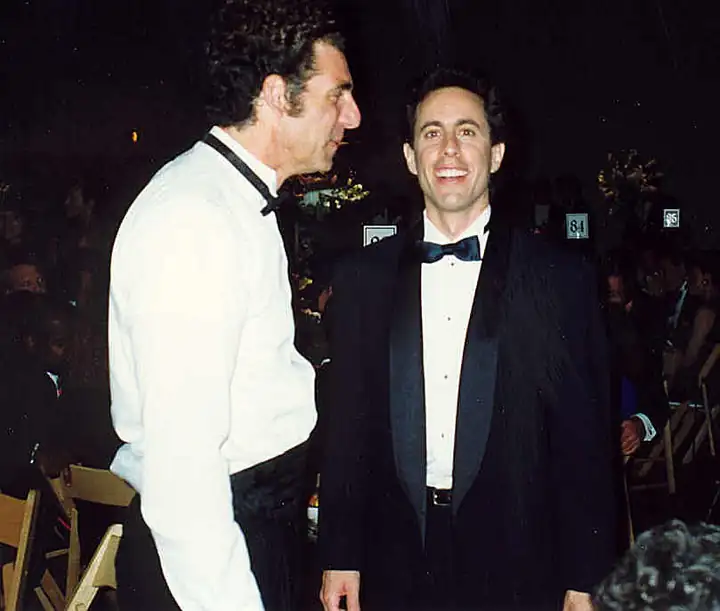
    In a scene from Seinfeld (1989), Michael Richards, wearing a white shirt and bow tie, smiles as he talks with a man in a tuxedo.
    Seinfeld (1989): Michael Richards chats with a man in a tuxedoImage: Wikimedia Commons · Alan Light, CC BY 2.0

    PRODUCTION STORY · SOURCED

  4. #044

    The Soup Nazi (Larry Thomas) was based on the actual owner, Al Yeganeh, of a take-out soup business in Manhattan on West 55th Street between Broadway and 8th Avenue. Just like in the sitcom, his soups were known for their excellent quality, but Yeganeh was also famous for the unusual way he treated his customers. Instead of calling him a "Nazi," local patrons called him a terrorist, presumably because they knew Yeganeh was born in Iran, not Germany. Yeganeh was so angered by the episode (season seven, episode six, "The Soup Nazi"), that he forbade the use of the word "Nazi" in his restaurants. Even the slightest reference to this show would push his buttons (it can be seen in an interview he did with CNN). So when some cast members and writers from this show bravely visited the restaurant after the episode aired, Yeganeh claimed that the show had ruined his life.

    PRODUCTION STORY · SOURCED

  5. #045

    When the final episode aired on May 14, 1998, the TV Land network honored the occasion by airing no programming in the show's timeslot. Instead, the network just showed a still photo of a closed office door.

    PRODUCTION STORY · SOURCED

  6. #046

    Sir Paul McCartney was a massive fan of this show and wanted to appear in an episode. For unknown reasons, the writers didn't make it happen.

    PRODUCTION STORY · SOURCED

  7. #047

    For awhile, NBC stunted with having an interconnected storyline, or character crossover between their New York City set sitcom block which aired on Thursday nights. Seinfeld was the only one of the shows which refused to take part.

    PRODUCTION STORY · SOURCED

  8. #048

    The series does not have an opening credits sequence. Instead, the lead actor credits play out over a scene. Now commonplace in sitcoms and drama series, this was considered a novelty in 1990 and sparked a debate over the future of opening credits in TV series (although "Highlights of a 100" and "The Clip Show" were the exceptions as they had intros).

    PRODUCTION STORY · SOURCED

  9. #049

    In his autobiography, Paul Shaffer claimed to have turned down the role of George Costanza. He was offered the part due to his resemblance to Larry David, upon whom the character was based.

    PRODUCTION STORY · SOURCED

  10. #050

    The character of Rabbi Kirschbaum was named after writer Bruce Kirschbaum and evolved from a sketch on Fridays (1980). Bruce Kirschbaum and Larry David portrayed rabbis who had their own television program called "Live & Be Well." Bruce Mahler, who played Rabbi Kirschbaum in three episodes, also worked on Fridays (1980), along with Michael Richards and writer Larry Charles.

    PRODUCTION STORY · SOURCED

  11. #051

    In retrospect, most critics and fans agree that season two, episode eleven, "The Chinese Restaurant," is the first episode to truly embody the concept of "a show about nothing." Interestingly, the NBC executives overseeing the series hated the episode exactly because nothing happened and held it back to broadcast towards the end of the season believing that the episode was weak.

    PRODUCTION STORY · SOURCED

  12. #052

    Jane Leeves initially auditioned for the role of Rava, a chain-smoking Finnish author in season two, episode six, "The Statue." The part of Rava was given to Nurit Koppel and Leeves was later cast as the virgin Marla for four episodes.

    PRODUCTION STORY · SOURCED

  13. #053

    In the episode where Elaine dates a man named Joel Rifkin (season five, episode nine, "The Masseuse"). She tries to have him change his name, since Joel Rifkin is also the name of a man involved in a notorious New York City murder case. One of the initial suggestions for a new name was O.J. This episode was shot in 1993, a year before O.J. Simpson was accused of murdering his ex-wife Nicole Brown Simpson and Ron Goldman.

    PRODUCTION STORY · SOURCED

  14. #054

    Charles Durning, Carl Reiner, Edward Asner, Abe Vigoda, and Alan Arkin all auditioned and failed to land the role of Frank Costanza.

    PRODUCTION STORY · SOURCED

  15. #055

    Julia Louis-Dreyfus wanted Mary Tyler Moore to play Elaine Benes' mother.

    PRODUCTION STORY · SOURCED

  16. #056

    Season eight, episode twenty-two, "The Summer of George" was inspired by true events. Writer Alec Berg had a crush on Dylan Tays, who played Jerry's blonde girlfriend in season seven, episode nineteen, "The Calzone." Over the phone, Berg convinced Tays to go to the Oscars with him. (He was writing jokes for the ceremony one year.) Unfortunately, when he went to pick her up, he found out she had a boyfriend, a photographer who wasn't too thrilled to see him. Tays had neglected to tell him about that on the phone. The incident inspired a storyline in the season eight, episode twenty-two, "The Summer of George."

    PRODUCTION STORY · SOURCED

  17. #057

    Kramer's first name was originally going to be "Conrad." This was planned to be revealed in a season two episode titled "The Bet," written by Larry Charles. But the episode was scrapped due to its controversial storyline, in which Elaine buys a gun. Kramer's first name was finally revealed to be "Cosmo" in season six, episode eleven, "The Switch."

    PRODUCTION STORY · SOURCED

  18. #058

    Though Larry David played George Steinbrenner, the actual George M. Steinbrenner III was filmed playing himself for use in an episode. However, the scene was never shown on the series. Steinbrenner appeared with Jason Alexander (in the part of George) in a 1996 promotional spot for MLB All-Star Game balloting.
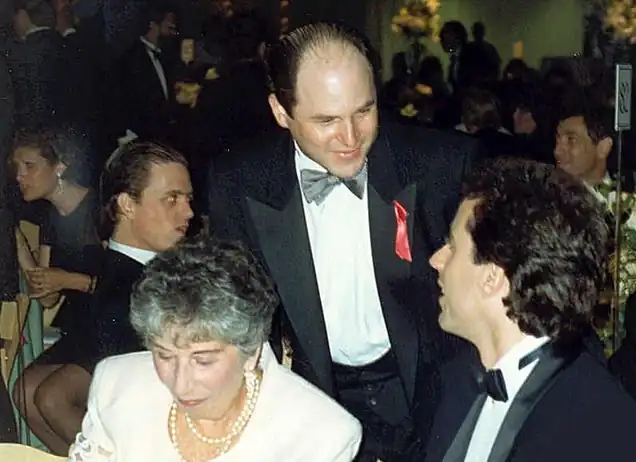
    Jason Alexander from Seinfeld, wearing a tuxedo, chats with people in formal dress at an event held at night.
    Seinfeld (1989): Jason Alexander in a tuxedo at a formal eventImage: Wikimedia Commons · Alan Light, CC0

    PRODUCTION STORY · SOURCED

  19. #059

    Netflix bought the streaming rights for $500 million.

    PRODUCTION STORY · SOURCED

  20. #060

    Larry David based George Costanza on himself. Many of the situations into which George gets himself are based on David's real-life experiences. George was named after Jerry Seinfeld's friend Michael Costanza. George's middle name, Louis, was an homage to Lou Costello of The Abbott and Costello Show (1952), which was a major influence on this series.

    PRODUCTION STORY · SOURCED

  21. #061

    In the 1970s, Larry David and Jerry Seinfeld worked together on the New York comedy club circuit. In 1980, he joined the ABC for their Saturday Night Live (1975) knock-off, Fridays (1980), where he worked alongside Michael Richards (Cosmo Kramer). In the mid 1980s, he was hired as a writer on Saturday Night Live (1975) and met Julia Louis-Dreyfus (Elaine Benes). Jason Alexander (George Costanza) was the only regular Seinfeld cast member he hadn't met before.

    PRODUCTION STORY · SOURCED

  22. #062

    The original script was called "Stand Up." It was to be a ninety-minute mockumentary about how a stand-up comedian writes his jokes based on his everyday life. It was to air in place of Saturday Night Live (1975) for one night. NBC liked the script so much that they decided to develop it into a pilot instead.

    PRODUCTION STORY · SOURCED

  23. #063

    Jason Alexander initially auditioned by videotape for the role of George Costanza, and did a Woody Allen impression, not knowing that George was based on co-creator Larry David. Incidentally, David had small roles in two of Allen's movies, New York Stories (1989) and Radio Days (1987). David also had the lead role in Whatever Works (2009).

    PRODUCTION STORY · SOURCED

  24. #064

    Larry David was very adamant that every character of the lead quartet had a storyline in each episode, and he even charted it out on the writers' room, to keep close track of the plots and screentime.

    PRODUCTION STORY · SOURCED

  25. #065

    The famous Seinfeld fictions (George's pseudo career as an architect, the fictional importer and exporter, and the fictional Art Vandelay) were introduced in season one, episode two, "The Stakeout."

    PRODUCTION STORY · SOURCED

  26. #066

    An episode titled "The Bet," in which Elaine buys a gun from Kramer's friend, was written for season two. It was not filmed, because the content was deemed unacceptable, and was hastily replaced by season two, episode four, "The Phone Message."

    PRODUCTION STORY · SOURCED

  27. #067

    Larry David was the original voice of Newman in The Revenge (1991), but Wayne Knight re-dubbed the voice for syndication.

    PRODUCTION STORY · SOURCED

  28. #068

    There was enough material recorded for season nine, episode twenty-two, "The Finale," to fill three half-hour episodes. In the end, the full show ran fifty-five minutes, the longest episode in the show's nine-year history.

    PRODUCTION STORY · SOURCED

  29. #069

    Fran Drescher was considered for the role of Elaine.

    PRODUCTION STORY · SOURCED

  30. #070

    Morty Seinfeld (Jerry's father) was originally played by Philip Bruns for one episode, then by Barney Martin for the rest of the series run.

    PRODUCTION STORY · SOURCED

  31. #071

    There are two high-definition versions of Seinfeld. The first is that of the network TV (non-syndicated) versions in the original aspect ratio of 4:3 that were downscaled for the DVD releases. Clips from this high-definition version in its upscale were seen on NBC during The Seinfeld Story special. Syndicated broadcast stations and the cable networks TBS and Comedy Central (and also Fox) began airing the syndicated version of Seinfeld in HD. Unlike the version used for the DVD, Sony Pictures cropped the top and bottom parts of the frame, while restoring previously cropped images on the sides, from the 35mm film source, to use the entire 16:9 frame.

    PRODUCTION STORY · SOURCED

  32. #072

    A running gag in the show is that Jerry (Jerry Seinfeld) can't act. This was actually a real concern for the show's producers. To weigh up for this, they needed strong supporting actors and actresses, hence Jason Alexander, who previously had been on Broadway.

    PRODUCTION STORY · SOURCED

  33. #073

    The character of Cosmo Kramer was based on Kenny Kramer, a man who worked across the hall from co-creator Larry David. In a self-confessed move to cash in on the sitcom's popularity, Kenny Kramer formed the "Kramer Reality Tour," an officially-recognized New York City tour which visits the real-life locations often featured in the sitcom. In the 1997 season of this show, Cosmo Kramer's memoirs are published by J. Peterman as his own. Wanting to make the most of the situation, Cosmo Kramer starts a "Peterman Reality Tour," offering a tour of the real-life locations featured in the memoirs.

    PRODUCTION STORY · SOURCED

  34. #074

    Danny DeVito, Nathan Lane, David Alan Grier, Larry Miller, Kevin Dunn, and Brad Hall were considered for the role of George Costanza.

    PRODUCTION STORY · SOURCED

  35. #075

    Jerry Seinfeld was inspired to end the show after nine seasons by The Beatles, who broke up after nine years together.

    PRODUCTION STORY · SOURCED

  36. #076

    Larry David and his entertainment lawyer had a bet over a friendly game of golf. David's victory allowed him to use his lawyer's name in an episode of this show. That's how Lloyd Braun (played by Peter Keleghan) became a character in season five, episode seven, "The Non-Fat Yogurt."

    PRODUCTION STORY · SOURCED

  37. #077

    Roger McDowell appeared as himself in season three, episode seventeen, "The Boyfriend" and season three, episode eighteen, "The Boyfriend." Initially, the creators wanted Darryl Strawberry to appear, but Keith Hernandez, his Mets teammate, didn't think that it was a good idea, considering Strawberry's public problems at the time. Keith's other friend and teammate, McDowell, got the job instead.

    PRODUCTION STORY · SOURCED

  38. #078

    Michael Richards auditioned three times for the role of Cosmo Kramer. Then-NBC President, the late Brandon Tartikoff, was present for the final one.

    PRODUCTION STORY · SOURCED

  39. #079

    Co-creator Larry David was given a $20,000 bonus by Castle Rock Entertainment and was promoted to executive producer for his work on season one, episode three, "The Robbery."

    PRODUCTION STORY · SOURCED

  40. #080

    Elaine's dancing in season eight, episode four, "The Little Kicks," was inspired by the Saturday Night Live (1975) boss Lorne Michaels. Seinfeld writer Spike Feresten started his career as a receptionist at Saturday Night Live (1975) and has said that at a Saturday Night Live (1975) after-party, he saw Michaels dance "as if he'd never seen another human being dance before" and that he "heaved and gyrated to a rhythm only he could feel."

    PRODUCTION STORY · SOURCED

  41. #081

    Jerry Seinfeld drew some of his material from Stan Laurel and Oliver Hardy, but has always maintained that Bud Abbott and Lou Costello were the biggest influence on him.

    PRODUCTION STORY · SOURCED

  42. #082

    Before the show was set to air, Jerry Seinfeld asked Jason Alexander what he thought their chances for success were. Alexander said he thought they "didn't have a chance." When asked why, Alexander responded, "Because the audience for this show is me, and I don't watch TV."

    PRODUCTION STORY · SOURCED

  43. #083

    Before he was cast as Newman, Wayne Knight auditioned for the role of George.

    PRODUCTION STORY · SOURCED

  44. #084

    Director Tom Cherones and writer Larry Charles left the show after season five.

    PRODUCTION STORY · SOURCED

  45. #085

    Phil Morris planned to star in a spin-off as Jackie Chiles, but the project was stalled.

    PRODUCTION STORY · SOURCED

  46. #086

    Julia Louis-Dreyfus said that Larry David frequently clashed with NBC executives over whether Jerry and Elaine should be a couple or remain friends after sleeping together in The Deal (1991). She recalled, "Larry was livid. He did not want anything to do with the idea of romance, the cute, the sexy."

    PRODUCTION STORY · SOURCED

  47. #087

    Doris Roberts, from Everybody Loves Raymond (1996), was considered for the role of Jerry's mother.

    PRODUCTION STORY · SOURCED

  48. #088

    As Larry David states on the DVD, the character of Elaine's father, the gruff war vet and author Alton Benes, was based on the late writer Richard Yates, who was the father of his former girlfriend Monica Yates, and author of the novel "Revolutionary Road."

    PRODUCTION STORY · SOURCED

  49. #089

    The first DVD releases of this show on November 23, 2004 were the first DVDs to be released under Columbia TriStar Home Entertainment's new name, Sony Pictures Home Entertainment.

    PRODUCTION STORY · SOURCED

  50. #090

    Steve Buscemi and Chris Rock were considered to play George Costanza.

    PRODUCTION STORY · SOURCED

  51. #091

    Writer David Mandel described writing an episode as "the modern equivalent of a Shakespeare sonnet."

    PRODUCTION STORY · SOURCED

  52. #092

    The funky slap 'bass guitar' riffs heard between scenes were generated on a keyboard synth by composer Jonathan Wolff.

    PRODUCTION STORY · SOURCED

  53. #093

    Robert Schimmel auditioned for the role of George Costanza.

    PRODUCTION STORY · SOURCED

  54. #094

    In early versions of the pilot script, George was originally written as a fellow stand-up comedian named "Bennett," and Kramer's name was "Kessler."

    PRODUCTION STORY · SOURCED

  55. #095

    Lee Garlington was originally supposed to be a member of the cast, as Claire, the coffee shop waitress who gave Jerry and George friendly advice. She appeared in the pilot episode, "Good News, Bad News." But when the show was picked up, her character was dropped. According to Jason Alexander, Garlington offended Larry David by re-writing her lines.

    PRODUCTION STORY · SOURCED

  56. #096

    The first episode, "Good News, Bad News," was watched by nearly eleven percent of American households, and received generally favorable reviews from critics, who reacted with disappointment that NBC did not order a first season. Convinced that the show had potential, and supported by the positive reviews, NBC executive Rick Ludwin managed to convince his superiors to order a four-episode first season by offering a part of his personal budget in return.

    PRODUCTION STORY · SOURCED

  57. #097

    The pilot episode, "Good News, Bad News" is also known as "The Seinfeld Chronicles." NBC requested that the show's title be shortened to simply "Seinfeld." This was done to avoid confusing it with another 1990 sitcom called The Marshall Chronicles (1990) on ABC. That show was described as Woody Allen meets The Wonder Years (1988). It lasted six shows. The re-named "Seinfeld" lasted nine years.

    PRODUCTION STORY · SOURCED

  58. #098

    Beginning in the third season, the Seinfeld logo changed slightly each season. Season eight had a black-and-white checker design around the title because Jerry Seinfeld believed this was going to be the final season of the series. It was meant to resemble the checkered flag at an auto racing event, which signifies the end of the race.

    PRODUCTION STORY · SOURCED

  59. #099

    The fake J. Peterman's first name was "Jacopo," which was taken from the name of a pizza joint from which writers Alec Berg and Jeff Schaffer used to order all the time.

    PRODUCTION STORY · SOURCED

  60. #100

    One of the first successful sitcoms to have extensive segments filmed outdoors.

    PRODUCTION STORY · SOURCED

  61. #101

    During the sixth season, NBC executives shared the original test results for the pilot episode with the supporting cast for the first time. The reviews from test audiences in late October 1989 were less than encouraging. They thought George Costanza was a "loser" and a "wimp," that Jerry's everyday life was "boring" and his character "powerless," "dense," and "naive," and that Kessler (Cosmo Kramer's original name), although sometimes "mildly amusing," was also underwhelming. They found the storylines a distraction from the stand-up segments which was the only part those familiar with Jerry's brand of comedy liked. Their overall view of the performance of that first show: "weak."

    PRODUCTION STORY · SOURCED

  62. #102

    Initially there was a plan to turn Cosmo Kramer into a millionaire, but this was discarded. Had it gone ahead, it would've explained how he was able to live so comfortably without having steady employment.

    PRODUCTION STORY · SOURCED

  63. #103

    Larry David was quite volatile in meetings with NBC executives, and would often outright refuse to accept their notes and suggestions. He was eventually banned from attending the meetings.

    PRODUCTION STORY · SOURCED

  64. #104

    It was originally intended that Elaine's (Julia Louis-Dreyfus') formidable father, famous author Alton Benes, of whom Jerry (Jerry Seinfeld) and George (Jason Alexander) are terrified, be a recurring character, but in an odd case of life imitating art, Lawrence Tierney really did frighten and intimidate the other cast members, so it was decided he should never return. Unsurprisingly, Tierney went on to play tough guy Joe Cabot in Quentin Tarantino's Reservoir Dogs (1992).
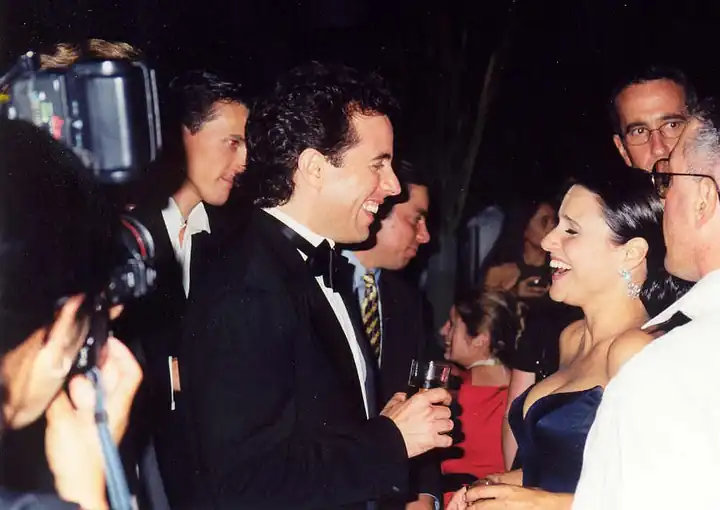
    In Seinfeld, Julia Louis-Dreyfus smiles alongside a man in a tuxedo at a formal event.
    Seinfeld (1989): Julia Louis-Dreyfus and a man at a tuxedo eventImage: Wikimedia Commons · Alan Light, CC BY 2.0

    PRODUCTION STORY · SOURCED

  65. #105

    Throughout the first eight seasons, the theme music played during Jerry's stand-up had to be re-recorded each week in order to match up with Jerry's set-ups and punchlines.

    PRODUCTION STORY · SOURCED

  66. #106

    Jerry Seinfeld turned down an offer from NBC that would have made him $110 million for a tenth season of the show.

    PRODUCTION STORY · SOURCED

  67. #107

    Elaine Pope was the first female writer on this show to have a script turned into a proper episode: season three, episode two, "The Truth." Pope previously worked with Larry Charles, Larry David, and Michael Richards on Fridays (1980).

    PRODUCTION STORY · SOURCED

  68. #108

    Many plots of the early episodes were completely based on the episode writer's real-life troubles, including season one, episode three, "The Robbery," season two, episode three, "The Jacket," season two, episode eleven, "The Chinese Restaurant," season three, episode seven, "The Café," season three, episode nine, "The Nose Job," and many others.

    PRODUCTION STORY · SOURCED

  69. #109

    Rosie O'Donnell, Patricia Heaton, Mariska Hargitay, Jessica Lundy, Amy Yasbeck, and Megan Mullally auditioned for the role of Elaine Benes.

    PRODUCTION STORY · SOURCED

  70. #110

    Jerry Seinfeld and Jason Alexander have both acknowledged in interviews years after the shows finale that there would have been a 10th season of the show if all four main cast members agreed on doing it. While Seinfeld was adamant about going out as the #1 show and ending at season 9 he said he would have accepted NBC's offer for a 10th season if his co-stars Julia-Louis Dreyfus Michael Richard's and Alexander wanted to keep going. The latter three would not see royalties as Seinfeld and co-creator Larry David would from syndication after the series ended and all wanted to continue to work. Alexander said he realized after the show's end getting longstanding work could be difficult because of how iconic Seinfeld was so he, Louis-Dreyfus and Richards all agreed with Seinfeld to end at season 9, leaving as the #1 show so the latter three could find other projects to work on.

    PRODUCTION STORY · SOURCED

  71. #111

    Elaine Benes was loosely based on Carol Leifer, a friend of Jerry Seinfeld's, whom he also used to date. She was also based on model Susan McNabb, who was Seinfeld's long-time girlfriend, and Monica Yates, whom Larry David dated.

    PRODUCTION STORY · SOURCED

  72. #112

    Newman (Wayne Knight) was originally written as the African-American son of Jerry's (Jerry Seinfeld's) landlord. William Thomas, Jr. was cast, and a scene featuring him was filmed, but it was deleted. Tim Russ also auditioned for the role.

    PRODUCTION STORY · SOURCED

  73. #113

    Larry Miller, a stand-up comedian, as well as a close friend of Jerry Seinfeld, was considered for the role of George Costanza before the role was given to Jason Alexander. Miller made an appearance in season six, episode seventeen, "The Doorman," as The Doorman.

    PRODUCTION STORY · SOURCED

  74. #114

    Jerry Seinfeld said that he credits the phrase "These pretzels are making me thirsty" from season three, episode eleven, "The Alternate Side," as the first of Seinfeld's many catchphrases.
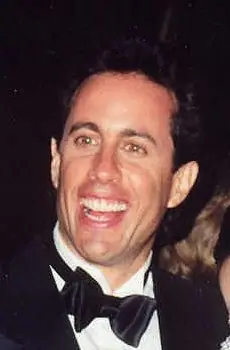
    In a scene from Seinfeld, a man in a tuxedo smiles broadly, with a dark interior in the background.
    Seinfeld (1989): A man in a tuxedo with a broad smileImage: Wikimedia Commons · Jerry_Seinfeld,_Julia_Louis_Dreyfus1997.jpg : Alan Light derivative w…, CC BY 2.0

    PRODUCTION STORY · SOURCED

  75. #115

    In the first episode, "Good News, Bad News," Kramer's last name was Kessler. Jerry was heard saying Kessler exactly the same way as he does Kramer. This was because Kenny Kramer would not allow his name to be used on the show, unless he was allowed to play Kramer. Eventually Kenny Kramer's list of demands were met, and the name Kramer was used.

    PRODUCTION STORY · SOURCED

  76. #116

    Kevin Dunn, Jerry's "self-involved," obnoxious friend Joel in season one, episode three, "Male Unbonding," is the brother of Nora Dunn from Saturday Night Live (1975). He originally auditioned for the role of George Costanza.

    PRODUCTION STORY · SOURCED

  77. #117

    Elaine was not originally part of the series. During development, NBC expressed concern that the series would be too male-centric, and became insistent on including a regular female character. The network was also said to make the casting request as a condition for picking up the series.

    PRODUCTION STORY · SOURCED

  78. #118

    With the exception of the pilot episode, "Good News, Bad News," season 1, episode 3 "Male Unbonding," and season 6, episode 14 "Highlights of a Hundred," every episode started with the word "The."

    PRODUCTION STORY · SOURCED

  79. #119

    Carol Leifer was a writer and producer on this show. Leifer and Jerry Seinfeld dated prior to this show, and she was the basis for Elaine Benes. She had three cameos during this show: in season six, episode sixteen, "The Kiss Hello"; season seven, episode seven, "The Secret Code"; and season seven, episode twenty-two, "The Invitations."

    PRODUCTION STORY · SOURCED

  80. #120

    Steve Vinovich, Larry Hankin, and Tony Shalhoub were considered for the role of Cosmo Kramer. Hankin played Kramer in the show within the show in season four, episode twenty-three, "The Pilot."

    PRODUCTION STORY · SOURCED

  81. #121
    Contains a major spoiler — show

    The following characters testify against the group: * Officer Vogel (Scott Jaeck) * Howie, the overweight Victim (John Pinette) * Mabel Choate (Frances Bay) * Marla Penny (Jane Leeves) * Donald Sanger (Jon Hayman) * Lola (Wheelchair Woman) (Donna Evans) * Dr. Wexler (Ursaline Bryant) * Sidra Holland (Teri Hatcher) * Joe Bookman (Philip Baker Hall) * Robin (Melanie Chartoff) * The Garden Valley Shopping Mall Security Guard from The Parking Garage (1991) (David Dunard) * The Detective from The Wig Master (1996) * Leslie (Christine Dunford) * George Steinbrenner (Lee Bear/Larry David) * Marcelino (Miguel Sandoval) * Mr. Hoffman (David Byrd) * Fred (Tony Carlin) from The Pick (1992) * Justin Pitt (Ian Abercrombie) * The Soup Nazi (Yev Kassem) (Larry Thomas) * Babu Bhatt (Brian George) * The Low-Talker (Wendel Meldrum) There were also others who testified in deleted scenes: * Arnold Deensfrei (Robert Katims) * Detective Blake (Ed O'Ross) * Mr. Lippman (Richard Fancy) * Ramon (Carlos Jacott) * Poppie (Reni Santoni)

    PRODUCTION STORY · SOURCED

  82. #122
    Contains a major spoiler — show

    Episode 4.16, The Shoes (1993), saw Seinfeld move from its regular Wednesday time slot to Thursday, airing after Cheers (1982), which was in its final season. The main four characters appeared in a segment that aired during the Super Bowl, advising viewers of the change. There were fears that new viewers of the show would be unaware & confused by the story of Jerry (Jerry Seinfeld) and George's (Jason Alexander) NBC pilot, but the popularity of the show turned out to be higher than ever.

    PRODUCTION STORY · SOURCED

  83. #123

    There was originally a plan to turn Cosmo Kramer into a millionaire, but it was scrapped. Had it continued, it would have explained how he could live so comfortably without a regular job.

    PRODUCTION STORY · SOURCED

  84. #124

    Larry David established the famous "no hugging, no learning" rule; that is, the series should avoid sentimentality and moral lessons, and the characters should never learn from their mistakes or grow.

    PRODUCTION STORY · SOURCED

  85. #125

    Larry David was quite irritable during meetings with NBC executives and often refused to accept their notes and suggestions. Eventually he was banned from attending the meetings.

    PRODUCTION STORY · SOURCED

  86. #126

    Jerry Seinfeld turned down an offer from NBC that would have earned him 110 million dollars for a tenth season of the series.

    PRODUCTION STORY · SOURCED

  87. #127

    When the finale aired on May 14, 1998, the TV Land channel aired no programming in the series' time slot to honor the event. Instead, the channel showed a photograph of a closed office door.

    PRODUCTION STORY · SOURCED

  88. #128

    Before the series aired, Jerry Seinfeld asked Jason Alexander what he thought their chances of success were. Alexander said they had "no chance at all." When asked why, he replied, "Because the audience for this show is me, and I don't watch television."

    PRODUCTION STORY · SOURCED

  89. #129

    Jerry Seinfeld's friend Michael Costanza, who gave the character George his name, filed a 100 million dollar lawsuit against Seinfeld, Larry David and NBC, alleging invasion of privacy and defamation of character. Costanza claimed the series used his likeness. The lawsuit was dismissed, and the judges added that it was barred by the statute of limitations because Costanza had not filed suit within a year of the series' 1989 debut.

    PRODUCTION STORY · SOURCED

  90. #130

    In hindsight, most critics and fans agree that the second season's eleventh episode, "The Chinese Restaurant," was the first episode that truly reflected the "show about nothing" concept. Interestingly, the NBC executives overseeing the series hated this episode because nothing happened, and, considering it weak, postponed it to air toward the end of the season.

    PRODUCTION STORY · SOURCED

  91. #131

    The night before the finale, ABC aired an episode of the series Dharma & Greg (1997) in which the couple tried to have sex in a public place because everyone would be inside watching the "Seinfeld" finale.

    PRODUCTION STORY · SOURCED

  92. #132

    During the original broadcast of the finale, MTV aired original cartoons specially timed to coincide with the finale's commercial breaks, so that viewers could comfortably watch both and not worry about missing anything.

    PRODUCTION STORY · SOURCED

  93. #133

    Larry David was very insistent that each of the four main characters have a story in every episode, and he even charted this in the writers' room, closely tracking plotlines and screen time.

    PRODUCTION STORY · SOURCED

  94. #134

    There was initially a plan to make Cosmo Kramer a millionaire, but the idea was abandoned. Had it happened, it would have explained how he could live so comfortably without a regular job.

    PRODUCTION STORY · SOURCED

  95. #135

    The original script was titled "Stand Up." It was to be a ninety-minute mockumentary about how a stand-up comedian writes his jokes, based on his daily life. It was planned to air one night instead of Saturday Night Live (1975). NBC liked the script so much that it decided to develop it as a pilot episode instead.

    PRODUCTION STORY · SOURCED

  96. #136

    Sir Paul McCartney was a big fan of the series and wanted to appear in an episode. For unknown reasons, the writers did not make this happen.

    PRODUCTION STORY · SOURCED

  97. #137

    Jerry Seinfeld drew his inspiration to end the series after nine seasons from The Beatles, who broke up after working together for nine years.

    PRODUCTION STORY · SOURCED

  98. #138

    In the episode titled "The Bet," Elaine was going to buy a gun from Kramer's friend. This episode was written for the second season, but it was not filmed because its content was deemed unacceptable, and the second season's fourth episode, "The Phone Message," was quickly added in its place.

    PRODUCTION STORY · SOURCED

  99. #139

    The first episode, "Good News, Bad News," was watched by about eleven percent of American households and generally received positive reviews from critics; however, NBC's failure to order a first season was disappointing. Convinced that the series had potential and supported by the positive reviews, NBC executive Rick Ludman persuaded his superiors to order a four-episode first season by offering part of his personal budget.

    PRODUCTION STORY · SOURCED

  100. #140

    Many stories in the early episodes were based entirely on the real-life problems of the episode's writer; among these are the first season's third episode "The Robbery," the second season's third episode "The Jacket," the second season's eleventh episode "The Chinese Restaurant," the third season's seventh episode "The Café," the third season's ninth episode "The Nose Job" and others.

    PRODUCTION STORY · SOURCED

  101. #141

    In the first versions of the pilot script, George was initially written as a stand-up comedian named "Bennett," and Kramer's name was "Kessler."

    PRODUCTION STORY · SOURCED

  102. #142

    The series introduced the character "Crazy" Joe Davola, named after an ABC producer.

    PRODUCTION STORY · SOURCED

  103. #143

    Kramer's first name was initially going to be "Conrad." This was to be revealed in the second season episode "The Bet," written by Larry Charles. However, the episode was shelved because of its controversial story in which Elaine buys a gun. Kramer's first name was finally revealed as "Cosmo" in the sixth season's eleventh episode, "The Switch."

    PRODUCTION STORY · SOURCED

  104. #144

    Jerry and George mentioned their siblings in the second and third seasons, but neither was ever seen or mentioned again.

    PRODUCTION STORY · SOURCED

  105. #145

    In the first episode, "Good News, Bad News," Kramer's last name was Kessler. Jerry could be heard pronouncing Kessler the same way as Kramer. This was because Kenny Kramer would not allow his name to be used in the series unless he was allowed to play the role of Kramer. In the end, Kenny Kramer's demands were met and the name Kramer was used.

    PRODUCTION STORY · SOURCED

  106. #146

    ABC Entertainment executive Lloyd Braun gave his name to a character who appears in three episodes: the fifth season's seventh episode "The Non-Fat Yogurt", the seventh season's tenth episode "The Gum" and the ninth season's third episode "The Serenity Now". This character is an old childhood neighbor and enemy of George Costanza.

    PRODUCTION STORY · SOURCED

  107. #147

    Elaine Benes was initially planned to be an eye doctor.

    PRODUCTION STORY · SOURCED

  108. #148

    For a time, NBC arranged a show by creating interconnected stories or character crossovers among its New York-set sitcom block airing on Thursday nights. Seinfeld was the only series that refused to take part in this.

    PRODUCTION STORY · SOURCED

  109. #149

    During the sixth season, NBC executives shared the pilot episode's original test results with the supporting cast for the first time. The comments from test audiences at the end of October 1989 were not encouraging. They judged George Costanza as a "loser" and "weak"; they found Jerry's daily life "boring" and his character "powerless", "intense" and "naive"; and Kessler (the original name of Cosmo Kramer) was inadequate, though sometimes "mildly funny". They thought the stories distracted from the stand-up segments, the only part that those familiar with Jerry's comedy style enjoyed. Their overall view of the first show's performance: "weak".

    PRODUCTION STORY · SOURCED

  110. #150

    Phil Morris planned a spin-off with Jackie Chiles, but the project was shelved.

    PRODUCTION STORY · SOURCED

  111. #151

    In the 1970s, Larry David and Jerry Seinfeld worked together on the New York comedy club circuit. In 1980 he joined the cast of ABC's Saturday Night Live (1975) imitation Fridays (1980), where he worked with Michael Richards (Cosmo Kramer). In the mid-1980s he was hired as a writer on Saturday Night Live (1975) and met Julia Louis-Dreyfus (Elaine Benes). Jason Alexander (George Costanza) was the only regular Seinfeld cast member he had not met before.

    PRODUCTION STORY · SOURCED

  112. #152

    Except for the pilot episode "Good News, Bad News", the first season's third episode "Male Unbonding" and the sixth season's fourteenth episode "Highlights of a Hundred", every episode began with "The".

    PRODUCTION STORY · SOURCED

  113. #153

    The famous Seinfeld conceits (George's fake architect career, his imaginary import-export company and the imaginary Art Vandelay) were first introduced in the first season's second episode "The Stakeout".

    PRODUCTION STORY · SOURCED

  114. #154

    Jerry Seinfeld says he saw the line 'These pretzels are making me thirsty' as one of the series' first slogans; this line appears in the third season's eleventh episode 'The Alternate Side'.

    PRODUCTION STORY · SOURCED

  115. #155

    Kramer's first name, Cosmo, was not revealed until the series' sixth season. This revelation and the promotional hype around it were considered unnecessary and artificial by some at the time.

    PRODUCTION STORY · SOURCED

  116. #156

    Although Jerry Seinfeld took some of his material from Stan Laurel and Oliver Hardy, he always stated that Bud Abbott and Lou Costello influenced him the most.

    PRODUCTION STORY · SOURCED

  117. #157

    While Jerry Seinfeld was performing his 'I'm Telling You For The Last Time' concerts at the Bensonhurst Theater in 1998, a small group of protesters gathered on the opposite sidewalk every night and condemned him for the ninth season's twentieth episode 'The Puerto Rican Day'. At one point security was increased because of death threats.

    PRODUCTION STORY · SOURCED

  118. #158

    For the ninth season's twenty-second episode 'The Finale', enough material was recorded to fill three half-hour episodes. In the end the full show ran fifty-five minutes, making it the longest episode in the series' nine-year history.

    PRODUCTION STORY · SOURCED

  119. #159

    It is the work of Larry Charles, who believes in these 'alternative facts', whenever Kramer supports 'anti-authority' views.

    PRODUCTION STORY · SOURCED

  120. #160

    Over its nine-year run, the series won an Emmy for Outstanding Comedy Series only once.

    PRODUCTION STORY · SOURCED

  121. #161

    Alec Berg (Mark DeCarlo), whom Jerry called 'a great John Houseman name', was in fact Alec Berg, one of the series' producers.

    PRODUCTION STORY · SOURCED

  122. #162

    Co-creator Larry David was rewarded with a $20,000 bonus by Castle Rock Entertainment for his work on the first season's third episode 'The Robbery' and was promoted to executive producer.

    PRODUCTION STORY · SOURCED

  123. #163

    The eighth season's twenty-second episode 'The Summer of George' was inspired by real events. Writer Alec Berg was in love with Dylan Tays, who played Jerry's blonde girlfriend in the seventh season's nineteenth episode 'The Calzone'. Berg persuaded Tays by phone to go to the Oscars together. Unfortunately, when he went to pick her up, he learned she had a boyfriend; this situation inspired the episode's story.

    PRODUCTION STORY · SOURCED

  124. #164

    The fake J. Peterman's first name was 'Jacopo'; the name was taken from a pizza shop where writers Alec Berg and Jeff Schaffer constantly ordered.

    PRODUCTION STORY · SOURCED

  125. #165

    The pilot episode 'Good News, Bad News' is also known as 'The Seinfeld Chronicles'. NBC wanted the series' name to be simply 'Seinfeld'; this was so it would not be confused with ABC's The Marshall Chronicles (1990). That series lasted six episodes; the renamed 'Seinfeld' lasted nine years.

    PRODUCTION STORY · SOURCED

  126. #166

    The first, second and eighth seasons are the only seasons without a two-part episode.

    PRODUCTION STORY · SOURCED

  127. #167

    With episode 4.16, The Shoes (1993), Seinfeld began airing on Thursday instead of its usual Wednesday, after the final season of Cheers (1982). The four main characters announced this change to viewers in an episode broadcast during the Super Bowl. There were concerns that new viewers would not understand the story of Jerry and George's NBC pilot, but the series' popularity turned out to be higher than ever.

    PRODUCTION STORY · SOURCED

  128. #168

    Matt Drudge worked for three years in the gift shop at CBS Studio Center in the early 1990s; it was near the area where the series' interior scenes were shot. Taking advantage of this opportunity, he founded the website Drudge Report and, by rummaging through the trash cans on the set, uncovered how much Jerry Seinfeld earned from his own series.

    PRODUCTION STORY · SOURCED

  129. #169

    The series' first DVD releases on November 23, 2004 were the first DVDs released under Sony Pictures Home Entertainment, the new name of Columbia TriStar Home Entertainment.

    PRODUCTION STORY · SOURCED

  130. #170

    There are errors in the credits of two episodes of the third season. In the third season's first episode 'The Note,' Jerry's dentist friend Roy (Ralph Bruneau) is mistakenly referred to as 'Lloyd,' which was the character's original name. In the third season's fifth episode 'The Library,' Jerry's high school crush Sherry Becker (Cynthia Szigeti) is mistakenly listed as Sandy.

    PRODUCTION STORY · SOURCED

  131. #171

    Writer David Mandel described writing an episode as 'the modern equivalent of a Shakespearean sonnet.'

    PRODUCTION STORY · SOURCED

  132. #172

    Larry David made a bet with his entertainment lawyer during a friendly golf match. David's victory allowed him to use his lawyer's name in an episode of the series. Thus the character Lloyd Braun (Peter Keleghan) appeared in the fifth season's seventh episode 'The Non-Fat Yogurt.'

    PRODUCTION STORY · SOURCED

  133. #173

    The series has no opening credits; instead, the names of the lead actors are shown over a scene. Now common in sitcoms and drama series, this practice was an innovation in 1990 and sparked debate about the future of opening credits in television series.

    PRODUCTION STORY · SOURCED

  134. #174

    Netflix bought the streaming rights for 500 million dollars.

    PRODUCTION STORY · SOURCED

  135. #175

    Elaine Pope was the first female writer on this series whose script was turned into an episode: the third season's second episode 'The Truth.' Pope had previously worked with Larry Charles, Larry David and Michael Richards on Fridays (1980).

    PRODUCTION STORY · SOURCED

  136. #176

    Bloomberg estimated that Jerry Seinfeld earned 465 million dollars from syndication deals for this series.

    PRODUCTION STORY · SOURCED

  137. #177

    Before becoming a television writer, Larry Charles was a stand-up comedian and worked with Larry David and Michael Richards on Fridays (1980). He joined the series' writing staff in the second season; in the first season he was writing for The Arsenio Hall Show (1989).

    PRODUCTION STORY · SOURCED

  138. #178

    This series was nominated for Favorite Instrumental Theme Song at the 2004 TV Land Awards.

    PRODUCTION STORY · SOURCED

  139. #179

    It was ranked second on Time Magazine's 'Best Television of 1996' list in its year-end issue dated December 23, 1996.

    PRODUCTION STORY · SOURCED

  140. #180

    In interviews given years after the finale, Jerry Seinfeld and Jason Alexander stated that a 10th season of the series would have been possible if all four main cast members had agreed. Although Seinfeld insisted on ending as the number one series, he said he would have accepted NBC's offer if the other three actors had wanted to continue. The others wanted to keep working because they would not receive royalties from syndication. Alexander realized that long-term employment could be difficult due to the series' iconic status, and they all agreed to end it at season 9.

    PRODUCTION STORY · SOURCED

  141. #181

    There are several errors in the Notes About Seinfeld feature on the first disc of the box set. It states that John Mellencamp dropped 'Cougar' from his name in the mid-1980s; this is wrong, he actually dropped it in 1981. In the first season's third episode 'Male Unbonding,' Andy Kaufman's surname is misspelled twice.

    PRODUCTION STORY · SOURCED

  142. #182

    In the 22nd issue of Spectrum Magazine dated April 2000, John Thorne placed this series fifth on his list of the best television series of the 1990s.

    PRODUCTION STORY · SOURCED

  143. #183

    Julia Louis-Dreyfus said that Larry David frequently argued with NBC executives about whether Jerry and Elaine should become lovers. 'Larry was very adamant. He wanted nothing to do with the idea of romance, cuteness, sexiness,' she said.

    PRODUCTION STORY · SOURCED

  144. #184

    Larry David established the rule of "no hugging, no learning": the series should avoid sentimentality and moral lessons, and the characters should never learn from their mistakes or grow.

    PRODUCTION STORY · SOURCED

  145. #185

    As Kramer (Michael Richards) grew more popular, his entrance applause grew so long that the actors complained it disrupted the pacing of their scenes. The directors asked the audience not to applaud too much when Kramer entered.

    PRODUCTION STORY · SOURCED

  146. #186

    A recurring joke on the show is that Jerry (Jerry Seinfeld) cannot act. This was in fact a genuine concern for the producers. To compensate, they needed strong supporting actors such as Jason Alexander, who had previously performed on Broadway.

    PRODUCTION STORY · SOURCED

  147. #187

    Larry David was quite irritable in meetings with NBC executives and often refused to accept their notes and suggestions. In the end, he was banned from attending the meetings.

    PRODUCTION STORY · SOURCED

  148. #188

    Jerry Seinfeld turned down NBC's $110 million offer for a tenth season.

    PRODUCTION STORY · SOURCED

  149. #189

    Elaine's (Julia Louis-Dreyfus) terrible father, the famous writer Alton Benes, was planned to be a recurring character, but in a strange case of life imitating art, Lawrence Tierney genuinely intimidated and cowed the other actors, so it was decided that he would not return. Tierney later played the tough guy Joe Cabot in Quentin Tarantino's Reservoir Dogs (1992).

    PRODUCTION STORY · SOURCED

  150. #190

    Producer and director Steven Spielberg said that while shooting Schindler's List (1993) he became so depressed that he watched tapes of episodes of this series to cheer himself up.

    PRODUCTION STORY · SOURCED

  151. #191

    When the finale aired on May 14, 1998, the TV Land channel broadcast no programming in the show's time slot to honor the occasion. Instead, the channel showed only a photograph of a closed office door.

    PRODUCTION STORY · SOURCED

  152. #192

    Before the series aired, Jerry Seinfeld asked Jason Alexander what he thought their chances of success were. Alexander said, "we don't have a chance." When he asked why, he replied, "Because the audience for this show is me, and I don't watch television."

    PRODUCTION STORY · SOURCED

  153. #193

    Jerry Seinfeld's friend Michael Costanza, the namesake of George, sued Seinfeld, Larry David and NBC for $100 million, alleging invasion of privacy and defamation of character. Costanza claimed he was harmed by the show's use of his likeness. The lawsuit was dismissed, and the judges added that Costanza had failed to file within a year of the show's 1989 premiere, so the statute of limitations had expired.

    PRODUCTION STORY · SOURCED

  154. #194

    While playing George, Jason Alexander initially based the character on Woody Allen, which is why he wore glasses. When he realized that George was actually based on Larry David, he began shaping his performance around David's mannerisms.

    PRODUCTION STORY · SOURCED

  155. #195

    In hindsight, most critics and fans agree that the second season's eleventh episode, "The Chinese Restaurant," was the first episode to truly reflect the "show about nothing" concept. Interestingly, the NBC executives overseeing the series hated the episode because nothing happened, and, considering it weak, delayed airing it until near the end of the season.

    PRODUCTION STORY · SOURCED

  156. #196

    John O'Hurley (Peterman) recalls being recognized at a friend's 40th birthday party while in the buffet line. A man came up to him and said, "that's a firing offense." One of J. Peterman's lines. During the conversation, O'Hurley learned that the man was not only a Seinfeld fan but also a fan of the real J. Peterman catalog. He used to read the catalog's exaggerated product descriptions to his wife in bed. He thanked O'Hurley for finally giving the catalog readings a voice. The fan was none other than Tom Hanks.

    PRODUCTION STORY · SOURCED

  157. #197

    The night before the finale, ABC aired an episode of Dharma & Greg (1997) in which the couple tried to have sex in a public place because everyone would be inside watching the Seinfeld finale.

    PRODUCTION STORY · SOURCED

  158. #198

    During the finale's first broadcast, MTV aired original cartoons specially timed to coincide with the finale's commercial breaks, so viewers could comfortably watch both and not worry about missing anything.

    PRODUCTION STORY · SOURCED

  159. #199

    It is one of only three series in American history to finish its final season ranked first in the ratings. The other two are I Love Lucy (1951) and The Andy Griffith Show (1962).

    PRODUCTION STORY · SOURCED

  160. #200

    Elaine was not originally part of the series. During development, NBC raised the concern that the show would be too male-oriented and insisted that a regular female character be added. It is also said that the network made this casting demand a condition for picking up the series.

    PRODUCTION STORY · SOURCED

  161. #201

    In the first episode, "Good News, Bad News," the first conversation was between George Costanza and Jerry about a shirt button. In the ninth season's twenty-second episode, "The Finale," their last conversation, while sitting in prison, was also about a button.

    PRODUCTION STORY · SOURCED

  162. #202

    Larry David insisted strongly that each of the four main characters have a story in every episode, and he tracked the plotlines and screen time closely by charting them in the writers' room.

    PRODUCTION STORY · SOURCED

  163. #203

    The Soup Nazi (Larry Thomas) was inspired by Al Yeganeh, the real owner of a soup takeout business on West 55th Street between Broadway and 8th Avenue in Manhattan. Just like in the series, his soups were known for their exceptional quality, but Yeganeh was also famous for his unusual behavior toward customers. Local customers called him a "terrorist" rather than a "Nazi," likely because they knew Yeganeh was born in Iran, not Germany. Yeganeh was so angered by the episode (season seven, episode six, "The Soup Nazi") that he banned the use of the word "Nazi" in his restaurants. Even the slightest reference to the series infuriated him (as can be seen in an interview he gave to CNN). After the episode aired, when some of the actors and writers visited the restaurant, Yeganeh claimed the series had ruined his life.

    PRODUCTION STORY · SOURCED

  164. #204

    In the episode where Elaine dates a man named Joel Rifkin (season five, episode nine, "The Masseuse"), she asks him to change his name because Joel Rifkin is also the name of a man involved in a famous murder case in New York. One of the first suggestions for a new name was O.J. This episode was shot in 1993, a year before O.J. Simpson was accused of murdering his ex-wife Nicole Brown Simpson and Ron Goldman.

    PRODUCTION STORY · SOURCED

  165. #205

    The character Cosmo Kramer was based on Kenny Kramer, who lived across the hall from co-creator Larry David. Kenny Kramer created the "Kramer Reality Tour" to capitalize on the series' popularity; it is an officially recognized New York tour that visits real locations frequently featured in the series. In the series' 1997 season, Cosmo Kramer's memoirs are published by J. Peterman as if they were his own. Looking to exploit the situation, Cosmo Kramer launches a "Peterman Reality Tour" that visits the real locations mentioned in the memoirs.

    PRODUCTION STORY · SOURCED

  166. #206

    George Costanza's fiancée Susan Ross was killed off because Heidi Swedberg was so difficult to work with. According to Jason Alexander, although they personally liked Swedberg, Alexander struggled to play his scenes with her (Julia Louis-Dreyfus had the same problem when she shared scenes with her in the episode The Pool Guy (1995)). Louis-Dreyfus jokingly suggested killing her off, which gave Larry David the idea to kill off her character.

    PRODUCTION STORY · SOURCED

  167. #207

    Kramer's wardrobe, consisting mostly of clothes from the 1960s and 1970s, was not meant to put him in retro fashion but to show that he had not bought clothes in years. The pants, in particular, were always about an inch short to emphasize this. In later seasons, because the clothes became increasingly worn and hard to find, and because of Kramer's extreme popularity, the producers had to have Kramer's clothes custom-made from retro fabrics. They would often make numerous backup copies of the clothes in case they were damaged during physical comedy.

    PRODUCTION STORY · SOURCED

  168. #208

    There was originally a plan to make Cosmo Kramer a millionaire, but it was abandoned. Had it been used, it would have explained how he could live so comfortably without a regular job.

    PRODUCTION STORY · SOURCED

  169. #209

    Kramer's line "These pretzels are making me thirsty" is a tribute to Jeff Goldblum and his only line in Annie Hall (1977). Goldblum's line is famous in cinema history for his delivery.

    PRODUCTION STORY · SOURCED

  170. #210

    The apartment building used for exterior shots at 129 West 81st Street, New York City, New York is actually not in New York but at 757 S. New Hampshire Avenue, Los Angeles, California.

    PRODUCTION STORY · SOURCED

  171. #211

    Julia Louis-Dreyfus was pregnant while filming part of the series. Her pregnancy was hidden by carrying accessories to conceal her changing body. This was parodied in The Nanny (1993), where pregnant Lauren Lane said they hid Elaine "behind enormous accessories."

    PRODUCTION STORY · SOURCED

  172. #212

    The puffy shirt from "The Puffy Shirt," the second episode of Seinfeld's fifth season, is now on display at the Smithsonian. The fifth season DVD set included a doll-sized replica of it.

    PRODUCTION STORY · SOURCED

  173. #213

    Elaine's famous "get out" line was first heard in the fifth episode of the second season, "The Apartment." Julia Louis-Dreyfus had actually done that push in real life, and that moment was not in the original script.

    PRODUCTION STORY · SOURCED

  174. #214

    The series' first script was titled "Stand Up." It was planned as a ninety-minute mockumentary about how a stand-up comedian writes his jokes based on his daily life. It was going to air on a night replacing Saturday Night Live (1975). NBC liked the script so much that it decided to make a pilot episode instead.

    PRODUCTION STORY · SOURCED

  175. #215

    In the fall season after the Seinfeld finale, "Frasier" took over Seinfeld's Thursday night time slot. In fact, the first episode of Frasier's sixth season opens with Frasier going to an audition for a TV show after being fired from his radio program, and his opening speech is a nod to taking over Seinfeld's time slot: "Before we begin, I'd like to say what an honor it is to be taking over this time slot. Obviously, there are some pretty big shoes to fill - my predecessor was very much loved. But I've never been one to shy away from a challenge, and I'm sure we'll have many happy years together in my new home." This was a tribute to Seinfeld.

    PRODUCTION STORY · SOURCED

  176. #216

    In the second season's eleventh episode, "The Chinese Restaurant," while waiting at a Chinese restaurant, Jerry lists off the many people he would call if he were seen there. One of them is his sister. His sister never appears in the series and is never mentioned again.

    PRODUCTION STORY · SOURCED

  177. #217

    Larry David created George Costanza based on himself. Most of the situations George finds himself in are based on David's real-life experiences. George took his name from Jerry Seinfeld's friend Michael Costanza. George's middle name, Louis, was a tribute to Lou Costello from The Abbott and Costello Show (1952), which had a major influence on the series.

    PRODUCTION STORY · SOURCED

  178. #218

    Julia Louis-Dreyfus, Jason Alexander, Michael Richards and Jerry Seinfeld had a superstitious ritual they performed before the taping of every episode. They would gather in Jerry's bathroom, put their hands one on top of another, and as they let go, let out a quick, very loud scream. The group called it the "Circle of Power." This gesture appeared in several episodes, including the fourth season's eleventh episode, "The Contest."

    PRODUCTION STORY · SOURCED

  179. #219

    Jerry (Jerry Seinfeld), George Costanza (Jason Alexander) and Cosmo Kramer (Michael Richards) had alter egos they used from time to time. Jerry's was "Kel Varnsen," George's was "Art Vandelay," and Kramer's alternated between "Dr. Martin Van Nostrand" and "H.E. Pennypacker."

    PRODUCTION STORY · SOURCED

  180. #220

    Jerry Seinfeld took his inspiration for ending the series after nine seasons from The Beatles, who broke up after nine years.

    PRODUCTION STORY · SOURCED

  181. #221

    Throughout the series, Kramer's friend Bob Saccamano was referenced many times, but the character never appeared.

    PRODUCTION STORY · SOURCED

  182. #222

    Co-creator and executive producer Larry David appeared in the series several times. He was the voice of George M. Steinbrenner III, The Man In The Cape (Frank's divorce lawyer, the sixth season's fourth episode, "The Chinese Woman"), a newsstand owner (he sells George gum in the seventh season's tenth episode, "The Gum"), and the man ordering kosher food (the fourth season's twelfth episode, "The Airport"). He was also one of the last voices heard in the series; he was the prisoner who shouts "I'll cut you!" at the end of the ninth season's twenty-second episode, "The Finale."

    PRODUCTION STORY · SOURCED

  183. #223

    Tony Shalhoub auditioned for the role of Cosmo Kramer, and years later Michael Richards was considered for the lead role in Monk (2002). Richards turned it down and Shalhoub got the role. Richards won three Emmys for playing Kramer; Shalhoub also won three Emmys for playing Monk.

    PRODUCTION STORY · SOURCED

  184. #224

    An episode titled "The Bet," which centered on Elaine getting a gun from Kramer's friend, was written for the second season. It was not filmed because its content was deemed inappropriate, and it was hastily replaced with the second season's fourth episode, "The Phone Message."

    PRODUCTION STORY · SOURCED

  185. #225

    On The Sarah Silverman Podcast in January 2021, Sarah Silverman recounted her bad experience with Michael Richards as a guest actor on Seinfeld early in her career. She was playing Kramer's girlfriend, and while filming a scene in which they were talking in bed, she flubbed a line and Michael Richards started yelling at her in front of the crew. But no one stopped him. She was shocked. When she returned to the set the next day, she had a scene with Richards in a restaurant. As they sat at the table during preparations for the shoot, Richards quite naturally began talking about real estate and similar topics. Silverman finally stopped him and said, "I don't care!" which surprised Richards. Then she said, "You can't talk like that and act like nothing happened. And I'm not going to be one of those people who forgets what happened and moves on. That was terrible behavior." She said Richards accepted the criticism and was friendly afterward. He even sometimes called her to ask for advice about stand-up.

    PRODUCTION STORY · SOURCED

  186. #226

    Lee Garlington was originally planned to be in the cast; she was to play Claire, a coffee shop waitress who gives Jerry and George friendly advice. She appeared in the pilot episode, "Good News, Bad News." However, when the series continued, her character was dropped. According to Jason Alexander, Garlington offended Larry David by rewriting her lines.

    PRODUCTION STORY · SOURCED

  187. #227

    The series was one of the first successful sitcoms to be shot extensively on location.

    PRODUCTION STORY · SOURCED

  188. #228

    In the episode in which George thinks his glasses were stolen from the gym locker room (the fifth season's third episode, "The Glasses"), he was eating a bag of Rold Gold pretzels. At the time, Jason Alexander was a spokesperson for the product.

    PRODUCTION STORY · SOURCED

  189. #229

    Although Larry David portrayed George Steinbrenner, the real George M. Steinbrenner III was filmed for an episode to play himself. However, that scene never aired. Steinbrenner appeared with Jason Alexander (as George) in a promotional film for the 1996 MLB All-Star vote.

    PRODUCTION STORY · SOURCED

  190. #230

    Jerry (Jerry Seinfeld) is the only character who appears in every episode. Elaine (Julia Louis-Dreyfus) was absent from the first season's first episode, "Good News, Bad News" (1989), and the fourth season's first and second episodes ("The Trip: Part 1" and "The Trip: Part 2," 1992). Kramer (Michael Richards) was absent from the second season's eleventh episode, "The Chinese Restaurant" (1991), and the third season's third episode, "The Pen" (1991). George (Jason Alexander) was also absent from the third season's third episode, "The Pen" (1991).

    PRODUCTION STORY · SOURCED

  191. #231

    The restaurant's exterior belongs to Tom's Restaurant; the same restaurant was immortalized in Suzanne Vega's song "Tom's Diner." It is located in Manhattan near the Columbia University campus, at West 112th Street and Broadway.

    PRODUCTION STORY · SOURCED

  192. #232

    Patrick Warburton could not play his recurring role of David Puddy in the seventh and eighth seasons because he was on Dave's World (1993).

    PRODUCTION STORY · SOURCED

  193. #233

    The show's frequently repeated phrase "Yada, yada, yada" ranked number one on TV Guide's list of TV's Top 20 Catchphrases, published in the August 21-27, 2005 issue.

    PRODUCTION STORY · SOURCED

  194. #234

    The first episode, "Good News, Bad News," was watched by roughly eleven percent of American households and generally received positive reviews from critics; NBC's decision not to order a first season was a disappointment. Convinced the show had potential and bolstered by the positive reviews, NBC executive Rick Ludwin offered part of his personal budget and persuaded his superiors to order a four-episode first season.

    PRODUCTION STORY · SOURCED

  195. #235

    Elaine's dance in the eighth season's fourth episode, "The Little Kicks," was inspired by Saturday Night Live (1975) boss Lorne Michaels. Seinfeld writer Spike Feresten began his career as a receptionist at Saturday Night Live and said that at an SNL party Michaels danced "like no human being had ever danced before," "swaying and spinning to a rhythm only he could feel."

    PRODUCTION STORY · SOURCED

  196. #236

    Many of the early episodes' storylines were based entirely on the episode writer's real-life problems; among them are the first season's third episode "The Robbery," the second season's third episode "The Jacket," the second season's eleventh episode "The Chinese Restaurant," the third season's seventh episode "The Café," the third season's ninth episode "The Nose Job," and others.

    PRODUCTION STORY · SOURCED

  197. #237

    In one episode, as Jerry walks down the street with one of his friends, a building with "Kal's Signs" written on it is visible in the background. The real name of Jerry Seinfeld's father is Kal, and he made his living making signs.

    PRODUCTION STORY · SOURCED

  198. #238

    Elaine Benes was inspired by Carol Leifer, Jerry Seinfeld's friend and former girlfriend. She was also inspired by Seinfeld's long-term girlfriend, model Susan McNabb, and by Monica Yates, whom Larry David dated.

    PRODUCTION STORY · SOURCED

  199. #239

    In the earliest versions of the pilot, George was originally written as a stand-up comedian named "Bennett," and Kramer's surname was "Kessler."

    PRODUCTION STORY · SOURCED

  200. #240

    In real life Jason Alexander does not wear glasses; the glasses he wore as George were an accessory.

    PRODUCTION STORY · SOURCED

  201. #241

    Among the fifty shows chosen by TV Guide editors in April 2002, Seinfeld was named the greatest television series of all time, taking first place; I Love Lucy (1951) came second and The Honeymooners (1955) third.

    PRODUCTION STORY · SOURCED

  202. #242

    Jason Alexander stated that while playing George, he drew inspiration from Larry David as well as from Jackie Gleason's performance as Ralph Kramden in The Honeymooners.

    PRODUCTION STORY · SOURCED

  203. #243

    Steve Vinovich, Larry Hankin and Tony Shalhoub were considered for the role of Cosmo Kramer. Hankin played Kramer in the show-within-the-show in the fourth season's twenty-third episode, "The Pilot."

    PRODUCTION STORY · SOURCED

  204. #244

    In the ninth season's fifteenth episode, "The Wizard" (1998), when Kramer adapts his coffee table book into a film and moves to Florida, several newspaper headlines are seen as he runs for president of the condo board. In the small print of these headlines are the words "Larry David Made a Hole in One," "Larry David Injured His Elbow" and "Larry David Will Never Play Golf Again." Larry David is one of the show's creators.

    PRODUCTION STORY · SOURCED

  205. #245

    Larry David provided the voice of Newman in the episode "The Revenge" (1991), but Wayne Knight re-recorded the voice for syndication.

    PRODUCTION STORY · SOURCED

  206. #246

    The third season's seventh episode, "The Café," was the first episode in which the studio audience applauded Kramer's entrance. Interestingly, this happened when he entered the Dream Café rather than Jerry's apartment.

    PRODUCTION STORY · SOURCED

  207. #247

    In the ninth season's fourteenth episode, "The Strongbox," we learn that Kramer is an army veteran. Michael Richards is also a veteran who was drafted in 1970 and served two years in Vietnam.

    PRODUCTION STORY · SOURCED

  208. #248

    The series introduced the character "Crazy" Joe Davola, named after an ABC executive producer.

    PRODUCTION STORY · SOURCED

  209. #249

    Kramer's name was originally going to be "Conrad." This was to be revealed in the second season episode "The Bet," written by Larry Charles. However, the episode was cancelled because of its controversial storyline in which Elaine buys a gun. Kramer's name was finally revealed as "Cosmo" in the sixth season's eleventh episode, "The Switch."

    PRODUCTION STORY · SOURCED

  210. #250

    Throughout the entire series, Kramer's regular source of income was never explained.

    PRODUCTION STORY · SOURCED

  211. #251

    Heidi Swedberg (Susan) initially thought she would be playing Cosmo Kramer's girlfriend. She did not realize until the middle of the fourth season that the role was George Costanza's, not Kramer's.

    PRODUCTION STORY · SOURCED

  212. #252

    Starting with the third season, the Seinfeld logo changed slightly each season. In the eighth season the title was surrounded by a black-and-white checkered pattern because Jerry Seinfeld thought it would be the show's final season. It was designed to resemble the checkered flag in auto racing that symbolizes the end of the race.

    PRODUCTION STORY · SOURCED

  213. #253

    In the second and third seasons, Jerry and George mentioned their siblings, but neither was ever seen or mentioned again.

    PRODUCTION STORY · SOURCED

  214. #254

    Morty Seinfeld (Jerry's father) was played by Philip Bruns in the first episode, and then by Barney Martin for the rest of the series.

    PRODUCTION STORY · SOURCED

  215. #255

    In the first episode, "Good News, Bad News," Kramer's surname was Kessler. Jerry pronounced Kessler the same way as Kramer. The reason was that Kenny Kramer would not allow his name to be used on the show unless he was allowed to play the role of Kramer. In the end, Kenny Kramer's demands were met and the name Kramer was used.

    PRODUCTION STORY · SOURCED

  216. #256

    ABC Entertainment executive Lloyd Braun gave his name to a character who appears in three episodes: the fifth season's seventh episode "The Non-Fat Yogurt," the seventh season's tenth episode "The Gum," and the ninth season's third episode "The Serenity Now." The character is George Costanza's childhood neighbor and rival.

    PRODUCTION STORY · SOURCED

  217. #257

    In his autobiography, Paul Shaffer claimed that he turned down the role of George Costanza. He had been offered the role because of his resemblance to Larry David, on whom the character is based.

    PRODUCTION STORY · SOURCED

  218. #258

    In the eighth season's third episode, "The Bizarro Jerry," "Bizarro Superman" can be seen in the background during the scene in Kevin's (Tim DeKay) apartment.

    PRODUCTION STORY · SOURCED

  219. #259

    The character Lloyd Braun (George's childhood neighbor and rival) was played by two different actors: first Peter Keleghan, and four years later Matt McCoy.

    PRODUCTION STORY · SOURCED

  220. #260

    Although George (Jason Alexander) at times had a romantic or sexual interest in Elaine, Elaine (Julia Louis-Dreyfus) never reciprocated those feelings. Interestingly, Jason Alexander and Julia Louis-Dreyfus played husband and wife in the Elijah Wood film North (1994) and in the sitcom The New Adventures of Old Christine (2006). Dreyfus's character Christine mistakes her gynecologist's professionalism for flirting and agrees to go out with him; the gynecologist is played by Jason Alexander.

    PRODUCTION STORY · SOURCED

  221. #261

    In the fifth season's second episode, "The Puffy Shirt" (1993), George (Jason Alexander) tells Jerry (Jerry Seinfeld) that his mother Estelle (Estelle Harris) never laughs. Later in the episode, when Jerry tries to tell her a joke, Estelle is uninterested. However, in the seventh season's fifteenth episode, "The Shower Head" (1996), Estelle laughs at Jerry's "I'm actually drunk" joke. Perhaps this is her first laugh.

    PRODUCTION STORY · SOURCED

  222. #262

    In a 2020 online interview, Jason Alexander stated that although they always had a comfortable working relationship, the show's four main stars were not friends off camera and never socialized together.

    PRODUCTION STORY · SOURCED

  223. #263

    Jerry's cousin Jeffrey, despite being mentioned many times throughout the series (each time by Uncle Leo (Len Lesser)), never appeared on screen. However, he did appear in deleted scenes on the DVDs.

    PRODUCTION STORY · SOURCED

  224. #264

    According to Larry David on the DVD, the character of Elaine's father, the tough war veteran and writer Alton Benes, was inspired by the late writer Richard Yates, the father of his ex-girlfriend Monica Yates and the author of the novel "Revolutionary Road."

    PRODUCTION STORY · SOURCED

  225. #265

    Stand-up comedian and close friend of Jerry Seinfeld, Larry Miller, was considered for the role of George Costanza, but the role went to Jason Alexander. Miller appeared as a doorman in the sixth season's seventeenth episode, "The Doorman."

    PRODUCTION STORY · SOURCED

  226. #266

    Bob Balaban played an NBC executive who approves a sitcom pilot titled "Jerry." Balaban was cast because of his resemblance to NBC executive Warren Littlefield, who allowed Jerry Seinfeld and Larry David to make the pilot for this series. Balaban also played Littlefield in the film The Late Shift (1995).

    PRODUCTION STORY · SOURCED

  227. #267

    In an episode of the third season, George can be seen wearing a baseball T-shirt with "Broadway Bound" written on it. Jason Alexander had appeared in the original New York staging of Neil Simon's play of that name.

    PRODUCTION STORY · SOURCED

  228. #268

    Phil Morris's portrayal of Jackie Chiles was based on lawyer Johnnie L. Cochran Jr. Cochran was initially a big fan, but when Morris began making commercials as the character Jackie Chiles, Cochran became concerned that it was damaging his career and image and asked him to stop. Cochran was later found guilty of beating his wife and represented O.J. Simpson in the double murder trial.

    PRODUCTION STORY · SOURCED

  229. #269

    For a time, NBC tried to create linked stories or character crossovers among its New York-set sitcom block airing on Thursday nights. Seinfeld was the only series that refused to take part.

    PRODUCTION STORY · SOURCED

  230. #270

    Michael Richards auditioned three times for the role of Cosmo Kramer. The then-president of NBC, the late Brandon Tartikoff, attended the final audition.

    PRODUCTION STORY · SOURCED

  231. #271

    In the DVD extras, Patrick Warburton said that because he was a fan of the series, he felt that if he played Puddy in a strange comedic style, he might be asked back. And so it was, because the producers liked the way he played the role.

    PRODUCTION STORY · SOURCED

  232. #272

    During the first eight seasons, the theme music that played during Jerry's stand-up performances had to be re-recorded every week to match Jerry's jokes and punchlines.

    PRODUCTION STORY · SOURCED

  233. #273

    In the sixth season, NBC executives shared the pilot episode's original test results with the supporting cast for the first time. The comments from test audiences in late October 1989 were not very encouraging. They found George Costanza "a loser" and "a wimp," Jerry's daily life "boring," his character "powerless," "unsympathetic" and "naive," and Kessler (Cosmo Kramer's original name) inadequate, though sometimes "mildly amusing." They felt the stories were a distraction from the stand-up segments, which were the only part enjoyed by those familiar with Jerry's comedy style. Their overall opinion of the first show: "weak."

    PRODUCTION STORY · SOURCED

  234. #274

    Barney Martin said he heard from many Jewish fans of the series that his portrayal of Jerry's father, Morty, reminded them of their own fathers. In real life, however, Martin was an Irish Catholic gentile.

    PRODUCTION STORY · SOURCED

  235. #275

    Jerry is a huge Superman fan, and nearly every episode of Seinfeld contains a reference to Superman. Sometimes it is just a sticker or a figurine in Jerry's apartment.

    PRODUCTION STORY · SOURCED

  236. #276

    Frank Sinatra died on the night of May 14, 1998, when the series finale aired. Thanks to the light traffic (many people were at home watching the finale), his ambulance reached the hospital in record time.

    PRODUCTION STORY · SOURCED

  237. #277

    In the eighth episode of the eighth season, Kramer lies on Jerry's bed, eats chicken and wipes his greasy hands on the sheets. Behind the scenes, Richards had a bucket next to him and would spit out the chicken he chewed between takes. In real life, Richards is a vegetarian.

    PRODUCTION STORY · SOURCED

  238. #278

    At Massapequa High School, Jerry Seinfeld's high school on Long Island, there was a teacher named Mr. Bevilaqua, who was the school's wrestling coach. In one episode, Jerry took part in a race in which Mr. Bevilaqua was a referee.

    PRODUCTION STORY · SOURCED

  239. #279

    Phil Morris planned a spin-off series as Jackie Chiles, but the project was shelved.

    PRODUCTION STORY · SOURCED

  240. #280

    In the fourth season's sixth episode, "The Watch," when Elaine Benes (Julia Louis-Dreyfus) is asked by Joe Davola (Peter Crombie) whether she looks familiar, she jokes that he probably recognizes her because her face, rather than Roosevelt's, was carved into Mount Rushmore alongside the US presidents. In 2015, for the fourth season of Veep (2012), a poster was released in which Selina Meyer's (Julia Louis-Dreyfus) face, rather than Jefferson's, was carved into Mount Rushmore.

    PRODUCTION STORY · SOURCED

  241. #281

    Michael Richards is the only one of the four main cast members who is not of Jewish descent. Julia Louis-Dreyfus's father was of French Jewish descent, but since Orthodox Judaism is a matrilineal religion, a person is considered Jewish only if their mother is Jewish. Louis-Dreyfus was raised Catholic.

    PRODUCTION STORY · SOURCED

  242. #282

    In the 1970s, Larry David and Jerry Seinfeld worked together on the New York comedy club circuit. In 1980, he joined the cast of ABC's Saturday Night Live (1975) imitation Fridays (1980), where he worked with Michael Richards (Cosmo Kramer). In the mid-1980s, he was hired as a writer on Saturday Night Live and met Julia Louis-Dreyfus (Elaine Benes). Jason Alexander (George Costanza) was the only regular Seinfeld cast member he had not met before.

    PRODUCTION STORY · SOURCED

  243. #283

    In Massillon, Ohio, there is a restaurant called "Kosmo," named after Cosmo Kramer. The restaurant's sign features a pencil drawing of Cosmo Kramer. One of the items on the menu is a meatball sandwich called the "Newman." George Costanza's famous photo, in which he poses in his underwear, hangs in the women's restroom.

    PRODUCTION STORY · SOURCED

  244. #284

    Newman (Wayne Knight) was originally written as the African-American son of Jerry's (Jerry Seinfeld) landlord. William Thomas Jr. was cast in the role and one scene was shot but deleted. Tim Russ also auditioned for the role.

    PRODUCTION STORY · SOURCED

  245. #285

    Except for the pilot episode "Good News, Bad News," season 1 episode 3 "Male Unbonding" and season 6 episode 14 "Highlights of a Hundred," every episode began with "The."

    PRODUCTION STORY · SOURCED

  246. #286

    Although Jason Alexander never won an Emmy Award for playing George (he was nominated six times), he is the only one of the four main cast members to have won a Tony Award. In 1989, he won the award for Best Actor (Musical) for "Jerome Robbins' Broadway," the same year the series began.

    PRODUCTION STORY · SOURCED

  247. #287

    Jerry Seinfeld's friend Michael Costanza, who formed the basis for the character George Costanza, appeared in a small role in the third season's twenty-second episode, "The Parking Space."

    PRODUCTION STORY · SOURCED

  248. #288

    Bette Midler, Raquel Welch, Jon Voight, Marisa Tomei, Regis Philbin, Kathie Lee Gifford, Keith Hernandez and Pat Cooper are some of the celebrities who appeared as themselves, but Woody Allen and Ted Danson never appeared despite being mentioned many times.

    PRODUCTION STORY · SOURCED

  249. #289

    The only trait of Cosmo Kramer that did not change after the pilot episode was his constant presence in Jerry's apartment. His dog mysteriously disappeared, his agoraphobia was gone, his 'Father Jim' mannerisms were dropped, and his hairstyle changed radically.

    PRODUCTION STORY · SOURCED

  250. #290

    Just as Jerry has a sister who is mentioned only once (season 2, episode 11, 'The Chinese Restaurant'), George also has a brother who is mentioned only twice in the series: season 3, episode 15, 'The Suicide' (his brother gets a woman named Pauline pregnant) and season 3, episode 6, 'The Parking Garage' (George's father, mother and brother never pay for parking). Elaine has a sister named Gail who lives in St. Louis; Elaine calls her after Gail sends her son a Christmas card in which her nipple is visible. Elaine also mentions a brother-in-law (probably Gail's husband) in season 2, episode 4, 'The Phone Message' (her brother-in-law revealed confidential business information on an answering machine).

    PRODUCTION STORY · SOURCED

  251. #291

    Aside from the four main characters, Liz Sheridan (Helen) is the only supporting player to appear at least once in all nine seasons.

    PRODUCTION STORY · SOURCED

  252. #292

    On the wall in Jerry's apartment hangs a picture of a black Porsche 911 mid-jump over a bump. In real life, Jerry Seinfeld is an avid Porsche enthusiast and collector.

    PRODUCTION STORY · SOURCED

  253. #293

    Newman was the only main character known by a single name.

    PRODUCTION STORY · SOURCED

  254. #294

    The famous Seinfeld fabrications (George's fake architect career, his imaginary import-export company and the imaginary Art Vandelay) were first introduced in season 1, episode 2, 'The Stakeout'.

    PRODUCTION STORY · SOURCED

  255. #295

    Although Jerry uses Apple computers throughout the series, various IBM-PC Microsoft office products (Word, Excel, MS Windows) sit on his desk next to his computer.

    PRODUCTION STORY · SOURCED

  256. #296

    Jerry Seinfeld said he attributed the line 'These pretzels are making me thirsty', the first of many Seinfeld catchphrases, to season 3, episode 11, 'The Alternate Side'.

    PRODUCTION STORY · SOURCED

  257. #297

    The funk-style slap bass guitar riffs heard between scenes were produced by composer Jonathan Wolff on a keyboard synthesizer.

    PRODUCTION STORY · SOURCED

  258. #298

    The number of Jerry's apartment changes from 411 to 3A, then to 5A. In the early episodes, when the exterior of Jerry's building is shown, his apartment is clearly on the third floor. In one episode, however, Jerry says the bus stop on the corner is ten floors below.

    PRODUCTION STORY · SOURCED

  259. #299

    Characters who testified against the group: Officer Vogel (Scott Jaeck), Howie (the overweight victim, John Pinette), Mabel Choate (Frances Bay), Marla Penny (Jane Leeves), Donald Sanger (Jon Hayman), Lola (the woman in the wheelchair, Donna Evans), Dr. Wexler (Ursaline Bryant), Sidra Holland (Teri Hatcher), Joe Bookman (Philip Baker Hall), Robin (Melanie Chartoff), the Garden Valley Shopping Mall security guard (The Parking Garage, 1991, David Dunard), the detective in The Wig Master (1996), Leslie (Christine Dunford), George Steinbrenner (Lee Bear/Larry David), Marcelino (Miguel Sandoval), Mr. Hoffman (David Byrd), Fred (The Pick, 1992, Tony Carlin), Justin Pitt (Ian Abercrombie), the Soup Nazi (Yev Kassem, Larry Thomas), Babu Bhatt (Brian George), the Low Talker (Wendel Meldrum). Others who testified in deleted scenes: Arnold Deensfrei (Robert Katims), Detective Blake (Ed O'Ross), Mr. Lippman (Richard Fancy), Ramon (Carlos Jacott), Poppie (Reni Santoni).

    PRODUCTION STORY · SOURCED

  260. #300

    Kramer's first name, Cosmo, was not revealed until the show's sixth season. The reveal and the promotional hype surrounding it were criticized at the time by some as unnecessary or overly artificial.

    PRODUCTION STORY · SOURCED

  261. #301

    One summer, before production, Jerry Seinfeld and some of the writing staff went out to hit a ball with a baseball bat in the parking lot of CBS Radford Studios. There were not many cars in the lot at the time, so it was not a problem. One day, however, a ball broke the window of a parked car. Seinfeld learned the car belonged to Alexandra Wentworth, who later played Sheila (a.k.a. 'Schmoopie') in season 7, episode 6, 'The Soup Nazi'. Jerry paid for the damage.

    PRODUCTION STORY · SOURCED

  262. #302

    Although Jerry Seinfeld took some of his material from Stan Laurel and Oliver Hardy, he has always maintained that the biggest influence came from Bud Abbott and Lou Costello.

    PRODUCTION STORY · SOURCED

  263. #303

    A photograph of Jerry Seinfeld's father can be seen on the wall next to his apartment door.

    PRODUCTION STORY · SOURCED

  264. #304

    While Jerry Seinfeld was performing his 'I'm Telling You For The Last Time' concerts at the Bensonhurst Theatre in 1998, a small group of protesters gathered across the street every night to condemn him over season 9, episode 20, 'The Puerto Rican Day'. At one point security was increased because of death threats.

    PRODUCTION STORY · SOURCED

  265. #305

    In the episode The Gum (1995), it is revealed that the name of the cashier Ruthie at Monk's Diner is Ruth Cohen. This is the actress's real name.

    PRODUCTION STORY · SOURCED

  266. #306

    Cosmo Kramer mentioned three unseen friends of his: Bob Sacamano, Lomez and Jay Remenshneider.

    PRODUCTION STORY · SOURCED

  267. #307

    The material recorded for season 9, episode 22, 'The Finale' was enough to fill three half-hour episodes. In the end, the full episode ran fifty-five minutes and became the longest episode in the show's nine-season history.

    PRODUCTION STORY · SOURCED

  268. #308

    Whenever Kramer espouses 'anti-authority' views, that is the work of Larry Charles, a believer in 'alternative facts'.

    PRODUCTION STORY · SOURCED

  269. #309

    Several films can be seen on Jerry's stereo rack: Child's Play 2 (1990) and Wayne's World (1992) in later seasons.

    PRODUCTION STORY · SOURCED

  270. #310

    In season 5, episode 1, 'The Mango', Jerry wears a blue-and-white Queens College T-shirt; in season 5, episode 8, 'The Barber', he wears a cap from the same school. In real life, Seinfeld is a graduate of the school. He graduated in 1976 from its theater and communications program. Other famous alumni include porn legend Ron Jeremy, comedians Joy Behar and Ray Romano, and singer-songwriter Paul Simon.

    PRODUCTION STORY · SOURCED

  271. #311

    Jerry Stiller played George's father. Ben Stiller (Jerry's real son) is married to Christine Taylor, who guest-starred as Jerry Seinfeld's girlfriend.

    PRODUCTION STORY · SOURCED

  272. #312

    Director Tom Cherones and writer Larry Charles left the show after the fifth season.

    PRODUCTION STORY · SOURCED

  273. #313

    It is one of the rare long-running television roles of Jerry Stiller's in which his wife and comedy partner Anne Meara did not make at least one guest appearance.

    PRODUCTION STORY · SOURCED

  274. #314

    In the series finale, Cosmo Kramer suggests to Jerry, George and Elaine that they put on a musical such as 'Bye, Bye, Birdie' or 'My Fair Lady'. Jason Alexander played the role of Albert Peterson in the film Bye Bye Birdie (1995).

    PRODUCTION STORY · SOURCED

  275. #315

    It ranked 11th on Empire Magazine's list of the '50 Greatest TV Shows of All Time' (2008).

    PRODUCTION STORY · SOURCED

  276. #316

    The building used for the exterior shots of Elaine's workplace is located at 600 Madison Avenue in Manhattan, between 57th and 58th streets.

    PRODUCTION STORY · SOURCED

  277. #317

    Jason Alexander initially auditioned for the role of George Costanza on videotape and did a Woody Allen impression; he did not know that George was inspired by co-creator Larry David. Meanwhile, David had taken small roles in two of Allen's films: New York Stories (1989) and Radio Days (1987). David also starred in Whatever Works (2009).

    PRODUCTION STORY · SOURCED

  278. #318

    Jerry, in a lie detector test, gives his address as 129 West 81st Street.

    PRODUCTION STORY · SOURCED

  279. #319

    The series won the Emmy for Best Comedy Series only once during its nine-season run.

    PRODUCTION STORY · SOURCED

  280. #320

    Jerry's (Jerry Seinfeld) apartment is 5A, Cosmo Kramer's (Michael Richards) is 5B, and Newman's (Wayne Knight) is 5E.

    PRODUCTION STORY · SOURCED

  281. #321

    Ron Howard's brother Clint played the car thief in the second episode of the fourth season, "The Trip: Part 2". Their father Rance appeared in the series twice: the third episode of the fifth season, "The Glasses", and the twentieth episode of the seventh season, "The Bottle Deposit".

    PRODUCTION STORY · SOURCED

  282. #322

    Alec Berg (Mark DeCarlo), whom Jerry (Jerry Seinfeld) says has a great John Houseman name, was actually named after one of the series' producers, Alec Berg.

    PRODUCTION STORY · SOURCED

  283. #323

    The signs in Frank's (Jerry Stiller) billiard room: 'If there's no pool hall in heaven, I'm not going.' 'Pool is not a matter of life and death; it's much more important than that.' 'The Life of a Pool Shark is Hell... But someone has to do it.' 'RACK 'EM Billiard Hall Professional and Amateur Sharks Keep your ass and your butts off the table! Always Cold Beer, Sometimes Snacks'

    PRODUCTION STORY · SOURCED

  284. #324

    Co-creator Larry David received a $20,000 bonus from Castle Rock Entertainment for his work on the third episode of the first season, "The Robbery", and was promoted to executive producer.

    PRODUCTION STORY · SOURCED

  285. #325

    The twenty-second episode of the eighth season, "The Summer of George", was inspired by real events. Writer Alec Berg was in love with Dylan Tays, who played Jerry's blonde girlfriend in the nineteenth episode of the seventh season, "The Calzone". Berg persuaded Tays over the phone to go to the Oscars with him. However, when he went to pick her up, he learned she had a boyfriend. Tays had not mentioned this on the phone.

    PRODUCTION STORY · SOURCED

  286. #326

    In the sixth episode of the third season, "The Parking Garage", George was leaning on a car with the license plate BIF725. Jerry often called George "Biff". This is a reference to Jeff Loman in Death of a Salesman, whom Jerry likened George to in another episode.

    PRODUCTION STORY · SOURCED

  287. #327

    In the fourth episode of the third season, "The Dog", we learn that Elaine Benes has lived in New York since 1986.

    PRODUCTION STORY · SOURCED

  288. #328

    Estelle Harris, Rae Allen and Liz Sheridan died within two weeks of each other. Harris died on April 2, 2022, Allen on April 4, and Sheridan on April 15.

    PRODUCTION STORY · SOURCED

  289. #329

    Throughout the eighth season, a new magnet was seen on Jerry's refrigerator: a miniature copy of Action Comics #1 featuring Superman.

    PRODUCTION STORY · SOURCED

  290. #330

    The fake J. Peterman's first name was 'Jacopo'; the name was taken from a pizzeria where writers Alec Berg and Jeff Schaffer constantly ordered.

    PRODUCTION STORY · SOURCED

  291. #331

    George never gave his fiancée Susan a ring throughout their entire engagement. In the episode 'The Invitations', Susan says they will go ring shopping that weekend, but this never happens. Even Jerry gives his fiancée Jeannie a ring. He proposes in the seventh season's final episode, 'The Invitations'; in the eighth season's first episode, 'The Foundation', a flashback shows they have broken up and Jeannie returns the ring. It is implied that they were engaged all summer and broke up shortly before this episode.

    PRODUCTION STORY · SOURCED

  292. #332

    The pilot episode 'Good News, Bad News' is also known as 'The Seinfeld Chronicles'. NBC wanted the series' name to simply be 'Seinfeld'; the reason was to avoid confusion with another sitcom on ABC called The Marshall Chronicles (1990). That series was described as 'Woody Allen meets The Wonder Years' and lasted only six episodes. The renamed 'Seinfeld' lasted nine years.

    PRODUCTION STORY · SOURCED

  293. #333

    One proof of the series' influence was the use of the word 'sponge-worthy' (a catchphrase from the ninth episode of the seventh season, 'The Sponge') in a Budweiser commercial.

    PRODUCTION STORY · SOURCED

  294. #334

    On the Monk's cafe set, the decor in the recess between the restrooms frequently changes. Sometimes there are two payphones, sometimes one phone, and sometimes no phone at all but something like a menu board.

    PRODUCTION STORY · SOURCED

  295. #335

    The first, second and eighth seasons are the only seasons without a two-part story.

    PRODUCTION STORY · SOURCED

  296. #336

    Roger McDowell appeared as himself in the seventeenth and eighteenth episodes of the third season ("The Boyfriend"). Originally the creators wanted Darryl Strawberry, but his teammate Keith Hernandez thought it was not a good idea due to Strawberry's public problems at the time. Keith's other friend McDowell got the job.

    PRODUCTION STORY · SOURCED

  297. #337

    In the first season's fourth episode, "Male Unbonding," Elaine (Julia Louis-Dreyfus) is harassed by Jerry's unbalanced 'friend' Joel (Kevin Dunn). Kevin later played Ben Cafferty, adviser to Vice President Selina Meyer, on Veep (2012).

    PRODUCTION STORY · SOURCED

  298. #338

    With the fourth season's sixteenth episode, "The Shoes" (1993), Seinfeld moved from its usual Wednesday slot to Thursday, airing after Cheers (1982) in that show's final season. The four main characters announced the change to viewers in an episode broadcast during the Super Bowl. There were concerns that new viewers would not understand the story of Jerry and George's NBC pilot, but the show's popularity was higher than ever.

    PRODUCTION STORY · SOURCED

  299. #339

    In the early 1990s, Matt Drudge worked for three years at the gift shop at CBS Studio Center, close to the area where the series' interiors were filmed, where audience members could buy show-related merchandise. He used the opportunity to launch his website The Drudge Report and, by digging through trash, uncovered how much Jerry Seinfeld earned from his own sitcom.

    PRODUCTION STORY · SOURCED

  300. #340

    Carol Leifer was a writer and producer on the series. Leifer and Jerry Seinfeld had dated before the show, and she was the inspiration for the character Elaine Benes. She made three cameos on the series: in the sixth season's sixteenth episode "The Kiss Hello," the seventh season's seventh episode "The Secret Code" and the seventh season's twenty-second episode "The Invitations."

    PRODUCTION STORY · SOURCED

  301. #341

    Jane Leeves auditioned for the role of Rava, the chain-smoking Finnish writer in the second season's sixth episode "The Statue." The role of Rava went to Nurit Koppel, and Leeves later played the virgin Marla over four episodes.

    PRODUCTION STORY · SOURCED

  302. #342

    Bob Sacamano is Cosmo Kramer's never-seen imaginary friend. A source of strange anecdotes, the character was inspired by a real-life friend of Larry Charles, though the two parted ways shortly after the character was first introduced. Sacamano is referenced throughout the series in the following episodes: the second season's eighth episode "The Heart Attack" (because of a mistake during hernia surgery, he sits by the window repeating "My name is Bob"), the third season's second episode "The Truth" (he was once in a mental hospital, and electroshock therapy did not work), the third season's sixteenth episode "The Fix Up" (he works at a condom factory and gives Kramer defective condoms), the fifth season's third episode "The Glasses" (he once caught rabies), the seventh season's nineteenth episode "The Calzone" (he stayed as a guest at Kramer's for a year and a half), the eighth season's sixth episode "The Fatigues" (he throws a party, but Elaine is late in getting an invitation), the eighth season's eighth episode "The Chicken Roaster" (he sold fake Russian hats made of nutria fur in Battery Park), the eighth season's fourteenth episode "The Van Buren Boys" (while talking to him on the phone, Kramer realizes he has to return his pants, but on the way he falls into a puddle and ruins them), the ninth season's fifteenth episode "The Wizard" (Bob's father makes shoddy "Willard" calculators), the ninth season's twentieth episode "The Puerto Rican Day" (he made a fortune with the rubber-band idea for a mass racket toy).

    PRODUCTION STORY · SOURCED

  303. #343

    Lauren Bowles appeared in small roles (usually as a waitress) in nine episodes and is Julia Louis-Dreyfus's (Elaine Benes) stepsister. Bowles is the daughter of Louis-Dreyfus's mother, Judith LeFever Bowles, and Judith's second husband, L. Thompson Bowles.

    PRODUCTION STORY · SOURCED

  304. #344

    In the same year Jason Alexander began playing the character George, he won a Tony Award for his performance in Jerome Robbins' Broadway.

    PRODUCTION STORY · SOURCED

  305. #345

    Jerry's father says plane tickets are super-saver and non-refundable. In the fourth season's twelfth episode (The Airport), Kramer buys a super-saver ticket without knowing it is non-refundable, which upsets George. Jerry's father also tries to get a discounted plane ticket by getting a note from a doctor saying there has been a death in the family. In the fourth season's nineteenth episode (The Implant), George does the same thing when there is a death in his girlfriend's family.

    PRODUCTION STORY · SOURCED

  306. #346

    In the seventh season's second episode, The Postponement (1995), it is revealed that Elaine (Julia Louis-Dreyfus) is not Jewish.

    PRODUCTION STORY · SOURCED

  307. #347

    In an episode of Mad About You, the character played by Paul Reiser visits his old apartment, which is now occupied by Kramer. He asks whether Jerry lives across the hall, and Kramer says he does, indicating that Jerry lived in the building before Kramer. However, in the ninth season episode The Betrayal, there is a scene in which Jerry moves into the building and Kramer lives in the apartment across the hall.

    PRODUCTION STORY · SOURCED

  308. #348

    The series' first DVD release, on November 23, 2004, were the first DVDs released under Sony Pictures Home Entertainment, the new name of Columbia TriStar Home Entertainment.

    PRODUCTION STORY · SOURCED

  309. #349

    The second season's second episode, The Pony Remark (1991), gives the first sign of Kramer's (Michael Richards) gambling addiction: he makes a bet with Jerry (Jerry Seinfeld) about 'Levels.'

    PRODUCTION STORY · SOURCED

  310. #350

    Throughout the series, Jerry dated three actresses who appeared on Desperate Housewives (2004). Teri Hatcher appeared as Sidra in the fourth season's nineteenth episode "The Implant," the fourth season's twenty-third episode "The Pilot" and the ninth season's twenty-second episode "The Finale"; Brenda Strong appeared as Sue Ellen in the seventh season's twelfth episode "The Caddy," the seventh season's twentieth episode "The Bottle Deposit," the eighth season's ninth episode "The Abstinence" and the ninth season's eighth episode "The Betrayal"; and Marcia Cross appeared as Dr. Sara Sitarides in the ninth season's seventh episode "The Slicer."

    PRODUCTION STORY · SOURCED

  311. #351

    Two season three episodes have errors in their credits. In season 3, episode 1, "The Note," Jerry's dentist friend Roy (Ralph Bruneau) is mistakenly referred to as "Lloyd," which was the character's original name. In season 3, episode 5, "The Library," Jerry's high school crush Sherry Becker (Cynthia Szigeti) is mistakenly listed as Sandy.

    PRODUCTION STORY · SOURCED

  312. #352

    Writer David Mandel described writing an episode as "the modern equivalent of a Shakespearean sonnet."

    PRODUCTION STORY · SOURCED

  313. #353

    Initially there was no bedroom set for Jerry's apartment. One was built for the second season. This explains why Jerry's bed is in the front room in season 1, episode 1, "The Stakeout."

    PRODUCTION STORY · SOURCED

  314. #354

    Larry David made a bet with an entertainment lawyer during a friendly round of golf. David's victory allowed him to use his lawyer's name in an episode. Thus the character Lloyd Braun (Peter Keleghan) appeared in season 5, episode 7, "The Non-Fat Yogurt."

    PRODUCTION STORY · SOURCED

  315. #355

    The character Rabbi Kirschbaum takes his name from writer Bruce Kirschbaum and evolved from a sketch on Fridays (1980). Bruce Kirschbaum and Larry David played rabbis who had their own television program, "Live & Be Well." Bruce Mahler, who played Rabbi Kirschbaum in three episodes, also worked on Fridays (1980) alongside Michael Richards and writer Larry Charles.

    PRODUCTION STORY · SOURCED

  316. #356

    Richard Herd, who played George's boss Mr. Wilhelm at the Yankees, was in fact a fan of the Yankees' archrival, the Boston Red Sox. Herd stated that he told the producers this after his audition and that it resulted in some good-natured ribbing.

    PRODUCTION STORY · SOURCED

  317. #357

    While both of Jerry's (Jerry Seinfeld) and George's (Jason Alexander) parents appear on the show, only Elaine's (Julia Louis-Dreyfus) father and only Kramer's (Michael Richards) mother have appeared. Uncle Leo (Len Lesser) is the brother of Helen Seinfeld (Liz Sheridan).

    PRODUCTION STORY · SOURCED

  318. #358

    Elaine lives half a mile (roughly a 10-minute walk) from Jerry, Kramer and Newman. Elaine's address is 16 W 75th Street, Jerry's is 129 W 81st Street. George's apartment is never precisely stated, but his parents' address is 1344 Queens Boulevard, Queens, New York. Since George works at Yankee Stadium, he lives in Manhattan or the Bronx.

    PRODUCTION STORY · SOURCED

  319. #359

    Newman tearing the badges off Jerry's mailman uniform is a reference to the 1965 series "Branded," every episode of which began with the main character, convicted by court-martial, having his shoulder emblems torn from his military uniform.

    PRODUCTION STORY · SOURCED

  320. #360

    Season 6, episode 8, "The Mom & Pop Store," ends with a parody of the film Midnight Cowboy (1969), but the references to that film are not limited to this. Jon Voight appeared as himself in one episode, Bob Balaban appeared in multiple episodes as an NBC executive, and Dustin Hoffman was mentioned in one episode when Elaine Benes bets a friend over whether he appeared in Star Wars: Episode IV - A New Hope (1977).

    PRODUCTION STORY · SOURCED

  321. #361

    Actor Marty Rackham first appeared in season 4, episode 2, The Trip: Part 2 (1992) as an LAPD officer. He later appeared in season 5, episode 4, The Sniffing Accountant (1993), season 5, episode 21, The Opposite (1994) and finally season 6, episode 13, The Scofflaw (1995) as a writer and Elaine's (Julia Louis-Dreyfus) boyfriend.

    PRODUCTION STORY · SOURCED

  322. #362

    Several pornographic films have been inspired by this series: The Bet (1993) and Seinfeld: A XXX Parody (2009).

    PRODUCTION STORY · SOURCED

  323. #363

    In season 8, episode 16, "The Pothole," the viewer learns that Elaine Benes lives on the south side of West 86th St.

    PRODUCTION STORY · SOURCED

  324. #364

    Throughout the first season, a The Three Stooges calendar hung on the wall next to Jerry's kitchen.

    PRODUCTION STORY · SOURCED

  325. #365

    It is not revealed until the second season that Elaine (Julia Louis-Dreyfus) is a book editor.

    PRODUCTION STORY · SOURCED

  326. #366

    The series has no opening credits; instead, the names of the lead actors are shown over a scene.

    PRODUCTION STORY · SOURCED

  327. #367

    Netflix purchased the streaming rights for 500 million dollars.

    PRODUCTION STORY · SOURCED

  328. #368

    The name of the restaurant where the gang often hangs out is Monk's.

    PRODUCTION STORY · SOURCED

  329. #369

    Susan Ross (Heidi Swedberg) worked at NBC, but after she is fired, what her job was is never stated.

    PRODUCTION STORY · SOURCED

  330. #370

    For most of the series, Jerry's apartment is referred to as number 5A (it is seen as 3A at least once). This number is written on the door in black letters. However, in the third episode of the first season, "Male Unbonding," Jerry's apartment is number 411, indicated by gold-colored metal numerals beside the door. Also, something else made of gold-colored metal hangs on Jerry's door.

    PRODUCTION STORY · SOURCED

  331. #371

    In the first season, although Jerry is a Mets fan, a Yankees cap is visible on his bookshelf.

    PRODUCTION STORY · SOURCED

  332. #372

    Elaine Pope is the first woman writer whose script became an episode of this series: the second episode of the third season, "The Truth." Pope had previously worked with Larry Charles, Larry David and Michael Richards on Fridays (1980).

    PRODUCTION STORY · SOURCED

  333. #373

    Athena Massey played Jerry's girlfriend who insisted on eating her peas one at a time in the first episode of the seventh season, "The Engagement." She later explained that she ate the peas with a spoon.

    PRODUCTION STORY · SOURCED

  334. #374

    According to costume designer Ruth E. Carter, the glasses Jason Alexander wore in the pilot episode were the same glasses Denzel Washington wore in the film Malcolm X (1992).

    PRODUCTION STORY · SOURCED

  335. #375

    Bloomberg estimates that Jerry Seinfeld earned $465 million from the series' syndication deals.

    PRODUCTION STORY · SOURCED

  336. #376

    Early in the series, because most of the action took place in Jerry's apartment, it was a problem that the characters had nothing to do but sit and stand. This made their interactions feel unnatural. At Julia Louis-Dreyfus's suggestion, the action shifted to Jerry's refrigerator. Whenever Elaine enters the apartment, she throws down her bag and heads for the fridge. George also sometimes snacks when he visits Jerry, but this strategy affected Kramer most of all. Kramer's legendary freeloading began as a result of the focus on the refrigerator.

    PRODUCTION STORY · SOURCED

  337. #377

    No bagel was ever eaten toasted; the bagels were always "raw."

    PRODUCTION STORY · SOURCED

  338. #378

    The back of Jerry's refrigerator is recessed into the wall, so that its front protrudes less.

    PRODUCTION STORY · SOURCED

  339. #379

    Kevin Dunn played Jerry's "smug" friend Joel in the third episode of the first season, "Male Unbonding." He is the brother of Saturday Night Live (1975) cast member Nora Dunn. He had actually auditioned for the role of George Costanza.

    PRODUCTION STORY · SOURCED

  340. #380

    In the early seasons, at least one of the black-and-white framed photographs in Jerry's apartment was by Inge Morath. The largest of them is "Carriage Ride, Central Park, NYC 1963," which hangs on the wall between the bathroom and the living room. Inge Morath was married to Arthur Miller when the photograph was taken, and Miller is referenced in the series; George is sometimes called "Biff" from "Death of a Salesman."

    PRODUCTION STORY · SOURCED

  341. #381

    Before becoming a television writer, Larry Charles was a stand-up comedian and had worked with Larry David and Michael Richards on Fridays (1980). He joined the series' writing staff in the second season; in the first season he was writing for The Arsenio Hall Show (1989).

    PRODUCTION STORY · SOURCED

  342. #382

    In the twelfth episode of the eighth season, "The Money," Jerry's parents explain why they want to sell the Cadillac Jerry bought them. Jerry asks, "What about the Northstar system?" and his father says, "I don't think we ever used it." Northstar was the name of Cadillac's V8 engines at the time.

    PRODUCTION STORY · SOURCED

  343. #383

    In the third episode of the eighth season, "The Bizarro Jerry," Elaine is friends with Kevin (Tim DeKay), who is Jerry's exact opposite. Louis-Dreyfus's and DeKay's characters appear together in the ninth episode of the fourth season of The New Adventures of Old Christine (2006), "Rage Against the Christine." This time Christine tries to prove that her boyfriend is a psychopath.

    PRODUCTION STORY · SOURCED

  344. #384

    Matthew Perry's (Chandler on Friends) stepfather, Keith Morrison, played a news anchor in two episodes: the first episode of the fourth season, "The Trip: Part 1," and the second episode, "The Trip: Part 2."

    PRODUCTION STORY · SOURCED

  345. #385

    Because of her allergy, Elaine Benes talks about hiring someone to "get rid of" cats. Later, in the first episode of the seventh season, "The Engagement," she hires Newman to get rid of a dog that barks and disturbs her sleep.

    PRODUCTION STORY · SOURCED

  346. #386

    The series was nominated for Favorite Instrumental Theme at the 2004 TV Land Awards.

    PRODUCTION STORY · SOURCED

  347. #387

    In the twentieth episode of the fourth season, "The Junior Mint," George references the Home Alone film series. Among the actors from those films who appeared in this series are Rob Schneider, Bill Erwin, Larry Hankin and Mark Beltzman.

    PRODUCTION STORY · SOURCED

  348. #388

    It was ranked second on Time magazine's "Best Television of 1996" list in its year-end issue dated December 23, 1996.

    PRODUCTION STORY · SOURCED

  349. #389

    Throughout the series, Kramer is never seen entering Jerry's apartment from the hallway side; he is only seen entering from inside Jerry's apartment.

    PRODUCTION STORY · SOURCED

  350. #390

    Bill Erwin played Sid in the eighteenth episode of the fourth season, "The Old Man," and the twenty-third episode, "The Pilot." He also played a character named Kramer in the twenty-eighth episode of the second season of The Twilight Zone (1959), "Will the Real Martian Please Stand Up?" Donald Bishop played Dr. Allenwood in the nineteenth episode of the fourth season, "The Implant," and played a character named Kramer in the fourth episode of the fourth season of Baretta (1975), "The Sky Is Falling."

    PRODUCTION STORY · SOURCED

  351. #391

    Three guest actors worked with writer and director John Landis. David Naughton worked with Landis on the film An American Werewolf in London (1981). Peter Riegert and Mark Metcalf worked with Landis on the films National Lampoon's Animal House (1978) and Oscar (1991).

    PRODUCTION STORY · SOURCED

  352. #392

    Seinfeld has two high-definition versions. The first are the network TV (non-syndication) versions in the original 4:3 aspect ratio, which were dropped for the DVD releases. Upgraded clips of this high-definition version were seen on NBC in the special The Seinfeld Story. Syndication broadcast stations and the cable channels TBS and Comedy Central (and Fox) began airing the syndication version of Seinfeld in HD. Unlike the version used on DVD, Sony Pictures cropped the top and bottom of the frame from the 35mm film source, restoring previously cropped side image and using the full 16:9 frame.

    PRODUCTION STORY · SOURCED

  353. #393

    In interviews years after the show's finale, Jerry Seinfeld and Jason Alexander said that a 10th season of the series could have happened if all four main cast members had agreed. Seinfeld insisted on ending as the number one show, but said that if Julia Louis-Dreyfus, Michael Richards and Alexander had wanted to continue, he would have accepted NBC's offer of a 10th season. Because the three actors would not receive the syndication royalties that Seinfeld and co-creator Larry David would, and because they wanted to keep working, Alexander said he realized that the show's iconic status could make it hard to find long-term work, and that he therefore went along with the decision to end Seinfeld in its 9th season, together with Louis-Dreyfus and Richards.

    PRODUCTION STORY · SOURCED

  354. #394

    Brian George, Armin Shimerman, Sab Shimono and Timothy Stack appeared in the film Blind Date (1987).

    PRODUCTION STORY · SOURCED

  355. #395

    Michael Richards was overwhelmed by being recognized on the street because of Seinfeld's popularity in the US. On a summer holiday he went to Bali and encountered a primitive Buddhist tribe in a remote forest. When one of the tribe members saw him, he pointed his finger and shouted, 'Kramer! Kramer!' Richards learned that the tribe had a television with a cable running through the forest, and that they watched the series in their huts, dubbed into their own language.

    PRODUCTION STORY · SOURCED

  356. #396

    There are several errors in the 'Notes About Seinfeld' feature on the first disc of the box set. It states that John Mellencamp dropped the 'Cougar' from his name in the mid-1980s, in 'The Stakeout', the first episode of the first season. This is wrong; he actually dropped the suffix in 1981, with the release of the album 'Whenever We Wanted'. And in 'Male Unbonding', the third episode of the first season, Andy Kaufman's surname is misspelled twice, using two 'f's instead of one.

    PRODUCTION STORY · SOURCED

  357. #397

    In the list of the best television series of the 1990s published in Spectrum Magazine issue #22, dated April 2000, John Thorne placed this series fifth.

    PRODUCTION STORY · SOURCED

  358. #398

    Jason Alexander and Julia Louis-Dreyfus appeared together in the 1994 film 'North'.

    PRODUCTION STORY · SOURCED

  359. #399

    Easter Egg: On the first disc of the Season 1 and 2 box set from the 2004 DVD release, in the 'Extras' menu, go up to highlight and select the chili pepper fridge magnet; a camera and lighting test video opens, narrated by director Tom Cherones and production designer Thomas Azzari. On the third disc, in the 'Inside Looks' menu, go to the fortune cookie at the top left of the menu and highlight it; a hidden video opens in which the cast and crew discuss the never-filmed episode 'The Bet'. The story was considered too dark because it revolved around Elaine acquiring a gun.

    PRODUCTION STORY · SOURCED

  360. #400

    Julia Louis-Dreyfus said that Larry David frequently argued with NBC executives over whether Jerry and Elaine should stay a couple or be friends after they slept together in the episode 'The Deal' (1991). She recalled: 'Larry was very adamant. He wanted nothing to do with the idea of romance, cuteness, sexiness.'

    PRODUCTION STORY · SOURCED

Behind the Scenes (62)

  1. #401

    According to costume designer Ruth E. Carter, the prop glasses Jason Alexander wore in the pilot were the same ones worn by Denzel Washington in Malcolm X (1992).

    BEHIND THE SCENES · SOURCED

  2. #402

    On her show The Sarah Silverman Podcast in Jan. 2021, Sarah Silverman talked about the bad experience she had working with Michael Richards on Seinfeld when she guest starred early in her career. She played Kramer's girlfriend and while they were filming a scene in bed talking, she messed up a line and Michaels started screaming at her in front of the crew. But no one stopped him. She was shocked. The next day, Silverman returned to set, and she had a scene with Richards in the diner. They're both sitting at the table, and while they are setting up the shot, Richards starts casually talking to Silverman about real estate and other small-talk matters, as though nothing happened. She finally cut him off and said, "I don't give a f**k!" which stunned him. Then she told him, "You don't talk like that and act like nothing happened. I'm not going to be one of those people that joins in and acts like nothing happened. That was sh*tty behavior." She said, to his credit, he accepted the criticism and became casually friendly after that. He would also call her up sometimes and ask for advice about stand-up.

    BEHIND THE SCENES · SOURCED

  3. #403

    The puffy shirt used in season five, episode two, "The Puffy Shirt," is currently placed in the Smithsonian. A doll-sized replica was included with the fifth season DVD set.

    BEHIND THE SCENES · SOURCED

  4. #404

    The back of the Jerry's refrigerator in sunk into the wall so that the front doesn't protrude as much.

    BEHIND THE SCENES · SOURCED

  5. #405

    Julia Louis-Dreyfus was pregnant while shooting part of this series. Her pregnancy was disguised with her carrying props to hide her changing body. This was parodied on The Nanny (1993), when the very-pregnant Lauren Lane mentioned them hiding Elaine "behind all these huge props" while standing in front of a poster with "Baby" on it.

    BEHIND THE SCENES · SOURCED

  6. #406

    The building used for the exterior shots where Elaine works is 600 Madison Avenue in Manhattan, between 57th and 58th streets.

    BEHIND THE SCENES · SOURCED

  7. #407

    Early on in the show's run, a problem arose when it became clear that with much of the show's action taking place in Jerry's apartment, there wasn't really anything for the characters to do while there aside from sitting or standing and delivering their lines. This made interactions seem unnatural and unrealistic. It was Julia Louis-Dreyfus' idea to bring the action to Jerry's fridge. Just about every time she enters the apartment, Elaine tosses away her purse and goes to the fridge for something to eat or drink. George also sometimes eats when visiting Jerry, but clearly this strategy had the biggest impact on Kramer. His legendary mooching started as a result of focusing on the fridge.

    BEHIND THE SCENES · SOURCED

  8. #408

    The first time Elaine's catchphrase of "get out" was introduced was in season two, episode five, "The Apartment." Julia Louis-Dreyfus actually did that shove in real life, and the moment was not in the original script.

    BEHIND THE SCENES · SOURCED

  9. #409

    Kramer's wardrobe of mostly 1960s and 1970s clothing was not intended to make him into retro fashions, so much as to suggest that he hadn't bought clothes in several years. The pants, in particular, were always about an inch too short in order to stress this. In later seasons, appropriate clothing became increasingly difficult for producers to find, due to the combination of it getting older and older, as well as the extreme popularity of Kramer as a character, forcing them to have tailors personally make Kramer's clothing out of retro fabrics. Often, they created numerous back-up copies of the clothing in case it was damaged during the physical comedy.

    BEHIND THE SCENES · SOURCED

  10. #410

    Jerry's girlfriend's infamous "man hands" in season eight, episode three, "The Bizarro Jerry," were actually those of James Rekart.

    BEHIND THE SCENES · SOURCED

  11. #411

    One summer, Jerry Seinfeld and some of the writing staff went outside to hit baseballs in the CBS Radford Studios parking lot while in pre-production. There weren't many cars in the lot at the time, so it wasn't a big deal. But one day, a ball crashed through the window of one such parked car. Seinfeld found out that the car belonged to Alexandra Wentworth, who was later cast as Sheila, a.k.a. "Schmoopie," in season seven, episode six, "The Soup Nazi." Jerry paid for the damages.

    BEHIND THE SCENES · SOURCED

  12. #412

    Season three, episode seven, "The Café," was the first episode to have applause by the studio audience as Kramer entered. Interestingly, it happened when Kramer entered the Dream Café rather than Jerry's apartment.

    BEHIND THE SCENES · SOURCED

  13. #413

    The set dressing in the alcove upstage center between the restrooms on the Monk's cafe set, often changes. Sometimes there're two pay phones, sometimes, there is one pay phone, and other times, there're no phones but what looks like a menu board.

    BEHIND THE SCENES · SOURCED

  14. #414

    As Kramer (Michael Richards) became more popular, his entrance applause grew so prolonged that the cast complained it was ruining the pacing of their scenes. Directors subsequently asked the audience not to applaud so much when Kramer entered.

    BEHIND THE SCENES · SOURCED

  15. #415

    The restaurant exterior belongs to Tom's Restaurant, which is the same restaurant that was immortalized in the Suzanne Vega song "Tom's Diner." It is near the Columbia University campus in Manhattan at West 112th Street and Broadway.

    BEHIND THE SCENES · SOURCED

  16. #416

    Initially, there wasn't a bedroom set for Jerry's apartment. One was made for the second season. This explains why Jerry's bed is in his front room for one scene in season one, episode one, "The Stakeout."

    BEHIND THE SCENES · SOURCED

  17. #417

    In real life, Jason Alexander does not wear eye glasses, and the ones he wore as George were props.

    BEHIND THE SCENES · SOURCED

  18. #418

    In season eight, episode eight, Kramer lies in Jerry's bed eating chicken and wiping his greasy hands on the sheets. Off-camera, there was a bucket next to Richards, and between takes he would spit out the chicken he was chewing. In real life, Richards is a vegan.

    BEHIND THE SCENES · SOURCED

  19. #419

    Julia Louis-Dreyfus, Jason Alexander, Michael Richards, and Jerry Seinfeld had a superstitious ritual they completed before the taping of every episode. They gathered in the set of Jerry' bathroom and placed their hands on top of each others and as they released them they would all make a quick, very loud yelping sound. The group called this "The Circle of Power." This gesture made it into a couple of episodes, including season four, episode eleven, "The Contest."

    BEHIND THE SCENES · SOURCED

  20. #420

    Co-creator and executive producer Larry David appeared several times throughout this show. He is the voice of George M. Steinbrenner III, The Man In The Cape (Frank's divorce lawyer in season six, episode four, "The Chinese Woman"), the owner of a newsstand (in season seven, episode ten, "The Gum," he sells George gum), and the man who orders the Kosher meal (in season four, episode twelve, "The Airport"). He was also one of the last voices heard on the show, as the prisoner who yells "I'm gonna cut you!" at the end of season nine, episode twenty-two, "The Finale."

    BEHIND THE SCENES · SOURCED

  21. #421

    The apartment used for exterior shots of 129 West 81st Street, New York City, New York, is not actually in New York at all, but is 757 S. New Hampshire Avenue, Los Angeles, California.

    BEHIND THE SCENES · SOURCED

  22. #422

    Elaine's "get out" catchphrase was first introduced in the second season's fifth episode, "The Apartment." Julia Louis-Dreyfus actually did it in real life, and it was not in the original script at that moment.

    BEHIND THE SCENES · SOURCED

  23. #423

    As the character Kramer (Michael Richards) grew more popular, the applause that greeted his entrances lasted so long that the cast complained it was disrupting the pacing of their scenes. The directors then asked the audience to applaud less when Kramer came in.

    BEHIND THE SCENES · SOURCED

  24. #424

    Kramer's wardrobe consisting mostly of 1960s and 1970s clothing was not meant to put him in retro fashion, but to imply that he had not bought new clothes in years. His pants in particular were always about an inch short to emphasize this. In later seasons, because the clothes became increasingly worn and the character of Kramer grew extremely popular, the producers had trouble finding suitable clothing; they therefore had to have Kramer's outfits custom-made from retro fabrics. They often prepared backup copies in case the clothes were damaged during physical comedy.

    BEHIND THE SCENES · SOURCED

  25. #425

    The apartment building used for the exterior shots of 129 West 81st Street, New York, New York is actually not in New York but at 757 S. New Hampshire Avenue in Los Angeles, California.

    BEHIND THE SCENES · SOURCED

  26. #426

    Julia Louis-Dreyfus was pregnant while filming one episode of the series. Her pregnancy was camouflaged with props she carried to hide her changing body. This was parodied in The Nanny (1993), when the pregnant Lauren Lane, speaking about how they hid Elaine "behind all these big props," stands in front of a poster that reads "Baby."

    BEHIND THE SCENES · SOURCED

  27. #427

    Julia Louis-Dreyfus, Jason Alexander, Michael Richards and Jerry Seinfeld had a superstitious ritual they completed before filming every episode. They would gather in the bathroom on Jerry's set, put their hands one on top of another, and as they pulled their hands away they would let out a quick, very loud scream. The group called it the "Circle of Power." The move appeared in several episodes, including the fourth season's eleventh episode, "The Contest."

    BEHIND THE SCENES · SOURCED

  28. #428

    On The Sarah Silverman Podcast in January 2021, Sarah Silverman described her bad experience with Michael Richards when she was a guest actor on Seinfeld early in her career. She played Kramer's girlfriend and, while filming a scene in which they talked in bed, she flubbed her line; Richards began yelling at her in front of the crew. No one stopped him. Silverman was shocked. When she returned to the set the next day, she had a scene with Richards in a restaurant. As the two sat at the table during setup, Richards quite naturally started talking to Silverman about real estate and other ordinary topics, as if nothing had happened. Silverman finally stopped him and said, "I don't care!" which surprised Richards. Then she said, "You can't talk like this and act like nothing happened. I'm not going to be one of those people who ignores what happened. That was a terrible way to behave." She said Richards accepted the criticism and was friendly afterward. He would even sometimes call her to ask for advice about stand-up.

    BEHIND THE SCENES · SOURCED

  29. #429

    It is one of the first successful sitcoms to do extensive exterior shooting.

    BEHIND THE SCENES · SOURCED

  30. #430

    Although Larry David played George Steinbrenner, the real George M. Steinbrenner III was filmed to play himself in one episode. However, that scene was never shown in the series. Steinbrenner appeared with Jason Alexander (in the role of George) in a promotional film for the 1996 MLB All-Star vote.

    BEHIND THE SCENES · SOURCED

  31. #431

    The restaurant exterior belongs to Tom's Restaurant, immortalized in Suzanne Vega's song "Tom's Diner." It is located in Manhattan near the Columbia University campus, at West 112th Street and Broadway.

    BEHIND THE SCENES · SOURCED

  32. #432

    In real life Jason Alexander does not wear glasses; the glasses he wore as George were a prop.

    BEHIND THE SCENES · SOURCED

  33. #433

    Larry David did the original voice of Newman in the episode "The Revenge" (1991), but Wayne Knight re-dubbed the voice for syndication.

    BEHIND THE SCENES · SOURCED

  34. #434

    The third season's seventh episode, "The Café," was the first episode in which the studio audience applauded Kramer's entrance. Interestingly, this happened at his entrance to the Dream Café rather than to Jerry's apartment.

    BEHIND THE SCENES · SOURCED

  35. #435

    The famous "man hands" of Jerry's girlfriend in the eighth season's third episode, "The Bizarro Jerry," actually belonged to James Rekart.

    BEHIND THE SCENES · SOURCED

  36. #436

    Starting with the third season, the Seinfeld logo changed slightly each season. In the eighth season, because Jerry Seinfeld believed it would be the show's final season, there was a black-and-white checkered pattern around the title. This represented the checkered flag in auto racing that symbolizes the end of a race.

    BEHIND THE SCENES · SOURCED

  37. #437

    In an online interview in 2020, Jason Alexander stated that although they always had an easy working relationship, the show's four main stars were not friends off camera and never socialized together.

    BEHIND THE SCENES · SOURCED

  38. #438

    During the first eight seasons, the theme music that played during Jerry's stand-up routines had to be re-recorded every week to match Jerry's jokes and punchlines.

    BEHIND THE SCENES · SOURCED

  39. #439

    In the eighth season's eighth episode, Kramer lies on Jerry's bed, eats chicken and wipes his greasy hands on the sheets. Behind the scenes, Richards had a bucket next to him and would spit out the chicken he chewed between takes. In real life Richards is a vegetarian.

    BEHIND THE SCENES · SOURCED

  40. #440

    Although Jerry used Apple computers throughout the series, on his desk next to his computer were various IBM-PC Microsoft office products (Word, Excel, MS Windows).

    BEHIND THE SCENES · SOURCED

  41. #441

    The funky slap bass guitar riffs heard between scenes were produced by composer Jonathan Wolff on a keyboard synthesizer.

    BEHIND THE SCENES · SOURCED

  42. #442

    The number of Jerry's apartment changes from 411 to 3A and then to 5A. In the early episodes, when the exterior of Jerry's building is shown, his apartment is clearly on the third floor. However, in one episode Jerry says the bus stop on the corner is ten floors below.

    BEHIND THE SCENES · SOURCED

  43. #443

    One summer, Jerry Seinfeld and some of the writing staff went to hit baseballs in the parking lot of CBS Radford Studios during pre-production. There weren't many cars in the lot at the time, so it wasn't a problem. But one day, a ball broke the window of a parked car. Seinfeld learned the car belonged to Alexandra Wentworth; Wentworth later joined the cast in the sixth episode of the seventh season, "The Soup Nazi," as Sheila (a.k.a. "Schmoopie"). Jerry paid for the damage.

    BEHIND THE SCENES · SOURCED

  44. #444

    Director Tom Cherones and writer Larry Charles left the series after the fifth season.

    BEHIND THE SCENES · SOURCED

  45. #445

    The building used for the exterior shots of the building where Elaine works is located at 600 Madison Avenue, between 57th and 58th Streets in Manhattan.

    BEHIND THE SCENES · SOURCED

  46. #446

    Jerry's (Jerry Seinfeld) apartment is number 5A. Cosmo Kramer's (Michael Richards) apartment is 5B, and Newman's (Wayne Knight) apartment is 5E.

    BEHIND THE SCENES · SOURCED

  47. #447

    The signs in Frank's (Jerry Stiller) billiard room: "If there's no pool hall in heaven, I'm not going. Pool is not a matter of life and death. It's much more important than that. The Life of a Pool Shark is Hell... But someone has to do it. DIZIN's Pool Hall Professional and Amateur Sharks Keep your ass and your butts off the table! Always Cold Beer, Sometimes Snacks"

    BEHIND THE SCENES · SOURCED

  48. #448

    On the Monk's cafe set, the decor of the area at the back center between the restrooms changes frequently. Sometimes there are two payphones, sometimes one payphone, and sometimes no phone at all but something like a menu board.

    BEHIND THE SCENES · SOURCED

  49. #449

    Next to Jerry's Mac there is a copy of the computer game Red Baron (1990).

    BEHIND THE SCENES · SOURCED

  50. #450

    Initially there was no bedroom set for Jerry's apartment. One was built for the second season. This explains why Jerry's bed is in the front room in a scene in the first season's first episode, "The Stakeout."

    BEHIND THE SCENES · SOURCED

  51. #451

    Elaine lives half a mile (about a 10-minute walk) from Jerry, Kramer and Newman. Elaine's address is 16 W 75th Street, and Jerry's is 129 W 81st Street. George's apartment is never fully specified, but his parents' address is 1344 Queens Boulevard, Queens, New York. Since George works at Yankee Stadium, he may live in Manhattan or the Bronx.

    BEHIND THE SCENES · SOURCED

  52. #452

    In the sixteenth episode of the eighth season, "The Pothole," it is revealed that Elaine Benes lives on the south side of West 86th Street.

    BEHIND THE SCENES · SOURCED

  53. #453

    Throughout the first season, a Three Stooges calendar hung on the wall in Jerry's kitchen.

    BEHIND THE SCENES · SOURCED

  54. #454

    For most of the series, Jerry's apartment is referred to as number 5A (it was seen as 3A at least once). This number was written on the door in black letters and numerals. However, in the third episode of the first season, "Male Unbonding," Jerry's apartment number was 411, indicated by gold-colored metal numerals next to the door. There was also another gold-colored metal object on Jerry's door.

    BEHIND THE SCENES · SOURCED

  55. #455

    In the first season, although Jerry is a Mets fan, a Yankees cap can be seen on his bookshelf.

    BEHIND THE SCENES · SOURCED

  56. #456

    According to costume designer Ruth E. Carter, the glasses Jason Alexander wore in the pilot episode were the same as those Denzel Washington wore in the film Malcolm X (1992).

    BEHIND THE SCENES · SOURCED

  57. #457

    In the early days of the series, since most of the action took place in Jerry's apartment, it was a problem that the characters had nothing to do but sit and stand. This made their interactions feel unnatural. With an idea from Julia Louis-Dreyfus, the action shifted to Jerry's refrigerator. Whenever Elaine enters the apartment, she throws down her bag and heads for the fridge to snack or drink something. George also sometimes eats when he visits Jerry, but this strategy affected Kramer most of all. Kramer's legendary freeloading began with the focus on the refrigerator.

    BEHIND THE SCENES · SOURCED

  58. #458

    The back of Jerry's refrigerator is recessed into the wall, so that its front doesn't stick out too far.

    BEHIND THE SCENES · SOURCED

  59. #459

    At least one of the black-and-white framed photographs hanging on the walls of Jerry's apartment in the early seasons is by Inge Morath. The largest photograph, titled "Carriage Ride, Central Park, NYC 1963," is on the wall between the bathroom and the living room. Inge Morath was married to Arthur Miller when the photograph was taken, and Miller is mentioned in the series; George is sometimes called 'Biff' from "Death of a Salesman."

    BEHIND THE SCENES · SOURCED

  60. #460

    Throughout the series, Kramer is never seen entering Jerry's apartment from the hallway side; he is only seen entering from Jerry's apartment side.

    BEHIND THE SCENES · SOURCED

  61. #461

    There are two high-definition versions of Seinfeld. The first is the original 4:3 aspect ratio network TV (non-syndication) versions, which were downscaled for the DVD releases. Upscaled clips of this high-definition version were seen on NBC in the special The Seinfeld Story. Syndication broadcast stations and the cable channels TBS and Comedy Central (and Fox) began airing the syndication version in HD. Unlike the version used on DVD, Sony Pictures used the full 16:9 frame, restoring side image that had previously been cropped from the 35mm film source while cropping the top and bottom of the frame.

    BEHIND THE SCENES · SOURCED

  62. #462

    Easter Egg: On disc 1 of the 2004 Season 1 and 2 DVD release, in the "Extras" menu, navigate up to highlight and select the chili pepper refrigerator magnet; a camera and lighting test video opens, narrated by director Tom Cherones and production designer Thomas Azzari. On disc 3, in the "Inside Looks" menu, go to the fortune cookie in the upper-left corner of the menu and highlight it; a hidden video opens in which the cast and crew discuss an episode titled "The Bet" that was never filmed. The story was considered too dark because it revolved around Elaine acquiring a firearm.

    BEHIND THE SCENES · SOURCED

Characters & Cast (185)

  1. #463

    Bette Midler, Raquel Welch, Jon Voight, Marisa Tomei, Regis Philbin, Kathie Lee Gifford, Keith Hernandez and Pat Cooper are some of the celebrities who appeared as themselves, but though mentioned several times, Woody Allen and Ted Danson never appeared.

    CHARACTERS & CAST · SOURCED

  2. #464

    Susan Ross (Heidi Swedberg) worked for NBC, but after she gets fired, we're never told what her job is.

    CHARACTERS & CAST · SOURCED

  3. #465

    Barney Martin has said he heard from several fans of the series who were Jewish commenting on how his portrayal of Jerry's father Morty reminded them of their own father. This is despite the fact that in real life, Martin was an Irish Catholic gentile.

    CHARACTERS & CAST · SOURCED

  4. #466

    The character of Lloyd Braun (George's childhood neighbor, and rival) was played by two different actors, first Peter Keleghan then, four years later, Matt McCoy.

    CHARACTERS & CAST · SOURCED

  5. #467

    The characters of Elaine Benes and Cosmo Kramer are not Jewish, but in real life, Julia Louis-Dreyfus is.

    CHARACTERS & CAST · SOURCED

  6. #468

    Since her appearance on this show, Athena Massey, who played Jerry's pea-picking girlfriend in season seven, episode one, "The Engagement" (the one who insisted on eating her peas one at a time), is on record as saying that she now eats her peas with a spoon.

    CHARACTERS & CAST · SOURCED

  7. #469

    Jason Alexander originally based his portrayal of George on Woody Allen, which is why he wore glasses. When he realized that George was actually based on Larry David, he began basing his performance on David's mannerisms.

    CHARACTERS & CAST · SOURCED

  8. #470

    Bob Balaban played an NBC network executive who approved a sitcom pilot to be called "Jerry." Balaban was chosen because of his resemblance to NBC executive Warren Littlefield, the man who allowed Jerry Seinfeld and Larry David to produce this show's pilot. Balaban also played Littlefield in The Late Shift (1995).

    CHARACTERS & CAST · SOURCED

  9. #471

    Jerry (Jerry Seinfeld) is the only character to appear in every episode. Elaine (Julia Louis-Dreyfus) did not appear in season one, episode one, Good News, Bad News (1989), season four episodes one and two, The Trip: Part 1 (1992) & The Trip: Part 2 (1992). Kramer (Michael Richards) did not appear in season two, episode eleven, The Chinese Restaurant (1991) and season three, episode three, The Pen (1991), and George (Jason Alexander) also did not appear in season three, episode three, The Pen (1991).

    CHARACTERS & CAST · SOURCED

  10. #472

    Jason Alexander mentioned in a 2020 online interview that while they always enjoyed a comfortable working relationship, the show's four main stars weren't friends off-camera and never socialized together.

    CHARACTERS & CAST · SOURCED

  11. #473

    Bob Sacamano is a fictional friend of Cosmo Kramer. He was never seen, but was the source of many bizarre anecdotes. Larry Charles has stated that Sacamano was a real-life friend, although the two fell out shortly after the character was first introduced. Throughout the course of the series, he was referenced in the following episodes: season two, episode eight, "The Heart Attack" (due to malpractice in a hernia operation now sits in a chair by the window repeating "My name is Bob"). season three, episode two, "The Truth" (was once in a mental institution where electroshock therapy had no effect). season three, episode sixteen, "The Fix Up" (works in a condom factory and gives Kramer defective condoms). season five, episode three, "The Glasses" (once contracted rabies).-. season seven, episode nineteen, "The Calzone" (once was Kramer's house guest for a year and a half). season eight, episode six, "The Fatigues" (throws a party, but Elaine gets the invitation late). season eight, episode eight, "The Chicken Roaster" (once sold replica Russian hats made of nutria in Battery Park). season eight, episode fourteen, "The Van Buren Boys" (Kramer is on the phone with him when he realizes he has to return a pair of pants, but while wearing them on the way to return them, falls into a puddle, ruining them). season nine, episode fifteen, "The Wizard" (Bob's father provides poorly-made "Willard" tip calculators). season nine, episode twenty, "The Puerto Rican Day" (made a fortune through coming up with the idea of the rubber band for toy paddles with the ball and rubber band).

    CHARACTERS & CAST · SOURCED

  12. #474

    John O'Hurley (Peterman) recalls attending a friend's 40th birthday party and being recognized at the buffet line. A man came up to him to say "that would be grounds for dismissal." One of his J. Peterman lines. During their conversation, O'Hurley learned that this guy was not only a fan of Seinfeld but a fan of the real J. Peterman catalogue, too. He would actually read the over-the-top item descriptions to his wife in bed. He thanked O'Hurley for finally giving him a voice to use for the catalogue readings. The fan was none other than Tom Hanks.

    CHARACTERS & CAST · SOURCED

  13. #475

    Heidi Swedberg (Susan) initially thought she was going to be playing Cosmo Kramer's love interest. It wasn't until midway through the fourth season that she realized it would be George Costanza, not Kramer.

    CHARACTERS & CAST · SOURCED

  14. #476

    Patrick Warburton was unable to play his recurring role of David Puddy in the seventh and eighth seasons, due to his commitment to Dave's World (1993).

    CHARACTERS & CAST · SOURCED

  15. #477

    Elaine's middle name is Marie. George's middle name is Louis. Jerry's real first name is Jerome, and his middle name is Allen.

    CHARACTERS & CAST · SOURCED

  16. #478

    Ron Howard's brother, Clint, played the role of the car thief in season four, episode two, "The Trip: Part 2." Their father, Rance, made two appearances in the series - season five, episode three, "The Glasses," and season seven, episode twenty, "The Bottle Deposit."

    CHARACTERS & CAST · SOURCED

  17. #479

    Though George (Jason Alexander) had moments of romantic and/or sexual interest in Elaine, Elaine (Julia Louis-Dreyfus) never reciprocated those feelings toward George. Interestingly, Jason Alexander and Julia Louis-Dreyfus played husband and wife in the Elijah Wood film, North (1994), and in the sitcom, The New Adventures of Old Christine (2006), Dreyfus' Christine "agrees" to go on a date with her gynecologist, after mistaking his professionalism for flirtation. The gynecologist is played by Jason Alexander.

    CHARACTERS & CAST · SOURCED

  18. #480

    Throughout this show, Jerry dated three actresses who appeared in Desperate Housewives (2004). Teri Hatcher Teri Hatcher played the role of Sidra in season four, episode nineteen, "The Implant," season four, episode twenty-three, "The Pilot," and season nine, episode twenty-two, "The Finale." Brenda Strong played the role of Sue Ellen in season seven, episode twelve, "The Caddy," season seven, episode twenty, "The Bottle Deposit," season eight, episode nine, "The Abstinence," and season nine, episode eight, "The Betrayal," and Marcia Cross played Dr. Sara Sitarides in season nine, episode seven, "The Slicer."

    CHARACTERS & CAST · SOURCED

  19. #481

    Jason Alexander has stated that, in addition to Larry David, his performance as George was also inspired by Jackie Gleason's performance as Ralph Kramden in The Honeymooners (1955).

    CHARACTERS & CAST · SOURCED

  20. #482

    We learn Kramer is a military veteran in season nine, episode fourteen, "The Strongbox." Michael Richards is also a veteran, having been drafted in 1970 and serving for two years in Vietnam.

    CHARACTERS & CAST · SOURCED

  21. #483

    Phil Morris' portrayal of Jackie Chiles was based on lawyer Johnnie L. Cochran, Jr. Cochran was a huge fan initially, but after Morris began doing commercials in character as Jackie Chiles, Cochran began to worry it was harming his career and image and requested he stop. Cochran was later found guilty of beating his wife and represented O.J. Simpson in his double murder trial.

    CHARACTERS & CAST · SOURCED

  22. #484

    Jerry (Jerry Seinfeld) and George (Jason Alexander) had both parents on this show, Elaine (Julia Louis-Dreyfus) had only a father, and Kramer (Michael Richards) had only a mother appear. Uncle Leo (Len Lesser) was Helen Seinfeld's (Liz Sheridan's) brother.

    CHARACTERS & CAST · SOURCED

  23. #485

    Jerry Seinfeld and Jason Alexander, are Both Left-Handed.

    CHARACTERS & CAST · SOURCED

  24. #486

    Richard Herd, who played Mr Wilhelm, George's boss when he worked for the Yankees, was actually a fan of the Yankees arch rivals, the Boston Red Sox. Herd said he noted this to producers upon completing his audition, which resulted in some good natured ribbing.

    CHARACTERS & CAST · SOURCED

  25. #487

    In addition to Jerry having a sister who was only mentioned once (in season two, episode eleven, "The Chinese Restaurant"), George has a brother who was mentioned only twice in the series: season three, episode fifteen, "The Suicide," (his brother impregnated a woman named Pauline) and season three, episode six, "The Parking Garage" (George's father, mother, and brother never pay for parking). Elaine has a sister, Gail, who she visits in St. Louis, and who she calls after she sends Gail's son her exposed nipple Christmas card. Elaine also mentions a brother-in-law (presumably Gail's husband) in season two, episode four, "The Phone Message" (he blurted out secret business information on an answering machine).

    CHARACTERS & CAST · SOURCED

  26. #488

    Jerry (Jerry Seinfeld), George Costanza (Jason Alexander), and Cosmo Kramer (Michael Richards) each had alter-egos that they used on occasion. Jerry's was "Kel Varnsen," George's was "Art Vandelay," and Kramer alternated between "Dr. Martin Van Nostrand" and "H.E. Pennypacker."

    CHARACTERS & CAST · SOURCED

  27. #489

    During the entire series run, Kramer's source of regular income was never revealed.

    CHARACTERS & CAST · SOURCED

  28. #490

    Throughout the run of the series, Kramer rarely said "Yes". Nearly all of his positive responses are slang variations ("Yup," "Yeah!," "Giddyup," et cetera). Six episodes where he does actually say "Yes" are: season three, episode thirteen, "The Subway," season four, episode five, "The Wallet: Part 1," season five, episode two, "The Puffy Shirt," season five, episode four, "The Sniffing Accountant," season eight, episode eleven, "The Little Jerry," and season eight, episode seventeen, "The English Patient." episode 20 "The Millenium"

    CHARACTERS & CAST · SOURCED

  29. #491

    Kramer's first name of Cosmo was not revealed until the show's sixth season. The revelation, and some promotional hype surrounding it, was criticized by some at the time for being too gimmicky, or unnecessary.

    CHARACTERS & CAST · SOURCED

  30. #492

    George never gives Susan an engagement ring during their entire engagement. Susan mentions going ring shopping later in the week in "The Invitations" but it never happens. Even Jerry gives his fiancé, Jeannie, a ring. He proposes in "The Invitations," the last episode of Season 7 and in "The Foundation, first episode of Season 8, we see a flashback of when him and Jeannie break up. She hands him a ring. It's implied they were engaged for the entire summer and broke up shortly before this episode.

    CHARACTERS & CAST · SOURCED

  31. #493

    Cosmo Kramer mentioned three unseen friends. Bob Sacamano, Lomez, and Jay Remenshneider.

    CHARACTERS & CAST · SOURCED

  32. #494

    We find out in season three, episode four, "The Dog," that Elaine Benes has lived in New York City since 1986.

    CHARACTERS & CAST · SOURCED

  33. #495

    Patrick Warburton revealed on the DVD extras that, being a fan of the show, he sensed that it he played Puddy in a peculiar comedic way he might get asked back to the show. Which he did because the producers liked the peculiar way he played the role.

    CHARACTERS & CAST · SOURCED

  34. #496

    Newman was the only major character known by just one name.

    CHARACTERS & CAST · SOURCED

  35. #497

    Only one consistent trait of Cosmo Kramer remained after the pilot. His constant appearances in Jerry's apartment. His dog mysteriously disappeared, he's no longer agoraphobic, his "Reverend Jim" mannerisms were dropped, and his hairstyle changed dramatically.

    CHARACTERS & CAST · SOURCED

  36. #498

    Tony Shalhoub auditioned for the role of Cosmo Kramer, and many years later, Michael Richards was considered for the title role on Monk (2002). Richards passed and Shalhoub took the role. Richards won three Emmys for playing Kramer, while Shalhoub also won three Emmys for playing Monk.

    CHARACTERS & CAST · SOURCED

  37. #499
    Contains a major spoiler — show

    Elaine (Julia Louis-Dreyfus) is not revealed to be a book editor until season two.

    CHARACTERS & CAST · SOURCED

  38. #500
    Contains a major spoiler — show

    Episode 2.2, The Pony Remark (1991), provides the first sign of evidence of Kramer's (Michael Richards) gambling addiction with his bet with Jerry (Jerry Seinfeld) about the 'Levels.'

    CHARACTERS & CAST · SOURCED

  39. #501
    Contains a major spoiler — show

    Actor Marty Rackham first appeared as an LAPD officer in episode 4.2, The Trip: Part 2 (1992). He appears also in episodes 5.4, The Sniffing Accountant (1993), 5.21, The Opposite (1994), and finally 6.13, The Scofflaw (1995), as an author and boyfriend of Elaine (Julia Louis-Dreyfus).

    CHARACTERS & CAST · SOURCED

  40. #502
    Contains a major spoiler — show

    It's revealed in episode 7.2, The Postponement (1995), that Elaine (Julia Louis-Dreyfus) is not Jewish.

    CHARACTERS & CAST · SOURCED

  41. #503

    Elaine's (Julia Louis-Dreyfus) formidable father, the famous writer Alton Benes, whom Jerry (Jerry Seinfeld) and George (Jason Alexander) fear, was originally intended to be a recurring character, but in an odd case of life imitating art, Lawrence Tierney genuinely frightened and intimidated the rest of the cast, so it was decided he should never return. Not surprisingly, Tierney went on to play the tough guy Joe Cabot in Quentin Tarantino's Reservoir Dogs (1992).

    CHARACTERS & CAST · SOURCED

  42. #504

    After the Seinfeld finale, the following fall season, "Frasier" took over Seinfeld's Thursday night slot. In fact, Frasier's season 6, episode 1 opens with Frasier auditioning for a TV series after being fired from his radio program, and his opening speech is a nod to replacing Seinfeld: "Before we begin, I'd like to say what an honor it is to be taking over this slot. Obviously, I have some pretty big shoes to fill — my predecessor here was much beloved. But I've never been one to shy away from a challenge, and I'm sure we're going to enjoy many happy experiences together. I've been here for years, in my new home." It was their way of honoring Seinfeld.

    CHARACTERS & CAST · SOURCED

  43. #505

    Kramer's line "These pretzels are making me thirsty" is a tribute to Jeff Goldblum and his only line in Annie Hall (1977). Goldblum's line is famous for its delivery in cinema history.

    CHARACTERS & CAST · SOURCED

  44. #506

    A recurring joke on the show is that Jerry (Jerry Seinfeld) cannot act. This was actually a genuine concern for the producers. To compensate, they needed strong supporting actors, and that is why they cast Jason Alexander, who had previously worked on Broadway.

    CHARACTERS & CAST · SOURCED

  45. #507

    Initially, Elaine's (Julia Louis-Dreyfus) intimidating father, the famous author Alton Benes (whom Jerry and George dread), was planned to be a recurring character. But in a strange case of life imitating art, Lawrence Tierney genuinely intimidated and cowed the rest of the cast, so it was decided that he would not return. Not surprisingly, Tierney played the tough guy Joe Cabot in Quentin Tarantino's Reservoir Dogs (1992).

    CHARACTERS & CAST · SOURCED

  46. #508

    While playing George, Jason Alexander initially based his performance on Woody Allen, which is why he wore glasses. When he realized that George was actually based on Larry David, he began shaping his performance around David's mannerisms.

    CHARACTERS & CAST · SOURCED

  47. #509

    Elaine was not originally part of the show. During development, NBC raised the concern that the series would be too male-focused and insisted that a regular female character be added. It is also said that the network made this casting request a condition for picking up the show.

    CHARACTERS & CAST · SOURCED

  48. #510

    The Soup Nazi (Larry Thomas) was inspired by Al Yeganeh, the real owner of a takeout soup business on West 55th Street in Manhattan, between Broadway and 8th Avenue. Just as on the sitcom, his soups were known for their excellent quality, but Yeganeh was also famous for the way he treated his customers. Local regulars called him a terrorist rather than a Nazi, probably because they knew Yeganeh was born in Iran, not Germany. Yeganeh was so angry about the episode (season seven, episode six, "The Soup Nazi") that he banned the use of the word "Nazi" in his restaurants. Even the slightest reference to the show enraged him (as can be seen in an interview he gave to CNN). After the episode aired, when some of the cast and writers visited the restaurant, Yeganeh claimed the show had ruined his life.

    CHARACTERS & CAST · SOURCED

  49. #511

    The character Cosmo Kramer was based on Kenny Kramer, who worked across from co-creator Larry David. To capitalize on the sitcom's popularity, Kenny Kramer launched an officially recognized New York city tour called the "Kramer Reality Tour," which visits the real locations frequently featured on the show. In the 1997 season, Cosmo Kramer's memoirs were published by J. Peterman as if they were his own. Looking to take advantage of the situation, Cosmo Kramer starts a "Peterman Reality Tour" that visits the real locations mentioned in the memoirs.

    CHARACTERS & CAST · SOURCED

  50. #512

    George Costanza's fiancée Susan Ross was killed off because the cast found working with actress Heidi Swedberg very difficult. According to Jason Alexander, although they liked Swedberg personally, Alexander struggled to play his scenes with her (Julia Louis-Dreyfus had the same problem when she shared scenes with her in the episode The Pool Guy (1995)). Louis-Dreyfus jokingly said they should kill her off, which gave Larry David the idea to kill off her character.

    CHARACTERS & CAST · SOURCED

  51. #513

    Elaine's "get out" catchphrase was first introduced in the fifth episode of the second season, "The Apartment." Julia Louis-Dreyfus did this shove in real life, and the moment was not in the original script.

    CHARACTERS & CAST · SOURCED

  52. #514

    Kramer's (Michael Richards) famous "I'm out of the contest!" moment was his hundredth entrance into Jerry's (Jerry Seinfeld) apartment.

    CHARACTERS & CAST · SOURCED

  53. #515

    Larry David based George Costanza on himself. Many of the situations George gets into are based on David's real-life experiences. George took his name from Michael Costanza, a friend of Jerry Seinfeld. George's middle name, Louis, was a tribute to Lou Costello from The Abbott and Costello Show (1952), which had a major influence on the series.

    CHARACTERS & CAST · SOURCED

  54. #516

    Jerry (Jerry Seinfeld), George Costanza (Jason Alexander) and Cosmo Kramer (Michael Richards) had alter egos they sometimes used. Jerry's was "Kel Varnsen," George's was "Art Vandelay," and Kramer alternated between "Dr. Martin Van Nostrand" and "H.E. Pennypacker."

    CHARACTERS & CAST · SOURCED

  55. #517

    Co-creator and executive producer Larry David appeared several times throughout the series. He provided the voice of George M. Steinbrenner III, played The Man In The Cape (Frank's divorce lawyer, season six, episode four, "The Chinese Woman"), a newsstand owner (who sells George gum in season seven, episode ten, "The Gum"), and the man ordering a kosher meal (season four, episode twelve, "The Airport"). He was also one of the last voices heard on the show, as the prisoner who shouts "I'll cut you!" at the end of season nine, episode twenty-two, "The Finale."

    CHARACTERS & CAST · SOURCED

  56. #518

    Tony Shalhoub auditioned for the role of Cosmo Kramer, and years later Michael Richards was considered for the lead role in Monk (2002). Richards turned it down and Shalhoub got the part. Richards won three Emmys for playing Kramer, and Shalhoub also won three Emmys for playing Monk.

    CHARACTERS & CAST · SOURCED

  57. #519

    Lee Garlington was originally planned to be part of the cast, as Claire, the coffee shop waitress who gives Jerry and George friendly advice. She appeared in the pilot episode, "Good News, Bad News." But when the series went forward, her character was dropped. According to Jason Alexander, Garlington offended Larry David by rewriting her lines.

    CHARACTERS & CAST · SOURCED

  58. #520

    Jerry (Jerry Seinfeld) is the only character to appear in every episode. Elaine (Julia Louis-Dreyfus) did not appear in the first season's first episode "Good News, Bad News" (1989), or in the fourth season's first and second episodes "The Trip: Part 1" (1992) and "The Trip: Part 2" (1992). Kramer (Michael Richards) did not appear in the second season's eleventh episode "The Chinese Restaurant" (1991) or the third season's third episode "The Pen" (1991), and George (Jason Alexander) did not appear in the third season's third episode "The Pen" (1991).

    CHARACTERS & CAST · SOURCED

  59. #521

    Patrick Warburton was unable to play his recurring role David Puddy in the seventh and eighth seasons due to his commitment to the series Dave's World (1993).

    CHARACTERS & CAST · SOURCED

  60. #522

    Throughout the series, Cosmo Kramer entered Jerry's apartment nearly four hundred times.

    CHARACTERS & CAST · SOURCED

  61. #523

    Elaine's dance in the eighth season's fourth episode "The Little Kicks" was inspired by Saturday Night Live (1975) boss Lorne Michaels. Seinfeld writer Spike Feresten began his career as a receptionist at Saturday Night Live and said that at an SNL party Michaels danced "like no human being had ever danced before" and "swayed and spun to a rhythm only he could feel."

    CHARACTERS & CAST · SOURCED

  62. #524

    Elaine Benes was inspired by Jerry Seinfeld's friend and ex-girlfriend Carol Leifer. She was also inspired by Seinfeld's long-term girlfriend, the model Susan McNabb, and by Monica Yates, whom Larry David dated.

    CHARACTERS & CAST · SOURCED

  63. #525

    Jerry Seinfeld received five Emmy nominations for Outstanding Lead Actor in a Comedy Series but never won.

    CHARACTERS & CAST · SOURCED

  64. #526

    Julia Louis-Dreyfus wanted Mary Tyler Moore to play Elaine Benes's mother.

    CHARACTERS & CAST · SOURCED

  65. #527

    Jason Alexander stated that while playing George he drew inspiration from Larry David as well as from Jackie Gleason's performance as Ralph Kramden in The Honeymooners (1955).

    CHARACTERS & CAST · SOURCED

  66. #528

    Steve Vinovich, Larry Hankin and Tony Shalhoub were considered for the role of Cosmo Kramer. Hankin played Kramer in the show-within-the-show in the fourth season's twenty-third episode "The Pilot."

    CHARACTERS & CAST · SOURCED

  67. #529

    We learn that Kramer is an army veteran in the ninth season's fourteenth episode "The Strongbox." Michael Richards is also a veteran who was drafted in 1970 and served two years in Vietnam.

    CHARACTERS & CAST · SOURCED

  68. #530

    Danny DeVito, Nathan Lane, David Alan Grier, Larry Miller, Kevin Dunn and Brad Hall were considered for the role of George Costanza.

    CHARACTERS & CAST · SOURCED

  69. #531

    Heidi Swedberg (Susan) initially thought she would be playing Cosmo Kramer's girlfriend. She did not realize until the middle of the fourth season that she was George Costanza's girlfriend.

    CHARACTERS & CAST · SOURCED

  70. #532

    Rosie O'Donnell, Patricia Heaton, Mariska Hargitay, Jessica Lundy, Amy Yasbeck and Megan Mullally auditioned for the role of Elaine Benes.

    CHARACTERS & CAST · SOURCED

  71. #533

    Morty Seinfeld (Jerry's father) was first played by Philip Bruns for one episode, then by Barney Martin for the rest of the series.

    CHARACTERS & CAST · SOURCED

  72. #534

    Paul Shaffer claimed in his autobiography that he turned down the role of George Costanza. He had been offered the part because of his resemblance to Larry David, on whom the character was based.

    CHARACTERS & CAST · SOURCED

  73. #535

    The character Lloyd Braun (George's childhood neighbor and rival) was played by two different actors: first Peter Keleghan, then Matt McCoy four years later.

    CHARACTERS & CAST · SOURCED

  74. #536

    Although George (Jason Alexander) at times had a romantic or sexual interest in Elaine (Julia Louis-Dreyfus), Elaine never reciprocated these feelings. Interestingly, Jason Alexander and Julia Louis-Dreyfus played husband and wife in Elijah Wood's film North (1994) and in the series The New Adventures of Old Christine (2006). Dreyfus's character Christine mistakes her gynecologist's professionalism for flirting and agrees to go on a date with him; the gynecologist is played by Jason Alexander.

    CHARACTERS & CAST · SOURCED

  75. #537

    Although Jerry's cousin Jeffrey is mentioned several times throughout the series (each time by Uncle Leo (Len Lesser)), he never appears on screen (he appears in a deleted scene on the DVDs).

    CHARACTERS & CAST · SOURCED

  76. #538

    According to Larry David on the DVD, the character of Elaine's father, the cantankerous war veteran and writer Alton Benes, is based on the late Richard Yates, the father of his ex-girlfriend Monica Yates and the author of the novel "Revolutionary Road."

    CHARACTERS & CAST · SOURCED

  77. #539

    Stand-up comedian and close friend of Jerry Seinfeld, Larry Miller, was considered for the role of George Costanza, but the part was given to Jason Alexander. Miller appeared as the doorman in the sixth season's seventeenth episode "The Doorman."

    CHARACTERS & CAST · SOURCED

  78. #540

    Bob Balaban played an NBC executive who approves a sitcom pilot called "Jerry." Balaban was cast because he resembled Warren Littlefield, the NBC executive who allowed Jerry Seinfeld and Larry David to make the pilot for this series. Balaban also played Littlefield in the film The Late Shift (1995).

    CHARACTERS & CAST · SOURCED

  79. #541

    In one episode of the third season, George is seen wearing a baseball t-shirt that reads "Broadway Bound." Jason Alexander had appeared in the original New York production of this Neil Simon play.

    CHARACTERS & CAST · SOURCED

  80. #542

    Phil Morris's portrayal of Jackie Chiles was based on the lawyer Johnnie L. Cochran, Jr. Cochran was initially a big fan, but when Morris began making Jackie Chiles commercials as the character, Cochran felt it was damaging his career and image and asked him to stop. Cochran was later found guilty of beating his wife and represented O.J. Simpson in the double murder trial.

    CHARACTERS & CAST · SOURCED

  81. #543

    Michael Richards auditioned three times for the role of Cosmo Kramer. The then-president of NBC, the late Brandon Tartikoff, was present at the final audition.

    CHARACTERS & CAST · SOURCED

  82. #544

    In the DVD extras, Patrick Warburton said that because he was a fan of the series, he felt that if he played Puddy in a strange comedic style he would be asked back. That is what happened, because the producers liked the way he played the role.

    CHARACTERS & CAST · SOURCED

  83. #545

    Barney Martin said he heard from many Jewish fans who told him that playing Jerry's father, Morty, reminded them of their own fathers. In real life, however, Martin was an Irish Catholic gentile.

    CHARACTERS & CAST · SOURCED

  84. #546

    At Jerry Seinfeld's high school, Massapequa High School on Long Island, there was a teacher named Mr. Bevilaqua who was also the school's wrestling coach. In one episode, Jerry took part in a race that Mr. Bevilaqua refereed.

    CHARACTERS & CAST · SOURCED

  85. #547

    Michael Richards is the only actor among the four main cast members without Jewish origins. Julia Louis-Dreyfus's father was of French Jewish descent, but since Orthodox Judaism is a matrilineal religion, a person is considered Jewish only if their mother is Jewish. Louis-Dreyfus was raised Catholic.

    CHARACTERS & CAST · SOURCED

  86. #548

    Elaine Benes was named after Larry David's friend Terry Benes.

    CHARACTERS & CAST · SOURCED

  87. #549

    Newman (Wayne Knight) was originally written as the African-American son of Jerry's landlord. William Thomas, Jr. was cast in the role and one scene was shot, but it was deleted. Tim Russ also auditioned for the role.

    CHARACTERS & CAST · SOURCED

  88. #550

    Although Jason Alexander never won an Emmy for the role of George (he was nominated six times), he is the only one of the four main actors to have won a Tony Award. In 1989 he won Best Actor (Musical) for "Jerome Robbins' Broadway"; the series began the same year.

    CHARACTERS & CAST · SOURCED

  89. #551

    Michael Costanza, Jerry Seinfeld's friend and the basis for the character George Costanza, appeared in a small role in the third season's twenty-second episode, "The Parking Space."

    CHARACTERS & CAST · SOURCED

  90. #552

    Bette Midler, Raquel Welch, Jon Voight, Marisa Tomei, Regis Philbin, Kathie Lee Gifford, Keith Hernandez and Pat Cooper are some of the celebrities who appeared as themselves; however, despite being mentioned several times, Woody Allen and Ted Danson never appeared.

    CHARACTERS & CAST · SOURCED

  91. #553

    Over the course of the series, Kramer rarely said "Yes." Almost all of his affirmative responses were slang variations ("Yup," "Yeah!," "Giddyup," etc.). The six episodes in which he actually said "Yes": the third season's thirteenth episode "The Subway," the fourth season's fifth episode "The Wallet: Part 1," the fifth season's second episode "The Puffy Shirt," the fifth season's fourth episode "The Sniffing Accountant," the eighth season's eleventh episode "The Little Jerry," and the eighth season's seventeenth episode "The English Patient" along with the twentieth episode "The Millennium."

    CHARACTERS & CAST · SOURCED

  92. #554

    After the pilot episode, only one consistent trait of Cosmo Kramer remained: his constant appearances in Jerry's apartment. His dog mysteriously disappeared, his agoraphobia was gone, his "Father Jim" mannerisms were dropped, and his hairstyle changed significantly.

    CHARACTERS & CAST · SOURCED

  93. #555

    Besides Jerry having a sister who is mentioned only once (the second season's eleventh episode "The Chinese Restaurant"), George also has a brother who is mentioned only twice: the third season's fifteenth episode "The Suicide" (his brother got a woman named Pauline pregnant) and the third season's sixth episode "The Parking Garage" (George's father, mother and brother never pay the parking fee). Elaine has a sister named Gail whom she visits in St. Louis and calls after Gail sends her a Christmas card with a bare nipple. Elaine also mentions a brother-in-law (probably Gail's husband) in the second season's fourth episode "The Phone Message" (he revealed confidential business information on an answering machine).

    CHARACTERS & CAST · SOURCED

  94. #556

    Apart from the four stars, Liz Sheridan (Helen) is the only supporting actor to appear at least once in each of the series' nine years.

    CHARACTERS & CAST · SOURCED

  95. #557

    At the acting Emmys, Michael Richards and Julia Louis-Dreyfus won awards, while Jerry Seinfeld, Jason Alexander, Jerry Stiller, Bill Erwin, Judge Reinhold, Marlee Matlin, Larry Thomas and Lloyd Bridges were nominated.

    CHARACTERS & CAST · SOURCED

  96. #558

    Newman was the only main character known by just a single name.

    CHARACTERS & CAST · SOURCED

  97. #559

    Characters who testified against the group: Officer Vogel (Scott Jaeck), the overweight victim Howie (John Pinette), Mabel Choate (Frances Bay), Marla Penny (Jane Leeves), Donald Sanger (Jon Hayman), Lola (the woman in the wheelchair) (Donna Evans), Dr. Wexler (Ursaline Bryant), Sidra Holland (Teri Hatcher), Joe Bookman (Philip Baker Hall), Robin (Melanie Chartoff), the Garden Valley Shopping Mall security guard (David Dunard), the detective in The Wig Master, Leslie (Christine Dunford), George Steinbrenner (Lee Bear/Larry David), Marcelino (Miguel Sandoval), Mr. Hoffman (David Byrd), Fred from The Pick (Tony Carlin), Justin Pitt (Ian Abercrombie), the Soup Nazi (Larry Thomas), Babu Bhatt (Brian George), the Low Talker (Wendel Meldrum). Others who testified in deleted scenes: Arnold Deensfrei (Robert Katims), Detective Blake (Ed O'Ross), Mr. Lippman (Richard Fancy), Ramon (Carlos Jacott), Poppie (Reni Santoni).

    CHARACTERS & CAST · SOURCED

  98. #560

    In the episode The Gum (1995), the name of Ruthie, the cashier at Monk's Diner, is revealed to be Ruth Cohen. This is the actress's real name.

    CHARACTERS & CAST · SOURCED

  99. #561

    Cosmo Kramer mentioned three friends who never appeared: Bob Sacamano, Lomez and Jay Remenshneider.

    CHARACTERS & CAST · SOURCED

  100. #562

    Doris Roberts of Everybody Loves Raymond (1996) was considered for the role of Jerry's mother.

    CHARACTERS & CAST · SOURCED

  101. #563

    Before being cast as Newman, Wayne Knight auditioned for the role of George.

    CHARACTERS & CAST · SOURCED

  102. #564

    Jerry Stiller played George's father. Jerry's real-life son, Ben Stiller, is married to Christine Taylor, who guest-starred on the series as Jerry Seinfeld's girlfriend.

    CHARACTERS & CAST · SOURCED

  103. #565

    In this character, one of Jerry Stiller's long-running television roles, his wife and comedy partner Anne Meara never appeared alongside him as a guest star.

    CHARACTERS & CAST · SOURCED

  104. #566

    Jason Alexander initially auditioned for the role of George Costanza with a video cassette and did a Woody Allen impression; he did not know that the character of George was inspired by one of the creators, Larry David. Meanwhile, David had taken small roles in Allen's films New York Stories (1989) and Radio Days (1987). He also starred in Whatever Works (2009).

    CHARACTERS & CAST · SOURCED

  105. #567

    Ron Howard's brother Clint played a car thief in the second episode of the fourth season, "The Trip: Part 2". Their father Rance appeared in the series twice: the third episode of the fifth season, "The Glasses", and the twentieth episode of the seventh season, "The Bottle Deposit".

    CHARACTERS & CAST · SOURCED

  106. #568

    Charles Durning, Carl Reiner, Edward Asner, Abe Vigoda and Alan Arkin auditioned for the role of Frank Costanza but did not get it.

    CHARACTERS & CAST · SOURCED

  107. #569

    Elaine's middle name is Marie, George's is Louis, Jerry's real name is Jerome and his middle name is Allen.

    CHARACTERS & CAST · SOURCED

  108. #570

    Roger McDowell appeared as himself in the seventeenth and eighteenth episodes of the third season. The producers initially wanted Darryl Strawberry, but his teammate Keith Hernandez thought it was not a good idea because of Strawberry's problems at the time, and McDowell got the role.

    CHARACTERS & CAST · SOURCED

  109. #571

    In the fourth episode of the first season, "Male Unbonding", Elaine is harassed by Jerry's unbalanced friend Joel (Kevin Dunn). Kevin later played Ben Cafferty, adviser to Vice President Selina Meyer, in the series Veep (2012), in which Julia Louis-Dreyfus starred.

    CHARACTERS & CAST · SOURCED

  110. #572

    Carol Leifer was a writer and producer on this series. Leifer had dated Jerry Seinfeld before the series and was the inspiration for the character Elaine Benes. She appeared as a guest actor three times on the series: the sixteenth episode of the sixth season, "The Kiss Hello", the seventh episode of the seventh season, "The Secret Code", and the twenty-second episode of the seventh season, "The Invitations".

    CHARACTERS & CAST · SOURCED

  111. #573

    Jane Leeves auditioned for the role of Rava, the chain-smoking Finnish writer in the sixth episode of the second season, "The Statue". The role of Rava went to Nurit Koppel, and Leeves later played the virgin Marla in four episodes.

    CHARACTERS & CAST · SOURCED

  112. #574

    Bob Sacamano is Cosmo Kramer's imaginary friend. He never appears, but he is the source of many bizarre anecdotes. Larry Charles stated that Sacamano was a real-life friend of his, but that they fell out shortly after the character was first introduced. He was mentioned throughout the series in the following episodes: the eighth episode of the second season, "The Heart Attack" (because of a mistake during hernia surgery, he sits by the window repeating "My name is Bob"), the second episode of the third season, "The Truth" (he had electroshock therapy in a mental hospital, but it had no effect), the sixteenth episode of the third season, "The Fix Up" (he works in a condom factory and gives Kramer defective condoms), the third episode of the fifth season, "The Glasses" (he once caught rabies), the nineteenth episode of the seventh season, "The Calzone" (he stayed as a guest at Kramer's for a year and a half), the sixth episode of the eighth season, "The Fatigues" (he throws a party, but Elaine gets the invitation late), the eighth episode of the eighth season, "The Chicken Roaster" (he sold fake Russian hats made of nutria fur in Battery Park), the fourteenth episode of the eighth season, "The Van Buren Boys" (while Kramer is talking to him on the phone, he realizes he has to return his pants, but on the way he falls into a puddle and ruins the pants), the fifteenth episode of the ninth season, "The Wizard" (Bob's father makes low-quality calculators with "Willard" tips), the twentieth episode of the ninth season, "The Puerto Rican Day" (he made a fortune with the idea of a rubber-ball racket).

    CHARACTERS & CAST · SOURCED

  113. #575

    Lauren Bowles appeared in nine episodes in small roles (usually a waitress) and is Julia Louis-Dreyfus's (Elaine Benes) half-sister. Bowles is the daughter of Louis-Dreyfus's mother, Judith LeFever Bowles, and her second husband, L. Thompson Bowles.

    CHARACTERS & CAST · SOURCED

  114. #576

    In the same year Jason Alexander began playing the character of George, he won a Tony Award for his work in the Broadway production Jerome Robbins' Broadway.

    CHARACTERS & CAST · SOURCED

  115. #577

    The second episode of the seventh season, "The Postponement" (1995), reveals that Elaine is not Jewish.

    CHARACTERS & CAST · SOURCED

  116. #578

    The second episode of the second season, "The Pony Remark" (1991), gives the first sign of Kramer's gambling addiction: he bets with Jerry on 'levels'.

    CHARACTERS & CAST · SOURCED

  117. #579

    Throughout the series, Jerry dated three actors who appeared in Desperate Housewives (2004): Teri Hatcher (as Sidra in the nineteenth episode of the fourth season, "The Implant", the twenty-third episode of the fourth season, "The Pilot", and the twenty-second episode of the ninth season, "The Finale"), Brenda Strong (as Sue Ellen in the twelfth episode of the seventh season, "The Caddy", the twentieth episode of the seventh season, "The Bottle Deposit", the ninth episode of the eighth season, "The Abstinence", and the eighth episode of the ninth season, "The Betrayal") and Marcia Cross (as Dr. Sara Sitarides in the seventh episode of the ninth season, "The Slicer").

    CHARACTERS & CAST · SOURCED

  118. #580

    The character Rabbi Kirschbaum takes his name from the writer Bruce Kirschbaum and evolved from a sketch on the program Fridays (1980). Bruce Kirschbaum and Larry David had played rabbis with their own television program, "Live & Be Well". Bruce Mahler, who played Rabbi Kirschbaum in three episodes, had also worked on Fridays (1980) together with Michael Richards and the writer Larry Charles.

    CHARACTERS & CAST · SOURCED

  119. #581

    Richard Herd played George's boss Mr. Wilhelm while he worked at the Yankees, and was in fact a fan of the Yankees' arch-rival, the Boston Red Sox. Herd stated that he told the producers this after the auditions and that it led to good-natured jokes.

    CHARACTERS & CAST · SOURCED

  120. #582

    While both of Jerry and George's parents appear in the series, only Elaine's father and only Kramer's mother were shown. Uncle Leo (Len Lesser) was the brother of Helen Seinfeld (Liz Sheridan).

    CHARACTERS & CAST · SOURCED

  121. #583

    The characters Elaine Benes and Cosmo Kramer are not Jewish, but in real life Julia Louis-Dreyfus is Jewish.

    CHARACTERS & CAST · SOURCED

  122. #584

    Both Jerry Seinfeld and Jason Alexander are left-handed.

    CHARACTERS & CAST · SOURCED

  123. #585

    Actor Marty Rackham first appeared as an LAPD officer in the fourth season's second episode, "The Trip: Part 2" (1992). He later appeared in the fifth season's fourth episode "The Sniffing Accountant" (1993), the fifth season's twenty-first episode "The Opposite" (1994) and the sixth season's thirteenth episode "The Scofflaw" (1995) as Elaine's boyfriend and a writer.

    CHARACTERS & CAST · SOURCED

  124. #586

    It is not revealed until the second season that Elaine is a book editor.

    CHARACTERS & CAST · SOURCED

  125. #587

    Guest actors included five Oscar winners (Jon Voight, Marisa Tomei, Marlee Matlin, Grant Heslov and Steve Tisch) and five Oscar nominees (Bryan Cranston, Bette Midler, Carol Kane, Candice Bergen and Marsha Mason).

    CHARACTERS & CAST · SOURCED

  126. #588

    Susan Ross (Heidi Swedberg) worked at NBC, but after she is fired it is never said what her job was.

    CHARACTERS & CAST · SOURCED

  127. #589

    Athena Massey played Jerry's girlfriend who insists on eating his peas one at a time in the seventh season's first episode "The Engagement," and later said she now eats peas with a spoon.

    CHARACTERS & CAST · SOURCED

  128. #590

    Kevin Dunn played Jerry's selfish and annoying friend Joel in the first season's third episode "Male Unbonding" and is the brother of Saturday Night Live (1975) cast member Nora Dunn. He had originally auditioned for the role of George Costanza.

    CHARACTERS & CAST · SOURCED

  129. #591

    In the eighth season's third episode "The Bizarro Jerry," Elaine befriends Kevin (Tim DeKay), Jerry's exact opposite. Louis-Dreyfus's and DeKay's characters meet again in the ninth episode of The New Adventures of Old Christine (2006), "Rage Against the Christine." This time Christine wants to prove that her boyfriend is a psychopath.

    CHARACTERS & CAST · SOURCED

  130. #592

    Matthew Perry's (Chandler on Friends) stepfather Keith Morrison appeared in two episodes as a news anchor: the fourth season's first episode "The Trip: Part 1" and the fourth season's second episode "The Trip: Part 2."

    CHARACTERS & CAST · SOURCED

  131. #593

    Because Elaine Benes is allergic to cats, she jokingly says she would hire someone to "get rid of" them. Later, in the seventh season's first episode "The Engagement," she hires Newman to get rid of a barking dog.

    CHARACTERS & CAST · SOURCED

  132. #594

    Jerry Seinfeld's real hometown is New York.

    CHARACTERS & CAST · SOURCED

  133. #595

    Bill Erwin, who played the character Sid (season 4, episode 18 "The Old Man" and season 4, episode 23 "The Pilot"), also played a character named Kramer in the second season's twenty-eighth episode of The Twilight Zone (1959), "Will the Real Martian Please Stand Up?" Donald Bishop, in the role of Dr. Allenwood (season 4, episode 19 "The Implant"), likewise brought to life a character named Kramer in the fourth season's fourth episode of Baretta (1975), "The Sky Is Falling."

    CHARACTERS & CAST · SOURCED

  134. #596

    Three guest actors worked with writer and director John Landis. David Naughton worked with Landis on the film An American Werewolf in London (1981), while Peter Riegert and Mark Metcalf worked together on the films National Lampoon's Animal House (1978) and Oscar (1991).

    CHARACTERS & CAST · SOURCED

  135. #597

    Brian George, Armin Shimerman, Sab Shimono and Timothy Stack appeared together in the film Blind Date (1987).

    CHARACTERS & CAST · SOURCED

  136. #598

    Michael Richards went on vacation to Bali to escape his fame in the US. In a remote forest he encountered a primitive Buddhist tribe, and when one of the locals saw him he shouted "Kramer! Kramer!" Richards learned that the tribe had a television in one of their huts with a cable running through the forest, and that they watched the series dubbed into their own language.

    CHARACTERS & CAST · SOURCED

  137. #599

    Jason Alexander and Julia Louis-Dreyfus appeared together in the film North (1994).

    CHARACTERS & CAST · SOURCED

  138. #600

    Chris Rock was considered for the role of George Costanza.

    CHARACTERS & CAST · SOURCED

  139. #601

    Producer and director Steven Spielberg said that while shooting Schindler's List (1993) he became so depressed that he watched episodes of this series to lift his spirits.

    CHARACTERS & CAST · SOURCED

  140. #602

    John O'Hurley (Peterman) recounts that he was recognized at a buffet line during a friend's 40th birthday party. A man came up to him and said, "That's a firing offense." It was one of J. Peterman's lines. During the conversation, O'Hurley learned that the man was not only a Seinfeld fan but also a fan of the real J. Peterman catalog. The man used to read its exaggerated product descriptions to his wife in bed. He thanked O'Hurley for giving him a voice to use while reading the catalog. The fan was none other than Tom Hanks.

    CHARACTERS & CAST · SOURCED

  141. #603

    In the history of American television, it is one of only three series to be number one in the ratings in its final season. The other two are I Love Lucy (1951) and The Andy Griffith Show (1960).

    CHARACTERS & CAST · SOURCED

  142. #604

    Jerry (Jerry Seinfeld) says "Hello, Newman" 18 times over the course of the series.

    CHARACTERS & CAST · SOURCED

  143. #605

    In the first episode, "Good News, Bad News," the first conversation between George Costanza and Jerry was about a shirt button. In the ninth season's twenty-second episode, "The Finale," their last conversation while sitting in prison was also about a button.

    CHARACTERS & CAST · SOURCED

  144. #606

    In the episode where Elaine dates a man named Joel Rifkin (fifth season, ninth episode, "The Masseuse"), Elaine asks him to change his name because Joel Rifkin is also the name of a man involved in a famous murder case in New York. One of the suggested new names was O.J. This episode was shot in 1993, a year before O.J. Simpson was accused of murdering his ex-wife Nicole Brown Simpson and Ron Goldman.

    CHARACTERS & CAST · SOURCED

  145. #607

    Kramer's line "These pretzels are making me thirsty" is a tribute to Jeff Goldblum and his single line in Annie Hall (1977). Goldblum's line is famous in cinema history for its delivery.

    CHARACTERS & CAST · SOURCED

  146. #608

    The puffy shirt from the fifth season's second episode, "The Puffy Shirt," is now on display at the Smithsonian. The fifth season DVD set included a doll-sized replica of it.

    CHARACTERS & CAST · SOURCED

  147. #609

    After the Seinfeld finale, in the following fall season, "Frasier" took over Seinfeld's Thursday night slot. In fact, the first episode of Frasier's sixth season opens with Frasier auditioning for a TV show after being fired from his radio program, and his opening speech is a nod to taking over Seinfeld's time slot: "Before we begin, I'd like to say how honored I am to be taking over this time slot. Obviously, I have some very big shoes to fill — my predecessor was much beloved. But I've never been one to shy away from a challenge, and I'm sure we'll have many happy years together in my new home." This was their way of honoring Seinfeld.

    CHARACTERS & CAST · SOURCED

  148. #610

    In the second season's eleventh episode, "The Chinese Restaurant," while waiting at the Chinese restaurant, Jerry lists many people he would call if he were seen there. One of them is his sister. His sister never appears in the series and is never mentioned again.

    CHARACTERS & CAST · SOURCED

  149. #611

    Throughout the series, many references were made to Kramer's friend Bob Saccamano, but the character was never seen.

    CHARACTERS & CAST · SOURCED

  150. #612

    In the episode where George thinks his glasses were stolen from the gym locker room (fifth season, third episode, "The Glasses"), he is eating a bag of Rold Gold pretzels. At the time, Jason Alexander was a spokesperson for the product.

    CHARACTERS & CAST · SOURCED

  151. #613

    The series' frequently repeated phrase "Yada, yada, yada" was chosen number one on TV Guide's list of TV's Top 20 Catchphrases (August 21-27, 2005 issue).

    CHARACTERS & CAST · SOURCED

  152. #614

    In one episode, while Jerry is walking down the street with one of his friends, a building with "Kal's Signs" written on it appears in the background. Jerry Seinfeld's real-life father's name is Kal, and he made his living making signs.

    CHARACTERS & CAST · SOURCED

  153. #615

    It was chosen the best television series of all time in a list of fifty shows selected by TV Guide editors in April 2002, beating out second-place I Love Lucy (1951) and third-place The Honeymooners (1955).

    CHARACTERS & CAST · SOURCED

  154. #616

    In season 9, episode 15, The Wizard (1998), Kramer (Michael Richards) has his coffee table book adapted into a film and moves to Florida, and while running for president of the apartment council, several newspaper headlines are seen. On these pages, in smaller print, are the headlines "Larry David Hits a Hole in One," "Larry David Injures His Elbow" and "Larry David Will Never Play Golf Again." Larry David is one of the creators of the series.

    CHARACTERS & CAST · SOURCED

  155. #617

    Throughout the series' entire run, Kramer's regular source of income was never explained.

    CHARACTERS & CAST · SOURCED

  156. #618

    In the eighth season's third episode, "The Bizarro Jerry," in the scene in Kevin's (Tim DeKay) apartment, "Bizarro Superman" is visible in the background.

    CHARACTERS & CAST · SOURCED

  157. #619

    In season 5, episode 2, The Puffy Shirt (1993), George (Jason Alexander) tells Jerry (Jerry Seinfeld) that his mother Estelle (Estelle Harris) never laughs. Later in the episode, when Jerry tries to tell her a joke, Estelle's lack of interest proves this. However, in season 7, episode 15, The Shower Head (1996), Estelle laughs at Jerry's "I'm actually drunk" joke. Perhaps this is her first laugh.

    CHARACTERS & CAST · SOURCED

  158. #620

    Jerry is a huge Superman fan, and there is a reference to Superman in almost every Seinfeld episode. Sometimes it is just a sticker or a figurine in Jerry's apartment.

    CHARACTERS & CAST · SOURCED

  159. #621

    Frank Sinatra died on the night of May 14, 1998, when the series' final episode aired. His ambulance reached the hospital in record time because traffic was light; many people were at home watching the finale.

    CHARACTERS & CAST · SOURCED

  160. #622

    In the fourth season's sixth episode, "The Watch," when Elaine Benes (Julia Louis-Dreyfus) is asked by Joe Davola (Peter Crombie) whether she recognizes him from somewhere, she jokes that she probably recognizes him because his face was likely carved into Mount Rushmore alongside the US presidents in place of Roosevelt. In 2015, a poster was released for the fourth season of Veep (2012), showing Selina Meyer's (Julia Louis-Dreyfus) face carved into Mount Rushmore in place of Jefferson.

    CHARACTERS & CAST · SOURCED

  161. #623

    In Massillon, Ohio, there is a restaurant named "Kosmo," after Cosmo Kramer. The restaurant's sign features a pencil drawing of Cosmo Kramer. One of the items on the menu is called "Newman," and it is a meatball sandwich. George Costanza's famous photo of himself posing half-naked in his underwear hangs in the women's restroom.

    CHARACTERS & CAST · SOURCED

  162. #624

    Estelle Harris and Liz Sheridan died in April 2022, only 13 days apart.

    CHARACTERS & CAST · SOURCED

  163. #625

    In Jerry's apartment, there is a picture on the wall of a black Porsche 911 flying over a hill. In real life, Jerry Seinfeld is an avid Porsche enthusiast and collector.

    CHARACTERS & CAST · SOURCED

  164. #626

    A photo of Jerry Seinfeld's father can be seen on the wall next to the door of his apartment.

    CHARACTERS & CAST · SOURCED

  165. #627

    Several films can be seen on Jerry's stereo rack, such as Child's Play 2 (1990) and Wayne's World (1992).

    CHARACTERS & CAST · SOURCED

  166. #628

    In the fifth season's first episode, "The Mango," Jerry wears a blue-and-white Queens College t-shirt, while in the fifth season's eighth episode, "The Barber," he wears a hat from the same school. In real life, Seinfeld is a graduate of this school. He graduated in 1976 from its theater and communications program. Other famous alumni include porn legend Ron Jeremy, comedians Joy Behar and Ray Romano, and singer-songwriter Paul Simon.

    CHARACTERS & CAST · SOURCED

  167. #629

    In the series finale, Cosmo Kramer suggests that he, George Costanza, Elaine Benes and Jerry Seinfeld put on a musical such as "Bye, Bye, Birdie" or "My Fair Lady." Jason Alexander had played the role of Albert Peterson in Bye Bye Birdie (1995).

    CHARACTERS & CAST · SOURCED

  168. #630

    It ranked eleventh on Empire Magazine's 2008 list of the 50 Greatest TV Shows of All Time.

    CHARACTERS & CAST · SOURCED

  169. #631

    During a polygraph test, Jerry gives his address as 129 West 81st Street.

    CHARACTERS & CAST · SOURCED

  170. #632

    In the third season's sixth episode, "The Parking Garage," George leans on a car with the license plate BIF725. Jerry frequently called George "Biff." This is a reference to Jeff Loman in Death of a Salesman, whom Jerry likened George to in another episode.

    CHARACTERS & CAST · SOURCED

  171. #633

    In the third season's fourth episode, "The Dog," we learn that Elaine Benes has lived in New York since 1986.

    CHARACTERS & CAST · SOURCED

  172. #634

    Estelle Harris, Rae Allen and Liz Sheridan died one after another within two weeks. Harris passed away on April 2, 2022, Allen on April 4, and Sheridan on April 15.

    CHARACTERS & CAST · SOURCED

  173. #635

    Throughout the eighth season, a new magnet is seen on Jerry's refrigerator. It is a miniature copy of the cover of Action Comics #1, which introduced Superman.

    CHARACTERS & CAST · SOURCED

  174. #636

    George never gives Susan a ring throughout their engagement. In the episode "The Invitations," Susan says they will go ring shopping that weekend, but this never happens. Even Jerry gives his fiancée Jeannie a ring. In the seventh season's final episode, "The Invitations," he proposes; in the eighth season's first episode, "The Foundation," the aftermath of their breakup is shown. Jeannie returns the ring to Jerry. It is implied that they were engaged all summer and broke up shortly before this episode.

    CHARACTERS & CAST · SOURCED

  175. #637

    One proof of the show's influence is that the word "sponge-worthy," which came out of the seventh season's ninth episode, "The Sponge," was used in a Budweiser commercial.

    CHARACTERS & CAST · SOURCED

  176. #638

    Jerry's father says that plane tickets are super saver and non-refundable. In season 4, episode 12 (The Airport), Kramer buys a super saver ticket without knowing they are non-refundable, which upsets George. Jerry's father also tries to get a discount by having a doctor write a note that there was a death in the family. In season 4, episode 19 (The Implant), George does the same thing when there is a death in his girlfriend's family.

    CHARACTERS & CAST · SOURCED

  177. #639

    In an episode of Mad About You, Paul Reiser's character visits his old apartment, where Kramer now lives. He asks if Jerry still lives across the hall, and Kramer says yes. This indicates that Jerry lived in the building before Kramer. However, in the ninth season's episode "The Betrayal," there is a scene in which Jerry moves into the building and Kramer is already living across the hall.

    CHARACTERS & CAST · SOURCED

  178. #640

    Newman removing the badges from Jerry's mailman uniform is a reference to the 1965 series "Branded." In that series, each episode began with the main character, who had been court-martialed, having his shoulder emblems torn from his uniform.

    CHARACTERS & CAST · SOURCED

  179. #641

    The sixth season's eighth episode, "The Mom & Pop Store," ends with a parody of the 1969 film Midnight Cowboy, but the references to that film are not limited to this. Jon Voight appeared as himself in one episode, Bob Balaban appeared in many episodes as an NBC executive, and Dustin Hoffman was mentioned in one episode when Elaine Benes bets on whether an acquaintance of hers appeared in Star Wars: Episode IV - A New Hope (1977).

    CHARACTERS & CAST · SOURCED

  180. #642

    There are several porn films inspired by this series: The Bet (1993) and Seinfeld: A XXX Parody (2009).

    CHARACTERS & CAST · SOURCED

  181. #643

    The restaurant the group frequently goes to is called Monk's.

    CHARACTERS & CAST · SOURCED

  182. #644

    Stanley Kubrick is said to have been a big fan of the series.

    CHARACTERS & CAST · SOURCED

  183. #645

    No episode ever shows a toasted bagel being eaten. The bagels are always "raw."

    CHARACTERS & CAST · SOURCED

  184. #646

    In the eighth season's twelfth episode, "The Money," Jerry's parents explain why they want to sell the Cadillac Jerry bought them. Jerry asks, "What about the Northstar system?" and his father says, "I don't think we ever used it." Northstar was the name of Cadillac's V8 engines at the time.

    CHARACTERS & CAST · SOURCED

  185. #647

    In the fourth season's twentieth episode, "The Junior Mint," George references the Home Alone film series. Among the actors from those films who appear in the series are Rob Schneider, Bill Erwin, Larry Hankin and Mark Beltzman.

    CHARACTERS & CAST · SOURCED

Easter Eggs & References (60)

  1. #648

    The model of the bike Jerry (Jerry Seinfeld) never rides, hanging in his apartment, changes throughout the series.

    EASTER EGGS & REFERENCES · SOURCED

  2. #649

    Jerry tells a polygraph examiner that his address is 129 West 81st Street.

    EASTER EGGS & REFERENCES · SOURCED

  3. #650

    A picture of Jerry Seinfeld's father can be seen on the wall next to his apartment door.

    In a frame from Seinfeld (1989), a man in a tuxedo smiles at the camera, with a social event in the background.
    Seinfeld (1989): A man in a tuxedo smiles at the cameraImage: Wikimedia Commons · Alan Light, CC BY 2.0

    EASTER EGGS & REFERENCES · SOURCED

  4. #651

    Alec Berg (Mark DeCarlo), a character that Jerry (Jerry Seinfeld) said has a great John Houseman name, was the name of a producer on this show, Alec Berg.

    EASTER EGGS & REFERENCES · SOURCED

  5. #652

    The show introduced a character, "Crazy" Joe Davola, the name of an ABC executive producer.

    EASTER EGGS & REFERENCES · SOURCED

  6. #653

    In season eight, episode sixteen, "The Pothole," the audience learns that Elaine Benes lives on the south side of West 86th St.

    EASTER EGGS & REFERENCES · SOURCED

  7. #654

    Over the course of the entire series, Cosmo Kramer entered Jerry's apartment almost four hundred times.

    EASTER EGGS & REFERENCES · SOURCED

  8. #655

    Jerry has a copy of the computer game Red Baron (1990) next to his Mac.

    EASTER EGGS & REFERENCES · SOURCED

  9. #656

    Signs in Frank's (Jerry Stiller's) billiard room include: If they don't have a pool hall in heaven, then I'm not goin'. Pool is not a matter of life and death. It is much more important than that. The life of the Pool Hustler is Hell... But somebody's got to do it. RACK 'EM Pool Hall Professional & Amateur Hustlers Keep your butt and butts off the table! Cold Beer Always, Snacks Sometimes

    EASTER EGGS & REFERENCES · SOURCED

  10. #657

    In Jerry's apartment, he has a picture on the wall of a black Porsche 911 catching air going over a hill. In real life, Jerry Seinfeld is an avid Porsche fan and collector.

    EASTER EGGS & REFERENCES · SOURCED

  11. #658

    In one episode of Mad About You Paul Reiser's character goes to visit his old apartment, which is now occupied by Kramer, in Jerry's apartment building. He asks Kramer if Jerry still lives across the hall and Kramer tells him that he does, indicating that Jerry was living in the building before Kramer. However in the season 9 episode The Betrayal there's a scene that shows Jerry moving into the building and Kramer is already living across the hall.

    EASTER EGGS & REFERENCES · SOURCED

  12. #659

    Throughout season eight, a new magnet could be seen on Jerry's refrigerator. It's a miniature reproduction of the cover of Action Comics #1, the comic book that introduced Superman.

    EASTER EGGS & REFERENCES · SOURCED

  13. #660

    For the majority of this show, Jerry's apartment number was 5A (and was shown at least once as 3A). This apartment number was indicated in black letters and numbers on the apartment door. However, in season one, episode three, "Male Unbonding," Jerry's apartment number was 411, indicated in gold-colored metal numbers next to the door. Something else, also gold-colored metal, was mounted on Jerry's door instead.

    EASTER EGGS & REFERENCES · SOURCED

  14. #661

    Kramer's line "These pretzels are making me thirsty" is an homage to Jeff Goldblum and his only line in Annie Hall (1977). Goldblum's line is famous in movie history for his delivery.

    EASTER EGGS & REFERENCES · SOURCED

  15. #662

    George references the Home Alone film franchise in season four, episode twenty, "The Junior Mint." Notable actors from those movies who have appeared on this show include Rob Schneider, Bill Erwin, Larry Hankin, and Mark Beltzman.

    EASTER EGGS & REFERENCES · SOURCED

  16. #663

    At least one of the black and white framed or matted photos on the walls of Jerry apartment during the early seasons was taken by Inge Morath. Carriage Ride, Central Park, NYC 1963 is the largest of these, on the wall between the bathroom and living room. Inge Morath was married to Arthur Miller when the photo was taken and he is referenced in the series and George is sometimes referred to as 'Biff,' from 'Death of a Salesman.'

    EASTER EGGS & REFERENCES · SOURCED

  17. #664

    A calendar of The Three Stooges was seen hanging on the wall next to Jerry's kitchen throughout the first season.

    EASTER EGGS & REFERENCES · SOURCED

  18. #665

    Michael Costanza, the friend of Jerry Seinfeld, who was the basis for the character of George Costanza, had a cameo appearance in season three, episode twenty-two, "The Parking Space."

    EASTER EGGS & REFERENCES · SOURCED

  19. #666

    Although Jerry used Apple computers throughout the series, he had various IBM-PC Microsoft office products (Word, Excel, MS windows) on his desk next to his computer.

    EASTER EGGS & REFERENCES · SOURCED

  20. #667

    Disc one of the box set contains a couple of errors in the Notes About Seinfeld feature. In season one, episode one, "The Stakeout," it is noted that John Mellencamp dropped the "Cougar" from his name in the mid 1980s. This is false - he dropped it in 1981 to coincide with the release of his album "Whenever We Wanted." For season one, episode three,"Male Unbonding," Andy Kaufman's surname is misspelled twice, with two "f"s instead of one.

    EASTER EGGS & REFERENCES · SOURCED

  21. #668

    Easter Egg: On disk 1 of the 2004 DVD release of Season 1 & 2, on the "Extras" menu navigate up to highlight the chili pepper fridge magnet and select it to reveal a camera and lighting test video narrated by director Tom Cherones and production designer Thomas Azzari. On disk 3, while on the "Inside Looks" menu navigate to and highlight the fortune cookie in the upper left part of the menu to reveal a hidden video where the cast and crew discuss an episode that was never filmed called "The Bet", the storyline being deemed too dark as it revolved around Elaine getting a firearm.

    EASTER EGGS & REFERENCES · SOURCED

  22. #669

    While they are waiting in the Chinese restaurant in season two, episode eleven, "The Chinese Restaurant," Jerry lists the many people that will be getting phone calls as a result of him being seen there. One of the included people was his sister. His sister never appeared on the show, nor is she ever referred to again.

    EASTER EGGS & REFERENCES · SOURCED

  23. #670

    In season eight, episode twelve, "The Money," Jerry's (Jerry Seinfeld's) parents explain why they want to sell the Cadillac Jerry bought them. Jerry asks "What about the Northstar system?" and Jerry's dad (Barney Martin) says "I don't think we've ever used it." Northstar was the designation of Cadillac's V8 engines of the time.

    EASTER EGGS & REFERENCES · SOURCED

  24. #671

    During the first season, despite being a Mets fan, a Yankees cap can be seen on Jerry's bookcase.

    EASTER EGGS & REFERENCES · SOURCED

  25. #672

    At Jerry Seinfeld's high school, Massapequa High School on Long Island, there was a teacher named Mr. Bevilaqua, he was the wrestling coach there. In one of the episodes, Jerry had a race that was officiated by Mr. Bevilaqua.

    EASTER EGGS & REFERENCES · SOURCED

  26. #673

    In season eight, episode three, "The Bizarro Jerry," during the scene in Kevin's (Tim DeKay's) apartment, you can see "Bizarro Superman" in the background.

    EASTER EGGS & REFERENCES · SOURCED

  27. #674

    Jerry and George mentioned having siblings in seasons two and three, but neither are ever seen nor mentioned again.

    EASTER EGGS & REFERENCES · SOURCED

  28. #675

    As Jerry is a huge Superman fan, and in almost every Seinfeld episode, there is some reference to Superman. Sometimes it's just a sticker or statue in Jerry's apartment.

    EASTER EGGS & REFERENCES · SOURCED

  29. #676

    Although Jerry's cousin Jeffrey was mentioned several times throughout the series (always by Uncle Leo (Len Lesser)), he never appeared on the show (although he appeared in a deleted scene on the DVDs).

    EASTER EGGS & REFERENCES · SOURCED

  30. #677

    Jerry (Jerry Seinfeld) says "Hello, Newman" 18 times in the entire series.

    EASTER EGGS & REFERENCES · SOURCED

  31. #678

    In The Gum (1995), the name of cashier Ruthie at Monk's Diner is revealed to be Ruth Cohen. This is the actress's real name.

    EASTER EGGS & REFERENCES · SOURCED

  32. #679

    There are two errors in the end credits of two season three episodes. In season three, episode one, "The Note," Jerry's dentist friend, Roy (Ralph Bruneau), is erroneously referred to as "Lloyd," which was the character's original name. In season three, episode five, "The Library," Sherry Becker (Cynthia Szigeti), Jerry's high school crush, is mistakenly listed as Sandy.

    EASTER EGGS & REFERENCES · SOURCED

  33. #680

    Jerry's (Jerry Seinfeld's) apartment number is 5A. Cosmo Kramer's (Michael Richards') apartment number is 5B. Newman's (Wayne Knight's) apartment is 5E.

    EASTER EGGS & REFERENCES · SOURCED

  34. #681

    Newman's tearing the badges from Jerry's mailman uniform is a reference to the 1965 series "Branded" that began every episode with the court-martialed main character's shoulder patches being torn from his military uniform.

    EASTER EGGS & REFERENCES · SOURCED

  35. #682

    In season three, episode six, "The Parking Garage," George was leaning up against a car with the license plate BIF725. Jerry often referred to George as "Biff." This is an homage to Jeff Loman from Death of a Salesman, to whom Jerry compared George in another episode.

    EASTER EGGS & REFERENCES · SOURCED

  36. #683

    Throughout the entire series Kramer is never seen entering Jerry's apartment from the hallway side of the apartment he is only seen entering from Jerry's apartment side.

    EASTER EGGS & REFERENCES · SOURCED

  37. #684

    In a season three episode, George can be seen wearing a baseball shirt that says "Broadway Bound." Jason Alexander appeared in a play of this name by Neil Simon during its original New York City run.

    EASTER EGGS & REFERENCES · SOURCED

  38. #685

    Season six, episode eight, "The Mom & Pop Store" ends with a scene that's a parody of Midnight Cowboy (1969), but that's not the extent of references to this particular movie. Jon Voight starred as himself in one episode, Bob Balaban starred in multiple episodes as an NBC executive, and Dustin Hoffman was mentioned in an episode, where an acquaintance of Elaine Benes makes a bet whether he had starred in Star Wars:; Episode IV - A New Hope (1977)..

    EASTER EGGS & REFERENCES · SOURCED

  39. #686

    Several movies can be seen on Jerry's stereo shelf, including Child's Play 2 (1990) and Wayne's World (1992) in the later seasons.

    EASTER EGGS & REFERENCES · SOURCED

  40. #687

    In season four, episode six, "The Watch," Elaine Benes (Julia Louis-Dreyfus) was asked by Joe Davola (Peter Crombie) if he knows her from somewhere, and she answers with a joke that he probably recognizes her because her face is sculptured on Mount Rushmore, alongside the U.S. Presidents, instead of Roosevelt's face. In 2015, a poster was released for the fourth season of Veep (2012) that showed the face of Selina Meyer (Julia Louis-Dreyfus) sculptured on Mount Rushmore, but it appeared instead of Jefferson's face.

    EASTER EGGS & REFERENCES · SOURCED

  41. #688

    In season eight, episode three, "The Bizarro Jerry," Elaine (Julia Louis-Dreyfus ) is friends with Kevin (Tim DeKay), who is the exact opposite of Jerry (Jerry Seinfeld). Louis-Dreyfus' and DeKay's characters are dating in The New Adventures of Old Christine (2006) season four, episode nine, "Rage Against the Christine." This time, Christine (Julia Louis-Dreyfus) wants to prove that her boyfriend (Tim DeKay) is psychotic.

    EASTER EGGS & REFERENCES · SOURCED

  42. #689

    In the series finale, Cosmo Kramer suggests that he, George Costanza, Elaine Benes, and Jerry Seinfeld do a musical such as "Bye, Bye, Birdie" or "My Fair Lady." Jason Alexander starred in Bye Bye Birdie (1995) as Albert Peterson.

    EASTER EGGS & REFERENCES · SOURCED

  43. #690

    In one of the episodes, Jerry is walking down the street with one of his buddies, and in the background, there's a building with a sign on it that reads "Kal's Signs." Jerry Seinfeld's real-life dad's name is Kal, and he made signs for a living.

    EASTER EGGS & REFERENCES · SOURCED

  44. #691

    Matthew Perry's (Chandler in Friends (1994)) stepfather, Keith Morrison, played the role of a newscaster in two episodes: season four, episode one, "The Trip: Part 1" 4.1 and season four, episode two, "The Trip: Part 2."

    EASTER EGGS & REFERENCES · SOURCED

  45. #692

    Three guest stars have worked with writer and director John Landis. David Naughton worked with Landis on An American Werewolf in London (1981). Peter Riegert and Mark Metcalf worked with Landis on National Lampoon's Animal House (1978) and Oscar (1991).

    EASTER EGGS & REFERENCES · SOURCED

  46. #693

    Bill Erwin, who played Sid in season four, episode eighteen, "The Old Man," and season four, episode twenty-three, "The Pilot," played a character named Kramer in The Twilight Zone (1959) season two, episode twenty-eight, "Will the Real Martian Please Stand Up?" Donald Bishop, who played Dr. Allenwood in season four, episode nineteen, "The Implant," played a character named Kramer in Baretta (1975) season four, episode four, "The Sky Is Falling."

    EASTER EGGS & REFERENCES · SOURCED

  47. #694

    Elaine Benes jokes about hiring someone to "rub out" some cats because of her allergic reaction to them. Later, in season seven, episode one, "The Engagement," she hires Newman to get rid of a dog that is barking and keeping her up all night.

    EASTER EGGS & REFERENCES · SOURCED

  48. #695

    Elaine lives 1/2 mile away from Jerry, Kramer and Newman, which is a 10 minute walk. Elaine lives at 16 W 75th Street. and Jerry lives at 129 W 81st Street. George's apartment is never fully disclosed but his parents address is 1344 Queens Boulevard, Queens, New York. George either lives in Manhattan or Bronx, since he worked at Yankee Stadium.

    EASTER EGGS & REFERENCES · SOURCED

  49. #696

    Cosmo Kramer entered Jerry's apartment nine times in the first season.

    EASTER EGGS & REFERENCES · SOURCED

  50. #697

    Throughout the series, there were numerous references to Kramer's friend Bob Saccamano, but the character was never seen.

    EASTER EGGS & REFERENCES · SOURCED

  51. #698

    In the episode where George thinks someone stole his glasses from the gym locker room (season five, episode three, "The Glasses"), he is eating a bag of Rold Gold pretzels. At the time, Jason Alexander was a spokesman for the product.

    EASTER EGGS & REFERENCES · SOURCED

  52. #699

    Kramer's (Michael Richards') famous "I'm out of the contest!" moment was his one hundredth entrance into Jerry's (Jerry Seinfeld's) apartment.

    EASTER EGGS & REFERENCES · SOURCED

  53. #700

    ABC Entertainment executive Lloyd Braun lent his name to a character appearing in three episodes, season five, episode seven, "The Non-Fat Yogurt," season seven, episode ten, "The Gum," and season nine, episode three, "The Serenity Now," and is an old childhood neighbor and nemesis of George Costanza.

    EASTER EGGS & REFERENCES · SOURCED

  54. #701

    Jerry's apartment number switches from 411 to 3A to 5A. In earlier episodes, where the whole exterior of Jerry's building is visible, his apartment is clearly on the third floor. But in one episode, Jerry suggests that a bus stop on the corner is ten floors down.

    EASTER EGGS & REFERENCES · SOURCED

  55. #702

    After the Seinfeld finale, the following Fall Season "Frasier" took Seinfeld's slot on Thursday nights. In fact, Season 6 Episode 1 of Frasier opens with Frasier auditioning for a TV show after being fired from his radio show, and his opening speech is a reference to the acquisition of Seinfeld's slot: "Before we begin, I'd like to say how honored I am to be taking over this slot. Obviously, I have some rather big shoes to fill - my predecessor here was much beloved. But I have never been one to shrink from a challenge and I'm sure we'll enjoy many happy years here together in my new home." Which was their way of honoring Seinfeld.

    EASTER EGGS & REFERENCES · SOURCED

  56. #703

    In season one, episode four, "Male Unbonding," Elaine (Julia Louis-Dreyfus) is sleazily hit on by Jerry's unstable "friend," Joel (Kevin Dunn). Kevin played the role of Ben Cafferty on Veep (2012), as an advisor to the title character Selina Meyer, played by Louis-Dreyfus.

    EASTER EGGS & REFERENCES · SOURCED

  57. #704

    In season five, episode one, "The Mango," Jerry is seen wearing a blue and white Queens College t-shirt, and in season five, episode eight, "The Barber," he wears a cap from the same college. In real life, Seinfeld is an alumnus of that school. In 1976, he graduated from the theatre and communications program. Other famous students include porn legend Ron Jeremy, comedians Joy Behar and Ray Romano, and singer and songwriter Paul Simon.

    EASTER EGGS & REFERENCES · SOURCED

  58. #705
    Contains a major spoiler — show

    Jerry's father makes a comment that his plane tickets are super savers and non refundable. In season 4 episode 12 (The Airport) Kramer buys super savers without knowing they are not refundable which upsets George. Jerry's father also tries to get a doctor to write him a note stating he had a death in the family to receive a discount on airfare. In season 4 episode 19 (The Implant) George does the same thing after his girlfriend has a death in the family.

    EASTER EGGS & REFERENCES · SOURCED

  59. #706
    Contains a major spoiler — show

    In episode 5.2, The Puffy Shirt (1993), George (Jason Alexander) tells Jerry (Jerry Seinfeld) that his mother, Estelle (Estelle Harris), has never laughed, ever. Later in the episode the point is proven when Jerry attempts to tell her a joke and she's not interested. But in episode 7.15, The Shower Head (1996), Estelle laughs at Jerry's joke: "Actually I'm drunk." Maybe this is her first time laughing ever.

    EASTER EGGS & REFERENCES · SOURCED

  60. #707
    Contains a major spoiler — show

    In episode 9.15, The Wizard (1998), in which Kramer (Michael Richards) options his coffee table book for a movie and moves to Florida, several newspaper headlines are featured as he runs for condo council president. In smaller print on these pages, other headlines read "Larry David Gets Hole in One," "Larry David Injures Elbow," and "Larry David Never To Play Golf Again." Larry David is one of the show's creators.
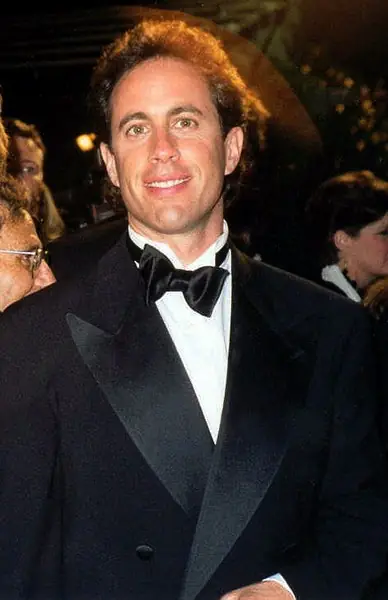
    EASTER EGGS & REFERENCES · SOURCED

Deeper Meaning (3)

  1. #708

    Any time Kramer supports "anti-authority" views, that's the work of Larry Charles, who believes in those "alternate truths."

    DEEPER MEANING · SOURCED

  2. #709

    Larry David famously instituted a policy of "no hugging, no learning," meaning that the show must avoid sentimentality and moral lessons, and the characters must never learn or grow from their wrongdoings.

    DEEPER MEANING · SOURCED

  3. #710

    Larry David established a "no hugging, no learning" policy for the series, meaning it should avoid sentimentality and moral lessons and that the characters should never learn from their mistakes or grow as a result of them.

    DEEPER MEANING · SOURCED

Career & Awards (19)

  1. #711

    Voted the number one top television series of all time, beating out number two, I Love Lucy (1951), and number three, The Honeymooners (1955), in the list of fifty shows chosen by TV Guide editors, April 2002.

    CAREER & AWARDS · SOURCED

  2. #712

    Jason Alexander and Julia Louis-Dreyfus were both in North (1994).

    CAREER & AWARDS · SOURCED

  3. #713

    One of only three series in American history to rank number one in the ratings for its entire final network season. The other two were I Love Lucy (1951) and The Andy Griffith Show (1960).

    CAREER & AWARDS · SOURCED

  4. #714

    This show was nominated for the 2004 TV Land Award for Favorite Instrumental Theme Song.

    CAREER & AWARDS · SOURCED

  5. #715

    Bloomberg estimated that Jerry Seinfeld made $465 million from syndication deals for this series.

    Julia Louis-Dreyfus from Seinfeld smiles and poses with a man in a tuxedo at an event.
    Seinfeld (1989): A man in a tuxedo and Julia Louis-Dreyfus at an eventImage: Wikimedia Commons · Alan Light, CC BY 2.0

    CAREER & AWARDS · SOURCED

  6. #716

    Ranked number eleven on Empire Magazine's 50 Greatest TV Shows Of All Time (2008).

    CAREER & AWARDS · SOURCED

  7. #717

    Jerry Seinfeld received five Emmy Award nominations for Outstanding Lead Actor in a Comedy Series, but never won.

    CAREER & AWARDS · SOURCED

  8. #718

    The same year Jason Alexander began portraying George, he won a Tony Award for his work in Jerome Robbins' Broadway.

    CAREER & AWARDS · SOURCED

  9. #719

    As for acting Emmys, Michael Richards and Julia Louis-Dreyfus won awards, while nominations went to Jerry Seinfeld, Jason Alexander, Jerry Stiller, Bill Erwin, Judge Reinhold, Marlee Matlin, Larry Thomas, and Lloyd Bridges.

    CAREER & AWARDS · SOURCED

  10. #720

    This show won an Emmy for Best Comedy Series only once in its nine-year run.

    CAREER & AWARDS · SOURCED

  11. #721

    Guest stars included five Oscar winners (Jon Voight, Marisa Tomei, Marlee Matlin, Grant Heslov, and Steve Tisch) and five Oscar nominees (Bryan Cranston, Bette Midler, Carol Kane, Candice Bergen, and Marsha Mason).

    CAREER & AWARDS · SOURCED

  12. #722

    In a list appearing in Spectrum Magazine issue #22, dated April 2000 of the best television series of the 1990s, John Thorne ranked this show as number five.

    CAREER & AWARDS · SOURCED

  13. #723

    While Jason Alexander never won an Emmy Award (nominated six times) for playing George, he's the only one of the four main performers to have won a Tony Award. He won a Best Actor in a Musical award for "Jerome Robbin's Broadway" in 1989, the same year this show started.

    CAREER & AWARDS · SOURCED

  14. #724

    Aside from the four stars, Liz Sheridan (Helen) is the only recurring cast member to make at least one appearance in all nine years of the show.

    CAREER & AWARDS · SOURCED

  15. #725

    Michael Richards and Larry David worked together on Fridays (1980).

    CAREER & AWARDS · SOURCED

  16. #726

    The show's often-repeated phrase, "Yada, yada, yada," was ranked number one in TV Guide's list of TV's 20 Top Catchphrases (August 21-27, 2005 issue).

    CAREER & AWARDS · SOURCED

  17. #727

    Was chosen by Time Magazine as one of the "Best of Television 1996" at position number two in their year-end review issue dated December 23, 1996.

    CAREER & AWARDS · SOURCED

  18. #728

    A testament to this show's influence was the word "sponge-worthy," the catchword from season seven, episode nine, "The Sponge," being used in a Budweiser commercial.

    CAREER & AWARDS · SOURCED

  19. #729

    On The Sarah Silverman Podcast in January 2021, Sarah Silverman spoke about a bad experience working with Michael Richards on Seinfeld, where she had appeared as a guest actor early in her career. She played Kramer's girlfriend, and while filming a scene talking in bed, she flubbed a line and Michaels began yelling at her in front of the crew. But no one stopped him. She was shocked. The next day Silverman returned to the set and had a scene with Richards in a restaurant. Both are sitting at the table, and while the shot is being set up, Richards starts casually chatting with Silverman about real estate and other small talk, as if nothing had happened. Finally she cut him off and said, "I don't give a f**k!" which stunned him. Then she told him: "You can't talk like that and act like nothing happened. I'm not going to be one of those people who joins in and acts like nothing happened. That was a really shitty thing to do." She said the man accepted the criticism and from then on was casually friendly. He also sometimes called her to ask for stand-up advice.
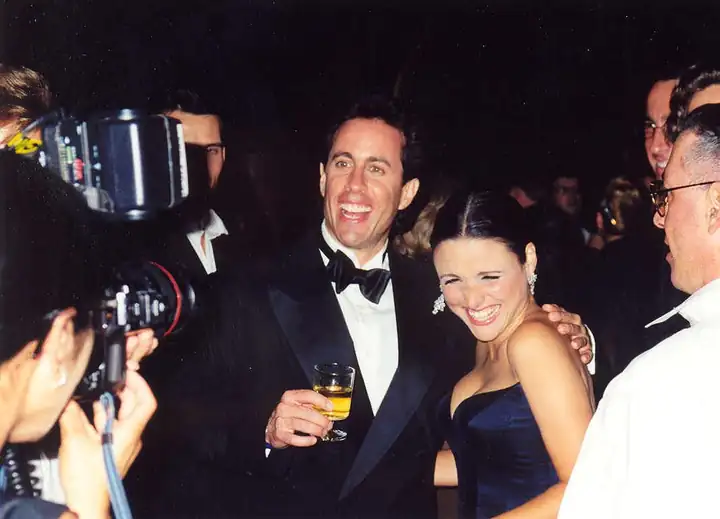
    CAREER & AWARDS · SOURCED

Life & Family (10)

  1. #730

    When Jerry Seinfeld performed his series of "I'm Telling You For The Last Time" concerts at the Bensonhurst Theatre in 1998, a small group of protesters turned up across the street every night condemning him for doing season nine, episode twenty, "The Puerto Rican Day." At one point, security had to be increased because of death threats.

    LIFE & FAMILY · SOURCED

  2. #731

    Michael Costanza, Jerry Seinfeld's friend after whom George is named, filed a $100 million lawsuit against Seinfeld, Larry David, and NBC, claiming invasion of privacy and defamation of character. Costanza claimed damages due to the show's alleged use of his likeness. The case was dismissed with the judges adding that the statute of limitations on the case had run out, as Costanza did not sue within one year of the show's debut in 1989.

    LIFE & FAMILY · SOURCED

  3. #732

    New York is Jerry's real Hometown.

    LIFE & FAMILY · SOURCED

  4. #733

    Estelle Harris, Rae Allen and Liz Sheridan all died within 2 weeks of each other. Harris died on April 2, 2022, Allen on April 4, and Sheridan on April 15.

    LIFE & FAMILY · SOURCED

  5. #734

    Lauren Bowles, who appeared on nine episodes in small roles (usually as a waitress), is the half-sister of Julia Louis-Dreyfus (Elaine Benes). Bowles is the daughter of Louis-Dreyfus' mother, Judith LeFever Bowles, and Judith's second husband, L. Thompson Bowles.

    LIFE & FAMILY · SOURCED

  6. #735

    Estelle Harris and Liz Sheridan died just 13 days apart in April 2022.

    LIFE & FAMILY · SOURCED

  7. #736

    To catch a break from his celebrity status in the United States, where many people on the street were recognizing him due to the show's popularity, Michael Richards took a summer vacation to Bali. He strolled into a remote jungle, where he came across a primitive Buddhist tribe, and upon seeing him, one of the natives pointed at him and yelled "Kramer! Kramer!" Richards then learned that the tribe had a television, with its cable stretched far across the jungle, in a hut where they would watch the show, dubbed into their language.

    LIFE & FAMILY · SOURCED

  8. #737

    Jerry Stiller played George's dad. Ben Stiller (Jerry's real-life son) is married to Christine Taylor, who guest-starred on the show as Jerry Seinfeld's girlfriend.

    LIFE & FAMILY · SOURCED

  9. #738

    Michael Richards is the only member of the four main cast members who is not of any Jewish descent. Julia Louis-Dreyfus's father is of French Jewish descent, but because Orthodox Judaism is a matriarchal religion, one is only considered Jewish if their mother is Jewish. Louis-Dreyfus herself was raised Catholic.

    LIFE & FAMILY · SOURCED

  10. #739

    One of the few long-running television roles for Jerry Stiller in which his wife and comedy partner Anne Meara did not make at least one guest appearance with him.

    LIFE & FAMILY · SOURCED

Continue through the archive

Sources & editorial notes

Reference databases

  • Wikipedia English Wikipedia article
  • IMDb IMDb title page (trivia)

Information from external sources is independently selected, consolidated and edited by Arka Evren. Sources are listed for verification and further reading. Encyclopedia text is used under its licence (CC BY-SA). How we work