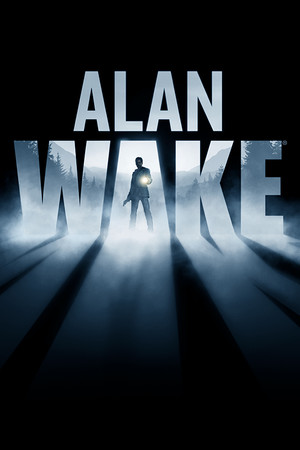
GAME · 2010
Alan Wake
- Publisher
- Xbox Game Studios
- Platforms
- Microsoft Windows
32 archived facts 5 topics 1 source Last reviewed Sep 2026
All facts (32)
- #001
Alan Wake was conceived early on as an attempt to tell a deeper narrative story than Max Payne, drawing influence from Stephen King and David Lynch, particularly Twin Peaks.
- #002
Alan Wake was approached as a television episodic format to tell its action-thriller story.
- #003
The basic narrative elements of Alan Wake were set early on: a successful writer finds himself in the small town of Bright Falls, where supernatural events cause his writings to come to life and attack him.
- #004
During development of Alan Wake, Remedy planned the town of Bright Falls as a free-roaming, sandbox-style open world city, a departure from the linear style of Max Payne.
- #005
Remedy built a semi-automatic system to generate Alan Wake's open world using biomes and other features drawn from their research on the Pacific Northwest, where Bright Falls was set.
- #006
An early version of Alan Wake was closer to a survival game: players would gather resources such as gasoline during daylight to run portable generators and lights for defense at night.
- #007
According to creative director Sam Lake, tying Alan Wake's survival-style gameplay to its supernatural events made establishing a story and narrative difficult; one idea involved a no-longer-dormant volcano under Cauldron Lake whose activity would have forced the evacuation of Bright Falls.
- #008
Alan Wake was announced at E3 2005 in June for "the next generation of consoles and PCs", with the game still designed around an open-world approach.
- #009
Remedy showed Alan Wake to the press behind closed doors at E3 2005 as a tech demo, and used the demo to attract publisher interest.
- #010
By 2006, Remedy announced a partnership with Microsoft Game Studios to publish Alan Wake exclusively for the Xbox 360 console and then-current Windows Vista PC operating system.
- #011
About three years into development of Alan Wake, Remedy recognized the need to pause and refocus on the game's core gameplay elements.
- #012
The revised gameplay loop led Remedy to break Alan Wake's open-world setting into linear chapter-sized levels, with some levels used for daytime story and NPC interaction and others for action-focused night sequences, and some having both daytime and nighttime versions.
- #013
Oskari Häkkinen, Remedy's head of franchise development during Alan Wake's development, said that keeping the open world map with features rendered in the distance provided landmarks for player direction, enabled narrative foreshadowing and helped the game world's overall cohesion.
- #014
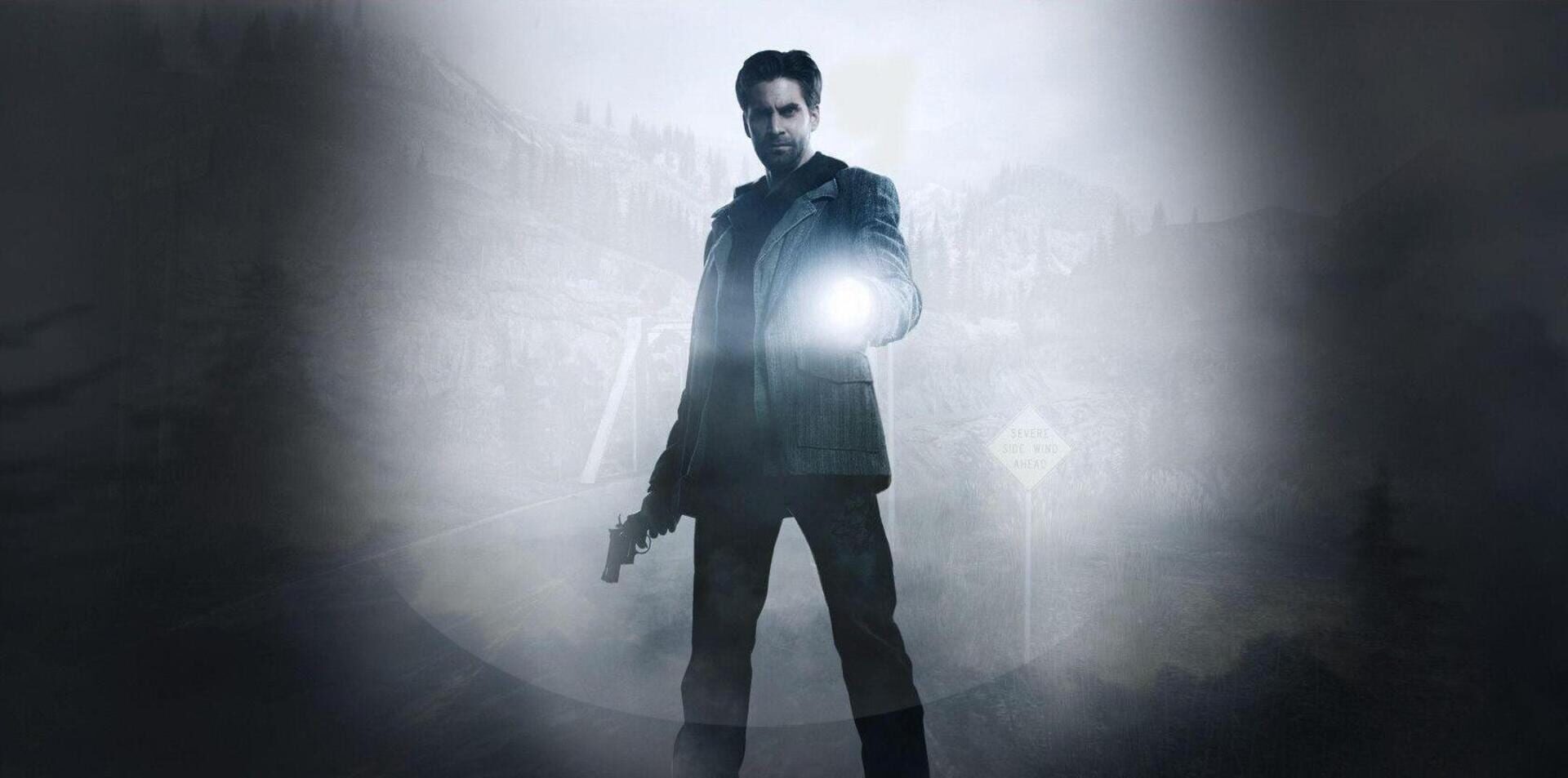
Early screenshots of Alan Wake showed the title character wearing noticeably different clothing than in the released game.
- #015
The town of Bright Falls appeared with a different layout in the first screenshots of Alan Wake than in the finished game.
- #016
According to Lake, Alan Wake was designed as the opposite of Max Payne: whereas Max was a cop suited to an action game, Remedy wanted Alan to be atypical of an action hero and made him a writer, partially influenced by King, who becomes involved in the events and is forced into action.
- #017
According to Lake, near the end of Alan Wake's development the character's story began to serve as a metaphor for Remedy's own work on the game.
- #018
According to Lake, the metaphor worked because Alan's earlier career as a novelist rested on a fictional police detective, mirroring Remedy's Max Payne, while he now struggled to write something different, representing the studio's difficulty in finding a vision for Alan Wake.
- #019
The enemies in Alan Wake were created by drawing concept art and then pouring water over it, a technique intended to make them feel "Just a bit off".
- #020
For Alan Wake himself, Remedy used "concept photos" rather than traditional concept artwork.
- #021
Ilkka Villi and Jonna Järvenpää, the models for Alan and Alice Wake, were the only Finnish models in Alan Wake; the remaining models were American.
- #022
Remedy confirmed in 2009 that Alan Wake was then in development exclusively for the Xbox 360, after the Microsoft Windows version had been demonstrated repeatedly over four years.
- #023
Alan Wake was declared finished and in final polishing in August 2009.
- #024
Alan Wake went gold on 7 April 2010 and was released in May.
- #025
After Alan Wake was released in 2010, Remedy stated that a PC version was "not on the cards at the moment."
- #026
Nearly two years after Alan Wake's release, Remedy secured the rights to publish a PC version of the game.
- #027
Alan Wake draws influence from and frequently alludes to certain films, TV shows and books, and pays homage to a number of artists and works.
- #028
According to Remedy, the shared themes and ideas between Alan Wake and other works of popular culture come from taking something familiar to people as an element and building something of your own.
- #029
According to creator Sam Lake, Alan Wake draws influence from and pays homage to the works of David Lynch, particularly Twin Peaks.
- #030
Sam Lake named the bestselling author Stephen King as the second main source of influence and homage for Alan Wake.
- #031
Alan Wake's setting of Bright Falls was inspired by the title town of Twin Peaks, as both are fictional small towns in Washington state.
- #032
To research Alan Wake's Pacific Northwest setting, a Remedy team spent two weeks driving about 2,000 miles through Oregon, Washington and British Columbia, gathering over 6,000 photographs and videos of natural settings and small-town Americana, including Astoria, Oregon and North Bend, Washington, where Twin Peaks was filmed.
Sources & editorial notes
Sources for the entries on this page
- Wikipedia Alan Wake — Wikipedia
Information from external sources is independently selected, consolidated and edited by Arka Evren. Sources are listed for verification and further reading. Encyclopedia text is used under its licence (CC BY-SA). How we work