GAME · 2015 · UK
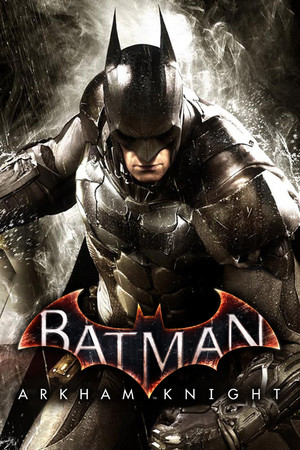
Batman: Arkham Knight
- Developer
- Rocksteady Studios
- Publisher
- Warner Bros. Games
- Platforms
- Microsoft Windows, macOS
115 archived facts 6 topics 2 sources Last reviewed Sep 2026
21 Facts From the Development of Batman: Arkham Knight
- #008
Contains a major spoiler — show
After Batman: Arkham City (2011), Mark Hamill said he would retire from the role of Joker unless an adaptation of "The Killing Joke" was made. This game includes a recreation of the opening pages of "The Killing Joke" through a Joker hallucination caused by Batman's fear toxin. Hamill would have his wish granted and would play the Joker in Batman: The Killing Joke (2016), the animated film adaptation of the comic. He later stated that he would continue to play the character as long as Kevin Conroy voiced Batman.
- #014
Contains a major spoiler — show
The idea of Scarecrow being the main villain and the Joker returning through hallucinations was taken from the script of "Batman: Unchained," Joel Schumacher's cancelled sequel to Batman & Robin (1997), which would have brought the live-action film series full circle back to its starting point with Batman (1989).
- #041
Contains a major spoiler — show
Its plot resembles the cancelled Batman film "Batman: Unchained," which was expected to be the fifth and final film in the Tim Burton/Joel Schumacher series. One of the biggest differences in Batman: Arkham Knight is that Harley Quinn is the Joker's lover, whereas in the cancelled film she was the Joker's daughter seeking revenge for her father's death.
- #070
Contains a major spoiler — show
A sequel was planned in which Damian Wayne, the illegitimate son of Bruce Wayne and Talia al Ghul, would become the new Batman after his father's supposed death. Despite concept art being made and some initial development being started, the game was ultimately shelved in favor of Gotham Knights (2022).
- #084
Paul Dini, who wrote the first two games in the Arkham series, stated in August 2012 that he would not be writing a sequel to Arkham City.
- #085
Paul Dini did not write the story-based Harley Quinn's Revenge downloadable content for Batman: Arkham City, and he said Warner Bros. and Rocksteady suggested he accept other work if offered.
- #086
For Batman: Arkham Knight, Rocksteady chose to use its own writing team, led by game director Sefton Hill and designer Ian Ball, with script elements by Martin Lancaster.
- #087
Geoff Johns served as a consultant on the plot of Batman: Arkham Knight.
- #088
Development of Batman: Arkham Knight started in 2011, once work on Arkham City was complete, and the game took four years to finish.
- #089
Batman: Arkham Knight was publicly revealed in March 2014, after marketing material leaked at the end of February, with Rocksteady Studios returning as developer following WB Games Montréal's 2013 title Batman: Arkham Origins.
- #090
Rocksteady Studios described Batman: Arkham Knight as the concluding chapter of the Arkham series, a finale the studio had in mind since developing Arkham City.
- #092
Rocksteady chose early in development to release Batman: Arkham Knight only on the then-upcoming next-generation consoles, a decision intended to let the team use system resources fully without limiting ideas to suit older hardware.
- #096
Batman: Arkham Knight does not include a multiplayer component, unlike Arkham Origins. According to Hill, the development team focused on delivering the best single-player experience it could and did not feel a multiplayer element was needed.
- #097
According to Hill, Warner Bros. supported the decision to omit multiplayer from Batman: Arkham Knight from the very beginning.
- #098
Rocksteady had wanted to include Batman's Batmobile in its earlier Arkham games, but technical constraints prevented it until Batman: Arkham Knight.
- #101
Batman: Arkham Knight has no fast travel system, unlike Arkham Origins, because its designers treated traversal as part of the game and believed skipping it would detract from the experience.
- #102
During early development of Batman: Arkham Knight, Rocksteady placed a prototype Batmobile in the existing Arkham City map and found that the claustrophobic city designed for gliding and grappling did not work well for driving a vehicle.
- #103
Gotham City was redesigned for Batman: Arkham Knight with wider streets so the Batmobile and other street traffic could drive without hitting walls, and buildings were made taller to accommodate the vehicle's ejection ability.
- #104
For Batman: Arkham Knight, the designers built on the previous games' gothic architecture while aiming for a more believable and dense city, adding neon lights, billboard advertising, American-style cars and ideas for shops while keeping a grimy, dystopian theme.
- #110
According to Hill, Rocksteady wanted an antagonist for Batman: Arkham Knight who could challenge Batman on equal terms.
- #113
Nick Arundel, who had composed the scores for Arkham Asylum and Arkham City, returned to score Batman: Arkham Knight, while David Buckley replaced his former partner Ron Fish.
Sources & editorial notes
Sources for the entries on this page
- IMDb IMDb
- Wikipedia Batman: Arkham Knight — Wikipedia
Information from external sources is independently selected, consolidated and edited by Arka Evren. Sources are listed for verification and further reading. Encyclopedia text is used under its licence (CC BY-SA). How we work