
GAME · 2010 · USA
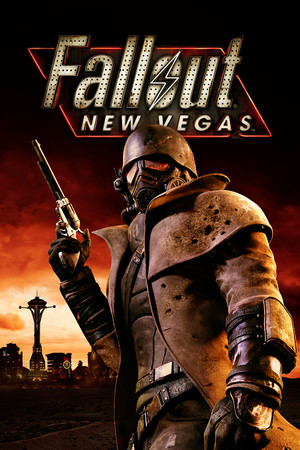
Fallout: New Vegas
- Developer
- Obsidian Entertainment
- Publisher
- Bethesda Softworks
- Platforms
- Microsoft Windows, PlayStation 3
37 archived facts 4 topics 2 sources Last reviewed Nov 2026
37 Interesting Facts About Fallout: New Vegas
Interesting Facts (12)
- #001
Obsidian Entertainment approached Bethesda after the release of Fallout 3, expressing interest in developing a Fallout spin-off. Bethesda agreed to allow it and specified that the game should be set in the western United States to distinguish it from Fallout 3, which takes place in the eastern United States. By coincidence, Obsidian had already been considering Vegas as the game's setting, and Bethesda loved the idea.
- #002
While taking the NCR citizenship test, one of the questions asks who the first NCR president was, and the correct answer is Tandi. Before the NCR was founded, Tandi was actually an NPC player character rescued in Fallout 1, a resident of the small town known as Shady Sands.
- #003
"That Gun" in the game was inspired by the pistol Harrison Ford's Rick Deckard used in Blade Runner (1982). Additionally, there is a challenge called "Benefit or a Hazard" for using That Gun against robots. This is a quote from Rick Deckard, who has mixed feelings about replicants.
- #004
The town of Novac takes its name from the sign next to the giant T-Rex outside the motel. The sign reads "NO VACANCY," with the letters "ANCY" destroyed and burned, leaving only "NOVAC" intact.
- #005
Mr. New Vegas's reference to Lanius's action against the troops, in which one in ten soldiers is killed by the other nine, is known as decimation, from the Latin for the removal of a tenth.
- #006
On his radio channel, Mr. New Vegas will sometimes touch on important moments in your game. If you choose to kill Mr. House, he will talk about it. Other plot points include how you deal with the various tribes of the Mojave and certain DLC quests.
- #007
The game's "player faction" group, a hidden group that allied characters join when recruited, is named the "DontTazeMeBro" group.
- #008
Mr. New Vegas's voice actor, Wayne Newton, is one of the most recognized performers in Las Vegas history and is known in real life as "Mr. Las Vegas."
- #009
In his checkered suit, "Benny" closely resembles the gangster Benjamin "Bugsy" Siegel, known for creating the Las Vegas we know today.
- #010
In the 2010 expansion pack Dead Money, Courier 6 tries to find the signal of the grand opening invitation of the Sierra Madre Hotel. In the story, a group of adventurers sets out to search for the lost treasure of the Sierra Madre.
- #011
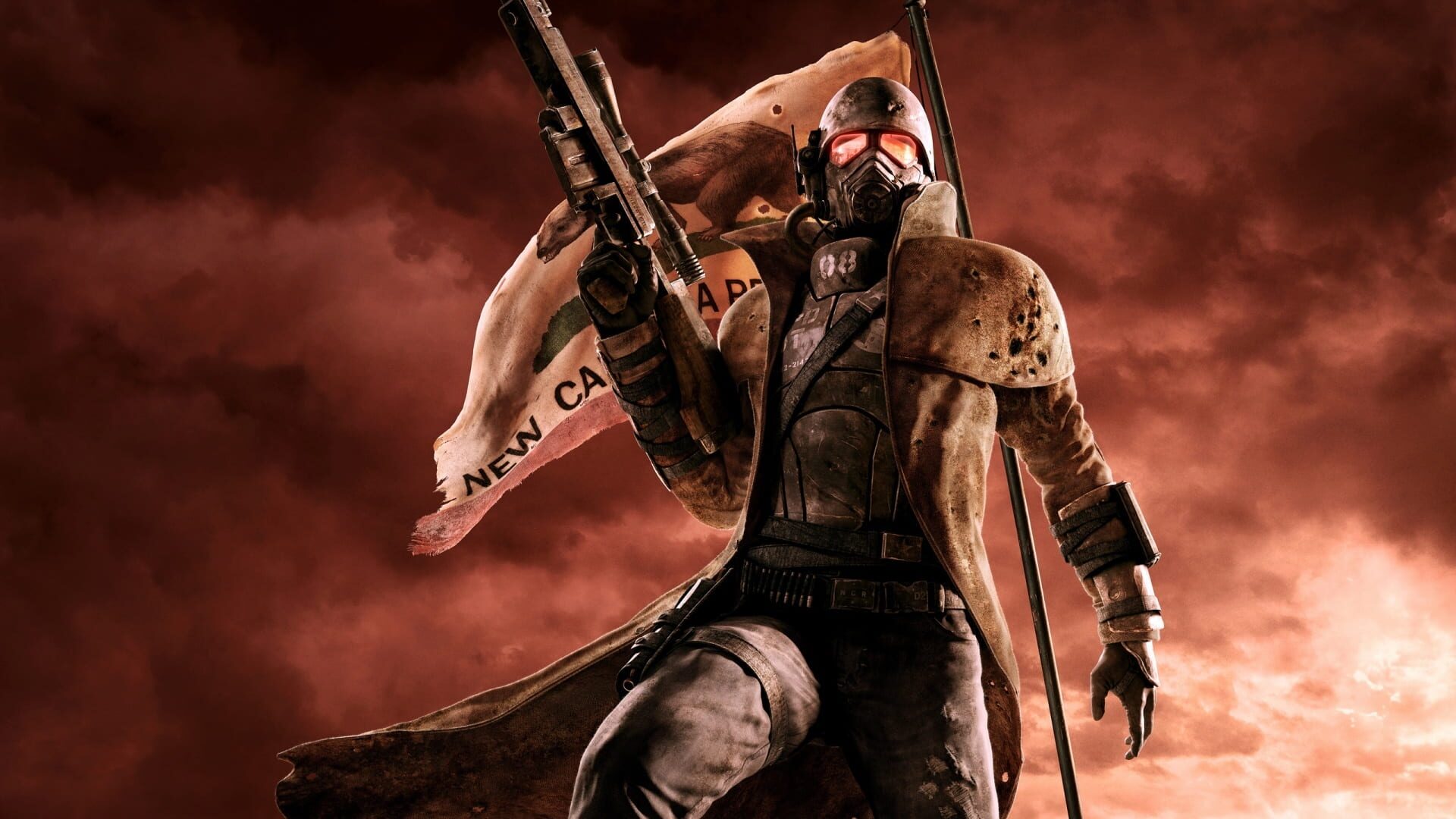
The design of the NCR Veteran Ranger armor comes from the description of a character in Fallout 1 who 'wears a gas mask and a brown leather coat.' This description, in turn, is a nod to the older game Wasteland, in which the player is a Ranger in a post-apocalyptic setting.
- #012
In one of Mr. New Vegas's news broadcasts, quotes are made from King, an Elvis fan and gang leader. Phrases such as 'Devil in disguise' and 'return to sender' are titles of Elvis Presley songs.
Production Story (13)
- #013
Fallout: New Vegas originated from the cancellation of Van Buren, which had been intended as the third mainline Fallout game.
- #014
Bethesda's creative director Todd Howard advocated for a full game rather than an expansion pack, and suggested Obsidian based on its experience with the Fallout series.
- #015
Bethesda wanted Fallout: New Vegas to be set on the West Coast of the United States, where the first two Fallout games take place, and Obsidian believed a similar setting would let it expand concepts introduced by Fallout 2, such as the New California Republic.
- #016
The narrative of Fallout: New Vegas was built around factional conflict in response to fan feedback. Sawyer reasoned that in the desert setting the factions would realistically care most about water access, making Hoover Dam a focus of the game's worldbuilding.
- #017
Obsidian aimed for Fallout: New Vegas to closely resemble the Las Vegas Strip of the 1950s, giving each casino large neon signs and architecture modeled on the contemporary Googie movement; the game also features a warmer color palette and local flora such as Joshua trees and prickly pear cacti.
- #018
Obsidian drew inspiration from the Fallout 3 modding community, particularly mods that aimed to improve the game through quality of life changes.
- #019
Bethesda supplied Obsidian with the Gamebryo engine used for Fallout 3, and because no Obsidian staff had worked with Gamebryo, the company hired a modder experienced with mods for The Elder Scrolls IV: Oblivion.
- #020
Bethesda allotted Obsidian 18 months to develop Fallout: New Vegas, a timeframe several journalists described as very short for a Triple-A game.
- #021
Obsidian's inexperience with the Gamebryo engine slowed Fallout: New Vegas development, as programmers had to perform routine engine maintenance and had difficulty implementing the Havok software required for console games.
- #022
Fallout: New Vegas was contracted for development and a decision was made to release it on consoles, which meant some areas of the game had to be cut.
- #023
Planned settlements east of the Colorado River were among the cut content, including three locations that Caesar's Legion would have controlled and that would have offered more information about the faction.
- #024
Obsidian intended to let players keep exploring the map after the story ended rather than stopping gameplay abruptly, but little design work on post-story content existed by the beta stage, and the studio chose to prioritize optimization over adding content to an already unstable game.
- #025
Designer Chris Avellone noted that the post-story content would have been small, such as extra dialogue options with NPCs and NPC locations changing to match the player's chosen ending.
Behind the Scenes (8)
- #026
At the request of project director Josh Sawyer, Obsidian repurposed digital assets from a canceled Alien game for Fallout: New Vegas; Sawyer said he did not want to disrupt the pipelines and preferred to use what was there, add to it rather than change it, and make great content.
- #027
Obsidian used United States Geological Survey data to capture the ambiance of the Mojave Desert for Fallout: New Vegas, and designer Sawyer traveled to Las Vegas to take reference photographs of the surrounding areas, including Red Rock Canyon National Conservation Area.
- #028
For Fallout: New Vegas, Obsidian designed the map using the Las Vegas Beltway as a reference, believing a road network circling the map would help players navigate, while Bethesda asked for large structures to act as visual landmarks.
- #029
Fallout: New Vegas kept the core gameplay of Fallout 3 largely intact, with Obsidian focusing on smaller changes such as more tactical combat options. Players could use iron sights on guns, and movement strongly affected accuracy.
- #030
Fallout: New Vegas added optional mechanics meant to evoke desert survival, including item-crafting and Hardcore Mode. According to Sawyer, Hardcore Mode was included to offer players an optional increase in difficulty.
- #031
Inon Zur composed the soundtrack for Fallout: New Vegas, aiming to evoke the soundscape of the American Southwest. While working on it, Zur received an email listing descriptors such as "Southwest in the Future. Open, Spacious, Raw, Lonesome, Cowboy, Rattlesnake, Desert, Wind, Heat, Rust, Steel, Dirt, Grit."
- #032
For Fallout: New Vegas, Inon Zur drew inspiration from the soundtrack of the film There Will Be Blood and collaborated with audio director Scott Lawlor on music for a string quartet.
- #033
Fallout: New Vegas uses an adaptive music system, so its soundtrack shifts with the player's situation: quiet and ambient during exploration, then loud and powerful in combat. The game also features licensed music, including 1950s songs and genres such as country and bluegrass, playable through in-game radio stations.
Easter Eggs & References (4)
- #034
If you choose the Wild Wasteland perk at the start of the game, you can find an old refrigerator in the desert containing a skeleton wearing a fedora. This is a reference to Indiana Jones and the Kingdom of the Crystal Skull, in which Jones hides in a refrigerator to escape a nuclear explosion.
- #035
With the Wild Wasteland perk, at Cottonwood Cove where you take the boat to Caesar's Fort, one of the buildings has the graffiti "Romanes eunt domus." This is a clear reference to a scene in Monty Python's Life of Brian in which the main character, Brian, tries to tell the Roman occupiers to go home by (incorrectly) painting the message on a wall in the town square. He is then caught by a Roman and made to correct his grammatical errors.
- #036
There is a hidden reference to The Princess Bride (1987). When Broc Flower Cave is entered with the Wild Wasteland perk, Giant Rats are renamed Rodents of Unusual Size.
- #037
Fallout: New Vegas uses kitschy roadside attractions as landmarks, such as a large dinosaur statue based on the Cabazon Dinosaurs in Cabazon, California, a choice made to differentiate the game from Fallout 3, which used Washington, D.C. monuments.
Related pages
- South Park: The Stick of Truth — Fallout: New Vegas comes up in the facts on that page
Sources & editorial notes
Sources for the entries on this page
- Wikipedia Fallout: New Vegas — Wikipedia
Information from external sources is independently selected, consolidated and edited by Arka Evren. Sources are listed for verification and further reading. Encyclopedia text is used under its licence (CC BY-SA). How we work