GAME · 2010
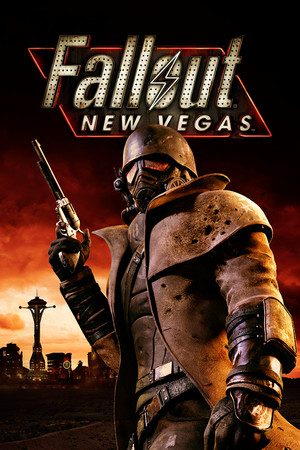
Fallout: New Vegas
- Developer
- Obsidian Entertainment
- Publisher
- Bethesda Softworks
- Platforms
- Microsoft Windows, PlayStation 3
29 archived facts 3 topics 1 source Last reviewed Sep 2026
20 Facts From the Development of Fallout: New Vegas
- #001
Fallout: New Vegas originated from the cancellation of Van Buren, which had been intended as the third mainline Fallout game.
- #002
Van Buren was to be developed by Black Isle Studios as a real-time game featuring turn-based combat, set across Arizona, Colorado, Nevada and Utah.
- #003
Van Buren was cancelled in December 2003 after financial problems at Interplay Entertainment, the publisher of Black Isle Studios.
- #004
Before Van Buren was cancelled, former Black Isle and Interplay staff cofounded Obsidian Entertainment, which went on to develop Star Wars Knights of the Old Republic II: The Sith Lords, Neverwinter Nights 2, Alpha Protocol and a cancelled Alien role-playing game.
- #005
Bethesda Softworks contracted Obsidian to develop a spin-off from the Fallout main series, following Obsidian's 2007 rejection of an offer to develop a Star Trek game.
- #006
Bethesda's creative director Todd Howard advocated for a full game rather than an expansion pack, and suggested Obsidian based on its experience with the Fallout series.
- #007
Bethesda Softworks bought the Fallout intellectual property in 2007, and the following year released Fallout 3, which sold over five million copies in 2008.
- #008
Before Fallout 3 was released, Bethesda had already begun development on The Elder Scrolls V: Skyrim and sought another developer to create a large expansion pack for Fallout 3.
- #009
Bethesda wanted Fallout: New Vegas to be set on the West Coast of the United States, where the first two Fallout games take place, and Obsidian believed a similar setting would let it expand concepts introduced by Fallout 2, such as the New California Republic.
- #010
Fallout: New Vegas was set in Las Vegas and the surrounding Mojave Desert because those locations evoked the 1950s imagery associated with the series and the post-apocalyptic setting of Mad Max.
- #012
The narrative of Fallout: New Vegas was built around factional conflict in response to fan feedback. Sawyer reasoned that in the desert setting the factions would realistically care most about water access, making Hoover Dam a focus of the game's worldbuilding.
- #016
Obsidian aimed for Fallout: New Vegas to closely resemble the Las Vegas Strip of the 1950s, giving each casino large neon signs and architecture modeled on the contemporary Googie movement; the game also features a warmer color palette and local flora such as Joshua trees and prickly pear cacti.
- #019
Obsidian drew inspiration from the Fallout 3 modding community, particularly mods that aimed to improve the game through quality of life changes.
- #020
Bethesda supplied Obsidian with the Gamebryo engine used for Fallout 3, and because no Obsidian staff had worked with Gamebryo, the company hired a modder experienced with mods for The Elder Scrolls IV: Oblivion.
- #024
Bethesda allotted Obsidian 18 months to develop Fallout: New Vegas, a timeframe several journalists described as very short for a Triple-A game.
- #025
Obsidian's inexperience with the Gamebryo engine slowed Fallout: New Vegas development, as programmers had to perform routine engine maintenance and had difficulty implementing the Havok software required for console games.
- #026
Fallout: New Vegas was contracted for development and a decision was made to release it on consoles, which meant some areas of the game had to be cut.
- #027
Planned settlements east of the Colorado River were among the cut content, including three locations that Caesar's Legion would have controlled and that would have offered more information about the faction.
- #028
Obsidian intended to let players keep exploring the map after the story ended rather than stopping gameplay abruptly, but little design work on post-story content existed by the beta stage, and the studio chose to prioritize optimization over adding content to an already unstable game.
- #029
Designer Chris Avellone noted that the post-story content would have been small, such as extra dialogue options with NPCs and NPC locations changing to match the player's chosen ending.
Sources & editorial notes
Sources for the entries on this page
- Wikipedia Fallout: New Vegas — Wikipedia
Information from external sources is independently selected, consolidated and edited by Arka Evren. Sources are listed for verification and further reading. Encyclopedia text is used under its licence (CC BY-SA). How we work