GAME · 2011
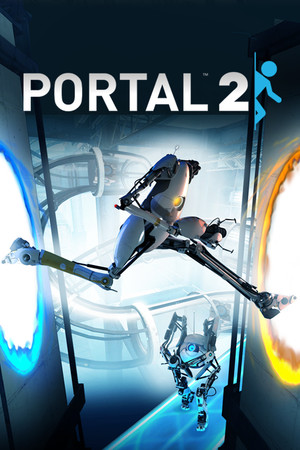
Portal 2
- Platforms
- Microsoft Windows, macOS, PlayStation 3
28 archived facts 4 topics 1 source Last reviewed Sep 2026
All facts (28)
- #001
Valve chose to develop Portal 2 as a standalone product following the success of Portal, partly due to pressure from other developers within Valve who wanted to work on a Portal title.
- #002
Development of Portal 2 started almost immediately after Portal was released.
- #003
Portal 2 received more development resources than Portal: the first game had a team of seven or eight people, while Portal 2 had a team of 30 or 40.
- #004
According to Erik Wolpaw, some Portal 2 developers temporarily worked on the Left 4 Dead games to help meet milestones before returning to Portal 2 with additional people.
- #005
Erik Johnson, a project manager at Valve, said the studio's aim for Portal 2 was to find a way to "re-surprise" players, a prospect he described as "pretty terrifying."
- #006
After Portal 2's release, Geoff Keighley wrote that according to Gabe Newell, the game would probably be Valve's last with an isolated single-player experience; Keighley later said the word "probably" suggested this could change.
- #007
Gabe Newell said Valve was not "giving up on single-player" and instead planned to add more social features on top of the single-player experience, similar to Portal 2's cooperative mode.
- #008
Valve initially intended to leave portals out of Portal 2 and instead built the game around a new mechanic called "F-Stop". The mechanic centered on an "Aperture Camera" that could photograph objects, store them, and then place them back while rotating or scaling them.
- #009
The F-Stop version of Portal 2 was set in the 1980s and had neither Chell nor GLaDOS, following instead a new test subject caught in a conflict inside Aperture after Johnson uploaded himself into an artificial intelligence to seek immortality and seized control of a robot army.
- #010
Playtesters responded well to F-Stop but were unhappy that portals had been dropped, and based on that feedback Newell directed the team to rethink the direction around October 2008.
- #011
Valve kept the details of F-Stop undisclosed because it considered reusing the idea later; in 2020 the developer LunchHouse Software revealed it had found the mechanic's code in the Source branch used for its game PUNT and, with Valve's permission, shared it through the documentary webseries Exposure.
- #012
Portal 2's test chambers were built in two forms: a "checklisting" type that gave players a safe space to try a new concept, and a second type that mixed elements in fresh combinations to push lateral thinking.
- #013
The test chambers of Portal 2 started as isometric whiteboard drawings, after which the developers ran a sanity check and built simple levels using Valve's Hammer Editor.
- #014
Iterative playtesting kept Portal 2's puzzle solutions from being too obvious or too hard, and when playtesters found alternative solutions the team removed those deemed too easy.
- #015
Portal 2's Repulsion (jumping) and Propulsion (running) gels originated in Tag: The Power of Paint, and Valve hired the creators of Tag to develop the idea further before deciding to include it in Portal 2.
- #016
A third Tag gel that let the character walk on any surface regardless of gravity caused motion sickness in playtesters, so it was replaced in Portal 2 by Conversion gel, which integrates with the portal mechanic.
- #017
The gels in Portal 2 are rendered with fluid dynamics routines developed at Valve by the former Tag team, combining flowing surface maps, debris flow maps and random noise for real-time water effects, with rendering techniques from Left 4 Dead 2 used for pools of liquid.
- #018
Early builds of Portal 2 were among a larger set of Valve and Steam files that leaked in August 2026.
- #019
The leaked Portal 2 material contained additional footage of the F-Stop mechanic, a bullet time effect used to solve puzzles.
- #020
The leak also included dialogue from Cave Johnson about the nature of Companion Cubes.
- #021
Wolpaw compared this shared-screen play to players collaborating on point-and-click adventure games at a single computer.
- #022
Portal 2's cooperative levels were designed around coordination and communication, and Valve acknowledges that they are considerably harder than the single-player puzzles.
- #023
The single-player campaign of Portal 2 was built to keep players from becoming frustrated.
- #024
Valve found that timed puzzles work well in Portal 2's cooperative mode, leaving players with a positive feeling once they plan and carry out difficult maneuvers.
- #025
In Portal 2's cooperative mode, each puzzle chamber required actions from both players.
- #026
When a playtester found a way to finish a puzzle using only one set of portals, Valve returned the level to its designers for more work.
- #027
Valve generally designed Portal 2's cooperative chambers so that both players stayed within each other's sight, encouraging communication and cooperation.
- #028
Some Portal 2 cooperative chambers were built asymmetrically, with one player using portals and controls so the other could cross the room, underscoring that the two characters are separate entities even while cooperating.
Sources & editorial notes
Sources for the entries on this page
- Wikipedia Portal 2 — Wikipedia
Information from external sources is independently selected, consolidated and edited by Arka Evren. Sources are listed for verification and further reading. Encyclopedia text is used under its licence (CC BY-SA). How we work