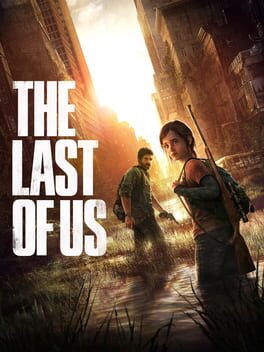
GAME · 2013
The Last of Us
- Developer
- Naughty Dog
- Publisher
- Sony Interactive Entertainment
- Platforms
- PlayStation 3
36 archived facts 5 topics 1 source Last reviewed Sep 2026

All facts (36)
- #001
Naughty Dog began developing The Last of Us in 2009, after the release of Uncharted 2: Among Thieves.
- #002
For the first time in Naughty Dog's history, the studio split into two teams during development of The Last of Us; one team worked on Uncharted 3: Drake's Deception (2011) while the other developed The Last of Us.
- #003
Game director Bruce Straley and creative director Neil Druckmann led the team that developed The Last of Us.
- #004
In Druckmann's early concept, a police officer with a heart condition would protect a young girl, and the heart condition would often lead players to control the girl instead, reversing their roles.
- #005
Druckmann later developed this university idea when he created the story of The Last of Us.
- #006
Druckmann describes The Last of Us as a coming-of-age story in which Ellie adapts to survival after her time with Joel, and as an exploration of how far a father will go to save his child.
- #007
The Last of Us uses the idea that "life goes on" as a major motif, illustrated by a scene in which Joel and Ellie find a herd of giraffes.
- #008
Concept artist John Sweeney said the giraffe scene was designed to "reignite [Ellie's] lust for life" after her suffering following her encounter with David.
- #009
The infected, a core concept of The Last of Us, were inspired by a segment of the 2006 BBC nature documentary Planet Earth that featured the Cordyceps fungi.
- #010
The Last of Us explores the Cordyceps fungus evolving to infect humans and the direct results of an outbreak of that infection, even though the fungi mainly infect insects and take control of their motor functions to help cultivate the fungus.
- #011
The relationship between Joel and Ellie served as the focus of The Last of Us, with all other elements built around it.
- #012
Troy Baker and Ashley Johnson were cast as Joel and Ellie in The Last of Us, providing both voice and motion capture performances.
- #013
Troy Baker and Ashley Johnson helped shape their characters in The Last of Us; Baker persuaded Druckmann that Joel's loneliness would lead him to care for Tess, while Johnson argued that Ellie should be stronger and more defensive.
- #014
After Ellie in The Last of Us drew comparisons to actor Elliot Page, her appearance was redesigned to reflect Ashley Johnson's personality more closely and to make the character look younger.
- #015
The Last of Us features an original score composed primarily by Gustavo Santaolalla, who was contacted early in development. Santaolalla, known for minimalist compositions, used various instruments, including some unfamiliar to him, to convey a sense of danger and innocence.
- #016
The art department of The Last of Us drew inspiration from sources such as Robert Polidori's photographs following Hurricane Katrina, which served as a reference when designing the flooded areas of Pittsburgh.
- #017
During development of The Last of Us, the art department had to negotiate for elements they wanted to include because of strong differing opinions within the team. The team ultimately settled on a balance between simplicity and detail, with Straley and Druckmann favoring simplicity while the art team preferred detail.
- #018
The Last of Us game designer Ricky Cambier cited Ico and Resident Evil 4 as influences on the game's design, saying the team wanted to blend Ico's character building and interaction with the tension and action of Resident Evil 4.
- #019
New engines were created for The Last of Us to meet the team's needs, with artificial intelligence built to coordinate with players; adding Ellie as artificial intelligence was a major contributor to the engine.
- #020
The lighting engine for The Last of Us was re-created to incorporate soft light, in which sunlight seeps in through spaces and reflects off surfaces.
- #021
Gameplay presented difficulty for The Last of Us team, who felt every mechanic required thorough analysis, and the game's user interface design went through various iterations during development.
- #022
The Last of Us was announced on December 10, 2011, at the Spike Video Game Awards, where its debut trailer was also shown.
- #023
Journalists attributed the widespread anticipation that followed the announcement of The Last of Us to Naughty Dog's reputation.
- #024
The Last of Us was delayed from its original projected release date of May 7, 2013, and moved to a worldwide release on June 14, 2013, for further polishing.
- #025
To promote pre-order sales of The Last of Us, Naughty Dog worked with several retailers to offer special editions containing extra content.
- #026
Grounded: Making The Last of Us, a documentary included with the game's season pass, was released online in February 2014.
- #027
Two DLC packs for The Last of Us were included with some special editions of the game and were available upon release: the Sights and Sounds Pack, which contained the soundtrack, a PlayStation 3 dynamic home screen theme and two avatars, and the Survival Pack, which featured bonus skins after campaign completion, in-game money, bonus experience points and early access to customizable multiplayer items.
- #028
The Abandoned Territories Map Pack, released on October 15, 2013, added four new multiplayer maps for The Last of Us based on locations in the game's story, and the Nightmare Bundle, released on November 5, 2013, added a collection of ten head items, nine of which could be purchased separately.
- #029
A bundle released on May 6, 2014, for The Last of Us contained five separate DLC: Grounded, which added a new difficulty to the main game and Left Behind; the Reclaimed Territories Map Pack, which added new multiplayer maps; the Professional Survival Skills Bundle and Situational Survival Skills Bundle, which added eight new multiplayer skills; and the Survivalist Weapon Bundle, which added four new weapons.
- #030
The Grit and Gear Bundle for The Last of Us, adding new headgear items, masks and gestures, was released on August 5, 2014.
- #031
The Last of Us Remastered added DualShock 4 features: the touchpad navigates inventory items, the light bar signals health by shifting from green to orange and red when damage is taken, and audio recordings can be heard through the controller's speaker.
- #032
The Last of Us Remastered includes a Photo Mode that lets players pause gameplay and freely adjust the camera to capture images, and its menu allows players to watch all cutscenes with audio commentary from Druckmann, Baker, and Johnson.
- #033
The Last of Us Part I, a remake of The Last of Us, launched on PlayStation 5 on September 2, 2022, and on Windows on March 28, 2023.
- #034
Development of The Last of Us Part I was led by game director Matthew Gallant and creative director Shaun Escayg, with the game rebuilt for PlayStation 5 hardware and requiring new art direction, animation, and character models.
- #035
The Last of Us Part I added revised gameplay and controls, improved performance and lighting, and new accessibility options, and on PlayStation 5 it supports 3D audio along with the DualSense controller's haptic feedback and adaptive triggers.
- #036
The Last of Us Part I's announcement drew mixed reactions, with some journalists and players calling it unnecessary given the original's age and the existence of Remastered, and questioning its US$70 price; on release it received positive reviews, while the Windows version's response was mixed and became Naughty Dog's lowest-rated game.
Sources & editorial notes
Sources for the entries on this page
- Wikipedia The Last of Us (video game) — Wikipedia
Information from external sources is independently selected, consolidated and edited by Arka Evren. Sources are listed for verification and further reading. Encyclopedia text is used under its licence (CC BY-SA). How we work