

FILM · 1984 · USA
Amadeus
- Directed by
- Miloš Forman
- Runtime
- 160 min
- Studio
- The Saul Zaentz Company
178 archived facts 8 topics 1 source Last reviewed Nov 2026
Disciplined Italian composer Antonio Salieri becomes consumed by jealousy and resentment towards the hedonistic and remarkably talented young Salzburger composer Wolfgang Amadeus Mozart.

178 Interesting Facts About Amadeus
Interesting Facts (24)
- #001
The piece of Wolfgang Amadeus Mozart's music with the oboe and clarinet themes, whose score Salieri so deeply admires in the early scenes, is the Adagio, or third movement, of the Serenade No. 10 in B-flat, KV361, also known as "Gran Partita".
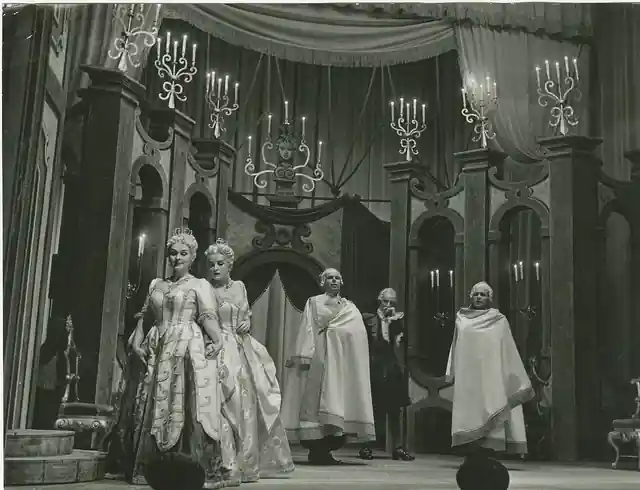
Amadeus (1984): Così fan tutte on stage, five people in period costumesImage: Wikimedia Commons · Unknown author Unknown author, CC BY-SA 4.0 - #002
Salieri says that Mozart composed his first concerto at the age of four, his first symphony at seven, and a full-scale opera at twelve. Modern scholarship believes that Mozart wrote his first symphony (Symphony No 1 in E flat, K16) at the age of eight, and his first concerto (Piano Concerto No 1 in F, K37) at eleven. As for opera, the term "full-scale" is open to interpretation, but most would cite La Finta Simplice, K46a, written when Mozart was twelve. However, Mozart's father routinely lied about his son's age to make him seem even more of a prodigy, so Salieri's statement was quite possibly what was then believed.
- #003
Constanze's mother is identified as Mozart's landlady, and he did live in their household when he went to Vienna. But Constanze and her family were trained singers, and Constanze's sister Josepha was a coloratura who originally performed the role of the Queen of the Night in The Magic Flute as shown in the film when Mozart's screeching mother-in-law dissolves to the Queen of the Night's aria.
- #004
The musicians play on an instrument that was the forerunner to the modern piano, called the forte-piano, combining the Italian words for loud (forte) and soft (piano). This is because the instrument was the first keyboard instrument developed that could truly provide contrast between loud and soft depending on how the keys are struck by the fingers. Its popularity with the emerging European middle class is showcased in a scene in the director's cut where a wealthy family has their daughter take a lesson from Mozart. The real Mozart's piano sonatas were written with his female students in mind. It quickly outpaced the harpsichord and clavichord as a household musical instrument as well as a concert staple. The Classical Era (roughly 1750-1820) saw an end to the harpsichord being used in virtually all compositions, and the piano along with the violin becoming the chief featured instruments of concertos for solo instrument and orchestra. Also in this era, the genre of concerto was no longer a work written for orchestra without a featured solo instrument; that form of concerto was replaced by the sinfonia, later called the symphony. The forte-piano had black keys where the modern piano (fully named the pianoforte) has white keys, and white keys where the modern instrument has black. In one scene where Mr. and Mrs. Mozart are driven to a concert where Mozart is to play, six men are seen hefting the forte-piano on their shoulders through the streets of Vienna. The earlier instrument was smaller than the modern piano (with a shorter keyboard), and much lighter. It was also far less durable than its modern counterpart. Beethoven is the composer credited with helping to design a more durable instrument with a wider pitch range, leading to the instrument having to be renamed.
- #005
- #006
Baron van Swieten was the son of Gerhard van Swieten, appointed by Empress Maria Theresia to squelch vampire hysteria that was sweeping Austrian society, especially the armed forces. As the Imperial "vampire hunter," the elder van Swieten was Bram Stoker's inspiration for the character of Abraham Van Helsing in "Dracula".
- #007
- #008
- #009
- #010
- #011
- #012
Contains a major spoiler — show
The exact cause of Mozart's death remains uncertain. His last 15 days were marked by serious illness featuring swelling, pain, and vomiting. His official record mentions fever and skin rash, and contemporary reports of a higher death rate among citizens that year who had the same symptoms suggest that he had contracted a communicable disease during an epidemic going around in Vienna. His unattended burial depicted in the movie would be in accordance with Viennese burial customs of the time when preference was given to memorial services, although one source later wrote that five fellow composers (including Salieri) had been present. However, Mozart was not interred in a communal or pauper's grave as seen in the film; he was given an unmarked 'common grave' for individual members of the common people (not aristocrats). Although it did not reflect his standing with the public as a famous composer, his financial troubles were likely the reason for his modest burial. As common graves were subject to excavation after ten years, his remains are lost; a commemorative memorial now marks the estimated spot of his interment at the St. Marx Cemetery.
- #013
- #014
- #015
- #016
- #017
- #018
- #019
- #020
- #021
- #022
Salieri says Mozart composed his first concerto at the age of four, his first symphony at seven, and a full-scale opera at twelve. Modern scholarship believes Mozart wrote his first symphony (Symphony No. 1 in E-flat, K16) at eight and his first concerto (Piano Concerto No. 1 in F, K37) at eleven. As for opera, the term "full-scale" is open to interpretation, but most cite La Finta Semplice, K46a, which Mozart wrote at twelve; however, Mozart's father consistently lied about his son's age to make him appear an even greater prodigy, so Salieri's account was probably what was believed at the time.
- #023
- #024
Production Story (63)
- #025
- #026
- #027
- #028
- #029
- #030
Originally, the young Kenneth Branagh, who was just becoming well-known on stage and TV in Britain, was cast as Mozart, with Ben Kingsley, fresh from his Oscar for "Gandhi", playing Salieri, but Miloš Forman changed his mind and decided to go with American actors for the principal roles. Branagh was very annoyed by this.
- #031
Meg Tilly originally was cast as Stanze but tore a leg ligament in a street soccer game the day before she was to film her first scene. Elizabeth Berridge, Rebecca De Mornay and Diane Franklin screen tested as replacements, with Berridge and Franklin as the final two choices being flown to Prague for a week of screen testing on set before Berridge got the role. Miloš Forman would later succeed in casting her in a costume drama, Valmont (1989), alongside Amadeus actors Jeffrey Jones and Vincent Schiavelli.
- #032
- #033
- #034
- #035
The original Broadway production of "Amadeus" opened at the Broadhust Theater on December 17, 1980 and ran for 1181 performances starring Ian McKellen and Tim Curry. The movie was based on the Peter Schaffer play which won the 1981 Tony Award Best Play and who also wrote the movie screenplay. Patrick Hines was in the original Broadway production, but played a different role in the movie version.
- #036
- #037
- #038
- #039
- #040
- #041
F. Murray Abraham originally sought for the small role of Rosenberg. During one audition session, Miloš Forman asked him to read for the part of the old Salieri. His reading was so good that Forman has already had in mind of him playing the lead role but deliberately stopped short of saying "you got the part" because Forman knew that casting him for that would clash with his work on Scarface (1983), so he deliberately waited until he nearly completed all his scenes. A few days later, Forman asked Abraham to do the same reading for a few more audition sessions, but his refusal to do so eventually convinced Forman to cast him because he felt Abraham "could be a great actor if there are no breaks in between."
- #042
- #043
The script clearly took some artistic liberties, including the plotline of the masked man who comes to Mozart pretending to be his dead father. This was not, as the movie portrays, Salieri. But in 1791, Austrian Count Franz von Walsegg - who had a penchant for commissioning music to pass off as his own at his twice-weekly concerts - approached Mozart and asked for a requiem for his beloved wife, who had died on Valentine's Day.
- #044
Miloš Forman and Sir Peter Shaffer spent four months adapting the very stylized play into a workable script. They added characters such as the priest, maid, archbishop, and mother-in-law; Wolfgang Amadeus Mozart's character was enlarged beyond Antonio Salieri's perceptions; and Salieri's monologues were reworked visually.
- #045
- #046
Tim Curry and Mark Hamill both auditioned for the role of Mozart, and played Mozart on Broadway. Hamill recalled how his time as Luke Skywalker kept him from being cast in the film: "Miloš Forman asked me to read [opposite] actresses [to cast them] for the film version of Amadeus. I said, 'Milos, I played Amadeus on Broadway and in the national tour, and I was wondering if there was a chance you'd consider me for the part.' And he laughed, [and said,] 'No, no, no, because no one is to be believing that the Luke Spacewalker is the Mozart!'" While he understood, Hamill admitted, "It was disappointing." He concluded, "But everyone has their own trajectory. I had my challenges, and other people have different challenges. I don't have to be a leading man. I'm happy just to be a working stiff, and that's what I was for the longest time. All I wanted to do when I started out was make a living doing what I love to do. I didn't want to be Tom Cruise. And, by those standards, I succeeded far beyond my expectations."
- #047
- #048
According to Miloš Forman's autobiography, one studio offered to fund the film on the condition that Forman cast Walter Matthau (a reported Mozart enthusiast) for the role of Wolfgang Amadeus Mozart. Forman refused the offer, considering Matthau to be too old for the role, since he was more than 60, and Mozart only lived to be 35.
- #049
- #050
- #051
- #052
Contains a major spoiler — show
The original script for Amadeus saw a number of variations in character actions and roles: Salieri's initial suicide attempt saw him attempt to jump out of his bedroom window as his servants tried to coax him away from the window and back to his own room (at which point they break down the door and find Salieri wounded); Salieri's servant girl Lorl played a slightly larger role; Leopold Mozart took a more vehement stance against stopping his son Wolfgang's marriage to Constanze; and the Baron Van Swieten was cast as "Von Swieten".
- #053
- #054
- #055
- #056
- #057
- #058
- #059
- #060
- #061
- #062
- #063
In the scene where the Confutatis section is dictated, a mistake made by John Strauss (the person who cues the musical phrases with hearing aids) surprised Tom Hulce because he was expecting the correct pitch. This mistake was included in the film: while F. Murray Abraham says 'A-minor', Hulce does not respond for a moment.
- #064
- #065
Miloš Forman and Sir Peter Shaffer spent four months adapting the stylized play into a screenplay. They added characters such as the priest, the maid, the archbishop and the mother-in-law; Mozart's character was expanded beyond Salieri's perceptions; Salieri's monologues were visually rearranged.
- #066
Musicians play an instrument called the forte-piano; this is the first keyboard instrument capable of changing its volume according to finger pressure. It was popular among the rising middle class; in the film it appears in the scene where the daughters of a wealthy family take lessons from Mozart. The real Mozart's piano sonatas were written for female students. The forte-piano left the harpsichord and the clavichord behind in home music-making. During the Classical Period (1750-1820) the harpsichord was almost abandoned, and the piano and violin took the leading role in concertos. The concerto genre was no longer written for orchestra without a soloist; it was replaced by the sinfonia (later the symphony). On the forte-piano, the black keys were where the white keys of the modern piano are. In the film, six men are seen carrying the forte-piano on their shoulders; the early instrument was smaller and lighter than the modern piano. Beethoven helped design an instrument that was more durable and had a wider pitch range.
- #067
- #068
- #069
Part of the 'Don Giovanni' scene was shot on 4 July. During one take, when Miloš Forman said 'action', a large American flag was unfurled from the ceiling and five hundred extras stood up and began singing 'The Star Spangled Banner'. Thirty of the seated extras were presumed to be Czechoslovak secret police.
- #070
The Emperor recounts that the young Mozart proposed to his sister Antoinette; this is Marie Antoinette, Queen of France. While discussing that 'The Marriage of Figaro' might anger the public, the Emperor says she wrote that he was 'afraid of his own people'. Since 'Figaro' was written in 1782-83, this foreshadows Marie Antoinette's execution in 1793.
- #071
F. Murray Abraham initially applied for the small role of Rosenberg. During an audition, Miloš Forman asked him to read for the older Salieri. His reading was so good that Forman began considering him for the lead, but he avoided saying 'you got the part' because he knew it would clash with Scarface (1983); he waited until he had completed all his scenes. A few days later Forman asked Abraham to do the same reading again, but Abraham's refusal convinced Forman to cast him, because he felt Abraham 'could be a great actor if there were no interruptions in between'.
- #072
- #073
Wolfgang's older sister Maria Anna Mozart was a keyboard prodigy like her brother. As a child, Wolfgang admired her, they toured together and played piano four hands. They also collaborated on compositions attributed solely to Wolfgang. Despite this relationship, Maria Anna is not a character in the film.
- #074
Meg Tilly was cast as Stanze but tore a ligament in her leg playing street football the day before shooting her first scene. Elizabeth Berridge, Rebecca De Mornay and Diane Franklin auditioned in her place; the last two candidates left, Berridge and Franklin, were screen-tested in Prague for a week, and Berridge won the role. Miloš Forman later cast her in the costume drama Valmont (1989) alongside Amadeus cast members Jeffrey Jones and Vincent Schiavelli.
- #075
- #076
Baron van Swieten was the son of Gerhard van Swieten, who was tasked by Empress Maria Theresia with suppressing the vampire hysteria that had gripped Austrian society, particularly the armed forces. As the empire's 'vampire hunter', the elder van Swieten inspired the character of Abraham Van Helsing in Bram Stoker's Dracula.
- #077
- #078
The original screenplay of Amadeus contained various differences in character actions and roles: Salieri's first suicide attempt, trying to jump out of his bedroom window while his servants try to pull him away from the window and return him to his room (during which they break down the door and find Salieri injured); Salieri's servant Lorl had a somewhat larger role; Leopold Mozart took a firmer stance against his son Wolfgang's marriage to Constanze; and Baron Van Swieten was named 'Von Swieten'.
- #079
- #080
Constanze's mother is described as Mozart's landlady, and Mozart stayed in their house when he went to Vienna. However, Constanze and her family were trained singers, and Constanze's sister Josepha was a coloratura soprano who first sang this role, as seen in the scene where Mozart's screeching mother-in-law turns into the Queen of the Night aria from The Magic Flute.
- #081
- #082
For period authenticity, every concert hall scene was lit only with candles. In order to obtain enough light, special three-wick candles were ordered from a nearby factory. The candles burned out so quickly that thousands had to be replaced after each shot, which required the factory to work at full capacity for months. (From a party conversation with Patrizia von Brandenstein in 2013; Brandenstein won the 1985 Oscar for Best Art Direction.)
- #083
Emperor Joseph recounts a funny anecdote in which the child Mozart fell off a stool and the future Marie Antoinette helped him, saying 'Will you marry me?' This is a reworking of an event found in many Mozart biographies: while the Mozarts were guests at Schönbrunn Palace in the summer of 1762, the 6-year-old Mozart fell hard on the polished wooden floor while playing with the royal children. The future Marie Antoinette was also 6 years old and turned back to lift the child up. Mozart said through tears, 'You are kind-hearted. I will marry you.' When the amused Empress Maria Theresia asked why, he said, 'Because she stopped to help, the other one ran away.' Historians debate the veracity of the event.
- #084
- #085
- #086
- #087
Behind the Scenes (30)
- #088
During the start of the Confutatis section dictation, a miscue from John Strauss (who was cuing the music phrase for both actors via a.m. wave hearing aids) got Tom Hulce lost and confused because he was waiting for the exact pitch and phrase coming in. The miscue was included in the final film - when F. Murray Abraham repeats the phrase 'A-minor', Hulce was not responding for a while as he was actually waiting for the cue.
- #089
- #090
- #091
- #092
- #093
- #094
Part of the "Don Giovanni" scene was shot on July 4th. During one take, when Miloš Forman called "action", a large American flag unfurled from the ceiling, and five hundred extras stood up and began to sing "The Star Spangled Banner." The thirty extras who stayed seated and looked very confused were presumed to be members of the Czechoslovakian secret police.
- #095
During filming in 1983, Czechoslovakia was under Communist rule. The production team was often followed around by the secret police, and Miloš Forman and the cast spoke about their fears that a Fourth of July prank - the unfurling of the American flag in the concert hall and the singing of "The Star-Spangled Banner" by the large cast and crew - would lead to their arrests for inciting rebellion. Many suspected that their hotel rooms had been bugged during the six months they spent filming the movie. Forman, who was considered a traitor for becoming an American citizen and not returning to the Soviet-controlled area, had previously had one of his movies banned in the country. According to Twyla Tharp, in order to shoot in red territory, Forman had to make certain concessions. "Milos had to sign an agreement that he would go to his hotel every night for the year that he was there and that his driver would be his best friend from the old days," Tharp told The Hollywood Reporter. "And everybody knew what would happen to his best friend if something untoward politically happened around Milos, because Milos was a sort of local hero and he was dangerous to the authorities."
- #096
- #097
For period authenticity, every concert hall scene was lighted only by candles. To yield enough light for filming, a nearby factory was contracted to produce custom-made candles with three wicks each. The candles burned down so quickly that thousands of them had to be replaced after each take of each scene. This required the full capacity of the candle factory for several months.
- #098
- #099
During the filming of the "Don Giovanni" sequence, Karel Fiala's hat caught on fire, due to him being too close to a candle and the production having rehearsed the scene without them being lit. It took a while for someone to respond and put it out because Fiala didn't seem to notice it himself.
- #100
The film was shot primarily in Czechoslovakia, and it was the first time Miloš Forman had been in his home country since 1967. He stated that he was actually denied entry during the location scouting phase, given that the local authorities deemed him a 'traitor' for leaving his country for the West.
- #101
- #102
Tom Hulce and F. Murray Abraham deliberately kept a distant working relationship during the making of the film, much as their characters do. Abraham even made a conscious decision to keep his distance from the rest of the cast, given that his character does not mingle much with the others, and would even sleep in another hotel. He said that it resulted in him not being invited to many of the parties that the cast threw together.
- #103
Prague in the 1980s (Miloš Forman's native city) was ideal as a stand-in for 18th-century Vienna, as modern television antennas, plastic, and asphalt had rarely been introduced under Communist rule. Most locations were ready to shoot as they appeared, with covering up some local street signs and modern lanterns being the only interventions necessary.
- #104
- #105
- #106
- #107
Several paintings in the film are based on real portraits of Wolfgang Amadeus Mozart and his father, Leopold Mozart: when Leopold is reading the letter about Wolfgang and Constanze's marriage, the portrait behind him is of a young Wolfgang, created circa 1768 by Thaddeus Helbling. The original painting is in the care of the Mozarteum Foundation in Salzburg. The portrait of Leopold seen in the film, while made to look like Roy Dotrice, is based on and has a very close resemblance to a real portrait of Leopold. This original too is in the care of the Mozarteum.
- #108
- #109
- #110
When the dictation of the Confutatis section began, John Strauss's wrong cue surprised Tom Hulce because he was expecting the exact bar and phrase. This mistake was included in the final cut of the film: while F. Murray Abraham repeats the 'A-minor' phrase, Hulce does not react for a while because he was actually waiting for the cue.
- #111
The musicians play an instrument called the forte-piano, the forerunner of the modern piano. This instrument was the first keyboard instrument capable of contrasting loud and soft according to how hard the keys were struck. Its popularity among the rising European middle class is shown in the scene where a wealthy family has their daughters taught by Mozart. The forte-piano quickly overtook the harpsichord and the clavichord. During the Classical Period (1750-1820), the harpsichord fell out of use in almost all compositions, and the piano and violin became the principal instruments of concertos with orchestral accompaniment. On the forte-piano, the black keys are white on the modern piano, and the white keys are black. In the scene where Mozart is taken to a concert, six men are seen carrying the forte-piano on their shoulders. The early instrument was smaller and much lighter than the modern piano. Beethoven is known as the composer who helped design a more durable instrument.
- #112
During the 1983 shoot, Czechoslovakia was under Communist rule. The production crew was frequently followed by the secret police. Miloš Forman and the cast feared that unfurling an American flag in the concert hall and singing 'The Star-Spangled Banner' as a 4 July joke would lead to their arrest on charges of inciting rebellion. Many suspected that their hotel rooms were bugged throughout the six months they spent shooting the film. A film of Forman's had previously been banned in the country. According to Twyla Tharp, Forman had to make certain concessions in order to shoot in the red zone: 'Milos had to sign an agreement accepting that for the year he spent there he would go to his hotel every night and that his driver would be his best friend from the old days.'
- #113
Part of the 'Don Giovanni' scene was shot on 4 July. On one take, when Miloš Forman said 'action', a large American flag unfurled from the ceiling and five hundred extras stood up and began singing 'The Star Spangled Banner'. Thirty of the seated extras were presumed to be Czechoslovak secret police.
- #114
- #115
- #116
For period authenticity, every concert hall scene was lit only with candles. To obtain enough light, special candles with three wicks each were ordered from a nearby factory. The candles burned so quickly that thousands had to be replaced after every take of every scene. This required the candle factory to work at full capacity for several months.
- #117
Characters & Cast (22)
- #118
- #119
- #120
- #121
- #122
The accent convention in this movie is: American accents are native German speakers. Non-American accents are foreigners, even if the accent doesn't match the actual language. This is why Simon Callow (who is British) plays Schikaneder with an American accent, while Charles Kay speaks in his normal English accent to play Count Orsini-Rosenberg, considered in this piece to be Italian (although historically an Austrian). F. Murray Abraham, an American actor, affects a slight Italian accent for Salieri.
- #123
Cast member Simon Callow originally portrayed the part of Wolfgang Amadeus Mozart in the 1979 stage production. Callow has claimed that, when he first met Milos Forman, the latter praised his stage performance effusively and said that he really wanted him to be in the film, too - but then added that he wasn't sure which part Callow could play.
- #124
- #125
- #126
- #127
- #128
- #129
- #130
- #131
F. Murray Abraham actually applied for the small role of Rosenberg. At the audition, Miloš Forman asked him to read the elderly Salieri, and his performance was so good that Forman began to consider him for the lead. However, he waited for a while because of Abraham's conflict with Scarface (1983).
- #132
Meg Tilly was initially cast as Stanze, but the day she was to shoot her first scene, she tore a ligament in her leg while playing street football. Elizabeth Berridge, Rebecca De Mornay and Diane Franklin were tested in her place; Berridge and Franklin were taken to Prague and given test shoots on set for a week, and Berridge was chosen.
- #133
- #134
- #135
At the 1985 Oscars, Sir Laurence Olivier, presenting the Best Picture award, opened the envelope and said "Amadeus" without remembering to read out the nominees. An AMPAS official quickly came on stage to confirm the winner, and Olivier handed the award to producer Saul Zaentz. Olivier had been ill for years and had made this mistake due to mild dementia. In his acceptance speech, Zaentz thanked Olivier, saying it was an honor to receive the award from him, and also mentioned the other nominees: The Killing Fields, A Passage to India, Places in the Heart and A Soldier's Story.
- #136
- #137
- #138
Miloš Forman and Sir Peter Shaffer spent four months adapting the highly stylized play into a workable screenplay. Characters such as the priest, the maid, the archbishop and the mother-in-law were added; Mozart's character was expanded beyond Salieri's perceptions; Salieri's monologues were visually rearranged.
- #139
The original screenplay had differences in character actions and roles: Salieri's first suicide attempt involved trying to jump from his bedroom window while his servants tried to stop him; his servant Lorl had a larger role; Leopold Mozart took a harsher stance against his son's marriage; and Baron Van Swieten was called "Von Swieten."
Easter Eggs & References (3)
Deeper Meaning (28)
- #143
The Emperor tells of the young Mozart proposing marriage to his sister, Antoinette. This was Marie Antoinette, then Queen of France. Later - when talking about how "The Marriage of Figaro" may incense the people - the Emperor mentions that she has written to him, feeling "afraid of her own people". As "Figaro" was written in 1782-83, this foreshadows Marie Antoinette's eventual fate: fettered into constitutional monarchy during the French Revolution in 1789, and eventually deposed, tried and executed in 1793.
- #144
- #145
Maria Anna Mozart, Wolfgang's older sister, was, like her brother, also a musical prodigy on the keyboard in both composition and performance. As a child, Wolfgang idolized her and they toured together, playing four-hand piano pieces on the same piano. They also collaborated on compositions that were attributed to Wolfgang alone. Despite this relationship, Maria Anna is not a character in this film.
- #146
It has been claimed that the concept for Wolfgang Amadeus Mozart's bizarre laugh was taken from "references in letters written about him by two women who met him", that describe him as laughing in "an infectious giddy" which sounds "like metal scraping glass". No citations have ever been provided for these letters, however. There is no indication as to who wrote them, to whom or when. And in the absence of further citations, these claims of historical evidence for Mozart's laugh should be regarded as dubious at best. Robert L. Marshall, writing in "Film as Musicology: Amadeus" (The Musical Quarterly, Vol.18/2, 1997, p.177) says that there is "absolutely no historical evidence for this idiosyncrasy. We simply have no contemporary testimony at all as to how Mozart sounded when he laughed." Marshall goes on to explain that the laugh is a dramatic device, representing the mocking laughter of the gods, as Salieri states in the script.
- #147
Contains a major spoiler — show
In the movie Salieri deliberately sabotages Mozart, envious of the superior talent of a man he regards as morally mediocre. There is no historical evidence of anything more acrimonious than a friendly rivalry between the two composers; in fact, Salieri even tutored Mozart's younger son. The tradition that Salieri hated Mozart and was even responsible for his death comes from a work by Russian writer Pushkin, which inspired Peter Shaffer's drama on which this movie is based. Hence the saying "Salieri didn't murder Mozart, but Pushkin for sure murdered Salieri".
- #148
- #149
- #150
- #151
- #152
- #153
- #154
Salieri says Mozart composed his first concerto at four, his first symphony at seven and his first opera at twelve. Modern scholarship states he wrote the symphony at eight and the concerto at eleven; the opera is disputed. Because Mozart's father lied about his son's age, Salieri's account may reflect the belief of the period.
- #155
- #156
- #157
- #158
The accent rule in the film: an American accent represents native German speakers, while other accents represent foreigners. For this reason the Englishman Simon Callow plays Schikaneder with an American accent, while Charles Kay plays the Italian Count Orsini-Rosenberg with a normal English accent. F. Murray Abraham uses a slight Italian accent for Salieri.
- #159
- #160
- #161
- #162
- #163
- #164
Wolfgang's older sister Maria Anna Mozart was a prodigy like her brother, both as a composer and performer at the keyboard. As a child, Wolfgang admired her; they toured together, played four-hand pieces on the same piano and collaborated on compositions attributed only to Wolfgang. Despite all this closeness, Maria Anna is not given a place in the film.
- #165
Baron van Swieten was the son of Gerhard van Swieten, whom Empress Maria Theresia tasked with suppressing the vampire hysteria sweeping Austrian society and especially the army. The elder van Swieten, with this identity as an 'imperial vampire hunter', became an inspiration for Bram Stoker's character Abraham Van Helsing in Dracula.
- #166
- #167
In the film, Constanze's mother appears as Mozart's landlady, but in reality Constanze and her family were trained singers. Constanze's sister Josepha was a coloratura soprano who originally sang the role of the Queen of the Night in The Magic Flute; in the film this role comes to life in the scene where Mozart's shouting mother-in-law turns into an aria.
- #168
- #169
Emperor Joseph recounts a funny anecdote in which the child Mozart slips off a stool and the future Marie Antoinette helps him up: Mozart asks, 'Will you marry me?' This is a reworked version of an event that took place at Schönbrunn Palace in the summer of 1762. When the six-year-old Mozart fell on the slippery polished floor, the likewise six-year-old Antonia turned back to lift him up. Mozart said through his tears, 'You are kind, I will marry you.' When the Empress asked why, he replied, 'Because she stopped to help, the other one ran away.' Historians debate the accuracy of the incident.
- #170
Career & Awards (7)
- #171
- #172
- #173
According to John Harkness's book "The 1999 Academy Awards Handbook", Maurice Jarre, in his speech accepting the 1984 Best Original Score Oscar for A Passage to India (1984), expressed his gratitude that Amadeus (1984) had not been Oscar-nominated for Best Original Score. An obvious joke, since none of Amadeus' score was original.
- #174
- #175
After one month of release, the soundtrack album ranked #1 on Billboard's pop album charts, marking the first time a classical music record had ever been listed among contemporary popular artists, according to the Los Angeles Times. The soundtrack also placed #3 on Billboard's classical music charts, and Tower Records claimed that the album was the second-highest seller across all genres at that time.
- #176
When the movie won Best Picture at The 57th Annual Academy Awards (1985), Sir Laurence Olivier was presenting the award. He went up to the podium, opened the envelope and said "Amadeus." The problem was he forgot to read the nominees first. An AMPAS official quickly went onstage to confirm the winner and signalled that all was well, before Olivier then presented the award to producer Saul Zaentz. Olivier had been ill for many years, and it was because of mild dementia that he forgot to read the nominees. Zaentz then thanked Olivier, saying it was an honour to receive the award from him, before mentioning the other nominees in his acceptance speech: The Killing Fields (1984), A Passage to India (1984), Places in the Heart (1984) and A Soldier's Story (1984).
- #177
Life & Family (1)
- #178
Mozart was christened Joannes Chrystostomus Wolfgangus Theophilus Mozart. The first two names, according to the custom of the times, were his Saint's names (he was christened on the feast of St John Chrysostom). Wolfgangus was a Latinised version of Wolfgang, the name by which he was known by his family. Theophilus was the middle name of his godfather, Joannes Pergmayr. Theophilus is Greek in origin, and can mean either Lover of God or Loved by God. The German translation of this is Gottlieb, and a letter from Mozart's father survives in which he calls his new-born son Wolfgang Gottlieb. The Latin version of Theophilus is Amadeus. Mozart himself preferred the French version, Amade. He sometimes joking signed his name Wolfgangus Amadeus Mozartus, but never Wolfgang Amadeus Mozart.
Continue through the archive
 Miloš FormanDirector
 Miroslav OndříčekDirector
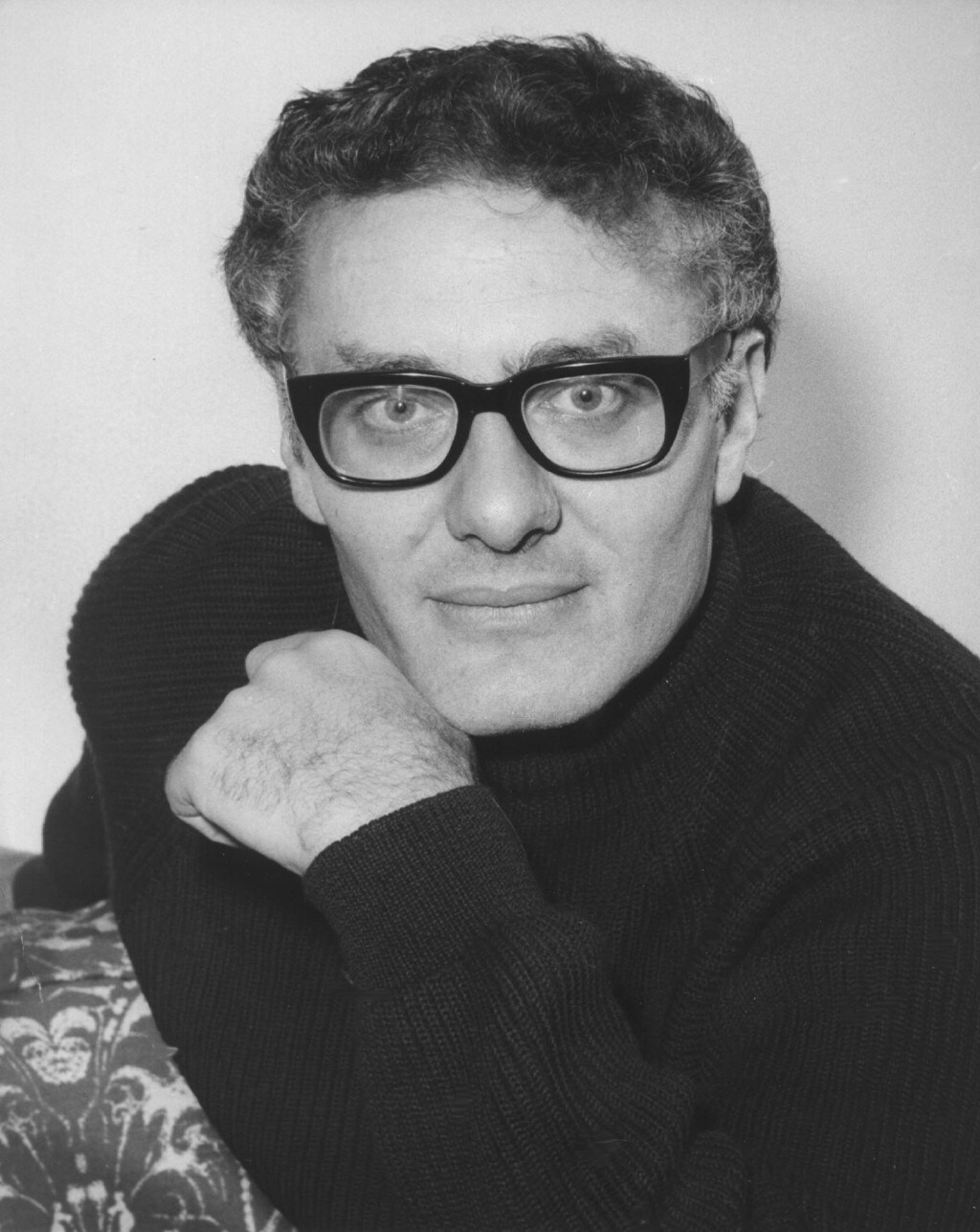 Peter ShafferWriter
 F. Murray Abrahamas Antonio Salieri
 Tom Hulceas Wolfgang Amadeus Mozart
 Simon Callowas Emanuel Schikaneder
 Roy Dotriceas Leopold Mozart
 Christine Ebersoleas Katerina Cavalieri
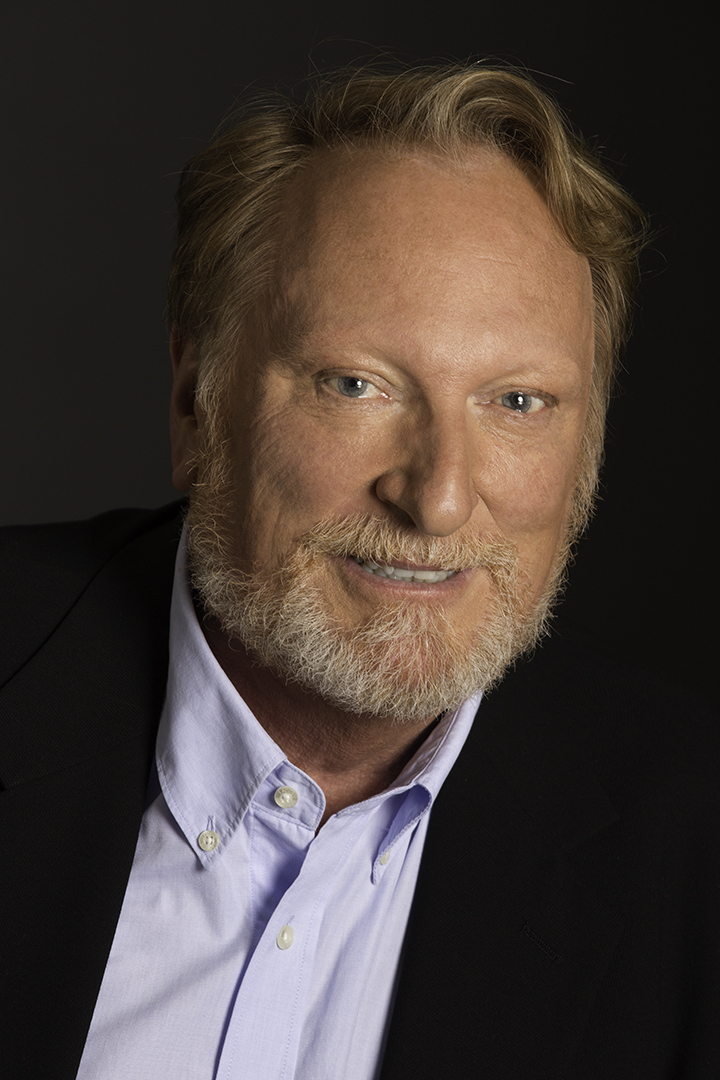 Jeffrey Jonesas Emperor Joseph II
 Kenny Bakeras Parody Commendatore
Sources & editorial notes
Reference databases
- Wikipedia
- IMDb
Information from external sources is independently selected, consolidated and edited by Arka Evren. Sources are listed for verification and further reading. Encyclopedia text is used under its licence (CC BY-SA). How we work