

FILM · 2006 · UK
Casino Royale
- Directed by
- Martin Campbell
- Runtime
- 144 min
- Studio
- Metro-Goldwyn-Mayer, Columbia Pictures, EON Productions
299 archived facts 6 topics 1 source Last reviewed Nov 2026
Le Chiffre, a banker to the world's terrorists, is scheduled to participate in a high-stakes poker game in Montenegro, where he intends to use his winnings to establish his financial grip on the terrorist market. M sends Bond—on his maiden mission as a 00 Agent—to attend this game and prevent Le Chiffre from winning. With the help of Vesper Lynd and Felix Leiter, Bond enters the most important poker game in his…

299 Interesting Facts About Casino Royale
Interesting Facts (99)
- #001
To prepare, Daniel Craig read all of Ian Fleming's novels and talked to Mossad and British Secret Service agents who had advised on Munich (2005).
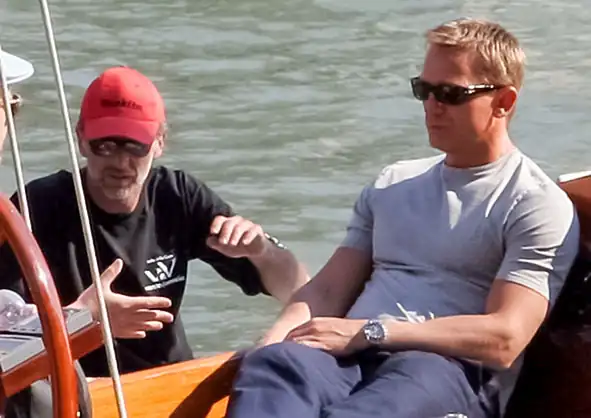
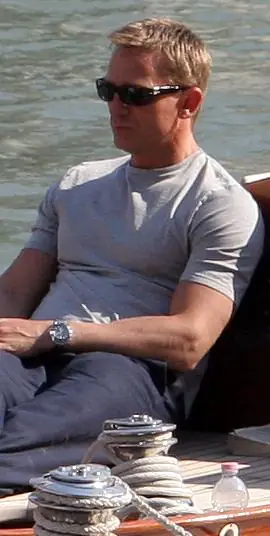
Casino Royale (2006): James Bond and Venice Hotel Concierge, by the waterImage: Wikimedia Commons · File:Daniel Craig on Venice yacht crop w Wilson.jpg : Flickr user won…, CC BY 2.0 - #002
- #003
- #004
- #005
Contains a major spoiler — show
Producers Barbara Broccoli and Michael G. Wilson told screenwriters Neal Purvis and Robert Wade there were two things from the novel the script had to include: Le Chiffre's torture of James Bond, and the book's last line, in which Bond says "The bitch is dead."
- #006
- #007
- #008
- #009
Just two days after the premiere, pirated copies were on sale in London, and Daniel Craig was offered one while walking unrecognized through the streets of Beijing. Casino Royale was also the first Bond film ever shown in China, where every earlier Bond had been banned and could only be seen on bootlegs.
- #010
- #011
On Le Chiffre's computer, the page reporting Bond's latest mission at the embassy also carries a story about a French footballer named Neil Pinkawa saying he isn't retiring from the national team. Neil Pinkawa is the film's lead screen graphics artist, who made all the mock web pages in the movie.
- #012
- #013
- #014
- #015
The Venice authorities allowed the producers to sail Bond's yacht, the "Spirit 54," up the Grand Canal between the Accademia and Rialto bridges. No one remembers when a pleasure yacht last sailed the Grand Canal, but it's believed to have been centuries ago.
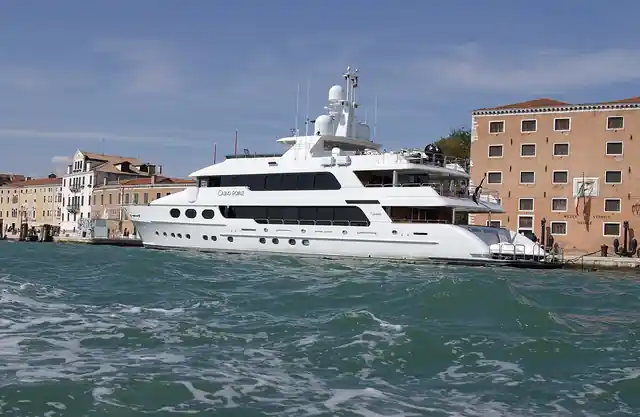
Casino Royale (2006): Venice Hotel Concierge, at the card tableImage: Wikimedia Commons · Janericloebe, Public domain - #016
- #017
- #018
According to Sir Roger Moore's book "Bond on Bond" (2015), producer Kevin McClory, who had once owned the film rights to S.P.E.C.T.R.E., the character Ernst Stavro Blofeld, any Thunderball (1965) remake and assorted outlines, scripts and treatments, "had been a long-time pain in EON's behind, and they couldn't use the Blofeld character or his organization (S.P.E.C.T.R.E.) for fear of litigation, which is how the Quantum idea came about, as originally the producers had hoped to introduce Spectre as the villains in Casino Royale (2006) and Quantum of Solace (2008), but now (in 2013), seven years after McClory's death (when a settlement was made by MGM and EON Productions with McClory's estate), they could finally bring everything back under one roof."
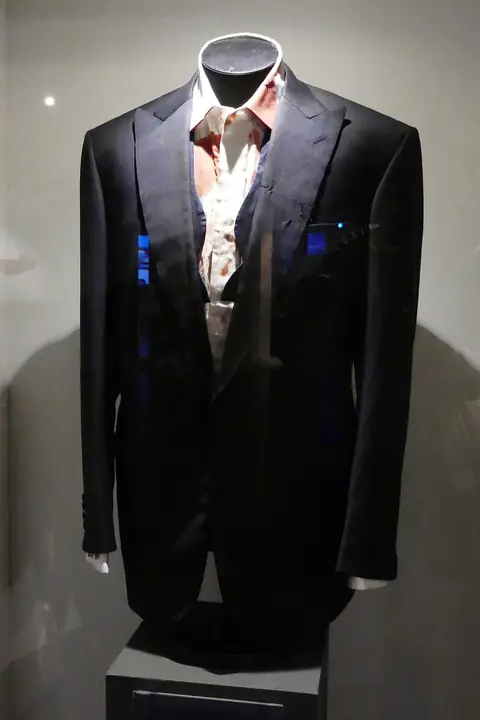
Casino Royale (2006): James Bond, at the card tableImage: Wikimedia Commons · FR, CC BY-SA 4.0 - #019
The Bahamas location used as the Madagascar construction site was an abandoned hotel project at Coral Harbour, begun thirty years earlier. It had been used to film hotel rooms for Thunderball (1965) and, for The Spy Who Loved Me (1977), as a camera platform with models and workshops; today it's part of a military base.
- #020
- #021
- #022
- #023
- #024
- #025
- #026
Contains a major spoiler — show
At the showdown of the final poker hand, Bond waits until every other player has shown before revealing his cards, even though he knows he holds the best possible hand. He's deliberately "rubbing it in." Poker players call this a "slowroll"; it's not against the rules, but it's considered very bad etiquette and would be harshly frowned on in a real game.
- #027
Contains a major spoiler — show
It's the first Bond film in which he fails every one of his mission objectives: Le Chiffre dies without revealing anything about his network, MI6's money ends up with the terrorist organization, and Vesper dies without revealing anything either. At the end, though, Bond captures Mr. White, so there's a chance he can salvage something.
- #028
- #029
Ian Fleming once said of writing "Casino Royale": "Writing about 2,000 words in three hours every morning, 'Casino Royale' dutifully produced itself. I wrote nothing and made no corrections until the book was finished. If I had looked back at what I had written the day before, I might have despaired."
- #030
Contains a major spoiler — show
Le Chiffre is the first main villain in the EON series to die at the hands of someone other than Bond, a Bond Girl or a Bond ally, none of whom are directly involved in his death. As in the novel, he's the first major villain (henchmen aside) killed by his own side. Structurally, he's also the first main villain in the official series to die before the third act, around the end of the second.
- #031
Le Chiffre is the first main villain in the EON series with two obvious physical ailments. He uses an inhaler, a trait from the novel, and his tear ducts weep blood. This is a real condition called haemolacria, which usually shows up as tears partly tinged with blood or as drops of pure blood, and it can point to a tumor in the eye's lacrimal apparatus or to a range of other diseases.
- #032
Contains a major spoiler — show
Bond quips that Vesper Lynd isn't his type. "Smart?" she asks sarcastically. "Single," he replies coldly. In fact she turns out to have a boyfriend for whose sake she became a double agent, and since Bond falls in love with her before discovering her betrayal, romantic and otherwise, it seems "taken" women really are his type, whether he knows it or not.
- #033
- #034
- #035
- #036
When M briefs Bond on Le Chiffre's losses after the Miami plot fails, she says the CIA found he had shorted huge amounts of airline stock after 9/11, and that when the stocks plunged after the attacks, someone made a fortune. This was alleged in real life too, when people noticed suspicious-looking trades the day before 9/11, but a thorough investigation by the FBI and others found no al-Qaeda link.
- #037
Unlike earlier Bond films, the opening titles leave out the semi-nude girls; Bond is finally catching up with the times, and the "Playboy era" is long gone. The old mindset shows in On Her Majesty's Secret Service (1969), where Bond not only reads the magazine but steals the centerfold. Romance is still a big Bond theme, but treating women as objects is definitely out.
- #038
- #039
- #040
- #041
- #042
Graphic designer Daniel Kleinman based the title sequence on the cover of the novel's 1953 British first edition, Ian Fleming's own design of a playing card bordered by eight red hearts dripping blood. "The hearts not only represent cards, but the tribulations of Bond's love story," Kleinman said. "So I took that as inspiration to use playing card graphics in different ways in the titles," such as a club as a puff of gun smoke, or slashed arteries spurting thousands of tiny hearts. For the silhouettes, he digitized footage of Daniel Craig and the stuntmen on the Inferno visual effects system at Framestore CFC in London and worked their shapes into more than twenty animated scenes built from intricate card patterns. He chose not to use the female silhouettes so familiar from Bond titles, feeling they didn't fit the spirit of a film about Bond falling in love.
- #043
Vesper Lynd's official job is International Liaison Officer for the Financial Action Task Force at H.M. Treasury, with a work address of 1 Horse Guards Road, London, SW1A 2HQ, which, like MI6's real Vauxhall Cross address in the Bond films of the previous decade, is the actual address of Her Majesty's Treasury.
- #044
- #045
Contains a major spoiler — show
When Bond is poisoned, the heart monitor at one point shows his heart has stopped, so technically he dies before being revived: the first time in an official Bond film that he dies and lives again, as in Ian Fleming's haiku and the title "You Only Live Twice." In the opening of From Russia with Love (1963) Bond seemed to be killed, but the dead man turned out to be another agent in a mask, and in You Only Live Twice (1967) his death is faked at the start. Fleming's "You Only Live Twice" haiku reads: "You only live twice. Once when you are born. And once when you look death in the face." In Casino Royale (1967), James Bond (in fact several of them, the real one and six namesakes) does eventually die and go to Heaven.
- #046
- #047
- #048
- #049
Producer Barbara Broccoli told David Giammarco in an interview published in "The Globe & Mail" on March 27, 2006: "'Casino Royale' is the definitive Bond story. It was always an ambition of theirs (her father Albert R. Broccoli and his producing partner Harry Saltzman) to be able to make this story, but sadly, they were never able to. So when it finally became available to us, we leaped at the chance. I'd like to think that I'm doing this for my dad."
- #050
- #051
- #052
- #053
The yacht Bond and Vesper sail in Venice is a British-built Spirit 54' called "Soufrière." According to its builder, it was made specifically for the film, then spent ten years cruising and racing before being refitted in 2015. In February 2020 it was on sale for over $750,000, and in 2023 a German orthopedist and big 007 fan bought it for an undisclosed sum; it's expected to be moored near Rostock, Germany.
- #054
- #055
Sir Richard Branson's cameo was cut from the in-flight version shown by every major airline, along with a shot of the Virgin Atlantic plane he supplied. But Branson can still be glimpsed on the right of the x-ray screening at Miami airport as Bond chases Eclipse; on screen for a single second, he did make it onto British Airways.
- #056
- #057
The interiors of the sinking Venetian house were a rig built in the Paddock Tank at Pinewood Studios that could be sunk in nineteen feet of water. It weighed ninety tons and used a mix of hydraulics and electronics, with a computer controlling the hydraulic valves as well as a one-third-scale model of the building used for exterior shots. Banks of compressors run by technicians forced the water upward; for once, it was the crew rather than the actors who brought the house down.
- #058
- #059
- #060
Before Bond's fight with Obanno and his man, the tournament organizer announces a one-hour break after four hours of poker. Bond sends Vesper back to the room before returning to the table, and when he's done he finds her in the shower; she'd likely been sitting there for over four hours, which would explain her shivering.
- #061
- #062
Le Chiffre explains his bleeding left eye: "Weeping blood comes merely from a derangement of the tear duct, my dear General. Nothing sinister." In medicine the left eye is called Oculus Sinister, often shortened to "O.S."; "sinister" is Latin for "left," and the left side (and left-handedness) has long been associated with evil.
- #063
- #064
- #065
- #066
- #067
- #068
Ian Fleming is said to have based Le Chiffre in the novel Casino Royale on the English occultist Aleister Crowley, who was on friendly terms with Fleming while serving with British intelligence in World War II. Some have speculated that Crowley also inspired Blofeld, perhaps because of his resemblance to some film versions of Blofeld, especially the shaved head, though the novels describe Blofeld very differently. In another occult connection, John Dee, mystic and adviser to Elizabeth I, signed himself with the code name "007."
- #069
- #070
The vehicles in the film include: the new DBR9 Aston Le Mans racer-based casino ice 2007 Aston Martin DBS; a silver birch Aston Martin DB5; a 2007 Mk IV Ford Mondeo; a Fiat Ferroviaria/Alstom Pendolino CD 680 tilting train; a DeHavilland Canada Twin Otter seaplane; a "Spirit 54" Spirit yacht; Sunseeker boats, including an XS 2000, a Sportsfish 37 and Le Chiffre's Predator 108 yacht; a bendy articulated bus; a Texron fuel truck oil tanker; Ford Crown Victoria Police Interceptor cars; cranes; a Fiat W190 bulldozer; a Notar MD-600N helicopter; a Range Rover and Land Rover Defender; Jaguars, Lincolns and Volvos; a Skyfleet S570 prototype airplane; and a Virgin Atlantic Airbus A340-600.
- #071
- #072
- #073
- #074
- #075
- #076
- #077
- #078
Daniel Craig and Mads Mikkelsen both later turned up in Star Wars: Craig in a cameo as a First Order stormtrooper in Star Wars: Episode VII - The Force Awakens (2015), Mikkelsen as Galen Erso in Rogue One: A Star Wars Story (2016).
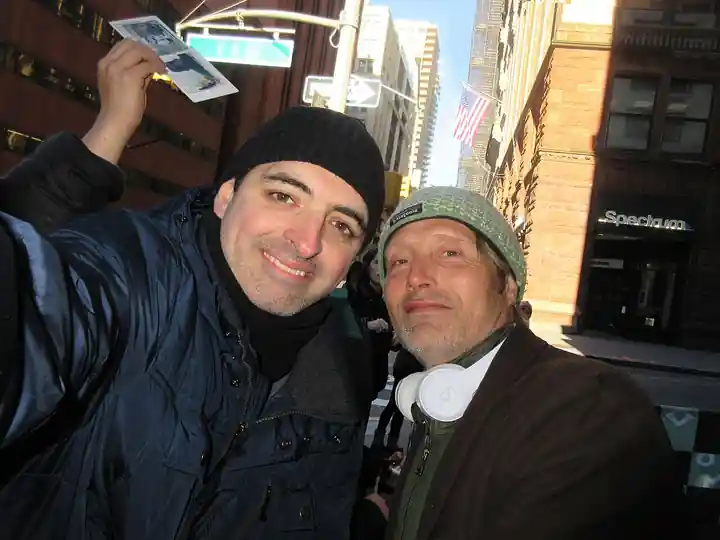
Casino Royale (2006): Le Chiffre, in the streetImage: Wikimedia Commons · Greg2600, CC BY-SA 2.0 - #079
- #080
Gadgets, weapons and kit in Casino Royale include a Heckler and Koch UMP9 9mm gun; a Differential Global Positioning System (DGPS); a Sonic Resonance Imaging Unit; UMP45 sub-machine guns; a long-wave transmitter microchip implanted as a tracking device; an explosive key-fob detonator; a Medipac and portable Medtronic defibrillator; a bug planted in Le Chiffre's inhaler; a Walther P99 semi-automatic pistol; and two Omega Seamaster watches.
- #081
- #082
Tsai Chin, who plays Madam Wu, compared herself with her character: "We are both tough women except for at least three things. I don't know how to bargain. Most Chinese are good at it. I am not. I am too lazy. You need to have good arithmetic and I don't. I hate gambling, which is almost a national sport. And I don't think I would keep the money."
- #083
- #084
Contains a major spoiler — show
Bond falling for Vesper Lynd only to lose her echoes his love for Tracy di Vicenzo, killed at the end of On Her Majesty's Secret Service (1969). The novel Casino Royale came first, though, so on screen the two deaths happen in the reverse order of the books.
- #085
- #086
For the media event announcing Daniel Craig as Bond, the producers had him arrive on the Thames in a real military Zodiac crewed by serving soldiers. Strict government rules meant everyone on board, Craig included, had to wear a life jacket, and the press had fun with the idea of James Bond bothering with one.
- #087
- #088
- #089
- #090
- #091
- #092
- #093
- #094
Dame Judi Dench compared working with Pierce Brosnan on GoldenEye (1995) and with Daniel Craig here: "The difference is that, with Pierce… It was his first Bond film, too, but he had been filming for a few weeks and had a chance to settle in and deal with me, the 'new girl.' With Daniel, it was the other way around, and I was conscious of that. Of course he was nervous. Who wouldn't be? It is a huge responsibility playing Bond because everyone has a view on it."
- #095
At 63 when Casino Royale came out, Martin Campbell was the oldest person ever to direct a Bond film, ahead of Lewis Gilbert (59) on Moonraker (1979), Michael Apted (58) on The World Is Not Enough (1999), Gilbert and John Glen (both 57) on The Spy Who Loved Me (1977) and Licence to Kill (1989), and Glen (55) on The Living Daylights (1987).
- #096
- #097
- #098
- #099
Production Story (165)
- #100
Contains a major spoiler — show
Mollaka (the free runner) has no lines in the film, but in an early draft of the script he did: "What's your name huh? I'm never there when they die. I want to know the names, I want to know who died here today." Bond: "The names Bond, what's yours?" Mollaka: "Mollaka" Bond: "See? You already had your answer".
- #101
A Bond origin story like this one had been floated as the first Bond film after Sir Roger Moore retired, and a first-draft script was written with Bond as a young man in the Royal Navy. But producer Albert R. Broccoli turned it down, believing audiences of the time weren't really interested in a young Bond.
- #102
Daniel Craig initially turned down the role of James Bond because he felt the series had settled into a standard formula. He changed his mind when he read the finished script. Timothy Dalton had also turned down For Your Eyes Only (1981) for the same reason, and in the end, like Craig, he decided to play a different, more grounded interpretation of Bond in The Living Daylights (1987) and Licence to Kill (1989).
- #103
- #104
The Aston Martin DBS's car barrel roll stunt broke the world record for the most barrel rolls with the help of a cannon. Initially, the DBS's racing specifications meant that a standard ramp would not be enough to move the car, so the special effects team was called in to install an air-powered cannon behind the driver's seat. This allowed the car to complete seven full rolls. The stunt was officially entered into the Guinness Book of World Records on 5 November 2006.
- #105
- #106
Producers Barbara Broccoli and Michael G. Wilson instructed screenwriters Neal Purvis and Robert Wade to include two specific story elements from the novel in the script: the first was Le Chiffre's torture of James Bond, and the second was the novel's final line, in which James Bond says, "The bitch is dead."
- #107
- #108
- #109
- #110
Andreas Daniel, who played the card dealer, landed the role by chance. While the production company was looking for a card dealer, they called the casino where he worked. By coincidence, Daniel was saying on the phone, "You are looking for a card dealer? You have just found him. Take me!" He got the role and flew to Prague to shoot his scenes without telling his colleagues. He bought himself a new car with his salary.
- #111
- #112
- #113
Only two days after the premiere, pirated copies went on sale in London. Daniel Craig was offered such a copy while walking anonymously through the streets of Beijing, China. Casino Royale was also the first Bond film shown in China, because all previous Bond films had been banned and could only be seen through pirated copies.
- #114
- #115
On Le Chiffre's computer, on the same page, there is a story containing the story of Bond's last mission at the Embassy. It is stated that a French footballer named Neil Pinkawa indicated that he was not leaving the national football team. Neil Pinkawa is the lead screen graphics artist on this film, who would be responsible for creating all the fake web pages in the film.
- #116
- #117
- #118
In one scene, James Bond was supposed to see Solange (the villain's wife, played by Caterina Murino) riding a horse while swimming on the beach, and the two were to make eye contact. Craig says that while shooting the scene he accidentally struck an oddly positioned sandbank, which forced him to stand up and walk out of the water instead of swimming off as specified in the script. The shot of Craig stepping out of the water was plastered all over the film's promotional material, and many assumed it was a nod to Ursula Andress emerging from the beach in the first Bond film, Dr. No (1962). Respect for Bond's legacy probably helped win over many reluctant fans, most of whom were wary when it was announced that an unknown actor would take over the series. It also helped launch James Bond as a more modern and durable 007. But the real impact was on Daniel Craig's career: this scene alone turned him into an international sex symbol. Craig said he immediately realized the moment would lead to comparisons with Andress, but that he did not think "it would follow him for the rest of his life."
- #119
A week after filming was completed, on 30 July 2006, the 007 Stage at Pinewood Studios burned down. This was the second time this happened, the first being before filming on A View to a Kill (1985). The producers had just finished using the stage to shoot the Venice interiors for the film.
- #120
Authorities in Venice gave the producers permission to use James Bond's yacht, the "Spirit 54," along the Grand Canal between the Accademia and Rialto bridges. No one remembers exactly when a pleasure yacht last sailed the Grand Canal, but it is believed to have been several centuries ago.
- #121
During the opening title sequence animation, there is a quick shot of Vesper's face on a card made up of a combination of the Queen of Hearts and the Queen of Spades. This foreshadows the plot: the Queen of Hearts is a symbol of love, and James Bond falls in love with her. The Queen of Spades (also known as "the bitch" in some card games such as Hearts) is a symbol of bad luck, and Vesper betrayed James.
- #122
A promotional brochure used to promote this film in Japan was titled "Seven rules to receive 00 status." The MI6 fan site translated it as follows: "1) You are not afraid of death and do not give in to torture. 2) You have Olympic-level shooting skills. 3) Even if you betray your own mother and father, you will never betray the organization. 4) You have knowledge that would surprise even an academic and a sense of humor that would make even a bad girl smile. 5) You have the sociability of a lamb but remain a lone wolf. 6) You have the highest level of experience with alcohol, gambling, cars and food. 7) You can fall in love, but you can never love."
- #123
- #124
The location in the Bahamas used as the Madagascar construction site was an abandoned hotel site in Coral Harbor where construction had been underway thirty years earlier. It was used for filming the hotel rooms for the James Bond film Thunderball (1965) and also served as a camera platform with sets and workshops for the Bond film The Spy Who Loved Me (1977). It is now part of a military base.
- #125
- #126
- #127
- #128
- #129
- #130
During the showdown of the final hand of the poker game, James Bond does not reveal his cards until all the other players have shown their hands, even though he knows he holds the best possible hand in that situation. He deliberately waited to "rub it in their faces." In poker slang this is called a "slowroll," and although it is not against the rules, it is considered very bad etiquette and would be harshly criticized in a real-world game.
- #131
This is the first James Bond film in which he fails in all of his mission objectives (Le Chiffre died without giving any information about his network, MI6's money was lost to the terrorist organization, and Vesper died without revealing anything). In the end, however, Bond captured Mr. White, so he has a chance to salvage something.
- #132
The "Vesper" that James Bond orders in Casino Royale is taken from the novel. It consists of three measures of gin (Gordon's was Bond's choice), one measure of vodka [Bond preferred the use of grain vodka (Absolut)] and half a measure of Kina Lillet. The ingredients are shaken over ice until cold and served in a cocktail glass with a slice of lemon peel as a garnish. In 1985, Kina Lillet was reformulated to reduce its sugar and quinine content (dropping "Kina" from its name) and rebranded as "Lillet." The addition of red and pink versions of the aperitif also led to the original being referred to as "Lillet Blanc."
- #133
- #134
Ian Fleming once said of writing the novel "Casino Royale": "Writing about 2,000 words in three hours every morning, 'Casino Royale' dutifully produced itself. I wrote nothing until the book was finished and made no corrections. If I had looked back at what I had written the day before, I might have despaired."
- #135
- #136
Caterina Murino was shooting in Argentina when the first casting session for this film was held in Paris, and was then shooting in Rome when the second session was announced. However, while rehearsing the day before her appointment she fell off a horse, and she went to the audition full of painkillers and could barely walk. When asked whether she could ride a horse, she said she had fallen off one. Despite this she got the role, her first in English.
- #137
Le Chiffre is the first Bond villain to die in the EON Productions series, but he does not die at the hands of James Bond, a Bond girl or a Bond ally. Nor is anyone directly involved in the events that lead to his death. As in the novel, Le Chiffre is the first main villain to be killed by his own people (henchmen excluded). Also, in terms of screenwriting, Le Chiffre is the first main villain in the official James Bond series to be killed before the third act (Le Chiffre dies near the end of the film's second act).
- #138
When he was cast as 007, Daniel Craig had his own ideas about playing the role, and in an interview with Jonathan Ross on the set of this film he stated that he wanted to stay faithful to the book and show the character's raw vulnerability by having him make a few mistakes, that when he does the right thing the drama would be there and it would make the audience think everything is going to go wrong, and that when everything goes well the audience would be more excited.
- #139
- #140
Le Chiffre is the first leading Bond villain in the EON Productions series to have two distinct physical dysfunctions. He has an inhaler to breathe, a character trait from the original novel, but he also has tear ducts that weep blood. This bleeding of the eye is a real medical condition known as haemolacria. It usually manifests as partly bloody tears, part tears and part blood, or as full drops of blood. Haemolacria can be an indication of a tumour in the lacrimal apparatus of the eye and can also be an indication of various other diseases.
- #141
James Bond says Vesper Lynd is not his type. "Smart?" she asks sarcastically. "Single," he replies coldly. In fact, it turns out she has a boyfriend for whom she ultimately became a double agent. Combined with the fact that Bond inevitably falls in love with her before discovering her betrayal (both romantic and treacherous), this proves that "taken" women really are his type, whether or not he knows they are taken.
- #142
- #143
- #144
- #145
The black-and-white opening of this film was the idea of cinematographer Phil Meheux, who designed it both to surprise the audience and as a reference to The Spy Who Came in from the Cold (1965) and the Reflections in a Golden Eye (1967). The opening sequence required six thousand feet of Eastman Double-X 5222 black-and-white negative film (worth an hour and six minutes at twenty-four frames per second). At the time of its release, this was the only film in the official series in which a significant sequence was shot in black and white. However, in the gun barrel scenes of the early films, some shots of James Bond were in black and white. Also, the first season, third episode of Climax! (1954), "Casino Royale", was entirely in black and white.
- #146
- #147
Quentin Tarantino expressed interest in adapting Ian Fleming's novel "Casino Royale" with an "out of continuity" universe in which Pierce Brosnan would reprise the role of James Bond. He claimed his approach to a Bond film would be different, that he would shoot the film in black and white, without the classic John Barry theme, without an opening title sequence or the familiar one-liners, and that he would use voice-over narration to include Fleming's text. The film would rather be a film noir, set during the Cold War period in which Ian Fleming wrote, and set immediately after the death of Bond's wife Tracy in On Her Majesty's Secret Service (1969). It is frequently reported that he turned down EON's offer. The truth is that EON could not have hired Tarantino because he refused to join the Directors Guild, and it is doubtful that the Directors Guild would have been willing to grant a waiver either. Since Tarantino does not have the rights to the character, it is impossible for him to develop a Bond project on his own.
- #148
The free-running and movement style used by bomb maker Mollaka in the Madagascar chase near the beginning of this film is called "parkour". Sebastien Foucan (Mollaka) is one of the leading exponents of parkour and has appeared in many other media events. In the early versions of the script, Mollaka was known as "Two Fingers".
- #149
Unlike previous Bond films, semi-nude pictures of girls were removed from the opening titles, as the long history of the "Playboy era" had passed and Bond had finally become current with the times. An example of the earlier mindset was seen in On Her Majesty's Secret Service (1969), where Bond not only read the magazine but stole the centerfold. While romance remained Bond's main theme, the objectification of women was decidedly eliminated.
- #150
- #151
- #152
- #153
- #154
During the final hand of poker with Le Chiffre, Bond appears to hesitate before going "all in." This is purely for dramatic effect. With the dealing of the Four of Spades as the fourth community card (known as "The Turn" or "Fourth Street"), Bond would have known he could not lose the hand regardless of the other players' hands. Under Texas Hold'em dynamics, no other player can complete a straight flush, the highest hand in straight poker. Even if Le Chiffre had four aces, he would still lose to Bond's flush.
- #155
The third consecutive James Bond film in which James Bond is tortured. In The World Is Not Enough (1999) he was tortured with clamping screws in a chair. Tomorrow Never Dies (1997) featured chakra torture devices, but Bond was not actually tortured. In Die Another Day (2002) he was subjected to torture in the opening scenes while in a North Korean prison, and in this film he is tortured by Le Chiffre, adapted from the classic sequence of the original Ian Fleming novel in which Le Chiffre tortures Bond with a carpet beater. In this film Le Chiffre uses a knotted rope. A plate of glass was placed under the chair so that Daniel Craig was never struck with the rope. However, at one point during filming Mads Mikkelsen struck the glass with the rope so hard that it cracked, and a shocked crew member quickly ran to the chair.
- #156
The Body Worlds exhibition in Miami was filmed on a very cold night in Prague, Czech Republic. Most viewers are unaware that the figures in the exhibition are real, legally obtained human remains that were dissected and preserved. This is the first time real human remains have appeared prominently in a major motion picture.
- #157
- #158
Mollaka (the free runner) has no lines in this film; in the first draft of the script he said: "What's your name huh? I'm never there when they die. I want to know the names, I want to know who died here today." Bond: "The names Bond, what's yours?" Mollaka: "Mollaka" Bond: "See? You already had your answer".
- #159
- #160
- #161
Graphic designer Daniel Kleinman drew inspiration for the title sequence of this film from the cover of the novel's first British edition from 1953, which featured Ian Fleming's original design of a playing card surrounded by eight red hearts dripping blood. Kleinman said: "The hearts represent not just the cards but the troubles of Bond's love story. So I took that as inspiration to use the playing card graphics in different ways in the titles," such as a club representing gun smoke and a spade representing severed arteries spraying thousands of tiny hearts. To create the shadow images of the sequence, Kleinman digitized footage of Daniel Craig and stunt doubles at Framestore CFC in London using the Inferno visual effects system. The silhouettes of the performers were incorporated into more than twenty digitally animated scenes depicting intricate and innovative card patterns. Kleinman decided not to use the female silhouettes commonly seen in James Bond title sequences, feeling that women did not fit the spirit of this film and the story that follows Bond falling in love.
- #162
- #163
The Skyfleet S570 prototype at Miami International Airport is intended to be a version of the new Airbus A380. The S570 was built from an old 747-200 originally used by British Airways (under the name "G-BDXJ") and flown for European Aircharter and Air Atlanta Europe before being retired. It was refitted with two dummy engines on each inner pylon and external fuel tanks on the outer pylons, and it somewhat resembled a B-52 Stratofortress.
- #164
Daniel Craig's role in Layer Cake (2004) cemented his casting as James Bond over other competing actors. After Daniel Craig was announced as the new James Bond, DVD and video rentals of the film increased. In the Bondesque sequence at the end of Layer Cake (2004), Craig says "My name? If you knew that, you'd be as clever as me," evoking the famous "The name is Bond, James Bond" slogan.
- #165
According to Spirit Yachts, ''the scene showing Daniel Craig and Eva Green sailing to Venice on the Spirit 54 is now world-famous. The yacht (a 54-foot design named Spirit), hand-built by Spirit Yachts' skilled boatbuilders in Suffolk, was shipped to the Bahamas. From there, Spirit Yachts took it to Puerto Rico and the British Virgin Islands for filming. After shooting the scenes in the Caribbean, the yacht was sent to Croatia and set sail for Venice. During filming in Venice, the yacht's rigging was taken in and out a total of 10 times to fit under multiple canal bridges. It was the first sailing yacht to go out onto the Grand Canal in 300 years.''
- #166
Playing poker was a common pastime among the cast and crew on set even after production was completed. But this is not a new situation for a James Bond film. Sir Roger Moore and Albert R. Broccoli played backgammon and placed bets during filming. The cast and crew of many James Bond films are known to have participated in some high-stakes gambling games.
- #167
Bond films generally avoid referring to specific dates, but in the later Bond film No Time to Die (2021), when Bond visits Vesper Lynd's grave in Italy, her birth and death years are shown as 1983 and 2006. Casino Royale (2006), the film in which Vesper dies, was released in 2006. It was revealed by No Time to Die (2021) that she was 22 or 23 years old when her character died. It is not explained how someone so young attained a senior position at MI6 and was tasked with preventing 100 million dollars from falling into the hands of a terrorist.
- #168
The 2007 Ford Mondeo sports model used at the beginning of this film is a special, one-off hand-built prototype vehicle produced in January 2006 at Ford Europe's Design Studio in Cologne, Germany, and secretly shipped to the Bahamas for filming. Production was not scheduled to begin until the second quarter of 2007.
- #169
Vesper Lynd's official job was H. M. Treasury, Financial Action Task Force International Liaison Officer. Her business address was 1 Horse Guards Road, London, SW1A 2HQ. Just as the James Bond films of the last decade have used MI6's real Vauxhall Cross address, this is the real address of Her Majesty's Treasury.
- #170
- #171
- #172
- #173
- #174
At one point when James Bond is poisoned, a heart monitor shows that his heart has stopped beating. Technically, he dies before being revived. This is the first instance in an official Bond film of him dying and then living a second time, in accordance with Ian Fleming's haiku and the novel and film title "You Only Live Twice." In the opening sequence of From Russia with Love (1963), James Bond appeared to have been killed, but the face revealed another agent wearing a mask, and in You Only Live Twice (1967), James Bond's death at the beginning of the film was faked. Ian Fleming's "You Only Live Twice" haiku (poem) reads: "You only live twice. Once when you are born. And once when you look death in the face." In Casino Royale (1967), James Bond (actually several James Bonds, the real one and six namesakes) ultimately dies and goes to Heaven.
- #175
Although the iconic James Bond theme is not heard in full until the final scene of this film, a few bars of it can be heard faintly at the end of the scene in which Bond wins Dimitrios's vintage Aston Martin while playing poker, and somewhat more distinctly when Bond's plane first lands in the Bahamas. A few more bars are also heard right after the defibrillator scene.
- #176
- #177
- #178
Some of the poker players are theoretical characters from the novels. The large black gentleman is Mr. Big from "Live and Let Die", while the female tourist to the left of Felix Leiter (Jeffrey Wright) appeared in "Goldfinger". She and her husband ask James Bond to investigate Auric Goldfinger's cheating them.
- #179
- #180
It was said that a James Bond origin story like this was the first James Bond film since Sir Roger Moore's retirement. A first draft script was written in which James Bond is a young man in the Royal Navy. However, producer Albert R. Broccoli rejected this concept because he believed audiences at the time were not very interested in a young James Bond.
- #181
- #182
In 1999, Sony paid MGM 5 million dollars to settle the 40 million dollar lawsuit MGM had filed against Sony over the James Bond rights. The lawsuit was filed because of Sony's intention to make a second adaptation of "Casino Royale". In the settlement, Sony agreed to hand over all its rights to the Bond character and to "Casino Royale". In an ironic twist of fate, Sony bought MGM in 2005 and released a serious adaptation of "Casino Royale" in 2006.
- #183
While filming the scene in which the engine of a moving plane throws a police car into the air, second unit directors Ian Lowe, Terry Madden and Alex Witt used a winch with a strong lead cable attached to the vehicle's rear bumper to move the car up and back at the exact moment it was clear of the plane. In the 2004 season of MythBusters (2003), the team tested a myth that a taxi flips over behind a 747. The most obvious difference was that the plane MythBusters used was stationary on the runway, while the plane in this film was still in the air.
- #184
The first official James Bond film to begin without the famous gun barrel introduction shown immediately before the opening titles. It also has a style quite different from the previous films. Depicted in black and white, blood flows in fast streams, the rifling of the barrel is noticeably altered, Bond is dressed more casually (not a tuxedo, suit and tie), and for the first time in the series the audience sees the person Bond shoots. In addition, this is the first gun barrel sequence that does not include some variation of the "James Bond theme", since it is accompanied by the opening bars of the theme song "You Know My Name", sung by Chris Cornell. A more traditional gun barrel was included in Quantum of Solace (2008), but it was not shown until just before the title sequence.
- #185
- #186
- #187
- #188
For the scene in which Bond drives an excavator toward a building and crashes into the concrete base that Mollaka (Sebastien Foucan) runs across, the stunt team built a model and proposed several ways the excavator could plausibly remove the concrete, including taking out the column beneath it. A section of the concrete wall was removed and reinforced with steel to accommodate the excavator.
- #189
- #190
Producer Barbara Broccoli told David Giammarco in an interview published in "The Globe & Mail" on 27 March 2006: "'Casino Royale' is a definite Bond story. Being able to make this story was always a passion for them (her father Albert R. Broccoli and producing partner Harry Saltzman), but unfortunately they never managed it. So when we finally had it, we took the chance. I like to think I'm doing this for my father."
- #191
- #192
The yacht Bond and Vesper board in Venice is a British-built Spirit 54 named "Soufrière." According to the builder's website, it was built specifically for the film and spent the next decade cruising and racing before being refurbished in 2015. As of February 2020 it was listed for sale at over $750,000. In 2023 a German orthopedics specialist and major 007 fan bought the yacht for an undisclosed sum; it is expected to be kept near the German city of Rostock.
- #193
- #194
While discussing aliases, James Bond jokingly claims the alias assigned to Vesper Lynd is "Stephanie Broadchest," a clear joking reference to the Bond novels and earlier films, which featured cunning female characters with comically suggestive names that were often the source of corny one-liners.
- #195
- #196
- #197
- #198
The interiors of the sinking house in Venice were a rig built in the Paddock Tank at Pinewood Studios and could be submerged in nineteen feet of water. It weighed ninety tons and used a mixture of hydraulics and electronics. A computer controlled the hydraulic valves as well as the one-third-scale model of the building used for exterior shots. The water was pushed upward by rows of compressors controlled by technicians. It was the crew, not the actors, who were responsible for the destruction of the house, just once.
- #199
The number on Dimitrios's (Simon Abkarian's) keychain was "53." 1953 was the year Ian Fleming's source novel was published and the year Playboy magazine, which has a long history with the James Bond films, was founded. This film version was also released fifty-three years after the novel was published.
- #200
The weighted rope Le Chiffre uses to torture Bond is actually a sailor's knot used to throw a rope from one boat to another. The knot is woven around a throw weighing several kilos; when thrown, it is enough to carry the length of the attached rope. In the source novel, Le Chiffre uses a carpet beater, not a weighted rope.
- #201
- #202
Before Bond's confrontation with Obanno and his man, the tournament director announced to the players that there would be a one-hour break after four hours of poker. Before returning to the table to continue the game, Bond made sure Vesper returned to the room, and after finishing the game he found Vesper in the shower. Vesper Lynd had probably been sitting in the shower for more than four hours, which explained her shivering.
- #203
Among the Body Worlds plastinates featured in that scene were the Poker Playing Trio (which plays a significant role in one scene) and the Horse and Rider. The exhibition's developer and organizer, German anatomist Gunther von Hagens, also appears in a small role in the film, though only his distinctive hat is visible on screen.
- #204
When Le Chiffre says, "Weeping blood comes merely from a derangement of the tear duct, my dear General. Nothing sinister," he is explaining that his left eye is bleeding. In medicine, the name for the left eye is the Latin term Oculus Sinister, usually abbreviated as "O. S." The Latin word for "left" is "sinister," and the left side (and left-handedness) has historically been associated with evil.
- #205
- #206
- #207
- #208
When he was offered the role of James Bond, Daniel Craig met with his predecessor Pierce Brosnan, and Pierce Brosnan told him to take on the role of James Bond because Daniel Craig was hesitant about taking on the legendary part, and Pierce Brosnan later went on record in an interview stating that Daniel Craig was a great Bond and that he greatly enjoyed watching him.
- #209
Casino Estoril in Lisbon, Portugal, was the inspiration for the casino gambling scene and the title of the novel. Portugal remained neutral during World War II and became a center of espionage for both the Axis and the Allies. Ian Fleming, who visited on behalf of British Intelligence, learned that many German agents frequented the Casino and that they had decided to gamble against them in the hope of bankrupting enemy spies and then recruiting them as double agents by offering to pay off their debts to British Intelligence. However, unlike his fictional creation, Fleming went banco three times during his visit and lost three times. He did not know that the future James Bond novel would be filmed three times.
- #210
- #211
Bond's attempt to save Vesper from drowning mirrors a scene Daniel Craig portrayed in Lara Croft: Tomb Raider (2001). In the other film, the female lead was trapped underwater while he tried to save her.
- #212
- #213
During the animated opening title sequence, the sniper crosshairs turn into roulette wheels. These wheels have the usual red and black numbers, but they have only a single green zero, and not the more common ones with both a single zero and a double zero. This is because James Bond has not yet been given "Double-0" status.
- #214
Solange's name is never spoken in this film. The name "Solange" had previously appeared in two Ian Fleming stories. It was the name of the girl in the short story "007 In New York," and a girl named "Solange" was referred to in the short story "From A View To A Kill." These stories appear in the "Octopussy" and "For Your Eyes Only" collections, respectively. They share the same name, but whether they are actually the same character has not been confirmed.
- #215
The character of Le Chiffre in Ian Fleming's Casino Royale novel is said to have been inspired by the English occultist Aleister Crowley. Crowley was friends with Fleming while serving in British intelligence during the Second World War. Possibly because of the physical resemblance between Crowley and some film portrayals of Blofeld (especially his shaved head), there is speculation that Crowley was also the basis for Blofeld. However, the novels describe Blofeld as having a very different appearance. In another occult connection, John Dee (mystic and adviser to Elizabeth I) used the code name "007" as a signature.
- #216
- #217
For the scene in which Bond follows Vesper to the house under renovation, supported by inflatable balloons, a tank was built at the 007 stage at Pinewood consisting of a Venetian square and the interior of the three-story dilapidated house. The ninety-ton rig included electronics with hydraulically controlled valves, closely controlled by computer because of the system's dynamic movement on two axes. The same computer system also controlled the exterior model that the effects team eventually built at one-third scale to film the building collapsing into the Venetian canal. The model elevator inside the rig could be submerged in nineteen feet (5.8 meters) of water, and rows of compressors could be used to regulate its movement tightly.
- #218
- #219
- #220
In the scene where James sits in a wheelchair, you can see James on the left and Mathis walking toward him. This is the place where Anakin Skywalker and Padme strolled ("sand gets in everything") and where their secret wedding took place. The planters and balustrade motifs are the same, and the distant mountain range can be recognized from the walk.
- #221
- #222
- #223
M's personal assistant was named Villiers, just like Amherst Villiers, the British automotive engineer famous for creating the supercharged 4.5-litre Bentley driven by "locomotive" James Bond in Ian Fleming's original novels. James Villiers also played Chief of Staff Bill Tanner in For Your Eyes Only (1981).
- #224
Sony managed to promote some of its products in this film. The notebook Daniel Craig used was a VAIO FG series notebook, Vesper Lynd's mobile phone was a Sony Ericsson M600i, and James Bond used the K800i model. Jeffrey Wright and Eva Green also used a Cybershot T-50 digital camera (which includes touchscreen manipulation features). This is also the first film to include Sony's new high-definition format: you can clearly see a Blu-ray recorder in the surveillance video room Bond infiltrates.
- #225
James Bond finds Vesper Lynd in the shower, and Vesper says, "There's all this blood on my hands. It's not coming off." This foreshadows Vesper's death at the end of the film. It is also a reference to Macbeth, since both Lady Macbeth and Vesper commit suicide out of guilt for their actions.
- #226
- #227
- #228
- #229
- #230
- #231
The Skyfleet S570 aircraft was an old British Airways 747-200B G-BDXJ with its engines removed and modified to match its appearance in this film. The modified aircraft's outboard engines were replaced with external fuel tanks, while the inboard engines were replaced with a pair of model engines on each inner pylon. The cockpit profile was altered to make the 747 look like a prototype of an advanced aircraft.
- #232
- #233
Casting director Debbie McWilliams revealed that Daniel Craig's Bond was a rather unpopular choice during casting: "He was such an unpopular choice. Nobody supported it. Not the studio. Not the director." She later described his attendance at the press conference on the River Thames, where Craig arrived by speedboat wearing a suit and a life vest, as "completely disastrous," saying she had "never seen anybody look as uncomfortable as Daniel did that day. It was awful."
- #234
Mads Mikkelsen was a last-minute addition to the cast for the role of Le Chiffre after American studio executives complained that they could not understand the accent of the original French actor hired to play the role. Casting director Debbie McWilliams had her eye on Mikkelsen and heard he was near Prague (where Casino Royale was being filmed), so she arranged a meeting and brought him there, and then: "I rushed to introduce him to Barbara and she said, 'Get him in a costume, get his hair and makeup done and get him on the film set right away.' He didn't know what he was being made up for. We dropped him in and [director] Martin Campbell said between takes: 'Oh, hello, you must be Le Chiffre.' And that was that."
- #235
- #236
- #237
- #238
- #239
Tsai Chin, who plays Madam Wu, compared herself to her character. "The two of us are strong women except for at least three things. I don't know how to bargain. Most Chinese are good at it. I'm not. I'm very lazy. You need to have good arithmetic, but I don't. I hate gambling, which is almost a national sport. And I don't think I'd hold on to the money."
- #240
- #241
James Bond falling in love with Vesper Lynd, only for the object of his love to be killed, is a repetition of the concept of Bond falling in love with Tracy di Vicenzo, who is killed at the end of On Her Majesty's Secret Service (1969). However, the novel "Casino Royale" was the first novel written, and "On Her Majesty's Secret Service" came later. So the deaths on screen occurred in the reverse order of the books.
- #242
- #243
At the time the media announced Daniel Craig as the new James Bond, the producers had Craig arrive on the River Thames in a real military Zodiac operated by military personnel. Due to strict government regulations, everyone on the boat, including Craig, had to wear a life jacket. The press mocked the fact that James Bond would bother to wear such a thing.
- #244
Matthew Goode met with producer Barbara Broccoli about the role of James Bond. He recalled: "I didn't audition. I went in and met Barbara. It was quite funny because — and she's a magnificent and lovely, charming person — she said: 'So what's your take on Bond?' And I said, 'My take on Bond.' We should take it back to the books, you know? We should really make this guy an absolute alcoholic, drug addict. He hates himself. He hates women. He hates a lot of people. He's in deep pain. He's proficient at killing people.' I think at the end of the interview she said, 'Hmm. Next.' I really wanted to make it dark, but I should have said: 'But he's also incredibly attractive.'"
- #245
- #246
According to casting director Debbie McWilliams, Eva Green was someone she fought for: "I championed her from the beginning, but everyone else thought she hadn't proven herself yet. She had to screen test twice before she got the part. I loved her performance, but I thought the costume department, hair and makeup tried to make her look older than she was, and that didn't help her. You didn't see the real Eva until later in the film."
- #247
- #248
- #249
- #250
- #251
In the black-and-white pre-title sequence, the lithographs on the wall during the fight scene in the bathroom are sometimes known as "Spy Prints." The lithographs of the 19th-century British magazine Vanity Fair were caricatures of famous people of the day, like People's person of the month. One of their most prolific artists used the nickname "SPY," so they are often called Spy Prints.
- #252
According to an article published in the Daily Record in September 2003, "Bond 21" was at one point to be titled "The Man with the Red Tattoo" and based on Raymond Benson's final James Bond novel from 2002. It is unknown whether EON Productions seriously considered this. Daniel Craig appeared in The Girl with the Dragon Tattoo (2011).
- #253
- #254
- #255
- #256
- #257
- #258
- #259
- #260
When Daniel Craig was offered the role of James Bond, he called Sir Sam Mendes, with whom he had previously worked on Road to Perdition (2002), for advice. Mendes warned Craig not to accept it because he feared he would be typecast. Mendes went on to direct two Bond films: Skyfall (2012) and Spectre (2015).
- #261
Dame Judi Dench compared her experiences of working with Pierce Brosnan on GoldenEye (1995) and with Daniel Craig on this film: "The difference is that with Pierce… It was his first Bond film too, but he had been shooting for a few weeks and had a chance to get along with me, the 'new girl.' With Daniel it was the opposite, and I was aware of that. Of course he was nervous. Who wouldn't be? Playing Bond is a big responsibility because everyone has an opinion about it."
- #262
- #263
- #264
Screenwriter Paul Haggis said the film was influenced by Batman Begins (2005), particularly how it portrayed Batman's "origin" and how it revived the Batman series after a years-long hiatus. He explained: "We're trying to do for Bond what 'Batman Begins' did for Batman." Sir Christopher Nolan's version of Batman was also influenced by the James Bond series.
Behind the Scenes (10)
- #265
The Aston Martin DBS barrel roll set a world record for the most cannon-assisted barrel rolls in a car. Because of the DBS's racing specification, a normal ramp wasn't enough to flip it, so the effects team fitted an air-powered cannon behind the driver's seat, and the car managed seven full rolls. The stunt was officially entered in the Guinness Book of World Records on November 5, 2006.
- #266
- #267
Caterina Murino was filming in Argentina when the first casting session was held in Paris, and in Rome when a second was announced. The day before her appointment she fell off a horse in rehearsal, and she went to the interview full of painkillers and barely able to walk. Asked whether she could ride, she said she'd just fallen off a horse. She got the part anyway, her first in English.
- #268
Contains a major spoiler — show
It's the third Bond film in a row in which Bond is tortured. In The World Is Not Enough (1999) he was tortured in a chair with tightening screws (Tomorrow Never Dies (1997) had chakra torture devices, but Bond wasn't actually tortured); in Die Another Day (2002) he was tortured in a North Korean prison in the opening scenes; and here he's tortured by Le Chiffre, adapted from the novel's classic scene in which Le Chiffre uses a carpet beater. In the film it's a knotted rope. A sheet of plate glass sat under the chair so Daniel Craig was never actually hit, but at one point Mads Mikkelsen swung so hard he cracked the glass, sending a shocked crew member rushing over to the chair.
- #269
Spirit Yachts says: "the scene portraying Daniel Craig and Eva Green cruising into Venice on-board a Spirit 54 is now world famous. Having been handcrafted by Spirit Yachts' skilled team of boat-builders in Suffolk, the yacht (a 54 foot design named Spirit) was shipped to the Bahamas. From there, Spirit Yachts sailed her to Puerto Rico and through the British Virgin Islands for filming. After shooting scenes in the Caribbean, the yacht was shipped to Croatia and sailed on to Venice. During filming in Venice, the yacht's rig was taken in and out a total of 10 times to fit under multiple canal bridges. She was the first sailing yacht to go up the Grand Canal in 300 years."
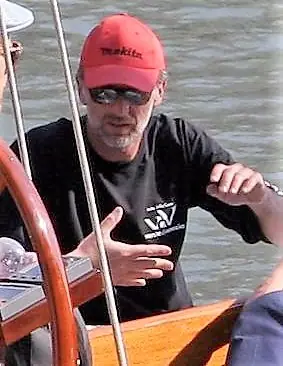
Casino Royale (2006): Venice Hotel Concierge, death sceneImage: Wikimedia Commons · Flickr user wonderferret, CC BY 2.0 - #270
- #271
- #272
Casino Royale is the fourth Bond film with a casino called "Casino Royale." Never Say Never Again (1983) had one set in Monte Carlo, filmed at the Casino de Monte Carlo, Hôtel de Paris, Casino Square, Monte Carlo, Monaco; Monte Carlo was also the setting of the casino in Climax! (1954) season one, episode three, "Casino Royale," shot on the Casino Set at Television City, Los Angeles, California. The casino in GoldenEye (1995) wasn't called "Casino Royale," but again Monte Carlo was both setting and location (Monte Carlo Resort and Casino). In Casino Royale (1967), filmed in England, the casino was in France, as in Ian Fleming's novel, which places it in the fictional French resort of Royale-les-Eaux. This film is the first time a Bond story puts the Casino Royale somewhere other than France or Monte Carlo: Montenegro, with the former Kaiserbad Spa in Karlovy Vary, Czech Republic, standing in for its exterior.
- #273
Casting director Debbie McWilliams fought for Eva Green: "I championed her from the beginning but everyone else felt she had yet to prove herself. She had to screen test twice before she got the job. I loved her performance but thought the costume department and hair and makeup tried to make her look older than her years, which didn't help her. It wasn't until later in the film that you saw the real Eva."
- #274
Characters & Cast (8)
- #275
Daniel Craig came to 007 with his own ideas. Talking to Jonathan Ross on set, he said he wanted to stay true to the book and show the character's raw vulnerability by letting him make mistakes: the drama would come from making the audience think it was all going to go wrong, so that when he finally got it right, they'd be all the more thrilled.
- #276
Quentin Tarantino was interested in adapting Ian Fleming's "Casino Royale" as an "out of continuity" film starring Pierce Brosnan as Bond. His Bond would have been different: black and white, no classic John Barry theme, no opening titles, none of the familiar one-liners, and voice-over narration to work in Fleming's prose. It would have been more of a film noir, set firmly in the Cold War era Fleming wrote in, right after the death of Bond's wife Tracy in On Her Majesty's Secret Service (1969). It's often said EON turned him down; in truth EON couldn't have hired him, since he refuses to join the Directors Guild and the Guild was unlikely to grant a waiver, and Tarantino couldn't develop a Bond film on his own because he doesn't own the character.
- #277
- #278
- #279
- #280
Spectre (2015) features a plot element called "L'Americain" (The American). George Clooney was reportedly considered for Bond in this film; producer Barbara Broccoli apparently wanted him and eventually met him about it, but Clooney turned it down: "I'm American, and it wasn't right for James Bond, James Bond is English, and not American." Clooney has been compared to the great American star Cary Grant, who was considered for Bond in the 1960s and was best man at the wedding of Dana Broccoli and series co-founder Albert R. Broccoli, Barbara's father. Clooney later starred in the spy film The American (2010), released between Quantum of Solace (2008) and Skyfall (2012), in a year when a Bond film would have been due on a two-year cycle.
- #281
Matthew Goode met producer Barbara Broccoli about playing Bond: "I didn't audition. I went in and met Barbara. It was quite a funny one because - and she's gorgeous and just a lovely, lovely person - she was like, 'So what's your idea for Bond?' And I was like, 'My idea for Bond. We've gotta take it back to the books, you know? Really, we absolutely have to make this guy an alcoholic, a drug addict. He hates himself. He hates women. He hates a lot of people. He's in deep pain. He's brilliant at killing people.' I think by the end of the interview, she was like, 'Mhmm. Next.' I wanted to make it really dark, but what I should have said was, 'But also incredibly charming.'"
- #282
Easter Eggs & References (7)
- #283
- #284
The black-and-white opening was the idea of director of photography Phil Meheux, who wanted to surprise viewers and nod to The Spy Who Came in from the Cold (1965) and Reflections in a Golden Eye (1967). It used six thousand feet of Eastman Double-X 5222 black-and-white negative, an hour and six minutes' worth at twenty-four frames per second. At the time it was the only sizeable black-and-white sequence in the official series, though some gun-barrel shots of Bond in the early films were black and white, and Climax! (1954) season one, episode three, "Casino Royale," was entirely in black and white.
- #285
Contains a major spoiler — show
Bond films usually avoid naming specific dates, but when Bond visits Vesper Lynd's grave in Italy in No Time to Die (2021), it gives her birth and death years as 1983 and 2006, matching the release of Casino Royale (2006), the film in which she dies. Only then, in No Time to Die (2021), do we learn she was 22 or 23 when she died, which leaves unexplained how someone so young landed a senior post at MI6, charged with keeping $100 million out of a terrorist's hands.
- #286
It's the first official Bond film that doesn't open with the famous gun barrel, which instead comes just before the titles, and in a style unlike any before it: in black and white, with the blood running down in quick streaks, the barrel's rifling noticeably changed, Bond dressed casually (no tuxedo, no suit and tie), and, for the first time in the series, the man Bond shoots shown on screen. It's also the first gun barrel without some version of the "James Bond theme," playing instead over the opening bars of Chris Cornell's title song, "You Know My Name." A more traditional gun barrel turns up in Quantum of Solace (2008), but only just before the end credits.
- #287
- #288
- #289
In the black-and-white pre-title sequence, the lithographs on the wall during the bathroom fight are what are sometimes called "Spy Prints": caricatures of famous figures of the day from the 19th-century English magazine Vanity Fair, a bit like People's person of the month. One of the most prolific artists signed himself "SPY," hence the name.
Deeper Meaning (10)
- #290
In one scene Bond was meant to be swimming off the beach when he sees Solange, the villain's wife played by Caterina Murino, out riding, and their eyes meet. Craig says he hit an awkwardly placed sandbank during the take, which forced him to stand up and wade out of the water instead of simply floating away as scripted. That shot of Craig rising from the sea was plastered all over the publicity, and many took it as a nod to Ursula Andress emerging from the waves in the first Bond film, Dr. No (1962). The apparent homage probably won over many skeptical fans who'd been wary of an unknown taking over, and helped relaunch Bond as a more modern, rugged 007. Its biggest effect, though, was on Daniel Craig's career: that one scene turned him into an international sex symbol. Craig said he knew at once it would invite comparisons with Andress, but didn't think he'd "be haunted by it for the rest of my life."
- #291
Contains a major spoiler — show
In the animated opening titles, Vesper's face flashes up on a card that combines the Queen of Hearts and the Queen of Spades, foreshadowing the story: the Queen of Hearts stands for love, and Bond falls for her, while the Queen of Spades (called "the bitch" in some card games, such as Hearts) stands for bad luck, and Vesper betrays him.
- #292
Contains a major spoiler — show
After being poisoned at the Casino Royale, Bond suffers ventricular tachycardia (VT) caused by digitalis. VT is a fast heart rhythm starting in one of the ventricles, with three or more beats in a row at over one hundred beats per minute; it can lead to uncoordinated contraction of the heart muscle, called ventricular fibrillation, and sudden death. Here it's digitalis-induced, caused by the drug digitalis, also known as digoxin or by the brand name Lanoxin, a heart medication that can kill in overdose, a cardiac glycoside derived from the foxglove plant Digitalis lanata, better known as Grecian or woolly foxglove.
- #293
- #294
- #295
- #296
- #297
The Casino Estoril in Lisbon, Portugal, inspired the novel's gambling scene and its title. Portugal stayed neutral in World War II and became a hub of espionage for both the Axis and the Allies. Visiting for British Intelligence, Ian Fleming learned that many German agents played at the casino and decided to gamble against them, hoping to bankrupt the enemy spies and then recruit them as double agents by offering to have British Intelligence pay off their debts. Unlike his creation, though, Fleming went banco three times and lost three times, little knowing his future Bond novel would be filmed three times.
- #298
Contains a major spoiler — show
In the scene where Bond sits in a wheel-backed chair, with Mathis walking toward him from the left, the location is the one where Anakin Skywalker and Padme take their stroll (the "sand gets in everything" scene) and hold their secret wedding: the flower pots and balustrade motifs are the same, and the distant mountains are recognizable from that walk.
- #299
Related pages
- London Has Fallen — Casino Royale comes up in the facts on that page
- Denis Villeneuve — Casino Royale comes up in the facts on that page
- Skyfall — Casino Royale comes up in the facts on that page
Sources & editorial notes
Reference databases
- Wikipedia
- IMDb
Information from external sources is independently selected, consolidated and edited by Arka Evren. Sources are listed for verification and further reading. Encyclopedia text is used under its licence (CC BY-SA). How we work