

FILM · 2012 · UK
Skyfall
- Directed by
- Sam Mendes
- Runtime
- 143 min
- Studio
- Metro-Goldwyn-Mayer, EON Productions, Columbia Pictures
174 archived facts 8 topics 1 source Last reviewed Nov 2026
When Bond's latest assignment goes gravely wrong, agents around the world are exposed and MI6 headquarters is attacked. While M faces challenges to her authority and position from Gareth Mallory, the new Chairman of the Intelligence and Security Committee, it's up to Bond, aided only by field agent Eve, to locate the mastermind behind the attack.

174 Interesting Facts About Skyfall
Interesting Facts (117)
- #001
- #002
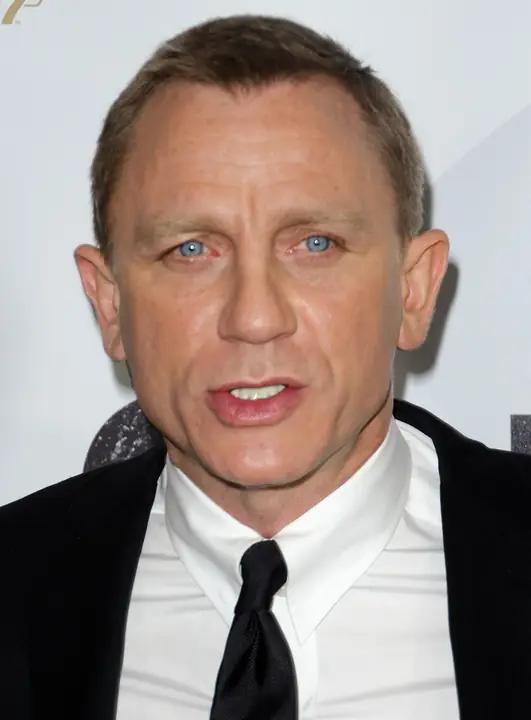
Daniel Craig performed the stunt himself in which he jumps from an escalator rail and slides down.
Skyfall (2012): James Bond, behind the scenesImage: Wikimedia Commons · Liam Mendes, CC BY-SA 2.0 - #003
The role of Kincade (Albert Finney) was originally written with Sir Sean Connery in mind. Producers Barbara Broccoli and Michael G. Wilson initially wanted Connery to come out of retirement for a surprise role. Director Sir Sam Mendes told The Huffington Post: "There was a definite discussion about that (Connery playing Kincade) very early on. But I think it's problematic. Because to me that's also… it takes you out of the movie. Connery is Bond and he's not going to come back as another character. It's like he was there. So it was a very brief flirtation with that thought, but it was never going to happen, because I thought it would distract."
- #004
According to producer Michael G. Wilson, the passport used by Daniel Craig was an original document issued by the British Home Office, not by the props department. Everything from the paper, printing and photograph to the cover is completely original in James Bond's "official passport." However, as a security measure the passport was coded with information that would instantly flag any improper use in an official transaction. The actual details shown in Bond's passport in this film are as follows: Name = John Adam Bryce; Date of Birth = 16 December 1968; Sex = Male; Place of Birth = London; Date of Issue = 22 June 2012; and Date of Expiry = 22 August 2029.
- #005
Hashima Island, the site of Tiago Rodriguez, a.k.a. Raoul Silva's lair, is a tiny deserted industrialized island situated off the southwest coast of Japan, fifteen kilometers (nine and a half miles) from Nagasaki, and running just four hundred eighty meters (three tenths of a mile) long and one hundred sixty meters (one tenth of a mile) wide. The small isle is one of five hundred five uninhabited islands in the Nagasaki Prefecture. The isle is also known as "Ghost Island", as well as "Gunkanjima", which translates as "Battleship Island". The island was last significantly inhabited in 1974, and was once a thriving coal mining community. The island is notable for its character, due to its sea wall, and its untouched abandoned and derelict concrete buildings.
- #006
This film implies that Bond's ancestors were Catholic. When Kincade (Albert Finney) shows M (Dame Judi Dench) the secret escape passage in the chapel at Bond's ancestral estate, he explains that it was actually a hiding place for priests, referring to the "Recusants" in English history, when priests were illegal (many were assassins sent by Philip of Spain to kill Queen Elizabeth) and those who continued to practice Catholicism, sheltered priests and rejected the authority of the official church (the Church of Scotland, that is Presbyterian in this case). One of the most prominent real-life Recusant families from Dorset was named "Bond." Their Latin family motto was "Non sufficit orbis," which translates as "Not even the world is enough," or more colloquially as "The World Is Not Enough (1999)," as Fleming used it in his novel On Her Majesty's Secret Service and as the title of a later Bond film. A member of this family, John Bond, was reportedly a spy for Sir Francis Drake during the Elizabethan era (despite his family being Catholic).
- #007
The porcelain bulldog on M's desk (which she later gives to Bond) is draped in a Union Jack. These bulldog figurines were created by Royal Doulton during World War II to represent patriotism. In Tinker Tailor Soldier Spy (2011), two Royal Doulton bulldogs sit on the desk of Control (Sir John Hurt), the head of MI6.
- #008
Daniel Craig performed many of his own stunts, including the signature rooftop fight on the top of a moving train travelling at fifty kilometers per hour (thirty-one miles per hour) during the opening sequence. Producer Barbara Broccoli has said: "Daniel contributes a great deal to designing the action and the fights in particular, and he's the one who really pulls it off, because he wants to do as much of it as he possibly can. We were in Turkey for the train sequence, and I had my heart in my mouth the whole time. He and Ola (Rapace) were fighting on the roof of a moving train, and the moves that they were doing were just heart stopping. Daniel's the reason why the action works as well as it does, because he sells it, he's up there, and I think audiences know that."
- #009
This was the final film of trumpeter Derek Watkins, who had worked in the music department as a trumpeter on every James Bond film since he was 17, having worked on twenty-three James Bond films starting with Dr. No (1962). Watkins died in 2013, four months after the premiere of this film.
- #010
Filming of one of Javier Bardem's first scenes (Silva's interrogation by M and Bond at the new MI6 headquarters) had to be stopped during one of the first takes when Bardem interrupted the scene, saying excitedly that he could not believe he was making a film with Dame Judi Dench and Daniel Craig.
- #011
- #012
M's (Dame Judi Dench's) house in the film is the former home of legendary James Bond composer John Barry. The producers thought this would be a loving tribute to the late composer, who scored many James Bond films and defined the series' signature theme music, and whose work was a key inspiration for the modern Bond music composed by David Arnold. John Barry died in 2011. Thomas Newman's score for the film is said to serve as a tribute to Barry.
- #013
This is the first time a character says the "f" word in a James Bond movie. In The Living Daylights (1987), Bond (Timothy Dalton) was clearly seen saying "For God's sake!", but it could not be heard because of the noise of the aircraft engine. This film is the first Bond film to use an audible version of the "f" word, spoken by M (Dame Judi Dench) at Skyfall Lodge.
- #014
- #015
- #016
For the motorcycle chase in Turkey, Coca-Cola was sprayed on the asphalt in Istanbul so the bikes would not slip. Although Coca-Cola was not an official product placement in the film, there was a Coca-Cola Zero marketing campaign tied to the film. Because the sugar in Coca-Cola makes it sticky, Coke Zero would have been less effective.
- #017
- #018
Reportedly, sales of cut-throat razors rose by around four hundred percent in the week following the film's release. Online retailers of cut-throat razors reported sales increases of fifty to four hundred percent due to the exposure the film generated. The surge in sales was attributed to the love scene in the film, in which Miss Eve Moneypenny (Naomie Harris) gives James Bond (Daniel Craig) an erotic close shave with an old-fashioned straight razor and comments with a classic line: "Sometimes the old ways are the best."
- #019
- #020
Skyfall Lodge is not a real building but a purpose-built exterior set made of plywood and plaster. The custom-made artificial house in the film's story is a rural residence. The filming location is in Glencoe, Scotland, but the actual shooting location was Hankley Common in southwest Surrey, England.
- #021
In a 2014 interview with Radio Times magazine, Dame Judi Dench revealed that she cried when the producers told her that M would die at the end of the film. During the interview she also revealed that her late husband, Michael Williams, had encouraged her to sign on to the Bond films. "He wanted to live with a Bond woman," Dench said.
- #022
The Shanghai setting makes this the first Bond film shot in China. Originally, Licence to Kill (1989) was to be shot in China, but when the Chinese government made certain restrictive demands, such as veto rights over the script, the location's viability dropped. At one point this film's scene was said to include a motorcycle chase along the Great Wall of China, a chase originally designed for Licence to Kill (1989), but instead there was a rooftop motorcycle chase shot in Istanbul, Turkey. Another scene, a fight scene in the museum of recently discovered ancient terracotta figures in Xian, was also planned for Licence to Kill (1989), but that scene was not used in this film either. Screenwriter John Logan wanted to use Shanghai as a filming location because, "What we were looking for was a contrast to London. We wanted exotic places that didn't much resemble the world he grew up in, the world he operates in, places where in some ways Bond would be uncomfortable."
- #023
- #024
- #025
According to director Sir Sam Mendes, the film was influenced by director Sir Christopher Nolan's Batman Begins (2005) and The Dark Knight (2008). Some of the first reviews of the film compared its mood to that of The Dark Knight Rises (2012). Interestingly, a recurring line of dialogue in The Dark Knight Rises (2012) was "permission to die", which was also the title of a 1989 James Bond comic book. The image of Bond standing on a rooftop looking out over London with the British flag evoked Batman perched on rooftops looking out over Gotham City. Mendes said: "What Nolan has achieved, especially with the second film, The Dark Knight (2008), is an extraordinary thing. It was a game-changer for everybody. What Nolan proved was that you can make a huge film that is exciting and fun and has a lot to say about the world we live in, even if The Dark Knight (2008) isn't set in our world. It helped give me the confidence to take this film in directions that wouldn't have been possible without The Dark Knight (2008)." Nolan frequently said that the classic James Bond films influenced the Dark Knight trilogy. So it can be said that Bond inspired Batman, and Batman inspired Bond.
- #026
Many actors who played smaller roles in the film never received a script because the production's confidentiality protocols were strict enough to reflect real-life intelligence espionage. Tonia Sotiropoulou did not know what she would be doing in the film until her scenes were shot. She commented, "I was one of the people who never had a script. The director just told me what I was going to do on set. They have to be very careful. You have quite strict contracts that say you can't say anything about it, and everyone respects that."
- #027
When Bond follows Patrice to Shanghai, Patrice assassinates a man (credited as "Shanghai Art Collector") while looking at a painting. The painting is "Woman with a Fan (Luna Czechowska)", painted by Amedeo Modigliani in 1919. On 20 May 2010, this painting was stolen from the Musée d'Art Moderne de la Ville de Paris along with works by Henri Matisse, Georges Braque, Pablo Picasso and Fernand Léger. The paintings are still missing and their total value is estimated at two hundred million dollars.
- #028
- #029
- #030
- #031
Eminönü Square, a busy business district of Istanbul, was used for the filming of the opening scene and had to be closed for three weeks for it. It is one of the oldest and most magnificent squares in Istanbul, surrounded by the ancient Egyptian Bazaar and the splendid New Mosque. As an interesting requirement in the bazaars, shops could open but could not trade because the area was closed to the public, traffic and pedestrians. To compensate the shopkeepers for their losses, they were paid 750 lira per day. The Turkish market scene in this film consisted of more than 250 dressed market stalls created by the Art and Accessories departments and was filled with about 500 extras.
- #032
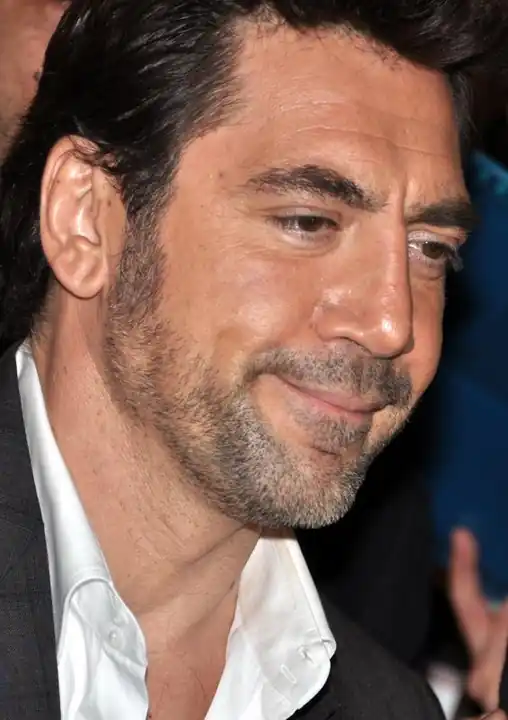
The computer mainframe room where Silva gives his entrance speech was specially built to be exactly the right length for a single take in which Javier Bardem walks slowly and, at the end of the speech, comes to stand directly opposite Bond. The other key room in which Silva is seen is the plexiglass enclosure Javier Bardem called the "Crystal Cage".
Skyfall (2012): SilvaImage: Wikimedia Commons · Own work, CC BY-SA 3.0 - #033
According to a report in the UK newspaper The Sun, Bond girl Bérénice Marlohe said Daniel Craig was shy and hesitant before shooting the love scene in the shower. Marlohe said: "He was very shy and when he saw me getting into the shower he said 'Oh my God'. He tried not to take off his underwear for the shower scene, but I said 'No, come on, don't be shy. I'll do anything to make you comfortable.'".
- #034
Glencoe, Scotland, is a filming location that plays itself: Glencoe. In the James Bond novel "On Her Majesty's Secret Service," Ian Fleming wrote that Bond's father, Andrew, was from Glencoe, giving Bond a sense of his family background. The Glencoe area has one of Scotland's most iconic landscapes; its mountains contain some of the oldest sedimentary and volcanic layers in the world. In this film, those mountains served as a beautiful backdrop for the drive Bond and M take along Glencoe's scenic roads in the iconic silver birch Aston Martin DB5.
- #035
- #036
- #037
- #038
Marketing is said to have reached a new level with Daniel Craig appearing in various commercial television advertisements for the product placements seen in this film, such as Heineken, Omega watches and Sony Electronics. But this was justified, Daniel Craig said: "The fact is actually that without them we couldn't do it. It's an unfortunate situation but it's the way it is. It costs a lot of money to make this film, it costs almost as much, if not more, to promote it, so we go where we can go."
- #039
In three consecutive James Bond films, Casino Royale (2006), Quantum of Solace (2008) and this film, every girl Bond sleeps with or teases ends up dying. These include: Solange, Vesper Lynd, Agent Strawberry Fields and Sévérine. He does not sleep with Camille Montes or Miss Eve Moneypenny (though a liaison with the latter was strongly suggested, if so off-screen), and both survive.
- #040
- #041
- #042
When Bond (Daniel Craig) and Q (Ben Whishaw) meet at the National Gallery in London, Q jokes about giving Bond an exploding pen while Bond complains about the gadgets he is given to carry out the mission. In the previous two films, Q had given Bond such a pen: Never Say Never Again (1983) and GoldenEye (1995).
- #043
The title is not a phrase taken from any Ian Fleming James Bond story. Screenwriters Neal Purvis and Robert Wade came up with the title "Skyfall" at two in the morning. Neal and Robert said: "We needed a memorable place name. I just pulled it out of the air and it turned out to be something that interested the filmmakers." This is the only Bond film for which the team provided the title. The title of The World Is Not Enough (1999) was taken from a real-life Bond family motto mentioned by Ian Fleming in the novel On Her Majesty's Secret Service (1969), while the title of Die Another Day (2002) was taken from a line in A. E. Housman's poem "A Shropshire Lad." Casino Royale (2006) and Quantum of Solace (2008) were titles taken from original Ian Fleming stories.
- #044
- #045
According to Ian Fleming, a 00 Agent faces forced retirement from field work at the age of 45, at which point 00 status is revoked and the agent is assigned to posts at MI6 Headquarters. In this film, James Bond fails his qualifying tests due to his physical condition and is to be retired and given a desk job. When this film came out, Daniel Craig was 44 years old.
- #046
- #047
- #048
The Paddock Tank (Outer Tank) at Pinewood Studios doubled as the exterior of the Shanghai Golden Dragon Casino. The set was lit with three hundred floating lanterns and two dragon heads ten metres tall. Twelve craftsmen were brought from China to create the authentic structures. They were made from wrapped steel cables and silk fabric and were lit from inside by four hundred bulbs.
- #049
- #050
- #051
- #052
The Grand Bazaar in Istanbul featured prominently in the opening chase scene. The Grand Bazaar is one of the largest and oldest covered markets in the world, with sixty-one covered streets and over three thousand shops attracting up to four hundred thousand visitors a day. Because of the dangerous nature of the sequence, access to the location where this film unit was based was only possible on Sunday, when the bazaar was closed. Through the joint efforts of the location department, production design, art department and set dressing department, the bazaar was dressed on the preceding Saturday nights to look like a hive of activity such as you would expect from the location. 500 Turkish extras were brought in to give the Grand Bazaar its usual crowded and bustling atmosphere. The roofs of the bazaar served as a magnificent platform for watching Istanbul's ancient and dynamic skyline. The production made great efforts to protect and preserve the Grand Bazaar's historic architecture; there were also floating reinforced steel roof panels over the existing tiles to protect the original structure. The Grand Bazaar shop that the motorcycle crashed into the window of was around 330 years old.
- #053
- #054
The helicopter of Tiago Rodriguez, also known as Raoul Silva (Javier Bardem), was an AgustaWestland AW101. Although it was one of the newest and most advanced helicopters at the time this film was made, sound effects editor William R. Dean applied the common dubbing practice of using the sound of the twin-bladed Bell Huey, a Vietnam-era helicopter developed in the late 1950s.
- #055
Bond's father's hunting rifle is a .500 caliber Nitro Express, an extremely powerful elephant gun. During the final shoot-out, Bond is shown firing it from the hip. Its recoil would make this a very foolish thing to do, and a human being struck by one of the bullets would not merely fall down. A shot placed at center-mass would explode the entire chest cavity, and likely blow the target's arms out of the shoulders.
- #056
- #057
- #058
- #059
In Shanghai, the man who is assassinated is looking at a painting that is revealed to him. The painting is "Woman with a Fan" (1919) by Amedeo Modigliani, which had been stolen from the Paris Museum of Modern Art in 2010. The thief, 49-year-old Vjeran Tomic was known as "Spiderman" for his climbing ability. He was arrested one year after the theft, but the painting was never found. Presumably, it's being sold by a fence to this art collector. This is a callback to the stolen portrait of the Duke of Wellington by Goya we see on Dr No.
- #060
- #061
- #062
Naomie Harris's mother comes from Jamaica, where Ian Fleming wrote the James Bond stories at his Goldeneye estate. At thirty-five, Harris was one of the oldest actresses to play a significant Bond Girl at the start of filming. Honor Blackman was thirty-seven when she filmed Goldfinger (1964), and Maud Adams was also thirty-seven when she filmed Octopussy (1983). Harris attended this film's Royal World Premiere with twenty-six members of her family.
- #063
- #064
Second unit director Alexander Witt and the second unit went to Shanghai, China, to shoot the main footage and driving scenes. The team worked nights during the busy week before Chinese New Year to capture the exciting, constantly changing metropolis, one of the world's most dynamic cities. An aerial unit piloted by Marc Wolff was granted rare access to the skies above the city to shoot with a helicopter borrowed from the Chinese government. Production designer Dennis Gassner and the art department worked on the sound stages at Pinewood Studios to create the rest of the Chinese setting.
- #065
In October 2012, discussion arose in the media and online about the homoerotic undertones of Raoul Silva's behaviour toward James Bond, who was traditionally a devoutly heterosexual ladies' man. The excitement suggested that Silva might be the first male Bond "Girl" and that James Bond might actually be bisexual. However, this was not the first time a Bond villain had been suggested to be gay, since the characters Mr. Wint and Mr. Kidd in Diamonds Are Forever (1971) were camp henchmen. This is the second time in three Daniel Craig films that James Bond is tied to a chair and tortured by the main villain. In Casino Royale (2006), Bond's testicles were struck with a knotted rope by Le Chiffre (Mads Mikkelsen). Here Bond's chest is stroked by Raoul Silva, who then gropes and strokes both of his legs with both hands. There is an off-screen implication between shots that Bond's testicles are being stroked, making the scene controversial in a manner similar to the Casino Royale (2006) scene.
- #066
Stuntman Gary Powell and other members of his family have worked on every official James Bond film in the EON Productions series since Dr. No (1962). His father and uncle, Nosher Powell and Dinny Powell, worked with Sir Sean Connery and George Lazenby on the Bonds of the early 1960s and throughout the 1970s; his brother Greg Powell worked with Sir Roger Moore and Timothy Dalton on the Bonds of the 1970s and 1980s, and Gary worked on all the Bonds of the 1990s and 2000s with Pierce Brosnan and Daniel Craig, as well as this film, the first Bond film of the 2010s.
- #067
- #068
Much of the film's story takes place beneath the surface of London's streets, in an underground setting historically known as "The Churchill Bunker System." During World War II, many government offices moved underground to protect themselves from German bombing during "The Blitz." Here, after MI6 headquarters comes under a terrorist attack, M decides to move underground, just as Sir Winston Churchill did during World War II.
- #069
The character Severine is the subject of many comparisons with Andrea Anders in The Man with the Golden Gun. Both are found on Chinese soil, both are enslaved by a villain and seduce Bond in the hope that he will kill the man and free them, both gamble and carry Beretta pistols, both have shower scenes with Bond, both are involved in conspiracies involving custom-made bullets, and both are shot in the chest and killed by the villain using a special pistol.
- #070
The title was floated in the media in 2011 as "Carte Blanche" or "Red Sky at Night". Earlier, in 2010, it was reported that a competition would be held to choose a title for the film from among the remaining Ian Fleming stories, the two most popular being "Risico" and "The Property of a Lady". "The Hildebrand Rarity" was also floated as a possible title. Around October 2011 the title "Skyfall" became the subject of new rumours when the internet domain names JamesBond-Skyfall.com and Skyfallthefilm.com were registered by the film's producers and its financiers MGM and Sony Pictures before any official announcement. The title "Skyfall" was confirmed when producer Michael G. Wilson called it "the worst kept secret in London" at a press conference on 3 November 2011. At that event it was announced that the film would not be based on any previously published Ian Fleming James Bond novel or short story.
- #071
Producer Michael G. Wilson has appeared regularly in the official James Bond series since The Spy Who Loved Me (1977), beginning with Goldfinger (1964). Wilson's small role in this film was mostly cut, but one shot of him still appears in the film. The deleted scene was a funeral procession of hearses, with Wilson's cameo as a pallbearer. Wilson is still visible in the film at a distance through a doorway in the scene where Dame Judi Dench's M stands beside MI6 coffins draped in Union Jack flags.
- #072
- #073
- #074
Despite the long-standing collaboration between director Sir Sam Mendes and composer Thomas Newman, it was initially expected that James Bond's veteran composer David Arnold would provide the score for this film. However, in January 2012 it was finally announced that Newman would compose the music. This is only the sixth time (out of twenty-three films) that a James Bond film's score was not written by Monty Norman, John Barry or David Arnold. It is a myth that Arnold was unable to score this film because of his role as music director of the 2012 London Olympics. In numerous interviews he stated that Newman was chosen because of his ongoing work with Mendes. In October 2012 David Arnold announced on Twitter that the producers had licensed some of the music from Casino Royale (2006) for this film.
- #075
M (Dame Judi Dench) mentions that she ran MI6's Hong Kong operations until 1997, even though Dench first appeared as M in GoldenEye (1995). The reason for this apparent contradiction is that the James Bond series was reset or rebooted starting with Casino Royale (2006), and Dench is in fact playing two separate versions of the same character.
- #076
- #077
For the first time in EON Productions' official film series, M's first and last name is revealed as Gareth Mallory (though this is before he becomes M). Bernard Lee's M had the first name Miles, spoken aloud in The Spy Who Loved Me (1977), and his successor Robert Brown was confirmed by the producers to be the same Miles, not Admiral Hargreaves (played by Brown in The Spy Who Loved Me (1977)) as some fans believe. Dame Judi Dench's M was never given a first and last name, though in Casino Royale (2006) Bond says one of her names begins with the letter M before being cut off by her (and in some drafts of the GoldenEye (1995) script her name is given as "Barbara Mawdsley," but this was never spoken aloud in the final film and is therefore not considered canon).
- #078
Screenwriter Peter Morgan left the production when development work was halted due to MGM's bankruptcy. Morgan later stated that ideas from his first draft, including the film's "big hook", were still retained by the screenwriting team of Logan, Purvis and Wade. Details of the script's characters and plot were tightly guarded during principal photography; the names and identities of several characters, such as those played by Ralph Fiennes, Ben Whishaw, Naomie Harris and Albert Finney, were kept secret for several months. The script was heavily revised by John Logan even throughout filming; by the time shooting was completed it had been revised thirteen times since the third draft.
- #079
For the exterior scenes shot in Whitehall, halfway through the chase between James Bond and Tiago Rodriguez, also known as Raoul Silva, there were one hundred background vehicles, three hundred crew members, seven hundred fifty extras and cooperation from the bureaucracy of numerous government agencies. Permits, negotiations and authorizations for the London chase sequence were granted by British official bodies including Westminster City Council, Transport For London (TFL) and TFL Buses, the Met and CHX Police, London Underground, Network Rail, Herts Traffic Management Systems, the Ministry of Defence, the Royal Parks and the British Foreign and Commonwealth Office.
- #080
- #081
This is the third consecutive James Bond film to deal with terrorism. The main type of terrorism depicted in the film is cyberterrorism. In an interview in the companion documentary Everything or Nothing (2012), producer Barbara Broccoli said that September 11 made the producers think about doing something more serious and that it might now be time to move away from Pierce Brosnan-style Bond films. In another interview Broccoli added: "In terms of September 11, we thought Die Another Day (2002) became too fantastical. That was something that had happened in previous Bond films too. There comes a time when you have to readjust the tone of the films to match the times we live in."
- #082
- #083
- #084
- #085
- #086
- #087
- #088
Filming at Pinewood Studios used thirty-one different sets across eight different sound stages, including the huge "007 Stage." The main sets included the Golden Dragon Casino and the Paddock Lot on D Stage, the exterior of Dead City Island on the North Lot, and the interior of MI6's underground bunker headquarters on the "007 Stage"; the latter took nine weeks and two hundred and fifty crew members were needed to build the set.
- #089
After years of delay, the Metropolitan Police finally began phasing out its traditional striped uniform during the making of this film, replacing it with the national high-visibility police livery ("Battenburg") that most UK police forces had adopted since the early 2000s. As a result, this is probably the last major film to prominently feature the distinctive vehicle markings (although a few do appear in the new design as well).
- #090
This is the first James Bond film in twenty-three years to show the "traditional" series M's office; the last time was in Licence to Kill (1989). It is also the first time in the series that both the old "traditional" and the new "modern" type of M office are seen in the same film. In fact, this film has three M offices: the old "traditional" type seen in the series since GoldenEye (1995), the new "modern" MI6 type, and M's temporary office in the underground bunker.
- #091
- #092
James Bond's line to Miss Eve Moneypenny, "Don't touch your ear," marks the second time he instructs a fellow agent not to give away their mission; the first was in Casino Royale (2006), during the botched opening chase, when the agent did exactly that and alerted his target to their presence.
- #093
- #094
- #095
Part of the film is set in Istanbul. Turkish producer Ali Akdeniz, who worked on The World Is Not Enough (1999) and this film, says this section was chosen specifically as a tribute to James Bond's connections with Istanbul, once known as "The City of Spies." Ian Fleming visited Istanbul in June 1955 for an INTERPOL conference on behalf of "The Sunday Times." The event provided a setting and much background information for the Bond novel From Russia with Love (1963). Fleming, for example, met the Oxford-educated Nazım Kalkavan, who inspired the character Darko Kerim. While there, Fleming also reported on the "Istanbul Pogroms" (the Istanbul Riots), published in "The Sunday Times" on 11 September 1955. When Fleming left the conference he travelled by train and said the experience was boring because there was no dining car. Interestingly, trains appear in this film and in From Russia with Love (1963): the London Underground and a Turkish train in Adana in this film, and the Orient Express in From Russia with Love (1963).
- #096
In Skyfall, Bond is seen shaving with a shaving brush and a straight razor, in contrast to Live and Let Die (1973), where he used aerosol shaving foam and a razor blade. Roger Moore sat on the board of the company that made Brut, and the bathroom scene in that film featured Brut shaving cream and antiperspirant products.
- #097
- #098
- #099
The opening train action scene was initially planned to be shot at the Sabarmati railway yard of the Konkan Railway in India. However, delays in obtaining permission to film there and many complicated problems meant this did not happen. South Africa was considered for the sequence, but it was ultimately shot in Turkey.
- #100
- #101
- #102
- #103
Action films are often criticized for improper gun use and safety, most notably when characters keep their fingers on the triggers when not actively firing. Keeping fingers off the trigger is known as proper "trigger discipline." This film, however, contains a subtle example of proper gun safety in an action scene. In the hearing room, as Bond, Moneypenny and M fire at Silva and his men, there is a moment when Bond fires two fire extinguishers to create a smoke screen while crossing to the other side of the room. If you watch Moneypenny very carefully as she walks ahead of Bond, she not only takes her finger off the trigger but also turns the barrel safely downward to make sure she does not accidentally shoot Bond. Then, as she passes him, she raises the gun again, ready to fire. Whether actress Naomie Harris was trained to do this or did it on her own, the action is considered textbook gun safety.
- #104
- #105
The film's explosive finale at the James Bond farm, "Skyfall," was compared by the public and by production staff, including director Sir Sam Mendes, to the booby-trap-filled climax of Home Alone (1990). Two members of the sound department, Dino Dimuro and David Young, worked on both films.
- #106
- #107
- #108
Albert Finney said he remembered watching the first James Bond film, Dr. No (1962). The other actors were working in film and television when Dr. No (1962) was in cinemas. While Dame Judi Dench (M) appeared as Anya in Anton Chekhov's The Cherry Orchard (1962), Finney's film role closest to the release date of Dr. No (1962) was that of another great lover, Tom Jones (1963). There he acted alongside Diane Cilento, who was once married to Sir Sean Connery, the first James Bond of cinema and in fact the original choice to play the character of Kincade. Producer Barbara Broccoli said that her father, pioneering Bond producer Albert R. Broccoli, wanted to work with Finney but that the opportunity never arose.
- #109
The only weapon in the James Bond family collection that was not sold was his father's hunting gun, a double-barrelled shotgun with the initials "AB" on the stock. Bond's late father was named Andrew. Coincidentally, the initials are the same as those of Albert R. Broccoli, who produced every official James Bond film from Dr. No (1962) to GoldenEye (1995) before his death in 1996.
- #110
In the film's thrilling action scenes set in Scotland, Daniel Craig/James Bond wears an olive green field jacket known as the "Barbour x To Ki To Beacon Heritage Sports Jacket". Designed in a collaboration between the iconic British brand Barbour and Japanese designer Tokihito Yoshida, the jacket was made from weather-resistant 6 oz fabric. It polished Sylkoil cotton and was cut like a blazer or sports jacket. The standard version of this jacket has a detachable zipped hood, which the costume department removed to give Bond a more modern look in the intense action scenes.
- #111
In the scenes set in Shanghai, Daniel Craig/James Bond wears a navy coat by the American designer Billy Reid. Coincidentally, Reid calls this garment the "Bond Peacoat", though the name actually comes from the brand's Bond Street store in New York rather than from the character James Bond. The coat is made in Italy from 100% wool, with leather details and horn buttons. Daniel Craig had in fact bought this coat for his own personal use at the Billy Reid store in Nashville before filming on Skyfall began, and was apparently such a fan that he asked costume designer Jany Temime to order several additional Billy Reid coats for him to wear on screen. Craig reportedly wore a Medium for the "hero" shots but a Large for the action scenes, to give him extra room to move and greater comfort.
- #112
- #113
Record producer Paul Epworth recalled writing the title song with Adele: "I thought, 'This could be the song.' I called her and said, 'It might be too dark.' And she said she loved it. Within 10 minutes [in the recording booth] she put down most of the vocals. She had the lyrics ready in her head when she drove over. It was ridiculous. It was quick, but it was really extraordinary." He later clarified, "Adele didn't record her final 'Skyfall' vocal in 10 minutes. We cut the first draft of the verse and chorus. It took us a while to hone the track into the end result."
- #114
- #115
- #116
When Daniel Craig was offered the role of James Bond for Casino Royale (2006), he called Sir Sam Mendes, with whom he had previously worked on Road to Perdition (2002), to ask for advice. Mendes warned Craig not to take it, fearing he would be typecast. Mendes eventually directed two of Craig's Bond films: Skyfall and Spectre (2015).
- #117
Production Story (7)
- #118
The promotional tie-in with Heineken beer for this film was valued at £28 million ($45 million). The product placement caused a media controversy before release, drawing criticism for lacking integrity, blatantly commercializing the film with Daniel Craig appearing in a Heineken commercial, and showing disrespect for James Bond's traditional drink, the shaken, not stirred martini. Producers Michael G. Wilson and Daniel Craig defended the financing, noting that making Bond films costs a great deal of money and that this film could not have been completed without such support, along with the fact that most of the product placements involved supplying products alongside technical support, and that James Bond is still seen drinking a vodka martini.
- #119
M's name is "Olivia Mansfield". A 2013 prop exhibition revealed her full name to be visible in an inscription on the box given to James Bond from Miss Eve Moneypenny containing M's porcelain bulldog figurine. In 1995, the original script for GoldenEye (1995) had revealed M's name as "Barbara Mawdsley", but early drafts of scripts aren't considered canon, only what ends up on-screen, and this was before the reboot with Casino Royale (2006), so Dame Judi Dench's interpretation of M could be two different characters (however unlikely). Curiously, "Olivia" is Dench's middle name, and the first head of the British Secret Service was (George) Mansfield Smith-Cummings (known by the first letter of his last name "C"). According to fellow spy novelist John le Carré, Ian Fleming (ever tongue-in-cheek), designated the head of S.I.S. as "M", using Cummings' first name. Keeping the Mansfield as a surname is a twist, but not intended in any of Fleming's original works. Fleming's "The Man With The Golden Gun" gave M's name as "Myles Messervy".
- #120
In early drafts of the screenplay, when M (Dame Judi Dench) enters her home to find James Bond (Daniel Craig) waiting for her, after the line "007 reporting for duty" and Bond's reply "I came back" to "You're supposed to be dead," M said, "You only live twice, Mr. Bond." This would have been a reference to You Only Live Twice (1967), which starred Sir Sean Connery.
- #121
Due to MGM's bankruptcy and the delayed sale, development and production were postponed for nearly nine months between 2010 and 2011, and production was officially suspended on April 19, 2010. In a press statement made at the time by producers Barbara Broccoli and Michael G. Wilson about this film, then known as "Bond 23," they said: "Due to the continuing uncertainty surrounding the future of MGM and the failure to close a sale of the studio, we have suspended development on 'Bond 23' indefinitely. We do not know when development will resume and do not have a date for the release of 'Bond 23'." During this period, despite the canceled financing, some development and pre-production work continued on this James Bond film with the goal of releasing it in cinemas on the series' 50th anniversary. Production resumed in January 2011.
- #122
Shortly before post-production was locked, roughly ten minutes of footage was cut from the film because the total running time was quite long. These scenes and sequences included MI6 agents after the MI6 headquarters explosion; a funeral for MI6 agents; Sévérine at Shanghai International Airport; a scene with M and Mallory; the first scenes featuring M's assistant Vanessa; Bond running in Regent's Park; and scenes involving Sévérine's activities.
- #123
Ola Rapace played the henchman "Patrice," who speaks not a single word of dialogue despite being on screen for more than fifteen minutes in the pre-title chase and the Shanghai scenes. Ola is the ex-husband of Noomi Rapace, who appeared in the Swedish adaptation The Girl with the Dragon Tattoo (2009). Daniel Craig appeared in the American adaptation, The Girl with the Dragon Tattoo (2011). Rapace became the fourth Scandinavian actor to play a James Bond villain in three Bond films. Mads Mikkelsen played the villain "Le Chiffre" in Casino Royale (2006), Jesper Christensen played the villain "Mr. White" in that film as well as Quantum of Solace (2008), and Ulrich Thomsen appeared in The World Is Not Enough (1999).
- #124
Behind the Scenes (18)
- #125
Viewing the Komodo dragon pit scene closely, you will notice that Daniel Craig has oddly shaped, chubby hands. This is because during filming Craig went to shops and bought a pair of gloves he thought suited 007. Director Sam Mendes allowed him to wear them in the scene, but later during editing they realized the gloves did not fit the scene's logic: James Bond's gun was taken by a henchman, it could not fire because the weapon was coded to Bond's palm print, and it allowed Bond to fire it. So there was no reason for Bond to wear gloves, since he could not fire his gun. After frantic calculations about how much reshooting the scene would cost, it was deemed too expensive and CGI was applied to Craig's hands.
- #126
James Bond's Tom Ford suit had eighty-five versions specially made for the opening chase scene. Thirty were made for Daniel Craig and thirty for his double and stunt double. Each version of the suit was made specifically for a particular moment in the opening sequence. For example, while Craig rides the motorcycle he wears a suit with longer sleeves so they would not ride up on his arms. Costume designer Jany Temime said: "Each suit had three fittings, like a real traditional Savile Row suit. It was very high-class tailoring. The first suit was mohair, very light, wool silk. The tuxedo was wool silk. Everything was made of beautiful fabric. He jumps and fights, then stands up and the suit is perfect." Also, for the motorcycle portion of the chase, Craig's tie had to be weighted down. The weight prevented the tie from flying up while traveling at high speeds.
- #127
Daniel Craig, who received a personal invitation from Her Majesty Queen Elizabeth II, appeared as James Bond in the introduction video for the Opening Ceremony of the 2012 Olympic Games in London, originally titled "The Arrival" but later known as "Happy and Glorious." In the fantasy entertainment segment, Daniel Craig and Queen Elizabeth II appear as James Bond meeting the Queen to escort her safely to the stadium. They are seen traveling to a helicopter flying along the River Thames toward the cauldron, where stunts are performed, and then the "skyfall" jump from the helicopters into the waiting ceremony accompanied by the familiar James Bond music. The segment is said to be the Queen's first acting role.
- #128
- #129
- #130
During the main filming in Turkey, the production was criticized for allegedly damaging the roofs of buildings in Istanbul where the rooftop motorcycle chase was shot. One such incident that made local headlines was a stunt rider riding off a roof and smashing the window of the famous Bobeyi jewelry store. Producer Michael G. Wilson held a press conference and rejected the claims, saying that the roof covering was removed for the stunt riding and replaced with copies until filming was completed, after which the original covering was restored. This is not the first Bond film to feature a motorcycle chase on a rooftop; it is the second, after Tomorrow Never Dies (1997).
- #131
During principal photography, three Turkish youths got past tight security in Adana, Turkey, and infiltrated a closed film set, where they filmed footage of a train scene with their mobile phones. In keeping with the intrigue of the earlier Bond film From Russia with Love (1963), also shot in Turkey, the three sneaked through back alleys and jumped a wire fence at the train station where this film was being shot. The trio went under the train cars and met up in the repair shop, where they disguised themselves as spies and put on off-duty workers' helmets and overalls. They were later caught by security, interrogated and removed from the set.
- #132
This is the first James Bond film shot entirely digitally; previously, only part of one scene in Quantum of Solace (2008) had been shot digitally. It is also the first film to use the Arri Alexa Studio camera, which cinematographer Sir Roger Deakins chose because, unlike other Alexa models, it has an optical viewfinder. Because the camera had not yet gone into production, Deakins shot with Arri's only Studio prototype.
- #133
Daniel Craig was injured during the rehearsal period of this film, after which the schedule was rearranged to allow two weeks of rest for his injuries. Craig was not injured during principal photography. This is the second time in the series' history that a delay occurred because the actor playing James Bond was injured. The first was Die Another Day (2002), when Pierce Brosnan tore his knee during filming of the opening scene involving the flying vehicle and production was halted for about one to two weeks.
- #134
The glass set representing the interior of the Shanghai office skyscraper was called "The Jellyfish." It was built at Pinewood Studios and likened to "a hall of mirrors." Cinematographer Sir Roger Deakins said: "Because it was all glass, the crew walking through it kept bashing into things." For filming, Deakins lit the set with two huge LED panels used to represent the electronic billboards outside the skyscraper's office windows. Production had initially scouted a location for a Chinese skyscraper, but this fell through; the replacement set was improved by being built from glass in multiple dimensions. The scene featuring "The Jellyfish" in this film is the one in which Bond pursues an assassin to an office complex in Shanghai. A hall of mirrors was seen in the opening scene and finale of The Man with the Golden Gun (1974).
- #135
The London Underground train crash that occurs while Bond is chasing Silva was filmed on the huge 007 Stage at Pinewood Studios, which had hosted many of the past super-scale Bond sets. For the crash, filmed on "The Catacombs Set," the crew built two full-size fabricated replica Tube train cars, each weighing about five to seven tons, while the real ones weigh around twenty-five to thirty tons. The Tube cars were raised onto a track about six meters above the floor of the set. Near the ceiling of the set, broken Tube rails curved downward, along with a monorail supporting the cars from above. The trains were then accelerated along the elevated rail guided by the monorail, derailed, and crashed into the ceiling of the catacombs, which was made of separable elements. When the train hit, a large part of the 007 Stage was destroyed. Digital visual effects were later added in post-production to support the practical special effects. It was too dangerous to allow people to remain on the stage during the filming of the crash, so eleven remote-controlled cameras were placed around the 007 Stage to capture the crash from various angles.
- #136
When it came to casting Silva's mercenaries, director Sir Sam Mendes wanted actors rather than stuntmen. Stunt coordinator Gary Powell set up a stunt training camp to find actors who met the physical requirements. The group, which began with forty-two men, had to learn how to throw a punch, how to react to punches, how to hold a gun and how to react to being shot. The group was eventually narrowed down to the seven men who looked the most natural.
- #137
Stuntman and James Bond stunt double Andy Lister performed the fall from the bridge into the river in the opening scene. Riggers set up a crane on top of the train carriage to hold the safety line. Andy then reacted to the fired gun by falling backwards loosely from a height of three hundred feet (ninety-two metres). This stunt jump is a typical Bondian "Skyfall" jump synonymous with the series. Skyfall jumps have appeared regularly since The Spy Who Loved Me (1977); among others, Moonraker (1979), For Your Eyes Only (1981), Octopussy (1983), A View to a Kill (1985), The Living Daylights (1987), Licence to Kill (1989), GoldenEye (1995), Tomorrow Never Dies (1997), The World Is Not Enough (1999), Die Another Day (2002) and Quantum of Solace (2008).
- #138
This is the second consecutive James Bond film whose opening sequence features a car chase. The chase was originally written and designed for The World Is Not Enough (1999) but was scrapped because the film's story grew too large. The car chase in this film involved a fleet of twelve Land Rover Defenders and sixteen Audi A5s, all modified and reinforced in different ways to meet the requirements of the stunt and camera departments. Two of the Defenders had driving "pods" fitted to the roof of Miss Eve Moneypenny's (eight feet above the ground) vehicle, allowing her to concentrate on delivering dialogue while being driven by former "Stig" Ben Collins at fifty miles per hour (eighty kilometres per hour) through the crowded streets of Istanbul. Multiple British rally champion Mark Higgins was Harris's driving double in the wide shots of the Land Rover weaving through traffic. Other changes made to the vehicles for the showpiece scene included spread wheels for greater stability, a conversion from manual to automatic, modified engines for more power, and the addition of internal roll cages for protection and safety.
- #139
The explosion scene at the climax was shot over two consecutive nights. This is the second consecutive James Bond film whose climax ends with a landmark building being blown up. In Quantum of Solace (2008) it was a desert facility; here it is a mansion in the Scottish countryside. Ironically, before the big explosion, Javier Bardem was banned from smoking on set because of the fire risk from the dry grass in the area where the film set was located.
- #140
A total of twenty Honda CRF250R motorcycles were used in the opening motorcycle chase. The sequence is notable for being performed on narrow rooftop rails and without any helmets or heavy-duty protective equipment. The "Police" and "Street Merchant" bikes were ridden by stunt riders, and because of the high speed of the chase, the stunt teams filming it also rode camera-carrying bikes. For this film, the Honda motorcycles were specially modified for the stunt scene by Chris Corbould's special effects team.
- #141
It is the first James Bond film released in IMAX format. Unlike most films blown up for IMAX release, the film did not go through the DMR (Digital Media Remastering) process, because cinematographer Sir Roger Deakins felt the film's image quality was high enough to make it unnecessary. Deakins said: "…they shot 2.35:1 (aspect ratio), but because of the size of the chip there's so much area at the top and bottom that I basically shot for both formats. IMAX was clean and the image quality was magnificent because you use the full size of the chip. So I saw a lot of tests and IMAX surprised me. We did a 4K finish, and it's down-rezzed to 2K after that. It quite surprised me, the fantastic quality." Films shot in IMAX have a 1.44:1 aspect ratio that fills the entire IMAX screen. This film was not shot in IMAX, but the aspect ratio of IMAX "Skyfall" prints is 1.90:1 compared with standard cinema "Skyfall" prints, which have a 2.35:1 aspect ratio. The IMAX image is twenty-six percent larger at the top and bottom of the frame than the screen image in conventional cinemas, thus offering audiences a greater depth of viewing area.
- #142
On Silva's island, Daniel Craig/James Bond wears a pair of Tom Ford FT0144 "Marko" aviator sunglasses, in colour code 18V (silver/rhodium frame with blue lenses). It's possible that these sunglasses came from Craig's own personal collection, as he was photographed wearing them on-set throughout Skyfall's filming, as well as in his personal life.
Characters & Cast (7)
- #143
Dame Judi Dench took on the role of M in this film at the age of seventy-seven. This performance was also Dench's seventh time playing M. It is the largest role Dench has played as M on screen and the most significant James Bond film to date in exploring the relationship between M and James Bond. Producer Barbara Broccoli said this film explores that relationship perhaps more than the previous twenty-two films. She said: "We really wanted to explore the relationship between Bond and M because it's the most important relationship he has in his life. M is the only person who represents authority for him. You have two extraordinary actors and we thought, let's go all the way. It worked extremely well. It's a very emotional story."
- #144
- #145
Dame Judi Dench's seventh and final major appearance playing M. Dench has played the role of M for seventeen years from 1995 until 2012, her first being in GoldenEye (1995). This record ties with Bernard Lee, who played M for the same amount of time, except Lee appeared in eleven James Bond movies, while Dench appeared in seven. Additionally, this puts Dench at the same number of Bond movies as Sir Roger Moore, as well as Sir Sean Connery (if one counts the unofficial Bond movie Never Say Never Again (1983)) and Walter Gotell (who played the roles of Morzeny in From Russia with Love (1963), and then General Gogol for six movies consecutively from The Spy Who Loved Me (1977) to The Living Daylights (1987)). However, Dench played a cameo role in Spectre (2015) in a special video appearance.
- #146
Tonia Sotiropoulou, who appears early in the film as a minor Bond Girl, auditioned for the other Bond Girl role, Sévérine, but lost out to Bérénice Marlohe. After casting director Debbie McWilliams suggested the production might find another role for her, her management company Back Door Management resubmitted her for this film and she was successful. Tonia's Bond Girl character has no name and is credited only as "Bond's Lover". Her brief role is also entirely silent, making her the first Bond Girl to visibly consummate a relationship with Bond (rather than merely implying it) without speaking a single word.
- #147
Javier Bardem was once offered a role in an earlier James Bond film, possibly even the role of Bond (though that is unlikely). Bardem told CinemaBlend: "Years ago I was offered Bond, I don't remember for which film. But yes, it wasn't then. I felt it wasn't the time for me to do something like that, and I was also doing something else, so I passed. This time, when I read it, I felt it was very strong material and I wanted to be part of it."
- #148
- #149
This is the second film in which a character played by Javier Bardem uses a cyanide pill. Raoul Silva breaks a tooth containing hydrogen cyanide in order to commit suicide after months of torture. The cyanide disfigures him rather than killing him. In The Sea Inside (2004), Bardem's paralyzed character Ramon Sampedro is given a potassium cyanide solution by a friend. This allows him to die after fighting for twenty years for the right to assisted suicide. His suicide succeeds.
Easter Eggs & References (13)
- #150
This film has many things in common with The World Is Not Enough (1999). Both feature kidnapping victims abandoned to their fate by M, whom they see as a mother figure, and M has to deal with the consequences of her decisions when the victims in question seek revenge. They are also the only James Bond films in which M is actually part of the story rather than briefing Bond and sending him on his way. Both include scenes in Istanbul, Turkey, as well as a chase scene in London (a rarity for the series, although London appears in almost every film), an explosion at MI6, MI6's temporary relocation, the healing of the shoulder injury Bond received in the teaser, the introduction of a new Q who is a female assistant afraid of her male terrorist employer, Bond being held captive in a chair by the Big Bad, the Big Bad using Bond to reach M, Bond following a villain underground, a helicopter destroying Bond's car, Bond using gas to blow up a helicopter, and the villain being impaled by a metal object.
- #151
During the martini scene at the bar, the famous James Bond drinking catchphrase "shaken, not stirred" is not spoken, but the martini is clearly prepared on screen and the bartender is shown shaking it before pouring. Also, the label of the bottle of alcohol that Tiago Rodriguez, also known as Raoul Silva (Javier Bardem), offers Bond (Daniel Craig) on his island reads "1962", a reference to the series' 50th anniversary. The beer is Heineken, which contributed a fairly large amount to product placement. Bill Tanner (Rory Kinnear) is also seen drinking it.
- #152
- #153
- #154
While speaking through microphones at "The Golden Dragon Casino," James Bond (Daniel Craig) warns Miss Eve Moneypenny (Naomie Harris) to stop touching her ear. This is a reference to Casino Royale (2006), in which Bond warned Agent Carter (Joseph Millson) to stop touching his ear while speaking to him.
- #155
The gun barrel sequence was reshot specifically for this film, as it had been for the previous film. In this third Daniel Craig Bond film, Craig still did not appear in the traditional series gun barrel sequence shown at the beginning of the film (the last film to originally use this sequence was Die Another Day (2002)). According to Sir Sam Mendes, an attempt was made to place the gun barrel before the pre-title sequence, but it did not work artistically. It was also placed at the end of the film to mark the series' Golden Anniversary with Bond's 50th Anniversary logo. Daniel Craig is also the first actor to film three different gun barrel scenes, showing Bond wearing different outfits and in different poses while firing. In the famous gun barrel scene, Bond is seen for the first time wearing a gray suit instead of black. Sir Roger Moore is the other Bond actor to shoot more than one gun barrel sequence; he shot one for Live and Let Die (1973), which was reused in The Man with the Golden Gun (1974), and eventually shot a second one for The Spy Who Loved Me (1977), which would be reused in his other Bond films.
- #156
The names of the MI6 agents leaked in the YouTube video are those of production crew members, though the faces shown belong to actors. Among the names used are art director Paul Inglis, associate producer Andy Surry and special effects technician Steve Benelisha. The other two MI6 agent names, Mansur Dimka and Ben Daheer, appear not to be based on any particular person. The YouTube poster who uploaded the video in the film has the handle "vials", an anagram of "Silva", the surname of the villain Raoul Silva. The running time of the YouTube video is also 0:07, a reference to James Bond's 007 code number.
- #157
Tiago Rodriguez, also known as Raoul Silva, reads James Bond's psychological profile, which mentions Bond's unresolved childhood trauma. This refers to his losing his parents in a climbing accident when he was eight years old. This was explored in more detail in the next Bond film, Spectre (2015).
- #158
Adele's theme song was the first Bond song to share the film's title since Madonna's Die Another Day (2002), and the first to do so for a Daniel Craig James Bond film. The premiere of "Skyfall" took place on Friday, 5 October 2012 at 0:07 BST (4 October, 19:07 EDT), exactly 50 years after the release of Dr. No (1962). A ninety-second version of the song leaked online shortly after Adele officially announced on Twitter that she was the artist singing the title song. The song was recorded with a full orchestra at Abbey Road Studios in London.
- #159
The title's meaning and relevance is a reference to "Skyfall Lodge" ("Skyfall Glencoe" or "Skyfall House"), the name of James Bond's Scottish childhood ancestral home. In the books, Ian Fleming gave James Bond a real-life lineage to the Bonds of Peckham. The real-life Bond family motto, "Orbis non sufficit" ("The World is not enough"), was used in the novel On Her Majesty's Secret Service (1969) and as the title of the film The World Is Not Enough (1999). The Bond family arms were once displayed in St. Giles' Church in Camberwell but were destroyed in a fire in the 1800s. Similarly, in this film the fate of "Skyfall" is a fire. This film forms the third part of an unofficial trilogy about Bond's lineage; the first and second parts are in On Her Majesty's Secret Service (1969) and The World Is Not Enough (1999). Producer Barbara Broccoli said the film "has some emotional context which will be revealed in the film," which also applied to Quantum of Solace (2008).
- #160
When Q hands Bond the Walther PPK and his passport at the National Gallery in London, the painting behind him is Joseph Wright of Derby's "An Experiment on a Bird in the Air Pump (1768)", which depicts a natural philosopher, a pioneer of the modern scientist, demonstrating an experiment to curious onlookers. This suits Q's role in scientific research and development for the S.I.S., MI6 and 007. The painting is also known for being used on the cover of Mary Wollstonecraft Shelley's "Frankenstein".
- #161
In the scene where Silva comes out of the tube and gets into the police car, you can see a production of Stephen Sondheim's Assassins at the Playhouse Theatre in the background. There was no production of it at the time; it is a reference to the fact that Sam Mendes directed the original London production and that Bond himself is an assassin.
- #162
Deeper Meaning (8)
- #163
A few days after the film opened in the UK, the real MI6, the Secret Intelligence Service (S.I.S.), ran a full-page advertisement in "The Times" and "The Sunday Times" under the headline "If the qualities that make a good spy were obvious, they wouldn't make a very good spy." The ad's aim was to debunk the legend and mythology surrounding fictional spies like James Bond in the film, stating that real-life espionage work is not "high-speed chases and shoot-outs" and that the average spy is not a "globe-trotting secret agent." Real agents, it showed, are actually "far more ordinary." The ad also rejected the white male spy stereotype, saying "the truth is, we don't care what sex you are, or where you're from, as long as you're a British national." The humorous campaign is considered one of MI6's most open recruitment campaigns. Even so, the ad still warns of extreme secrecy and strict confidentiality, advising potential applicants that they cannot tell anyone they have applied.
- #164
Javier Bardem described his character as follows: "An angel of death, a man who is rotten inside but very cleanly shaven. He has a very personal goal, he is not trying to destroy the world, and he moves toward that goal. A man seeking revenge. It is about focusing on the one person he wants to eliminate." Bardem also explained about finding the character inside the villain: "It is always about who the person behind the character is. It would be very difficult for me to play a role I had just seen. A kind of symbol. In this case, there is a man who is suffering, full of pain and frustration, who just wants to fix the situation. There was room to be funny or aggressive on this journey, but I could understand very well who he was, and that helped me portray him."
- #165
The painting that Q (Ben Whishaw) and James Bond (Daniel Craig) view at the National Gallery is "The Fighting Temeraire" (1839) by J. M. W. Turner. His best known painting, it depicts H.M.S. Temeraire, one of the last 90-98 gun "second class" warships, which had played a distinguished role in the Battle of Trafalgar in 1805. In 1838, it was decommissioned and towed from Sheerness to Rotherhithe to be broken up for scrap. Turner's main motive of painting was to evoke a sense of loss in the demise of a ship that had once seen great glory. It is evocative of this movie's theme of the aging warriors M (Dame Judi Dench) and Bond, which is touched on again in M's quoting of Tennyson. The painting in the private sale is Woman with a Fan (1919) by Italian artist Amedeo Modigliani. The reason for this being a private sale is that it was stolen from the Museum of Modern Art in Paris in May, 2010. This same painting appeared in Spectre (2015), hanging in Madeleine's room at Blofeld's facility in Morocco.
- #166
Q and Bond initially look at J. M. W. Turner's painting "The Fighting Temeraire." Turner depicts the old ship of the line HMS Temeraire being towed away for scrapping. This mirrors Bond himself as an aging warrior being retired. However, at the end of the film, while Bond speaks with the new M, there is another painting in the background, this time depicting the Battle of Trafalgar, HMS Temeraire's finest hour, symbolizing 007's return.
- #167
The opening few seconds are a tribute to the traditional gun barrel openings of previous James Bond films. The long, dark corridor with a bright light at its end resembles the shape of the gun barrel. Bond enters the frame from off-screen with a gun in his hand and is silhouetted at the end of the corridor. Then only the first three notes of the Bond theme are played.
- #168
With the cooperation and support of the Mayor of London's Office and Transport for London, the production managed to close Vauxhall Bridge and Millbank for a scene in which M witnesses a terrorist attack on MI6 Headquarters. The explosion at MI6 Headquarters was represented that day by a few fireworks, but later a one-third-scale miniature model of MI6 was built on the backlot at Pinewood Studios, where longtime James Bond special effects expert Chris Corbould, this film's special effects and miniature effects supervisor, used twenty-eight explosives to recreate the attack.
- #169
- #170
Villains in the James Bond film series usually have some physiological disorder or feature that makes them distinguishable. For this film, Raoul Silva (Javier Bardem) has a false jaw. This is because he attempted suicide by implanting a hydrogen cyanide capsule in his left rear molar; it broke open and physically damaged his lower jawbone. Interestingly, Jaws (Richard Kiel) from The Spy Who Loved Me (1977) and Moonraker (1979), another villain with a false jaw, is Bardem's favourite Bond villain. Similarly, Sévérine (Bérénice Marlohe), initially presented as a hostile femme fatale working with Silva, has a tattoo on her wrist as a distinguishing feature. However, as her true character is revealed, it is discovered that the tattoo means she belongs to the sex trade in Macau.
Career & Awards (1)
- #171
Director Sir Sam Mendes had a relationship with Rachel Weisz, who was once said to be appearing in this film. Weisz is now married to Daniel Craig. Weisz has also appeared in spy films such as The Bourne Legacy (2012) and The Constant Gardener (2005), for which she won the Oscar for Best Supporting Actress, a film that coincidentally also starred Ralph Fiennes.
Life & Family (3)
- #172
Ben Whishaw is the fourth actor to play Q in the official James Bond series. This is the first time Q is younger than James Bond. The producers said, "When it came time to reintroduce the character of Q, it made sense that he would now be a young tech genius, and the character was written with that in mind." Whishaw's Q has been compared to computer genius types such as Jack Dorsey and Mark Zuckerberg. Coincidentally, Whishaw said he does not even own a computer. Peter Burton first played Q under the character's real name, Major Boothroyd, and was referred to as "the Armorer" in Dr. No (1962); later Desmond Llewelyn played Q in seventeen Bond films between 1963 and 1999, followed by John Cleese (as Q's assistant "R") in The World Is Not Enough (1999), and then as Q in Die Another Day (2002), the latter being the character's last appearance in the official franchise before this film. Counting the unofficial Bond films Casino Royale (1967) and Never Say Never Again (1983), in which Q was played by Geoffrey Bayldon and Alec McCowen respectively, Whishaw became the sixth actor to play Q. Q is an abbreviation of the word "Quartermaster".
- #173
The film's Royal World Premiere marked a rare gathering, on the series' 50th anniversary, of the families of James Bond producers Harry Saltzman and Albert R. Broccoli and of author Ian Fleming. Since Saltzman was able to acquire the film rights to the 007 novels from Fleming in 1962, and given both men's shared experience as intelligence agents, the unique seating arrangement at the Royal Albert Hall reflected that relationship. In the Royal Box beside His Majesty King Charles III (then the Prince of Wales) and the then Duchess of Cornwall (Queen Camilla) sat Ian Fleming's surviving family, including his niece Lucy Fleming and his cousin Sir Christopher Lee, who served in British Intelligence, alongside Saltzman's daughter Hilary Saltzman, his son Steven Saltzman, and the Canadian press and broadcast journalist David Giammarco, a longtime associate of the James Bond films and author of the book "For Your Eyes Only: Behind the Scenes of the James Bond Films". The film's Gala Charity Premiere benefited retired members of Britain's intelligence agencies, of which His Majesty is the Royal Patron.
- #174
The first Bond film Sir Sam Mendes saw was Live and Let Die (1973), and his favourite is From Russia with Love (1963). During pre-production, Mendes was hired as a consultant during MGM's bankruptcy period, which prevented him from being paid a direct fee because he was classified as a director in good faith on the production and therefore required an official director's payment. Mendes was reportedly offered the directing job by Daniel Craig at a party. A meeting with the producers was then arranged for Mendes, and things proceeded from there. As a child, Mendes owned a die-cast Corgi Toys model of Bond's Aston Martin DB5, which inspired him to include the vehicle in this film. Around the time of Casino Royale (2006), Mendes initially thought Craig had been miscast as Bond. Mendes told "Metro": "I was one of those who said I didn't think he was the right casting. I was asked in an interview at the time and I said, 'I'm not sure, I'd advise him not to do it.'" With its PG-13 rating, this is also Mendes's first film that is not R-rated.
Sources & editorial notes
Reference databases
- Wikipedia
- IMDb
Information from external sources is independently selected, consolidated and edited by Arka Evren. Sources are listed for verification and further reading. Encyclopedia text is used under its licence (CC BY-SA). How we work