

FILM · 2017 · USA
Coco
- Directed by
- Lee Unkrich
- Runtime
- 105 min
- Studio
- Pixar
185 archived facts 7 topics 2 sources Last reviewed Nov 2026
Despite his family’s baffling generations-old ban on music, Miguel dreams of becoming an accomplished musician like his idol, Ernesto de la Cruz. Desperate to prove his talent, Miguel finds himself in the stunning and colorful Land of the Dead following a mysterious chain of events. Along the way, he meets charming trickster Hector, and together, they set off on an extraordinary journey to unlock the real story…

185 Interesting Facts About Coco
Interesting Facts (20)
- #001
- #002
- #003
During one of the visits to an Oaxacan family in Mexico for inspiration, director Lee Unkrich paid particular attention to a traditional ofrenda that holds pictures of the dead and is also used to offer food during the Día de Muertos. He noticed the family Basset hound had to be repeatedly chased away from the ofrenda because it tried to eat the food. He found this so amusing that he included a scene in the movie where Miguel is horrified to find Dante eating food from the ofrenda.
- #004
- #005
- #006
- #007
- #008
- #009
In an alternative ending, the final battle with Ernesto took place on the bridge leading to the land of the spirits. Miguel had to cross the bridge before the last petal fell from the hourglass; as Ernesto chased after him to keep his secret, the bridge vanished and he dissolved into nothingness.
- #010
Robert Lopez and Kristen Anderson-Lopez wrote 'Remember Me' for Coco. It was the husband-and-wife team's first time composing music for a Pixar film. They had turned down Olaf's Frozen Adventure due to a scheduling conflict.
- #011
- #012
- #013
- #014
- #015
- #016
- #017
A deleted prologue scene begins with a respectful ballad and turns into an extravagant show tune that almost corrupts the meaning of Día de los Muertos. This foreshadows Ernesto turning a personal song like 'Remember Me' into a spectacle. It is also implied that Ernesto played Héctor's songs, but could not perform any of them the way he wanted.
- #018
- #019
Contains a major spoiler — show
First Pixar film to show an on screen death of major characters, in this case when Ernesto gets crushed to death by the falling bell, and when Héctor gets poisoned and dies. All other deaths in Pixar films have been slightly off-screen, out of view or not in the scene at all.
- #020
Contains a major spoiler — show
Ernesto throws Miguel into a cenote in order to keep Miguel from ruining his fame. In ancient Mayan civilization priests would throw children (among other things such as jewels) into cenotes as a sacrifice to their gods in exchange for rain and healthy crops.
Production Story (21)
- #021
During one of the visits to an Oaxacan family in Mexico for inspiration, director Lee Unkrich paid particular attention to a traditional ofrenda that holds pictures of the dead and is also used to offer food during the Día de Muertos. He noticed the family Basset hound had to be repeatedly chased away from the ofrenda because it tried to eat the food. He found this so amusing that he included a scene in the movie where Miguel is horrified to find Dante eating food from the ofrenda.
- #022
- #023
Miguel learns how to play the guitar from watching Ernesto de la Cruz's old movies on video. According to the film's co-director and screenwriter Adrian Molina, this is based on Molina's childhood in the 1990s, when he recorded old and new episodes of The Wonderful World of Disney on ABC, CBS, and The Disney Channel and yearned for a better life as a result.
- #024
- #025
- #026
For the film's theatrical release, Coco (2017) was originally accompanied by a 22-minute animated short film entitled Olaf's Frozen Adventure (2017) in which Olaf (voiced by Josh Gad) finds a family tradition for his friends for the holiday season. Coco (2017) is the first full-length Pixar animated film not to be accompanied by a short film created and produced by Pixar Animation Studios since Toy Story (1995), which had no accompanying short film in the USA and was accompanied in the UK by a re-release of the Roger Rabbit short film Roller Coaster Rabbit (1990).
- #027
- #028
- #029
"Coco" can colloquially mean "skull" in Spanish, which gives a double meaning given that most of the movie takes place in the afterworld amongst skeletons. "Coco" in Spanish can also be a hypocorism for "Socorro," an actual common name for women, originated from "Virgen del Socorro" (Virgin of Relief).
- #030
- #031
The film was originally titled "Día de los Muertos" for the Mexican holiday (NOTE: In Spanish, the holiday is called correctly Día de Muertos). During the film's production in 2015, the Walt Disney Company requested to trademark the phrase "Día de los Muertos" for various merchandising applications. This was met with significant criticism from many people in the United States, particularly the Mexican-American community, who derided the company for cultural appropriation and exploitation. A week later, Disney canceled these efforts and changed the film's title to "Coco." Sometime later, Pixar Animation Studios hired Mexican-American cartoonist Lalo Alcaraz, playwright Octavio Solis, and former CEO of the Mexican Heritage Corp. Marcela Davison Aviles, as technical consultants for the film, and asked them to take voice-over roles in the film. Alvarez is the creator of the comic strip "La Cucaracha," and his signature on the strip, a caricature of himself over the name "LALO," can be seen as a graffito on a wall in the City of the Dead.
- #032
- #033
The film had been in production for several years, and a different young actor voiced Miguel (then known as Marco). Eventually, that kid hit puberty, so he had to be replaced by Anthony Gonzalez. But the original voice actor did have a cameo in the film, similar to Nemo's original voice actor reappearing in Finding Dory (2016). Later in the movie, a stagehand (with a high voice) tells Ernesto to go through the door to the stage. That is the original voice actor.
- #034
Originally, the film's producers considered making Pepita a Xolo dog. But, from an artistic point of view, opting to make her an Alebrije opened up all sorts of exciting possibilities. Before Pepita was introduced, a stall selling Alebrije sculpture in Santa Cecilia featured a lookalike sculpture of her.
- #035
The filmmakers and animators traveled to Mexico five times to research the culture, people, food, traditions, etc., to help define the story and characters of Coco (2017). Among their journeys, they visited Mexico City and Oaxaca. Director Lee Unkrich said of the experience, "I'd seen it portrayed in folk art. There was something about the juxtaposition of skeletons with bright, festive colors that captured my imagination. It has led me down a winding path of discovery. And the more I learn about Día de Muertos, the more it affects me deeply."
- #036
- #037
- #038
Contains a major spoiler — show
The song that Mama Imelda and Ernesto de la Cruz sang towards the end of the film is called "La Llorona", a classic and anonymous Mexican song. One popular interpretation of the song is about a singer feeling trapped by this woman (La Llorona) who has fallen in love with him. Another interpretation is a woman's grief about drowning her children in a river. This version is an urban legend in Mexico.
- #039
Contains a major spoiler — show
In an alternate climax the final battle with Ernesto was going to happen on the bridge to and from the spirit world. In it, Miguel just had to cross it before the last petal fell in an hourglass (signaling the end of the holiday). Ernesto chased after Miguel as the bridge was falling apart to keep his dark secret from the living but is erased into nothing when the bridge does.
- #040
Contains a major spoiler — show
The deleted scene of the showtune "prologue" starts out with a reverent and beautiful ballad, before it erupts into an over-the-top show tune that practically bastardizes the very meaning of Dia de los Muertos. Dia de los Muertos is meant to be a personal holiday, meant to reverently pray and visit dead family members. This could have been intended to foreshadow how Ernesto took something as personal as "Remember me", and twisted into something flashy and showy to garner attention. There's a blink-and-you'll-miss-it moment, right after Ernesto takes the now-dead Héctor's songbook and flips through it, where "Remember Me" (and "The World Es Mi Familia") is shown. The song notes above the notation state "simply, tenderly," as lullabies are sung. This sets up for when Héctor sings it as it should have been performed (instead of the bombastic, over the top ballad Ernesto turned it into). Doubles as well to point out subtly that Ernesto may have taken Héctor's songs, but he didn't have the talent or skill to ever perform any of them how they should have been done and it's likely that none of the songs were ever sang properly by Ernesto the way Héctor intended for them.
- #041
Behind the Scenes (6)
- #042
- #043
Lee Unkrich and Adrian Molina said that the most challenging element to animate was Abuelita's neck. To have a reference for the neck, Molina asked his mother-in-law, who lives in Mexico City, to travel to PIXAR, where he and Unkrich tried to make her angry to see how her neck moved, this was difficult because Molina's mother-in-law is, according to him, "a woman hard to get angry" After some hours they successfully made her mad.
- #044
- #045
- #046
Dante is a Xolo dog (Xoloitzcuintli), a national Mexican breed known for lacking hair and rough skin. Due to a genetic trait, Xolo dogs also regularly lose teeth, and as a result, their tongues often slip out of their mouths. The animators decided to incorporate this into Dante's design and have as much fun with it as possible. Dante's tongue was animated using the same technology used for Hank the Septopus in Finding Dory (2016) and the titular character from the Pixar Short Lou (2017).
- #047
Characters & Cast (7)
- #048
- #049
Miguel shows pride in that when he smiles, a dimple appears near the left corner of his mouth but not the right. Anthony Gonzalez, who voices the role, has a similar trait.
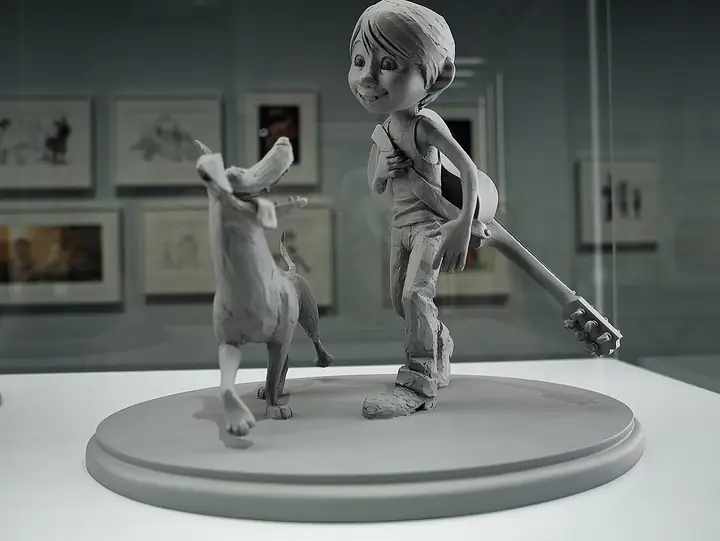
Coco (2017): Miguel RiveraImage: Wikimedia Commons · Jl FilpoC, CC BY-SA 4.0 - #050
- #051
- #052
- #053
- #054
Contains a major spoiler — show
Director Lee Unkrich confirmed on Twitter that Ernesto was not killed when the bell fell on top of him for the second time in the Land of the Dead, as he is already dead, technically speaking. However, it is unlikely Ernesto was sentenced to the "final death" that befalls Chicharron, as the film's epilogue shows that his statue has not been removed from Mariachi Plaza and stories of his crimes are still being passed down in the Land of the Living, meaning he is perhaps permanently trapped in the Land of the Dead where his name is also tarnished.
Easter Eggs & References (92)
- #055
- #056
- #057
- #058
- #059
Miguel's exchange with the Clerk about him being allergic to Dante ("But Dante doesn't have any hair!" "And I don't have a nose, and yet here we are.") echoes Bob Parr's dialogue with Edna Mode in The Incredibles (2004): ("You know I'm retired from hero work." "As am I, Robert, yet here we are.")
- #060
Miguel's last name, Rivera, is a reference to film producer Jonas Rivera, who has worked with Pixar Animation Studios since 1994 and produced two of their films: Up (2009) and Inside Out (2015).
- #061
- #062
The first Alebrije to appear when Miguel first crosses the bridge is a giant feathered serpent. This is possibly a nod to Quetzalcoatl (known as Kukulkan or Q'uq'umatz), a prominent deity in several Mesoamerican cultures. This deity had a temple built in his honor, El Castillo, located in the ancient city of Chichen Itza, one of the eight wonders of the modern world, located in the Yucatán peninsula in Mexico. The step pyramid also resembles the structure that the creature lands on, and that connects the marigold bridges. Interestingly, its head resembles Rex, the toy dinosaur from the Toy Story franchise.
- #063
- #064
- #065
- #066
The film features a variety of animated caricatures or cameo appearances of legendary Mexican celebrities, paying homage to them. Among the many deceased Mexican stars who are featured in the film include Santo, a wrestler; movie actor Cantinflas; actors and singers Pedro Infante and Jorge Negrete; painter Frida Kahlo; Emiliano Zapata, one of the revolutionary leaders during the Mexican Revolution; and actress María Félix. Director Lee Unkrich has stated that besides these celebrities, more are hidden in the film.
- #067
Aside from Mama Coco, and the deceased relatives that Miguel meets, no one knows the names of the living relatives. Miguel calls his uncle Tio Berto, but the others are simply addressed as "Mama", "Papa" and "Abuelita", until Miguel sings to Mama Coco at the end, and when Abuelita sniffles, Mama Coco turns to her and calls her by her name, which is Elaina.
- #068
- #069
- #070
- #071
The character of Ernesto de la Cruz is based on the Mexican icon Pedro Infante (in fact, the second last name of Infante was "Cruz"). In addition, Ernesto's last name, de la Cruz, is also a reference to another Pixar character, Cruz Ramirez, from Cars 3 (2017). In addition to that, a cartoon of Pedro Infante appears in the film and even interacts with De la Cruz.
- #072
In the flashback sequence where Hector was poisoned, Locomotive 382 from Illinois Central Railroad is seen hauling the passenger train. This engine was the one Casey Jones died in on the night of April 30, 1900. Coincidentally, the locomotive was also said to be cursed following the infamous accident as it had more crashes in its career before being scrapped in 1935.
- #073
- #074
- #075
- #076
- #077
- #078
- #079
- #080
- #081
- #082
- #083
- #084
- #085
- #086
- #087
- #088
The film features a variety of animated caricatures or cameo appearances of legendary Mexican celebrities, paying homage to them. Among the many deceased Mexican stars who are featured in the film include Santo, a wrestler; movie actor Cantinflas; actors and singers Pedro Infante and Jorge Negrete; painter Frida Kahlo; Emiliano Zapata, one of the revolutionary leaders during the Mexican Revolution; and actress María Félix. Director Lee Unkrich has stated that besides these celebrities, more are hidden in the film.
- #089
The film had been in production for several years, and a different young actor voiced Miguel (then known as Marco). Eventually, that kid hit puberty, so he had to be replaced by Anthony Gonzalez. But the original voice actor did have a cameo in the film, similar to Nemo's original voice actor reappearing in Finding Dory (2016). Later in the movie, a stagehand (with a high voice) tells Ernesto to go through the door to the stage. That is the original voice actor.
- #090
- #091
- #092
- #093
Contains a major spoiler — show
When Miguel tells Dante that they need to find his great-great grandfather, Dante 'wanders off', immediately leading Miguel into the room where Héctor is being processed. A subtle one in occurs when Héctor is being processed after trying, yet again, to sneak into the world of the living. The customs officer has a lamp on his desk whose colored, semi-translucent, lampshade casts an eerie green light onto a picture of Ernesto de la Cruz that's hanging on a wall. Héctor's Leitmotif during the entire scene is rusty guitar music.
- #094
Contains a major spoiler — show
When Miguel asks Ernesto if he regrets leaving his family behind, Ernesto vaguely talks about it being difficult but couldn't resist his calling - notice that he never mentions any specific people, he doesn't use Imelda or Coco's names or even bring up a wife and daughter at all, because of course, he's not Miguel's great-great grandfather and what he meant by family was probably his parents or his hometown.
- #095
Contains a major spoiler — show
When Miguel makes a big deal about how Ernesto de la Cruz is the best musician in the world, Héctor responds by acknowledging the songs Ernesto sings as pretty good while Ernesto's actual talent is only mediocre. Of course Héctor would know this: he wrote all of the songs that Ernesto claims are his, and no doubt recognized Ernesto for what he was a medium talent who couldn't cut it.
- #096
Contains a major spoiler — show
When Miguel says that Ernesto is the best musician ever, Hector disagrees. At first, it seems Hector is just being jealous. However later in the film, it is revealed that Ernesto stole Hector's songs and guitar and passed them off as his own. This means that earlier in the film, Hector was subtly calling his former partner a fraud.
- #097
- #098
Contains a major spoiler — show
None of the Rivera family members, deceased or living, actually confirm that Ernesto is Miguel's great-great grandfather. When Miguel brings up his great-great grandfather in the land of the dead, he never says Ernesto's name and Imelda only refers to Hector as "that musician"
- #099
- #100
Contains a major spoiler — show
Upon meeting Héctor, when Miguel asks him how he knows Ernesto, Héctor says he used to play with Ernesto, and "taught him everything he knows". Since Héctor is introduced as a con artist, the audience takes this as a total lie. This turns out to be true. So true that Ernesto killed Héctor for his songs when Héctor was about to leave the life and go back to his family. Also in the same scene, Héctor tries to play a chord, the same as Miguel had done at his shrine to Ernesto. He messes up, effectively throwing off the audience, but it's a notable Five-Second Foreshadowing.
- #101
- #102
Contains a major spoiler — show
When he's going on about Ernesto's talent at the beginning, Miguel says "He played in movies, he had a cool guitar, he could fly!" Ernesto does go flying at the end of the movie, thanks to Pepita. Also Héctor can sing and he does have a cool guitar. But Miguel never considers whether or not Ernesto wrote his own songs. He never wrote a thing, every song he sung he stole from Héctor.
- #103
Contains a major spoiler — show
Another hint that could demonstrate that Ernesto is not Miguel's great great grandfather happens right before he has security take the boy away. Twice before Ernesto tries to give Miguel his blessing, the orange petal doesn't glow (except that Ernesto never started the blessing, which would make the petal to glow, so technically could still be family), which only happens when deceased family members want to send their kin back to the living.
- #104
- #105
Contains a major spoiler — show
When Héctor confronts Ernesto while the latter was about to give a blessing to Miguel, watch closely. Ernesto is pushing Miguel in front of him, not behind him. And this is when Ernesto didn't recognize Héctor and thought he was a potentially dangerous stranger. In other words, Ernesto was going to use his supposed great-great grandson as a shield. A subtle hint that Ernesto isn't a good guy.
- #106
Contains a major spoiler — show
If examined closely, Héctor's bangs are straight parted and messy like Miguel's, while Ernesto's are curled and slicked back. Héctor also shares Miguel's Beauty Mark and dimple when alive, while Ernesto doesn't. This is a hint of Strong Family Resemblance indicating who the real great-great grandfather is. Which makes even more sense when Miguel himself is the one that draws attention to the fact he has a dimple on one side when he smiles but not the other!
- #107
Contains a major spoiler — show
When Elena is explaining the importance of Día de Muertos to Miguel and chastises him for mentioning Coco's papa (aka Héctor), Coco, who has been sitting there unresponsive thus far despite the intense argument happening right in front of her, suddenly takes notice and asks if her papa is coming home. This foreshadows that despite her dementia, anything about her papa clearly jogs her memory and her lucidity, which comes back later when Miguel uses "Remember Me" to restore her memories.
- #108
- #109
Contains a major spoiler — show
Ernesto is very surprised to be told he has a great-great-grandson. Since Miguel's great-great-grandfather had a family and knew his daughter, Ernesto shouldn't be this shocked he has descendants: the first clue that he and Miguel aren't related. He still goes with it, as it's possible that Miguel may be related to an unrecognized offspring which given Ernesto's fame, might be a real possibility. Similarly, when Miguel learns that Ernesto was his grandfather all along, his family incredulously responds "That's impossible." They know full well who his grandfather was, and it wasn't Ernesto. Or they could mean "That's impossible, there's no way to instantly know for sure this stranger is the mystery great-great-grandfather." All the same, it foreshadows that it's impossible for a man like Ernesto to be related to the family-orientated Riveras. Also, whenever Miguel's family talks about Coco's father, it is mentioned that he was forgotten and left off the ofrenda. Ernesto, on the other hand, is remembered by many people, both living and dead. This is the most obvious hint that Ernesto is not Miguel's great-great-grandfather.
- #110
- #111
Contains a major spoiler — show
A trumpet and a record player are visible in the bungalow where Chicharrón has his final death and Hector fetches the guitar. At the beginning of the film, a trumpet and record player are the two items (presumably belonging to Hector) thrown out by Imelda when she first bans music. Also in Hector's photo he has one dimple just like Miguel. And the guitar also has a gold tooth on the headstock, just like Hector has. These are all hints implying Hector is Miguel's real great great grandfather.
- #112
Contains a major spoiler — show
Héctor takes Miguel to visit a forgotten friend of his to get a guitar and serves a couple of drinks, but the friend becomes Deader Than Dead and as such, Héctor drinks a single glass and leaves it upside down on the table, next to the full one. We learn later that Ernesto de la Cruz murdered him by slipping poison in a similar drink. Or it could be interpreted as meaning: one glass is drunk in honour of the finally departed Chicharron, one remains for Hector, who is close to finally dying as well.
- #113
- #114
Contains a major spoiler — show
In the flashback to the last time Héctor and Ernesto saw each other in life, Héctor is carrying a guitar case, which Ernesto picks up after Héctor dies, foreshadowing that the iconic guitar that led Miguel to believe Ernesto is his ancestor originally belonged to Héctor.
- #115
Contains a major spoiler — show
When Miguel and his ancestors are crossing over the Marigold Bridge, they have to push through a rift; when Dante crosses over, he doesn't even disrupt the rift and goes through normally. This foreshadows his alebrije form: He is neither alive nor dead, but instead a spirit creature.
- #116
- #117
Contains a major spoiler — show
When Miguel knocks over the photo and finds the hidden section, he asks Coco if this is her father, Ernesto De La Cruz. Coco never actually says yes - she points at the photo and says "Papa", but she never actually confirms that the name of the man in the photo is Ernesto. In a bit of Freeze-Frame Bonus, the photo shows what Miguel thinks is Ernesto, but if you look at him, the man in the photo is noticeably less burly than Ernesto, hinting it's not him, and it turns out to be Héctor.
- #118
Contains a major spoiler — show
Ernesto de la Cruz is similar to Charles Muntz from Up (2009). Both of these characters had been idolized by the film's protagonists, both had been accused of being a fraud (fabricating a bird skeleton in Muntz's case, stealing songs in Ernesto's case), both briefly bonded with their idol upon meeting for the first time until confessing something, both were revealed as the film's main antagonists through plot twists, and both faced a violent fate at the end of the film (Muntz falling to his death, and Ernesto being exposed).
- #119
Contains a major spoiler — show
In the movie the spirit of Frida Kahlo identifies Dante as a Xolo (Xoloitzcuintli dog), which is a nice tribute to the real Frida. During the mid-20th century the Xolo breed began to decline in popularity. Frida and her husband, Diego Rivera, helped to save the breed by including the Xolo dog as part of their art. Thanks to Frida and Diego, the breed became known again to the world.
- #120
- #121
- #122
Contains a major spoiler — show
Earlier in the movie, Abuelita asked Miguel "Do you want to end up like that man?! Forgotten? Left off your family's ofrenda?" It doesn't just foreshadow that Héctor (Miguel's real great-great-grandfather) is in reality nearly forgotten: it's a hint towards Ernesto's ultimate fate, forgotten and left off his "familia's" ofrendas.
- #123
Contains a major spoiler — show
When Héctor sings to Chicharron, he changes a lyric to be more kid-appropriate in the presence of Miguel. It's a hint that Héctor is a parent himself. When Chicharron goes through the Final Death, Miguel is the only person confused what happened. Dante is uncharacteristically saddened by his fate like Héctor, indicating he knows more about the Land of the Dead than it seems.
- #124
Contains a major spoiler — show
Several Mayan references can be spotted through out the film. All of the marigold bridges start at the top of Mayan temples. Pepita has the appearance of a jaguar, who the Mayans considered to be rulers of the Underworld. Several skeletons at Ernesto's palace are dressed in Mayan priest or king outfits.
- #125
Contains a major spoiler — show
Chicharron at one point confronts Hector about his missing femur. This is in fact true: as Coco is forgetting him and he starts to degrade further and further, Hector probably loses his own femur and replaces it with Chicharron's. This is why Hector appears to be limping all the time.
- #126
Contains a major spoiler — show
As Héctor is singing a last song for Chicharrón who is slowly fading away, a sexual joke appears. He says the following "- and her.. knuckles they drag on the floor", Chicharrón goes "those aren't the words!". It is clear that the original song would've said jugs or knockers instead of knuckles, but as Miguel was there Héctor censored it. This maybe because the word Chicharrón besides being the name of a snack, it is sometimes used to refer to knockers.
- #127
Contains a major spoiler — show
The poster pretty much sums up everyone's role in the film. The guitar played by Ernesto de la Cruz divides the Land of the Living and the Land of the Dead. Ernesto is positioned between Héctor and Imelda, hinting that he's the reason they are separated. Two skeletal hands are touching the guitar; one is undoubtedly Héctor's, while the other could be either Héctor's or Ernesto's, foreshadowing Miguel's mistaken belief of the identity of the guitar's true owner. Imelda being at the bottom of the poster foreshadows the weight of the years that passed since her husband's departure, as well as her caring attitude in spite of it. Miguel and Héctor being at the top foreshadows that they are family. Dante being across from de la Cruz foreshadows him as an alebrije, protecting Miguel from harm. And Coco being at the bottom foreshadows the struggles she herself endured in wanting to see her father again.
- #128
- #129
- #130
- #131
- #132
Contains a major spoiler — show
Very noticeably, not once does Miguel's family in the land of the dead ever refer to his great-great-grandfather by name. Of course, had anyone even said Héctor's name around him or had Miguel mention Ernesto de la Cruz around them, the plot would have gone differently. He also never brings up their names around anyone else, not even Ernesto, who only vaguely knew Imelda as she was his best friend's wife.
- #133
- #134
- #135
- #136
- #137
Contains a major spoiler — show
At the beginning of the movie, Miguel runs from his home to the plaza with the musicians. On his way, he plays music with some dolls that are on a table and then Dante, the street dog, appears from a garbage bin. Those doll animals are the spirit creatures in the Land of the Dead! Also at that scene, Dante shows up right next to those creature dolls, indicating that he is also a spirit creature!
- #138
Contains a major spoiler — show
When climbing up to Miguel's hideout, Dante's footing displaces a few stacks of bricks, which would take quite a feat of strength to do effortlessly. This could hint that Dante is an alebrije and has supernatural strength because of it. Also, in regards to "Dante's Lunch", there's the fact that Dante goes through an unusual amount of injuries whilst holding on to the bone (crashing clean through a fence, through tables of cacti, flour and luchador costumes). Normally, this would be taken as cartoon physics. But as it turns out, Dante is an alebrije, and it's likely he's much sturdier than the average dog.
- #139
- #140
Contains a major spoiler — show
The musicians making fun of how Héctor died (by allegedly choking on some chorizo), and Héctor defending his position by saying it was from food poisoning. Taken a step further by Héctor complaining afterwards about musicians being a "bunch of self-important jerks!"
- #141
Contains a major spoiler — show
The dog's name, Dante, is a reference to Dante Alighieri, the Italian poet and author of the 'Divine Comedy', originally called 'Comedia'. The Divine Comedy describes Dante's journey through the realm of the dead. In México, the Xoloitzcuintli (the Mexican hairless dog depicted in the film) is the guide of the deceased through his/her way to the Mictlán (the underworld, the place where all the souls go after death).
- #142
Contains a major spoiler — show
When Miguel excitedly exclaims that he's going to play "Remember Me" in the battle of the bands, Héctor immediately and uncomfortably negates the idea, saying that it's too popular and everyone will be singing it (which is true, and a legitimate concern). But later it's revealed that Héctor has a likely ulterior motive for not wanting Miguel to perform it: "Remember Me" is an extremely personal song to Héctor; he wrote it as a love song for his daughter Coco.
- #143
Contains a major spoiler — show
During Ernesto's party, when Miguel shows off his dimple ("dimple, no dimple, dimple, no dimple"), Ernesto is one to point out "no dimple". Second time watching it, it's apparent that Ernesto is subtly demeaning Miguel as nothing special (it's not uncommon to lack dimples), foreshadowing the measure of his ego.
- #144
Contains a major spoiler — show
The headstock of Ernesto's guitar has a detail of a skull with a single yellow tooth. When Héctor first grins, it's hard not to notice that he, too, has a single yellow tooth, indicating that the guitar actually belongs to him; Ernesto de la Cruz has a mouth full of perfectly white teeth in both life and death.
- #145
Contains a major spoiler — show
In Mexican tradition, the ofrenda is an altar that pays tribute to the dead. Within the film, it aids the deceased who can be remembered. However, there is an existing ofrenda tradition that remembers and pays tribute to the dead who have been forgotten. This tradition was left out of the film as it would have derailed the plot.
- #146
Deeper Meaning (32)
- #147
- #148
- #149
- #150
- #151
- #152
Pepita's species, Alebrijes, are small figurines made out of paper maché or carved out of wood that represents mythical animal hybrids. Adrian Molina and the Pixar team came across these brightly-coloured sculptures while doing research for the film and were immediately smitten with them.
- #153
Contains a major spoiler — show
When Ernesto learns that Miguel has to return home very soon or he'll die, he calmly states "Hm, I really should get you home" with the same casual indifference as if he just learned the kid was up later past his bedtime than he thought. He also tells Miguel that it's been fun and "I hope you die very soon." These are two subtle but tell-tale hints that Ernesto is a sociopath with no regard for human life, and willing to murder someone (like Héctor for his songs) when he thinks they might threaten his fame.
- #154
Contains a major spoiler — show
While sorting through the issue that Miguel is cursed, the Clerk explains that a curse is invoked when someone steals from the dead on Dia de los Muertos, on a day meant for giving to the dead. It's momentarily hand-waved why the guitar cursed Miguel when he 'asked' Ernesto for his permission to take said guitar, and there's even a Red Herring that perhaps it was Imelda's photo that might've been the "stolen" object. But it turns out, the guitar didn't belong to Ernesto, but rather Héctor, and Miguel unwittingly robbed it of its original owner.
- #155
- #156
- #157
Contains a major spoiler — show
When rescuing Miguel from the pool, Ernesto pushes his guitar out of the way before dragging him to the surface, showing he's trying to protect his reputation. In fact, we see later in the movie, namely when he's tossed into the cenote, that a guitar-deprived Miguel is a perfectly capable swimmer. The foreshadowing part of the scene is that no one tries to get the guitar back to the surface so Miguel may keep playing aka stealing the spotlight from Ernesto de la Cruz.
- #158
- #159
Contains a major spoiler — show
Ernesto is the Spanish variation of the name Ernest, which sounds and is spelled very similarly to the word earnest, meaning truthful, genuine or heartfelt. And his last name is Spanish for "of the cross", meaning his name is literally "Heartfelt of the Cross". This is a major case of dramatic irony considering his true nature is a liar, fraud and murderer.
- #160
- #161
Contains a major spoiler — show
Ernesto throws Miguel into a cenote in order to keep Miguel from ruining his fame. In ancient Mayan civilization priests would throw children (among other things such as jewels) into cenotes as a sacrifice to their gods in exchange for rain and healthy crops.
- #162
Contains a major spoiler — show
For most of the film, Miguel wears a tank top and sweatshirt, symbolizing his immaturity and initial callowness. Bit by bit, he learns the difference between fame and genuine affection, as well as the importance of family. Near the end of the film - after he becomes a big brother to his infant sister Coco - he wears a button-up dress shirt, mirroring his change of heart.
- #163
Contains a major spoiler — show
In the deleted scene "Tour Guide", Héctor (as a tour guide) mentions that part of his "craft" is showing tourists "there's more to this city than de la Cruz; there's art, culture, history". Meanwhile, the bus drives by a bunch of de la Cruz posters. It may seem Played for Laughs, but it's meant to represent the Irony that despite being lauded as a great artist by the world, de la Cruz does not represent art or culture as much as he does fame and attention. He also makes a frustrated fuss about Miguel interrupting his "craft", like any artist would at having their art disrupted. According to Héctor, the reason he no longer makes tours near Ernesto's house is because Ernesto asked him a favor to stop driving by his house. It becomes very obvious foreshadowing that Ernesto wants Héctor as far away from him as possible, either so he won't suspect he earned his fame with Héctor's song, or because most murderers want to stay away from their victims.
- #164
- #165
Contains a major spoiler — show
Often in animated films, the good guys wear light colors (like white) and the bad guys wear dark colors (like red and purple). In order to surprise the audience, Ernesto (the villain) wears white while Miguel, Imelda, and Hector (the heroes) wear red and/or purple.
- #166
- #167
Contains a major spoiler — show
At Frida Kahlo's studio, when Miguel is talking with Frida, Héctor enters the scene and scolds Miguel "not to wander off" or "bother the celebrity". At first, it seems like Héctor simply wants Miguel to remain low-key and stick with him. But a second time watching this, it's apparent Héctor is acting just like a parent would: making sure their kids learn not to wander anywhere without adult supervision, and not to bother strangers.
- #168
Contains a major spoiler — show
When Abuelita loads a bouquet of marigolds upon Miguel, he's still so upset about not being able to sign up for the talent show that he gets some petals into his mouth and spits them out. Héctor, too, is so upset about things not going his way that he ends up breathing flowers. Like great-great-grandfather, like great-great-grandson indeed.
- #169
Contains a major spoiler — show
If you watch the video of Ernesto Miguel is watching near the start, the camera zooms in on his hands when he's playing notes, implying it's actually a stunt double. There are only wide shots of Ernesto when he's merely strumming, hinting he's actually not as talented as Miguel thinks he is.
- #170
- #171
Contains a major spoiler — show
When Elena, Berto, and Rosa are dragging Miguel back from Mariachi Plaza, Elena chases Dante away with her chancla at one point; Miguel protests that "it's just Dante", and her response is "Never name a street dog; they'll follow you forever." Since Dante is Miguel's spirit guide, he probably will, one way or another.
- #172
Contains a major spoiler — show
Miguel tries to stagger to act like a skeleton, and Héctor tells him that isn't how they walk. Miguel points out that's how Héctor walks, which may be a clue towards Héctor approaching "Final Death" and gradually losing his energy. In fact, Héctor's entire design makes him look shabbier and more decayed than the other skeletons, signifying his slowly being forgotten.
- #173
- #174
Contains a major spoiler — show
When we first meet Héctor his leitmotif is a rusty, clumsy guitar playing in a drunken manner in order to show that he is goofy, shifty and untrustworthy. Once he plays Chicharron's last request and shows a gentler, kinder version of himself his theme now changes into a soulful, mournful guitar solo The same one that was playing in the beginning that showed the walkway musician and his family.
- #175
Contains a major spoiler — show
In the deleted scene "Dia de los muertos," it features a group of people singing a calm ballad, before turning it over-the-top and practically bastardizes the meaning of the holiday. This could mean to foreshadow how Ernesto bastardizes Hector's song, "Remember Me," from a personal family song into a flashy fame song.
- #176
Contains a major spoiler — show
Only after seeing the "seize your moment" motto printed on de la Cruz's statue does Miguel perform questionable acts to get into the talent show (stealing an offering from another ofrenda to distract Dante, breaking into Ernesto's tomb, and stealing his guitar). Ernesto did some pretty shady things himself to seize his moment, such as killing his friend Héctor and taking the credit for all his songs.
- #177
Contains a major spoiler — show
The song that Mama Imelda and Ernesto de la Cruz sang towards the end of the film is called "La Llorona", a classic and anonymous Mexican song. One popular interpretation of the song is about a singer feeling trapped by this woman (La Llorona) who has fallen in love with him. Another interpretation is a woman's grief about drowning her children in a river. This version is an urban legend in Mexico.
- #178
Contains a major spoiler — show
If you watch the video of Ernesto Miguel is watching near the start, the camera zooms in on his hands when he's playing notes, implying it's actually a stunt double. There are only wide shots of Ernesto when he's merely strumming, hinting he's actually not as talented as Miguel thinks he is.
Career & Awards (7)
Sources & editorial notes
Reference databases
- Wikipedia
- IMDb
Information from external sources is independently selected, consolidated and edited by Arka Evren. Sources are listed for verification and further reading. Encyclopedia text is used under its licence (CC BY-SA). How we work