
FILM · 1946 · USA
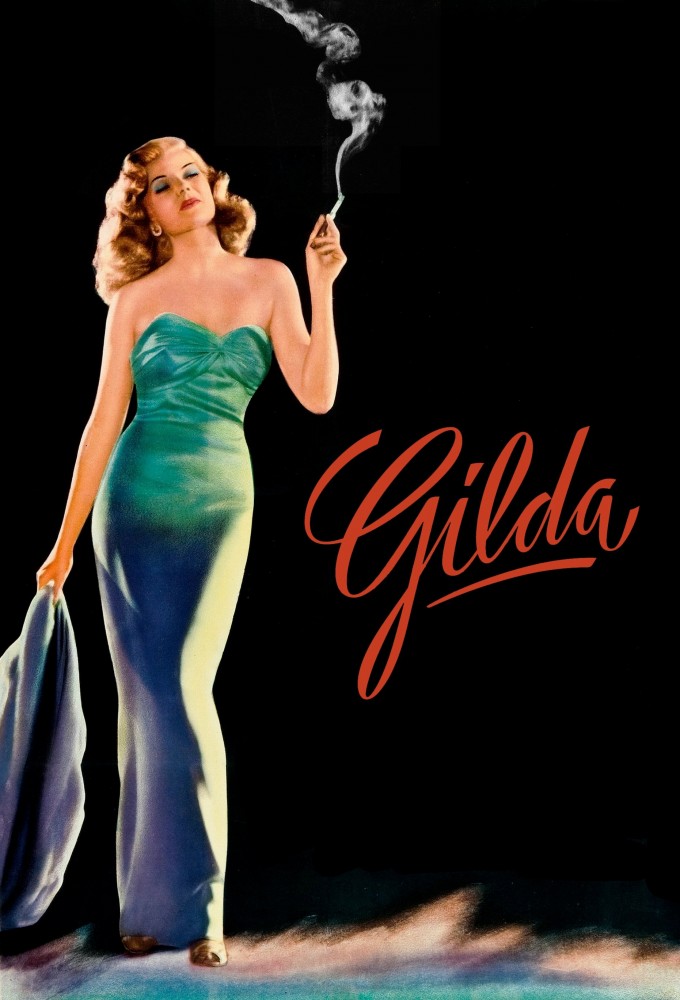
Gilda
- Directed by
- Charles Vidor
- Runtime
- 110 min
- Studio
- Columbia Pictures
45 archived facts 7 topics 1 source Last reviewed Nov 2026
A gambler discovers an old flame while in Argentina, but she's married to his new boss.
45 Interesting Facts About Gilda
Interesting Facts (10)
- #001
A rumor holds that Gilda is the only film in which Rita Hayworth's real singing voice is heard, but this is not true. According to the DVD's bonus features, Hayworth never recorded her own singing voice and was a skilled lip-syncher; Anita Ellis dubbed nearly all of her songs in the film. Hayworth always wanted to do her own singing, and Columbia Pictures head Harry Cohn paid for her voice lessons, but she never developed a voice she considered strong enough to use, and she remained angry about this for the rest of her life.
- #002
- #003
The film was such a major financial success for Columbia Pictures that Rita Hayworth's agent, Johnny Hyde, demanded that studio head Harry Cohn give his client a share of the profits for her next films. Cohn refused, but he softened when Hayworth called in "sick" for several days during the production of her next film, Down to Earth (1947). Hayworth set up the Beckworth Corporation to collect 25% of the net profits from the remaining films on her Columbia contract.
- #004
- #005
In the V-E Day scene, the crowd at the casino sings "Marcha de San Lorenzo" (the March of San Lorenzo) instead of the Argentine national anthem, which would have been the logical theme to sing in that situation. This piece of music honors a famous battle in Argentine history and is usually played only at celebrations related to the Argentine hero José de San Martín.
- #006
The first frame after the film's credits shows dice being thrown toward the camera and filling the screen as they land. Glenn Ford is behind them, and everything is sharply in focus. The camera then pulls up and back, and the dice leave the frame, but Ford reaches for them and throws them a second time, though they do not fill the screen from this new angle. This particular effect was achieved in the first throw by using oversized dice. The first die is never actually seen in Glenn Ford's hands, so there is no way to gauge the extra-large size of the first pair of dice. The shot has the look of a super-wide lens with great depth of field.
- #007
The script was not yet finished when shooting began. According to choreographer Jack Cole, "Script pages were coming in almost the morning we were going to shoot them; they were making the picture as we went along. If you really look, you can tell the picture was made that way, because if you try to follow the story, it really doesn't make any sense."
- #008
- #009
- #010
Production Story (3)
- #011
- #012
- #013
The film is shown briefly in The Shawshank Redemption (1994), adapted from Stephen King's novella 'Rita Hayworth and Shawshank Redemption'; in both works, the Rita Hayworth poster is used as a seemingly insignificant detail that gains importance later in the story.
Behind the Scenes (22)
- #014
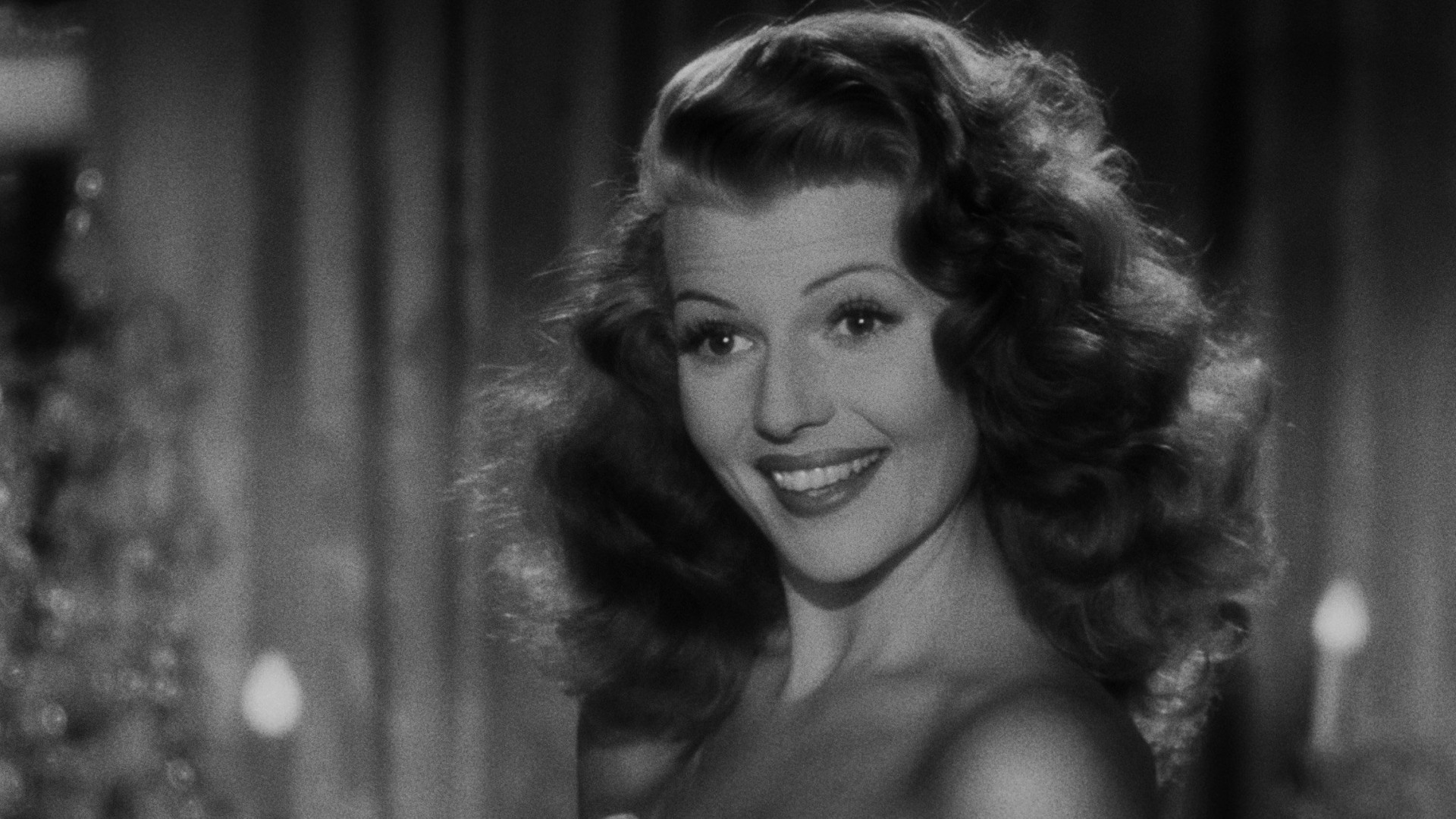
Rita Hayworth's entrance scene was shot twice. Her action of poking her head into the frame and the dialogue that follows remain the same, but she wore different costumes: in one film print a striped blouse and a dark skirt, and in the other the more famous off-the-shoulder dressing gown.
- #015
The film was initially considered for shooting in Technicolor, but because most of the special cameras were already committed to other projects, Harry Cohn accepted the black-and-white option and hired cinematographer Rudolph Maté to shoot the picture. Maté had been the cinematographer on earlier color Hayworth films such as Cover Girl (1944) and Tonight and Every Night (1945).
- #016
- #017
- #018
- #019
- #020
- #021
In the first frame after the credits, dice are thrown toward the camera and fill the screen; Glenn Ford is clearly visible in the background. When the camera rises and pulls back, the dice leave the frame, but Ford picks them up and throws them a second time; this time the dice do not fill the screen. This special effect was achieved by using oversized dice for the first throw.
- #022
- #023
- #024
The film was such a box-office success for Columbia Pictures that Rita Hayworth's agent, Johnny Hyde, demanded that studio boss Harry Cohn give his client a share of the profits on her subsequent films. Cohn refused, but he gave in when Hayworth faked being 'sick' for a few days during the shooting of her next film, Down to Earth (1947). Hayworth set up the Beckworth Corporation to collect 25% of the net profits from her remaining films with Columbia.
- #025
Harry Cohn was constantly on guard against negative press that could affect Rita Hayworth's box-office power; her marriage to Orson Welles was a source of endless worry for him. During shooting, Hayworth and Welles were going through one of their periods of separation, and the gossip magazines were buzzing with rumors of a romance between Hayworth and Glenn Ford. When the two spent time together off set, the studio boss would bombard them with angry phone calls and order Hayworth to go home. Cohn even went so far as to spy on his actors; he had recording devices installed in the dressing rooms, but as Ford later said, 'Of course we knew our rooms were bugged, because the sound department tipped us off.' When Welles returned to Columbia for The Lady from Shanghai (1947) with the wife he was separated from, he was aware of the hidden microphones, and he recounted that he and Rita put on improvised sketches and radio programs in their dressing rooms for their 'listeners.'
- #026
The script was not yet finished when shooting began. According to choreographer Jack Cole, 'The pages for the scene we were going to shoot reached us almost on the morning of the shoot; they were writing the film as it went along. If you look carefully, you'll notice that it doesn't make much sense when you try to follow the story, because that's really how the film was made.'
- #027
- #028
- #029
In Spain, it was released on Christmas Eve 1947, a year and a half after its original U.S. release. The Franco-era censorship of the time described the film as 'extremely dangerous from a moral standpoint,' and the Spanish Catholic Church tried to dissuade people from going to the cinema by threatening that anyone who dared to watch the film would go straight to hell.
- #030
- #031
- #032
- #033
- #034
- #035
Characters & Cast (1)
- #036
Although there is a rumor that Rita Hayworth's real singing voice is heard only in this film, that is not true. According to the DVD extras, Hayworth never recorded her own voice and was quite skilled at dubbing. Almost all of her songs in the film were sung by Anita Ellis. Hayworth always wanted to use her own voice, and Columbia boss Harry Cohn even paid for voice lessons, but her voice was never considered strong enough; this created a lifelong resentment in Hayworth.
Easter Eggs & References (2)
- #037
When the film was released, the atomic bomb tested at Bikini Atoll in the Marshall Islands in the Pacific bore an image of Rita Hayworth referring to the bomb's condition. The fourth atomic bomb ever detonated was decorated with a photograph of Hayworth cut from the June 1946 issue of Esquire magazine, and the device's nickname, "Gilda," was written on it in five-inch black letters. Although the gesture was meant as a compliment, Hayworth was deeply offended.
- #038
Deeper Meaning (6)
- #039
- #040
- #041
- #042
In the years since the film's release, it has been noticed that there is a strong homosexual subtext between Johnny and Ballin, especially in the final lines. In one scene, Johnny also tells Ballin, 'You must lead a gay life.' Upon hearing this remark, the director Charles Vidor is said to have remarked, 'Really? I never thought those boys were supposed to be that way!' Glenn Ford also acknowledged the homosexual subtext but said, 'It never occurred to any of us during the shooting.'
- #043
- #044
Career & Awards (1)
Sources & editorial notes
Reference databases
- Wikipedia
- IMDb
Information from external sources is independently selected, consolidated and edited by Arka Evren. Sources are listed for verification and further reading. Encyclopedia text is used under its licence (CC BY-SA). How we work