

ACTOR · BORN 1922 · DIED 2015
Christopher Lee
- Born
- 27 May 1922, Westminster, London, England, UK
- Died
- 7 June 2015
- Known for
- Airplane! (1980), The Resident (2011), Dracula (1958), The Lord of the Rings: The Two Towers (2002)
109 archived facts 6 topics 1 source Last reviewed Nov 2026
Christopher Lee (27 May 1922 – 7 June 2015) was an actor best known for Airplane!, The Resident and Dracula.
Christopher Lee over the years


109 Interesting Facts About Christopher Lee
Interesting Facts (25)
- #001
Lee's films set a box office record: as of May 2006, The Lord of the Rings trilogy and the two Star Wars films in which he played Count Dooku had grossed more than 4.4 billion dollars combined, beating the 3 billion and 3.8 billion dollar totals claimed for the likes of Harrison Ford and Samuel L. Jackson.
- #002
Close friends off screen, Lee and Peter Cushing often played deadly enemies on screen. After Cushing died, Lee said he had never been as close or as open with any other friend as he had been with Peter.
Christopher Lee: Kharis, The Mummy and Peter StormImage: Wikimedia Commons · Hammer, Public domain - #003
Lee wore an eyepatch as Rochefort in The Three Musketeers (1973), The Four Musketeers (1974) and The Return of the Musketeers (1989), one of the rare adaptations of Alexandre Dumas's 'Twenty Years After,' and his take was so striking that later versions, Disney's The Three Musketeers (1993) and the 2011 adaptation among them, kept the eyepatch, even though it's nowhere in Dumas.
- #004
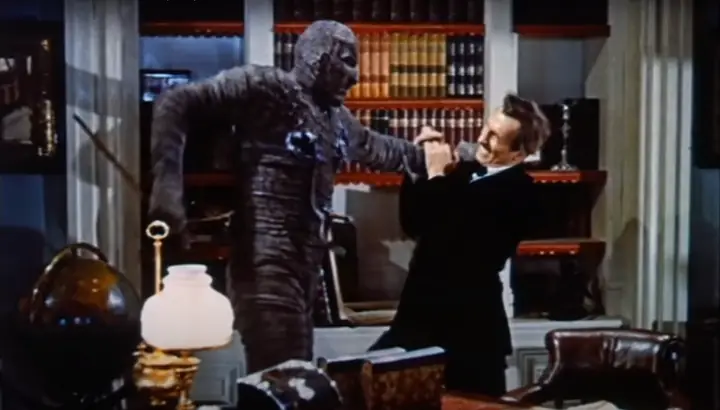
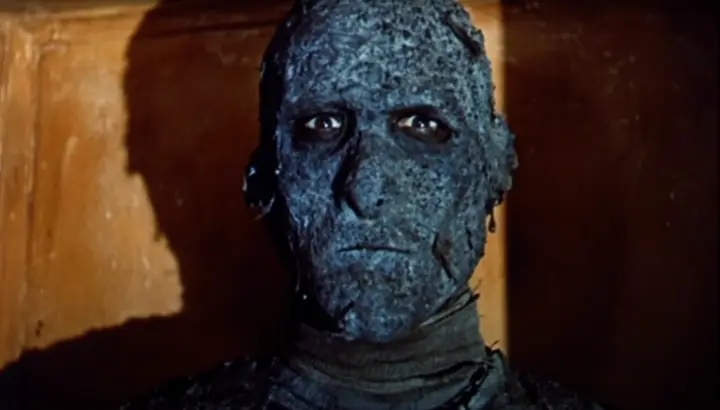
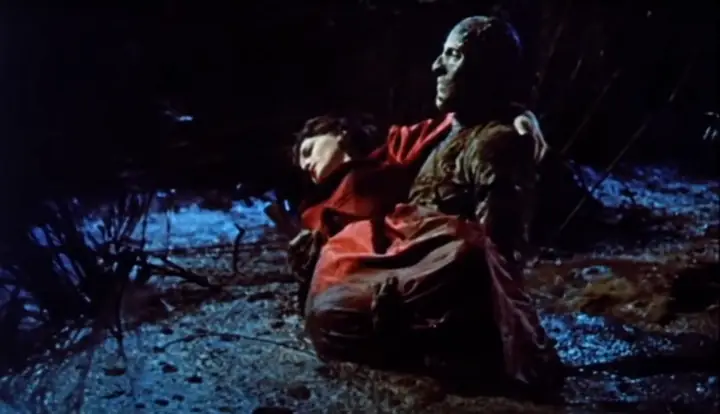
Lee was badly hurt making The Mummy (1959) with Peter Cushing: crashing through real glass windows and doors, he dislocated his shoulder and strained his neck, and carrying an actress 87 yards through a swamp with his arms fully outstretched did permanent damage to his shoulders.
Christopher Lee: Kharis, The MummyImage: Wikimedia Commons · Hammer, Public domain - #005
- #006
Filming The Warriors (1955), Lee hurt his right hand in a sword fight with a slightly tipsy Errol Flynn, leaving his little finger permanently bent, which is clearly visible in many of his films.
Christopher Lee: Kharis, The MummyImage: Wikimedia Commons · Hammer, Public domain - #007
At 17, Lee witnessed France's last public guillotine execution, that of Eugen Weidmann in 1939; standing 1.96 meters tall, he could see clearly over the crowd, whose behavior caused such a scandal that all later French executions were held behind closed doors.
Christopher Lee: behind the scenesImage: Wikimedia Commons · John Turner, CC BY 2.0 - #008
- #009
- #010
- #011
- #012
- #013
- #014
In 2002, after Richard Harris died, rumors spread that Christopher Lee would take over as Albus Dumbledore in the Harry Potter films. Lee shot them down sharply, saying he hadn't been offered it and probably wouldn't be, and that he found such gossip deeply disrespectful just ten days after Harris's death.
- #015
- #016
Christopher Lee narrated 'The Last Vampire' on the debut album by the Hollywood Vampires, the supergroup formed by Johnny Depp, Alice Cooper and Joe Perry; he recorded it shortly before his death, making it his last appearance on an album.
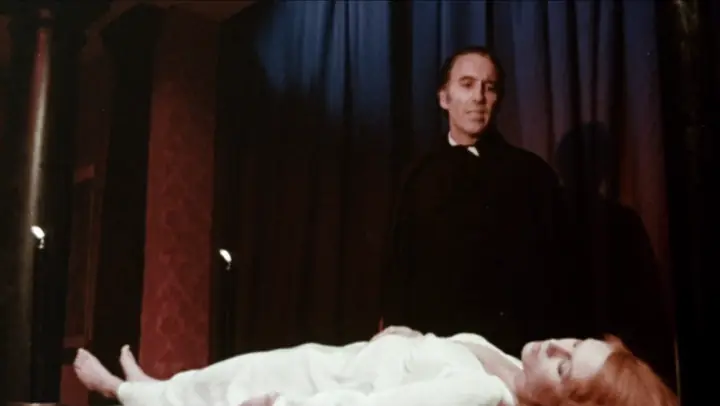
Christopher Lee: Count Dracula and Ship's Vampire, wedding sceneImage: Wikimedia Commons · [1], Public domain - #017
The widespread belief that Christopher Lee had a huge library of occult books wasn't true: in a 2011 talk at University College Dublin, he laughed off the claim of 20,000 books, saying he owned four or five, warned students against dabbling in the occult and stressed he never had himself.
- #018
Over the years, Christopher Lee said that of the Bond actors he worked with, Roger Moore, Pierce Brosnan and Daniel Craig, those were the most faithful to Ian Fleming's character, yet of his own Bond film, The Man with the Golden Gun (1974), he bluntly said Fleming's characters in the novel were weak and the film was much better written.
- #019
- #020
- #021
- #022
- #023
- #024
- #025
Christopher Lee made seven films with Oliver Reed: The Two Faces of Dr. Jekyll (1960), Wild for Kicks (1960), The Pirates of Blood River (1962), The Three Musketeers (1973), The Four Musketeers (1974), The Return of the Musketeers (1989) and Treasure Island (1990).
Behind the Scenes (48)
- #026
According to Lee's autobiography, his first meeting with Peter Cushing on The Curse of Frankenstein (1957) was memorable: annoyed that the monster had no dialogue, Lee stormed into Cushing's dressing room and announced, "I have no lines!" Cushing coolly replied, "You're lucky; I've read the script," the start of a warm, funny friendship.
- #027
- #028
- #029
Christopher Lee was known for his deep familiarity with J.R.R. Tolkien's works, and during the filming of The Lord of the Rings trilogy he frequently visited the production department to offer the crew valuable advice. He was the only actor fortunate enough to have met Tolkien in person, and he was never shy about sharing that unique experience with everyone on set. His contributions played an important role in enriching the film's atmosphere and detail.
- #030
- #031
According to Lee's autobiography, when he first met Peter Cushing during the filming of The Curse of Frankenstein (1957), an unforgettable exchange passed between them. Because he had no lines at all as the creature, Lee stormed angrily into Cushing's dressing room and shouted, 'I have no lines!' Cushing's cool reply, 'You're lucky; I've read the script,' marked the beginning of the humorous and warm relationship between the two.
- #032
Over the course of his career, Lee played three different characters in the Sherlock Holmes universe, achieving a rare distinction in that regard. He played the detective himself, his clever and cautious older brother Mycroft Holmes, and Sir Henry Baskerville in the story The Hound of the Baskervilles.
- #033
- #034
Early in his career, Lee made a living dubbing foreign films into English and other languages; one of these was Monsieur Hulot's Holiday (1953). Sometimes he would voice every character in a film by himself, including the female roles. Douglas Fairbanks Jr. praised Lee's talent in this area, noting that he could imitate any accent flawlessly and that this made him an extraordinary character actor.
- #035
In 2005, Lee planned to attend a heavy metal festival called Earthshaker Fest, where he wanted to hear his favorite bands, Italy's Rhapsody and America's Manowar, play live. He announced at the last moment, however, that he could not attend because of an important film shoot. A message he had recorded in advance for his fans was shown on a giant screen just before Rhapsody took the stage, once again revealing Lee's passion for music.
- #036
Lee and his wife formed a close friendship with Boris Karloff and his wife; Karloff was famed as the Frankenstein monster of the generation before him. This friendship did not stem from working together but from their being neighbours in England; the two couples lived side by side. Lee and Karloff appeared together in Corridors of Blood (1958) and The Crimson Cult (1968), but the bond between them was strengthened further by this coincidental closeness off set.
- #037
Lee used an unusual method to learn German: he grasped the language by listening to recordings of Richard Wagner's operas. The dramatic structure of Wagner's works and the rhythm of the language helped Lee develop his German speaking ability. This method shows his passion for learning languages and his interest in art.
- #038
Early in his career, Lee had difficulty finding work as a supporting actor, because almost all of the leading male stars of the period were shorter than him. His height of 1.96 metres made him visually dominant beside the lead actors in many productions, and this caused directors to hesitate about casting him. Yet in later years this physical trait made him an ideal choice for unforgettable villains.
- #039
Lee's daughter Christina Erika Lee was born with a serious deformity in her legs; her legs were bent at such a severe angle that they almost faced backwards. Christina, who spent her first two years in braces, managed to learn to walk after the age of three and no longer needed the braces. This difficult process shows Lee's devotion to his family and his resilience in the face of the difficulties he encountered.
- #040
Lee voiced King Haggard in the German version of the animated film The Last Unicorn (1982) and did not ask for any fee for this work. His love for and admiration of the film drove him to make this sacrifice. This gesture lays bare Lee's passion for art and the value he gave to projects he loved.
- #041
- #042
On 21 July 2004, Lee was honoured with honorary citizenship of the Italian town of Casina, where the castle of his ancestors, Sarzano, was located. Delivering his thank-you speech at the ceremony in fluent Italian, Lee once again showed his attachment to his roots. This honour symbolises his connection to his Italian noble family, the Carandini, and his deep respect for European culture.
- #043
Lee's education followed an uneven path because of his family's financial difficulties. After preparatory school he passed the entrance exam for Eton College, but his family could not cover the fees. He went on to Wellington College, yet when their financial situation worsened further he had to be withdrawn from the school and began working in the city as an office boy at a shipping company for a wage of £1 a week.
- #044
One of Lee's favourite music groups was the Italian symphonic power metal band Rhapsody, with whom he formed a special bond. Lee's spoken words open the track 'Unholy Warcry' on Rhapsody's album 'The Dark Secret'. He also duetted with the band's vocalist Fabio Lione on the single 'The Magic of the Wizard's Dream', performing on the English, German, Italian and French versions of the song.
- #045
Like The Lord of the Rings director Sir Peter Jackson, Lee appeared in films alongside three generations of the Astin family over the course of his career. The family is best known for Sean Astin's role as Frodo Baggins, and its members worked on the same projects as Lee. This coincidence is a striking example of how intertwined connections in the film world can be.
- #046
- #047
Lee wore an eyepatch while playing the character Rochefort in The Three Musketeers (1973), The Four Musketeers (1974) and The Return of the Musketeers (1989), one of the rare adaptations based on Alexandre Dumas's novel 'Twenty Years After'. Lee's interpretation was so striking that later productions such as Disney's The Three Musketeers (1993) and its 2011 adaptation continued to depict Rochefort with an eyepatch, even though no such detail exists in Dumas's book.
- #048
Lee was seriously injured during the shooting of The Mummy (1959), in which he appeared alongside Peter Cushing. He dislocated his shoulder and strained his neck muscles in scenes where he had to smash through real glass windows and doors. In particular, the scene in which he carried an actress 87 yards through a swamp with his arms fully extended caused permanent damage to his shoulders, and the experience shows the sacrifices he made in action scenes.
- #049
Lee and David Prowse formed an interesting connection as the two actors who played Frankenstein's Monster opposite Peter Cushing during their careers. Lee took on the role in The Curse of Frankenstein (1957), while Prowse played the same character in Frankenstein and the Monster from Hell (1974). Both actors later appeared as Sith Lords in the Star Wars series; Lee as Count Dooku and Prowse as Darth Vader.
- #050
Lee was made an honorary member of three different stunt unions thanks to his courage in action scenes and the rapport he built with stunt performers. The honour reflects his professionalism on set and the importance he placed on stunt safety. Throughout his career, Lee was not afraid to perform many dangerous scenes himself, and this attitude earned him respect in the industry.
- #051
- #052
In Star Wars: Episode II - Attack of the Clones (2002), Lee's lightsaber duels and dangerous scenes were performed by a stunt double; Lee's face was digitally placed onto the double's body. Regarding the situation, Lee noted that he had done more sword fighting than any other actor in the past 40 years, but that he could no longer perform such scenes. The statement reflects his pride in his action background despite his age.
- #053
During the shooting of The Warriors (1955), Lee injured his right hand in a sword fight scene with a slightly drunk Errol Flynn. As a result of the accident, his little finger was permanently bent, and this physical feature can be clearly seen in many of Lee's films. The injury shows his courage in taking on the risks of action scenes and his professionalism.
- #054
Lee turned down the role played by Leslie Nielsen in Airplane! (1980) because he had difficulty understanding the script. The decision reflects his distant approach to comedy and his own particular sense of humour. The role went to Nielsen, and the film became one of the most important comedies in film history.
- #055
When Lee arrived at the recording studio to voice King Haggard in the original animated version of The Last Unicorn (1982), he brought his own copy of the book with him. He had marked the passages he felt were wrongly left out of the film and shared his views on the matter with the production team. This behavior shows Lee's meticulous approach to adaptations and his respect for literary works.
- #056
- #057
Lee and his best friend Peter Cushing were great fans of Looney Tunes cartoons and often amused themselves by imitating the characters' voices to each other. On one occasion, at a cinema showing a Sylvester and Tweety cartoon, they laughed so loudly that they were asked to leave the auditorium. This anecdote reveals the joyful and warm friendship between the two.
- #058
Around 1988, Lee agreed to play a vampire once again in an unmade Dutch/Belgian comedy titled 'Blooper'. The screenplay, written by Frank Van Laecke, was commissioned because of the physical resemblance between Lee and the Dutch opera singer Marco Bakker; this resemblance had been noticed by Bakker's wife, the actress Willeke van Ammelrooy. Lee, known for his love of opera, got along well with the pair, and the story revolved around the opera singer Billy Blooper (Bakker), who learns that his father (Lee) is a vampire with rotten teeth.
- #059
Lee got along very well with Eddie Powell, his longtime stunt double at Hammer Film Productions. Powell married Hammer's wardrobe supervisor Rosemary Burrows, and Burrows jokingly gave Lee nicknames such as 'Nasty' and sometimes 'Green Mould'. This playful relationship shows the warm and friendly bonds Lee formed with the crew on set.
- #060
Over the course of his career, Lee worked with three different Gollum voice actors. First, Theodore Gottlieb appeared as a voice in The Last Unicorn (1982); second, Peter Woodthorpe appeared alongside Lee in The Odyssey (1997); and finally, Andy Serkis appeared in the same project as Lee in The Lord of the Rings films.
- #061
Christopher Lee's mother's second husband was the uncle of Ian Fleming, the creator of the character James Bond. Through this family tie, Lee and Fleming were step-cousins. Over the course of his career, Lee played the villain Francisco Scaramanga in the Bond universe created by Fleming, making a cinematic nod to this kinship as well.
- #062
In his youth, Lee had the chance to meet Prince Felix Yusupov and Grand Duke Dmitri Pavlovich Romanov, who were involved in the murder of Grigori Rasputin, whom he would later portray on screen. This extraordinary encounter strengthened Lee's connection to history and gave him unique insight while preparing for the role of Rasputin. Thanks to this experience, Lee was able to grasp the character's dark world more deeply.
- #063
The white coffin used in one of Christopher Lee's Dracula films later reappeared in the music video for the 1986 song 'Venus' by Bananarama, one of the iconic groups in pop music history. This coffin made an extraordinary journey from the dark atmosphere of horror cinema to the colorful world of pop music. Thus, a prop from Lee's film found a second life in a different art form.
- #064
Although Christopher Lee had actually fought in World War II, when he auditioned for a role in the 1962 film The Longest Day, he was turned down on the grounds that he 'did not look like a military man.' This rejection bothered Lee for the rest of his life. Moreover, some film books mistakenly listed him in the cast of this film, and Lee had to correct this error until the end of his life. This incident is a striking example of how persistent misinformation in cinema history can be.
- #065
The supergroup Hollywood Vampires, founded by Johnny Depp, Alice Cooper and Joe Perry, featured Christopher Lee as the narrator on a track called 'The Last Vampire' on their self-titled debut album. Lee's recording was completed shortly before his death, making it his final performance on a music album. This track holds great significance as one of the last artistic touches of Lee's career.
- #066
Christopher Lee appeared in some of the major productions of his career without having any dialogue at all. In Hamlet (1948), The Curse of Frankenstein (1957) and Dracula: Prince of Darkness (1966), Lee's characters did not speak a single word. Lee was one of the rare actors who could captivate the audience even in silence.
- #067
The widespread belief that Christopher Lee owned an extensive collection of occult books was in fact not true. In a talk he gave at University College Dublin in 2011, Lee humorously denied the claim that he had a collection of 20,000 books, saying he had only four or five occult books in his possession. He also warned students against harmful occult practices and emphasized that he had never engaged in such matters himself. Lee's statements show just how exaggerated the legends about him could become.
- #068
In interviews over the years, Christopher Lee described the three James Bond actors he worked with - Roger Moore, Pierce Brosnan and Daniel Craig - as the names most faithful to the character created by Ian Fleming. Yet when speaking about his own Bond film, The Man with the Golden Gun (1974), Lee did not hold back from saying that the characters in Fleming's novels were weak and that the film adaptation was far better written. These criticisms reveal Lee's view of the Bond series as both a fan and a critic.
- #069
Christopher Lee was so ashamed of appearing in the 1985 film Howling II:... Your Sister Is a Werewolf that when he met director Joe Dante during the shooting of the 1990 film Gremlins 2: The New Batch, he apologized to him for having appeared in that poor sequel. Lee's behavior clearly reveals how much he cared about his artistic reputation and his discomfort at taking part in low-quality work.
- #070
Christopher Lee said that he had witnessed the last public guillotine execution carried out in France in 1939 and that, thanks to this experience, he knew what it sounded like when a blade enters human flesh. This extraordinary statement shows how full Lee's life was of unusual and striking events. Lee also reflected such experiences in his acting, managing to add depth to his performances.
- #071
Christopher Lee appeared in six productions nominated for the Best Picture Oscar: Hamlet (1948), Moulin Rouge (1952), The Lord of the Rings trilogy (2001-2003) and Hugo (2011). Of these films, Hamlet and The Lord of the Rings: The Return of the King won the Oscar in that category. However, Lee appeared in The Return of the King only in the extended version of the film and did not appear in the theatrical version that the Academy rewarded. This situation went down as an interesting detail in Lee's career.
- #072
Billionaire businessman Jean Paul Getty, a close friend of Christopher Lee, lent Lee and his wife Gitte his Sutton Place mansion in Surrey for their honeymoon in 1961. This gesture was a sign of the strong friendship between Lee and Getty. That Lee spent his honeymoon in such a magnificent place also reveals how influential the figures in his social circle were.
- #073
Christopher Lee twice played the leader of a separatist movement in his career. First, he played Muhammad Ali Jinnah, the founder of Pakistan, in the 1998 film Jinnah. His second role was Count Dooku in the Star Wars series, the former mentor of Qui-Gon Jinn who takes over the leadership of the separatist movement. These two roles show Lee's ability to portray historical and fictional leaders with the same charisma and depth.
Characters & Cast (4)
- #074
- #075
- #076
- #077
Although Christopher Lee had actually fought in World War II, he was turned down for The Longest Day (1962) for 'not looking like a military man,' which rankled for the rest of his life, all the more because some film books wrongly listed him in the cast, an error he kept correcting until he died.
Deeper Meaning (2)
Career & Awards (16)
- #080
- #081
Early on, Lee made a living dubbing foreign films into English and other languages, among them Monsieur Hulot's Holiday (1953), sometimes voicing every character himself, women included. Douglas Fairbanks Jr. praised his gift for flawlessly mimicking any accent, which he said made him an extraordinary character actor.
- #082
- #083
Lee holds the record for playing iconic figures of Victorian fiction: Count Dracula ten times, Dr. Fu Manchu five times, Sherlock Holmes three times, Mycroft Holmes once and Sir Henry Baskerville once, plus Jekyll and Hyde adaptations like The Two Faces of Dr. Jekyll (1960) and I, Monster (1971).
- #084
- #085
- #086
- #087
- #088
- #089
- #090
Lee considered Billy Wilder, who directed him in The Private Life of Sherlock Holmes (1970), the greatest director he ever worked with, though in later years he named Tim Burton, with whom he made Sleepy Hollow (1999), Charlie and the Chocolate Factory (2005) and Dark Shadows (2012), among others, as his favorite.
- #091
- #092
- #093
- #094
Christopher Lee had no lines at all in some major films, including Hamlet (1948), The Curse of Frankenstein (1957) and Dracula: Prince of Darkness (1966), proof he could hold an audience through presence and expression alone.
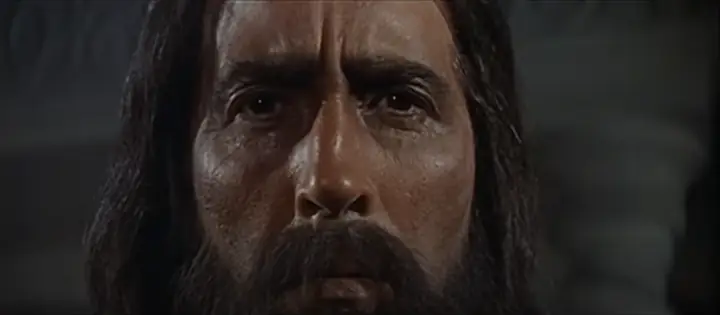
Christopher Lee: Grigori Rasputin, behind the scenesImage: Wikimedia Commons · The Celluloid Highway, Public domain - #095
Life & Family (14)
- #096
- #097
Lee planned to attend the 2005 Earthshaker Fest heavy metal festival to see his favorite bands, Italy's Rhapsody and America's Manowar, but had to pull out at the last minute because of a film shoot; a pre-recorded message from him was shown on the big screen just before Rhapsody took the stage.
- #098
- #099
- #100
- #101
- #102
Lee's schooling was patchy because of his family's money troubles: he passed the entrance exam for Eton College but they couldn't afford the fees, and after Wellington College their finances got worse still, so he had to leave and work as an office boy at a shipping firm in the City for 1 pound a week.
- #103
One of Lee's favorite bands was the Italian symphonic power metal group Rhapsody, with whom he formed a special bond: his spoken words open 'Unholy Warcry' on their album 'The Dark Secret,' and he duetted with singer Fabio Lione on the single 'The Magic of the Wizard's Dream,' in English, German, Italian and French versions.
- #104
- #105
Around 1988, Lee agreed to play a vampire again in 'Blooper,' a never-made Dutch/Belgian comedy written by Frank Van Laecke, conceived because of Lee's resemblance to Dutch opera singer Marco Bakker, noticed by Bakker's wife, actress Willeke van Ammelrooy. Opera-lover Lee got on well with them both, and the story followed opera singer Billy Blooper (Bakker), who discovers that his father (Lee) is a vampire with rotten teeth.
- #106
- #107
- #108
When Christopher Lee met Maria Rasputin, daughter of Grigori Rasputin, whom he'd played, she praised his performance, saying he didn't look like her father (who was much shorter than Lee's 1.96 metres) but had perfectly captured his intensity and dark charisma.
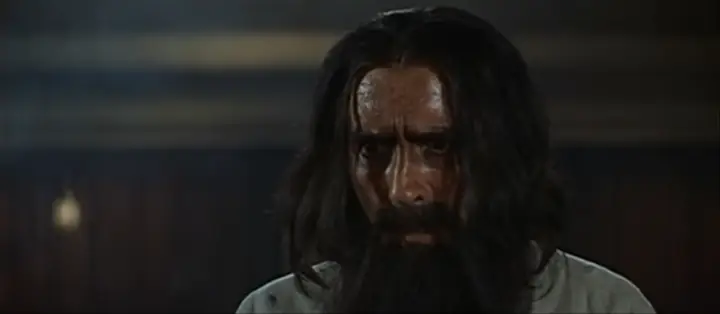
Christopher Lee: Grigori RasputinImage: Wikimedia Commons · The Celluloid Highway, Public domain - #109
Related pages
- Pumpkinhead — Christopher Lee comes up in the facts on that page
- Tim Burton's the Nightmare Before Christmas — Christopher Lee comes up in the facts on that page
- Liam Neeson — Christopher Lee comes up in the facts on that page
Continue through the archive

Sources & editorial notes
Reference databases
- Wikipedia
- IMDb
Information from external sources is independently selected, consolidated and edited by Arka Evren. Sources are listed for verification and further reading. Encyclopedia text is used under its licence (CC BY-SA). How we work