

FILM · 1940 · USA
The Great Dictator
- Directed by
- Charlie Chaplin
- Runtime
- 125 min
- Studio
- Charles Chaplin Productions
139 archived facts 8 topics 1 source Last reviewed Nov 2026
Dictator Adenoid Hynkel tries to expand his empire while a poor Jewish barber tries to avoid persecution from Hynkel's regime.

139 Interesting Facts About The Great Dictator
Interesting Facts (15)
- #001
Some Eva Braun biographies published decades after the war revealed that Adolf Hitler was very amused during the private screenings of the movie. He even declared that the Dictator's office in the movie looked very like his in the Berlin Chancellerie. And the scene with Sir Charles Chaplin playing with the globe made him laugh.
- #002
Adolf Hitler banned the film in Germany and all Nazi-occupied countries. Curiosity got the best of him, and he had a print brought in through Portugal. History records that he screened it twice, in private, but not his reaction. He was said to have laughed only once which was during the 'barber chair scene' between Hynkel and Napaloni. Charles Chaplin said, "I'd give anything to know what he thought of it." West Germany finally lifted the ban in 1958.
- #003
- #004
- #005
- #006
- #007
The film was banned in every country under Nazi occupation, but it was screened for German audiences once. In the occupied Balkans, members of a resistance group stole reels from a military cinema in Greece and replaced them with this film. The German soldiers enjoyed the screening until they realized what it was; some reportedly left the cinema, while others fired at the screen.
- #008
- #009
- #010
- #011
- #012
- #013
- #014
- #015
Production Story (61)
- #016
- #017
- #018
- #019
The movie was banned in all Nazi-occupied countries, but it was screened to a German audience once. In the occupied Balkans, members of a resistance group switched the reels in a military cinema to this film, which they had smuggled in from Greece. The German soldiers enjoyed the screening until they realized what it was. Some left the cinema, and some reportedly fired shots at the screen.
- #020
- #021
- #022
- #023
Sir Charles Chaplin cast his wife Paulette Goddard as the female lead, playing a cleaner. He insisted that she scrub the floor of the whole set only for her to refuse. Chaplin stopped filming until she agreed to do so. (Their relationship was on the rocks at this stage, which could explain his treatment of her.)
- #024
- #025
- #026
According to documentaries on the making of the film, Sir Charles Chaplin began to feel more uncomfortable lampooning Adolf Hitler the more he heard of Hitler's actions in Europe. Ultimately, the invasion of France inspired Chaplin to change the ending of his film to include his famous speech.
- #027
Konrad Bercovici sued Sir Charles Chaplin for $6,450,000, claiming the comedian plagiarized the film from a script Bercovici had given him. A settlement was reached in 1947, in which Chaplin paid Bercovici $90,000, plus $5,000 damages. In return, Bercovici acknowledged Chaplin as the sole author of the film and granted him exclusive rights to the screenplay, as well as first option on two of his own stories.
- #028
- #029
Sir Charles Chaplin got the idea when a friend, Alexander Korda, noted that his screen persona and Adolf Hitler looked somewhat similar. Chaplin later learned they were both born within a week of each other (Chaplin 4/16/1889, Hitler 4/20/1889), were roughly the same height and weight, and both struggled in poverty until they reached great success in their respective fields. When Chaplin learned of Hitler's policies of racial oppression and nationalist aggression, he used their similarities as an inspiration to attack Hitler on film.
- #030
Production on the film started in 1937, when not nearly as many people believed Nazism was a menace, as was the case when it was released in 1940. However, the film was beaten to the punch by the first anti-Nazi film satire The Three Stooges production You Nazty Spy! (1940), an 18 minute short film, which was released nine months earlier.
- #031
- #032
Sir Charles Chaplin planned shots of people all over the world accepting the message of peace, as goose-stepping German soldiers broke in a waltz and Japanese bombers dropped toys on Chinese children. He actually started shooting some of these scenes before abandoning the idea. They survive in home movies shot by his son.
- #033
When Sir Charles Chaplin first announced that he was going to make this film, the British government, whose policy at the time was one of appeasement towards Nazi Germany, announced that they would ban it. However by the time of the film's release, Britain was at war with Germany and in the midst of the blitz, so the government's attitude towards the film had completely changed toward a film with such obvious value as propaganda.
- #034
Sir Charles Chaplin maintained a closed set throughout production, partly out of fear that other filmmakers would steal his idea. When Life magazine printed an unauthorized photo of him as dictator Adenoid Hynkel, Chaplin sued and won. Half the issues printed for that week were recalled before they could hit news stands.
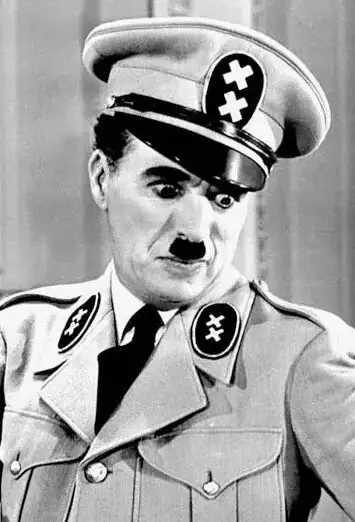
The Great Dictator (1940): Adenoid Hynkel in uniform with a bewildered expressionImage: Wikimedia Commons · United Artists, Public domain - #035
As the premiere approached, Sir Charles Chaplin had good reason to be concerned about his gamble on political commentary. Gallup polls revealed that 96% of Americans opposed U.S. involvement in the war in Europe, and threatening letters from Nazi sympathizers poured into the studio. At one point, he even asked a friend with the Longshoreman's Union in New York if they could have some union members present at the opening, to prevent a pro-Nazi demonstration.
- #036
Sir Charles Chaplin originally intended to call the film "The Dictator", but he received notice from Paramount Pictures that they would charge him $25,000 for use of the title as they owned the rights to an unrelated novel by Richard Harding Davis. Chaplin balked at the conditions and inserted "Great" into the title. (In France, the film is known as "Le Dictateur" and in Finland, it is "Diktaattori" aswell in Sweden, it is named "Diktatorn".)
- #037
- #038
- #039
When Chaplin announced the film, the British government, which was pursuing a policy of appeasement toward Nazi Germany, declared it would ban the film. But by the time it was released, Britain was at war with Germany and in the midst of the Blitz; the government's stance toward the film, whose propaganda value was obvious, changed completely.
- #040
- #041
Production began in 1937, at a time when those who believed Nazism was a threat were not as numerous as they would be in 1940. But the film was beaten to the punch by the first anti-Nazi film satire, the 18-minute short You Nazty Spy! (1940) from The Three Stooges, which was released nine months earlier.
- #042
Chaplin initially planned to title the film 'The Dictator', but Paramount Pictures informed him they would demand $25,000 for the use of the title because they held the rights to an unrelated novel by Richard Harding Davis. Chaplin objected and added 'Great' to the title. (It is known as 'Le Dictateur' in France and 'Diktaattori' in Finland.)
- #043
As first written, the final speech, in which the Barber is still dressed as Hynkel, was a call for peace through appeasement. But after news from Europe, Chaplin rewrote it as a call for peace and freedom for everyone. Some critics, notably columnist Ed Sullivan, claimed the speech was pure Communist propaganda.
- #044
- #045
- #046
- #047
Adolf Hitler banned the film in Germany and in all occupied countries. Overcome by curiosity, he had a copy brought in via Portugal. History records that he had the film screened privately twice, but not how he reacted. He is said to have laughed only once, during the 'barber's chair scene' between Hynkel and Napaloni. Chaplin said, 'I'd give anything to know what he thought of it.' The West German ban was lifted only in 1958.
- #048
- #049
The idea was born when his friend Alexander Korda pointed out the resemblance between Chaplin's screen persona and Hitler. Chaplin learned that the two were born a week apart (16 and 20 April 1889), were the same height and weight, and had risen from poverty to great success in their respective fields. When he heard of Hitler's policies of racial persecution and aggression, he used these similarities to attack him in the film.
- #050
- #051
During shooting, Chaplin's relationship with Paulette Goddard began to deteriorate, but both struggled to save it. In 1942 Chaplin introduced her as his 'wife' at an event (that status was always disputed), but within months they divorced amicably and Chaplin agreed to a generous divorce settlement. In the 1960s both were living in Switzerland; they ran into each other at a café and had lunch together. It was the last time they met.
- #052
- #053
- #054
Chaplin planned scenes in which people from around the world embrace a message of peace, goose-stepping German soldiers are broken by a waltz, and Japanese bombers drop toys to Chinese children, and he even shot some of them. But he abandoned the idea; the footage survives today in his son's home movies.
- #055
- #056
- #057
- #058
- #059
- #060
Hynkel's big speech was initially shot in the San Fernando Valley in front of extras. Despite the extreme heat, Chaplin entertained the extras between takes with Sherlock Holmes scenes and antics. But he could not use any of the footage; the scene was reshot and Karl Struss was unable to match the lighting at the location.
- #061
- #062
At the urging of his brother Syd, Chaplin replaced his longtime cinematographer Roland Totheroh with Karl Struss. Although Struss initially preferred to shoot scenes from a single angle like a stage play, he persuaded Chaplin to shoot the same scene from different angles with two cameras to make editing easier.
- #063
- #064
- #065
- #066
- #067
- #068
- #069
- #070
- #071
- #072
- #073
- #074
- #075
- #076
Behind the Scenes (24)
- #077
Initially, Hynkel's big speech was shot on location in the San Fernando Valley in front of an audience of extras. Despite the extreme heat, Sir Charles Chaplin entertained the extras between shots with scenes from Sherlock Holmes and a variety of pratfalls. In the end, he could not use any of the footage. The scene required retakes, and Karl Struss could not match the lighting from the location.
- #078
For the first time in years, Sir Charles Chaplin brought in a new director of photography, Karl Struss, to work with his usual cameraman, Roland Totheroh. He did so at the urging of his brother, Syd Chaplin, who felt that Totheroh's techniques were behind the times. Struss quickly learned that the director preferred to shoot scenes as though they were being performed on stage. He finally convinced Chaplin to let him shoot the scenes from two cameras at once, placed at different angles, to make it easier to edit the film.
- #079
- #080
- #081
- #082
- #083
- #084
- #085
- #086
- #087
- #088
- #089
Contains a major spoiler — show
Hynkel's dance with the globe originally was written as a scene in which he cuts up a map of the world to rearrange the countries the way he wants. When this evolved into the globe dance, Sir Charles Chaplin spent six days over a two month period filming the sequence, plus three days of retakes.
- #090
- #091
- #092
- #093
- #094
- #095
- #096
Chaplin had planned scenes in which people around the world embraced the message of peace: German soldiers marching in goose step would waltz, and Japanese bombers would drop toy horses to Chinese children. He began shooting some of these scenes but abandoned the idea. The footage survives in home movies shot by his son.
- #097
Initially, Hynkel's big speech was shot in the San Fernando Valley before an audience of extras. Despite the extreme heat, Chaplin entertained the extras between takes with Sherlock Holmes scenes and various jokes. In the end he could not use any of the footage. The scene required reshoots, and Karl Struss could not match the lighting from the location.
- #098
For the first time in years, Chaplin brought in a new cinematographer, Karl Struss, to work alongside his usual cameraman, Roland Totheroh. He did this at the insistence of his brother Syd Chaplin, who thought Totheroh's techniques were behind the times. Struss quickly learned that the director preferred to shoot scenes as if they were being performed on stage. In the end he convinced Chaplin to shoot scenes with two cameras from different angles simultaneously, which made editing easier.
- #099
- #100
Characters & Cast (12)
- #101
- #102
This is the first Sir Charles Chaplin film since The Pilgrim (1923) in which Chaplin plays a character who is actually identified by name. His famous Tramp character was rarely given a name, though he was often referred to as Charlie. The tramp-like barber in this film remains unnamed, but the Tomainian dictator Adenoid Hynkel is referred to by name throughout the film.
- #103
This was the last movie in which Sir Charles Chaplin used the "Tramp" outfit (the bowler hat and the walking cane), but although it appears he is playing The Tramp once again, that character actually had been retired in his previous film, Modern Times (1936). Chaplin was said not to consider this movie a "Tramp" film.
- #104
- #105
- #106
- #107
Chaplin cast his wife Paulette Goddard as the female lead and asked her to play a cleaning woman. He insisted that she mop the entire set, but Goddard refused. Chaplin halted the shoot until she agreed. (Their relationship was going badly during this period, which may explain his behavior.)
- #108
- #109
- #110
- #111
- #112
Easter Eggs & References (12)
- #113
- #114
- #115
Bollywood blockbuster Sholay's Jailor played by Asrani was inspired by this film. The entry sequence of the jailor was lifted from Adenoid Hynkel's entry in the grand room of his palace. In a later sequence in Sholay, the jailor is toying with a globe, again inspired by the famous globe scene of this film.
- #116
- #117
In 1950, a Looney Tunes theatrical cartoon Rabbit of Seville (1950) would use at least two gags inspired by The Great Dictator. Hynkel the barber manhandles the bald dome of a customer to the tune of Brahms' "Hungarian Dance No. 5," a scene reprised in "Rabbit" by Bugs Bunny, who slaps around Elmer Fudd in the barber's chair to the tune of Rossini's Overture from "The Barber of Seville." Later, Hynkel will sit in the chair himself and repeatedly elevate higher than the Tomainian in the chair next to him; this scene too is re-enacted in "Rabbit of Seville," as Bugs and Elmer try to out-elevate each other from their seats.
- #118
Contains a major spoiler — show
This film is featured in Iron Sky (2012) about a group of Nazis that fled to the far side of the moon in 1945. The naive school teacher shows her students a 10-minute version of the film showing Sir Charles Chaplin's dance with the globe but ending before it pops in his face. Later, she views the complete film leading to her beginning to question her Nazi ideals.
- #119
- #120
Contains a major spoiler — show
During Adenoid Hynkel's globe balloon dance, he spins the globe as if it were the Earth rotating on its axis. However, he spins it in the wrong direction, clockwise as seen from above the north pole. If the Earth spun in that direction, the Sun would rise in the west and set in the east.
- #121
Contains a major spoiler — show
The "Big Bertha" artillery piece actually was not used to shell Paris, as stated in the film. In fact, the Big Bertha was simply a heavy artillery piece used by the Germans in the beginning of the war to smash Belgian forts during the invasion of that country. The large howitzer used to shell Paris by the Germans during WWI was called "The Paris Gun".
- #122
Contains a major spoiler — show
During Hynkel's speech, there are several recognizable German words used. Most popular are "Wienerschnitzel" (a Viennese-style breaded veal cutlet) and "Sauerkraut" (sour preserved cabbage). Others are "Leberwurst" and "Blitzkrieg". Though some other utterances vaguely resemble words in German, the speech is actually gibberish. Several times in the film, Hynkel utters "cheese und cracken!" in the context of an obscenity.
- #123
- #124
Contains a major spoiler — show
The bubble dance was a popular burlesque dance form, dating back to the early 1920s and most likely even earlier. By the 1930s, Sally Rand's bubble dance routine was quite famous. Many members of the movie audience would have recognized Sir Charles Chaplin's globe dance, laughing all the louder.
Deeper Meaning (11)
- #125
- #126
- #127
Adolf Hitler banned the film in Germany and in all occupied countries, but curiosity got the better of him and he had a copy brought in via Portugal. History records that he had the film screened privately twice, but not how he reacted. According to rumors, he laughed only once, during the 'barber chair scene' between Hynkel and Napaloni. Charles Chaplin said, 'I'd give anything to know what he thought.' The West German ban was lifted only in 1958.
- #128
- #129
- #130
- #131
- #132
The 1950 Looney Tunes cartoon 'Rabbit of Seville' used at least two gags inspired by The Great Dictator. The barber Hynkel pummeling a customer's bald head to the accompaniment of Brahms's 'Hungarian Dance No. 5' became Bugs Bunny slapping Elmer Fudd to the overture of Rossini's 'The Barber of Seville.' Hynkel's race to raise his chair also inspired Bugs and Elmer's chair battle.
- #133
- #134
- #135
Career & Awards (2)
- #136
- #137
At the 1940 Academy Awards, the film received five nominations, but it did not win any. Sir Charles Chaplin was hurt by this, as he already had spent 27 years in Hollywood. James Stewart, the winner of the Best Actor Award (for which Chaplin was nominated), was not even planning on going to the ceremony until someone told him to go there hours before it began. Interestingly enough, this was the first year in which the winners remained secret until the moment they were announced at the ceremony.
Life & Family (2)
- #138
- #139
During filming, Sir Charles Chaplin's relationship with Paulette Goddard began to deteriorate, but both tried very hard to save it. In 1942, Chaplin proudly introduced her as "my wife" (a position that was always considered sketchy) at a New York engagement, but within months they were amicably divorced, and the notoriously finicky Chaplin agreed to a generous divorce settlement. In the 1960s, both Chaplin and Goddard were living in Switzerland, but having made no contact, they spotted each other at a café and had lunch together. It was their last meeting.
Continue through the archive
 Charlie ChaplinDirector
 Paulette Goddardas Hannah
 Jack Oakieas Benzino Napaloni, Dictator of Bacteria
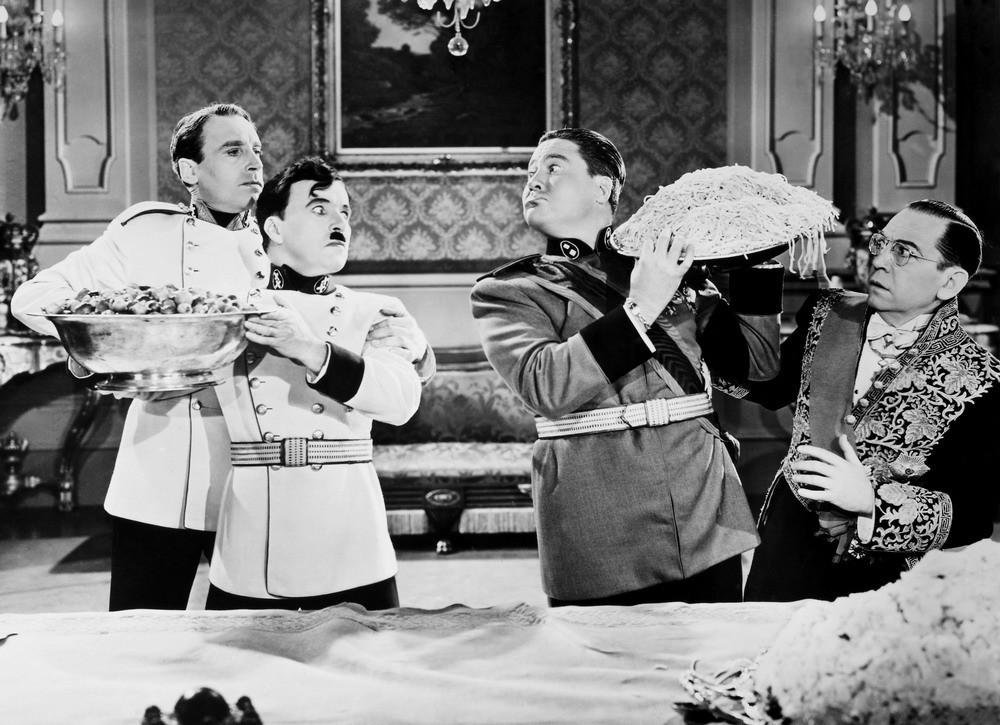 Henry Daniellas Garbitsch
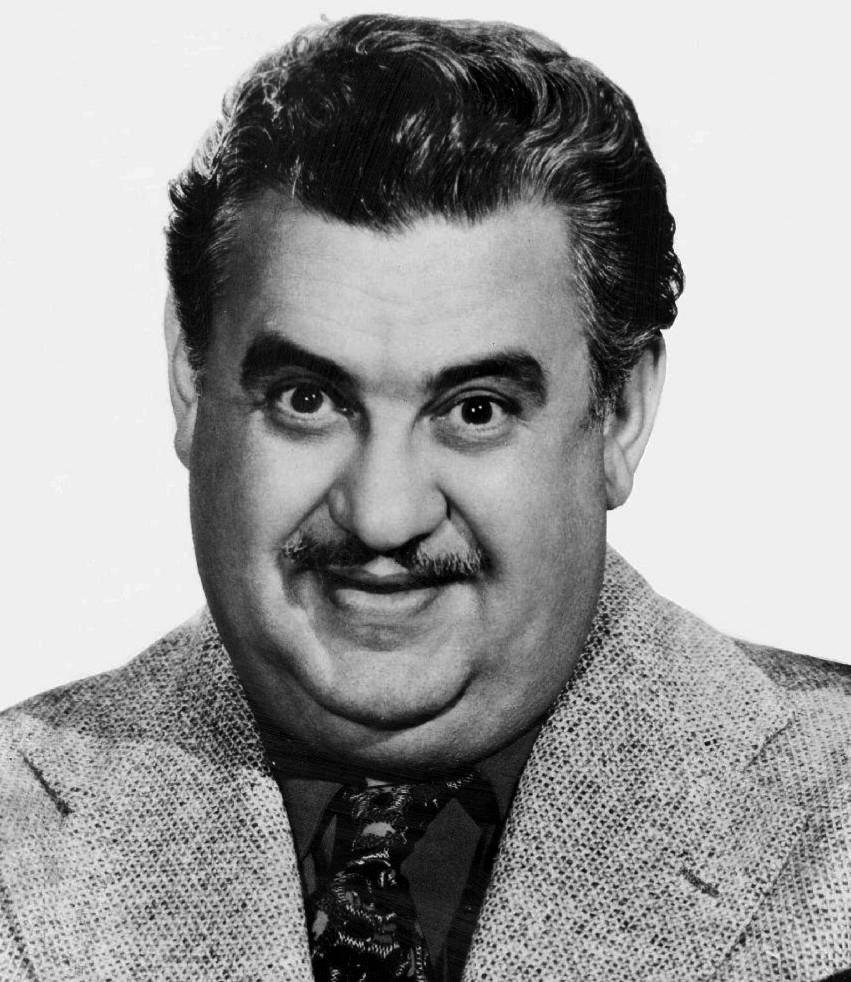 Billy Gilbertas Field Marshal Herring
 Rudolph Andersas Tomanian Commandant at Osterlich / Robert O. Davis
 Sig Arnoas Compact Parachute Inventor (uncredited)
 The KidSame creators
 The Gold RushSame creators
Sources & editorial notes
Reference databases
- Wikipedia
- IMDb
Information from external sources is independently selected, consolidated and edited by Arka Evren. Sources are listed for verification and further reading. Encyclopedia text is used under its licence (CC BY-SA). How we work