FILM · 1966 · USA
The Professionals
29 archived facts 7 topics 1 source Last reviewed Oct 2026
All facts (29)
- #001
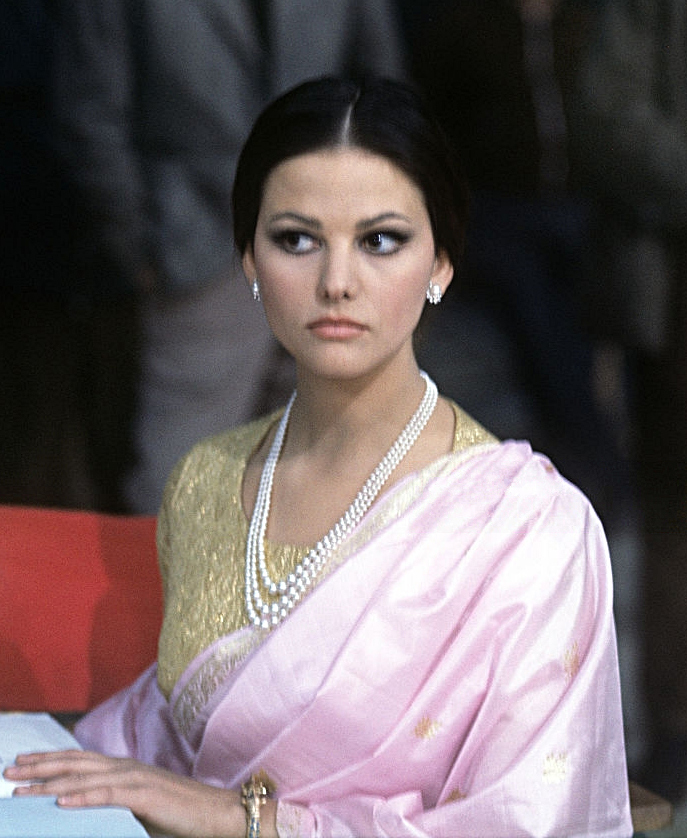
During the filming of the scene in which Maria tries to escape from a canyon rigged with dynamite, Claudia Cardinale's stunt double was seriously injured in the explosion. Cardinale, who had never ridden a horse before, performed the stunt herself in the final scene and escaped unharmed.
- #002
Although the male leads were in their fifties (except Lee Marvin, who was only 42), they all insisted on doing their own stunts. However, because there was no black stunt double of his height and build, Woody Strode was the only one who performed all of his own stunts. Burt Lancaster, then 52, did most of his own acrobatic work, including hanging upside down at Coyote Pass and running across a moving train car. The studio, however, objected to Lancaster climbing the cliff edge to place the dynamite, and a stunt double was brought in for him. Jack Palance, though as tall as Strode, had to use a stunt double for the scenes in which he was injured and fell from his horse, because falling from a horse in the wrong place could cause serious injuries.
- #003
The film's success led the studio to call for a sequel, but because of the fiasco surrounding the sequel to The Magnificent Seven (1960), in which only Yul Brynner returned, only four of the leads were involved. However, all of the directors' shooting schedules were full. Whenever any window could be cleared, Robert Ryan's health (due to lung cancer) made it impossible for him to do the physical work the film required. After his death in 1973, all plans for the sequel were cancelled.
- #004
It was the first western to include nudity, even though it was a long shot and tame by later standards.
- #005
Lee Marvin took on the job of keeping the film's guns clean in unpredictable desert conditions.
- #006
Richard Farnsworth, a top film stuntman and Oscar-nominated actor, taught Woody Strode how to use a bow and arrow for the role of Jake.
- #007
According to producer Phil Parslow, the opening scene in which Lee Marvin demonstrates the machine gun was the only scene Marvin shot drunk during the entire film, despite many stories to the contrary.
- #008
Burt Lancaster, at 52, insisted on doing all of his own stunts. Because of the camera angles and the absence of his full facial features during the acrobatics, it is doubtful that these small details are truly genuine and more legend. In fact, the rock-climbing scene in which Lancaster rigs dynamite to make his crossing was probably shot with a stunt double because of the way it was filmed.
- #009
The shoot was plagued by many complications, including rain, snow, sleet, scorching sun, intense desert heat and even flash floods.
- #010
The film showcased Woody Strode's talents and led to his work in future "Spaghetti" westerns.
- #011
Most of the film was shot in the desert outside Las Vegas, so the cast and crew stayed in Vegas hotels during production. Reportedly, some of their nighttime antics included dangling naked showgirls out of hotel room windows, firing prop shotguns and shooting arrows at Las Vegas landmarks. According to a famous story, one night Woody Strode and a stuntman (Woody later wrote that it was Lee Marvin) decided they were tired of the Pioneer Club's famous neon cowboy "Vegas Vic," who sat on a horse. So they got a prop bow and shot the old "Howdy Podner" out of the sky with a well-aimed steel-tipped arrow fired from a hotel window. They knew the police would come quickly, especially since they had caused trouble on the Strip on several previous nights. Marvin reportedly also fired a shotgun out of his hotel window. The police showed up immediately and their antics should have landed them in jail, but apparently Marvin's star status kept them out of serious trouble.
- #012
In his book "Lee Marvin: Point Blank," author Dwayne Epstein describes Richard Brooks as an old-school, screaming director who exhausted his cast and crew, causing them to blow off steam when they returned to their Las Vegas hotels at night. Lee Marvin and Woody Strode created legendary debauchery in the casinos but still managed to perform the next day. Whatever they had done the night before, Marvin was a complete professional when he arrived on set the next day. According to Strode, "I saw that when we got to the set. He was working on dialogue and by the time we got to the set he had it all in his head. He'd say, 'Now watch me say all of Burt's lines.' Burt worked all night and went through the usual routine an actor goes through. Lee didn't do that. The man was talented."
- #013
Ralph Bellamy noted that Richard Brooks did not need a megaphone or loudspeaker to make his voice heard, even on exterior shoots.
- #014
Lee Marvin's widow (Pam) commented on his experiences making the film. On "The Professionals," a dispute arose between Marvin and his co-star Burt Lancaster over the authenticity of the guns. Burt did not care, and Lee was known throughout his career for being particular about guns and costumes. There was a big blow-up. Richard Brooks begged Lee to make peace with Burt, who was known to have a rather inflated ego. Lee did so by kneeling in front of Lancaster and apologizing. It is not known whether Burt saw that Marvin was mocking him.
- #015
"The Professionals" received three nominations at the 1967 Academy Awards: Best Director and Best Screenplay (Adapted Screenplay) for writer-director Richard Brooks, and Best Cinematography for cinematographer Conrad L. Hall. All three Oscars went to A Man for All Seasons (1966).
- #016
The cast listing at the very beginning of the film is unusual because the billing appears irregular. Lee Marvin is shown first, demonstrating the machine gun, and his name appears on screen. Robert Ryan is billed after a scene in which he knocks a man down for punching a horse, then Woody Strode is shown subduing a rebellious prisoner he has just brought into a border town, and finally Burt Lancaster's name appears in a comic scene in which he is in bed with another man's wife and then flees down a street in a hurry after being disturbed by the angry husband. Lancaster actually has top billing but is billed below the other Professionals as a visual highlight at the top of the film, then placed first at the end of the film after Marvin, Ryan and Strode walk toward the camera.
- #017
The "French 75" mentioned in the dialogue refers to the Model 1897 75 mm field gun artillery piece, which France gave to the American National Guard during World War I and which was also used by the Mexican army.
- #018
Many scenes were shot in the Coachella Valley, Death Valley and Nevada's Fire Valley. The train scenes were shot on the Eagle Mountain Railroad (EMRR), a private, isolated railway line in the desert 80 kilometers east of Indio, California. The 52-mile line was owned by the Kaiser Steel Corporation and was used to haul iron ore until 1986. Scenes were shot on or near the railway in January-February 1966. The film makes extensive use of retired Great Western Steam Locomotive No. 75, standing in for both the American and Mexican locomotives. It was built in 1909 for the Great Western Railway in Colorado and retired from service in 1965. It was later bought for film production purposes and appeared in many well-known films over the following 34 years. Eventually, No. 75 was sold in 1999 to the Heber Valley Railroad in Heber City, Utah. The scenes at the beginning and end of the film, in which the four Professionals cross the border under a wooden bridge, were shot at the first railway bridge north of "Ferrum" in California. Since the film is set around 1910, the large steel bridge over Salt Creek Wash was actually repainted to look like a wooden bridge. Other scenes were shot at "Gravel Pit" and "Summit." An old Southern Pacific car, several old wooden freight cars and a Kaiser Steel flatcar were used for the various trains seen in the film. Part of Tough Guys (1986), which also starred Burt Lancaster, was shot on the EMRR.
- #019
The film won two Motion Picture Magazine Laurel Awards in 1967: Best Action Drama and Best Action Performance for Lee Marvin. In Germany, it was one of four films to receive the Golden Screen Award in 1967 (the others were Doctor Zhivago (1965), Merveilleuse Angélique (1965) and You Only Live Twice (1967)).
- #020
Richard Brooks produced, wrote and directed the film, taking responsibility for it under his contract with Columbia. After the $10 million spent on Lord Jim (1965), which had come out a year earlier and was a financial and critical failure for Brooks, Brooks was looking for a more modestly priced production at $6 million. The film was a big hit and led to something of a comeback for Brooks.
- #021
When Columbia first acquired the rights, the studio planned for Gregory Peck, Frank Sinatra and Robert Mitchum to star.
- #022
With Claudia Cardinale's death in 2025, no surviving main cast member remains.
- #023
Although Lee Marvin plays essentially the same character in The Professionals as he would in The Dirty Dozen (1967), Robert Ryan's character, Colonel Breed, is his exact opposite — hesitant and emotionally conflicted here.
- #024
Lee Marvin (Fordan) and Robert Ryan (Ehrengard) would appear together again in The Dirty Dozen (1967), a year after this film's release.
- #025
Two years later, Claudia Cardinale and Woody Strode were among the stars of Once Upon a Time in the West (1968), though at that time they did not share a scene together.
- #026
It is the only film nominated for Best Adapted Screenplay that was not also nominated for Best Picture of the Year.
- #027
Remake plans were announced in 2000 but had not been pursued as of 2011. Among those attached were screenwriter Bruce Feirstein and director John Woo.
- #028
The film made its network television premiere on CBS's Thursday Night Movies on September 21, 1972.
- #029
The film's cast includes three Oscar winners — Burt Lancaster, Lee Marvin and Jack Palance — and two Oscar nominees: Robert Ryan and Ralph Bellamy.
Continue through the archive

Sources & editorial notes
Reference databases
Sources for the entries on this page
- IMDb IMDb kaydı
Information from external sources is independently selected, consolidated and edited by Arka Evren. Sources are listed for verification and further reading. Encyclopedia text is used under its licence (CC BY-SA). How we work