
ACTOR · BORN 1933
Michael Caine
- Born
- 14 March 1933, Rotherhithe, London, England, UK
- Known for
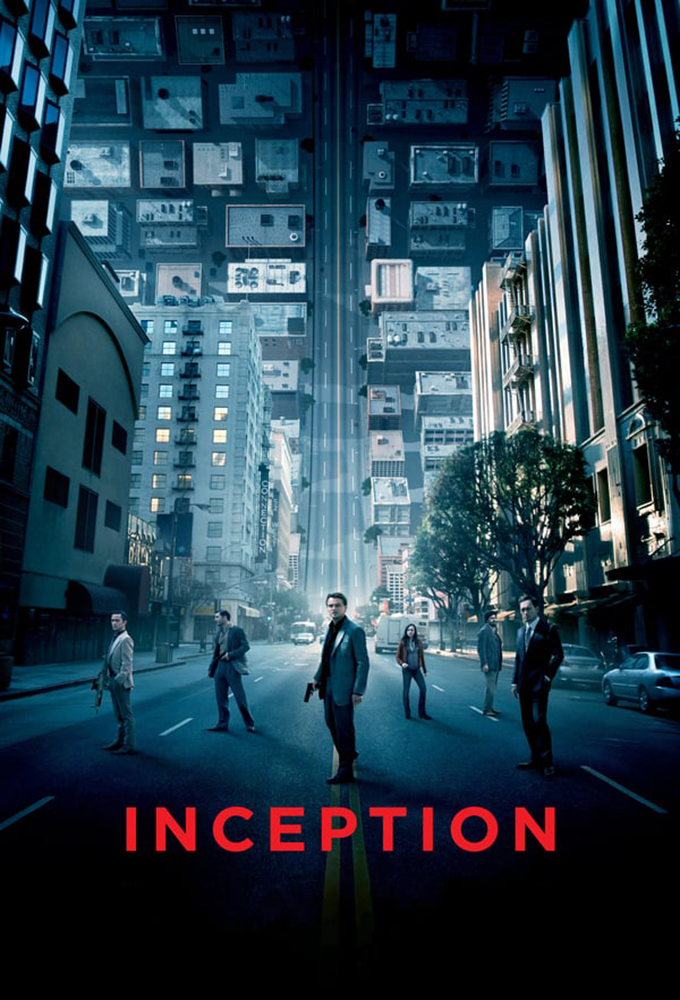
- Interstellar (2014), Inception (2010), The Dark Knight (2008), The Dark Knight Rises (2012)
99 archived facts 4 topics 1 source Last reviewed Sep 2026
42 Interesting Facts About Michael Caine
- #003
In 2016, at the age of 83, Michael Caine legally changed his birth name, Maurice Micklewhite, to Michael Caine. The decision stemmed from the constant difficulties he faced at airport security checks because his passport did not match his stage name. Officials could never connect the name on the passport with the famous actor standing in front of them, which turned Caine's travels into a nightmare.
- #004
Alongside acting, Michael Caine is a successful restaurateur. He owns seven restaurants in total: six in London and one in Miami. Among them is Langan's Brasserie, which he became a partner in during the 1980s and which grew into one of London's most famous venues. Caine's interest in gastronomy has also made him a well-known name in the business world.
- #006
Michael Caine's stage name comes from the 1954 film 'The Caine Mutiny'. The actor, whose real name was Maurice Micklewhite, chose the name Michael Caine early in his career, taking inspiration from that film. Over time the name became an inseparable part of his identity and was etched into cinema history.
- #009
Michael Caine formed close friendships with two giants of the music world: Sir Elton John and Sir Andrew Lloyd Webber. These friendships show that Caine's circle was not limited to film circles but extended across different fields of the arts. All three, as major figures of British culture, supported one another.
- #012
Michael Caine visited the legendary actor John Wayne several times in the hospital where Wayne was being treated for cancer. Wayne is regarded as one of Hollywood's greatest stars, and Caine's visits demonstrate the respect between two generations of actors. Caine stood by Wayne and supported him in his final days.
- #015
During his military service in the Korean War, Michael Caine came to hate the smell of garlic, which North Korean and Chinese soldiers chewed as a snack, for years afterwards. The smell reminded him of the hard days of the war. Later, however, after going into the restaurant business, Caine managed to overcome this prejudice and made garlic an indispensable part of his kitchen.
- #017
Michael Caine has explained that the secret of his ability to produce tears in crying scenes is to think of a painful childhood memory. The technique is one that actors often use to give a realistic performance in emotional scenes. Thanks to this method, Caine has delivered many unforgettable dramatic performances.
- #020
Michael Caine turned down the role of Captain Edward J. Smith in James Cameron's legendary film 'Titanic' (1997). The role was later taken by Bernard Hill. The decision was one of the significant choices of Caine's career, though the film went on to become one of the biggest box-office successes in cinema history.
- #021
In 2016, at the age of 83, Michael Caine legally changed his name from Maurice Micklewhite to Michael Caine. The decision came about because airport security officers could never reconcile his face with the name on his passport, and he was constantly questioned as a result. Caine said he had grown tired of the situation and no longer wanted trouble when travelling.
- #023
Four of Michael Caine's unforgettable films — 'Alfie' (1966), 'The Italian Job' (1969), 'Get Carter' (1971) and 'Sleuth' (1972) — were later remade. Each of these films became a cult production of its era and reached wide audiences again through its remake. Caine's performances in these films cemented his place in cinema history.
- #026
Michael Caine was unaware of the existence of his half-brother David until their mother's death. David had epilepsy and spent his life in a hospital. Caine's younger brother, Stanley Caine, went on to an acting career with roles in 'Billion Dollar Brain' (1967), 'Play Dirty' (1969) and 'The Italian Job' (1969). This family secret left deep marks on Caine's life.
- #028
Michael Caine used his first American accent in the film 'Hurry Sundown' (1967). He learned the Southern drawl from the legendary actress Vivien Leigh, who told him to repeat the sentence 'four door Ford' every day for weeks. The exercise enabled Caine to apply the accent successfully and proved that he was a versatile actor.
- #030
On 16 November 2000, Michael Caine was officially knighted at Buckingham Palace under his birth name, Maurice Micklewhite. With the ceremony he took the title Sir Michael Caine professionally. The knighthood was seen as recognition of his contributions to British cinema and culture.
- #031
In the early 1960s, when Michael Caine was penniless and had to leave his flat, he stayed for a few months at the home of the composer John Barry. Barry took him in during this difficult period. Caine repaid the kindness in 1998 by introducing Barry's Royal Albert Hall concert, his first in the United Kingdom in 25 years. The gesture is a sign of the pair's long friendship.
- #032
Although Michael Caine never appeared in a James Bond film, he had the privilege of being the first person to hear the completed music for 'Goldfinger' (1964). When he and his flatmate Terence Stamp were evicted from their flat, he began staying in the spare bedroom at the home of his composer friend John Barry. Barry was composing the music for Goldfinger at the time, and Caine was there the night the iconic score was completed.
- #033
Michael Caine was included in GQ magazine's list of the '50 Best-Dressed Men in the Last 50 Years'. The selection shows that he is known not only for his acting but also for his elegant style of dress. Caine became one of the style icons of his era, particularly for his fashion sense in the 1960s.
- #034
Michael Caine first saw his wife Shakira Caine (then named Shakira Baksh) in 1971, in a Maxwell House coffee commercial directed by the then little-known director Ridley Scott. Caine described her as 'the most beautiful woman' he had ever seen and went to great lengths to meet her. He reached her through a phone number given to him by a friend, and they married in 1973 at the Algiers Hotel in Las Vegas.
- #036
Michael Caine was a co-owner of Langan's Brasserie, one of London's most famous restaurants. The restaurant opened in the 1970s and quickly became a meeting point for the worlds of art, literature and cinema. Caine's restaurant business also shows that he was not only an actor but also a successful businessman.
- #039
Michael Caine became identified with the catchphrase 'Not a lot of people know that', although he never actually used the expression. The catchphrase first emerged during a Michael Caine impression Peter Sellers did on a 1972 television programme. Sellers humorously mimicked Caine's habit of constantly passing on interesting facts from the Guinness Book of Records, and the expression became part of Caine's image in popular culture.
- #045
Rumors emerged that Michael Caine did not get along with Steven Seagal during the shooting of 'On Deadly Ground' (1994). Caine, however, stated that the two were on good terms and that the real problem was the harsh filming conditions in Alaska. He even joked that the film's title was a fitting one for those difficult conditions.
- #046
Michael Caine speaks fluent French. This language ability has been a significant advantage in his international career and in his interactions with different cultures. Caine has displayed his knowledge of French in various interviews and has drawn attention for the skill.
- #050
Michael Caine was considered for the role of Grandpa Joe in 'Charlie and the Chocolate Factory' (2005). The role ultimately went to David Kelly. Kelly's performance became one of the film's most beloved aspects. Caine's loss of the part is one of the 'missed roles' of his career.
- #051
At his audition for 'Zulu' (1964), Michael Caine was told by director Cy Endfield that it was 'the worst audition I've ever seen.' When the production team could not find a suitable actor, however, Caine still landed the role. The episode shows how important Caine's perseverance and luck were in his career.
- #052
Michael Caine was considered to play C.S. Lewis in 'Shadowlands' (1993). The role ultimately went to Sir Anthony Hopkins. Hopkins's performance won great acclaim along with the film. Caine's loss of the part is one of the notable 'missed roles' of his career.
- #053
Michael Caine was considered for Sir Sean Connery's roles in 'Highlander' (1986), 'The Name of the Rose' (1986) and 'The Avengers' (1998). All of these roles went to Connery instead. Caine's failure to appear in these productions is counted among the 'missed opportunities' of his career.
- #055
Michael Caine turned down the role of Maurice Castle in 'The Human Factor' (1979). The role was later taken by Nicol Williamson. The decision was one of the significant ones of Caine's career; the film, however, was adapted from Graham Greene's novel.
- #059
Michael Caine turned down the role of Robert Rusk in Alfred Hitchcock's thriller Frenzy (1972). He said he found the character disgusting and did not want to be associated with the role. The decision caused a rift between him and Hitchcock; in his memoir, Caine wrote that when they met years later, Hitchcock ignored him.
- #060
Although Michael Caine's height is often listed as 6' 2" (1.88 m), the actor stated in his autobiography What's It All About? (1992) that he is 6' 1" (1.85 m). The small discrepancy shows that celebrities' height listings are not always accurate. Caine set the record straight in his own words.
- #064
Michael Caine also appeared in remakes of his own films: Get Carter (2000) and Sleuth (2007). In these films he took on roles different from the characters he had played in the originals. This is a rare trait in his career and shows Caine's attachment to these productions.
- #065
Michael Caine was honoured with a Fellowship by the British Film Institute (BFI) for his extraordinary contribution to film culture. The prestigious title is a recognition of his long-standing contributions to the art of cinema. With this award, Caine cemented his place among the living legends of British cinema.
- #071
Caine is a passionate cricket fan. This passion was immortalised in a joking reference by Gary Oldman, his co-star in The Dark Knight Rises (2012), while describing Caine's acting method. Oldman said Caine was extremely fast and accurate on set, getting it right on the 'first take,' again on the 'second take,' and showing the same success on the 'third take,' because he was in fact impatient to get back to a cricket match. The anecdote highlights Caine's professionalism and easy manner in an entertaining way.
- #077
Caine and the other English actor Michael Gough are the two performers who have played the character Alfred Pennyworth in the Batman films. Both also appeared in different adaptations of Charles Dickens's classic A Christmas Carol: Caine played Scrooge in the 1992 The Muppet Christmas Carol, while Gough appeared alongside George C. Scott as Mr Poole in the 1984 A Christmas Carol. The coincidence shows the parallels in the careers of the two veteran actors.
- #078
In a 2001 Orange Film survey, Michael Caine ranked fifth among the greatest British actors, a result that confirmed his status as one of the living legends of British cinema. The ranking reflected his standing with both critics and the public.
- #079
On 18 December 2005, after his close friend Sir Elton John entered a civil partnership with David Furnish, Michael Caine attended the celebration party held at his mansion in Old Windsor. His presence demonstrated the strength of his friendship with Elton John and his support on a special day, and can also be read as a sign of his support for gay rights.
- #080
In 1987, Michael Caine was named Best Film Actor at the British Variety Club Awards, cementing his place among the most successful male actors of the period. The honour reflected his strong performances during the 1980s.
- #089
Michael Caine is a passionate supporter of the English football club Chelsea FC. The allegiance shows his attachment to British culture and sport, and he is known to follow Chelsea's matches often from the stands.
- #090
During the Second World War, Michael Caine spent six years as a refugee in North Runcorn in Cheshire, where he attended the village school. The experience lays bare the hardships of his childhood and the effects of the war, and the period played an important part in shaping his character and worldview.
- #091
After the 2009 film Harry Brown, Michael Caine called for the reintroduction of national service in the United Kingdom to give young people 'a sense of belonging rather than a sense of violence'. The statement reflects his sensitivity to social issues and his concern for young people's future.
- #093
Michael Caine was born on 14 March, the same day as Motown Records CEO and famed record producer Quincy Jones. The coincidence is notable for bringing two giants of different fields into the world on the same date.
- #097
Michael Caine has stated plainly that he will not appear in any film about harming children, even if his character is on the good side. The principle reveals the importance he places on ethical values and his sense of social responsibility.
- #098
Michael Caine turned down the role of Colonel John Stewart in the 1966 film Khartoum, and the part went to Richard Johnson. The decision reflects his desire at the time to move toward different projects.
- #099
Michael Caine appeared alongside Laurence Olivier in four films: Battle of Britain (1969), Sleuth (1972), A Bridge Too Far (1977) and The Jigsaw Man (1983). These collaborations brought the two veteran actors together on the same projects over many years and produced significant works in cinema history.
Continue through the archive



Sources & editorial notes
Reference databases
Sources for the entries on this page
- IMDb IMDb
Information from external sources is independently selected, consolidated and edited by Arka Evren. Sources are listed for verification and further reading. Encyclopedia text is used under its licence (CC BY-SA). How we work