DIRECTOR · BORN 1963
Quentin Tarantino
- Born
- 27 March 1963, Knoxville, Tennessee, USA
- Known for
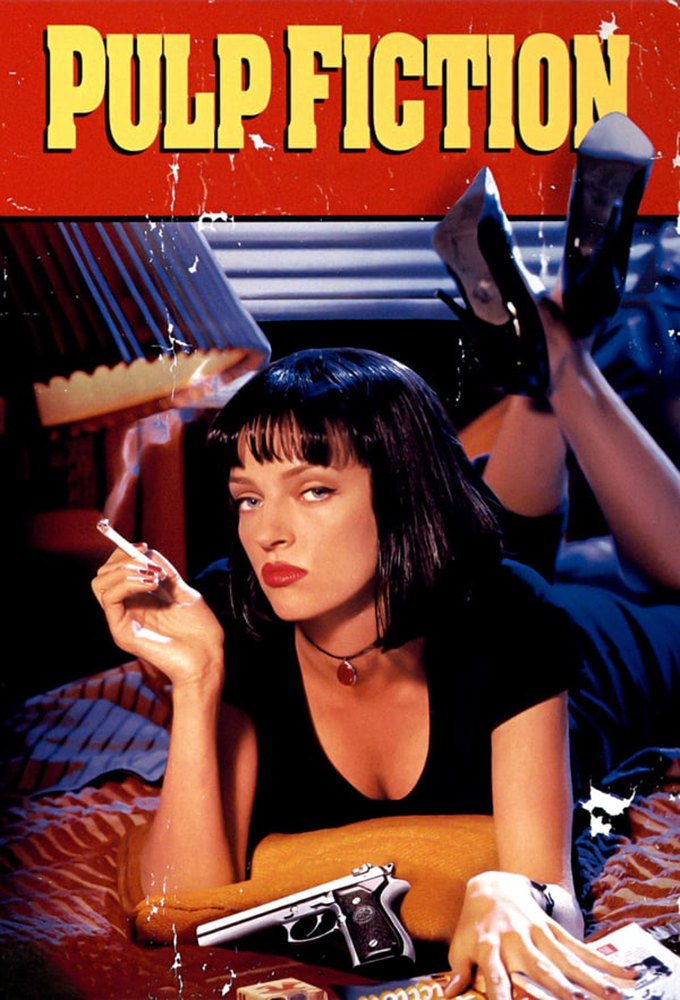
- Pulp Fiction (1994), Django Unchained (2012), Inglourious Basterds (2009), Reservoir Dogs (1992)
133 archived facts 8 topics 2 sources Last reviewed Sep 2026
All facts (133)
- #001
Quentin Tarantino is known for his hatred of product placement in his films. For this reason, he prefers to create fictional brands such as Red Apple, the cigarette brand his characters smoke, and Fruit Brute, a discontinued cereal. In this way, he keeps his films faithful to their own universe, independent of real-world commercial concerns.
- #002
When Uma Thurman became pregnant, Quentin Tarantino delayed production of 'Kill Bill: Vol. 1' (2003) by several months. He had written the role specifically for Thurman and refused to replace her with another actress. The idea was based on a concept the two had developed together on the set of 'Pulp Fiction' (1994). Tarantino's decision demonstrates his loyalty to his actress and his belief in the project.
- #003
Quentin Tarantino is the only child of Connie McHugh and Tony Tarantino, an aspiring actor who left the family before his son was born.
- #004
Quentin Tarantino cites Martin Scorsese, Brian De Palma, Sergio Leone, Jean-Luc Godard and Howard Hawks as the directors who shaped his film career. Each of these names leaves traces in his stylistic choices and narrative language. In particular, Leone's epic westerns and Godard's experimental storytelling are elements Tarantino frequently references in his films.
- #005
Tarantino has openly named the three films that influenced him most as a director: 'The Good, the Bad and the Ugly' (1966), 'Black Sabbath' (1963) and 'Abbott and Costello Meet Frankenstein' (1948). He regards the first as an 'obvious' source of inspiration for its mastery of epic western storytelling. Mario Bava's 'Black Sabbath' taught him the importance of a distinct directorial voice, while 'Abbott and Costello Meet Frankenstein' opened the door to blending genres.
- #006
The Big Kahuna burger stands out as a recurring motif in Quentin Tarantino's cinema. This fictional fast-food chain appears in at least three of his films: 'Pulp Fiction' (1994), 'Jackie Brown' (1997) and 'Death Proof' (2007). Tarantino's use of such details is a sign of his desire to create a universe that is internally consistent across his films.
- #007
Quentin Tarantino owns the New Beverly Cinema in Los Angeles. He first kept the theater, where he often watched double features as a child, afloat with a monthly subsidy of $5,000, and then bought the building in December 2007 to prevent it from being turned into a chain store. Taking over full ownership in October 2014, Tarantino personally programs the cinema; it offers a nostalgic atmosphere with children's matinees, double features every night, midnight screenings on weekends and vintage short films.
- #008
Curtis Zastoupil took Quentin Tarantino to many film screenings, and Tarantino's mother permitted him to watch more mature films including Carnal Knowledge (1971) and Deliverance (1972).
- #009
At one point in his career, Quentin Tarantino stated openly that he wanted to direct a James Bond film. This statement made people curious about his love of genre cinema and the innovative perspective he could bring to the action-adventure genre. However, no such project has materialized so far.
- #010
In 2018, the Oxford English Dictionary added the term 'Tarantinoesque' to its dictionary. The term is used to describe features that characterize Tarantino's films, such as 'graphic and stylized violence, nonlinear storylines, cinephile references, satirical themes and sharp dialogue.' This is proof of how unique and influential the director's cinematic language is.
- #011
Quentin Tarantino returned to Torrance, California, less than a year after being sent to his grandparents in Knoxville.
- #012
Quentin Tarantino began his first job in the film industry at the age of 16 by lying about his age. He worked as an attendant at the Pussycat Theater, a porn cinema in Torrance, California. This experience increased his interest in cinema and gave him the opportunity to watch films of different genres. This job, taken at a young age, became one of the cornerstones of his film career.
- #013
At the age of 14, Quentin Tarantino wrote one of his earliest screenplays, Captain Peachfuzz and the Anchovy Bandit, which was based on the 1977 film Smokey and the Bandit.
- #014
In a radio interview, Quentin Tarantino said he cannot bear to see real animals and insects die or be tortured in films. To him, real acts of violence have no place in a film, because cinema should convey reality through artificiality. This statement reveals the ethical understanding behind the way he aestheticizes violence.
- #015
Quentin Tarantino completely bans the use of cell phones on set during filming. All actors and crew members must hand in their devices at the set entrance; there are no exceptions to this rule. This strict practice aims to ensure full concentration and a professional atmosphere on set.
- #016
As a 15-year-old, Quentin Tarantino was grounded by his mother for shoplifting Elmore Leonard's novel The Switch from a Kmart.
- #017
As of September 2015, the films directed by Quentin Tarantino had grossed a total of $1,407,548,403 worldwide. This figure shows that he is also a commercially successful director. Films such as 'Pulp Fiction' (1994) and 'Django Unchained' (2012) in particular achieved great box-office success.
- #018
Although they are constantly compared by fans, Quentin Tarantino considers director Paul Thomas Anderson one of his best friends. Tarantino has praised Anderson's work and described him as a 'filmmaking artist.' This friendship is a sign of the two directors' mutual respect and their passion for cinema.
- #019
During the 1980s, Quentin Tarantino held several jobs, including working as an usher at an adult movie theater in Torrance, California, called the Pussycat Theater, a position he obtained after lying about his age.
- #020
Quentin Tarantino's mother, Connie McHugh, reluctantly allowed her son to leave Narbonne High School at the age of 16, on the condition that he find a job. Saying 'I wanted him to see that life would not be a picnic without an education,' his mother hoped he would return to college with more focus. However, Tarantino, who is reported to have an IQ of 160, wanted to study acting and believed he could learn more by following his own path.
- #021
Quentin Tarantino worked for five years at Video Archives, a video store in Manhattan Beach, California, where he became well known locally for his film knowledge and recommendations.
- #022
Over the course of his career, Quentin Tarantino has directed 8 different actors in Oscar-nominated performances: John Travolta, Samuel L. Jackson, Uma Thurman, Robert Forster, Christoph Waltz (twice), Jennifer Jason Leigh, Leonardo DiCaprio and Brad Pitt. Waltz won an Oscar for both his performances in 'Inglourious Basterds' (2009) and 'Django Unchained' (2012). Pitt achieved the same feat with 'Once Upon a Time in... Hollywood' (2019).
- #023
Quentin Tarantino also spent time as a recruiter in the aerospace industry during the 1980s.
- #024
Quentin Tarantino hates CGI (computer-generated imagery) tricks and prefers not to shoot a scene at all unless it can be done 'in camera.' For example, if a chase needs to be filmed at 80 mph, that speed must actually be achieved, rather than creating a fake effect by slowing down the camera. This approach shows his commitment to realism and practical effects in his cinema.
- #025
In 1986, Quentin Tarantino took his first Hollywood job, working as a production assistant on Dolph Lundgren's exercise video Maximum Potential alongside Video Archives colleague Roger Avary.
- #026
Quentin Tarantino has expressed a desire to adapt his screenplays for the theater stage. He has said he would like to see live performances of 'Reservoir Dogs' (1992), 'The Hateful Eight' (2015) and 'Once Upon a Time in... Hollywood' (2019). This shows that he is open to his stories being reinterpreted in different mediums.
- #027
Quentin Tarantino co-wrote Love Birds In Bondage with Scott Magill before he worked at Video Archives, and he went on to produce and direct the short film.
- #028
Quentin Tarantino has called Uma Thurman his muse. With her unforgettable performances in films such as 'Pulp Fiction' (1994) and the 'Kill Bill' series, Thurman holds an important place in Tarantino's cinema. This description reflects the depth of the pair's creative collaboration and their mutual trust.
- #029
Quentin Tarantino is a big fan of the Half-Life computer game series and has considered the possibility of directing a film adaptation of the game. This statement shows his interest in video games and his openness to different media. However, no such project has materialized so far.
- #030
Claims that Quentin Tarantino appeared in 'Dawn of the Dead' (1978) or 'King Lear' (1987) are false. Years ago, Tarantino added these false credits to his acting résumé to make up for his lack of experience. This erroneous information was later attributed to him in sources such as Leonard Maltin's 'Movie and Video Guide' and the 'Cinemania CD ROM.'.
- #031
In 1987, Quentin Tarantino co-wrote and directed My Best Friend's Birthday, which was left uncompleted, though some of its dialogue was included in True Romance.
- #032
One of Quentin Tarantino's biggest annoyances during shoots is when actors and crew members nap on set. As a solution, he uses a large purple dildo named 'Big Jerry'. Whenever someone falls asleep, Tarantino brings 'Big Jerry' close to their face without waking them and takes photos. These photos are hung on the set's 'Wall of Shame' and become a source of good-natured fun for everyone.
- #033
Quentin Tarantino was accused by producer Don Murphy in a $5,000,000 assault lawsuit. The incident took place in a restaurant, where Tarantino slammed Murphy against a wall and punched him. The event led to debates about Tarantino having anger control issues.
- #034
Tarantino said the pay from that role helped support him during preproduction of Reservoir Dogs. He estimated an initial payment of about $650 and roughly $3,000 in residuals over three years, as the episode was frequently rerun on a "best of..." lineup.
- #035
The rock band Nirvana thanked Quentin Tarantino in the liner notes of their 1993 album 'In Utero'. This acknowledgment shows Tarantino's connection to the music world and his cultural influence. The band's vocalist Kurt Cobain's admiration for Tarantino's work is well known.
- #036
Quentin Tarantino wrote the screenplay for a dialogue-driven heist film in three and a half weeks and gave it to Lawrence Bender unformatted.
- #037
Quentin Tarantino insists on always being next to the camera during a shoot. He describes the idea of watching his actors from another room on a video assist monitor as something he both hates and finds unacceptable. This emphasizes the importance of his presence on set and the direct communication he establishes with his actors.
- #038
Quentin Tarantino shows Howard Hawks's 'Rio Bravo' (1959) to potential girlfriends as a compatibility test. The film is one of his favorite westerns and shows that he believes in the importance of shared tastes in a relationship. This habit is an example of how Tarantino's passion for cinema reflects on his personal life.
- #039
Harvey Keitel read Quentin Tarantino's script, contributed to the budget, served as co-producer and played a major part in the picture.
- #040
Quentin Tarantino's films generally center on criminals and characters who commit terrible crimes such as murder and drugs. However, the only crime Tarantino himself committed was stealing from a bookstore when he was young. This irony reveals the difference between his fictional world and his real life.
- #041
Reservoir Dogs, which Quentin Tarantino wrote, directed and acted in as Mr. Brown, was released in January 1992 and screened at the Sundance Film Festival.
- #042
Quentin Tarantino is referenced in several episodes of the animated series 'Courage the Cowardly Dog' as the zombie director Quintin Tarantella. The first episode in which he appears is titled 'Everyone Wants to Direct'. This reference shows Tarantino's place and influence in popular culture.
- #043
Quentin Tarantino's screenplay True Romance was optioned, and the resulting film was released in 1993.
- #044
Quentin Tarantino's mother, Connie McHugh, was only 16 years old when she gave birth to him. Becoming a mother at such a young age was an important factor in shaping Tarantino's childhood and the conditions in which he was raised. His mother placed great importance on her son's education and future.
- #045
Quentin Tarantino sold a second script, for Natural Born Killers, which was revised by Dave Veloz, Richard Rutowski and director Oliver Stone. Tarantino received story credit and said in an interview that he wished the film well, though he later disowned the finished film.
- #046
Quentin Tarantino was initially offered the chance to direct 'Men in Black' (1997), but he turned it down. The job was later given to Barry Sonnenfeld. Tarantino's decision shows how committed he is to his own projects and creative vision.
- #047
Quentin Tarantino did an uncredited rewrite on It's Pat (1994).
- #048
Quentin Tarantino announced that he plans to retire after his 10th feature film. For after retirement, he stated that he wants to write novels, books on film history and games, as well as direct theater. This statement shows his desire to express himself in creative fields beyond cinema.
- #049
Quentin Tarantino was an uncredited screenwriter on Crimson Tide (1995) and The Rock (1996).
- #050
Although Quentin Tarantino frequently uses violence and drugs in his films, he has stated that he strongly hates these concepts. This contradiction shows his ability to separate the fictional nature of his cinema from his real-life values. While Tarantino aestheticizes violence, he actually rejects its reality.
- #051
After Reservoir Dogs succeeded, Quentin Tarantino was approached by major studios with offers that included Speed (1994) and Men in Black (1997), but he chose instead to withdraw to Amsterdam to write his script for Pulp Fiction.
- #052
Quentin Tarantino has expressed a desire to work with actors such as Kate Winslet, Johnny Depp, Meryl Streep, Simon Pegg and Michael Caine. These names show his admiration for different acting styles and talents. However, he has not yet come together with these actors on a project.
- #053
Quentin Tarantino wrote, directed and acted in the 1994 dark comedy crime film Pulp Fiction, which kept the graphic violence and non-linear storylines of his earlier work.
- #054
In 2008, Quentin Tarantino ranked his favorite films in Empire magazine's 'The 500 Greatest Movies of All Time' poll. His list included works from different genres such as 'The Good, the Bad and the Ugly' (1966), 'Rio Bravo' (1959), 'Blow Out' (1981), 'Taxi Driver' (1976), 'His Girl Friday' (1940), 'Five Fingers of Death' (1972), 'Pandora's Box' (1929), 'Carrie' (1976) and 'Unfaithfully Yours' (1948). This list shows his broad taste in cinema and his interest in different eras.
- #055
Pulp Fiction received seven Academy Award nominations, including Best Picture; Quentin Tarantino was nominated for Best Director and won Best Original Screenplay, sharing the award with Roger Avary.
- #056
Quentin Tarantino's name comes from the character Quint Asper, played by Burt Reynolds in the series 'Gunsmoke' (1955). His mother, Connie McHugh, gave her son this name because of her admiration for the character. This information offers an interesting detail about the origin of Tarantino's name.
- #057
Quentin Tarantino won the Palme d'Or at the 1994 Cannes Film Festival for Pulp Fiction.
- #058
Quentin Tarantino shot his latest film, 'The Hateful Eight' (2015), using the Ultra Panavision 70 film process. This rare film process had not been used for 50 years, despite offering technical advantages over current technology. Tarantino's choice shows the importance he places on cinematic image quality and his commitment to traditional methods.
- #059
Quentin Tarantino took part in the 1995 anthology film Four Rooms, a collaboration with directors Robert Rodriguez, Allison Anders and Alexandre Rockwell. He directed and acted in its fourth segment, "The Man from Hollywood", a tribute to the Alfred Hitchcock Presents episode "Man from the South".
- #060
One of Quentin Tarantino's favorite horror films is the original 1974 'Black Christmas'. His tradition is to watch this film in his home theater every Christmas season. This habit shows his love for genre cinema and his commitment to his personal rituals.
- #061
Quentin Tarantino appeared in a supporting role in Desperado, re-teaming with Robert Rodriguez later in 1995. He also acted in From Dusk till Dawn, which Rodriguez directed in 1996, alongside Harvey Keitel, George Clooney and Juliette Lewis.
- #062
In all of Quentin Tarantino's original screenplays, a police detective named Scagnetti is mentioned at least once. Most of the time, the scenes featuring this character have been cut from the final versions of the films. This recurring name is an example of Tarantino's habit of making references to his own universe in his screenplays.
- #063
Quentin Tarantino's third feature film was Jackie Brown (1997), an adaptation of Elmore Leonard's novel Rum Punch. A homage to blaxploitation films, it starred Pam Grier, and Elmore Leonard considered it his favorite of the 26 screen adaptations of his novels and short stories.
- #064
Quentin Tarantino did not begin to take an interest in writing and directing until his early twenties. This late start is an indication of his passion for a cinema career and his determination to find his own path. In his youth, he focused more on watching films and working at a video store.
- #065
Quentin Tarantino took a series of minor acting parts during the 1990s, appearing in Eddie Presley (1992), The Coriolis Effect (1994), Sleep With Me (1994), Somebody to Love (1994), All-American Girl (1995), Destiny Turns on the Radio (1995) and Girl 6 (1996).
- #066
Quentin Tarantino was initially offered the chance to direct 'Speed' (1994), but he turned it down. The job was later given to Jan de Bont. Tarantino's decision shows that his approach to the action genre is different and that he wanted to focus on his own projects.
- #067
In 1996 Quentin Tarantino starred in Steven Spielberg's Director's Chair, a simulation video game built around pre-generated film clips.
- #068
When Harvey Weinstein's sexual assault and harassment scandal came to light, Quentin Tarantino was not involved in the incidents. However, he publicly expressed regret over having made films for Weinstein for many years. After a conversation with his friend Tony Tamberelli, he issued a general apology, saying, 'I knew enough to do more than I did.' He also announced that he would make his ninth film with a different studio.
- #069
On 'The Tonight Show with Jay Leno' in 1992, Quentin Tarantino said his favorite James Bond film of all time was 'From Russia with Love' (1963). The choice reflects his admiration for the classic Bond films and his respect for the series' early era.
- #070
Critics gave Quentin Tarantino unfavorable reviews for his performance in the 1998 Broadway revival of Wait Until Dark.
- #071
Quentin Tarantino ranked 8th in Empire (UK) magazine's 2005 poll of the Greatest Directors of All Time. The ranking reflects his standing and influence in the film world, and he was one of the youngest directors on the list.
- #072
Quentin Tarantino wrote and directed Kill Bill, a highly stylized revenge film drawing on Chinese martial arts films, Japanese period dramas, Spaghetti Westerns and Italian horror.
- #073
Six Quentin Tarantino films appeared on FHM magazine's (Denmark) 2004 list of the 100 Best Men's Films: 'True Romance' (1993) at 75, 'From Dusk Till Dawn' (1996) at 73, 'Kill Bill: Vol. 2' (2004) at 26, 'Kill Bill: Vol. 1' (2003) at 25, 'Reservoir Dogs' (1992) at 11 and 'Pulp Fiction' (1994) at number 1. The list reflects Tarantino's impact on male audiences and the popularity of his films.
- #074
Kill Bill grew out of a character called The Bride and a plot that Quentin Tarantino developed with lead actress Uma Thurman while Pulp Fiction was being made.
- #075
Quentin Tarantino said he hated 'The Matrix Reloaded' (2003) and 'The Matrix Revolutions' (2003) and that they ruined the mythology of the first film. The criticism reflects the importance he places on storytelling and consistency; Tarantino believes a series' sequels should preserve the spirit of the original.
- #076
Kill Bill was first intended as one theatrical release, but its four-hour running time led Quentin Tarantino to split it into two films.
- #077
Quentin Tarantino's three favorite Alfred Hitchcock films are known to be 'Sabotage' (1936), 'Suspicion' (1941) and 'Torn Curtain' (1966). The choices reflect his interest in the thriller genre and his admiration for Hitchcock's storytelling techniques; Tarantino has often said he drew inspiration from these films.
- #078
Quentin Tarantino has said he still regards Kill Bill as a single film in his filmography; Volume 1 was released in 2003 and Volume 2 in 2004.
- #079
One of the films Quentin Tarantino directed, 'Pulp Fiction' (1994), was selected by the Library of Congress for the National Film Registry as being 'culturally, historically, or aesthetically' significant. The selection confirms the film's lasting impact and cultural importance in American cinema history.
- #080
The character Clarence Worley in 'True Romance' (1993) personifies Quentin Tarantino's own passions in life. With his devotion to comic books, films and popular culture, Clarence reflects Tarantino's own interests, making the character an example of the autobiographical elements in Tarantino's screenwriting.
- #081
Quentin Tarantino said he wanted to make a film telling the story of the abolitionist John Brown and to act in it. John Brown is a major figure in American history who fought against slavery; Tarantino's interest in the project reflects his curiosity about historical subjects and strong characters.
- #082
Quentin Tarantino considers 'Ride in the Whirlwind' (1966) one of the best westerns ever made and wrote an extensive article about it titled 'A Rare Sorrow' for Sight & Sound magazine. The article appeared as an extra on the 'Pulp Fiction' (1994) Special Edition DVD and was also published in Paul A. Woods' book 'Film Geek Files'. Interestingly, the film's director, Monte Hellman, was also an executive producer on 'Reservoir Dogs' (1992).
- #083
Quentin Tarantino picked 'Sin City' (2005), 'Domino' (2005), 'Hustle & Flow' (2005) and 'The Devil's Rejects' (2005) as his favorite films of 2005. The choices reflect his interest in different genres and independent cinema; Tarantino said he appreciated each of these films for different reasons.
- #084
Quentin Tarantino was working on a script titled 'The Vega Brothers' that would have brought together Vincent Vega (John Travolta) from 'Pulp Fiction' (1994) and Vic Vega (Michael Madsen) from 'Reservoir Dogs' (1992). Considering the actors' ages, however, he said it was 'pretty much not possible anymore' and made 'Inglourious Basterds' (2009) instead.
- #085
Quentin Tarantino signed a deal to direct a new 'Star Trek' film for Paramount, with J.J. Abrams producing. He asked the studio for two conditions: that he choose the project's screenwriter himself (this became 'The Revenant' screenwriter Mark L. Smith) and that the film be R-rated and under no circumstances brought down to PG-13. The conditions reflect Tarantino's commitment to creative control and adult themes.
- #086
Quentin Tarantino was asked to direct the crime comedy 'Get Shorty' (1995) but turned the offer down. He did, however, persuade John Travolta to star in the film, an episode that reflects Tarantino's relationships with actors and his influence on their careers.
- #087
Quentin Tarantino is close friends with director Robert Rodriguez and actress Kristin Chenoweth. He worked with Rodriguez on the 'Grindhouse' (2007) project, while his friendship with Chenoweth reflects the bonds he can form with people from different circles.
- #088
Quentin Tarantino is a big fan of the comedy trio The Three Stooges. The admiration reflects his interest in slapstick comedy and classic American humor, and Tarantino frequently includes such comedic elements in his films.
- #089
While making his first films, Quentin Tarantino lived with actress Jennifer Beals. The period shows that he had an important support network at the start of his career; Beals is an actress known for 'Flashdance' (1983).
- #090
Quentin Tarantino frequently references Jean-Luc Godard's work, especially in 'Pulp Fiction' (1994). The film's fragmented structure can be read as a tribute to the jump cuts in Godard's 'Breathless' (1960), showing how strongly Tarantino was influenced by French New Wave cinema.
- #091
Quentin Tarantino planned to direct an episode of 'The X-Files' (1993) but refused to join the Directors Guild. The Guild rejected his request for an exemption so that he could direct the episode, an episode that reflects Tarantino's independent stance toward institutional structures.
- #092
John Travolta asked Quentin Tarantino to direct 'Battlefield Earth' (2000), but Tarantino turned the offer down. The film received negative reviews from critics and was a commercial failure; Tarantino's decision reflects his selectivity in choosing projects.
- #093
In 1986 Quentin Tarantino got his first Hollywood job, working with Roger Avary as a production assistant on Dolph Lundgren's exercise video 'Maximum Potential'. The experience was one of his first steps in the film industry and an important stepping stone for his later career.
- #094
Quentin Tarantino collects vintage board games based on television series such as 'I Dream of Jeannie' (1965), 'The Dukes of Hazzard' (1979) and 'The A-Team' (1983). The collection reflects his interest in popular culture and his love of nostalgia, and Tarantino takes pleasure in collecting such objects.
- #095
Quentin Tarantino served as president of the Official Competition jury at the 57th Cannes International Film Festival in 2004. The prestigious role reflects his standing in the film world and his international influence, and his jury presidency drew attention at the festival.
- #096
Nearly every film Quentin Tarantino has directed features an actor who appeared in Martin Scorsese's 'Mean Streets' (1973). Harvey Keitel appeared in 'Reservoir Dogs' (1992), 'Pulp Fiction' (1994) and 'Inglourious Basterds' (2009); Robert De Niro in 'Jackie Brown' (1997); David Carradine in the 'Kill Bill' series; Robert Carradine in 'Django Unchained' (2012); and David Proval in 'Four Rooms' (1995). The connection reflects Tarantino's respect for film history and his deliberate casting choices.
- #097
Eli Roth wanted to hold the world premiere of 'Hostel' (2005) at the 2005 Iceland Film Festival. During the festival, Roth and Quentin Tarantino were declared honorary Vikings in the Viking Village in a ceremony organized by Eythor Gudjonsson; Roth's Icelandic name was Eli Sheldonsson and Tarantino's was Quentin Conniesson. The event reflects the pair's playful and adventurous personalities.
- #098
Quentin Tarantino wrote the foreword to the book 'Unfiltered: The Complete Ralph Bakshi' (2008). Ralph Bakshi is an important figure in the world of animation, and the foreword shows Tarantino's admiration for his work as well as his interest in artists outside cinema.
- #099
During his stay in the Philippines, Quentin Tarantino was stuck in traffic because of flooding while on his way to Malacanang Palace to meet President Gloria Macapagal-Arroyo and receive a lifetime achievement award. Refusing to give up, Tarantino and his partner Tikoy Aguiluz got out of the limousine and reached the palace by pedicab (a three-wheeled bicycle). After arriving he said, 'It was a lot of fun. It took a long time but it wasn't bad at all.'.
- #100
Quentin Tarantino worked at the Video Archives video store in Manhattan Beach, California, between 1985 and 1990, alongside future filmmakers Roger Avary and Daniel Synder. He became known among locals for his extensive knowledge of world cinema and his customer-specific video recommendations, and during this period he wrote several screenplays, including 'Reservoir Dogs' (1992), 'True Romance' (1993) and 'Natural Born Killers' (1994). When the store closed, he bought its inventory of 8,000 titles and chose to watch those films.
- #101
Quentin Tarantino was offered the role of the President of the United States in 'Battle Royale II: Requiem' (2003), but had to turn it down because of a scheduling conflict. The offer shows that he is a recognized name in international cinema, and even though Tarantino could not play the role, the offer itself reflects the diversity of his career.
- #102
Quentin Tarantino is the godfather of Michael Madsen's two sons, Hudson and Calvin Michael. Michael and his wife DeAnna told OK! magazine that they had joked about also making Quentin the godfather of their newest son, Luke Ray. The relationship shows the close friendships Tarantino builds with his actors.
- #103
Quentin Tarantino was offered the chance to direct the series 'Westworld' (2016), but he turned it down. The series combines the science fiction and western genres, and Tarantino's decision reflects his selective approach to projects and his commitment to his own creative vision.
- #104
Quentin Tarantino calls the 1981 My Bloody Valentine, one of the cult works of horror cinema, his favorite slasher film of all time. The choice also reveals the mastery with which he handles bloody and tense scenes, and the director's admiration for the film is a sign of his deep respect for the classics of the genre.
- #105
The Russian poet Boris Pasternak holds an important place among Tarantino's literary tastes. His visit to Pasternak's grave while attending the Moscow Film Festival in June 2004 proves how deep this admiration is. The intense emotionality and social criticism in Pasternak's works may have inspired the character depth in Tarantino's own films.
- #106
Director Terry Gilliam is regarded as an important mentor in Tarantino's career. Tarantino openly expressed his gratitude by including Gilliam in the 'Special Thanks' section of the credits of his 1992 Reservoir Dogs. Gilliam's imagination and boundary-breaking storytelling style helped shape Tarantino's own distinctive cinematic language.
- #107
Among Tarantino's favorite films, the works he frequently cites show the breadth of his cinematic taste: Howard Hawks's western classic Rio Bravo (1959), Sergio Leone's The Good, the Bad and the Ugly (1966) and Kinji Fukasaku's Japanese action film Battle Royale (2000). With their cross-genre shifts and character-driven storytelling, these films leave traces in Tarantino's own filmography.
- #108
Tarantino was offered the directing job on the 2002 film 8 Mile, but he was busy shooting the Kill Bill films at the time and turned it down. The decision shows his commitment to his projects and his care in not juggling more than one job at once. 8 Mile, a music drama starring Eminem, came to life with a different director's vision.
- #109
Tarantino named his production company 'A Band Apart', a reference to Jean-Luc Godard's 1964 film Band of Outsiders. The choice of name reflects his admiration for the French New Wave and his respect for film history. Godard's innovative storytelling techniques are an influence frequently seen in Tarantino's own films.
- #110
Tarantino founded a record label called A Band Apart Records together with producer Lawrence Bender. The company's aim was to focus on film soundtracks and distribute those albums through Maverick Records, which was owned by Madonna. The venture shows how much Tarantino values the strong bond between cinema and music and how meticulously the music in his films is chosen.
- #111
Tarantino's first job was collecting coins from automatic magazine boxes and placing pornographic magazines in them. This ordinary job put him in close contact with cinema and popular culture at a young age. The experience may have planted the first seeds of his interest in the dark and marginal themes he would often use in his films later on.
- #112
Tarantino is one of three directors, along with Martin Scorsese and Baz Luhrmann, who have directed Leonardo DiCaprio more than once. The trio holds an important place in DiCaprio's career, and each has brought out his abilities from a different angle. Tarantino's work with DiCaprio includes some of the actor's most memorable performances.
- #113
Tarantino is a big fan of Paul Verhoeven's 1995 film Showgirls. The cult drama, which critics tore apart, holds a different value in Tarantino's eyes. His love for the film shows that he takes an independent stance against mainstream judgments and is open-minded about appreciating what is unusual in cinema.
- #114
After Reservoir Dogs, Quentin Tarantino planned to make a film based on the Marvel Comics character Luke Cage, but he chose to make Pulp Fiction instead. His version would have been a period film set in 1972, the year the comic book was first published. This decision became an important turning point in Tarantino's film career and pushed him in a different direction.
- #115
Among Quentin Tarantino's two favorite films are Manos: The Hands of Fate (1966), of which he owns a 35mm print, and Star Trek II: The Wrath of Khan (1982), which he referenced in Kill Bill: Vol. 1. These choices show that he is a cinephile who appreciates both cult films and science fiction classics. Such references can often be seen in Tarantino's films.
- #116
On December 21, 2015, Quentin Tarantino was honored with his own star on the Hollywood Walk of Fame at 6927 Hollywood Boulevard. The award is regarded as an official recognition of his contributions to the world of cinema. The star ceremony is recorded as one of the most important moments of Tarantino's career.
- #117
Quentin Tarantino directed one scene in his friend Robert Rodriguez's 2005 film Sin City. This guest directing is an example of collaboration that shows the two directors' trust in and friendship with each other. Tarantino's contribution added a different flavor to the film's overall atmosphere.
- #118
In an interview with Krishnan Guru-Murthy on Channel Four News following Django Unchained, Quentin Tarantino gave a sharp response to questions about film violence. He rejected the question, stating that he had already expressed his views on other platforms and did not want to discuss the subject further. This incident laid bare Tarantino's attitude toward the media and his attachment to his artistic freedom.
- #119
One of the biggest influences on Quentin Tarantino's film career is Wong Kar-wai's 1994 film Chungking Express. By arranging its North American distribution, Tarantino helped the film gain international recognition. Wong Kar-wai's poetic narration and visual aesthetic created an influence that can also be felt in Tarantino's own films.
- #120
Quentin Tarantino is a big fan of Russ Meyer, one of the pioneers of the sexploitation genre, and has stated that he is interested in remaking Meyer's 1965 film Faster, Pussycat! Kill! Kill! Meyer's bold and boundary-pushing style influenced Tarantino's view of cinema and inspired him to capture a similar energy in his own films.
- #121
The Kill Bill films were heavily influenced by the 1973 film Lady Snowblood and its 1974 sequel Lady Snowblood 2: Love Song of Vengeance. These Japanese revenge stories form the basis of the violence and revenge themes in Tarantino's films. With the inspiration he drew from these films, Tarantino created his own unique narrative.
- #122
Quentin Tarantino, a strong advocate of using celluloid film over digital, had his first experience with digital technology while directing a scene in Robert Rodriguez's Sin City. Rodriguez, who praises digital technology at every opportunity, tried to convince Tarantino of it as well. At the end of the shoot, Tarantino was reported to have said "Mission accomplished," indicating that Rodriguez had achieved his aim.
- #123
Quentin Tarantino became a father for the first time at the age of 56; his wife Daniella Pick gave birth to their son Leo on February 22, 2020. The name Leo does not come from Leonardo DiCaprio, the actor Tarantino frequently works with, but from his wife's grandfather. This name choice shows the importance he places on family ties and the special meanings in his personal life.
- #124
As a child, one of Quentin Tarantino's favorite films was Abbott and Costello Meet Frankenstein (1948). This film helped him understand the differences between genres and increased his interest in cinema. Tarantino has stated that this film taught him how genres such as horror and comedy can intertwine.
- #125
At one point in his life, Quentin Tarantino considered becoming a novelist and tried writing two chapters of a novel about his work experiences at Video Archives in Manhattan Beach. This attempt shows his interest in narrative techniques and his mastery of storytelling. This experience with novelistic narration was influential in shaping the original narrative style of his films.
- #126
In 1988, Quentin Tarantino took a small role as an Elvis Presley impersonator in the episode 'Sophia's Wedding: Part 1' of the series The Golden Girls. This early acting experience sheds light on the period before he began his film career. This role is an indication of Tarantino's interest in popular culture and his closeness to the entertainment world.
- #127
In 1994, in an interview with Charlie Rose before the release of Pulp Fiction, Quentin Tarantino named his three favorite films: Brian De Palma's Blow Out (1981), Howard Hawks's Rio Bravo (1959) and Martin Scorsese's Taxi Driver (1976). These choices show how broad his taste in cinema is and how he draws inspiration from different directors.
- #128
The famous author Elmore Leonard rated Quentin Tarantino's adaptation Jackie Brown (1997) as his favorite among the 26 different screen adaptations made from his novels and short stories. This praise shows how faithful Tarantino can be to a writer's work and how he can reinterpret it in his own cinematic language. Leonard's appreciation is proof of Tarantino's talent for adaptation.
- #129
Quentin Tarantino says he wanted people to come up with their own theories about what is inside the famous briefcase in Pulp Fiction. In his mind there was no specific thing inside the briefcase; this ambiguity remained an element that heightened the film's mystery. Rather than explaining the answer to this question, Tarantino prefers to leave it to the audience's imagination.
- #130
Quentin Tarantino's family consists of his New York-born father Tony Tarantino and his Tennessee-born mother Connie McHugh. Tarantino, of Italian descent on his father's side, has grandparents named Dominic James Tarantino and Elizabeth Jean Salvaggio. His mother, meanwhile, grew up in Ohio and has English and Irish origins. This multicultural family background may have influenced Tarantino's worldview and art.
- #131
Quentin Tarantino appears in the acknowledgments section of actor Ethan Hawke's novel 'Ash Wednesday.' This can be seen as an indication of the friendship and mutual respect between the two artists. Hawke thanking Tarantino in this way shows that Tarantino is also a recognized name in the literary world.
- #132
Quentin Tarantino's first notable screenplay is the work titled 'Captain Peachfuzz and the Anchovy Bandit,' which he wrote in 1985. This early screenplay carries the first signs of his creativity and storytelling ability. This screenplay is regarded as an important step on Tarantino's path to a film career.
- #133
In the Greatest Films poll organized by Sight & Sound magazine in 2002, Quentin Tarantino listed the following among his top ten films: The Good, the Bad and the Ugly (1966), Rio Bravo (1959), Taxi Driver (1976), His Girl Friday (1940), Rolling Thunder (1977), They All Laughed (1981), The Great Escape (1963), Carrie (1976), Coffy (1973), Dazed and Confused (1993), Five Fingers of Death (1972) and Hi Diddle Diddle (1943). This extensive list reveals his command of film history and his taste, which draws on different genres.
Continue through the archive

Sources & editorial notes
Reference databases
Sources for the entries on this page
- Wikipedia Quentin Tarantino — Wikipedia
- IMDb IMDb
Information from external sources is independently selected, consolidated and edited by Arka Evren. Sources are listed for verification and further reading. Encyclopedia text is used under its licence (CC BY-SA). How we work