
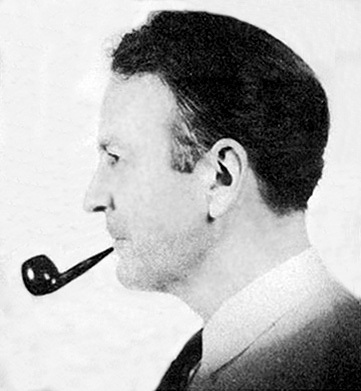
WRITER · BORN 1888 · DIED 1959
Raymond Chandler
- Born
- 23 July 1888
- Died
- 26 March 1959
- Known for
- Double Indemnity (1944)
34 archived facts 4 topics 1 source Last reviewed Nov 2026
Raymond Chandler (23 July 1888 – 26 March 1959) was a screenwriter best known for Double Indemnity.
34 Interesting Facts About Raymond Chandler
Interesting Facts (18)
- #001
In the mid-1950s, Raymond Chandler encouraged Ian Fleming to keep writing James Bond novels, sending a few words of praise to Fleming's American publishers, support that helped keep the series going.
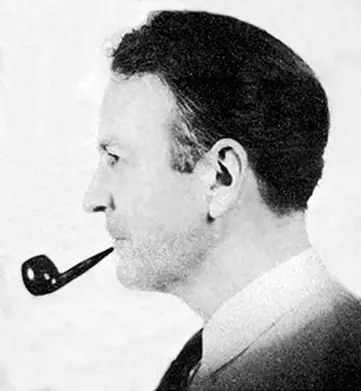
Raymond Chandler: by the waterImage: Wikimedia Commons · Photographer uncredited. Published by Alfred A. Knopf ., Public domain - #002
Asked once how he felt about Hollywood 'ruining' his books, Chandler took the questioner into his study, pointed at his shelf and said, 'There they are. They're fine,' confident that the originals would always be safe.
- #003
Chandler makes a brief cameo in Double Indemnity (1944): near the end, he can be seen sitting on a chair outside Edward G. Robinson's mezzanine office as Fred MacMurray walks out.
- #004
Chandler scornfully called Veronica Lake 'Moronica.'
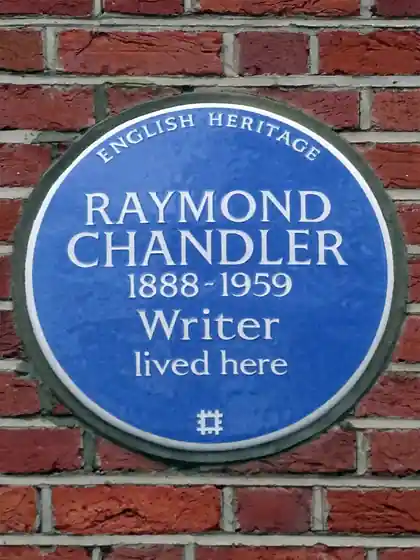
Raymond Chandler: a sceneImage: Wikimedia Commons · Spudgun67, CC BY-SA 4.0 - #005
Chandler's last completed novel, 'Playback,' began as a screenplay for Universal Studios, which paid for it but decided not to make it, so he turned it into a novel.
- #006
'Playback,' the last Philip Marlowe novel, was based on an unfilmed original screenplay by Chandler in which Marlowe does appear.
- #007
Raymond Chandler wrote Dashiell Hammett a personal letter praising his work, a gesture of respect between two masters of detective fiction.
- #008
Because of his early years in England, Raymond Chandler described himself as 60% English and 40% American, and his work carries traces of both cultures.
- #009
Chandler's former house on Shetland Ln. in Brentwood, where he wrote 'The High Window' and 'Lady in the Lake,' appears in the film Hollywood Mouth 2 (2014).
- #010
Writing the script for 'Strangers on a Train,' Chandler clashed constantly with director Alfred Hitchcock over artistic differences, until they stopped speaking and Hitchcock threw out his work, one of Chandler's rougher Hollywood experiences.
- #011
'The Little Sister' is said to grow out of Raymond Chandler's contempt for Hollywood, a frequent target in his work.
- #012
He once called Los Angeles a 'paradise of failures,' a sign of the dislike for the city that colored his portraits of its dark side.
- #013
When 'The Big Sleep' (1946) was being cast, Raymond Chandler wanted Cary Grant as Philip Marlowe, but Grant said no, and Chandler approved Humphrey Bogart, whose Marlowe became one of the most iconic in film history.
- #014
Chandler was reportedly unhappy with Philip Marlowe's portrayal in radio adaptations, feeling his character wasn't faithfully represented.
- #015
As an oil company executive, Raymond Chandler earned $3,000 a month.
- #016
Chandler had a separate career as a critic of detective fiction, writing perceptive analyses of the genre.
- #017
Chandler personally praised Dick Powell's Marlowe in 'Murder, My Sweet,' one of the screen's notable portrayals of the detective.
- #018
Alfred Hitchcock and Chandler clashed bitterly over the script for 'Strangers on a Train' and weren't speaking to each other during production.
Behind the Scenes (6)
- #019
In British radio plays, he was portrayed twice by Patrick Stewart in connection with his screenwriting adventures. Patrick Stewart's performance successfully reflected Chandler's character.
- #020
The only consistent criticism of Chandler's writing is that his narratives are somewhat disjointed and inconsistent. This criticism points to certain weaknesses in Chandler's storytelling. However, this quality gave his works a distinctive character.
- #021
He was a student at Dulwich College, and later returned there as a substitute teacher. This experience shows Chandler's abilities in the field of education. Teaching is one of the jobs he held before beginning his literary career.
- #022
Ed Bishop played Philip Marlowe in six BBC radio adaptations. These radio plays allowed the Marlowe character to come to life in a different medium. Bishop's performance remained faithful to Chandler's character.
- #023
British songwriter Robyn Hitchcock paid tribute to Chandler in 1986 with his song 'Raymond Chandler Evening'. Hitchcock's tribute emphasizes the enduring quality of Chandler's works.
- #024
Shortly before the author's death, he was officially consulted about the production of the Philip Marlowe TV show. This consultation shows the importance Chandler placed on screen adaptations of his character. However, the production of the show took place after Chandler's death.
Career & Awards (3)
- #025
Chandler was 50 when his first novel came out, a late start that let him bring a mature perspective and plenty of life experience to his books.
- #026
After his friend Richard Middleton's suicide, the 22-year-old Chandler gave up writing, thinking that if someone as talented as Middleton couldn't succeed, he had no chance, and he spent many years in other jobs.
- #027
Having chosen his new career, Raymond Chandler taught himself to write pulp fiction by analyzing an Erle Stanley Gardner novel to learn the techniques of the genre.
Life & Family (7)
- #028
Chandler died in 1959 while writing his last Philip Marlowe novel, 'Poodle Springs,' which more than thirty years later was completed by Chandler fan Robert B. Parker (author of the 'Spenser' novels) and became a bestseller.
- #029
Chandler's wife, Cissy, was more than seventeen years older than him and, to his embarrassment, sometimes mistaken for his mother by strangers; he was devoted to her and attempted suicide after she died.
- #030
During Prohibition, Chandler was involved in bootlegging, and his drinking increased, the start of a struggle with alcoholism that alcohol themes in his work often reflect.
- #031
Raymond Chandler took four years to finish 'The Long Goodbye,' a delay blamed on his alcoholism.
- #032
British costume designer Jocelyn Rickards, who knew Chandler well in the 1950s, wrote in her memoirs, long after his death, that she suspected his marriage was never consummated and that he died a virgin, an unverified claim that fueled speculation.
- #033
Chandler's father abandoned the family when he was 7, and he never saw or heard from him again, a loss reflected in the absent fathers of his work.
- #034
Raymond Chandler was said to have suffered from manic depression, speculation based on his mood swings and drinking, but no diagnosis was ever confirmed.
Related pages
- Chinatown — Raymond Chandler comes up in the facts on that page
- Billy Wilder — Raymond Chandler comes up in the facts on that page
Sources & editorial notes
Reference databases
- Wikipedia
- IMDb
Information from external sources is independently selected, consolidated and edited by Arka Evren. Sources are listed for verification and further reading. Encyclopedia text is used under its licence (CC BY-SA). How we work