

FILM · 1959 · USA
Ben-Hur
- Directed by
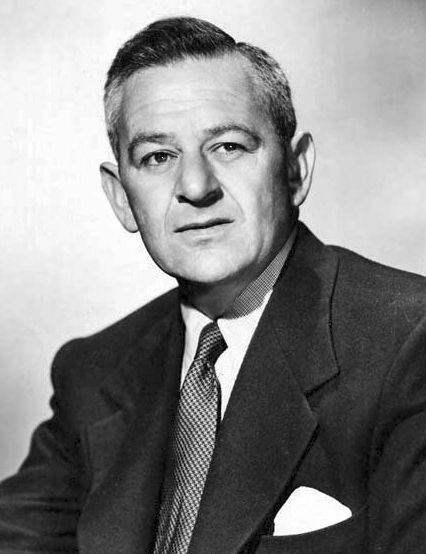
- William Wyler
- Runtime
- 212 min
- Studio
- Metro-Goldwyn-Mayer
241 archived facts 6 topics 1 source Last reviewed Nov 2026
In ancient Judea, a Jewish aristocrat opposing Roman occupation of his homeland reunites with his childhood friend, now a Roman commander — setting in motion a saga of betrayal, adventure, tragedy, revenge, and faith.

241 Interesting Facts About Ben-Hur
Interesting Facts (16)
- #001
- #002
- #003
- #004
- #005
- #006
- #007
- #008
After a few days of filming, Andrew Marton discovered that the most effective way to shoot in the arena was to place the cameras in the middle of the race, which required a camera car that moved along with the chariots. He also noted that the best shots in the turns were achieved using a custom-built camera car with rubber tires.
- #009
William Wyler was famous for his attention to detail. Charlton Heston recalled a particular scene in which Judah Ben-Hur walks through a room on his return from slavery. Such a simple scene required eight takes before the actor finally asked Wyler what was missing. The director told him he liked Heston's first attempt, in which he kicked a piece of pottery to give the scene a single sound. Heston, on the other hand, had assumed Wyler did not like the kick and had therefore deliberately avoided doing it again.
- #010
- #011
- #012
- #013
- #014
(At about 2 hours 40 minutes) The shot in which Messala's body is dragged behind his own chariot was first attempted with a dummy, but it was not convincing. It was decided that the chariot would drag Stephen Boyd along the ground at high speed, so a steel plate was molded to his body to protect him. Despite this measure, Boyd suffered burns and some permanent scars on his skin.
- #015
The outdoor set of the chariot-racing circus, filmed over nine months at Rome's Cinecitta studios, was the largest set built for a film at that time. One reason for choosing Cinecitta was that it was Europe's largest outdoor studio, but also that MGM still held financial assets in Italy frozen by the fascist regime during World War II; the new government was willing to release the money, but only if MGM spent it in Italy.
- #016
Production Story (50)
- #017
- #018
- #019
- #020
- #021
- #022
William Wyler was so impressed by David Lean's work on The Bridge on the River Kwai (1957) that he offered Lean the chance to direct the famous chariot race scene. Lean was to receive a full credit reading 'Chariot Race Directed by David Lean.' He turned the offer down, however, because he knew Wyler was a truly talented director.
- #023
Ben-Hur is the first of three films to win 11 Academy Awards, including Best Picture; the others are Titanic (1997) and The Lord of the Rings: The Return of the King (2003). Some of the categories Titanic and The Return of the King won did not exist in Ben-Hur's time, which makes its 11 wins all the more impressive. In addition, Gone with the Wind (1939) won 8 competitive Oscars and 2 special Oscars; Ben-Hur was the first film to win 10 Oscars in competitive categories.
- #024
- #025
- #026
- #027
Despite being Jewish, Wyler was eager to make a film that would appeal to all faiths. He regarded the novel's subtitle, 'A Tale of the Christ,' as an almost incidental part of the story. His insistence on telling the story of a man named Judah Ben-Hur is a major reason for the film's enduring success.
- #028
- #029
- #030
- #031
- #032
- #033
- #034
- #035
- #036
- #037
- #038
Six distinguished writers, including Christopher Fry, worked on the script, which reached 230 pages. The book, written by General Lew Wallace while he was governor of New Mexico, was turned into a Broadway play in which William S. Hart (who later became famous as a cowboy star) played Messala and two chariots raced on treadmills. Seven years later the number of chariots rose to eight, and the play ran in a theater for 17 years. It was first filmed in 1907, with the chariot race performed by members of the Brooklyn Fire Department.
- #039
The budget soared to $10 million, nearly fifty percent over the original plan. Joseph Vogel, president of MGM's parent company Loew's Inc., came from New York and voiced the growing concerns among the board and shareholders. He asked William Wyler whether he could help; the director politely said 'No, thank you' and continued shooting. Vogel went on a five-week business trip to Europe. When he returned, Wyler was reshooting the scene that had been filmed when he left, this time improved with new dialogue by Christopher Fry. The worried boss wondered whether they had been shooting the same scene the whole time.
- #040
- #041
- #042
- #043
- #044
After reading Karl Tunberg's original screenplay, William Wyler wrote 'terrible... awful' in the margins. He then brought in Gore Vidal, who was under contract to MGM and hated it, to rewrite the script. Vidal also found Tunberg's screenplay terrible and initially did not want to take on the project. He changed his mind when Wyler promised he would be freed from the remaining two years of his contract. Wyler later brought in playwright Maxwell Anderson to write a draft. Christopher Fry was then assigned to polish the screenplay, which by that point was largely Anderson's work, built on the skeleton of Tunberg's earlier drafts. Neither Fry nor Vidal (whose contribution was almost negligible) received credit on screen; this angered Wyler so much that he leaked the story to the press. The resulting controversy was probably the reason the film failed to win the Best Writing Oscar, even though it won the other 11 awards for which it was nominated.
- #045
For the first 35 mm screenings, exhibitors had to raise ticket prices to meet the terms of their exhibition contracts; some raised them to more than double standard admission. Some exhibitors also charged different prices depending on the day or the location of the seats. Despite the expensive tickets, audiences flocked to the cinemas. Domestic and international grosses were reported to be more than ten times the film's staggering production cost.
- #046
- #047
- #048
- #049
- #050
- #051
- #052
- #053
- #054
- #055
The film's screenwriting process is generally told from two perspectives in the main sources: the perspective of director William Wyler and star Charlton Heston, or the perspective of novelist Gore Vidal. The views of producer Sam Zimbalist, who died in the middle of production, are filtered through the views of Wyler, Heston and Vidal in most published sources. However, there is another perspective based on a comprehensive reading of the sources. Zimbalist came up with the idea of remaking 'Ben-Hur' in the mid-1950s. This remake (the same story had previously been filmed twice as a silent film) was a gamble to save MGM from the brink of bankruptcy. Zimbalist hired screenwriter Karl Tunberg to write the screenplay for the new 'Ben-Hur' after Tunberg's success with MGM's historical epic Beau Brummell (1954). Tunberg suggested Sidney Franklin as director, but Zimbalist insisted on Wyler. Wyler did not like Tunberg's screenplay and brought in other writers during shooting: Vidal (who later claimed he made a major contribution, but this claim is not supported by Heston's or Wyler's memoirs), Maxwell Anderson, S.N. Behrman and Christopher Fry. When MGM executives watched the rough cut in late 1958, they agreed that many scenes were inadequate. At this point, Tunberg, despite being primarily occupied with Count Your Blessings (1959), was hired to rewrite the material Wyler had changed and to create some additional scenes; all of these made it into the final version. Many of these changes amounted to restoring what had existed before Wyler's on-set interventions in the screenplay. This final screenplay in fact formed the basis of the film that was released. However, Wyler still demanded that Fry be credited for his on-set work. The Screen Writer's Guild conducted a formal arbitration, without using oral statements and using only experienced writers as jurors; each examined all drafts of the screenplay without knowing about the others. These jurors unanimously decided that the final screenplay was essentially Tunberg's work. The process and reasoning behind this decision were published in 'The Hollywood Reporter' (p. 5) on Friday, November 20, 1959. A careful reading of the Guild's published statement will confirm the events described above. Enraged by this rejection, Wyler used his considerable influence in Hollywood (with Heston's help) to run a publicity campaign against Tunberg. The campaign had an effect: 'Best Screenplay' was the only category in which 'Ben-Hur' was nominated for an Academy Award but did not win.
- #056
- #057
It was approved by the British Board of Film Censors with an 'A' certificate on 30 October 1959, then premiered at the Empire, Leicester Square on 16 December 1959 and ran there for 76 weeks. When the Empire closed for redevelopment the film transferred to the Royalty, where it ran for another 49 weeks, ending its West End run on 6 May 1962. MGM deliberately held back other cities; a 35-week run in Birmingham began on 1 September 1960, a 37-week run in Manchester on 28 November 1960, and a 26-week run in Liverpool on 28 May 1961. High-priced out-of-town roadshows continued until mid-1963, though some towns refused to show Ben-Hur until prices returned to normal. MGM finally gave the film a general release at normal prices on 8 December 1963. It was re-released in 1969; the Casino Cinerama in London showed it for 19 weeks from 26 December 1969.
- #058
- #059
- #060
- #061
Sidney Franklin was initially persuaded to direct; Richard Brooks was also considered at one point, but he left the project before going on a location scouting trip in Italy. An angry MGM sent the famously tough E.J. Mannix to Brooks: 'He asked if I was a Communist. Don't you like the film because it's about Jesus? I told him the film wasn't even about Jesus, it was about a horse race.' In the end Brooks swapped projects with William Wyler, who had made 'Blackboard Jungle' (1955) for the same studio.
- #062
Years later, Charlton Heston thought that if the director of 'Ben-Hur', Wyler, and the director of 'El Cid' (1961), Anthony Mann, had swapped roles, the first film would have been no less, while the second could have been the greatest epic film. Heston was half right: Wyler could have made 'El Cid' better, but Mann could not have matched Wyler's level of script detail, visionary direction and actor performances.
- #063
- #064
- #065
- #066
Behind the Scenes (74)
- #067
- #068
(About 2 hours 35 minutes) The chariot race sequence was directed by legendary stuntman Yakima Canutt (alongside veteran second-unit director Andrew Marton). Joe Canutt (Yak's son) doubled for Charlton Heston. During one of the accidents, in which Judah Ben-Hur's horses jump over a wrecked chariot, the younger Canutt was thrown from his chariot onto his tongue because he had ignored Yak's instructions on how to hold the handrails when the chariot hit the top of the hidden ramp leading to the wreckage. He managed to climb back into his chariot and bring it back under control. The sequence looked so good that it was included in the film along with a close-up of Heston climbing back into the chariot. Canutt had a slight cut on his chin, but that was the only injury in this incredibly dangerous incident. Stuntman Nosher Powell, who worked on the film, notes in his biography that Yak turned ghostly pale when the chariot crashed. The accident was unplanned, and everyone, including Yak, believed Joe was dead.
- #069
The Roman soldier standing on the spina, or the circus's central island, was a dummy. Those who claim that a real extra would not have allowed the camera movement to focus so precisely on the "man" if it had not been planned in advance seem never to consider this. Both this "soldier" and the "driver" of an overturned chariot who jumps in front of one chariot and over another were articulated and weighted dummies (made with movable arm and leg joints), so when they were hit they "reacted" as a normal human body would in that situation. The combination of skillful placement and expert editing between the stunt driver and a kneeling dummy gave the impression that the man was really crushed.
- #070
- #071
(At about 1 hour 17 minutes) During filming, director William Wyler noticed that one of the extras was missing a hand. For the scene in which the galley is rammed by a pirate ship, he had the makeup department make a prosthesis with a protruding fake bone to cover the man's stump. Wyler similarly used an extra who was missing a foot.
- #072
- #073
- #074
- #075
- #076
- #077
The chariot race sequence (around 2 hours 35 minutes) was directed by legendary stuntman Yakima Canutt and veteran second unit director Andrew Marton. Joe Canutt doubled for Charlton Heston. In one of the accidents in which Judah Ben-Hur's horses jump over a wrecked chariot, young Canutt was thrown from his chariot and caught on his tongue because he had not followed Yak's instructions. He managed to climb back into his chariot and regain control. The sequence looked so good that it was included in the film, and a close-up of Heston climbing back into the chariot was added. Canutt suffered a minor cut on his chin, but this was the only injury in that incredibly dangerous sequence. In his biography, stuntman Nosher Powell states that Yak went pale when the accident happened; the accident was unplanned and everyone thought Joe was dead.
- #078
William Wyler chose all the camera angles for the chariot race, but left the details of the actual filming to second unit directors Andrew Marton and Yakima Canutt. When Wyler saw Marton and Canutt's work, he said it was "one of the greatest cinematic achievements" he had ever seen, and then supervised the editing of the sequence.
- #079
The Roman soldier standing on the spina, the central island of the circus, was a dummy. Those who claim he was a real extra forget that the camera's movement could not focus so precisely on the "man." Both this "soldier" and the "driver" who is pulled off the track when a chariot overturns and is crushed by another chariot were articulated, weighted dummies with movable arm and leg joints, so that when struck they reacted like a normal human body. The skillful placement and editing between the stunt driver and a kneeling dummy created the flawless impression that the man was actually crushed.
- #080
After a few days of shooting, Andrew Marton discovered that the most effective way to film in the arena was to place cameras in the middle of the race, which required a camera car that moved along with the chariots. He also realized that the best shots at the turns were achieved using a custom-built camera car with rubber tires.
- #081
William Wyler was meticulous about details. Charlton Heston recalls a scene in which Judah Ben-Hur crosses a room after returning from slavery: this simple scene required eight takes, and the actor finally asked Wyler what was missing. The director said he liked the first take, in which Heston kicked a piece of pottery to give the scene a single sound. Heston, however, had assumed Wyler did not like the kick and had therefore deliberately not repeated it.
- #082
- #083
- #084
- #085
- #086
The shot in which Messala's body is dragged behind his own chariot (around 2 hours 40 minutes) was first attempted with a dummy, but it was not convincing. It was decided to drag Stephen Boyd along the ground at high speed, and a steel plate molded to his body was made to protect him. Despite this precaution, Boyd suffered skin burns and permanent scars.
- #087
The exterior set of the chariot race circus, filmed over nine months at the Cinecittà studios in Rome, was the largest set ever built for a film at that time. One reason Cinecittà was chosen was that it was Europe's largest open-air studio, but another was that MGM had financial assets in Italy that had been frozen by the fascist regime during World War II; the new government was willing to release the money, but only if MGM spent it in Italy.
- #088
During filming, director William Wyler noticed that one of the extras was missing a hand (around 1 hour 17 minutes). He had the makeup department make a prosthesis containing a protruding fake bone to cover the man's amputated arm; this was for the scene in which the galley is rammed by the pirate ship. Wyler similarly made use of an extra who was missing a foot.
- #089
A special infirmary was set up for the filming of the dangerous chariot race scenes. In the end, however, there were very few injuries, most of them sunburns. Even more incredible, despite all the dangerous stunts with horses, not a single horse died or was seriously injured, whereas nearly a hundred horses had died in the previous adaptation, Ben-Hur: A Tale of the Christ (1925).
- #090
- #091
- #092
- #093
- #094
- #095
- #096
- #097
- #098
- #099
- #100
- #101
- #102
- #103
- #104
- #105
- #106
- #107
- #108
- #109
- #110
- #111
- #112
- #113
- #114
- #115
The pace and scope of the production, combined with the oppressive summer heat, affected everyone; but it was not as bad as MGM claimed, with a 20-bed hospital, two doctors and two nurses. Senior General Manager Henry Henigson had to take a vacation in Capri but returned four days later; he was too involved in the production to stay away.
- #116
Because the film had to compete with television, the studio wanted it made on the most epic scale. They insisted it be shot in widescreen, but the problem for William Wyler and cinematographer Robert Surtees was composing shots with this process. They had to find a way to avoid empty screen space; they wanted neither to shoot two actors in a vast void nor to fill the frame with meaningless elements. Wyler said they often had to include actors with nothing important to do in shots in order to fill the frame.
- #117
- #118
The chariot race arena covered 19 acres and was the largest set built for a film at that time. The two straights were each 500 yards long, and the 4 statues in the center were 30 feet high. 750 workers built the arena in a year. There were 2 Roman galleys, each 175 feet long and seaworthy.
- #119
- #120
Although the original 35mm presentation was in Technicolor (there is no such thing as a 70mm Technicolor print; all original 70mm prints were MetroColor), all prints of the 1974 re-release were in MetroColor. More importantly, the 1974 re-release was cut from the original 212-minute running time to 170 minutes and stripped of the film's musical overture and entr'acte (it was presented without an intermission). Worst of all, the order of some scenes was rearranged; this was an almost unheard-of truncation for a successful film, especially one that had won an unprecedented eleven Academy Awards.
- #121
According to Andrew Marton, the track for the chariot race was made of steam-compacted rock debris, covered with 10 inches of ground pumice and 8 inches of crushed yellow rock; this provided a surface hard enough to bear the weight of the chariots and horses, yet flexible enough not to lame the horses (Marton said this was achieved with the layer of sand on top). After one day of shooting, the top layer of rock was removed because it had significantly slowed the speed of the race and reflected too much light. The pumice layer, which Marton and Yakima Canutt had initially opposed, turned out to be the most functional element.
- #122
Andrew Marton had three 65mm cameras to shoot the race. The large-format film created problems. While the standard close-up lens for 35mm photography was 100mm, in the widescreen process it became a 200mm lens and could not focus closer than 50 feet. Marton therefore had to use a 140mm lens and, along with his crew, had to move closer to the dangerous action of the race.
- #123
- #124
- #125
- #126
- #127
- #128
- #129
- #130
- #131
- #132
- #133
- #134
It is the second film shot in the MGM Camera 65 process (eight more films would be shot after the process was renamed Ultra Panavision). It had been intended to be the first, but due to production delays MGM first used the process on Raintree County (1957). Like the Todd-AO format (introduced in 1953), MGM Camera 65 used 65mm negative film, which was then printed onto 70mm film for roadshow presentations or optically reduced to 35mm for general release. Unlike Todd-AO, however, Camera 65 ran at the standard 24 fps from the outset and used 1.25x anamorphic lenses to optically squeeze the 2.76:1 aspect ratio into the 2.20:1 Todd-AO frame. These lenses were developed and manufactured as a natural evolution of efforts to improve the quality of anamorphic camera and projection lenses for the CinemaScope system. The extra 5mm of film between the 65mm negatives and the 70mm prints consisted of 2.5mm outside the perforations on each side of the film and allowed for up to four magnetic oxide stripes carrying as many as six separate sound channels; this offered far superior sound quality compared with the mono optical tracks on 35mm prints of the period. When MGM sold its camera department to Panavision in 1961, the Camera 65 process was renamed Ultra Panavision 70 but remained technically the same. However, the complexity of anamorphic photography and post-production, particularly the use of unique 1.25x anamorphic lenses instead of the 2x power used for CinemaScope, made the system short-lived, and the process was last used for Khartoum (1966). Most of the cameras were used on Super Panavision 70 productions, an exact copy of Panavision's non-anamorphic 24 fps Todd-AO process, and were later replaced by the Panaflex 65 cameras used in the Panavision System 65. Because of the complexity and cost of projecting anamorphic 70mm prints, recent reissue 70mm prints of Ben-Hur were struck from negatives that were not optically squeezed, allowing projection on normal 70mm equipment with only slight cropping at the edges of the image.
- #135
- #136
- #137
- #138
- #139
- #140
Characters & Cast (69)
- #141
- #142
Kirk Douglas was offered the role of Messala but turned it down because he did not want to play 'a second-rate villain.' Douglas was interested in playing Judah Ben-Hur because of his Jewish identity, but he was too old and Charlton Heston had already been cast. The experience motivated Douglas to develop his own epic, Spartacus (1960); the film was designed in part to compete with this production.
- #143
- #144
- #145
- #146
- #147
- #148
- #149
- #150
- #151
- #152
Charlton Heston made a big mistake by writing a long note about his ideas for the character before his first scene with Messala. He later said that after doing so it took him quite a while to get into William Wyler's good graces, and that this may have played a part in the director giving him a hard time during the production. He also wrote that Wyler once said on set that he wished he could be a nice man, but 'you can't make a good film that way.'
- #153
Director William Wyler decided that the Romans would speak with English accents, while four American actors would play the Jews. This technique was later used in Masada (1981) and The Last Temptation of Christ (1988). There were exceptions, however, such as the Israeli actress Haya Harareet in the role of Esther and the English actor who voiced one of the Jews lowering supplies into the Valley of the Lepers.
- #154
According to Charlton Heston, William Wyler was reluctant to change his mind about an approach to a scene or a character, which often led to contradictory directions. He also noted in his diary: 'I don't think Wyler likes actors much. He doesn't empathize with them; they irritate him on set. He gets very impatient, but the actors always come out well. My only answer is that his taste is impeccable and every actor knows it.'
- #155
William Wyler was so impressed by Remington Olmsted, who played the Decurion soldier who refuses to give Ben-Hur water in the slave-drive scene, that when he noticed the actor had been casually replaced during shooting, he demanded that Olmsted be found and brought back at any cost. It was not very difficult. Claude Heater, who played Jesus, was a regular at Olmsted's restaurant in Rome during the shoot. Wyler's instincts were worth the effort.
- #156
- #157
Charlton Heston and James Stewart, who was nominated for Best Actor for Anatomy of a Murder (1959), arrived in the lobby at the same time on Oscar Night and posed for photographers. As they turned to go to their seats, Stewart took Heston's arm and said, 'I hope you win, Chuck. I really mean it.' Heston commented in his autobiography, 'He really meant it. I don't know another actor who would say that. An extraordinary man.'
- #158
- #159
In Christian tradition, Balthasar, one of the Three Wise Men, is black or dark-skinned. In this film, however, he is depicted as white and played by the Scottish actor Finlay Currie. Melchior, traditionally white, is dark-skinned in the film and was played by the uncredited Reginald Lal Singh.
- #160
- #161
Real aristocrats were brought in to play the patricians in the party scene: Emanuele Ruspoli, Count Marigliano del Monte, Duchess Nona Medici, Prince Raimondo of Italy, Count Santiago Oneto of Spain, Princess Nina Hohenlohe-Oehringen of Austria and her husband, Princess Irina Wassilchikoff of Russia, and Baroness Lillian de Balzo of Hungary.
- #162
- #163
- #164
- #165
- #166
- #167
- #168
- #169
- #170
- #171
- #172
- #173
Ava Gardner and Pier Angeli were considered for the role of Esther, but director William Wyler had been struck by the Israeli actress Haya Harareet, whom he met at Cannes, and wanted her. Unable to remember her name, he telegraphed his assistant to find 'that stubborn Israeli actress' and offer her the role. That brief description was enough to find Harareet; the actress, then in Paris, was brought to Italy for the film.
- #174
- #175
- #176
- #177
The first choice for the role of Esther was Liselotte Pulver, and she had already been given the part. But when a German producer insisted she first fulfil her contract with him, Pulver had to give up the role, which went to Haya Harareet. Pulver later admitted that losing this high-profile role was the greatest regret of her career.
- #178
- #179
- #180
- #181
- #182
- #183
- #184
- #185
- #186
- #187
- #188
- #189
- #190
Roger Ebert wrote that one of the film's problems was that no convincing explanation is given for the hatred between the characters played by Heston and Boyd. Gore Vidal's suggestion: they were lovers when young, Ben-Hur denies that time, and Boyd is embittered. Wyler accepted the idea but told only Boyd, not Heston, because Heston 'couldn't have handled it.' The film includes the scene that hints at this subtext.
- #191
- #192
Judah Ben-Hur fights five men over the course of the film: he battles two Roman guards while escaping prison; he drowns a Roman officer after the ship collision; he kills a Macedonian pirate with a spear (a skill demonstrated in the spear-throwing contest at the Antonia Fortress); and he sets another pirate's beard on fire to save Arrius. Whether the others receive fatal wounds is unclear.
- #193
- #194
- #195
- #196
- #197
- #198
- #199
- #200
- #201
- #202
- #203
He had to grow a beard for the role of Messala in 'Ben-Hur', but researchers later discovered that young Roman tribunes did not have beards, so his had to go. It was decided that he should have brown eyes, which meant he had to wear contact lenses to hide his blue eyes and have lifts inside his shoes so that he would match Charlton Heston's height of 1.80 cm.
- #204
In 1995, Charlton Heston denied screenwriter Gore Vidal's claim that Ben-Hur (1959) had a homosexual subtext. Vidal claims he wrote the script with such an implication and conveyed the subtext to director William Wyler. Boyd, who played Ben-Hur's friend (and later chief enemy) Messala, was supposedly part of this subtext and played his scenes as if he were a homosexual lover who had been rejected. Heston was not informed of this because they thought he would not like it. Heston stated that Vidal was removed from the project after writing one scene. Vidal responded by quoting from Heston's 1978 "The Actor's Life", in which he acknowledged that Vidal wrote most of the finished script.
- #205
- #206
For his work in Ben-Hur (1959), he is one of only 7 actors to win the Golden Globe for Best Supporting Actor in a motion picture without receiving an Oscar nomination for the same performance. The other 6, in chronological order, are: Millard Mitchell for My Six Convicts (1952), Earl Holliman for The Rainmaker (1956), Oskar Werner for The Spy Who Came in from the Cold (1965), Richard Attenborough for The Sand Pebbles (1966) and Doctor Dolittle (1967), Richard Benjamin for The Sunshine Boys (1975), and Aaron Taylor-Johnson for Nocturnal Animals (2016).
- #207
- #208
Like Peter Finch (they had respectively been contracted to play Antony and Caesar), he left the cast of "Cleopatra" at an early stage of production and, around the same time, turned down the role of Boaz in "The Story of Ruth", which irritated his bosses at Twentieth Century Fox somewhat. Stuart Whitman took on the role instead; the film was a flop. As a result, following his star-making performance in "Ben-Hur", Boyd stayed off screens for more than eighteen months.
- #209
Deeper Meaning (29)
- #210
- #211
- #212
- #213
- #214
- #215
- #216
- #217
- #218
Ben-Hur is one of the rare instances in which MGM's lion, Leo, does not roar during the opening credits, apparently because of the film's religious theme. Other examples include The Next Voice You Hear... (1950), Westward the Women (1951) and North by Northwest (1959); in the last, Bernard Herrmann's snarling music replaced the lion's roar.
- #219
- #220
- #221
- #222
At about 1 hour 23 minutes: when Judah and Quintus are rescued from the raft, Quintus offers the first water to Judah, then drinks from the same cup without washing it. It was unheard of for a Roman consul to grant such an honor to a condemned galley slave; the bewildered reactions of the other Romans are seen silently.
- #223
- #224
- #225
- #226
- #227
According to Gore Vidal's interview in The Celluloid Closet (1995), Ben-Hur and Messala were former lovers and Messala betrayed Ben-Hur because their relationship ended. Vidal said he discussed this with Stephen Boyd before shooting but that the information was kept from Charlton Heston. Heston vehemently denied any homosexual subtext, but Vidal noted that in his 1978 autobiography Heston acknowledged that Vidal wrote a large portion of the finished screenplay. All the other 'Ben-Hur' screenwriters added two conflicts between the two characters: (1) loyalty to country versus loyalty to God; (2) the redemption of one who loses his humanity to hatred and revenge. Accepting the 1959 Academy Award for Best Actor, Heston thanked only one 'Ben-Hur' screenwriter in his acceptance speech: Christopher Fry.
- #228
- #229
- #230
- #231
- #232
At roughly 1 hour 1 minute, Judah Ben-Hur is called 'number 41' in the galley scenes aboard the Roman ship. In the original novel this is 'number 60' (Book 3, Chapter 3, page 123, Harper Brothers 1922). In the Dell Movie Classic comic it appears as 'number 40' (Dell Comics #1052-5911, 1959, pages 15-16). The 1925 Ben-Hur: A Tale of the Christ and the 1958 Classics Illustrated adaptation make no reference to the number at all.
- #233
- #234
- #235
- #236
Until this point, portrayals of Pontius Pilate were generally one-dimensional, and showing him merely as a Roman villain was enough. In this film, however, the dialogue in his final meetings with Judah paints him as a stern but wise and understanding administrator. Even before the 'hand-washing' scene, he clearly lays out his reasonable philosophy and political agenda.
- #237
- #238
After being told that his mother and sister are dead, it is not explained why Judah chooses to face Messala in the arena rather than pursue him by more direct means. As the son of a consul, he could easily have destroyed Messala politically. Of course, had he chosen that, there would have been no magnificent chariot race.
Career & Awards (3)
Continue through the archive


Sources & editorial notes
Reference databases
- Wikipedia
- IMDb
Information from external sources is independently selected, consolidated and edited by Arka Evren. Sources are listed for verification and further reading. Encyclopedia text is used under its licence (CC BY-SA). How we work