

DIRECTOR · BORN 1908 · DIED 1991
David Lean
- Born
- 25 March 1908
- Died
- 16 April 1991
- Known for
- Lawrence of Arabia (1962), Doctor Zhivago (1965), Brief Encounter (1945), A Passage to India (1984)
23 archived facts 6 topics 1 source Last reviewed Nov 2026
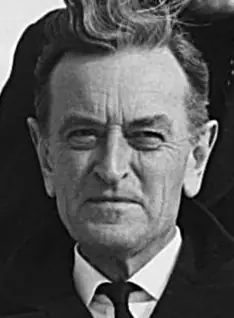
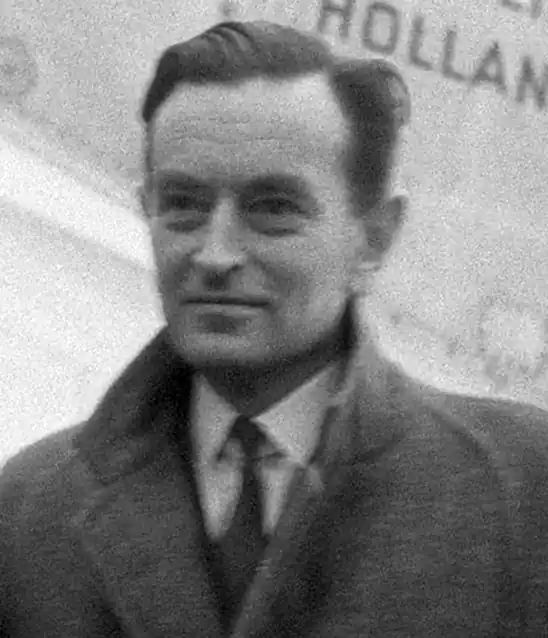
David Lean (25 March 1908 – 16 April 1991) was a director best known for Lawrence of Arabia, Doctor Zhivago and Brief Encounter.
23 Interesting Facts About David Lean
Interesting Facts (7)
- #001
While watching Lawrence of Arabia (1962) with Steven Spielberg, David Lean gave him a live director's commentary. Spielberg described it as learning from a true master and one of the most unforgettable moments of his life. He said the experience helped him make better films and directly influenced every film he shot afterwards, calling it a unique opportunity to understand the mind of one of cinema's greatest masters.
- #002
According to Richard Schickel, the savage attacks by Pauline Kael and other critics on Ryan's Daughter (1970) wounded David Lean deeply. The negative reviews were so damaging that Lean directed no films for a full 14 years, returning behind the camera only in 1984 with A Passage to India. That film, arriving after the long gap, showed Lean's passion for cinema and that he had not abandoned his art despite the criticism.
David Lean: portraitImage: Wikimedia Commons · Anonymous / Kar-Air Oy, Public domain - #003
Peter O'Toole shaped his performance in the 1980 film The Stunt Man by drawing on David Lean. O'Toole had previously worked with Lean on Lawrence of Arabia and had closely observed his directing style, his mannerisms and his authoritarian presence on set. He skilfully reflected those observations in the character he played, delivering an unforgettable performance.
David Lean: portraitImage: Wikimedia Commons · Harry Pot / Anefo, CC0 - #004
From 1986 until his death in 1991, David Lean worked intensively on a film adaptation of Joseph Conrad's novel Nostromo. On the project, produced by Serge Silberman together with Columbia Pictures, Lean wrote the screenplay first with Christopher Hampton and then with Robert Bolt. The film's budget was set at 46 million dollars, and shooting was planned to begin in March 1991 in Almería, Spain, and at Les Studios de la Victorine in Nice. A huge cast had joined the project, including Dennis Quaid, Isabella Rossellini, Julian Sands, Paul Scofield, Klaus Maria Brandauer, Irene Papas, Anthony Quinn and Christopher Lee. Lean's sudden death, however, left this major project unfinished.
- #005
David Lean worked on the film 'Mutiny on the Bounty' for a full 5 years. The producer, however, took the project away from him and handed it to another director. This caused Lean to suffer the pain of losing a project on which he had laboured for a long time. The episode went down in history as an example of producer-director clashes in the film industry.
- #006
The only film from which David Lean made a financial profit was 'Doctor Zhivago', in which he held a share of the production. The film was a great success at the box office and brought Lean a significant income. Lean, who generally faced financial difficulties on his other films, was satisfied with this project both artistically and commercially.
- #007
David Lean planned to make 'The Bounty' with a screenplay by Robert Bolt and Anthony Hopkins in the role of Bligh. A stroke he suffered, however, caused a temporary delay to the project, and the project was then shelved entirely. At that time the script was 4 to 5 hours long, and Lean's intention was to shoot it as two separate films. This ambitious project took its place in film history as one of the great visions Lean was unable to realise.
Production Story (1)
- #008
In a BBC documentary, Steven Spielberg recounted that David Lean asked him to go to Warner Brothers and find financing for a film adaptation of Joseph Conrad's novel Nostromo. The studio head, a personal friend of Spielberg, approved a budget of 20 million dollars. When Lean heard the news, however, he said it was not enough and asked Spielberg to go back and request 30 million dollars. A stunned Spielberg passed on the request, but the studio refused the increase and the project was shelved.
Behind the Scenes (5)
- #009
By the general account of actors who worked with David Lean, he was a cold and calculating director who took an almost gleeful pleasure in creating tension on set. This attitude was seen as a deliberate method for pushing actors to their highest level of performance. For many actors who worked with him, however, the approach meant a gruelling experience.
- #010
In Doctor Zhivago, David Lean's reflection can be seen in the glass door of a tram as Yuri steps off the train. It is one of the behind-the-camera cameo tricks the director frequently used in his films. Such small details add a particular pleasure to the film for cinema enthusiasts and carry the director's signature.
- #011
In David Lean's film 'Doctor Zhivago', when Zhivago enters the Gromenko house through the glass doors after working at the hospital, the director's reflection is clearly visible as the right-hand door opens. Although this was recorded as an accident left behind the camera, it has gone down in cinema history as an interesting detail. Such small mistakes are a separate source of pleasure for attentive eyes when watching films.
- #012
David Lean expressed interest in making a film version of the BBC Light Programme's 1955 science fiction radio serial 'Journey into Space'. The project demonstrated his interest in the science fiction genre and his desire to work in different genres. However, the project never came to fruition and remained one of the unrealised projects of Lean's film career.
- #013
Another film from which David Lean made a financial profit was 'Ryan's Daughter', in which he held a share of the production. Lean spent a full three years writing the screenplay and bringing the project to life. The film received 11 Oscar nominations, including screenplay, editing, director and best picture. This success shows Lean's belief in the project and that his efforts were rewarded.
Characters & Cast (1)
- #014
Toward the end of his life, David Lean said he wanted to remake Boris Pasternak's Doctor Zhivago. The most important condition for this remake, however, was that Julie Christie play Lara once again. But Christie was now too old for the role, and Lean knew he could not carry out the project for that reason. The situation shows Lean's passion for cinema and his longing for the past.
Career & Awards (5)
- #015
David Lean directed two films selected for the National Film Registry by the Library of Congress as being culturally, historically or aesthetically significant: The Bridge on the River Kwai (1957) and Lawrence of Arabia (1962). Both are regarded as masterpieces of cinema history and rank among the works of American cultural heritage deemed worthy of preservation. The selection is a sign of Lean's lasting contribution to cinema.
- #016
In the ranking of directors with the most Oscar nominations, Billy Wilder leads with 8 nominations, followed by Fred Zinneman with 7 and Frank Capra and David Lean with 6 each. Clarence Brown, John Ford, King Vidor, George Stevens, Alfred Hitchcock and George Cukor also appear on the list with 5 nominations each. David Lean's place near the top of this list lays bare his respected position and success in the world of cinema.
- #017
In 1990, David Lean was awarded the American Film Institute (AFI) Life Achievement Award. The award was given to honour his extraordinary contributions over his film career and the lasting legacy he left behind. Lean's receipt of this prestigious prize once again confirmed his legendary status in the world of cinema.
- #018
In May 1988, David Lean was awarded the Cannes Action Committee Prize for his outstanding contribution to the British film industry. The award showed how respected a figure he was not only internationally but also within his own country's film industry. Lean's receipt of this honour was a recognition of his contributions to making British cinema known worldwide.
- #019
For his contributions and services to the arts, David Lean was appointed Commander of the Order of the British Empire (CBE) in the 1953 Coronation Honours List. The honour was an official recognition of his achievements in cinema and his contributions to British culture. Lean's receipt of this title demonstrated his worth not only as an artist but also as a citizen who had served his country.
Life & Family (4)
- #020
David Lean initially wanted to direct Empire of the Sun (1987). Because of his advancing age and health problems, however, he decided to hand the project over to Steven Spielberg. Spielberg never forgot this gesture and dedicated the film to Lean's memory. The episode also stood as a sign of the respect and friendship between the two great directors.
- #021
Before his death in 1991, David Lean's only child, Peter, and his grandchild paid a visit to his home in France to reconcile with him. The attempt ended in anger, however, and the family never came together again. Lean had separated from his first wife when Peter was small, just as his own father had left them when David was 16.
- #022
Both David Lean's first wife, Isabel Lean (born 1908), and his third wife, the actress Ann Todd, were his first cousins. Such consanguineous marriages were in keeping with the social norms of the time, though today they are regarded as highly unusual. Details like these from Lean's private life shed light on his complex and contradictory character.
- #023
David Lean's third wife, actress Ann Todd, had previously been married to Lean's second cousin Nigel Tangye. Such family relationships, though uncommon in British society of the period, made Lean's connections to those around him even more complicated.
Related pages
- Arthur Kennedy — David Lean comes up in the facts on that page
- Deadpool & Wolverine — David Lean comes up in the facts on that page
- Liam Neeson — David Lean comes up in the facts on that page
Sources & editorial notes
Reference databases
- Wikipedia
- IMDb
Information from external sources is independently selected, consolidated and edited by Arka Evren. Sources are listed for verification and further reading. Encyclopedia text is used under its licence (CC BY-SA). How we work